Long before the explosion of podcasting, I had fallen in love with audio lectures. Perhaps this habit began when I was taking Regent College classes by J.I. Packer, Rikk Watts, Iain Provan, and Eugene Peterson while housesitting in a log cabin on a Japanese mountainside. Listening to those tapes, CDs, and MP3 classes–it was an age of digital transition–taught me a skill that I’ve taught but haven’t really written about: pre-listening. When I finally made it to my grad school campus, I had developed the ability to find and listen to audio content that would prepare me for the material we were studying that term. Regent has a huge library of audio content going back decades, so I could find a lecture or a panel that helped me get the vocabulary and outlines of a lesson by immersion, so to speak.
Now in the streaming era, we are embarrassed by the riches of fine audio content. Since that time, I don’t know how many thousands of hours of podcasts, lectures, and entire courses I have enjoyed.
I have even played with the medium myself. I have developed video lecture-based courses on “The Fiction and Fantasy of C.S. Lewis” (The King’s College, New York), “C.S. Lewis and the Mythologies of Love and Sex” (Signum University), “World Religions” (Maritime Christian College), “Japanese Religion and Culture” (UPEI), and “Spirituality in the Writings of L.M. Montgomery” (Atlantic School of Theology). This last Montgomery project was an online Maymester course that AST offered as an inexpensive learning experience for their students, alumni, supporters, and other curious readers. More than 80 people signed up to learn about Montgomery and the Spiritual Life.
My YouTube channel has also been a place to play with content. In 2014, I did a series of shorts on “Why Religion Matters” live on location in various parts of the UK. I talked about the history of Monasticism from a monastery in Belgium and the Christian roots of the University in an Oxford library. Even then, I knew these were pretty amateur. However, sometimes people find these things helpful, like my “Christian History in One Hour: A Video Lecture,” which has been used in some church and school curricula.
In terms of being a public scholar, I am nearly ready to launch Season 3 of the MaudCast, where I host discussions about the life, works, and legacy of Lucy Maud Montgomery. I have used A Pilgrim in Narnia and my YouTube channel not just as a teaching tool, but for provocation (see “The Real Order to Read Narnia,” for example) and as a sandbox. When doing a conference presentation, I will sometimes practice and release my presentation (like here and here), or try to work out a concept inspired by classroom conversations, like my startling claim that “The Internet is Somewhere.”
What surprises me most about the response to my online teaching, though, is a lecture that has gained over 3,000 views: “A Grief Observed: A Talk on the Anniversary of My Parents’ Deaths, with C.S. Lewis.” It really is a lecture, with slides and pauses for sips of coffee and a super-long title. There are no dynamic YouTube design features. It’s just me talking. While I cannot usually tell how people are responding on the other side of the microphone, it is encouraging to see the comments and feedback about what has helped others.
Earlier this week, I began listening to a new “Great Course,” “The Life and Works of L.M. Montgomery” by Kate Scarth, which I purchased from Audible. As I was listening, I thought, “This is just too good to keep to myself.” The feeling grew inside of me as I heard about Sørina Higgins’ new course, “Myth & Meaning through the Wardrobe“–this just a couple of years after her own contribution to the Great Courses catalogue with “C.S. Lewis: Writer, Scholar, Seeker.” I want others to have the opportunities I have had to experience these dynamic modes of lifelong learning.
Thus, I am beginning The Super Great Courses Series on A Pilgrim in Narnia!
I will post some notes on some of my favourite courses and lecture series–not just the official “Great Courses” company ones, but everything I feel fits into my “Super Great Courses” experiences. Besides Kate Scarth’s new project, I would like to share about courses and lecture series by Dimitra Fimi, Harold Bloom, Willie James Jennings, Sørina Higgins, Raphael Shargel, Anne Curzan, Paul Fry, Michael Ward, Tom Shippey, John McWhorter, Bruce Hindmarsh, Verilyn Flieger, Jorge Luis Borges, Charles Taylor, Lyle Dorsett, Michael Drout, and (unsurprisingly) C.S. Lewis and J.R.R. Tolkien. Don’t touch that dial!
I believe in open access scholarship. Because of this, since 2011 I have made A Pilgrim in Narnia free with nearly 1,000 posts on faith, fiction, and fantasy. Please consider sharing my work so others can enjoy it.
Hello, dear readers! My wife and I are escaping a beautiful but intensely hot high afternoon in a tourist cafe in the Land of Anne of Green Gables (Cavendish, PEI). We are camping on our Island’s magical North Shore (read about our place here), but we were baking in the shade. So now we are among the Island’s million visitors searching for some other magical things: namely, ice coffee, wifi, and air conditioning.
Here in this luxurious environment of overexcited, sunburned children, dreamily chatting seniors, and other pilgrims of local brew coffee, I wanted to take a moment to share some good news.
I am now in my 20th year of teaching at the University of Prince Edward Island (I talk a bit about it here and here). Over that time, I have taught 77 sections of 36 different courses at UPEI. Most often, I have taught Religious Studies or Applied Communication, Leadership, and Culture—as well as English, History, Philosophy, and Asian Studies. During this time, I have also taught and co-designed more than two dozen First-Year Experience courses, including 17 cohorts of UPEI 1020: Inquiry Studies, 10 sections of an experiment called “Global Issues,” and our brilliant UPEI 1030 program–a course designed to help students succeed in a university context.
After a rigorous competition, I am pleased to announce that I have begun an 11-month contract at UPEI. In this position, I am helping to lead our University Studies first-year experience program–both as a coordinator and a teacher in the classroom–and I am coordinating our Bachelor of Integrated Studies (a degree-completion program for mature students). I am excited about my new position–not just because I will get an office (not with AC but hopefully with wifi and coffee), but because I get to work more closely with the amazing UPEI 100 team, many of whom have spent years–and decades–helping our first-years find where they can fit at university. The previous coordinators have been superstars, so I hope I can carry on a bit of their energy and intentionality.
I may share more later, but as the baristas are cleaning up for closing time, I’ll just share the UPEI news brief this morning:
New Coordinator of Univ. 1000 and Bachelor of Integrated Studies
Dr. Brenton Dickieson has been appointed Coordinator of Univ. 1000 and Coordinator of the Bachelor of Integrated Studies. Brenton has taught extensively in ACLC, Asian Studies, Global Issues, Religious Studies, Univ. 1020: Inquiry Studies and various courses in the Univ. 1000 suite, including University Studies, and Leadership studies. He has won the Hessian Award for Teaching Excellence twice, and recently received a MacLauchlan Prize for Effective Writing by faculty.
In addition to his scholarly work, including a forthcoming book with Oxford University Press, Brenton hosts a popular blog, A Pilgrim in Narnia, and podcast, The MaudCast: The Podcast of the L. M. Montgomery Institute, now in its third season. He has previously taught at Signum University, where he has supervised eight MAs, and at The King’s College, NY, Maritime Christian College, and Regent Colllege, BC.
For a number of years, Brenton served as department and/or division lead in policy, research, and writing for the Post-Secondary Education division within the Government of PEI. In that capacity, he helped to produce PEI’s population growth strategy, private training school standards, and PEI’s international student strategy.
We welcome Brenton to his new role.
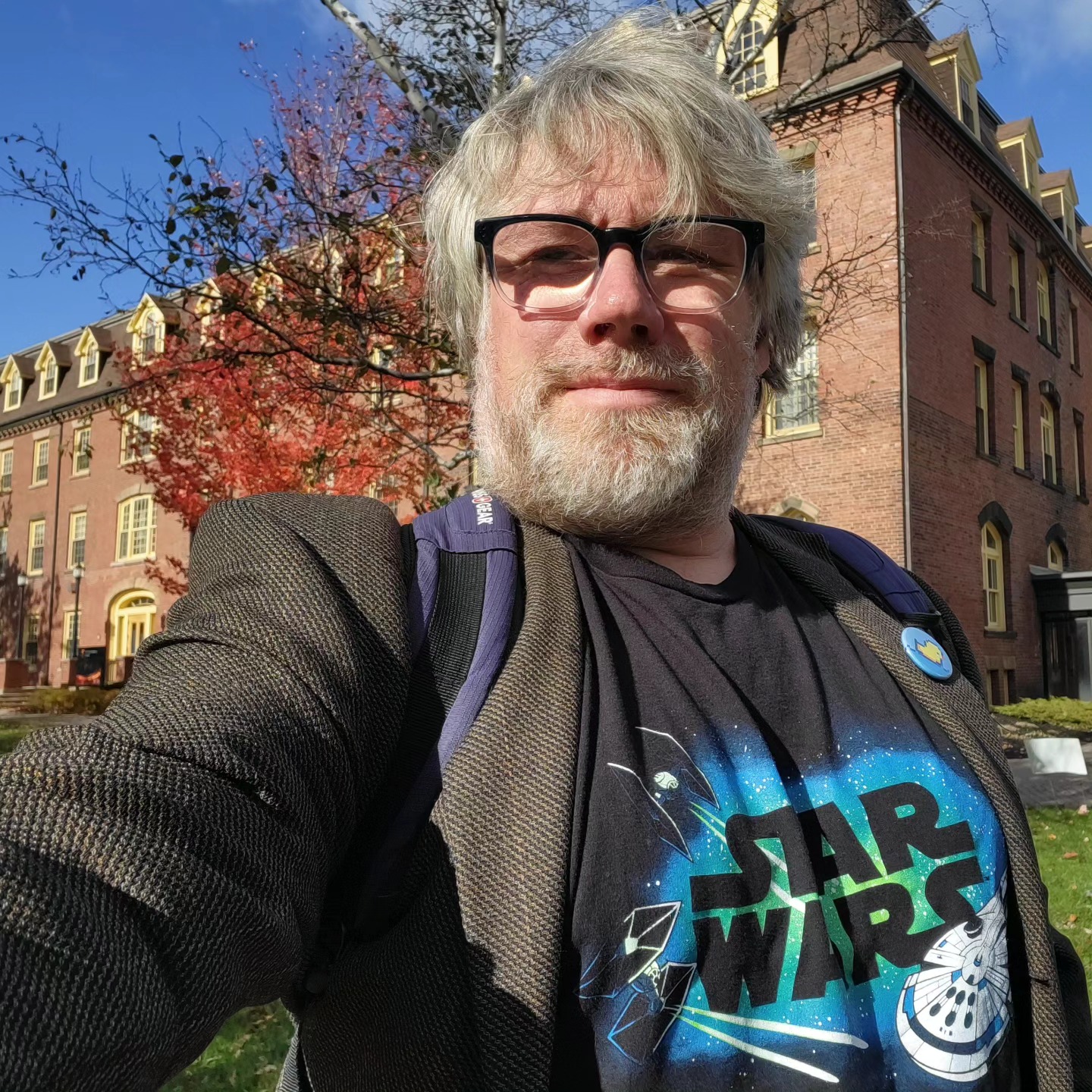
Dr. Brenton Dickieson, receiving an award from the Honourable Dr. Wade MacLaughlan,
President Emeritus of UPEI
I believe in open access scholarship. Because of this, since 2011 I have made A Pilgrim in Narnia free with nearly 1,000 posts on faith, fiction, and fantasy. Please consider sharing my work so others can enjoy it.
The Mythies are out! The Mythopoeic Society released its 2025 Awards shortlists earlier this year in five categories (three fiction and two scholarship awards). Award committee members read each of the books in their category and then vote on which works should receive the coveted Mythopoeic Award. Here are the results (with US Amazon links–but ensure you order from your local independent bookstore):
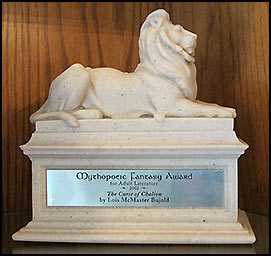
While a Hugo Award or a Grammy nod would probably help my career a bit more, the Mythopoeic Award is the one that I secretly want to win. By “secret,” I mean that I tell everyone I meet about my life’s dream to have that Aslan statue on my shelf with my other awards (like the Teacher of the Year awards, scholarship awards, and that 8th-place ribbon in Morris Dancing Mockery I won in Cheltenham some years back).
You will notice that the award winners are not all bestsellers. Some of the fiction is new to me, and the Myth and Fantasy Studies Award-winner was up against a master in the field (Jack Zipes), as well as a groundbreaking collection on speculative poetry, a popular book about epic fantasy, and a brilliant translation: Enheduanna: The Complete Poems of the World’s First Author by Sophus Helle (2023). These awards are different in the way they value the “mythopoeic” elements–the life-giving, all-encompassing mythmaking essence of their particular story or focus of study. It’s pretty great, honestly, and I look forward to reading the winners.
After the award voting had closed, I posted my thoughts on the category where I worked with all of the finalists: the Inklings Studies scholarship award. This year’s slate of finalists was entirely Tolkien-focussed—four monograph (single-book) studies and a manuscript study. From my peculiar perspective, you can read all about the finalists here:
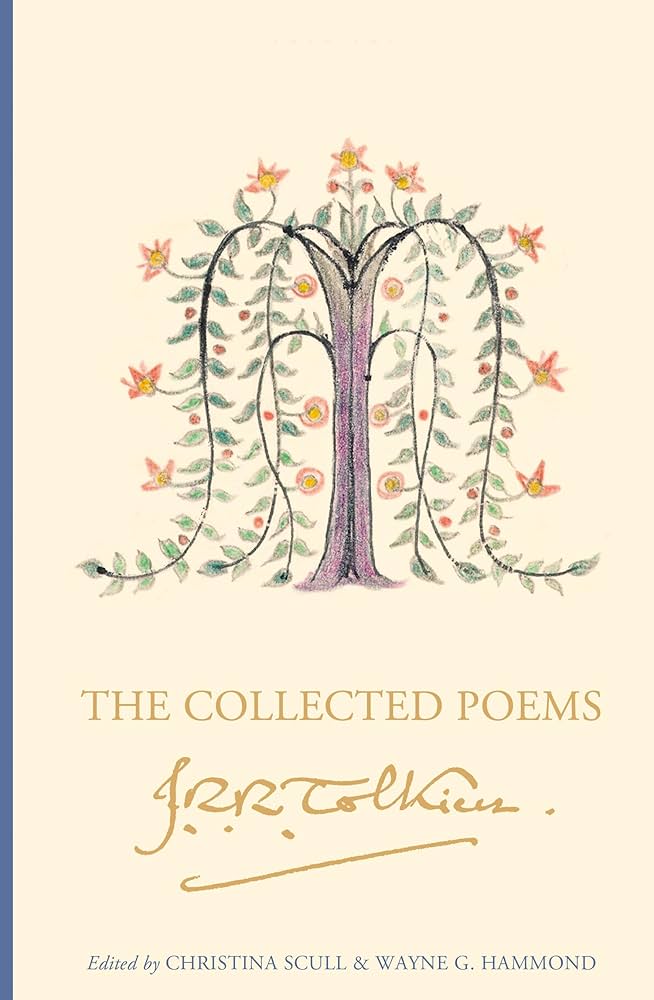
Given how strong some of these monographs were, I was mildly surprised–but far from astonished–that the winner was the edited three-volume collection by Christina Scull and Wayne G. Hammond, The Collected Poems of J.R.R. Tolkien(2024). I haven’t said a lot about these texts because I am working on a larger review (sort of a visual invitation to the series). I feel blessed to say that this beautifully designed and carefully edited 3-volume boxset has a treasured place on my shelf.
As entire volumes are dedicated to Tolkien’s poetic works, it is not an exhaustive collection. The selection seems to me wise, careful, and illustrative of Tolkien’s poetic life and work. I used the volume for a careful look at Tolkien’s WWI-era period, including his first forays into verse, his growth and development as a student, his artistic fellowship (the TCBS), and his lifelong editorial and revision habits.
The Collected Poems is, in my view, the most important Tolkien legendarium literary event since The Collected Letters, The History of Middle-earth, and The Nature of Middle-earth. Scull and Hammond have done us a tremendous service—and did it well.
For the full 2025 Mythopoeic Awards press release, see here. For more information about the Mythopoeic Awards, visit the Awards section of the Mythopoeic Society website. The Mythopoeic Society is made up of lovers of story. Some are professional scholars or writers, while most are avid readers who enjoy the community. Consider getting involved.
I believe in open access scholarship. Because of this, since 2011 I have made A Pilgrim in Narnia free with nearly 1,000 posts on faith, fiction, and fantasy. Please consider sharing my work so others can enjoy it.
It is award season! The Mythopoeic Society released its 2025 Awards shortlists earlier this year. While I had good intentions to read a lot more, there is only one category I was able to work through all of the finalists: the Inklings Studies scholarship award. This year’s slate of finalists was entirely Tolkien-focussed—four monograph (single-book) studies and a manuscript study. I have submitted my votes for the Inklings Studies Scholarship Award committee, but I have not heard the results yet. In this in-between moment, I decided to share my brief notes on each book—not full reviews, but something like a chatty “stub.”
For more information about the Mythopoeic Awards, visit the Awards section of the Mythopoeic Society website. The winners of this year’s awards will be announced at the Online Midsummer Seminar 2025, “More Perilous and Fair: Women and Gender in Mythopoeic Fantasy,” which runs August 2-3, 2025, on Zoom and Discord.
Mythopoeic Scholarship Award for Inklings Studies: 2025 Finalists
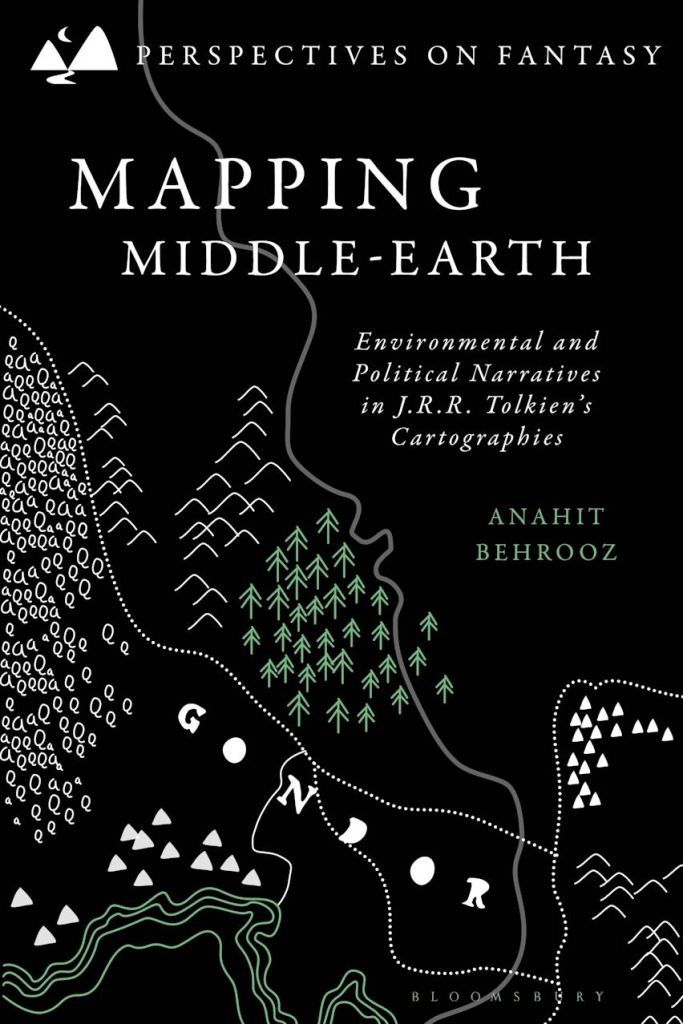
Mapping Middle-earth: Environmental and Political Narratives in J.R.R. Tolkien’s Cartographies by Anahit Behrooz (2023)
From the book’s website:
“In this cutting-edge study of Tolkien’s most critically neglected maps, Anahit Behrooz examines how cartography has traditionally been bound up in facilitating power.”
This is quite a great description, actually—knowing that “maps” and “cartography” have more and less literal and metaphorical meanings in the study. And all to the good. I am a lover of maps and someone who has been toying with GIS-mapping for professional pleasure. Berhooz was able to bring me immediately “there” in their project. Maps really are “political” as they chart (see what I did there?) the ways that humans interact with the non-human (land, creatures, seas, skies, the cosmos etc.).
Mapping Middle-earth is a smart book that plays with mapping in all kinds of ways. The introduction and chapter one are some of the best things I’ve read. The book closes with a compelling reading on Tolkien, race, culture, and empire (which pairs well with Stuart’s volume on race and racism). I simply didn’t resonate with the middle chapters, but this could be my issue rather than a problem with the book. I have a love-hate relationship with the F-word in scholarship–Foucault–which is a critical part of chapter three. I’m not always fussy about the conversation partners (theorists) Berhooz uses, but I think it works well overall.
It is also worth noting that the “Bloomsbury Perspectives on Fantasy,” edited by Matthew Sangster and Dimitra Fimi, is becoming a globally leading series in the field.
Tolkien’s Transformative Women: Art in Triptych by Annie Brust (2024)
In Tolkien’s Transformative Women, Annie Brust is trying to invite us into a broader vision of Tolkien’s female characters in Middle-earth using an artistic lens. I am quite sympathetic with her project as I find Tolkien’s work quite visual (imagistic, well-woven, etc.), I like the characters as material for study, and gender questions are important to me.
Ultimately, though, I wasn’t sure what to do with this book, exactly. I quite like the way Brust invites us into her material, and her “Triptych” is an elegant structure for the book. Although I am certain that this is a book that took years of careful work to write and produce, I had trouble keeping it together as a whole and (I blush to say) I wanted “more.” While this book covers quite a few women characters, perhaps it needed fewer with a deeper look.
But that is to wish for a different book. I hesitate to say more because I feel like the book grows on me with use, but I was not allowed that time as the copy I got was borrowed on a limited time. Moreover, as I reread the Introduction I have on PDF, I look forward to spending more time here as a study, testing out the themes and arguments.
The Collected Poems of J.R.R. Tolkien edited by Christina Scull and Wayne G. Hammond(2024, 3 volumes)
I will say little right now about this volume as I am working on a larger post. That said, this beautiful 3-volume boxset was my favourite Christmas gift in the last few years.
As entire volumes are dedicated to Tolkien’s poetic works, it is not an exhaustive collection. The selection seems to me wise, careful, and illustrative of Tolkien’s poetic life and work. I used the volume for a careful look at Tolkien’s WWI-era period, including his first forays into verse, his growth and development as a student, his artistic fellowship (the TCBS), and his lifelong editorial and revision habits.
The Collected Poems is, in my view, the most important Tolkien legendarium literary event since The Collected Letters, The History of Middle-earth, and The Nature of Middle-earth. Scull and Hammond have done us a tremendous service—and did it well.
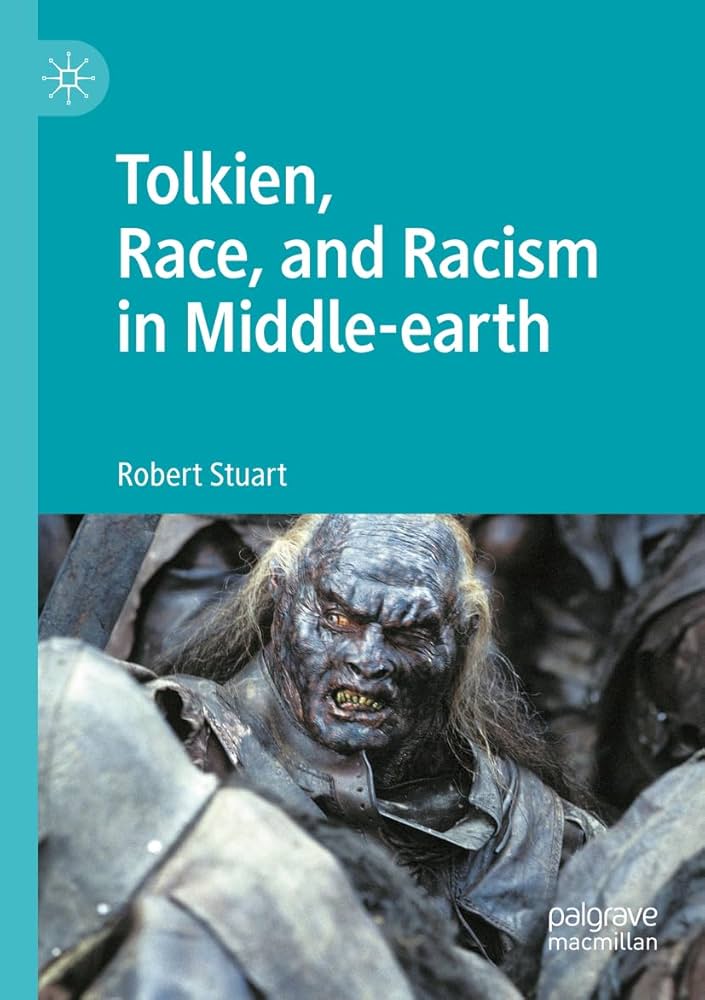
Tolkien, Race, and Racism in Middle-earth by Robert Stuart (2022)
The description for this volume begins by claiming it is:
is the first systematic examination of how Tolkien understood racial issues, how race manifests in his oeuvre, and how race in Middle-earth, his imaginary realm, has been understood, criticized, and appropriated by others.
Tolkien, Race, and Racism in Middle-earth is each of these things . . . but it is not the first of any of these claims. Scholars greater than I can tell you whether it is the first to bring these features together. However, for engaged readers, it is a quick-moving, informative, and theory-rooted study of these issues.
The advert for this book then says that the key question is this: “Was Tolkien racist?” Well, this is kind of nonsense. What Stuart does is present for us a careful argument that, given these definitions of race, racism, and racialization, these are the ways that Tolkien was a racist, a racialist, and a resistor of—or even a liberator from—the shackles that these social constructs place upon the racialized.
This volume was my least favourite to read—partly because of the way the material is presented but also because of the heart-stripping nature of the material. I think these are good kinds of studies, but to make “Is Tolkien a racist?” the question at the spearpoint of his study arrogates a kind of spiritual mastery that I cannot, myself, claim to have acquired. I will have more sympathy for studies like these when the author clearly acknowledges they are choosing their future regrets now and they cannot know the ways that they will be viewed as clearly “racist” or “racialist” in the future.
Still, because Stuart so thoroughly engages with the scholarly community, it is one of the most useful books for researchers to begin a study of the kind in race, culture, Indigenous studies, or political studies. Tolkien, Race, and Racism is the work of many years—well-researched and far more carefully written than the (invitingly) witty and occasionally (less-welcome) flippant tone belies. I like spreadsheet books like this one for reference, study, teaching, and provocation rather than sitting down and reading it cover-to-cover for enjoyment (as I did). Finally, Stuart’s self-introduction in the volume is important to remember.
J.R.R. Tolkien’s Utopianism and the Classics by Hamish Williams
Hamish Williams, a classics scholar and colleague in the faculty of the SPACE program at Signum University, has produced a thoughtful, well-written, and engaging linked-collection of essays, which could perhaps be called J.R.R.Tolkien’s Eutopianism and the Classics. Like Tolkien’s “eucatastrophe”—the good catastrophe—Williams plays with similar roots of the language to tease out ideas.
I quite enjoyed this intelligent, well-written study in overlapping areas of interest. Williams’ concern is the Greco-Roman corpus of classical literature as it potentially echoes, refigures, or otherwise appears in Tolkien’s work. There are three main movements in the volume:
1) Lapsarian Narratives: The Decline and Fall of Utopian Communities in Middle-earth
2) Hospitality Narratives: The Ideal of the Home in an Odyssean Hobbit
3) Sublime Narratives: Classical Transcendence in Nature and beyond in The Fellowship of the Ring
I resonated most with #2, which opened up a new depth of understanding in both The Hobbit and The Odyssey–though it was the chapter I was initially least interested in. I am hesitant to go all the way with Williams in #3–not because the books don’t share a sense of the transcendent/sublime–but I felt least certain of the pattern appearing in Hobbit and LotR.
This is an academic text that slips into humour from time to time—always a plus for me. There are some academic-y words that cracked my mental palate, but it is mostly accessible to folks with a general reading in the Greco-Roman classics and who love Tolkien’s texts.
It also pairs particularly well with Berhooz.
I believe in open access scholarship. Because of this, since 2011 I have made A Pilgrim in Narnia free with nearly 1,000 posts on faith, fiction, and fantasy. Please consider sharing my work so others can enjoy it.
I am at one of these professional moments where I am thinking about what I believe are, for me, the essential values, methods, and attitudes of an educator. My Teaching and Research Dossier is dozens of pages, but it is also a living document, always growing and moving. At the centre of this mammoth document is my Statement of Teaching Philosophy, which I am retooling now. As I read my own dossier, I see that I have some news that I had not shared with you, dear readers.
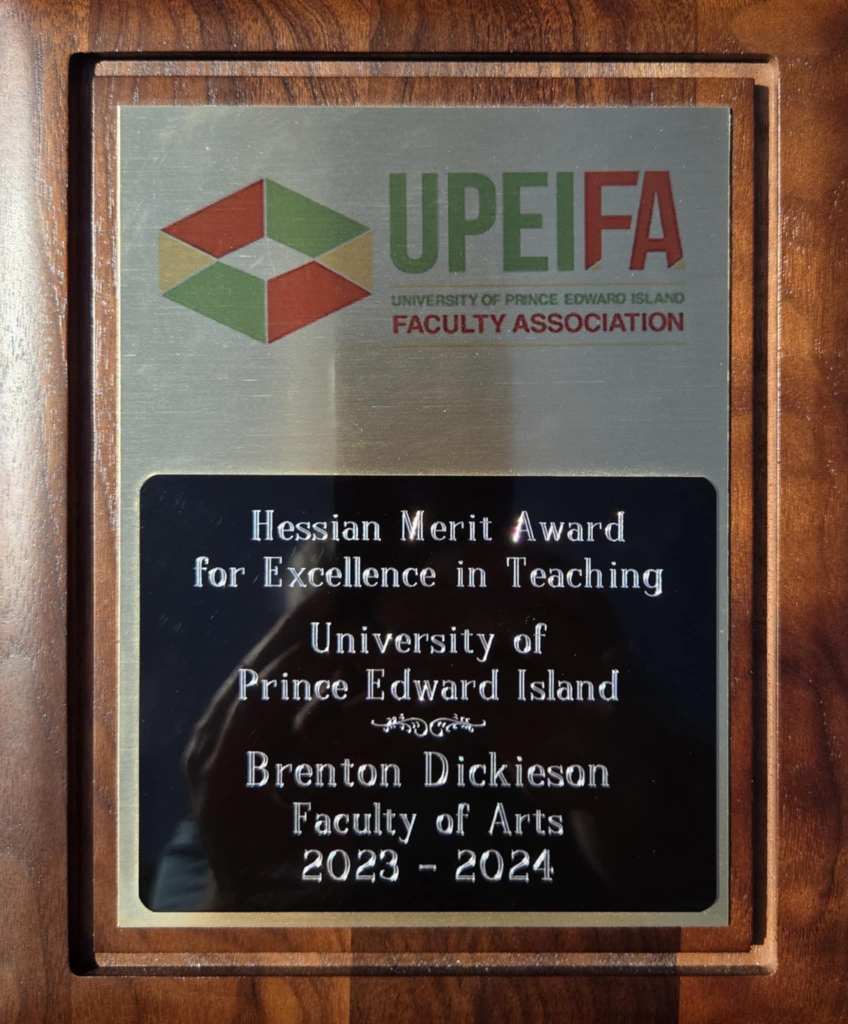
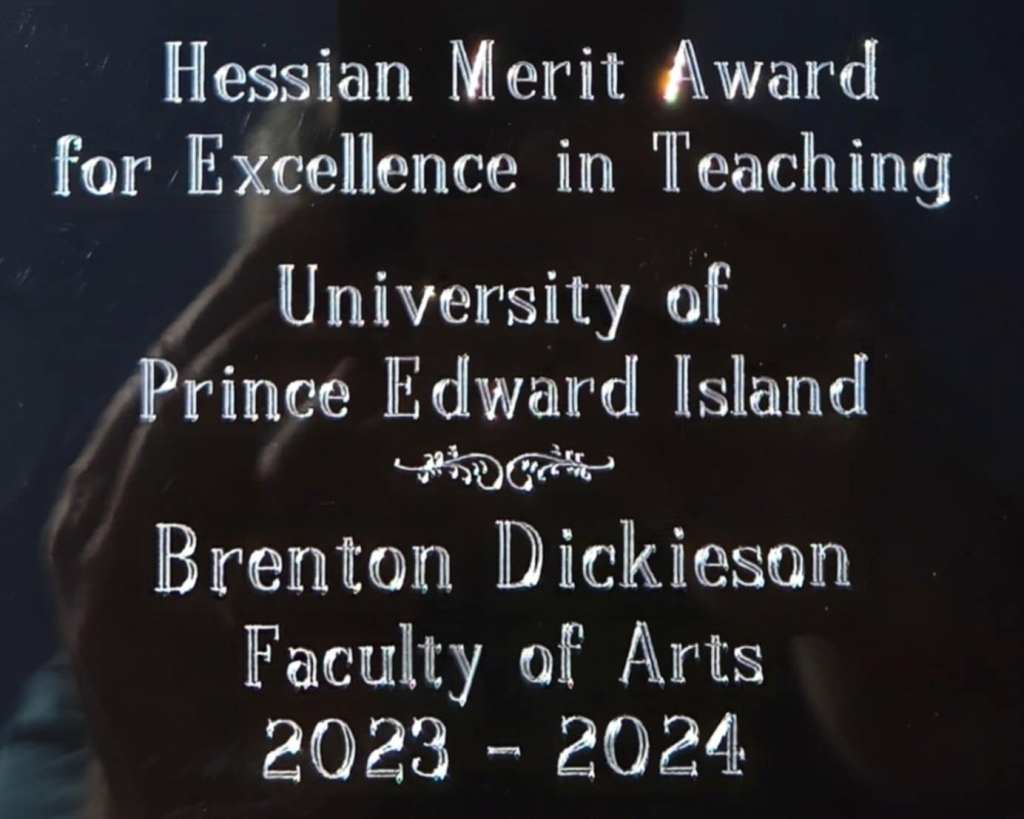
I won the Teacher of the Year award! This Hessian Teaching Award is of a different weight than the specialized teaching award from earlier this year, the MacLauchlan Prize for Effective Writing. Graciously provided by the Hessian family, the UPEI Faculty Association chooses research, service, and teaching awards–including one dedicated to sessional lectures (contract faculty, what you might call adjuncts).
I was pleased to be nominated and thrilled to win.
Apparantly, though, I wasn’t quite as motivated to share the story. This award is actually from the previous school year. If I could blame it on humility, I would. Rather, I’ve celebrated my other awards, like the Elizabeth R. Epperly Award for Outstanding Early Career Paper (see what I did there?). Somehow, though, after a wonderful evening with colleagues and friends–and a lovely spread of Prince Edward Island edibles–I kind of forgot about it.
So, here I am telling you all: I won one of the Prof of the Year awards last year!
While sharing this news is cool enough to warrant its own post, I thought I would also share excerpts from my Statement of Teaching Philosophy. The voice of this version is for a Canadian public university setting. I have left out some aspects of the Philosophy about which I am actively doing research and writing, such as Authentic Intelligence in the Age of AI (noted here), Equity, Diversity, and Inclusion (EDI), Indegeneity and the University Curriculum, and much of what I would say about Inquiry-Based Learning in Higher Education, which I talked about last week. I have also left out references to most inside-voice dialogues within the schools I teach in, and added a few pics and links.
The Statement is a two-dimensional document meant to capture the three-dimensional reality of teaching. Still, I hope this gives a hint of what I am thinking about as someone who loves teaching and learning.
Best to all, Brenton
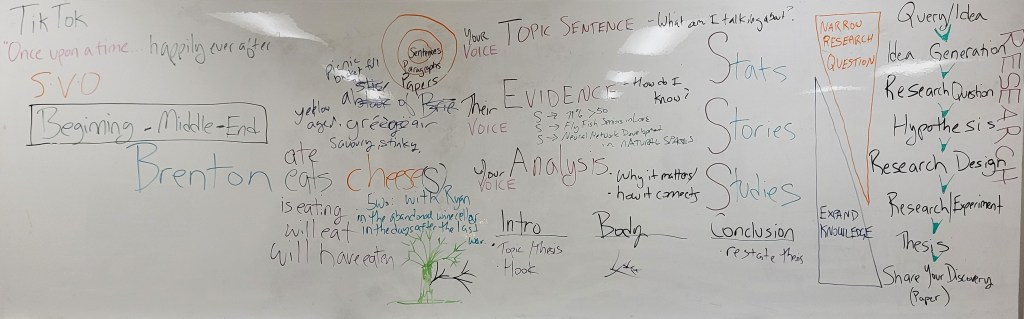
White Board from “The Fairy Story Lecture” by Brenton Dickieson
I love lecturing. The lecture-preparation process disciplines my mind to concentrate on the key elements of the lesson and the learning needs of the students. Even as doubts began to haunt my mind about the efficacy of “the lecture” as the prime meridian of higher education methodology, my relentless pursuit of innovating teaching methods worked to enhance, diversify, and fill out my lecturing style. All the while, though, my doubts increased.
And through it all, I could never shake the memory of a twenty-minute walk with a Newfoundland lad when I was an undergraduate student. In the summer before my senior year, I was part of a large team of students working in a small Newfoundland town. That summer, I was a guitarist in a music team, a camp counsellor, and youth teacher under the leadership of other students, the producer and lead writer of a twelve-episode children’s television series, Patches and Friends.
That summer, I met a ten-year-old camper whose home did not have electricity. He was crawling the walls at camp, so a director asked me to take him for a walk. Excited for the opportunity, he squeezed his shoes onto his feet, leaving the clay-caked laces to click along the deck boards. When we stopped at a picnic table, I decided to teach him how to tie his shoes. It only took twenty minutes, but no one had ever taken that time with him before. After that discovery of the essentials of human learning–relationships–why would I ever have confidence in a sole expert-at-the-front-disseminating-data model of an educator? It could be that the most intensive and effective educational moment of that boy’s life happened outside of the camp curriculum with a few moments of adult attention.
I have never thought that humans were disembodied minds needing a data update. Why would my teaching style treat them that way? Moreover, every one of my students is carrying around at least one all-the-information-in-the-world machine—a cell phone, tablet, or computer. So why would I prioritize data transfer as a teacher in the Age of AI?
I have come to believe that, contrary to what culture teaches us, the people I work with are not at heart analysts, teachers, researchers, workers, and students. People are primarily people. Students are not lines in a spreadsheet. They are not their student numbers. I have seen the limited results of treating workers and students as cogs in some social or institutional machine. Instead of continuing this modern fantasy of learning automation and social efficiency, I have come to believe that education is not an input:output data processing challenge. Education is an encounter with other human beings in the world. Education can only ever take place in the meaningful connections we have with one another.
Myriad experiences have confirmed my belief that, ultimately, teaching is student care. All aspects of scholarship begin with the respect I have for the dignity of individual students and an awareness of the deeply personal journey they are on.
The implications of this pedagogical starting point are intriguing. Indeed, this Statement of Teaching Philosophy is a brief mind map of the consequences of a student-centred approach to higher education. Seeing students as primarily people has provided opportunities for student care and collegiality that extend my work as a classroom teacher and allow me to learn from my students as we explore great and troubling questions together.
Curiosity about the human-learning process drives all of my teaching and research, my engagement with diverse kinds of students, and the traditional and innovative ways I design my curricula.
If teaching is student care, what do we do in the classroom?
I believe that University should be an encounter with ideas, tools for discovery, and other people. As an educator, I curate a classroom environment for transformational experiences. My key pedagogical frameworks keep moving out from this point. As educators talk about “flipping the classroom,” there is a battle in the world of pedagogy between philosophies of outcome-based education and student-centred approaches. There is also an emerging tension between the University as a protected space for critical inquiry and the University as a job preparation tool. I do not believe that these philosophies of education are either universally applicable or diametrically opposed. Different courses and programs will have different outcome requirements and explorative opportunities.
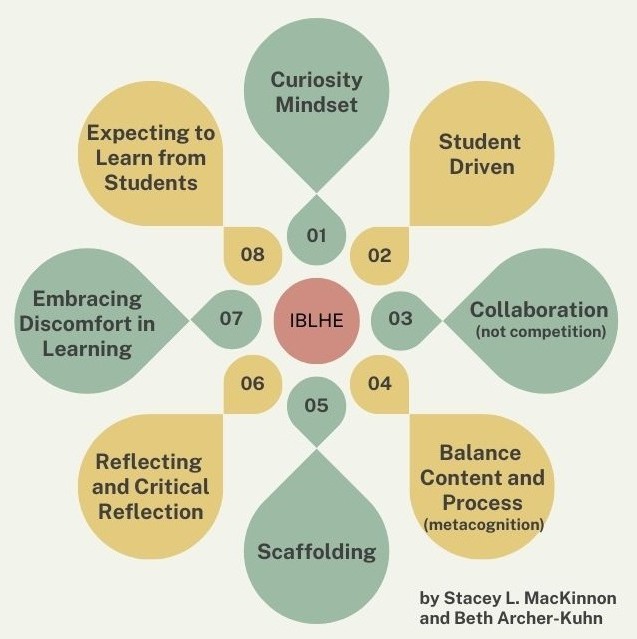
Out of both my pedagogical principles and my observations of the craft of teaching, I have discovered an Inquiry-based Learning in Higher Education (IBL-ED) approach, which I talked about in the chapter that I posted about last week. IBL-HE reorients the roles of “teacher” and “student” by fostering a curiosity mindset through interactive, collaborative, and supportive student-centred learning. In this approach, we provide students with the opportunity, tools, and support to pose their own research questions, design their research methodologies, determine the best ways to share their learning, and reflect on the learning process. We spend more time as teachers providing formative feedback, allowing us to teach “at the elbow,” resulting in greater differentiated learning opportunities in our increasingly diverse classrooms.
Discovering this framework was, for me, like seeing my philosophy of education captured in a Table of Contents.
I have worked hard to engender good student-teacher relationships by being awake to their ways of learning and place in life. With student experience at the centre of my teaching, I intentionally create an atmosphere of “critical empathy” in the classroom. Students are invited to ask any question, knowing they do so within an ongoing personal conversation with colleagues, with the professor, and with the material. The study of literature—reading texts together—is ideal for developing the twin skills of critical thinking and inquiry, and my approach to teaching religious studies and philosophy is also question-driven. We want to give our students the space to learn how to ask the right questions and think through the great problems of human experience.
Throughout the past two years, there has been a good deal of panic about GenAI and education. Instead of running from the question, we integrated the personal and professional questions of the cultural moment in a way that was relevant to our course goals: equipping students to think and write critically, holistically, and empathically by using the tools of informed inquiry. We engage with big questions like “What is AI?” and “Is AI Possible,” combined with technical writing and research tutorials and discussions like “Mis/Dis/Malinformation” or “Are They Lying to Me?”
“Critical Thinking” has become a bit of a buzz term. To disarm the entropic effect of an essential skill, we use curiosity, differentiated learning, and metacognition to help students think creatively and critically. We trust that thinking critically will follow, even without the trademarked capital letters.
Brenton Dickieson receiving the Hessian Award (2024)
There is a lot of discussion today about the university’s role in shaping students for their work-life. This is a discussion that I have been a part of in my role as a university teacher, government researcher and policy writer, and student vocational counsellor—and as a student for most of my adult life. We are in a time of great change as the university is being redefined and the global marketplace continues to evolve. This change has only increased as we have opened the “classroom” to digital spaces during the ongoing COVID-19 crisis and the emergence of GenAI.
As much as the world around is in a period of accelerated transition, students themselves are also in a period of vast changes and development—perhaps changing even faster than our hyper-speed culture. While a university education should excel at discipline-specific and interdisciplinary preparation, our teaching should meet students in the midst of their life journeys. The classical idea of vocation—a sense of calling—can inform our conversations with students as we create classroom space where they can explore who they are, where they fit in the world, and what roles they want to fulfill in personal, family, work, and community life.
It is, perhaps, easy to forget that university is “real life” to our students, not just a preparation for real life. Post-graduation employment, career development, and success in community leadership depend on the critical thinking, research and writing, oral communications, and literacy skills we provide them in the classroom. However, this happens not merely in the skills we teach, but in our ability to provide a context where students can consciously shape their learning towards becoming successful leaders in the workforce. I aim to effectively use curiosity-based approaches that are open to a wide variety of project outcomes, and to focus essential skills development in ways that are most effective for developing life-integrated competencies in leadership, communication, and critical thinking. From the very first day of class, I urge students to become pilots of their university experience by identifying the skills they are gaining and by seeking opportunities to enhance their education through work, research, and volunteering.
Thinking vocationally and methodologically, different courses and programs will have different outcome requirements and explorative opportunities. Indeed, a multi-modal approach to education adapts ongoing exploration of critical ideas with both the tools and methods available and the intention of shaping students to be workplace engaged. The goal is to create an interactive atmosphere that identifies the skills a student can achieve in the classroom while protecting that space for being curious, exploring ideas, curating self-understanding, and thinking critically.
Indeed, those things are precisely the kinds of identifiable skills that employers require. When we combine the ideas of critical inquiry and learning goals, we can facilitate a student experience that allows learners to shape their own educational encounters. This student-driven and multi-model approach is, I believe, in continuity with classic Liberal Arts education where discussions of literature, history, and culture make the humanities an exciting and broad arena of discovery.
Therefore, I do not feel like it is my job merely to impart knowledge. I do impart knowledge, of course, and my students sometimes feel overwhelmed by the complexity of theoretical approaches, the breadth of ideas, or the depth of texts. But my key job is to impart enthusiasm, to excite the imagination, to awaken dreams, and to help students mine the great depths of the human story. Ideally, then, I do not teach classes; instead, I teach students, allowing them to shape their transformational experience as organically as possible while being true to the curriculum.
Besides the practical advantages of a student-centred, curiosity-driven model, IBL-HE gives educators a tremendous amount of space to focus on our teaching strengths while getting support for our weaknesses. I love doing lectures and coming up with innovative ways to share content. However, by creating a culture of openness within the classroom where students are safe to explore and share, I have seen exponential growth in possibilities for student learning.
Practically speaking, this philosophy of teaching means augmenting the lecture and discussion model I have inherited with other teaching methods. Education should be relevant, not just economically and vocationally, but also personally and culturally. I passionately believe that each coming generation—and the generations seem to shorten with time—is charged with the task of changing the world for the better. This seems like a grand statement, but each cohort of students really does stand on the edge of new worlds. The university is a place that shapes the potential of the generation that is before us.
Thus, I am constantly seeking to develop my teaching skills—whether I am providing feedback, developing systems of learning, mentoring students, or concentrating on certain ideas or skills. I demonstrate this by the numerous workshops and seminars I have attended or led. I also seek to expand students’ experience through a variety of teaching methods, including:
Teacher led-discussion
Professor or student debates
Journaling, quick writes, mind-mapping, and other kinds of student response
Team discussions and break-out group activities (often with a shared tablet, whiteboard, or poster-board paper and markers)
Moodle discussion groups, blogs, wikis, glossaries, and video presentations
Blogging and social media interaction (student and professor)
Video and media integration, including YouTube tutorials, lecture supplements, course teasers, and “What’s Ahead” video correspondence
Live-taped lectures in various settings to augment lecture ideas or stimulate discussion, such as Stonehenge, a monastery, a cemetery, etc.
Class dramatic readings, monologues, and student improvised skits
Close readings of texts, films, and artwork
Improvised lectures from outlines designed to be responsive to at-the-moment student needs
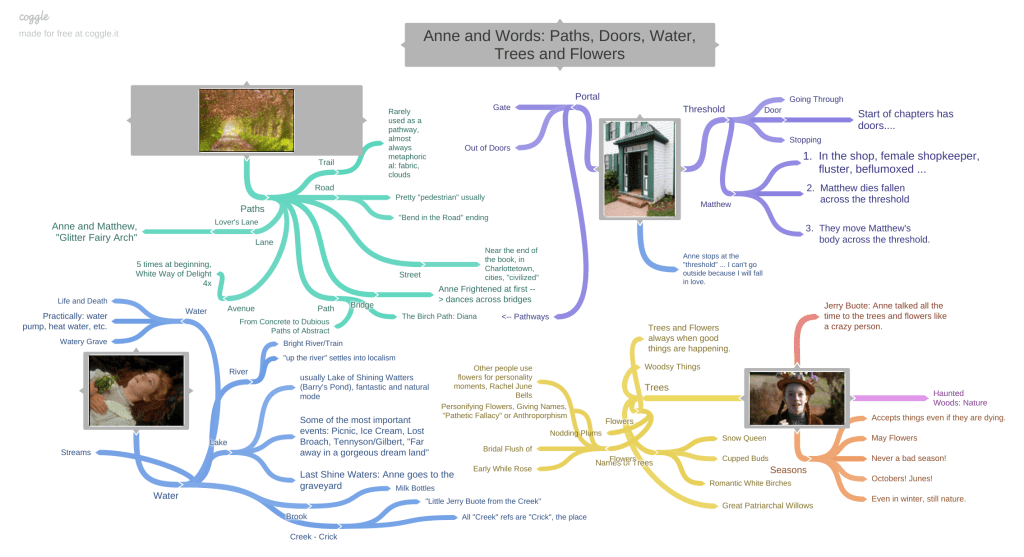
Various design tools: PowerPoint, Google Slides, Prezi, Coggle, Blackboard Collab, Canva
I have been working to provide certain students with an outline of the lecture so they can organize their thoughts and reduce anxiety
I purchased my own vibrantly coloured whiteboard markers to enrich my sketchy whiteboard markings
Thought-mapping, mind-mapping, and concept-map development as class exercises or material for lectures
Dozens of kinds of team-teaching
The use of various digital humanities tools, including Geographic Information Systems (GIS), AI experiments, and Digital Text analyses
Poetic, fictional, and other arts-based responses
Online teaching enhances some of these methods, challenges others, and offers opportunities for refinement at every point. For me, the critical difference is intentionality: Is the online course intentionally designed for that medium, or are we doing remote emergency education?
In any setting, I continually seek to develop these methods and hone my skills as a communicator and facilitator of learning. As the ultimate goal is student engagement, I will experiment with almost any creative endeavour to draw the students into the material.
As an emerging scholar with significant experience, I am excited about the opportunities to integrate the oft-separated academic pillars of research, teaching, community outreach, and service. Any university education that does not weave those worlds together is, I think, missing the opportunity before them. My scholarship exists both in academic forums as well as in blogs, articles, editorials, interviews, guest lectures, and podcasts. In continuity with my philosophy of education, I have extended the classroom and the research process into the worlds of social media. I am actively engaged on social media, rooting the conversation to my popular blog on faith, fantasy, and fiction (www.aPilgrimInNarnia.com), and extending my work as host of the Maudcast: The Podcast of the L.M. Montgomery Institute.
Admittedly, not every classroom experiment works swimmingly. For example, I was recently doing a section on FOMO: Fear of Missing Out. FOMO is a recent, in-vogue social quality that is usually connected to social media. As the students are much more connected to the digital social moment, I gave my planned lecture time to the class to teach me and one another what they know. I assigned a brief reading and then divided them into breakout groups with some discussion questions. Perhaps it was because of the time of year, or because they only pretended to prepare for class, but as each group was working to present their findings to the class as a whole, it was clear that they were not thinking about FOMO with any clear social media connections.
What should I do in the moment of a failed teaching activity? I could address the lack of preparation, or give them guidance to get back on track. Instead, I decided to follow their lead—as had intended. What resulted was a meaningful conversation about what it has been like for them to be immersed in school—sometimes continents away from home—and miss that stage of family life or fall out of step with their best friends from high school. Because I am open to learning from my students, even when in doubt, the “lecture” time was more intimate and valuable than what I had in mind.
Being willing to be a relevant, student-centred teacher requires active, ongoing attention to their learning and an ability to adapt quickly to changing environments.
I believe in open access scholarship. Because of this, since 2011 I have made A Pilgrim in Narnia free with nearly 1,000 posts on faith, fiction, and fantasy. Please consider sharing my work so others can enjoy it.













 A Pilgrim in Narnia