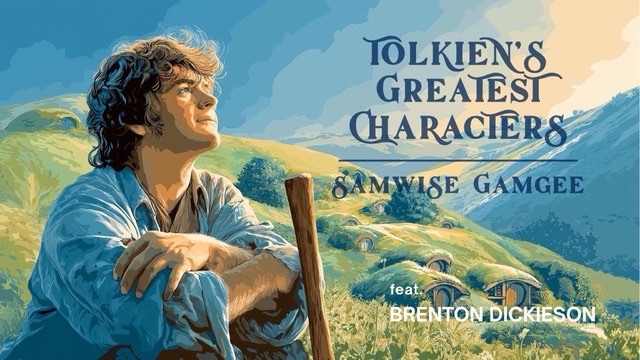
Ah, Sam, what a character. When Derek Holser reached out to me about his Tolkien’s Greatest Characters series on the Plunge, Samwise Gamgee came first to mind. The most hobbitish of heroes, the gardening guardian, most faithful companion of the fellowship, Sam is worth talking about.
So we did. Derek is a good friend, and you can see how friendship takes a central place in our Sam-centred podcast. You can find the Substack link here, and I’ve embedded the YouTube, Spotify, Apple Podcasts, and other links of interest below.
I believe in open access scholarship. Because of this, since 2011 I have made A Pilgrim in Narnia free with nearly 1,000 posts on faith, fiction, and fantasy. Please consider sharing my work so others can enjoy it.
I am busily prepping for the talk I announced last week for the C.S. Lewis and Kindred Spirits (CSLKS) conference in Iași, Romania: “’At war with all wild things’: A Settler’s Reflections on C.S. Lewis and Indigenous Spaces.” As I write, I am also thinking about how best to share the material once it emerges in a finished form. This has been one of the most challenging projects I have undertaken in terms of finding the right words–really, trying to find the “story” that emerges from my research and reading.
In my thought process, I realize that I never shared my previous conference talk: “Passports to the Geography of Fairyland: Can C.S. Lewis and L.M. Montgomery be Kindred Spirits?” As it is a light and fun topic, I hope this is something that fans of either or both authors might enjoy!
“Passports to the Geography of Fairyland: Can C.S. Lewis and L.M. Montgomery be Kindred Spirits?”
While few children’s books have sold more than C.S. Lewis’ 1950 fairy-tale, The Lion, the Witch and the Wardrobe—with perhaps 85,000,000 copies in print—L.M. Montgomery’s 1909 Anne of Green Gables was immediately popular on a global level. With translations within a year of publication, this first Anne book has sold approximately 50,000,000 copies. Is there any connection between these two giant figures in English children’s writing?
Lewis and Montgomery wrote in different genres—Lewis as a fantasist, Montgomery as a realist. Lewis came from the British academy while Montgomery remained a rural Canadian writer.
Despite their differences, the title of “The C.S. Lewis and Kindred Spirits Society” invites comparison. The vibrant, red-headed orphan of Montgomery’s Anne of Green Gables is a wiry, curious, precocious character who dearly desires to discover a “kindred spirit,” someone who shares her senses of wonder and adventure. Anne’s creator, Lucy Maud Montgomery, once claimed that she possessed “a passport to the geography of fairyland.” In her novels, Anne transforms the mundane world of Prince Edward Island much like C.S. Lewis’ wardrobe invites readers to another world. Despite all their differences, and though they never met or read each other’s books, Montgomery and Lewis are kindred spirits, for they share this imaginative passport to fairy-worlds of transformation and joy.
Some parts of my work to read further on this topic:
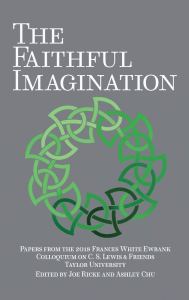
Brenton D.G. Dickieson, “C.S. Lewis’s Theory of Sehnsucht as a Tool for Theorizing L.M. Montgomery’s Experience of ‘The Flash,’” The Faithful Imagination (ed. Joe Ricke and Ashley Chu; Winged Lion Press, 2019), pp. 144-165.
Reach out to me if any of that is unavailable to you.
If you are interested in the talk but haven’t read the Anne of Green Gables series or the Emily trilogy, beginning with the brilliant Emily of New Moon, you can catch some of the “spirit of Anne” in the trailers to two television productions: the Kevin Sullivan 1980s mini-series that creates the visual imagination of “Anne” for most Canadians of my age, and the darker, artistic, troubling and beautiful recent Anne with an E serial on CBC/Netflix.
And though it sounds a bit maniacal out of context, Anne of Green Gables: The Musical has run for decades at the Confederation Centre of the Arts in Charlottetown, Prince Edward Island (until COVID broke the record run). Here is the “Kindred Spirits” song. In the “MaudCast: The Official Podcast of the L.M. Montgomery Institute,” And, by the way, a new season is launching this fall.
Though I don’t think we are ready to call Montgomery and Lewis “bosom friends,” here are some “kindred spirit” scenes from the Anne with an E series that captures Anne and Diana’s friendship (though I think Anne Shirley’s truest kindred spirit are those of “the race that knows Joseph” in Anne’s House of Dreams, Leslie Moore in particular).
I believe in open access scholarship. Because of this, since 2011 I have made A Pilgrim in Narnia free with nearly 1,000 posts on faith, fiction, and fantasy. Please consider sharing my work so others can enjoy it.
It is chilly and pouring rain here in Prince Edward Island … normal weather for the week of Remembrance Day. Anne of Green Gables and I both love Island Octobers, but I struggle with the dying-dark and dreary days of November. I was hoping a change of atmosphere would bring an uplift this November. I have been planning to attend the C.S. Lewis conference at Alexandru Ioan Cuza University in Iași, Romania. Besides a different experience of light, I was hoping to meet good friends, colleagues, and students in this burgeoning intellectual centre of Eastern Europe.
Alas, I cannot make it Iași, and I am feeling a bit Eeyore-ish about missing out. There is an online registration for the hybrid conference–check it out here–and the folks there are kind enough to let me present digitally. Still, it isn’t the same thing … and I haven’t had the heart to look up the weather in Iași today.
The unwieldy title of the Octavia Butler paper reveals how I’m struggling with a concept that is somewhat beyond myself. I keep talking about it from different angles and perspectives and finding new approaches, but not getting to the point of definitively saying the thing I need to say. Some people write to tell the world; some write to hear their own voices in a land of echoes. I write, at least initially, to discover what I know.
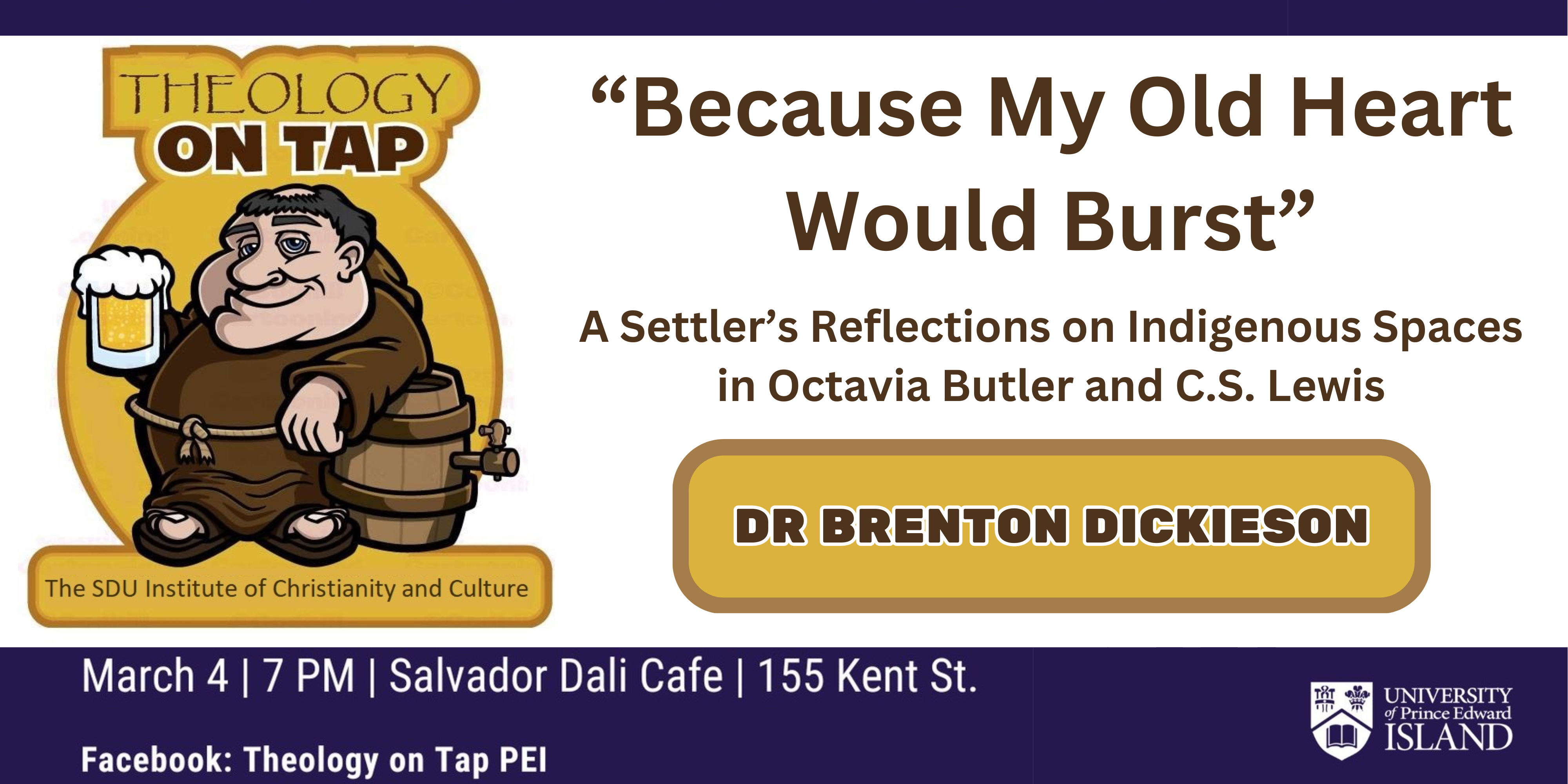
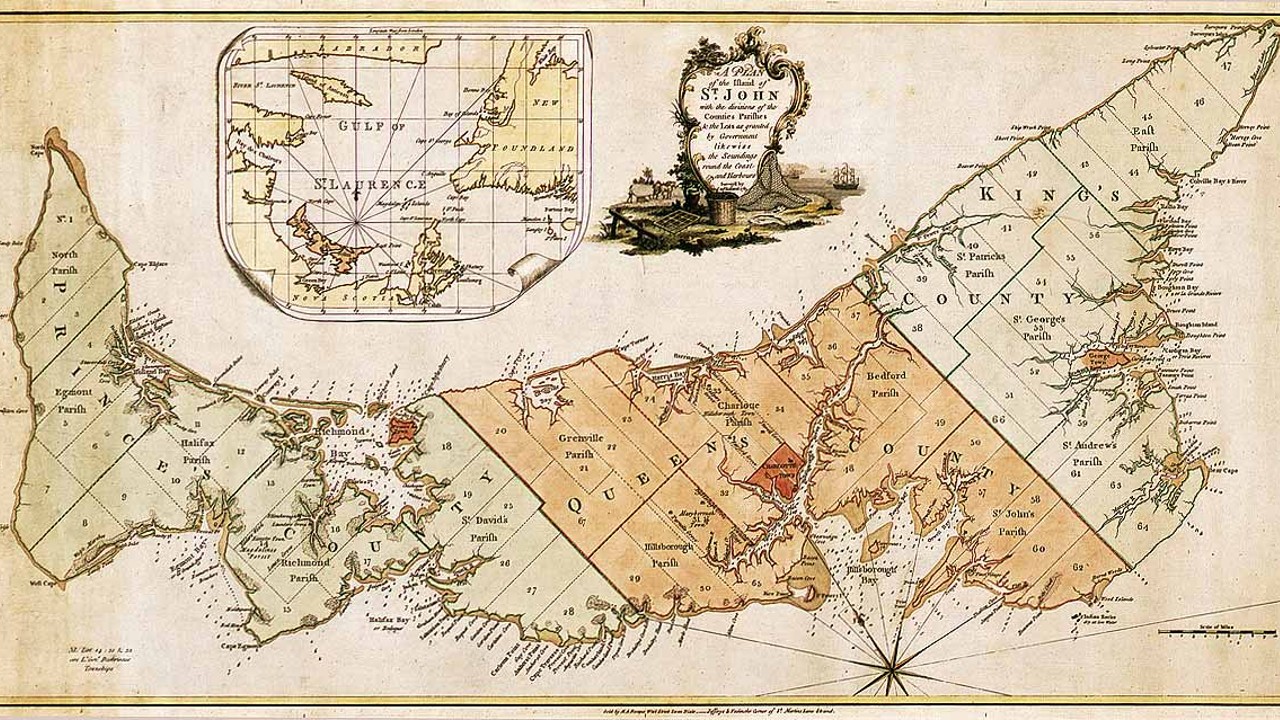
For my Romania talk, I am situating C.S. Lewis in a distinctly Indigenous studies space. In part, it is an echo of my Theology on Tap local talk back in the winter, which was not recorded, unfortunately. I gave that public lecture in this place I inhabit: Prince Edward Island, Epekwitk to the local Mi’kmaq folks, Abegweit in L.M. Montgomery‘s imagination, the Land of the Red Soil, the Cradle in the Waves, the Million Acre Garden of the Gulf. I am the descendant of settlers who, in their attempt to make life beautiful and make the world better, were part of a movement that caused great harm to the people who were already living here. In this way, I am a settler, but Epekwitk is my home. I am a native Prince Edward Islander, but not one of our Indigenous peoples. I belong nowhere else. It is deeply unsettling.
In Romania, I’m attempting to put all of this in a context that has a completely different kind of history from Canada and the United States, and then show some ways that C.S. Lewis speaks into this conversation–not as an expert, but with beauty, truth, and goodness. Romania has its own stories of conquest, displacement, and development, and I would love to learn more about them. However, in reading Narnia closely, I want to try to connect that audience to this Island space in which I endeavour to live well as it inhabits me.
If the talk is taped and I can share it, I will do so. Meanwhile, here is the title and a somewhat expanded description (though I already see that I am saying too much for a 15-minute talk!). I look forward to comments or seeing you online!
“At war with all wild things”: A Settler’s Reflections on C.S. Lewis and Indigenous Spaces
From the beginning of his fiction project in “Bleheris,” “Loki Bound,” and Dymer, to his mature and popular fantasy novels, C.S. Lewis is always writing about tyranny. When Lucy first finds her way into that magical world, the land is under the yoke of a century-long winter. We learn about this “always winter and never Christmas” reign through the stories and folklore of the Narnians as they live lives of resisting or giving in to the pretender’s cruel reign. Slaves are liberated in The Voyage of the Dawn Treader, The Silver Chair, and The Horse and His Boy as Narnia negotiates its spaces between and among empires and colonies. In The Last Battle, these pressures finally collapse as colonial powers flood into Narnia through ways opened by conspirators.
But in Prince Caspian, we learn of the tyranny from various angles. In this “Return to Narnia,” a remnant of Old Narnia tells the successor to the tyrannical throne—the Telmarine Prince Caspian himself—about Narnia’s long history of loss and suffering under tyranny. We hear the stories of oppressors and the oppressed as old Narnia comes alive again in an alliance of settlers and indigenous peoples.
Prince Caspian’s peculiar position of colonial power in sympathy with the colonized invites us to reimagine Lewis’ fiction in a context where we are coming alive to the stories of lands and their peoples that where often destroyed or forced underground in what Lewis called the death-consumed “social sewerage system” of European colonial rule. Lewis gives space to the heart-breaking tales of the indigenous folk, like Dr. Cornelius, without pretending that colonial systems of government and social development can simply be uncreated.
In this paper, I walk beside Prince Caspian as he considers his role in the ancestral and ongoing (though illicit) land of the Narnians, while I live in the ancestral and ongoing territory of the Mi’kmaq people of Prince Edward Island. Europeans came and conquered, driving the Old Islanders, who once had the wealth of all of these lands and rivers and woods, into tiny hamlets, claiming to rule this place, re-educating the people, and, like the Telmarines, suppressing the old stories and wild ways of being in the world. Without ignoring the cultural distance of time and space between my kitchen table and C.S. Lewis’ writing desk, Lewis helps us reimagine a way beyond course binaries that dominate (especially American) social discourse—guilty and innocent, ignorance and knowledge, despair and naivete—and invites us to listen, live, and lead in transformational ways within the tensions of our ever-changing colonial spaces
Prince Caspian, hungry for magic, mystery, and meaning, thrills when he discovers that “All you have heard about Old Narnia is true. It is not the land of Men. It is the country of Aslan, the country of the Waking Trees and Visible Naiads, of Fauns and Satyrs, of Dwarfs and Giants, of the gods and the Centaurs, of Talking Beasts.” But then he discovers that “It is you Telmarines who silenced the beasts and the trees and the fountains, and who killed and drove away the Dwarfs and Fauns, and are now trying to cover up even the memory of them.”
I believe in open access scholarship. Because of this, since 2011 I have made A Pilgrim in Narnia free with nearly 1,000 posts on faith, fiction, and fantasy. Please consider sharing my work so others can enjoy it.
We are once again in the season of Signum University’s Fall Fundraising Campaign. This annual event features a variety of entertainment, including (starting last week) a launch party, giveaways, and a LoTRO Marathon. On November 22nd, the famous Webathon takes place, featuring President Corey Olsen’s State of the University Address, as well as various talks and festivities. My first connection with these “amusements” was back when Stranger Things was beginning, and I joined Prof. Corey Olsen (the Tolkien Prof) for an online video conversation about this brilliant new show. It was pretty great fun (see vid at the bottom of this note).
The Webathon also features the SPACE Fall Showcase — a series of 30-minute capsules for various teachers and facilitators to pitch their modules to potential students. I should also mention that I am teaching a class on Narnia in February, so stay tuned.
All events will be streamed live on Signum University YouTube and Twitch channels. You can find the full schedule here.
Meanwhile, here are some features that may intrigue you enough to invest in world-class online adult learning. Moreover, each of these four courses is taught by folks in whom I have great confidence:
“Star Warsand Resistance “from the intrepid American scholar, Amy Sturgis, who seems to have a new book out every year!
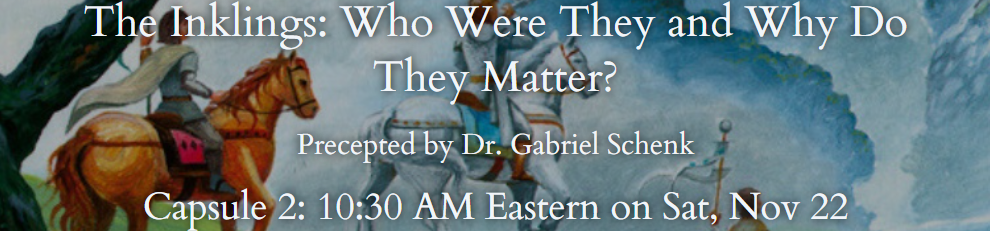
The highly anticipated “Inklings” course by Oxonian Gabriel Schenk–a contributor to A Pilgrim in Narnia–whose latest literature video reveals a secret portal to another world in the wilds of Oxford (check out his YouTube channel here, or find him on Instagram).
I was amazed how endearing the anime series Violet Evergarden was when I first encountered it. Bronwyn Rivera’s thesis filled out my understanding (see the video Thesis Theatre here), and now Bronwyn has teamed up with Anni Foasberg to offer a SPACE module for exploring that world even more deeply.
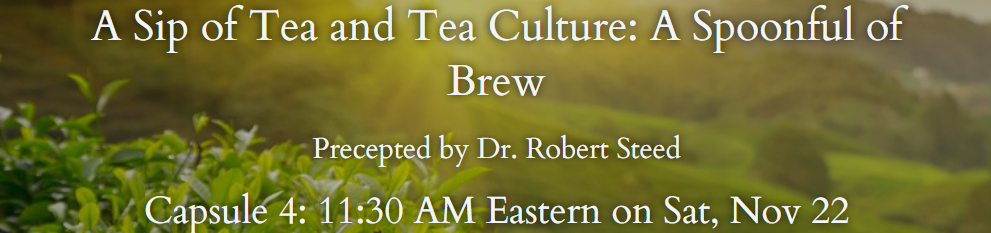
And … “Tea.” That’s right, tea. I’ve had the opportunity to work with Robert Steed on Japanese culture and religion, and now he is offering a unique perspective on tea culture in East Asia and beyond. Robert is a very popular professor, and I suspect this will be a lovely and informative course.
This capsule will preview the upcoming Rebellions Are Built On Hope: A Star Wars Series three-module adventure that begins in SPACE in February 2026. How do Andor (2022, 2025), Rogue One: A Star Wars Story (2016), and Star Wars, Episode IV: A New Hope (1977) fit together to tell a story? How does this story reflect a deep engagement with history, philosophy, and political thought? How does hope fuel resistance? Join Dr. Amy H. Sturgis for this “sneak peek” into a future SPACE series about a galaxy far, far away.
You may have read the works of J.R.R. Tolkien and C.S. Lewis, but did you know that they were also lifelong friends and colleagues at Oxford University, and part of a group of writers called The Inklings? In this capsule we’ll explore who The Inklings were – including the important but less famous members Charles Williams and Owen Barfield – and why their work still matters to us today.
“The war is over, and Violet Evergarden needs a job.” In this SPACE capsule, join us for a discussion about the stunning, coming-of-age fantasy anime Violet Evergarden. We’ll follow the story of a former soldier who finds forgiveness, healing, and self-worth through the unassuming power of writing letters.
In this capsule, Dr. Steed will first give a general description of the module as a whole, and then delve into some of the specifics of tea classification, situating those classifications within larger cultural frameworks.
I believe in open access scholarship. Because of this, since 2011 I have made A Pilgrim in Narnia free with nearly 1,000 posts on faith, fiction, and fantasy. Please consider sharing my work so others can enjoy it.
Hello, fair folk, far and near! I wanted to let you know about one of the handful of talks and papers that have occupied a good deal of my research and reading in 2025. Next week’s Monster Fest in Halifax, NS is an international festival focused on the construction of monsters and monstrosity. St. Mary’s University is hosting us for a few days of monsterology. I’m looking forward to discussions of Frankenmetrics, Leviathan, Teratophilia, Djinn and Ghouls, Cat Ladies and Trad Wives, a vampire autoethnography, and the “Unholy Trinity of Vampires, Zombies, and Copyright Law. A colleague of mine, Ariana Patey, is speaking about “’Absurd, Race-Crazed Monster’: Monstrosity, Horror and Transformation in the Catholic Alt-Right.”
I’m not sure if I have the courage, energy, or interest in self-punishment to attend the Monster’s Ball. And I’m a little concerned about the 15-minute limit (I had planned for 20). Still, I am working on something that is in continuity with a theme I have been thinking about for some time, but have not found the time to articulate.
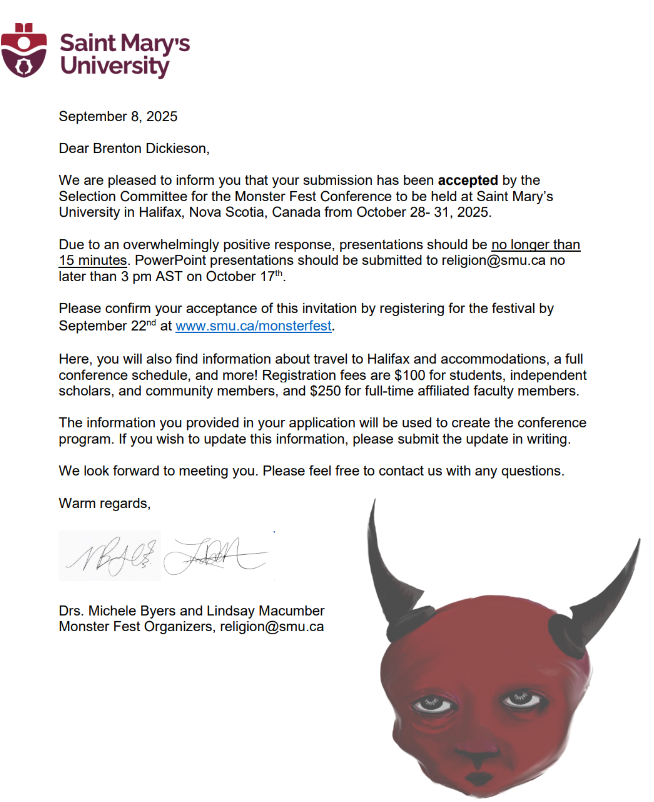
If you are local, check it out at https://www.smu.ca/monsterfest/. And here is my abstract, for anyone who may be interested, followed by my acceptance letter!
“The Monster in Me: C.S. Lewis’ Inversion of the Monstrous Other in his Speculative Fiction” Brenton D.G. Dickieson, PhD
In his earliest unpublished, unknown, and disregarded fiction, C.S. Lewis’ protagonists encounter grotesque, chimerical, and abhuman otherness: the Mothlight of Yesterday, the unseen Bethrelladoom, the half-blind all-father, a misformed teratogenic bastard, dragons of fire and ice, giants of despair and madness, and—somewhat on the nose—Nazi-sympathizing dwarfs. Whether writing as an atheist philosopher or a Christian seeker, however, the true enemies the protagonists flee are God and their own hearts.
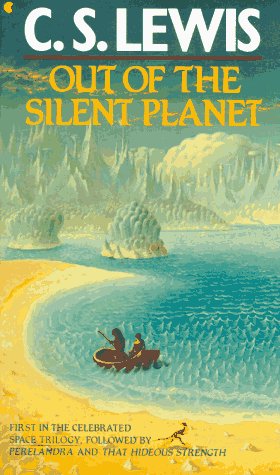
In Lewis’ first popular science fiction, Out of the Silent Planet (1938), the timid Cambridge philologist, Dr. Ransom, is kidnapped by an aristocratic scientific team in their attempt to colonize Malacandra (Mars) through the subjugation or eradication of the planet’s three evolutionarily distinct sentient-sapient species—human-like in intelligence but abominably uncanny in form. Fleeing from his English captors and the alien bogies of his imagination, Ransom encounters true “humanity” among indigenous Malacandrians. His idyllic life shatters when his comrades are murdered by classical European colonial invention—an English rifle—and Ransom must face the real monsters at last.
C.S. Lewis’ sometimes troubling relationship between monstrosity and alterity includes an element of prophetic self-critique that is critical to understanding the nature of temptation in The Screwtape Letters, the heart of each quest in Narnia, and the technocratic evil of his dystopic writings. This paper draws the line of continuity through his early fiction into his more mature corpus, demonstrating that “I” as the reader will always misunderstand the “other” in Lewis’ speculative universes unless I consider the monster in me.
I believe in open access scholarship. Because of this, since 2011 I have made A Pilgrim in Narnia free with nearly 1,000 posts on faith, fiction, and fantasy. Please consider sharing my work so others can enjoy it.










 A Pilgrim in Narnia