Why Did Star Wars Stick? #MayThe4thBeWithYou #StarWarsDay

star wars logoAs much as we wonder about it, it’s a question that is not perfectly easy to answer. Cheesy lines, over-the-top acting, zippers up the back of the monster’s costume–how many films just like it have found their way into the Betamax bins of history?

And those were originals! There aren’t many true fans who love all 11 feature films–the “trinal triplicities” and the two one-off films–not to mention Star Wars books and serials beyond count. Everyone has something that trips them up in the universe they love. For me it is Hayden Christensen–the brooding emo-menace of Episode II that is worse, even, than the dead-on-the-production-floor film, Ewoks in Las Vegas. Worse even than Jar Jar Binks.

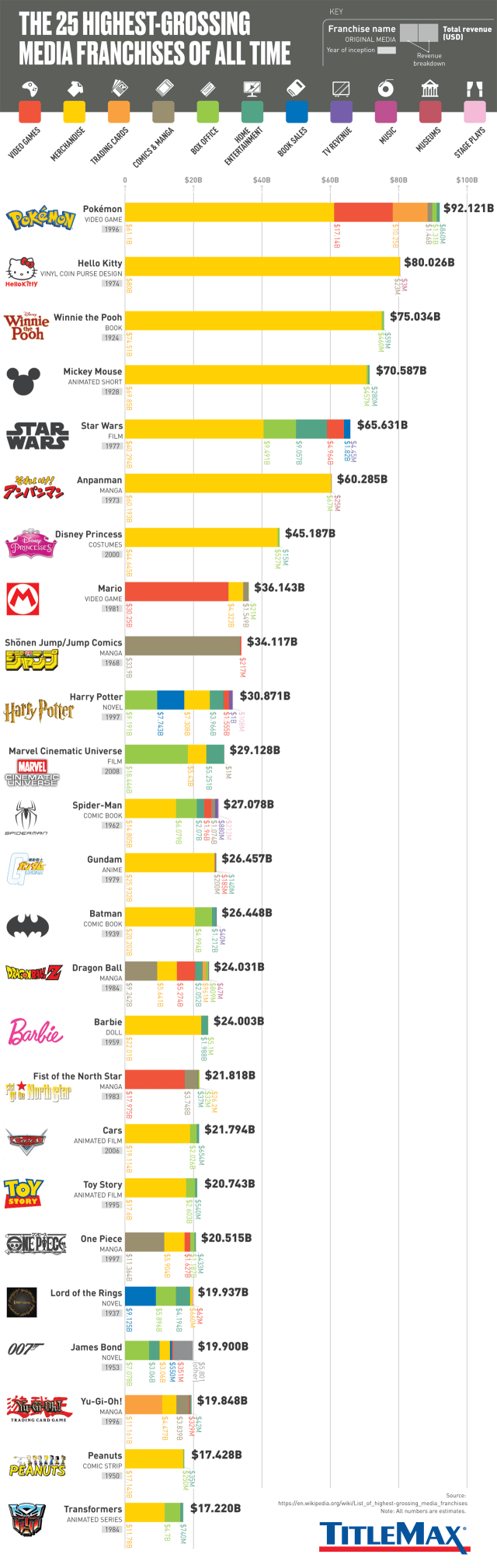
Yet, Star Wars lives–not only lives, but thrives, growing in popularity as its universe of characters grows. While the Marvel Universe films have become the kings of the opening weekend, Star Wars is still a giant in a land of grasshoppers. Star Wars still beats out Harry Potter, Bond, The Lord of the Rings, and all the other comic book cinematic empires. It’s hard to beat the Japanese for pop culture or children’s entertainment for eager consumers. In total media franchise sales Pokémon and Hello Kitty lead the world, with Winnie-the-Pooh and Micky not far behind. When it comes to total economic impact, Star Wars continues to outpace Harry Potter and the Marvel Cinematic Universe combines (see the infographic below).

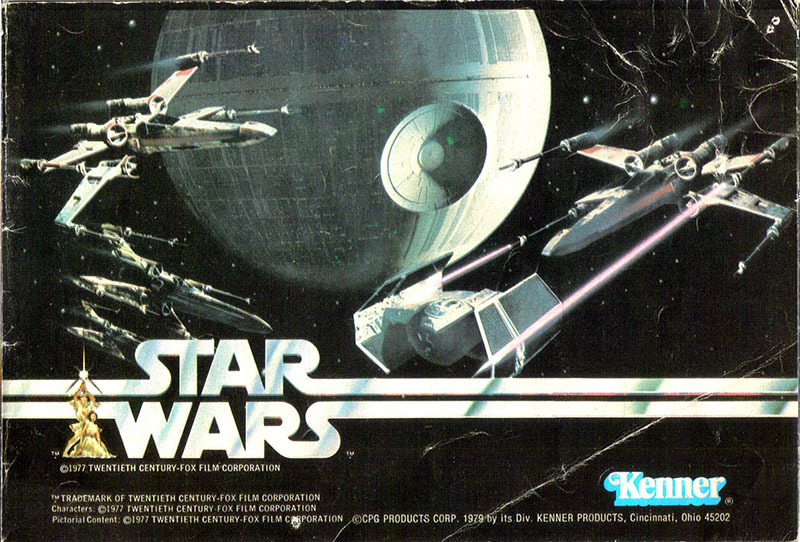
Let’s be honest: I still wish I had an ’80s classic Millennium Falcon. I lived in great envy for a great many years.

Why did Star Wars stick? If we are to believe the writers of That ’70s Show, it is the keen action and the super-duper special effects. But there is also something more. Watch the first little bit of the famous ’70s Show episode, “A New Hope.”

The entire episode is filled with nostalgia and hilarious throwbacks to the original series. The nostalgia continues to this day, from reproductions of Star Wars lunch boxes to celebrated Goodwill discoveries of Chewy pyjamas and broken lightsabers. Though it was almost lost in the incredibly painful second film of the prequel series, Attack of the Clones, the third episode, Revenge of the Sith, begins to recover the things we loved most about the original three.e

Almost. It is still a painful, painful prequel, but the empire moved on with its own strengths and weaknesses in the sequel trilogy. Perhaps you disagree. The Last Jedi was a complex and perhaps failed film, though one I quite loved. The first two parts of the sequel are echoes or mirrors of the original series, and the Rise of Skywalker conclusion brings that saga to a close. Critics are mixed on the way the series concludes, but fans are deeply torn. The trilogy that concludes the Skywalker trilogy is cinematically brilliant but the storylines don’t always land. Some of the characters brighten up and fill out that world, while others fall with a thud.

Personally, I think the Skywalker Saga closes the 2010s–the decade of nostalgia–pretty well. I love these films, even as digital waggery and character fails replace stage acting and zippers on costumes. I am content with what we have, even having loved the standalone Rogue One–you gotta love a director who has the courage to kill almost every character on his payroll. And although Ron Howard is always better with his partner Brian Grazer, Solo, one of the most expensive films ever made, deserved my $15.

I recognize that a lot of this is memory building and nostalgia–no doubt enhanced by the fact that even if I could get to a theatre, there isn’t anything of this calibre worth watching that we might complain about. Nostalgia is pretty important right now.

But I don’t think that’s a problem. We see this in the tone set by the very first J.J. Abrams episode, The Force Awakens. Predictably, it was filled with nostalgic moments:

“Chewy, we’re home.” Classic.

Über critical fans did not like it, I think. To them, it looked like a commercial grab for the fans of the past blended with a technological capability George Lucas could only have dreamed of. Personally, I loved the new characters and think the visual technologies have finally found their home.

There are problems in the logic of the series and the storylines. Star Wars still fails to answer its own question of providential luck–characters in The Force Awakens find each other across staggering distances or in buildings of near-infinite complexity–and Rogue One, despite its apocalyptic air, still carries that part of the myth on. But I like how the final trilogy is paced, and although there are huge gaps, and a gaff or two, it fits well into the Star Wars universe. More than nostalgic, The Force Awakens is framed up like a remake of A New Hope.

Imperial-class Star Destroyers wrenched into the sands of an alien world, Darth Vader’s mask from the flames, R2D2, the ping-pwang of laser fire: nostalgia, certainly. The deconstruction of the old series in The Last Jedi only adds to the nostalgia, even as it usurps it. But, nostalgia for what? There has to be something at the core of the series, beyond cheese and lights. Why has Star Wars stuck with us?

I think the answer is hidden in this long lost trailer from 1977.

In the days after Saturday Night Live and Spaceballs and The Simpsons, it’s hard not to imagine going into the theatre in 1977 and expecting a spoof. Perhaps we’ve lost our innocence as a culture these days.

And it is also easy to forget how far the art and science of special effects has come. When you live in a generation where you can use shareware software to stage an at-home light sabre battle for Youtube, 20th-century effects won’t impress us much. Think of Hugo, The Life of Pi, Inception, The Jungle Book, and Harry Potter–an almost random collection of films from this decade from five different genres that have special effects unlike anything imagined by the human race in my childhood.
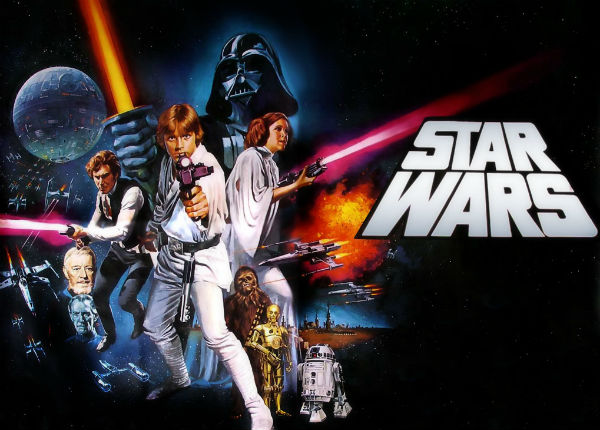
star wars posterBut it isn’t just effects is it?.

The films that visually impressed me the most growing up–Toy Story, the Lord of the Rings trilogy, The Matrix, Shrek, and, more recently, Inception–had more to them than technology. 2012 is a good example of a film with no story and a pretty dumb premise but pretty good effects.

No, I think the reason we love Star Wars is that it goes deeper into our cultural consciousness than we can imagine. Look at the stunning statements made by the trailer:

“an adventure unlike anything on your planet”

“the story of a boy, a girl, and a universe”

“a big, sprawling space saga of rebellion and romance”

“it’s a spectacle light years ahead of its time”

“it’s an epic of heroes and villains and aliens from a thousand worlds”

“a billion years in the making: Star Wars”

Then the flash of light.
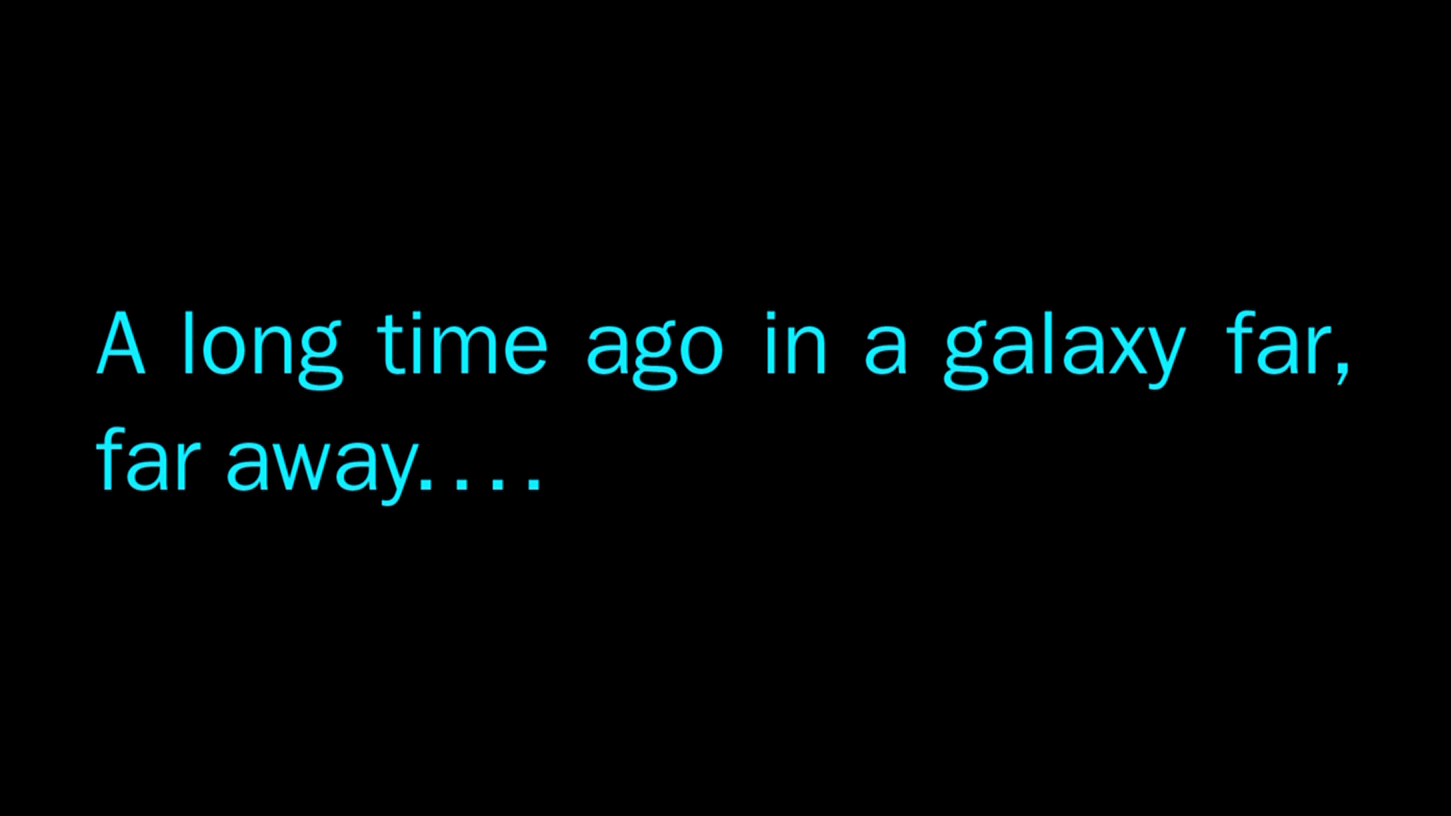
A_long_time_ago prologueGeorge Lucas is, I think, at the deepest level, a mythmaker. He certainly is a genius SciFi world-builder. He takes the universe-changing work of Larry Niven and Frank Herbert to a new level with his own mythic Empire. But while Ringworld and Dune are set in the future, Star Wars, like The Lord of the Rings, is set in the deep past.

Star Wars isn’t just adventure. Star Wars is mythology.

In this sense, I think that as much as George Lucas relies on the SF masters, he is also a deep reader of the master myth-maker: J.R.R. Tolkien. Tolkien understood the project of mythopoiea at the most intimate level, shaping Middle-earth out of a worldview that is entirely consistent with itself. Moreover, Tolkien’s project does what myth always does: it tells us about the present world. Myths are never really buried in the past. True myths, the good ones, will resonate again and again through cultures that appear long after the myth-making culture has slipped into legend.

That’s why I think Star Wars has lasted. Beyond big names and big budgets and super-duper effects, when you watch Star Wars you get the sense that it really is a film “a billion years in the making.” It is a story that tells all our stories, a myth speaks to us today. For all their flaws, I think Rian Johnson and J.J. Abrams get the myth in us.

At the centre, then, it is not just about nostalgia–which is no bad thing–but about our deepest realities of being human.  May the 4th be With You always!
star wars box 1979

Plus, this is amazing:

The Infographic from TitleMax:
Posted in Fictional Worlds, Reviews | Tagged , , , , , , , , , , , , , , , | 23 Comments

A Thought on Unruly Wisdom on a Writing Day

Today is a writing day. It astounds me that, as a writer, I find setting aside an entire 9-hour workday for writing difficult. Even today, there was a cat to feed, a fire to light, lunches to make, emails to answer, student queries to unquery–a couple of hours of desk-clearing to find my way back to these words on a screen. And then I found out we were laundry-less as a family, and an appointment popped up. I missed a job yesterday that I needed to take care of. And one student query was unqueriable.

Whatever focussed, monastic imaginations I once had of a writer’s life, it is clear that I am destined to be someone who tinkers with words while embedded in a world of digital demands and family rhythms.

Writing day. Today is “paper day,” actually. I am thinking about whether I have something to say for Mythcon this summer–a digital conference for the first time in history. Mostly, I want to connect this summer as I’m sure I won’t be able to get from Prince Edward Island to Albuquerque, New Mexico next summer–about 44 hours by car each way. I am beginning the writing process of a paper for the Canadian-American Theological Association in late May. I have the “data,” the hard work of thinking and analyzing done. I can throw together a PowerPoint slideshow really easily. But I am considering presenting it as a personal essay, allowing my life to be part of the “data” set. It’s a risk, but it could be an interesting one. And I have a June Mythmoot keynote speech fermenting in my imagination–begun in the wee sma’s of an insomniac writing session during the winter. It is just sitting there in the back of my brain, waiting for me to pull it all into place.

Now, as I write out each of these projects that are buzzing in my imagination, I realize that I am avoiding a certain one. Really, my goal today is to start pulling together a paper I proposed 17 months ago for a conference that was supposed to happen last spring. It was to be a grand tour, my debutante ball as a recently minted PhD. First, a national academic conference in Ontario with a couple of societies I enjoy, presenting one paper from the book I have in draft form and one for a future book. Then down to the C.S. Lewis and Friends Colloquium at Taylor University–a highlight of my even years–to present something from my PhD thesis. Then to Wheaton, for a week of archival work at the Wade. Then home. A 60-hour round trip all told (including visits with friends in St. John, Montreal, Toronto, and Indianapolis), where I propose some ideas for the academic community, reconnect with my friends, dig deep into research, and launch myself as an academic looking for a university position.

Alas, we have had all manner of apocalypses since those heady days of 2019 and my debutante ball was inevitably delayed. I wonder….

Ah, there, I have done it again: I have avoided the project that I am avoiding.

True, it is a good narrative technique to introduce an idea and then look away from it while simultaneously building a quiet case for the idea. In this moment, however, it is sheer procrastination. This is because the paper that I proposed ever and long ago has migrated in my mind. I woke up this morning thinking that I had moved on from it altogether, and wishing I had simply cancelled instead of taking the one-year postponement. Here before me is the task, however, and now is the time to look at this project and see what I can do with it.

As so often is the case, things are not how I had imagined them.

I had thought I had lost the plot on this paper. Intriguingly, as I look at my proposal, it does not seem to me have as bad as I had feared. In fact, I see that I have something here. More than that, my instinct in proposing it was a good one. This isn’t a project that I am over with–like poor Jane Studdock in That Hideous Strength, who has lost the love of her grad work and no amount of good intentions and self-accusation can restart it again. No, that’s not the problem at all.

The problem is that this is a project that I will not really begin for a couple of years.

Is that \really much of a problem, though? Doesn’t this paper allow me to test the concept, to play with the idea a bit, to see if it carries credibility for the scholars I am meeting with? I think so.  This actually has potential!

But as my spirits are lifted by this possibility, I remember the peer-reviewer comments, which I conveniently did not save. I had glanced at them when they were returned with a confirmation 16 months ago, and have stored them in my mind as something negative. Indeed, they have grown so that in my imagination, they are something that seemed impossible to deal with at all. In my mind, their scholarly critiques now seem beyond me, impossible to meet as a collegial demand, a strain that takes the paper beyond its well-meant horizon.

Digging out the comments from an old email thread, once again, I see that my mind had taken these few fleeting words and built them into a solid edifice of concern. Both peer-reviewers were, in fact, very positive and supportive. There was only one thing touching on a critique in either comment, and it was that within my own proposal was a counter-current of thought that was worth exploring. It is actually a pretty smart observation–one that actually helps me see even grander possibilities for the larger project ahead.

But there is one line that catches me up as I read:

Perhaps one of the things that needs to be most in play in this discussion is a kind of phronēsis.

Once again, my imagination takes this line and moves on it before I have done fully thinking about it. Perhaps this is why I had allowed a negative feeling to grow over the months of this paper. What does this even mean?

So I looked up phronēsis.

As it turns out, there is no mystery there. I have been teaching my Greek students a solid definition of ϕρόνησις for years–a thoughtful but tangible wisdom, the proper distance between the twin madnesses of manic risk and fearful protectionism, the right foundation for good action in the world.

So I know the word, phronēsis, but the sentence is still hard to discern. In taking the time to think this through, however–and carefully rereading the peer-reviewer’s comments–I have finally come to appreciate what they are saying.

And it is pretty simple. This scholar is saying that there is a distinction in my work worth noting, but going too deeply down that road might be unruly, frenetic (ϕρενῑτικός). But if I show a bit of humorous wisdom (ϕρόνησις) to choose the right distance between opposite errors, I can create a nuanced reflection on my topic. It’s a cool comment after all. They are simply encouraging me to choose well where I focus my time.

It is good advice.

And now, as I sit and reflect on this project, even though it comes both too late and too early in my research, I realize that I am excited to dig in and see where it goes.

There is another lesson, too–at least one that is coming to me. I am always a bit tempted to ϕρενῑτικός it seems. I love the way that words flow down the screen, the way that ideas tumble out, the way that links are made when people seem to be looking the other way. Whether this peer-reviewer knows me or not, for me a path of ϕρόνησις will be to still that frenetic thinking–particularly those edifices of doubt that grow up in the imagination through neglect and fear.

This seems to me the path of wisdom.

Posted in Reflections | Tagged , , , , , | 4 Comments

Full Video of “Inklings of Imagination,” My Conversation in Romania with Kirstin Jeffrey Johnson and Malcolm Guite at the C.S. Lewis and Kindred Spirits Society

Romania Poster

This was such an excellent afternoon–afternoon for me, but evening for the folks in Iași,  Romania and the hundreds of folks that joined us in 15 other nations in the world. The C. S. Lewis and Kindred Spirits Society has been serving as a conversation point for Inklings scholarship and imaginative artistry in Eastern Europe. Canadian George MacDonald scholar Kirstin Jeffrey Johnson hosted what more than an hour and half of conversation with myself and scholar-poet-priest, Malcolm Guite–who I recently featured in this write-up on a brilliant poem about words. Here is the full video of the conversation (and the original announcement of details below). I hope you enjoy!

C. S. Lewis & Kindred Spirits Connected Presents ‘Inklings of Imagination’

On April 23rd at 7 pm EEST (4pm BST) ‘Inklings & Kindreds’ scholar Kirstin Jeffrey Johnson will host these two delightful raconteurs in an exploration of the value of imaginative literature generally, and why the work of ‘C. S. Lewis & Kindred Spirits’ specifically is significant for the world today. As highly regarded scholars for their work, these consummate teachers are equally admired amongst peers and students for their deep love of and playful enthusiasm for that material. For them it is not stuffy scholasticism, rather, it is the Stuff of Life.

The cup of tea/coffee is optional and local!

We are very much looking forward to seeing you.

On behalf of the Organising Team,
Denise Vasiliu
Lector, Alexandru Ioan Cuza University of Iasi
CEO of Adora Christi Foundation

Register Here

Biographies

The Revd Dr Malcolm Guite is a Fellow of Girton College Cambridge, where he was also chaplain. Now retired to focus on his poetry, performance, and academic writing, Malcolm continues as a visiting professor at such institutions as Regent College (Vancouver), Duke University, and Durham University. Malcolm has lived in Nigeria, Canada, and England.

Dr. Brenton Dickieson is host of the highly regarded ‘Pilgrim in Narnia’ blog, a free-lance writer, and associate professor at multiple universities including Regent College (Vancouver), University of PEI, and the online Signum University. Perhaps the only scholar of both the creator of Narnia and that of Anne of Green Gables, discussing ‘kindred spirits’ is truly Brenton’s language. Brenton has lived on two of Canada’s three coasts, and also in Japan.

For further introduction, visit:

Membership Information

The C. S. Lewis & Kindred Spirits Society was created in 2018 by the Agora Christi Foundation of Iași, Romania. In turn, the CSLKS Society has established a “Friends of C.S. Lewis & Kindred Spirits Society” to support the project of Agora Christi in cooperation with the English Department at the “Alexandru Ioan Cuza” University of Iași, organized around the study of the lives and works of the Inklings, beginning with C. S. Lewis and J. R. R. Tolkien. This project is not limited to Iași or Romania but has already reached post-communist Eastern Europe as well as Western Europe, Asia, and North America.

In November 2020, we hosted a C. S. Lewis & Kindred Spirits Connected ZOOM meeting on “Of this and other worlds: Narnia at 70” celebrating the 70th anniversary of the publication of The Lion, the Witch, and the Wardrobe, we produced our first newsletter in January 2020, and we hope to launch a CSLKS Society website soon.

Now, we are glad to announce that we will be sponsoring:

  • another C. S. Lewis & Kindred Spirits Connected ZOOM meeting on 23rd of April with a lively discussion between Inklings scholars Malcolm Guite and Brenton Dickieson, moderated by George MacDonald scholar Kirstin Jefferson, and
  • in November 2021- the 5th edition of the C. S. Lewis & Kindred Spirits International Interdisciplinary Conference, originally scheduled for November 2020 and postponed because of COVID19

Some of the papers given at the 2018 conference have been published in Linguaculture (Iași) Volume 10, Number 2, 2019, which can be accessed at http://journal.linguaculture.ro/archive/65-volume-10-number-2-2019.  Linguaculture, Volume 5, Number 2, 2014, also published several papers from previous meetings at http://journal.linguaculture.ro/archive/53-volume-5-number-2-2014. Articles from these volumes can be downloaded as pdfs.

We encourage all of you to support the work and mission of the C. S. Lewis & Kindred Spirits Society by becoming a member of the Friends of the CSLKS. Click here to become a member.

Posted in Reflections | Tagged , , , , | 9 Comments

Lewis and Tolkien among American Evangelicals: Guest Post by G. Connor Salter (Lewis Scholarship Series)

This guest blog by G. Connor Salter is a response to a series of pieces called “Why is Tolkien Scholarship Stronger than Lewis Scholarship?” (see parts 1, 2, and 3). There are some deep conversations within the comments section of the articles, but I also set the digital soap box out for others, and this is one of the responses. Connor holds a Bachelor of Science in Professional Writing from Taylor University, and works as a journalist in Colorado. As a freelance writer, he has published over 300 book reviews, primarily for The Evangelical Church Library Association. He presented an essay on C.S. Lewis and Terence Fisher at Taylor University’s 2018 Making Literature Conference, and released his first audio short story series, Tapes from the Crawlspace, in 2020.

As Brenton Dickieson noted recently on this blog, “Lewis is a deceptively accessible writer.” This means that not only do many people benefit from his work, but it’s easy to approach him at a simple level and not realize you’re dealing with a deeply intelligent scholar.

Speaking as an American who finished my undergrad at a small private evangelical college and now works in Christian publishing, I’ve found this creates interesting problems. On the one hand, I have friends and associates in the academy writing excellent things about Lewis and Tolkien. On the other hand, as a book reviewer, I’ve been alternatively amused and annoyed at how often Lewis gets cited (sometimes correctly, sometimes not) in popular Christian books.

In writing about why Tolkien scholarship is often stronger than Lewis scholarship, Brenton argues that “it was America that seized upon Lewis as a literary light, especially in education and the Christian community… As a result, many of the 25+ posthumously published Lewis volumes and the many reprints are popular and accessible books, largely pitched to Christian readers.”

This captures an important point: Lewis is often seen in American (particularly evangelical) circles as a great Christian thinker first and foremost. Evangelicals working in the academic sphere appreciate his scholarship, but this plays a small part in his American reputation. Lewis obviously matters a lot to American evangelicals, sometimes even being described as an “evangelical rock star”  or the closest thing evangelicals have to a saint. Many times though, Lewis has been used more like a mascot.

The problem with mascots is their reputation fluctuates with whatever they’re attached to. The popular idea of “who a writer is” can impact what direction research takes, because popular culture and the academy feed off each other. For example, Inklings scholar Sørina Higgins observed in 2018 that the Lord of the Rings and the Narnia movies have indirectly resurged scholarly interest in fellow Inkling Charles Williams.

People can also make writers into mascots when it doesn’t make sense on paper. Much has been said about how in the 1960s every anti-Vietnam protestor, Green Peace recruit or environmentalist seemed to either be reading Lord of the Rings or Frank Herbert’s Dune. A variety of scholars, both ones who interviewed Lord of the Rings fans in the 1960s and ones summing up the period later, have argued the student counterculture movement saw the hobbits as the ultimate nature-loving hippies. Obviously, there’s something odd about anti-war students choosing an epic fantasy with many pro-chivalry themes as their manifesto. The student counter-culture movement picked a side of Tolkien’s work that resonated with them and ran with it. In a similar way, American evangelicals have often resonated with certain sides of Lewis (his apologetics, his overtly religious fairy tales) and run with that interpretation. The evangelical Christian education movement has particularly embraced this side of Lewis, sometimes naming schools after things from Narnia (see Cair Paravel Latin School).

Therefore, we need to consider how American evangelical culture may have influenced Lewis research. Here are two broad movements that have arguably influenced evangelical views on Lewis, but which haven’t impacted Tolkien research.

  1. Evangelicals and the academy

Since at least the 1960s, evangelicals have become known for undervaluing scholarly research. A variety of reasons have been given for this trend – logical positivism downplaying Christian philosophy, anti-intellectualism from theological conservatives – but ultimately the trend led to Mark Noll’s The Scandal of the Evangelical Mind in 1995. Noll, perhaps referencing a line by Lewis’ student Harry Blamires, summed the problem as “the scandal of the evangelical mind is that there is not much of an evangelical mind.” Christian Smith showed how poor thinking could create problems with his 2007 essay, “Evangelicals Behaving Badly with Statistics,” where he cited evangelical leaders misunderstanding statistics to make drastic claims. Rick Richardson memorably used Smith’s point in his book You Found Me to argue the number of non-religious people in America is not as bad as many make it out to be.

Whether the scandal continues is hard to say. Noll and others returned to the subject with The State of the Evangelical Mind, where the introduction noted that Books & Culture proudly proclaimed in 2015 that the scandal was gone… but a year later Books & Culture folded. On a more optimistic note, Craig L. Blomberg and Darlene M. Seal say in their article for the 2019 book Jesus, Skepticism and the Problem of History that currently evangelicals are deeply involved “almost everywhere” in historical research on Jesus.

Regardless, the point remains that American evangelicals have struggled to consistently produce deep thinkers. This has affected many disciplines, from seminary education to basic Biblical education. One particular consequence is that the evangelical publishing market has seen many more popular treatments of subjects than academic treatments (even granting that academic treatments are inherently niche). Thus, emphasis on Lewis as a lay apologist, a sort of proto-Lee Strobel or Josh McDowell, has been especially common. Emphasis on his scholarship has been rarer.

Granted, some of this is relatively new. Brenton observes how Disney’s Narnia films created “the Lewis industry,” a glut of popular Lewis literature. However, publishers like Bethany House and Barbour had been releasing generic Lewis biographies for years before that. Lewis’ status as an apologist, his deceptive accessibility, and an under-emphasis on really probing his work, have made him an easy choice for “Great Christian Thinkers in 30 Minutes” kind of books. Tolkien, as a Roman Catholic who didn’t write apologetics or lay theology, is much harder to fit into that kind of book.

  1. Evangelicals and fantasy

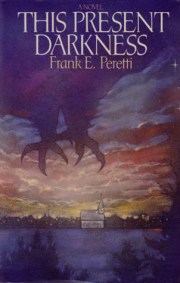
The American Christian Fiction market (which is primarily marketed to evangelicals) has traditionally consisted of the Amish Fiction/historical romance mainstays with a new interest in thrillers that started with Frank Peretti’s This Present Darkness in 1986. Peretti’s didactic use of spiritual material more or less set the tone for what qualified as “Christian content.”  There had to be a high emphasis on “realistic spiritual conversations,” lots of mini-sermons, and an appropriately tidy conclusion. Since literalism was so important, fantasy and anything involved magic was avoided.

When my freelancing career started in 2015, I got to interview Steve Laube, literary agent and owner of Enclave Publishing. Enclave had started in 2007 as Marcher Lord Press and was one of the early Christian publishers to specialize in speculative fiction. Laube made it clear that for a long time trying to sell speculative fiction to Christian publishers had been difficult. At one point he said “decades ago, fantasy equaled magic in many eyes. Narnia and Middle Earth were non grata because they had spells and witches in them.”

I later found an interview on Laube’s website where he described working as an acquisitions editor for Bethany House Publishers. He said the hardest book he ever had to convince the company to take was Arena by Karen Hancock (published in 2001). As Laube put it, “Fantasy was a no-no in the Christian market (and it still struggles to find a foothold). I decided to call it science fiction allegory and tried not use the “F” word…. fantasy.”

Since my undergrad was in publishing, I met many established Christian authors over the next few years. Most of what I heard proved Laube correct. There was an established base of writers working in fantasy and sci-fi, but most had made their careers in the last decade or so. Enclave wasn’t the only Christian publisher specializing in speculative fiction anymore (Rabbit Room followed in 2008, and the 2010s had seen new publishers like Mountain Brook Ink and Monster Ivy Publishing). However, the “Christian Spec Fic Market” was clearly still a small pool. Realm Makers, a writers’ conference focusing on Christian speculative fiction, started just two years before I entered my undergrad and describes itself as “the only writing conference for authors of faith who specialize in science fiction, fantasy, and other speculative genres.” Fantasy and science fiction had only recently gotten the seal of approval. Narnia may not have been non grata for everyone (as noted earlier, the Christian education crowd seem to have embraced it for some time), but for many American evangelicals it had been the safe fantasy series.

Even though things had changed and Tolkien was now acceptable, I noticed the Christian authors I met always seemed to mention him second. After college, it occurred to me that I’d found some great pre-2000s academic books on Tolkien as a Christian fantasist (Christian Mythmmakers by Rolland Hein, Colin Manlove’s work, etc.). However, the best popular books I could find (such as Devin Brown’s Christian World of the Hobbit) didn’t seem to have arrived until the early- to mid-2000s. This was not only the period right after Peter Jackson’s movies; it was also the period when the indie Christian Spec Fic market started.

In short, until the last 15 years or so, Lewis has been the designated fantasy author that many American evangelicals felt comfortable with. As things loosened up, Tolkien became “the other good/safe Christian fantasy author,” but still less known. This meant that while Americans had been writing popular Christian books on Lewis for decades, Tolkien didn’t get that treatment until later.

  1. Concluding Thoughts

It’s hard to say whether American evangelicals’ embrace of Lewis has ultimately been good or bad. We can reasonably say one negative effect is it’s been easy for evangelicals to co-opt Lewis without considering the full range of his work. Since Tolkien didn’t fit the American evangelical mold of a “good Christian writer,” it took longer for him to receive the same treatment. What Robert MacSwain calls “Jacksploitation” was around on some level even before Disney’s Narnia films. What we might call “JohnRonaldsploitation” is a newer phenomenon.

While this has shielded Tolkien scholarship in some helpful ways, popular interest has changed the game and will likely keep doing so. With a recent Tolkien biopic out and Amazon’s new Lord of the Rings TV show coming, popular interest in Tolkien may surpass the surge created by Peter Jackson’s films. Even if the Lord of the Rings TV show fails, other Inklings are becoming popular again – and in Charles Williams’ case, public domain, which opens the door wide for adaptations. Scholarship, entertainment and outright kitsch will exist alongside and feed off each other for the foreseeable future.

Posted in Reflections | Tagged , , , , , , , , , , , , , , | 55 Comments

What if you were held accountable for every word you ever said?” Malcolm Guite on CBC’s Tapestry with Mary Hynes (Feature Friday)

I am part of a great session in Eastern Europe on imagination and the Inklings later today (7pm East Europe time; 12noon Eastern EST) with poet-theologian Malcolm Guite and George MacDonald scholar and life-rich resonator, Kirstin Jeffrey Johnson. You can find the free link and more details here, and I hope you can join us in a bit to hear Malcolm’s elfin wisdom, Kirstin’s patient insistence on something deeper, and my own bumbling curiosities.

In preparing for this C.S. Lewis and Kindred Spirits Society conversation, I was invited to listen to Malcolm Guite’s recent appearance on CBC’s Tapestry, a delightful and sometimes disturbing hour-long weekly show that talks about faith and spirituality, resisting newsish hurry for deep thoughts and careful questions. Malcolm has appeared on CBC before, in a 2013 documentary on C.S. Lewis’ life (which I talk about here). Recently, though, Tapestry host Mary Hynes stumbled upon Malcolm’s poem, “Every Idle Word” in a Tweet:

https://platform.twitter.com/widgets.js

You can hear Malcolm reading this startling poem here:

Wow:

What if every murmuration,
Every otiose oration
Every oath and imprecation,
Insidious insinuation,
Every blogger’s aberration,
Every facebook fabrication
Every twittered titivation,
Unexamined asservation
Idiotic iteration,
Every facile explanation,
Drags us to the ground?

Quite a word to a word-enthralled and world-full chap like me.

Mary Hynes then took the time to speak with Malcolm about this poem, relating it to the way that words work in our world today. The show is called, “What if you were held accountable for every word you ever said?,” which you can listen in full and read transcript portions of here.

I might as well use this post as a chance to make some other links with Malcolm.

In 2018, Sørina Higgins hosted a Signum Symposium panel on The Inklings & King Arthur in the wake of her Mythopoeic award-winning collection (see here–and I’m pleased to have a chapter in it!). The panel included the Tolkien Professor, Corey Olsen, as well as Malcolm Guite. Sørina noted it as a beardworthy event.

One of my favourite links is between Malcolm as a poet and musician and Canadian indie musician Steve Bell. They have been collaborating for about a decade, and here is a great collaboration of image and space at A Rocha Canada in British Columbia:

I have had the chance to hear Steve Bell live, including in a tiny setting where I would watch his brilliant work on the fretboard. But I haven’t yet seen Steve and Malcolm live together. One of my favourite things that Steve and Malcolm did together is this moment in a concert, “The Singing Bowl & Birth of a Song.”

That entire “Live at the Westend” (Winnipeg) concert is absolutely brilliant and available at Steve Bell’s site in a Pay What You Can stream (go here). Here you can listen to Malcolm tease out what for him are the deepest links of life and artistry in this little recording on art, imagination and Steve Bell:

Finally, here is one of a number of Malcolm’s poems that Steve has turned into song, “Because We Hunkered Down”–a great song for the spring season, I hope:

Posted in Feature Friday, News & Links | Tagged , , , , , , , | 6 Comments