Never Nude Elwin Ransom of C.S. Lewis’ Classic ScFi, and A Note on Puzzling, Lazy, Irrelevant, Racist, Sexist, and Infelicitous Book Cover Designs (Friday Feature)

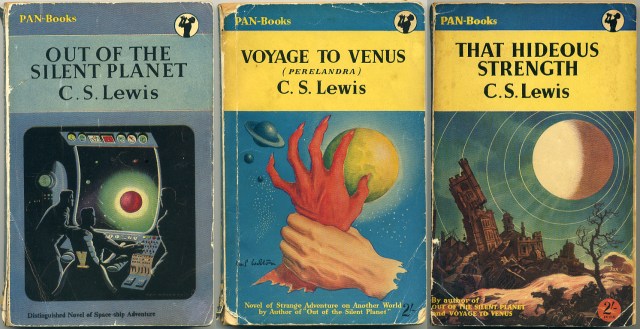
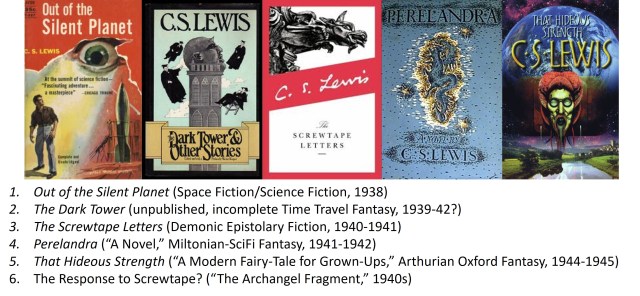
Ere long and ever ago when this blog was young, I wrote about the “Worst Book Description Ever” from C.S. Lewis’ science fiction classic, Out of the Silent Planet. As is sometimes so in the burdens of experience, I have since read worse book descriptions–not just of Out of the Silent Planet, but also of many, many books that it is clear the cover designers have never read. I did note in that decade-old post that I liked some of the cover art of the aptly misnamed “Space Trilogy.” The Pan series at the top of the page is clearly informed by the stories of the novels in fairly sophisticated symbolic ways. They also have a kind of demonic atmosphere that connects the three books and reveals its connections to The Screwtape Letters and the incomplete “Dark Tower” story–what I call the Ransom Cycle.
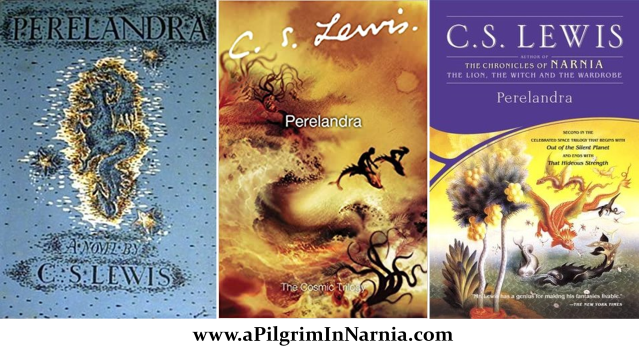
Perelandra poses some neat challenges for cover art design. The whole planet is so tinged with green light and vibrant colour that a cover design might come off as lurid, or even garish. Just above, the blue island cover captures the “fixed land” aspect of the story with an intriguing dragon-like or serpentine hint in the island’s design. It’s well done–even if the colouring is a bit off. The middle fish-riding scene above is also off in colour, but evocative of the adventure. And the remake of an older Sci Fi design above on the right does not quite capture the elements in the way I imagine the novel, but gets the feeling right for me.

Other cover designers, though, fail to get the essence of this strange space fantasy when trying to capture the symbolic or atmospheric features.
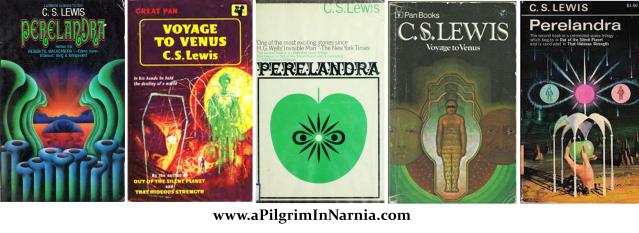
The tubular natural cover above is fine, but kind of ridiculous. The brown-green pair of Voyage to Venus US editions both work in elements of the novel–the greenness of skin, the god and goddess pairs Ransom will meet, travel in a coffin, a hint of the demonic–and manage to completely miss any feel for the novel itself. They did try to capture symbolism–as did the designer of the green apple cover of temptation and twin vision in the centre. This cover really does nothing, but does not have the deep sexist misreading of the temptation novel cover on the right. There are multiple terrible elements, but the nail polish shows they have completely misunderstood a novel deeply invested in gender symbolism and temptation. It is hard to imagine anyone doing worse.

Until you see other people try.
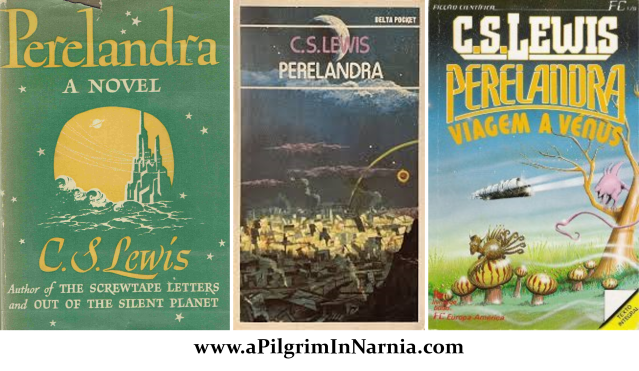
These three covers are clearly made by staff designers who haven’t read the book–though I have a certain kind of love for the one on the right, which is quite a beautiful cover for a novel I have never read.

One of the most difficult elements of the novel is capturing nudity among most of the main characters–Dr. Ransom, Tinidril, and Tor–when in a completely natural environment so different than our Terran one. Having two space angels trying to take form in the denouement of the novel doesn’t make things easier. Attempts to capture nudity on book covers don’t always go perfectly, as we can see here.
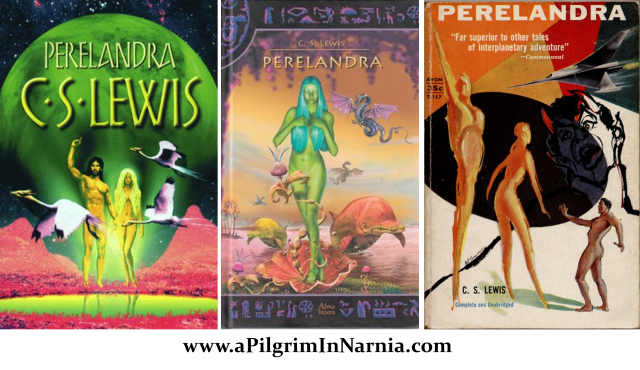
On the left, we have the hippie nudist couple covered delicately by a choreographed sequence of alien birds in flight while Tor gives a “hi guys!” shout from the distance. The middle picture is intriguing in a lot of ways, not least for evoking classical art on Venus (see below) and lovely fantasy elements informed by the book. However, Tinidril’s come hither figure and fashionable blue hair seem the opposite of her disturbing eyes and closed hands–unless she is about to pull back her hair for a full view of her Eve-like, belly button-less torso. I credit the picture on the right for attempting to use dance and symbolic painting to capture nudity in the novel, as well as Ransom’s encounter with the Lord and Lady of Perelandra. However, with the fighter jet, random poses, and demonic figure with horns, the whole cover looks more like an interpretation of Nena’s “99 Luftballons” by whomever it is that made Kate Bush’s videos.

Nudity in popular, symbolically rich art is hard.

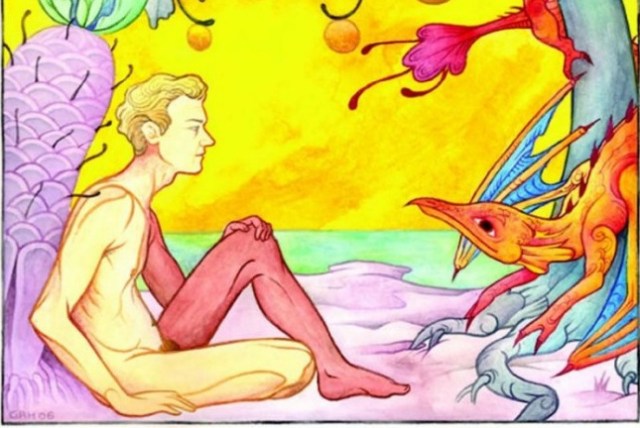
Thus, I am appreciative of this bit of fan art I found years ago (and would love to know who made it, if you happen to know). Ransom as the nude, piebald diplomat meeting his dog-like dragon is captured well in fantasy art that is meant to drift away from the realistic.
However, to capture the meeting of Ransom and Tinidril is more challenging because it has a kind of regal austerity. Perelandra’s Adam and Eve are green and naked, innocent and lordly, beautiful and yet not sexually alluring, farmers who frolic with their flock, and yet gods who are deeply implicated with their natural world. It was probably wise that, when they produced an opera of Perelandra, they used “The Birth of Venus” by Sandro Botticelli (late 15th c.) for their main image.
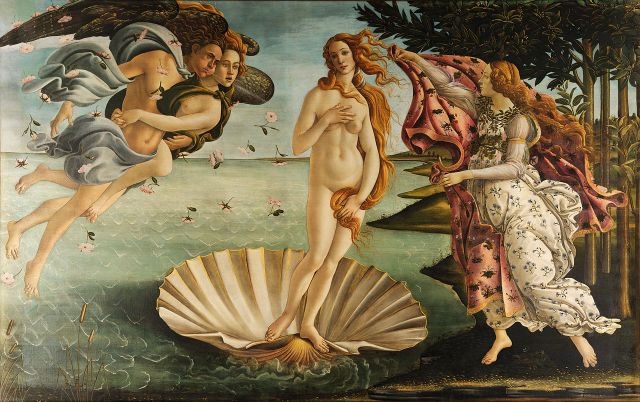
The Birth of Venus by Sandro Botticelli, circa 1485

This Venus as Tinidril or as the planet Perelandra can work for those of us who know the novel.

While not all attempts to capture Perelandra have been successful, I have applauded James Lewicki’s attempt in the first edition of Horizon journal (May 1959)–an illustration to an article by Edmund Fuller called, “The Christian Spaceman: C.S. Lewis.”
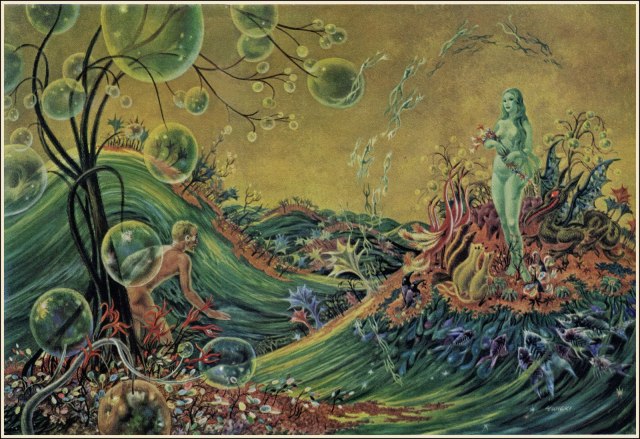
james lewicki_eve of perelandra_100It is very much a piece of the period, but you can tell that Lewicki had actually taken the time to read Perelandra. Ransom is the Piebald Man, tanned on one side by his space voyage. He is naked and disoriented, caught on a floating island away from the only human he has yet seen. Lewicki has made an attempt to capture some of the vegetation, including the bubble trees–a “fruit” that provides refreshment and strength to Ransom in his visit to Venus. And there is the lady, a bit indistinct in the distance, but unashamed as she gathers flowers in her great, global garden. Though Lewicki is caught a tad awkwardly between Boticelli and fantasy art, I like the piece overall.

If you still feel a little bit unsatisfied by the painting, you should know that Lewis predicted you would be.

She was standing a few yards away, motionless but not apparently disengaged—doing something with her mind, perhaps even with her muscles, that he did not understand. It was the first time he had looked steadily at her, himself unobserved, and she seemed more strange to him than before. There was no category in the terrestrial mind which would fit her. Opposites met in her and were fused in a fashion for which we have no images. One way of putting it would be to say that neither our sacred nor our profane art could make her portrait. Beautiful, naked, shameless, young—she was obviously a goddess: but then the face, the face so calm that it escaped insipidity by the very concentration of its mildness, the face that was like the sudden coldness and stillness of a church when we enter it from a hot street—that made her a Madonna. The alert, inner silence which looked out from those eyes overawed him; yet at any moment she might laugh like a child, or run like Artemis or dance like a Maenad. All this against the golden sky which looked as if it were only an arm’s length above her head (Perelandra ch. 5).

We see how it was, visually speaking, an impossible task. So we should be grateful to James Lewicki for attempting to do moderately well on what so many have done so badly. Someone has recoloured and focussed the pieces, which I think enhances what we see–even if the colours are a bit brash (see the tiles below).
Of the imaginative fantasy art and terrible science-fiction interpretations, there is one cover of Perelandra that is clearly my favourite–one that I have tucked into every post that I felt I could get away with. This Avon cover on the right is just so painfully bad that it fills my Perelandra lectures with opportunities for pure mockery and teachable moments about art, writing, and culture.

Giant green-bodied/pale-faced naked alien gods looming above with wispy clouds right where their fancy bits might go, while a Never Nude Ransom stands defiantly against them in his superman pose.

Really, super tight jean shorts?

If the man and woman were the Adam and Eve of Perelandra, it makes sense that Tinidril has a friendly smile to welcome a dear friend. But look at her face: Does she look more like the innocent child-mother of a fresh new world, or the girl in high school who wouldn’t talk to you? And why is Tor holding a sphere and looking like a soap opera star trying to find his lines in the meaningful distance?

While parts that might offend censors have been tastefully covered for us readers, imagine the view from Ransom’s angle. Let’s face it: this god and goddess are extremely … fit and very … photogenic.
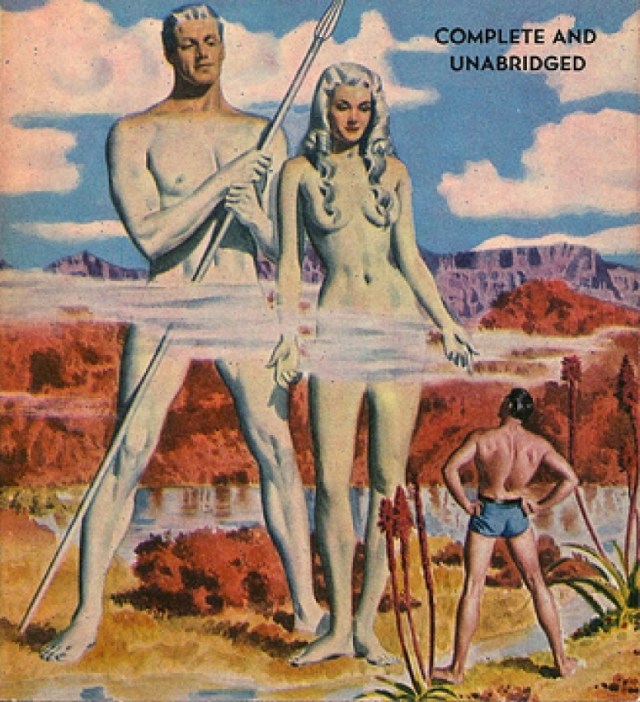
True, Ransom is looking pretty fine as well–not like someone who is slowly healing from near-fatal wounds and days of danger, distress, and darkness. Isn’t it amazing how Ransom’s hair is so neat and trimmed after months without a cut?

Of course, this picture is not of Tor and Tinidril, though, but of Malacandra and Perelandra, Mars and Venus, the angelic planetary intelligences Ransom knows as Eldils but who do not typically take visual form. At the end of Ransom’s adventures, they want to present themselves visually as they meet Tor and Tinidril, who have passed the test of temptation. After Mars and Venus attempt Ezekiel-like forms that disorient Ransom–though it would be amazing to see them in art–Ransom encounters them in a somewhat humanlike form. The passage is several pages, and I have included a part of that below, but here are some of the characteristics:

Their bodies, he said, were white. But a flush of diverse colours began at about the shoulders and streamed up the necks and flickered over face and head and stood out around the head like plumage or a halo…. The ‘plumage’ or halo of the one eldil was extremely different from that of the other. The Oyarsa of Mars shone with cold and morning colours, a little metallic—pure, hard, and bracing. The Oyarsa of Venus glowed with a warm splendour, full of the suggestion of teeming vegetable life.

The faces surprised him very much. Nothing less like the ‘angel’ of popular art could well be imagined. The rich variety, the hint of undeveloped possibilities, which make the interest of human faces, were entirely absent. He concluded in the end that [their look] was charity. But it was terrifyingly different from the expression of human charity, which we always see either blossoming out of, or hastening to descend into, natural affection. Here there was no affection at all: no least lingering memory of it even at ten million years’ distance, no germ from which it could spring in any future, however remote. Pure, spiritual, intellectual love shot from their faces like barbed lightning. It was so unlike the love we experience that its expression could easily be mistaken for ferocity.

Both the bodies were naked, and both were free from any sexual characteristics, either primary or secondary…. Ransom … has said that Malacandra was like rhythm and Perelandra like melody. He has said that Malacandra affected him like a quantitative, Perelandra like an accentual, metre. He thinks that the first held in his hand something like a spear, but the hands of the other were open, with the palms towards him…. At all events what Ransom saw at that moment was the real meaning of gender.

The two white creatures were sexless. But he of Malacandra was masculine (not male); she of Perelandra was feminine (not female). Malacandra seemed to him to have the look of one standing armed, at the ramparts of his own remote archaic world, in ceaseless vigilance, his eyes ever roaming the earthward horizon whence his danger came long ago…. But the eyes of Perelandra opened, as it were, inward, as if they were the curtained gateway to a world of waves and murmurings and wandering airs, of life that rocked in winds and splashed on mossy stones and descended as the dew and arose sunward in thin-spun delicacy of mist.

Well, that explains the spear and the open hands–and perhaps the looks of Mars and Venus are attempts to capture that here. And there is “mist” in this scene–hence the clouds? But I believe that I detect both primary and secondary sexual characteristics–and in very fine form. When pressed to paint a scene of sexless gendered gods, the artist chose to over-sex them.
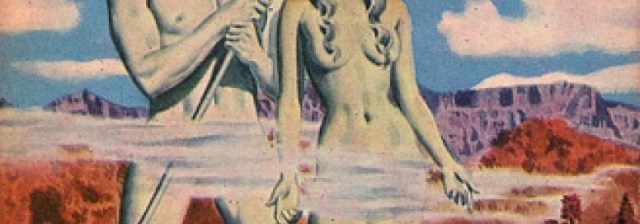
As Lewis is doing something with words that is too specific and complex for either words or images, I wouldn’t be so harsh to judge the artist except for three things.

The first is the ridiculously sexy nature of the painting. I mean, goodness.

The second is the awkward racism of this piece. When confused by the colours–the text has the angels as white-bodied to the shoulder (white, not pinkish pale bland flesh like mine) with polyvalent heads or headpieces–the artist made the bodies a humanoid Perelandran green like Tor and Tinidril. But then the artist made the faces white–the pinkish pale bland flesh kind like mine, though better looking–to ensure that readers are selecting a book about tastefully sexy nude Caucasian aliens.
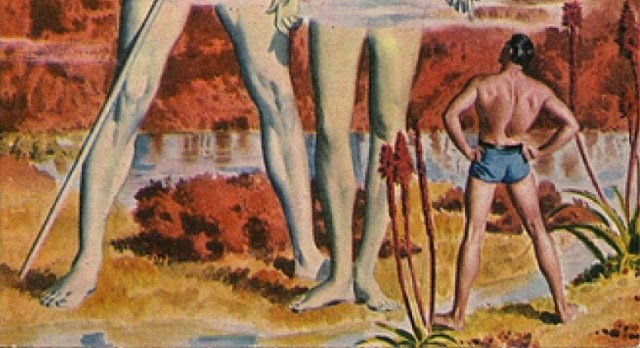
And third, I am sure that Dr. Ransom’s bum would have been quite well-shaped, given this artist’s visual imagination. So why the blue jean shorts?

We are so far into the realm of the ridiculous that I am now going to explain why I call this the “Never Nude” book cover in my lectures and blog posts.

Besides “Never Nude” being an apt title for a book about nudity that an artist hilariously tries to hide with denim and wispy clouds, “Never Nude” is a pop culture thing.

For those who know the smart-goofy American TV serial, Arrested Development, you got it from the title. For the rest, “Never Nude” is a psychological complex that Tobias Fünke suffers from. Tobias, a former psychiatrist, is completely unable to be naked–even in the shower or with his wife. Instead, Tobias copes with Never Nude Syndrome by taking a cue from Dr. Ransom on Perelandra and wearing tight jean cutoffs under his clothes. While this syndrome is not widely known by psychologists, Tobias is not the only character to suffer from it.

And so I leave you with the final bit of nonsense in this mostly nonsense post about some good but mostly puzzling, lazy, irrelevant, racist, sexist, and infelicitous interpretations of SF writing on classic book covers. In this selection of Arrested Development clips, Tobias shares his Never Nude disability with others for the first time–a secret known only to his wife, Lindsay Bluth-Fünke, played by Portia de Rossi. In the clip, George Michael Bluth is wearing a nude suit beneath his clothes–initially to get used to playing a nude Adam in a live local rendition of Michelangelo’s “The Creation of Adam.” As the suit makes him look more physically impressive, he has become addicted to it. Fortunately, his uncle is in a unique situation to sympathize and offer support.

From Perelandra, ch. 16:

Their bodies, he said, were white. But a flush of diverse colours began at about the shoulders and streamed up the necks and flickered over face and head and stood out around the head like plumage or a halo. He told me he could in a sense remember these colours—that is, he would know them if he saw them again—but that he cannot by any effort call up a visual image of them nor give them any name. The very few people with whom he and I can discuss these matters all give the same explanation. We think that when creatures of the hypersomatic kind choose to ‘appear’ to us, they are not in fact affecting our retina at all, but directly manipulating the relevant parts of our brain. If so, it is quite possible that they can produce there the sensations we should have if our eyes were capable of receiving those colours in the spectrum which are actually beyond their range. The ‘plumage’ or halo of the one eldil was extremely different from that of the other. The Oyarsa of Mars shone with cold and morning colours, a little metallic—pure, hard, and bracing. The Oyarsa of Venus glowed with a warm splendour, full of the suggestion of teeming vegetable life.

The faces surprised him very much. Nothing less like the ‘angel’ of popular art could well be imagined. The rich variety, the hint of undeveloped possibilities, which make the interest of human faces, were entirely absent. One single, changeless expression, so clear that it hurt and dazzled him, was stamped on each, and there was nothing else there at all. In that sense their faces were as ‘primitive’, as unnatural, if you like, as those of archaic statues from Aegina. What this one thing was he could not be certain. He concluded in the end that it was charity. But it was terrifyingly different from the expression of human charity, which we always see either blossoming out of, or hastening to descend into, natural affection. Here there was no affection at all: no least lingering memory of it even at ten million years’ distance, no germ from which it could spring in any future, however remote. Pure, spiritual, intellectual love shot from their faces like barbed lightning. It was so unlike the love we experience that its expression could easily be mistaken for ferocity.

Both the bodies were naked, and both were free from any sexual characteristics, either primary or secondary. That, one would have expected. But whence came this curious difference between them? He found that he could point to no single feature wherein the difference resided, yet it was impossible to ignore. One could try—Ransom has tried a hundred times to put it into words. He has said that Malacandra was like rhythm and Perelandra like melody. He has said that Malacandra affected him like a quantitative, Perelandra like an accentual, metre. He thinks that the first held in his hand something like a spear, but the hands of the other were open, with the palms towards him. But I don’t know that any of these attempts has helped me much.

At all events what Ransom saw at that moment was the real meaning of gender. Everyone must sometimes have wondered why in nearly all tongues certain inanimate objects are masculine and others feminine. What is masculine about a mountain or feminine about certain trees? Ransom has cured me of believing that this is a purely morphological phenomenon, depending on the form of the word. Still less is gender an imaginative extension of sex. Our ancestors did not make mountains masculine because they projected male characteristics into them. The real process is the reverse. Gender is a reality, and a more fundamental reality than sex. Sex is, in fact, merely the adaptation to organic life of a fundamental polarity which divides all created beings. Female sex is simply one of the things that have feminine gender; there are many others, and Masculine and Feminine meet us on planes of reality where male and female would be simply meaningless. Masculine is not attenuated male, nor feminine attenuated female. On the contrary, the male and female of organic creatures are rather faint and blurred reflections of masculine and feminine. Their reproductive functions, their differences in strength and size, partly exhibit, but partly also confuse and misrepresent, the real polarity.

All this Ransom saw, as it were, with his own eyes. The two white creatures were sexless. But he of Malacandra was masculine (not male); she of Perelandra was feminine (not female). Malacandra seemed to him to have the look of one standing armed, at the ramparts of his own remote archaic world, in ceaseless vigilance, his eyes ever roaming the earthward horizon whence his danger came long ago. “A sailor’s look,” Ransom once said to me; “you know … eyes that are impregnated with distance.” But the eyes of Perelandra opened, as it were, inward, as if they were the curtained gateway to a world of waves and murmurings and wandering airs, of life that rocked in winds and splashed on mossy stones and descended as the dew and arose sunward in thin-spun delicacy of mist. On Mars the very forests are of stone; in Venus the lands swim.

For now he thought of them no more as Malacandra and Perelandra. He called them by their Tellurian names. With deep wonder he thought to himself, ‘My eyes have seen Mars and Venus. I have seen Ares and Aphrodite.’
Posted in Feature Friday, Reflections, Reviews | Tagged , , , , , , , , , , , | 6 Comments

Dour and Daft Reflections of a Prince Edward Islander Speaking in a Nuclear Age, or Words I Don’t Use on Youtube or in Speeches

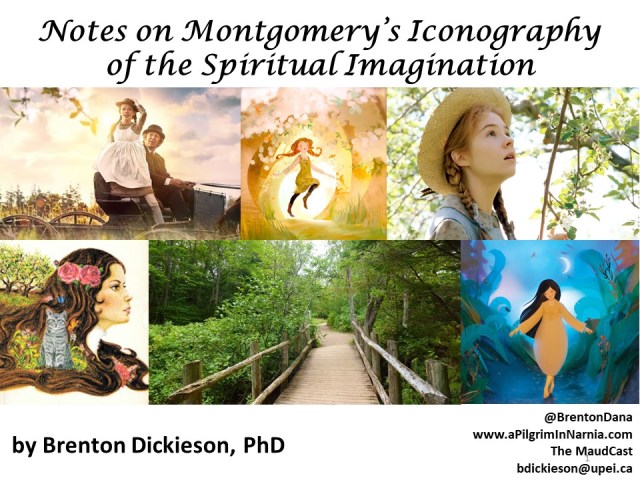
Last week I was giving a talk at the L.M. Montgomery Institute’s 15th Biennial International Conference at the University of Prince Edward Island. I was speaking on what I called Montgomery’s “iconography of the spiritual imagination.” The talk was less an academic paper and more a playful performance of an idea I found in academic research. In the end, it was really a 20-minute close reading of four paragraphs in Anne of Green Gables that millions of people have read, but that often get passed over–despite their brilliance, humour, and critical strength. It was a good talk–though both the poet and literary magician in me wish that I could have simplified the idea to strengthen the effect and enhance the “aha!” factor of the performance.

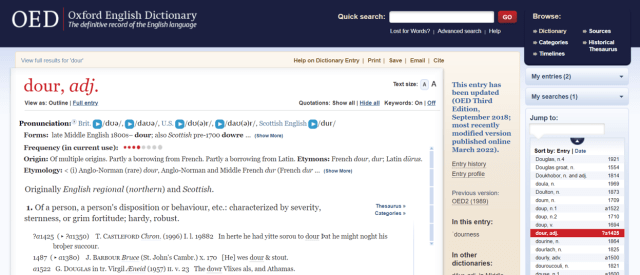
In the midst of a key moment, I had a bit of a crisis when I came to this line:

Christ couldn’t look dour or angry or stern or the children wouldn’t trust him.

I had practiced the talk a dozen times, but I hadn’t thought about how to say “dour.”  Locally, we say it so it rhymes with “sour,” like dower, daʊə. A more standard pronunciation is more like “doo-uh”–though soft, with a schwa sound sucking in the “r,” dʊə–or like doo-er or dewer, dʊ(ə)r. When I say the word out loud, I say dour/sour. But when I think of that word, I hear a Scottish English pronunciation like the first syllable of “durable” but with a rolling “r.”

So … a room of Montgomery readers from 18 countries, half of whom are not native English speakers, but who learned English either from the US or the UK/Continental Europe pathways rather than from Prince Edward Island‘s rural school system … what should I say?

In the decision of a moment, for the sake of clarity, I said dour/sour. It would be clear for many, it is honest to my natural way of speaking, and it gives a texture to the word I liked (the sourness more than the durability of “dour”).

Did I make the right choice? L.M. Montgomery does not rhyme “dour” in her poetry, so I can’t be sure, but there is a suggestive “sour” pronunciation in the first stanza of “The Exile”:

We told her that her far off shore was bleak and dour to view,
And that her sky was dull and mirk while ours was smiling blue.
She only sighed in answer, “It is even as ye say,
But oh, the ragged splendour when the sun bursts through the gray!”

Obviously, though, the better choice is to not use that word in a talk! Seriously, speeches are hard enough to give on their own without adding a whole world of trouble in difficult-to-pronounce words. Beyond my own tendency to stutter when set back on my heels, some folks are über dour about how to pronounce words.

For example, in my 10-minute Book Talk on Walter Miller’s genius science fiction novel, A Canticle for Leibowitz, a friendly viewer living in a police state of perfect pronunciation wrote a comment:

“Nuclear”, “nuclear”, “nuclear”. FFS, stop saying, “nook-yuh-ler”

Touché … or touchy, either one. Nucular-age jerk that I am, I wrote:

You must find life exhausting! The whole internet is there, here is a talk about a gorgeous and challenging book, and you take the time to harp on my local accent? Be free! You don’t have to police the whole world. Are you going to live your life critiquing local accents and variant pronunciations of all the greatly mishandled and regionally varied words, like lieutenant, aluminum, Arctic, tenterhooks, espresso, Toronto, acai berry tea, potable, film, basil, pernickety, Wednesday, Saoirse, all the French words Americans say wrong, and the word “pronunciation” itself? Who lives and dies on how you pronounce either when you can pronounce it either way?

The viewer didn’t miss a beat in responding to my inelegant slam:

Not exhausting at all, actually, though you may want to clear up your understanding of the etymology of, “pernickety” and the long-accepted American version of, “persnickety”, from the British, not French, the pronunciation of which you’ll find in all reputable dictionaries of the last century, unlike, “nook-yuh-ler”, which you ain’t gone fin’ nowhere. Nice try to charge me with an entire life of hand-wringing and damnation of all speakers worldwide because you can’t pronounce one word. Your video only has 104 views, 105 if I give it a like just for trying, so I will. When you make yourself public, expect to be corrected when you err, make the change, and improve your lot, but FFS, don’t go…. (sayyyy it). 

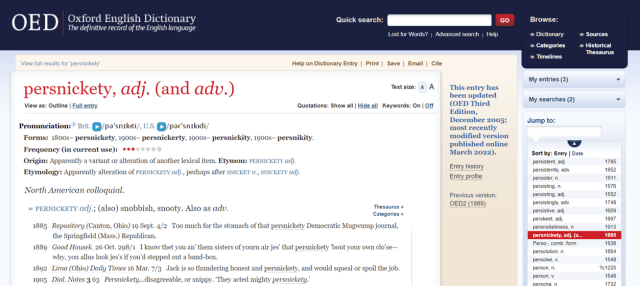
In terms of the writing life of trolls beneath the literary bridges of the Interweb, it’s pretty well done. And my “nook-yuh-ler” (though I weight the middle vowel a bit more) is not in the Oxford English Dictionary (OED) pronunciation guide–though Merriam-Webster notes it as nonstandard. The American Heritage Dictionary adds a usage note:

The pronunciation (noo’kyə-lər), which is generally considered incorrect, is an example of how a familiar phonological pattern can influence an unfamiliar one. The usual pronunciation of the final two syllables of this word is (-klēər), but this sequence of sounds is rare in English. Much more common is the similar sequence (-kyə-lər), which occurs in words like particular, circular, spectacular, and in many scientific words like molecular, ocular, and vascular. Adjusted to fit into this familiar pattern, the (-kyə-lər) pronunciation is often heard in high places. It is not uncommon in the military in association with nuclear weaponry, and it has been observed in the speech of US presidents, including Dwight D. Eisenhower and George W. Bush. The prominence of these speakers, however, has done little to brighten the appeal of (noo’kyə-lər), which was considered acceptable to only 10 percent of the Usage Panel in our 2004 survey.

Well, tough day for me as a hack speaker–though my hick pronunciation is “often heard in high places.” I like a touch of humour in my dictionaries, don’t you? That one is nicely done. A new Usage Panel survey is perhaps warranted, but I think we are sliding back to “nuclear” in more proper ways in popular English.

And, by the way, my Canticle for Leibowitz video has 3,500 views. So there Nuclear Boy!

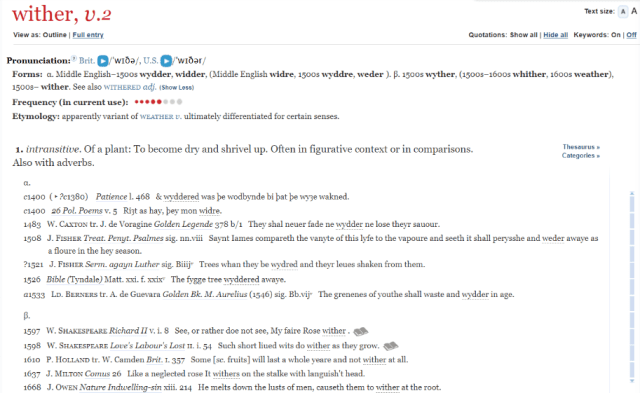
For the sake of honesty, I should add that even I, pronunciation bottom dweller that I am, have been a bit per(s)nickety about pronunciation. I queried whether C.S. Lewis’ strange dystopic narrative poem is pronounced “Die-mer” or “Dee-mer” (I am certain “Dymer” is “Die” not “Dee). I launched “A Complaynt on the Letter Y and Wyther Grange of Emily of New Moon,” and I wrote this piece: “The Sloo/Slow/Sluff of Despond: Today’s Word of the Day and a Spiritual Truth in John Bunyan’s Pilgrim’s Progress.” So I clearly think word pronunciation is important. 

(And folks who are both lovers of words and listeners of American roots music, you should see this.)

In any case, the result is that I’ve got to scratch “nuclear” with “dour” from my talks–and check ahead in other cases. I must admit, though, that mispronouncing an invented house name in a book is nothing compared to the fear I have of saying one of Tolkien’s 14,168 invented words wrong in public. Dour or not, Tolkienists can be … precise.

There are other words that I have erased from my speaking vocabulary for obvious reasons, like niggard or niggardly, fecund, nippy, masticate, and titular. Like that poor American youth pastor schmuck all those years ago when Youtube was young, I will never say “pitch my tents” out loud.  Or anyone’s tents. There are other phrases and words to use, for English is rich in possibilities. No doubt, I will discover other “Words that Must Not Be Named” along the way by accident. This is just a little terrifying but is the normal adventure of words in motion.

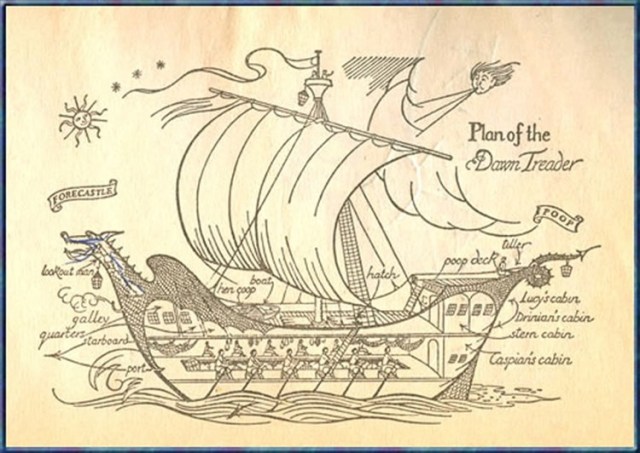
I do say “Poop Deck” whenever I speak to children about The Voyage of the Dawn Treader. So there.

One word that I cannot pronounce in a formal talk is “imaginative.” And I want that word, for all of my work is with imaginative writers. Anne is imagination personified. However, I have it in the “intro” of my MaudCast script, and I just cannot get it right.

Some of my speech self-editing is because of my upbringing and my local verbal space. Sometimes this is my own confusion, like riffle vs. rifle as a verb describing a shuffling search. My mother was indefatigable–a word I don’t say in speaches because I will mess it up–in retraining me to say “I beat” instead of “I bet” when referring to winning a game. Locally, we often soften “often” to “offen,” or almost, for me it rhymes with “soften”–and I have been soundly rebuked for this one. And I think we say “etc.” as “ectetera,” not quite an “x” sound, but a clear case of metalepsis. Or maybe I mean metathesis … either way, more words to avoid–though in her Great Course lecture series, The Secret Life of Words: English Words and Their Origins, Anne Curzan tells me that the maligned American pronunciation “aks” for “ask” has historical precedence: Chaucer used both spellings.

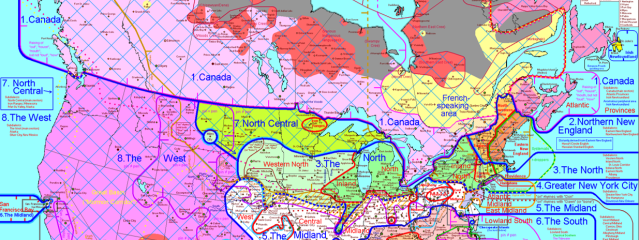
You can see in my saucy Youtube response to Dr Strangelove above, that I seem to favour a regional disparity in word pronunciation. I like the variety of usage that an English map would reveal (see here for North America, just dialects). However, there are some localisms I detest. Cringingly, folks say “I been” here in PEI–a point that one of Montgomery’s characters notes as a personal shame, somewhere in her stories. Prince Edward Islanders, insist on taking the “r” out of “slippery” and putting it in “wash,” and lean heavily on certain vowel sounds. Though we have our share of fine singers, “Silent Night” can sound like this in rural churches:

“Soi-lent noit. Hoe-ly noit. All is cam, all is broit.”

“Calm” is pronounced with a terrible nasal soft “a” sound. We would have named a daughter “Hana” as in Japanese “Hanako,” “flower child,” but the light rhyming syllable “Hana” would have become a nasally “Hanghth-ah”–with the first “a” sound like New Englanders say “sandwich.” Before Nicolas was a Nicolas 18 years ago, as an Islander having just moved from Japan to Vancouver, that pronunciation would have made me leave a room. Today, after being indoctrinated in our local talk, I quite like the Hannahs I know.

Here is a conversation I might overhear at local Tim Horton’s after an older man orders a double-double and sits with a gathering of like-minded gossipy old farts (a self-description I once heard):

Old Fart 1: “Jeez b’ys, but ain’t those arseholes in Warshington some slippy.”

Old Fart 2: “‘Magine!”

Old Fart 3: “P’isen!”

Old Fart 4: “[Indistinguisable in-breath of assent] Youse’ll find out they been fillin’ kit bags full of cash all along.”

Old Farts 1 through 4: “[Indistinguisable in-breath of assent]”

The “Indistinguishable in-breath of assent” is what linguists call ingressive pulmonic speech, or an ingressive particle.  As you can hear in this delightful video on CBC News by my friend, linguist Anne Furlong, we may have the Vikings to honour or blame for this! You have to hear it to know.

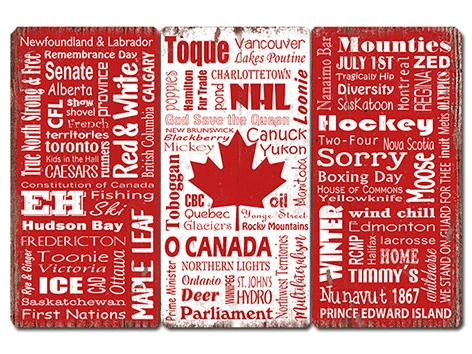
This suck-in particle is probably related to the English particle “eh,” which has roots back in Middle English “ey.” Canadians get a generous laugh from Americans for saying “eh” at the end of sentences and apologizing a lot. This Canadian-born habit bred in me a kinship with the Japanese language when I moved to Japan a few years ago for a brief and beautiful part of my life.

Like Canadian English, Japanese also has “an interjectional interrogative particle; often inviting assent to the sentiment expressed,” as the OED defines “eh!”–though I would add “reflexive” before “interjectional” in the definition, at least in the case of Canadian and Japanese. “Ne,” , sounds like “eh,” but is a bit softer. Like Canadian end-of-sentence “eh,” “ne” is trying to draw a response from the listener in some way (thus reflexive).

Japanese folks also apologize a lot. Truly, more than a Canadian’s instinctive “sorry,” many of their relational words are apologies and “excuse me” in one way or the other. A 2015 BBC article captured the reality of this Japanese verbal culture, but there is a practical application. If you can simply learn words like “sumimasen,” すみません, you will do well. “Yurushite,” 許して, is a more formal pleading for forgiveness, and onegaishimasu, お願いします, a word of asking, has a polite and deferential tone, like “if you please.” There are dozens of apologetically tinged words in the language, for built into the Japanese social space is a give-and-take of relationship with dozens of degrees of complexity.

To be fair to Canadians, “eh” is pretty common in many lands. I hear Americans use it with ease, and it is a normal part of conversation for many British folk–though they may be more apt to say “Eh?” or “Eh!” as a response at the beginning of a sentence than Canadians, who say “pardon me?”–a kind of apology, once again.

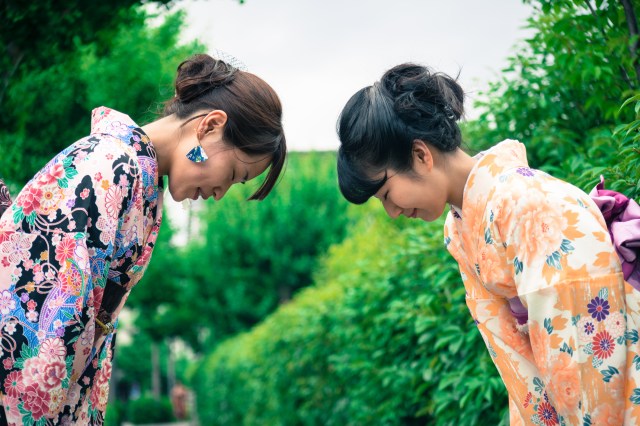
Onlookers be warned: don’t be fooled by apologetic language in Canada and Japan. Apologetic language can be like the act of bowing in Japan: what looks deferential and communicates respect but is also a way of gaining power and creating defined spaces and even distance.

I have largely worked out the “eh” in my formal conversation, but I hope that it still pervades my everyday talk–even when talking to Americans. I don’t know in what other ways I protect myself, though, from the American ridicule of the “Canadian accent.” Anyone who has spent time in Canada, or near it, knows that there is a great deal of difference in Canadian accents. The lower mainland BC (Vancouver) accent is distinct from cowtown Calgary, AB, the plains of northern Saskatchewan, the “we’re the centre of the universe” Torontonian gabber, someone native to Iqaluit, or a Quebecer–which is different in the north or in Montreal in Saint-Louis-du-Ha! Ha! in the east. Even in our small Maritime region, I can tell when someone is from Bouctouche, St. John, Acadian Moncton, Tignish, North Rustico, Souris, Cape Breton, Digby, or the French south shore. I would be surprised if an accent specialist found only a few hundred variations on the Island of Newfoundland.

Still, despite the erroneous American imagination of a Canadian accent–and despite variances in its pronunciation across the country, one thing is certain: though I say “house” with distinct precision, “how-se,” Americans hear it as rhyming with “moose.” I blame the government. So I just don’t say “house” if I can help it.

Moose, by the way, really are huge here, but not in every part of Canada.

Who can win this word game anyhow? Some folk gets fussy about accents and pronunciations, and other folk gets owly. But as Buddy Whatshisname always says, “Holy mackerel! Why go scoffin’? They just needs a good biff on the head.” Well, I haven’t quite boughtened into that bit of Island wisdom as a way of defining my entire approach to giving talks and making Youtube videos, but it goes some ways towards sharing my feelings. Going a bit further, I would say that if you are presenting yourself to the world, you have to think about the way your words land in different contexts. And it is super key to avoid words that will trip you up.

However, when it comes to everyday connections–whether on the beach or at table or connected through nuclear age technology–you should speak the way you want.

As Old Fart #5 might say, “Fill yer boots!”

Posted in Reflections | Tagged , , , , , , , , , , , , , | 10 Comments

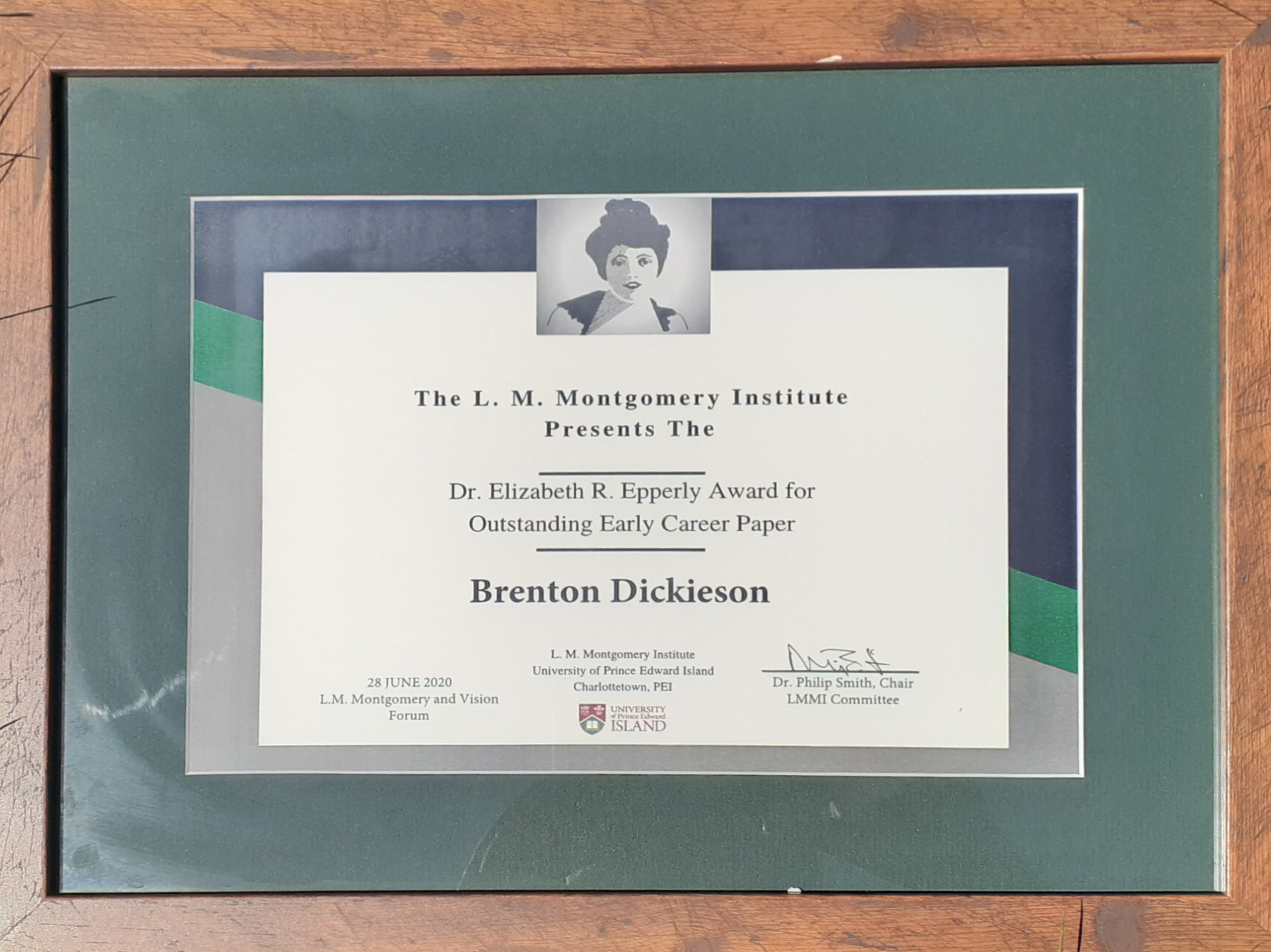
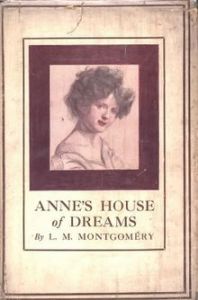
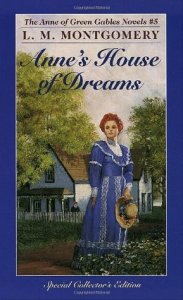
A Major Award! My Paper on L.M. Montgomery’s Anne’s House of Dreams won The Elizabeth R. Epperly Award for Outstanding Early Career Paper!

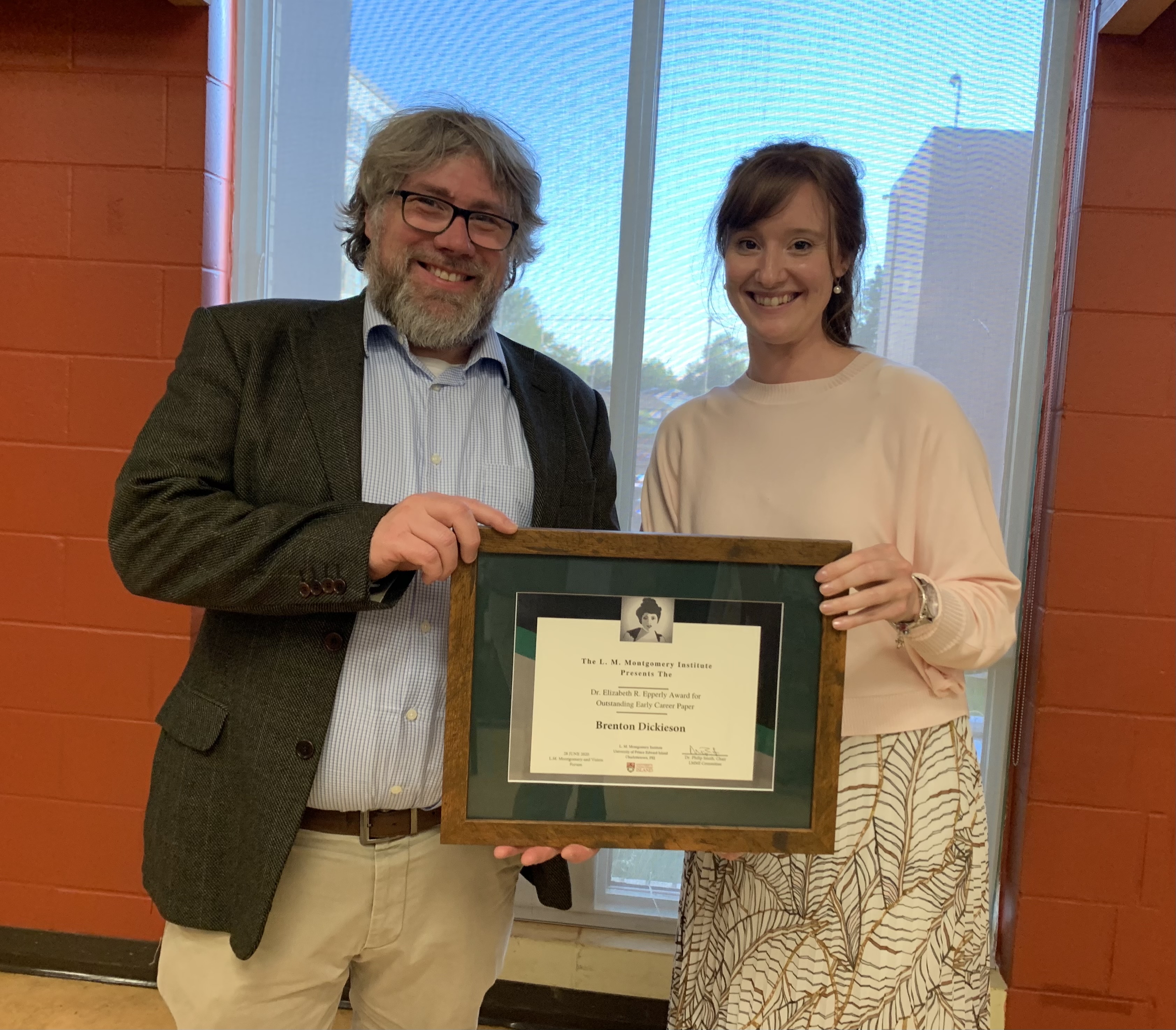
Last weekend, at the banquet that closed the L.M. Montgomery Institute’s 15th Biennial International Conference at the University of Prince Edward Island, I received a Major Award! In the grand company of Montgomery scholars and fans–as well as artists inspired by Montgomery, and local tourism operators and family members–I received Elizabeth R.  Epperly Award for Outstanding Early Career Paper for my 2020 paper, “Making Friends with the Darkness: L.M. Montgomery’s Popular Theodicy in Anne’s House of Dreams.” Although I knew about this prestigious L.M. Montgomery Institute (LMMI) award a while back, I was finally able to receive the certificate and connect in person with Bonnie Tulloch–the 2018 Epperly Award winner.

It was a nice moment to have Bonnie, a Canadian PhD researcher, present me with the certificate last Saturday night. At the close of Season 1 of the MaudCast, I had the chance to sit down with Bonnie Tulloch for an interview. Bonnie won the 2018 Epperly award for her paper “Canadian “Anne-Girl[s]”: Literary Descendents of Montgomery’s Redheaded Heroine”–which is now published and freely available here. What was intended to be a conversation primarily about Bonnie’s work soon became something else. We did have a great chat about the “Anne-girl” figure in Canadian literature, as well as other cool literary topics. However, in collusion with the LMMI, Bonnie soon “flipped the microphone,” taking over the podcast to interview me about my paper. I think it is a conversation that readers would enjoy. And I would encourage you to check out Bonnie’s work at here “Nonsensical Times” blog.

Below, I describe the award, my process of writing, and how to read my paper–which is now published in The Journal of L.M. Montgomery Studies and is open access–free to everyone. First, though, I would like to give my thanks to all involved (their details are below): Lesley and Tara as tireless editors, Jane for life-giving precision, the anonymous peer-reviewers for committing time to make this a better piece, Bonnie for the conversation and encouragement along the way, and Betsy Epperly, Emily Woster, and Kate Scarth as adjudicators with Bonnie. As the L.M. Montgomery Chair at UPEI, Kate has also provided ceaseless encouragement and support, for which I am grateful. Behind the scenes at the Journal and the LMMI are dozens of committed volunteers, supporters, and student workers who make all of this possible. Thank you to the Becks for providing me with a space to write a difficult piece in the perfect place: right next to Prince Edward Island’s stormy shoreline. And, as always, to Kerry who teaches me so much.

The L.M. Montgomery Institute’s Elizabeth R. Epperly Award for Outstanding Early Career Paper

For the last 27 years, the L.M. Montgomery Institute (LMMI) has encouraged researchers from around the world to share their work at its biennial conferences. These conferences have also become a welcoming place for new scholars from across disciplines. In 2018, to celebrate its twenty-fifth anniversary and to recognize the outstanding work of these voices, the LMMI created an award for outstanding paper by a student or an early career scholar (within three years of terminal degree completion).

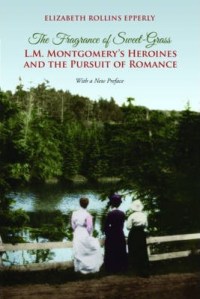
Dr. Elizabeth R. Epperly is a leading L.M. Montgomery and Victorian literature scholar. She was critical to the founding of the L.M. Montgomery Institute, and continues to serve the scholarly community as a mentor and scholar. Her The Fragrance of Sweet-Grass: L.M. Montgomery’s Heroines and the Pursuit of Romance (1992; 2014) is a foundational text, probably the first literary-critical monograph on Montgomery and essential to the development of the discipline of Montgomery studies. It is also beautifully written, which is not always true of works of literary criticism.

The winner of the 2020 Elizabeth R. Epperly Award will be recognized on the Vision Virtual Conference Space (on the Journal of L.M. Montgomery website) and will receive a certificate, expedited peer review of her/his paper for possible publication in the Journal of L.M. Montgomery Studies, and complimentary full registration at the 2022 biennial conference. The winner’s name will also be engraved on a plaque to be placed in the LMMI space in Robertson Library.

Selection Process

In 2020, a panel of four judges (Lesley Clement, Kate Scarth, Bonnie Tulloch, and Emily Woster), appointed by the LMMI Management Committee, received six very strong papers. representing a diverse range of disciplines, from six different counties (three continents).

Given the unique circumstances of 2020 and the cancellation of the onsite June conference, early career presenters were asked to submit papers prepared for journal publication, rather than for presentation at the conference as they would normally have done. The judges then decided which of the six papers best demonstrated “both thoughtful engagement with past Montgomery scholarship and an original, compelling argument.”

A Sampling of the Panel’s Comments on My Paper

  • “This paper related to the theme of vision through its exploration of the significance of darkness and light in Montgomery’s Anne’s House of Dreams. The author made a notable effort to engage with a substantial corpus of Montgomery scholarship and positioned the essay in dialogue with Elizabeth Epperly’s ideas in particular.”
  • “Beautifully written, scholarly informed reflection on Anne’s House of Dreams drawing on a tension central to Montgomery between darkness and light.”
  • “The argument flows nicely…asking pertinent and engaging questions along the way.”
  • “Beautifully argued, a unique reading of Anne’s House of Dreams with a nicely contextualized final argument/conclusions that invite comment and conversation going forward – just what an essay like this should do!”

Making Friends with the Darkness: L.M. Montgomery’s Popular Theodicy in Anne’s House of Dreams: The Story Behind the Paper

It started first as a proposal as an academic conference paper. Since the early 1990s, the L.M. Montgomery Institute (LMMI) has encouraged researchers from around the world to share their work at its biennial interdisciplinary conferences here in Prince Edward Island. In 2020, our theme was “L.M. Montgomery and “Vision,” and in my research, I had been thinking about themes of image, colour, light, and distance–particularly in the trio of “Four Winds” books Montgomery wrote during and after WWI. After months of research, I felt like I had found something worth talking about.

In reading and rereading the story of Anne’s early married life in Four Winds Harbour, Anne’s House of Dreams, I began to discern within the story a rather sophisticated approach to darkness and trouble. Written in one of Montgomery’s most intense moments of worry and loss, Anne’s House of Dreams seems to have the most sophisticated mix of lovely and terrible moments, of light and darkness, of hope and horror–at least of the Anne novels. And yet, Montgomery never seems to negate either the value of good, beautiful things or of the heart-rending difficult moments of suffering. Because Epperly’s Fragrance of Sweet-Grass is such an influential text, I wanted to dialogue with her thesis about Anne’s House of Dreams, where she argues that “all things harmonize” in this text. Her metaphor of “harmony” works well as a tool for analysis, but I wanted to trouble it a little bit. Can light and darkness ever really harmonize? Or is something going on in the core experiences of the characters and Montgomery’s consideration of how such pain and suffering can exist in a providential world?

This paper was my attempt to play with these questions.

The biennial LMMI conferences have a rigorous review process, and I pitched a paper for the June 2020 conference in the summer of 2019. This was all happening just as my first Montgomery paper was being published, “C.S. Lewis’s Theory of Sehnsucht as a Tool for Theorizing L.M. Montgomery’s Experience of ‘The Flash”–a paper I presented at the 2018 Frances White Ewbank Colloquium on C.S. Lewis & Friends at Taylor University and published by Joe Ricke and Ashley Chu in The Faithful Imagination (Winged Lion Press, 2019). My next piece, “Rainbow Valley as Embodied Heaven: Initial Explorations into L.M. Montgomery’s Spirituality in Fiction,” was a paper I presented at the 2018 conference and had been recently accepted for the Journal of L.M. Montgomery Studies (and has since been published, see here).

I was been feeling positive about my Montgomery work and making plans for the future.

My paper was accepted for the 2020 conference, but even assure futures are notoriously difficult things to predict.

In the spring of 2020, COVID-19 sent everything into disarray, and the Montgomery and Vision conference decided to go virtual. LMMI leaders used that L.M. Montgomery and Vision Forum to highlight some key moments of research and artistry (which you can find archived here), and we used the Forum to launch the MaudCast, the official podcast of the L.M. Montgomery Institute, which I am pleased to host. When the conference went virtual, I pivoted my work to MaudCast interviews. But scholars in graduate school or just completing a PhD–I defended my thesis just two weeks after submitting my paper proposal–were invited to write their papers as full essays and submit them to the 2020 Elizabeth R. Epperly Award for Outstanding Early Career Paper.

Feeling like my idea had merit, I took a four-day writing retreat in June 2020 to write the essay and spent much of summer 2020 revising it. When the award deadline came, I was able to submit “Making Friends with the Darkness: L.M. Montgomery’s Popular Theodicy in Anne’s House of Dreams”–a bit tentatively, as it was a difficult and complex work, but feeling like I was ready for some feedback. One phrase, in particular, continued to resonate in me. I was reflecting upon how a main character, the lighthouse keeper Captain Jim, acts morally when confronted with evil–standing up against that wrong action and working to rectify it. But he also tells the story of the encounter, and I came to see that Montgomery was using storytelling in the novel as a practical response to evil in a world we cannot always understand. I concluded one section of the piece with these words.

“For the story is important to tell as a way of concluding a moral action; telling stories is one of the things we do in the face of evil we cannot understand.”

Besides getting thoughtful feedback–and for those who don’t know, quality feedback for scholars and writers is all too rare–winning the Epperly Award also gave me a pathway toward publication in the Journal of L.M. Montgomery Studiesnot only the leading journal of the field, but one that is both open-sourced and editorially effective.

What began was a series of rewrites and revisions that–while harrowing in the midst of the process, as I admit here–resulted in a stronger essay than I could have imagined. I was attempting a complex experiment in theology and literature. I wanted to take a non-academic, popular writer and demonstrate that her intensely personal novel reveals a sophisticated use of imagery that provides a philosophically satisfying response to one of life’s most difficult questions.

In reading this experimental piece, the peer reviewers and committee members provided overwhelmingly helpful encouragement, guidance, and critique. I have already noted the award committee feedback, but I was surprised by how helpful the peer review critiques were, pushing me to define my terms more clearly and to work harder at drawing the reader into the conversation. At each stage, journal editors Lesley Clement and Tara K. Parmiter provided insightful comments and incisive critiques, allowing each draft to be stronger and clearer than the one before. Even the copy editor, Jane Ledwell, did more than simply perfect the grammar, but as a Montgomery reader, artist, and scholar, also provided topic-sensitive clarifications at critical points. Each of these readers provided an unusual amount of critique to make what is, I think, a far stronger essay.

And now it is available free globally on the Journal website as “Befriending the Darkness: L.M. Montgomery’s Lived Theodicy in Anne’s House of Dreams.” Here is a longer abstract of the paper for those interested:

Abstract: Upon completing Anne’s House of Dreams in 1916, Montgomery recorded in her journal that she had never written “amid so much strain of mind and body” (193). Caught between the pressures of life, Montgomery admitted that WWI was “slowly killing” her (185)—a war bound up for Montgomery with the agony of the loss of her second son. What Elizabeth Epperly calls Montgomery’s “most unselfconsciously philosophic” novel (The Fragrance of Sweet-Grass 75), Anne’s House of Dreams delves into painful issues of loss, suicide, bad marriages, ill-timed love, poverty, and the beautiful-terrible consequences of duty. The result is a complex and nuanced consideration of life faithfully lived as it excels in the “effects of light and shadow,” allowing for both “joy and sorrow” (Anne’s House of Dreams 84, 93).

As a novel filled with biblical and poetic references to the nature of life, and as a story unwilling to look away from difficult themes, readers are left with the assurance that “Everything works together for good” (Anne’s House of Dreams 16; see Rom 8:28). In dialogue with Epperly’s treatment—both accepting the basic argument but interrogating the metaphor of “harmony” in order to generate new analysis—this paper considers Anne’s House of Dreams as a lived theodicy. “There’s something in the world amiss,” Anne admits, quoting Tennyson, but it is unclear whether it will be fully “unriddled by and by” (162). Instead, with Leslie, there is some beauty to “the struggle—and the crash—and the noise” of life (64). Montgomery offers a complex and conflicted defence of goodness, which is a lived theodicy where readers are invited to make friends with the darkness in order to see the light.

My paper is the second publication for the L.M. Montgomery & Vision collection that came out of our 2020 virtual conference, and I look forward to seeing a series of projects emerge on this theme. For those who also want to think more dynamically about the paper and the process of writing, I am still thinking about how I would like to create some sort of visual invitation to the piece. I find film work to be a long and fruitful process, but one that requires a lot of creative mental space (which I don’t have right now!). Perhaps that will come in the weeks ahead.

My thanks to the organizers of the Epperly Award! As an emerging scholar, it is gratifying to know that people would commit so much time to providing support for the next generation of readers.

Posted in Reflections | Tagged , , , , , , | 25 Comments

An Unfinished Walking Song and Prince Edward Island’s Mi’kmaq on National Indigenous Peoples Day

Jingle dress dancers perform during the second day of powwow at Abegweit First Nation Powwow, June 2022 (photo by Jane Robertson/CBC)

For the past few days, our local news and some of my social media streams have been filled with images and stories and conversations about Canada’s First Nations peoples. The weather was nicer on the weekend for big outdoor events across the Province of Prince Edward Island. Today, though, the shivering hopeful and thankful will gather down by the water in downtown Charlottetown for music, dance, games, and other cultural events. Amidst pride flags and merchandise stands, my local coffee shop has created a kind of Mi’kmaq educational display. There are stories and histories, some Miꞌkmaq greetings to learn, profiles of local elders, and a bit of symbolic artwork.

Today is National Indigenous Peoples Day, an opportunity on the longest day of the year for Canadians to recognize and celebrate the unique heritage, diverse cultures, and outstanding contributions of First Nations, Inuit and Métis peoples. It is a day of celebration, culture, and remembrance, but also one of mourning. Amidst the hundreds of years of colonial pressure, trade, and community development is a history so terrifyingly violent that it breaks my heart to recount. However, this is part of the story of Canada, the country I love, my home.

My Scottish family heritage is one that includes people of creativity and vision writhing under colonial oppression, generations trying to escape from poverty, and a fight for the right to live and farm, to practice our faith and raise our children in peace. Thus, even though I only know a fraction of my community’s story–and even less about the history elsewhere–my sympathies are with the indigenous peoples of the Americas.

This day is for me also one of continued learning. Not far from where I grew up–in the village where I went to school, in fact–there were stories of Mi’kmaq people of the past. All that remained in my childhood, however, was that local belief and a few archaeological remnants they shared with us on class trips. Our Prince Edward Island history textbook was called Abegweit: Land of the Red Soil. The name “Abegweit” thrilled me, like a world of faërie that I always longed to see but was always out of my reach.

However, as a rural Prince Edward Islander in what we know as Epekwitk, I never met a person growing up who told me they were Native, let alone Mi’kmaq. We said “Micmac” then, like “Tik Tak,” but Mi’kmaq sounds something like “mig-maw”–though when I listen to locals speak, there seems to me something happening in the back of the throat at the end of each syllable that I lack the expertise to describe. I remember stories growing up about Mi’kmaq history, particularly about a relationship with the land and sea that better matched the rhythms needed for our little garden province.

I also remember being given childhood worksheets of questionable quality about Native peoples, and laughing with scorn at my poor French teacher when she wrote Amérindiens on the board–American Indian–and tried to tell us that this was a good technical title. I had been taught since I was young about the stupidity and cruelty of the name “Indian,” and must confess to having some feeling of superiority over this particular teacher, whose world was very small. Arrogance is not one of my better qualities, and I suppose French students today must learn a word like “Autochtones,” Autochthonous or Indigenous.

Chief Junior Gould of Abegweit First Nation joins the drum group Mi’kmaq Thunder for the singing of the Honour Song, June 2022 (photo by Jane Robertson/CBC)

Really, besides that textbook and some local educational events. the Mi’kmaq people lived as a kind of story in my mind, like the Western plains settlement and goldrush tales that bored me to tears in childhood. The first Métis friend I had, a teen street wanderer like me, on the edge of trouble, spoke of his Mi’kmaq family on the reserve and had an Acadian name. As I was curious, and as we were wandering about aimlessly, he took me into some kind of community centre. Almost without a transition, I found myself seated on the floor next to a drum. Someone spoke what sounded like a prayer, and then sprinkled loose tobacco on the drumskin. Then someone handed me a paddle with fabric bundled on one end.

“You are welcome,” the old man said. “Go ahead. Drum.”

When I looked terrified, he chuckled and the other men smiled, and the first man spoke again:

“Good then, watch, listen. When you hear it, you can walk with me.”

He beat the drum, and I felt the bass of it rumble through my awkward teenage body. I found the beat, and joined in, and others did as well. Then as the boom, boom, boom of the drum drew those gathered into a circle, they sang, or chanted, or called out–I do not know the word for it, Or the words they used–if they were words. But it was song like story, with age and legend, call and response. There was bittersweetness there, and something that I have felt was a touch of defiance, though I might be wrong. It was a walking song, I discerned–and that was my first moment in learning to listen to those who both walked before me and remain alongside me.

Since that day, I have lived in places with a large Indigenous community, and other places where their presence was subdued or invisible–or gone altogether. I have tried to learn the histories and stories. As a religious studies scholar, I have taken the time to understand some Indigenous spiritualities and worldviews, including those like Mi’kmaq Roman Catholics or Inuit Anglicans for whom their faith is meaningful.

And as a University teacher, for some years now, I have included a unit in our foundation-year program about the Residential School program in Canada’s history. This is when Church and Government conspired to remove children from their homes, scrub them of their language and culture and spirituality, and train them in British and French patterns of colonial Canadian culture. That there are so many living stories of sex abuse survivors in the Church- and State-run schools, and that so many children died under the care of church and state show the cruelty and corruption of the system and the real value the community placed on these dear lives. But the project was corrupt to the core: “Kill the Indian to save the Child” was the public policy of Canada’s Victorian visionaries.

Ask yourself what the death rate is at your local elementary school, and you see how deeply disturbing it is that there is such a statistic at all. Ask yourself what you would do if the government came to take your children away because of what you believed or your family’s heritage, and you see the core problem. The last Residential School closed in 1996.

It may be that at some point I must do something significant, something substantial, something other than impatient patients and intentional curiosity. Meanwhile, without being lost in the violent parts of the story, or the deep betrayal of the Church, or the ongoing patterns of exclusion,  I keep trying to learn and teach and raise my son, to watch and listen, and when I can, to walk with my neighbours.

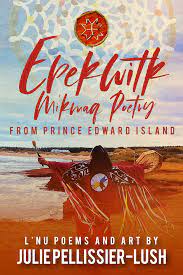
As I tried to help my family get out of the house for last days of school and first days of work this morning, I felt a song growing in me. It had this line, “these paths I tread have been walked before”–really more an image and a feeling than a lyric as of yet. But I thought of the line in French. And then I wondered how it would sound in our local Mi’kmaq language, and my family’s lost Scottish Gaelic, and the tongues of those to come. As part of the L.M. Montgomery Conference, tomorrow I am attending a creative session, “Revisioning Land as Teacher and Healer: Mi’kmaq Stories and Theories.” It will be led by Julie Pellissier-Lush, a Mi’kmaq artist and past Poet Laureate of Prince Edward Island. I have Julie’s collection of poetry and visual art, Epekwitk, and I look forward to watching, listening, and learning from her. Perhaps more words to that walking song will come.

And thus, on this day and others, I offer my thanks to the Mi’kmaq people, for whom the ancestral and ongoing land of Prince Edward Island is Epekwitk, a community cradled in the waves of Mi’kma’ki. And with the Inuit, Métis, and other Indigenous peoples who call the land of the red soil home, I appreciate your hospitality and hope you will take my curiosity in the spirit in which it is intended as we all hope for better things ahead.

Note: the three icons in the are meant to capture in visual simplicity what is a fairly complex Indigenous Peoples community:

  • The eagle to represent First Nations
  • The narwhal to represent Inuit
  • The beaded flower to represent Métis

The government website does not say who the artist is.

Posted in Reflections | Tagged , , , , , , , , , , | 10 Comments

Launch of Two L.M. Montgomery-Related Books: “L.M. Montgomery and Gender” and “The Summer Trade” (with MaudCast links)

Hi folks, I wanted to share a book launch announcement. This is a very local event–both in content and location–celebrating two quite different new books:

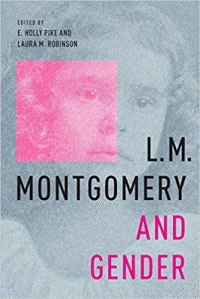
  • L.M. Montgomery and Gender, edited by E. Holly Pike and Laura M. Robinson
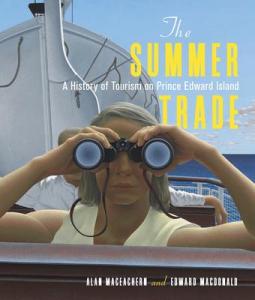
  • The Summer Trade: A History of Tourism on Prince Edward Island, co-written by Alan MacEachern and Edward MacDonald

Anyone who has visited Prince Edward Island–and almost anyone who would like to do so–will know how important L.M. Montgomery is to wee little Prince Edward Island’s slow emergence to becoming one of the great travel destination stops in the hemisphere. And anyone who has read Montgomery’s novels will know how rich a conversation about gender would be. After all, Montgomery’s career as a world-famous author begins with “You don’t want me because I’m not a boy!”

The launch itself is also a local one–and coming on the eve of the L.M. Montgomery Institute’s 15th Biennial International Conference at the University of Prince Edward Island this week. The launch is in the Faculty Lounge (SDU Main), Tuesday, Jun 21, 2022, 7:00pm. Many thanks to the Bookmark–our local superhero independent bookstore that is so invested in supporting local authors and culture–and McGill-Queen’s University Press, with a long history of publishing innovative and collaborative L.M. Montgomery scholarship.

So while this is a local event about local materials, I have had the privilege to interview three of these featured authors on these new books on the MaudCast. For those who don’t know, the MaudCast is the podcast of the L.M. Montgomery Institute, which is hosting this week’s conference. I love hosting the MaudCast because of its dedication to having conversations about innovation Montgomery-related scholarship and artistry.

Just ahead of the book’s launch, I sat down with Laura Robinson and E. Holly Pike for MaudCast S02E02. I had a great conversation with these two Atlantic Canadian L.M. Montgomery scholars and their labour of longsuffering love in producing the richly edited volume, L.M. Montgomery and Gender. Beyond discussion about some of the thoughtful essays in the collection, Holly and Laura were very patient and even playful with my questions about Montgomery and gender–with a particular moment about “what L.M. Montgomery is doing to us as readers.” It was a great conversation with huge possibilities.

In MaudCast S02E05 this spring, I interviewed historian of place, Alan MacEachern. I wanted to talk to Alan about his new tourism history book, The Summer Tradeco-written with UPEI professor Ed MacDonald, whose office down the hallway is always haunted by students with great questions. And I spent some time in the podcast talking about Alan’s role as this year’s L.M. Montgomery Institute Visiting Scholar, finishing with Alan’s current research project on the diary of Myrtle Webb. He is hoping to bring to life the story of the family that lived at the home that inspired the “Green Gables” in Montgomery’s iconic Anne books.

I hope you enjoy the podcasts. The books are, of course, available wherever fine books are sold. And here is the local announcement for the event:

Book Launch – The Summer Trade and L.M. Montgomery and Gender

Tuesday Jun 21 2022 7:00pm – 9:00pm

Join us for the dual launch of The Summer Trade: A History of Tourism on Prince Edward Island by Alan MacEachern and Edward MacDonald and L.M. Montgomery and Gender edited by E. Holly Pike and Laura M. Robinson.

The launch will take place in the Faculty Lounge of SDU Main Building at the University of Prince Edward Island.

Sponsored by Bookmark and McGill-Queen’s University Press.

About the books:

The Summer Trade: A History of Tourism on Prince Edward Island by Alan MacEachern and Edward MacDonald
Tourism has been a central part of Prince Edward Island’s identity for more than a century. What began as a seasonal sideline in the nineteenth century evolved into an economic powerhouse that now attracts over 1.5 million visitors each year, employs one in ten Islanders, and is the province’s second leading industry. Spanning from the Victorian era to the COVID-19 pandemic, The Summer Trade presents the first comprehensive history of tourism in any Canadian province. Over time the Island has marketed a remarkably durable set of tourism tropes – seaside refuge from urban industrial angst, return to innocence, literary shrine to L.M. Montgomery, cradle of Confederation, garden of the Gulf. As private enterprise and the state sought to manage the industry, the Island’s own identity became caught up in the wish fulfillment of its summer visitors. The result has been a complicated, sometimes conflicted relationship between Islanders and tourism, between a warm welcome to visitors and resistance to the industry’s adverse effects on local culture. Lavishly illustrated with postcards, tourist guides, and memorabilia, The Summer Trade also presents a history of Prince Edward Island in cameo that tracks cultural, economic, political, and environmental developments and tensions. Across the strait, the Island beckons.

L.M. Montgomery and Gender edited by E. Holly Pike and Laura M. Robinson.
The celebrated author of Anne of Green Gables and Emily of New Moon receives much-deserved additional consideration in L.M. Montgomery and Gender. Nineteen contributors take a variety of critical and theoretical positions, from historical analyses of the White Feather campaign and discussions of adoption to medical discourses of death and disease, explorations of Montgomery’s use of humour, and the author’s rewriting of masculinist traditions. The essays span Montgomery’s writing, exploring her famous Anne and Emily books as well as her short fiction, her comic journal composed with her friend Nora Lefurgey, and less-studied novels such as Magic for Marigold and The Blue Castle. Dividing the chapters into five sections – on masculinities and femininities, domestic space, humour, intertexts, and being in time – L.M. Montgomery and Gender addresses the degree to which Montgomery’s work engages and exposes, reflects and challenges the gender roles around her, underscoring how her writing has shaped future representations of gender. Of interest to historians, feminists, gender scholars, scholars of literature, and Montgomery enthusiasts, this wide-ranging collection builds on the depth of current scholarship in its approach to the complexity of gender in the works of one of Canada’s best-loved authors.

About the Authors:

Alan MacEachern is professor of history at the University of Western Ontario and has written widely on Canadian environmental history.

Edward MacDonald is professor of history at the University of Prince Edward Island and coeditor of several edited collections on environmental history of Atlantic Canada.

E. Holly Pike, former associate professor of English at Memorial University of Newfoundland, is co-editor, with Laura M. Robinson, of L.M. Montgomery and Gender.

Laura M. Robinson is dean of arts and professor of English and theatre, cross-appointed women’s and gender studies at Acadia University.

Posted in L.M. Montgomery, Reflections | Tagged , , , , , , , | Leave a comment