“The Woman Who Spanked the King” by L.M. Montgomery, Emily Byrd Starr, and Mistress McIntyre

Last week’s Platinum Jubilee celebration and my rather loose reflection, “A Note on C.S. Lewis and the “Tragic Splendour” of British Monarchy on Queen Elizabeth’s Platinum Jubilee,” put me in mind of how I was introduced to L.M. Montgomery’s novels as works worth study, and, in particular, her character Emily. I have become convinced that Emily of New Moon is pretty close to a work of genius–and most definitely among Montgomery’s greatest works.Emily Byrd Starr is something of a mystic, a prophet, poet, and priest who brings together art, beauty, love, and goodness within a spiritual and literary experience of otherness–an experience that I try to capture in “Emily of New Moon’s Visitation of Beauty with Father Cassidy.” Perhaps because I have tried to describe my own vocation in terms that seem to blend literary art, creativity, religious experience, and doing something good in the world, a friend of mine pressed Emily of New Moon into my hands. It was somewhat of an incongruous moment: both of us sitting in towels in the university change room following a long game of pickup basketball, he a church pastor and professor trying to describe how Emily is Montgomery at her best as a storyteller. Flipping through the pages, he was trying to show me “The Woman Who Spanked the King.” Then he stopped and handed me the book. “Of course, it’s in the second one. You’ll have to read this one first.”
Is this the average first encounter with Montgomery’s fiction: naked men chatting about books in a conversation that tumbles off into our shared Scottish heritage?
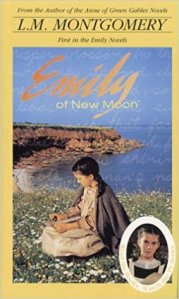
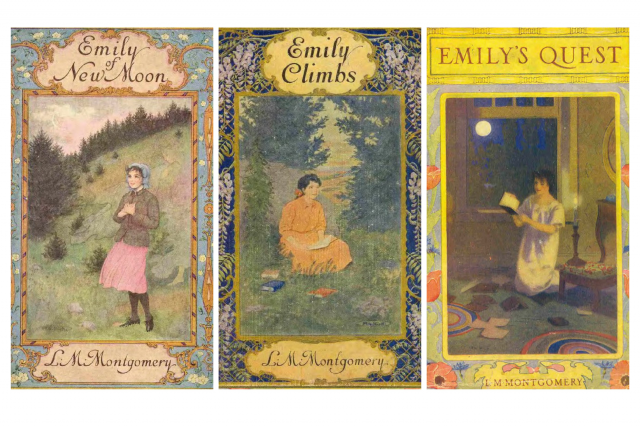
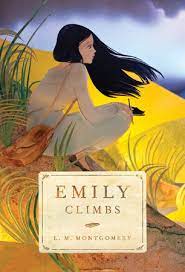
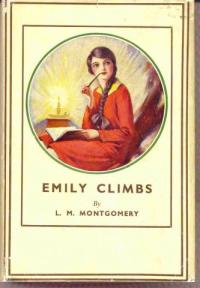
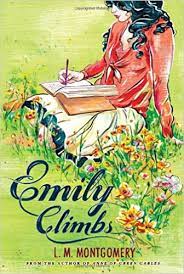
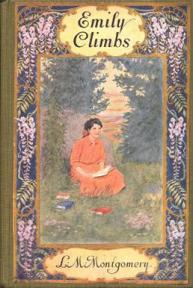
I should return his copy of Emily of New Moon, but quite honestly I find his annotations helpful. He was right that I loved the first Emily book (1923), and also find great meaning in the second one, Emily Climbs (1925). In an attempt to return the favour and try to introduce more readers to Montgomery’s brilliant artistic trilogy–and as a way of connecting to the royal moment we are in–I wanted to share about “The Woman Who Spanked the King.”

In this second Emily novel, the protagonist and her best friend, Ilse, are canvassing a neighbouring county selling magazine subscriptions to pay for their books at high school. In the midst of a torrential storm, the girls take refuge in a nearby home. The house is under a cloud of sorrow, however, for a little boy has gone missing and the searchers are near their limits of reasonable hope. A kind, class-conscious, and knows-everything neighbour feeds the girls, dries their clothes, and puts them in the spare room for the night.

As readers might know, great things happen in spare rooms in L.M. Montgomery’s novels–and in some other tales as well, I’m told. In this scene, Emily awakes from troubled dreams to see the reputedly near-mad Mistress McIntyre sitting quietly next to their bed.

Quite sane in far too many ways but “not quite right” in all the ways that are valued in Montgomery’s imagination, Mistress McIntyre is a character who is herself not far from dreamland. Thus, as with Emily’s father and Father Cassidy, a vocational benefactor, old Mrs McIntyre can discern that Emily is kin to the tribe of Elfland. However, she also sees one other of Emily’s traits–though perhaps only dimly. Mistress McIntyre says that Emily has “the way.” This might be Emily’s knack for storytelling and her genius as a poet. However, it might also be Emily’s gift of knowing beyond, perceiving within, the “second sight” some call it. For Mrs McIntyre, “the way” would come to Emily by her birthright as a “highlander” and a “Presbyterian”–even though she has no skill in the “Twa Talks,” a word for Scottish Gaelic I had never heard before.
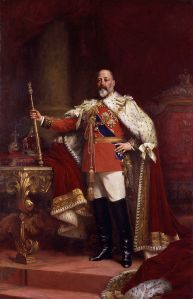
Thus, this is how Emily and Ilse awake to hear the story about “The Woman Who Spanked the King.”

Some background notes are perhaps helpful.

“Prince Bertie” in the tale is Edward VII, eldest son of Queen Victoria of Hanover and Prince Albert of Saxe-Coburg-Gotha. Edward was born in 1841, and Prince Albert acquired Balmoral Castle in Aberdeenshire, Scotland in 1852. Knowing how boys grow, Mistress McIntyre’s discipline of Bertie must have taken place in that first summer or two. Prince Albert died in 1861, but Queen Victoria did not die until 1901. As Prince Bertie would have to wait decades to find the throne as King Edward VII, so Mrs McIntyre would have to wait to tell her king-spanking tale in a way that deserves the title. Emily is listening to the story in 1903, just a couple of years into the Edwardian period.

The Wikipedia entry on Balmoral Castle notes that Queen Victoria and Prince Albert lived more like gentry than royals in their Scotland summer retreats, taking interest in their local staff (including gillies, with a hard “g”), opening a lending library, and extending the estate. Mistress McIntyre’s oral history of the royal family in the mid-Victorian era is quaint and humorous and gives a nice sense of local colour to the era-defining family.

Balmoral Castle (Architectural Digest)

For readers unfamiliar with the myriad Scottish terms for bits of land and water, a “burn” is a small river, and makes for an intriguing echo of the lost child of the frame story. Swift-moving rivers are the endless delight of children growing up as well as an interminable source of worry for those who are tasked with keeping those children safe–no less so when one of the children is the heir apparent to the throne. While some contemporary readers may condemn Mistress McIntyre’s approach to discipline even if they might appreciate the egalitarian nature of her concern–“I will be giving him a sound spanking on the place the Good Lord will be making for spanks in princes as well as in common children”–the political and moral fate of the Empire was in her hands (quite literally).
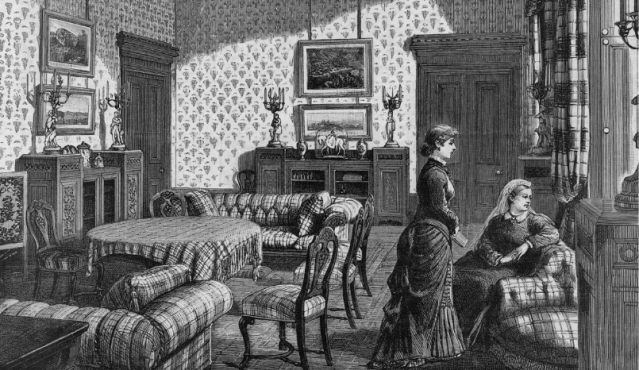
Queen Victoria at Balmoral Castle with an Unidentified Woman who may or may not be Mistress McIntyre (Architectural Digest)

The piece is filled with folk wisdom mixed with humour and lore. My book-evangelist friend was right: it shows Montgomery as a short-story writer at her finest. Emily’s literary mentor and chief critic, Mr Carpenter also approved of Emily’s treatment of the tale. As I discuss in “Stay in the Valley if You’re Wise,” Mr Carpenter sees some literary greatness in Emily, but warns her about the cost of her art while being unwaveringly precise in criticizing her work. With “The Woman Who Spanked the King,” however, he was delighted. When it was published in a magazine that gave Emily some literary heft and local note, a dying Mr Carpenter chuckled over rereading the piece, calling it “absolutely good.” Emily tries to pan the value of the tale, but Mr Carpenter reasserts her work as a writer:

“The best in this story belongs to Mistress McIntyre,” said Emily ruefully. “I can’t call it mine.”

“The setting is yours—and what you’ve added harmonizes perfectly with your foundation. And you didn’t polish hers up too much—that shows the artist. Weren’t you tempted to?”

“Yes. There were so many places I thought I could improve it a good deal.”

“But you didn’t try to—that makes it yours,” said Mr. Carpenter—and left her to puzzle his meaning out for herself.

It is a somewhat confusing thing to know what is our own in storytelling, thus I think it is worthwhile giving our thanks to L.M. Montgomery, Emily Byrd Starr, and Mistress McIntyre–and the entire grand tradition of Scottish storytelling of which Montgomery is one of the great figures in the Scottish Canadian diaspora. I hope you enjoy!
“The Woman Who Spanked the King”

The wet dawn came up from the gulf in the wake of the spent storm and crept greyly into the little spare room of the whitewashed house on the hill. Emily woke with a start from a troubled dream of seeking—and finding—the lost boy. But where she had found him she could not now remember. Ilse was still asleep at the back of the bed, her pale-gold curls lying in a silken heap on the pillow. Emily, her thoughts still tangled in the cobweb meshes of her dream, looked around the room—and thought she must be dreaming still.

By the tiny table, covered with its white, lace-trimmed cloth, a woman was sitting—a tall, stout, old woman, wearing over her thick grey hair a spotless white widow’s cap, such as the old Highland Scotch-women still wore in the early years of the century. She had on a dress of plum-coloured drugget with a large, snowy apron, and she wore it with the air of a queen. A neat blue shawl was folded over her breast. Her face was curiously white and deeply wrinkled but Emily, with her gift for seeing essentials, saw instantly the strength and vivacity which still characterized every feature. She saw, too, that the beautiful, clear blue eyes looked as if their owner had been dreadfully hurt sometime. This must be the old Mrs. McIntyre of whom Mrs. Hollinger had spoken. And if so, then old Mrs. McIntyre was a very dignified personage indeed.

Mrs. McIntyre sat with her hands folded on her lap, looking steadily at Emily with a gaze in which there was something hard to define—something just a little strange. Emily recalled the fact that Mrs. McIntyre was supposed to be not “quite right.” She wondered a little uneasily what she should do. Ought she to speak? Mrs. McIntyre saved her the trouble of deciding.

“You will be having Highlandmen for your forefathers?” she said, in an unexpectedly rich, powerful voice, full of the delightful Highland accent.

“Yes,” said Emily.

“And you will be Presbyterian?”

“Yes.”

“They will be the only decent things to be,” remarked Mrs. McIntyre in a tone of satisfaction. “And will you please be telling me what your name is? Emily Starr! That will be a fery pretty name. I will be telling you mine—it iss Mistress Margaret McIntyre. I am no common person—I am the woman who spanked the King.”
Again Emily, now thoroughly awake, thrilled with the story-teller’s instinct. But Ilse, awakening at the moment, gave a low exclamation of surprise. Mistress McIntyre lifted her head with a quite regal gesture.

“You will not be afraid of me, my dear. I will not be hurting you although I will be the woman who spanked the King. That iss what the people say of me—oh, yess—as I walk into the church. ‘She iss the woman who spanked the King.'”

“I suppose,” said Emily hesitatingly, “that we’d better be getting up.”

“You will not be rising until I haf told you my tale,” said Mistress McIntyre firmly. “I will be knowing as soon as I saw you that you will be the one to hear it. You will not be having fery much colour and I will not be saying that you are fery pretty—oh, no. But you will be having the little hands and the little ears—they will be the ears of the fairies, I am thinking. The girl with you there, she iss a fery nice girl and will make a fery fine wife for a handsome man—she is clefer, oh, yes—but you haf the way and it is to you I will be telling my story.”

“Let her tell it,” whispered Ilse. “I’m dying of curiosity to hear about the King being spanked.”

Emily, who realized that there was no “letting” in the case, only a matter of lying still and listening to whatever it seemed good to Mistress McIntyre to say, nodded.

“You will not be having the twa talks? I will be meaning the Gaelic.”

Spellbound, Emily shook her black head.
“That iss a pity, for my story will not be sounding so well in the English—oh, no. You will be saying to yourself the old woman iss having a dream, but you will be wrong, for it iss the true story I will be telling you—oh, yess. I spanked the King. Of course he would not be the King then—he would be only a little prince and no more than nine years old—just the same age as my little Alec. But it iss at the beginning I must be or you will not be understanding the matter at all at all. It wass all a long, long time ago, before ever we left the Old Country. My husband would be Alistair McIntyre and he would be a shepherd near the Balmoral Castle. Alistair was a fery handsome man and we were fery happy. It wass not that we did not quarrel once in a while—oh, no, that would be fery monotonous. But when we made up it is more loving than ever we would be. And I would be fery good-looking myself. I will be getting fatter and fatter all the time now but I wass fery slim and peautiful then—oh, yess, it iss the truth I will be telling you though I will be seeing that you are laughing in your sleeves at me. When you will be eighty you will be knowing more about it.

“You will be remembering maybe that Queen Victoria and Prince Albert would be coming up to Balmoral efery summer and bringing their children with them, and they would not be bringing any more servants than they could help, for they would not be wanting fuss and pother, but just a quiet, nice time like common folks. On Sundays they would be walking down sometimes to the church in the glen to be hearing Mr. Donald MacPherson preach. Mr. Donald MacPherson wass fery gifted in prayer and he would not be liking it when people would come in when he wass praying. He would be apt to be stopping and saying, ‘O Lord, we will be waiting until Sandy Big Jim hass taken his seat’—oh, yes. I would be hearing the Queen laugh the next day—at Sandy Big Jim, you will be knowing, not at the minister.
“When they will be needing some more help at the Castle, they just sent for me and Janet Jardine. Janet’s husband was a gillie on the estate. She would be always saying to me, ‘Good-morning, Mistress McIntyre’ when we would be meeting and I would be saying, ‘Good-morning, Janet,’ just to be showing the superiority of the McIntyres over the Jardines. But she wass a fery good creature in her place and we would be getting on fery well together when she would not be forgetting it.

“I wass fery good friends with the Queen—oh, yess. She wass not a proud woman whatefer. She would be sitting in my house at times and drinking a cup of tea and she would be talking to me of her children. She wass not fery handsome, oh, no, but she would be having a fery pretty hand. Prince Albert wass fery fine looking, so people would be saying, but to my mind Alistair wass far the handsomer man. They would be fery fine people, whatefer, and the little princes and princesses would be playing about with my children efery day. The Queen would be knowing they were in good company and she would be easier in her mind about them than I wass—for Prince Bertie was the daring lad if efer there wass one—oh, yess, and the tricky one—and I would be worrying all the time for the fear he and Alec would be getting into a scrape. They would be playing every day together—and quarrelling, too. And it would not always be Alec’s fault either. But it wass Alec that would be getting the scolding, poor lad. Somebody would haf to be scolded and you will be knowing that I could not be scolding the prince, my dear.

“There wass one great worry I will be having—the burn behind the house in the trees. It wass fery deep and swift in places and if a child should be falling in he would be drowned. I would be telling Prince Bertie and Alec time after time that they must nefer be going near the banks of the burn. They would be doing it once or twice for all that and I would be punishing Alec for it, though he would be telling me that he did not want to go and Prince Bertie would be saying, ‘Oh, come on, there will not be any danger, do not be a coward,’ and Alec, he would be going because he would be thinking he had to do what Prince Bertie wanted, and not liking fery well either to be called a coward, and him a McIntyre. I would be worrying so much over it that I would not be sleeping at nights. And then, my dear, one day Prince Bertie would be falling right into the deep pool and Alec would be trying to pull him out and falling in after him. And they would haf been drowned together if I had not been hearing the skirls of them when I would be coming home from the Castle after taking some buttermilk up for the Queen. Oh, yess, it is quick I will be taking in what had happened and running to the burn and it will not be long before I wass fishing them out, fery frightened and dripping. I will be knowing something had to be done and I wass tired of blaming poor Alec, and besides it will be truth, my dear, that I wass fery, fery mad and I wass not thinking of princes and kings, but just of two fery bad little boys. Oh, it iss the quick temper I will be always having—oh, yess. I will be picking up Prince Bertie and turning him over my knee: and I will be giving him a sound spanking on the place the Good Lord will be making for spanks in princes as well as in common children. I will be spanking him first because he wass a prince. Then I spanked Alec and they made music together, for it wass fery angry I was and I will be doing what my hands will be finding to do with all my might, as the Good Book says.
“Then when Prince Bertie had gone home—fery madI will be cooling off and feeling a bit frightened. For I will not be knowing just how the Queen will be taking it, and I will not be liking the thought of Janet Jardine triumphing over me. But it iss a sensible woman Queen Victoria wass and she will be telling me next day that I did right: and Prince Albert will be smiling and joking to me about the laying on of hands. And Prince Bertie would not be disobeying me again about going to the burn—oh, no—and he could not be sitting down fery easy for some time. As for Alistair, I had been thinking he would be fery cross with me, but it will always be hard telling what a man will think of anything—oh, yess—for he would be laughing over it, too, and telling me that a day would come when I could be boasting that I had spanked the King. It wass all a long time ago now, but nefer will I be forgetting it. She would be dying two years ago and Prince Bertie would be the king at last. When Alistair and I came to Canada the Queen will be giving me a silk petticoat. It wass a very fine petticoat of the Victoria tartan. I haf nefer worn it, but I will be wearing it once—in my coffin, oh, yess. I will be keeping it in the chest in my room and they will be knowing what it iss for. I will be wishing Janet Jardine could have known that I wass to be buried in a petticoat of the Victoria tartan, but she hass been dead for a long while. She wass a fery good sort of creature, although she wass not a McIntyre.”

Mistress McIntyre folded her hands and held her peace. Having told her story she was content. Emily had listened avidly. Now she said:

“Mrs. Mclntyre, will you let me write that story down, and publish it?”

Mistress Mclntyre leaned forward. Her white, shrivelled face warmed a little, her deep-set eyes shone.

“Will you be meaning that it will be printed in a paper?”

“Yes.”
Mistress McIntyre rearranged her shawl over her breast with hands that trembled a little.

“It iss strange how our wishes will be coming true at times. It iss a pity that the foolish people who will be saying there iss no God could not be hearing of this. You will be writing it out and you will be putting it into proud words—”

“No, no,” said Emily quickly. “I will not do that. I may have to make a few changes and write a framework, but most of it I shall write exactly as you told it. I could not better it by a syllable.”

Mistress McIntyre looked doubtful for a moment—then gratified.

“It iss only a poor, ignorant body I am, and I will not be choosing my words fery well, but maybe you will be knowing best. You haf listened to me fery nicely and it is sorry I am to have kept you so long with my old tales. I will be going now and letting you get up.”
Posted in Reflections | Tagged , , , , , , , , , , , | 11 Comments

A Note on C.S. Lewis and the “Tragic Splendour” of British Monarchy on Queen Elizabeth’s Platinum Jubilee

I must confess that I am not terribly fascinated by royalty. I do like coronation chicken sandwiches, Beefeaters clearly have style, and if the Earl and Countess of Strathearn invited me to be a theologian in residence, it would definitely become a family conversation. Usually, though, I am more interested in dead and fictional royalty than the lives of those who haunt royal halls today.

With the Platinum Jubilee of Queen Elizabeth II, however, I must admit to being curious about C.S. Lewis’ interest in the British monarchy.

After all, Lewis served King and country in war, he became an expert in English and Scottish literature during the long 17th century, and his brother, Warren, was something of a French royal historian whose seven books include The Splendid Century: Some Aspects of French Life in the Reign of Louis XIV. This knowledge and experience is no doubt behind Lewis’ great literary invention, Queen Orual of Glome in Till We Have Faces. Doubtless a Greek echo of Queen Elizabeth I in certain particulars, Orual succeeds her father with a genius for perceptive leadership, alliance-building, courage in battle, and strong social and economic policies.

And, of course, the globally famous seven Narnian Chronicles are bound up with courtly adventures. The Lion, the Witch and the Wardrobe is the story of a revolution against tyranny based upon a prophecy to establish two Sons of Adam and two Daughters of Eve upon the four empty thrones of Cair Paravel. Prince Caspian is likewise a civil war story about recovering the throne from a usurper. The Voyage of the Dawn Treader is about a second Narnian golden age under King Caspian’s reign–an era nearly lost in The Silver Chair, where a regicidal plot must be thwarted by English schoolchildren and a Marshwiggle. By rescuing a lost prince, they can restore the heart of the throne and secure Caspian’s succession. The Horse and His Boy is full of international courtly intrigue and establishes Cor of Archenland and Aravis of Calormen as the future King and Queen of a great Narnian neighbour. The Magician’s Nephew establishes the first King of Queen of Narnia, providing an outline of royal character that will be the testing point of Narnia’s last King in The Last Battle

The links were enough that I wanted to go into Lewis’ biography to discover what royal touches were there. Frankly, there are not that many links–though this is an important point about Lewis’ biography in and of itself. In walking briefly through the careers of the five British monarchs of Lewis’ life and considering Lewis’ thoughts on the monarchy, we discover some beautifully mundane and some startlingly powerful historical and theological moments.

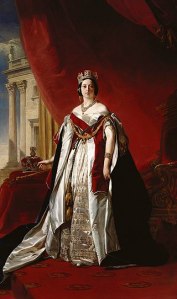
Queen Victoria (1837-1901)

As C.S. Lewis took his first breaths in November 1898, Queen Victoria was entering a year of sorrow that preceded the last months of her life. Then the longest-serving British monarch in history, Victoria reigned for a stunning, era-defining 63 years and 217 days.

The Victorian era was a period of radical change in innovation, technology, industrial development, the institution of the family, mass migration, and British expansion on the global stage. Queen Victoria’s personal sense of morality created a culture of restraint in tension–and sometimes in cooperation–with religious revivalism and activism, an expansion of higher education, early critical moments in women’s liberation, and the slow redefinition of class in England.

In terms of legacy, the Victorian era gave us Dickens, Tennyson, Wordsworth, Eliot, the Brontës, Wilde, Hardy, Kipling, Lewis Carroll and George MacDonald and Anna Sewell, Elizabeth Barrett Browning and her husband, Bram Stoker, H.G. Wells, Sherlock Holmes, William Morris, World Fairs, the Gothic and Classical revivals, the Pre-Raphaelite Brotherhood and some of their sisters and daughters, public museums, photography, early modernization of farm and kitchen, electricity, the idea of a hospital designed not to kill people, and the railway, telegraph, and telephone.

The period, though, also brought poorly managed urbanization, soul-destroying factories, deadly environmental disasters, the Crimean and Boer wars, the loss of English and Scottish rural culture, and an ideological, imperial, church-implicated cultural genocide perpetrated in residential schools throughout the colonies that has caused generations of suffering and has brought shame upon the Christian church.

We might be right in thinking that Lewis as a reader and writer in his formative years gained much from the Victorian literary legacy. Lewis was somewhat anti-progress in terms of technological development, and primarily looked askance at Victorian art and architecture. However, as an Anglo-Irish Oxbridge public intellectual and the son of two University-educated parents from clerical and industrial families, he is truly the child of each of these social, political, and economic cultural moments. In this respect, Lewis biographies by George Sayer and Alister McGrath provide the strongest links to the Victorian cultural background.

Edward VII (1901-1910)

In 1901 Edward VII, eldest son of Queen Victoria of Hanover and Prince Albert of Saxe-Coburg-Gotha, took the throne following decades of public service as Prince of Wales and other titles as he waited for his mother to turn the clock on the century. While the limitation of his leadership in the period may be clearer with the advantage of history, King Edward VII was known as a peacemaker. Near the end of his reign, a young “Jack” Lewis lost his mother and was beginning to test his literary capabilities. He also began his own sentence at ideological, imperial, residential schools. When Lewis was in his late ’20s, we read Sidney Lee’s Edward VII, but I do know his thoughts on the book or the man.

George V (1910-1936)

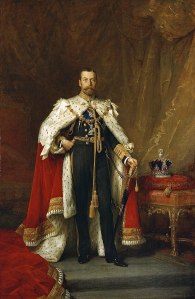
King George V was the second son of Edward VII and Alexandra of Denmark. He reigned through a dramatic period of revolutionary and reactionary ideas, British constitutional redesign, WWI, the beginning of the withdrawal of the throne from global dominion and the new era of the British Commonwealth (though not the collapse of empires like Germany, Russia, and Turkey), the global economic crisis of the 1930s, and the rise of Nazism. Although he was by reputation a homebody, during WWI he was a visible public figure. He presented himself as a British patriot in his support of the war and his connections with the public. Although the monarchy had been German for centuries, the king set aside the German name Saxe-Coburg-Gotha and inaugurated the House of Windsor, which reigns today.

In his brilliant C.S. Lewis Chronology, Joel Heck reports that in July 1911 the Lewis brothers saw Queen May, Princess Mary, and Prince Edward (later, briefly) drive by. I don’t know if they showed much interest. As a young man, King George V would have been most visible in the war effort. However, Lewis admits to being somewhat distant from the overwhelming social moment of war as he focused on study and writing.

Following the war, Lewis remained distant from political commentary. When they occur, Lewis’ political statements growing up are often sarcastic and elliptical–showing only one side of a letter conversation. For example, when King George V went to Lewis’ hometown of Belfast to open the parliament of Northern Ireland, Lewis quips to his father:

I am sorry you didn’t go and get yourself made an O.B.E. or
something when George-by-the-grace-of-God came to Belfast (27 Jun 1921 letter).

Besides the slighting reference to the King, Lewis is somewhat pessimistic about the Irish policies as a whole–royal or parliamentary. Although concerned about the Irish situation, as in many aspects of social life, Lewis was somewhat protected from the consequences as he shaped a small personal foundation for a peculiarly large cultural platform.

Edward VIII (1936)

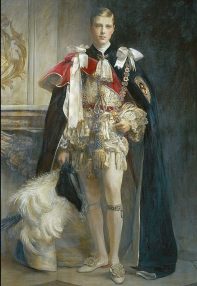
King Edward VIII was the eldest son of King George V and Queen Mary. He was a reputed philanderer and impatient with protocol–courtly or otherwise. He occupied the throne for a record-breaking 326 days when he abdicated for a marriage that was deeper to be unacceptable for the head of the Church of England.

As Prince of Wales, Edward attended Magdalen College, Oxford, in the 1910s, before Lewis matriculated to University College and where Lewis was later a don for nearly 30 years.

George VI (1936-1952)

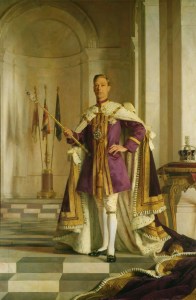
George VI was the second son of King George V and Queen Mary. He unexpectedly ascended to the throne a the age of 40 after living in the shadow of his brother, the heir apparent.

Although he was a reluctant king with a verbal tic and public profile that created some doubts about his qualities as a ruler–now even more iconic in the award-winning film, The King’s Speech–King Goerge VI was instrumental in England’s role in WWII. This began with acts like a Canadian tour in the spring of 1939 that eased Canada’s (and perhaps also the United States, as it included a visit with Roosevelt) pathway to joining the Allies in WWII. However, his reputation solidified with frequent public events in Great Britain to raise the spirits of the people, as well as visits to troops throughout the world. The king and queen communicated resiliency and rugged resistance by remaining in residence in London during air raids–and, indeed, experiencing near-deadly bombing in their home. King George developed a strong relationship with Prime Minister Winston Churchill, which was critical to wartime leadership. As WWII closed, the public flocked to Buckingham Palace in celebration of the king on both VE day and VJ day. And following the war, George VI was part of the rise of the United Nations and the global retreat of the British Empire.

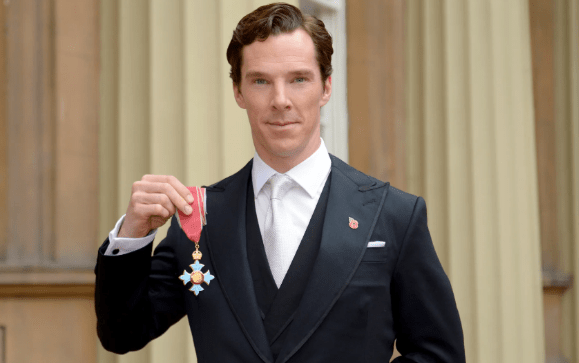
As it turns out, just a few months before the king died, in December 1951, Lewis was nominated by Churchill for the honour of being elected by George VI as a Commander of the Order of the British Empire (CBE). However, so as to distance himself from the appearance of political commentary, Lewis declined in writing to the Prime Minster’s Secretary:

I feel greatly obliged to the Prime Minister, and so far as my personal feelings are concerned this honour would be highly agreeable. There are always however knaves who say, and fools who believe, that my religious writings are all covert anti-Leftist propaganda, and my appearance in the Honours List would of course strengthen their hands. It is therefore better that I should not appear there. I am sure the Prime Minister will understand
my reason, and that my gratitude is and will be none the less cordial.

Given the royal nature of the honour and its history of recognizing educational, literary, and artistic contributions, Lewis seems overly cautious on this point. Tolkien was right to accept his honour in 1972, and I am open when my own invitation letter comes.

Queen Elizabeth II (1952-forever)

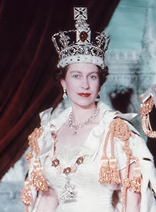
Queen Elizabeth is the eldest daughter of George VI and Lady Elizabeth Bowes-Lyon. When her uncle Edward abdicated, Elizabeth became heir presumptive at the age of 10. She is now the longest-ruling monarch at 70 years and 116 days (as of today). Elizabeth is the only British monarch to celebrate a Platinum Jubilee. In 11 days, she will pass Thailand’s beloved Rama IX to become the 2nd longest-reigning sovereign in verifiable history. Nearly two more years are needed to surpass King Louis XIV of France and his Splendid Century, however.

Elizabeth has served through the era of media fascination, from the radio and print to television and social media. Indeed, as part of her war service, like Lewis, she turned to the radio. Elizabeth first spoke on BBC radio when she was 14 years old–and only later served as a mechanic (which I think is pretty spunky of her). Through disaster and illness and waves of popularity and critique, Elizabeth continues to meet her public in their homes from her own home in the visual medium of the moment.

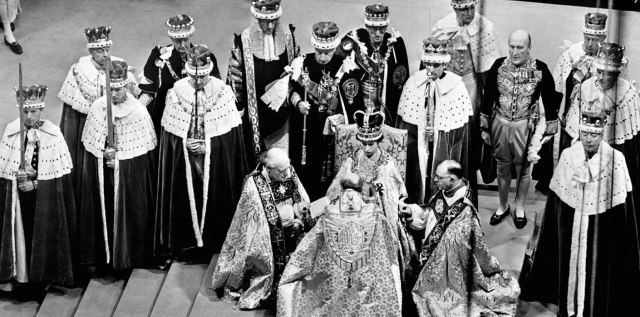
The Coronation of Queen Elizabeth II took place in Westminster Abbey on 2 June 1953, though Lewis chose not to attend. In a 22 Jun 1953 letter to Mary Shelburne, Lewis explains his feeling about the Coronation:

I didn’t go to the Coronation. I approve of all that sort of thing immensely and I was deeply moved by all I heard of it; but I’m not a man for crowds and Best Clothes. The weather was frightful.

Warren, however, watched the coronation on television, and may have been the source of Lewis’ quite distinct view of the matter. Lewis was struck by “the real devout piety shown by the Queen, who obviously took her vows very seriously” (17 Jul 1953 letter to Mrs. Frank Jones). In a follow-up letter to Mary Shelburne, Lewis makes a point about British royal-watching culture and a much deeper connection to the spiritual significance of the coronation:

You know, over here people did not get that fairy-tale feeling about the coronation. What impressed most who saw it was the fact that the Queen herself appeared to be quite overwhelmed by the sacramental side of it. Hence, in the spectators, a feeling of (one hardly knows how to describe it)–awe–pity–pathos–mystery. The pressing of that huge, heavy crown on that small, young head becomes a sort of symbol of the situation of humanity itself: humanity called by God to be His vice-regent and high priest on earth, yet feeling so inadequate. As if He said ‘In my inexorable love I shall lay upon the dust that you are glories and dangers and responsibilities beyond your understanding.’ Do you see what I mean? One has missed the whole point unless one feels that we have all been crowned and that coronation is somehow, if splendid, a tragic splendour.

Through thousands of letters and pages of print up to this moment in his life, there are very few comments about royalty in real life. And then there is this stunning description of the British throne. Lewis speaks not from the mind-numbingly obsessed perspective of the press, or the distant lens of the historian, or the heart-rapt vision of the lover of fairy tales, but from the altitude that only a cosmic point of view can provide. Ritual, sacramentality, awe, pity, pathos, mystery, symbol–an image of monarchy that draws all humanity into the moment of coronation as a people created vice-regents on earth and set apart as high priests of creation.

How have I never seen this note in this light before? Think of the consequence of this kind of view: the moral responsibility, the relational possibility, the sacramental invitation, and the mythopoeic potential.

It is, I suppose, because of this Platinum Jubilee that I am seeing it now.

There are other consequences of this view of the coronation for Lewis. When discussing the event with American correspondent Mary van Deusen, Lewis makes an intriguing comment:

Hasn’t what you are kind enough to say about our Coronation a wider relevance?–that nothing stirs us if it has the sole purpose of stirring us: i.e. the stirring must be a by-product (8 Jun 1953 letter).

That is an intriguing principle of psychological authenticity that public leaders and artists should each consider.

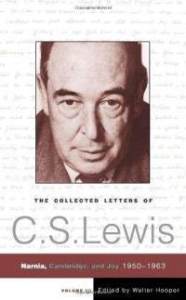
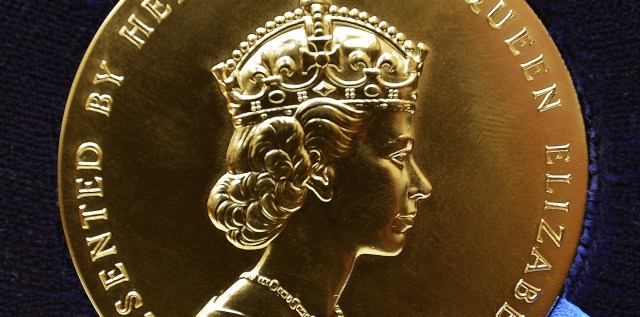
Lewis missed the coronation but had other brushes with royalty in multiple spheres. Friend and fellow poet Ruth Pitter wrote to Lewis about her recent encounter with Queen Elizabeth when she received the Queen’s Gold Medal for Poetry–quite a distinctive honour that puts Pitter in the company of W.H. Auden, Siegfried Sassoon, John Betjeman, Robert Graves, Ted Hughes, Simon Armitage, and Grace Nichols. Pitter–who, incidentally, did not turn down her CBE honour in 1979–writes:

I had been received by the Queen (in October of this year) to present her Gold Medal for Poetry, and I felt that it did me good. One plugs away for half a century, getting little praise and
less cash, then suddenly one is summoned to the Palace and given a medal. All is now well: if the highest in the land approves one, we can do without those in between. Besides, it was an Adventure: and to crown all, as I left the Queen, there outside the drawing-room door stood Albert Schweitzer, waiting to be received in his turn!’ (Bodleian Library, MS. Eng. lett. c. 220/3, fol. 136).

The capital-A “Adventure” is a nice touch, as is the Schweitzer note–so many thanks to Walter Hooper for sharing this discovery as a footnote to Lewis’ 31 Jan 1956 letter to Pitter. In that letter, Lewis shares about a royal encounter of his own:

It’s also amusing that a few nights before getting your letter I dreamed that I was presented [to] the Queen, and found to my horror, half way through the audience, that I was wearing my hat. At the same moment a lady in waiting approached me from behind with the speed of a roller-skater and snatched it off my head with the words ‘Don’t be a fool.’ I left the presence, pensive (as may be supposed) and on my way through a great gallery, finding, without surprise, a photograph of myself on an occasional table, tore it to pieces and went on. I’ve never had the dream of appearing in public insufficiently dressed: but I suppose too much means pretty well the same as too little. So you beat me both by the difference between reality and dream and that between success and failure. And Schweitzer too! Well,
you deserve it all.

It is not clear to me that too much is precisely the same as too little, but point taken.

Later that year, on 12 Jul 1956, a Thursday, Lewis was invited to attend a garden party given by Queen Elizabeth II at Buckingham Palace. In a letter the week before, Lewis asks Pitter if she is also going to the garden party and if they would like to go together:

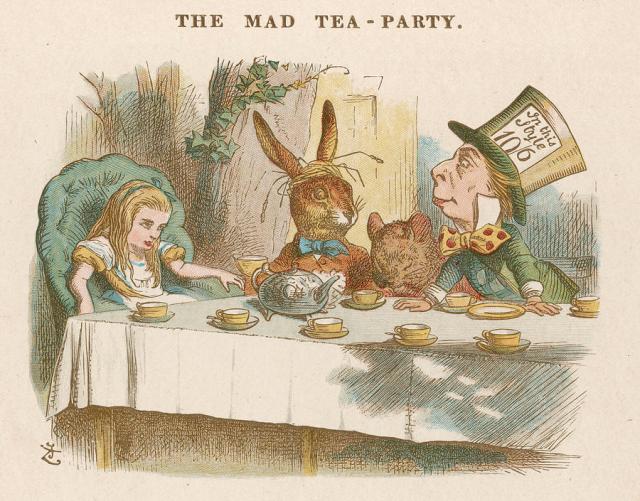
Do you play croquet with the Queen on Thursday. (Croquet is not mentioned in the invitation but I am well-read enough to know that a royal garden party will involve hedgehogs, flamingos, soldiers, Heads-man, and the grin of a Cheshire cat). If so are you coming via Oxford? I was thinking of going up by 1.58 [train] and returning by the 6.45 or 7.35 on either of which we cd. dine. You are an experienced courtier and it would give me great moral support to arrive in your company!

So, perhaps I am wrong: It is not so much Lewis’ expertise as a Medieval and Renaissance literary historian but his knowledge of Alice in Wonderland that provides him with his understanding of courtly life.

Unfortunately, Ruth Pitter was not among the thousands of guests who, to Lewis’ disappointment, so crowded the reception that it made finding a cup of tea impossible. It was one of those lonely-in-a-crowd moments for Lewis until he met a friend. Lewis never saw the queen.

Incidentally, in his peculiar ability to be completely clueless about popular culture and still make occasionally prescient comments, Lewis anticipated the pressures of a media-infused royal culture in a 12 Nov 1957 letter to Vera Gebbert:

If we can accept as true what our papers tell us, the Queen’s trip has been a real success…. I don’t suppose royalty feels the same embarrassment at these kinds of reception as we luckier mortals would in their place. After all, they have been in the limelight since they could walk almost. Look at Princess Anne and Prince Charles–still very young children, and I suppose they would find it odd if they were not photographed when they went out!

Prince Charles, heir apparent to the throne has lived his life thoroughly harried by this “limelight.” And yet he appears (like his mother) to move forward, one step in front of the other. While I have reservations about his role as head of the Church of England, he was affable and personable in his 2014 visit to our community. In spending time with local community leaders, he showed the same kind of curiosity about rural Prince Edward Island culture and the pressures facing churches as he showed in the technical details of our “heritage carpentry” program at our local college (on the site of what was Prince of Wales College, the Protestant university before it joined with St. Dunstan’s University to form the University of Prince Edward Island).

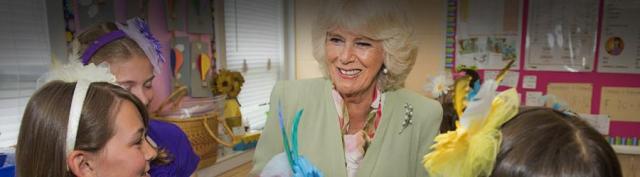
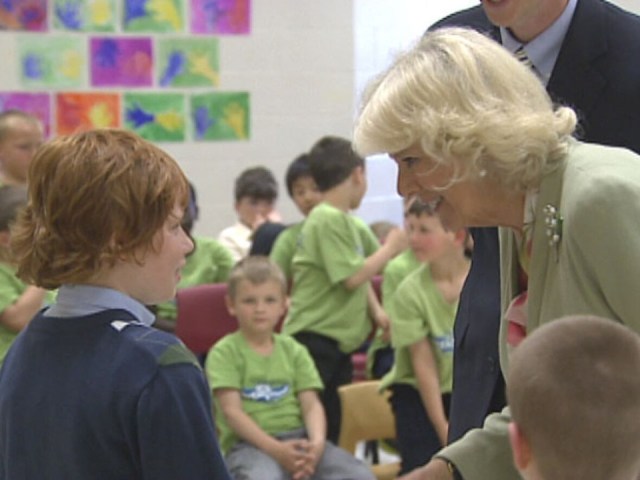
Duchess Camilla of Cornwall, likewise, betrayed any tabloid expectation in her warmth and generosity of spirit. She visited the school where my son attends and my wife teaches. She made fascinators (a kind of feathery hat, I think) with some grade four girls, followed by a series of dramatic presentations. Although I helped prepare the teenage actors for a remarkably abridged and buoyant Royal Shakespearean production–where the kiss of love was substituted with a high 5–I was not cleared by international security to attend the event (for reasons that those who know me would find obvious).

However, my son, then 9 years old, was chosen to recite a poem. With a nervous wink to Her Royal Highness, Nicolas recited “The Road Goes Ever On” by Bilbo Baggins. Here is the Duchess congratulating him on his recitation.

Nicolas, believe it or not, graduates high school in a couple of weeks–no doubt heightening expectations for this Platinum Jubilee.

That is, perhaps, not a bad place to end this royal exploration–a walking song “Where many paths and errands meet” that has its own tragic splendour for those that know the tale. After all, it takes on new words and new meanings after the Return of the King.

Posted in Reflections | Tagged , , , , , , , , , , , , , , | 18 Comments

Jacob R. Schreiner Thesis Theatre, “The Logos of Faith: Sub-Creation through Speech-Acts in Tolkien’s Legendarium” (free online event Wednesday, June 1st, 12noon Eastern)

Following a successful event last week–a great conversation with Miriam Davidson on “nonviolence” in The Lord of the Rings–I wanted to send a quick update on the three Signum University Thesis Theatres on The Lord of the Rings and Tolkien’s Legendarium that I previously announced. Our Signum University master’s students have the opportunity to write a thesis at the end of their degree program, exploring a topic of their choice. The “Thesis Theatre” is their opportunity to present their research to a general audience, tease out some of the implications of their work, and answer questions from the audience. The three projects I announced create a nice set for Tolkien fans: a literary motif, a social question, and a study of the power of words:

  • Tomorrow, Wednesday, June 1st, 12noon: Jacob R. Schreiner, “The Logos of Faith: Sub-Creation through Speech-Acts in Tolkien’s Legendarium” (free registration link: click here)
  • Last week, Miriam Davidson provided an excellent presentation on her thesis, “The Sword Not for its Sharpness: Nonviolent countercurrents in Tolkien’s Epic of War”
  • Emily Austin successfully presented her thesis, “The Road Gives Ever On: Following the Road Motif in The Lord of the Rings,” on Saturday, May 21st

Below is the description and free registration link for the last of these three Thesis Theatres. I hope you can join us tomorrow for a great discussion. Beneath that announcement, I include the Thesis Theatre Youtube video links of each session (followed by some other thesis theatres I have hosted).

Jacob R. Schreiner, “The Logos of Faith: Sub-Creation through Speech-Acts in Tolkien’s Legendarium”

Date: Wednesday, June 1st

Time: 12pm noon Eastern

Free Registration Link: click here

Host: Dr. Brenton Dickieson

Abstract: J.R.R. Tolkien’s theory of sub-creation has long been studied within his legendarium, and how humanity, being created by God, has the desire to imitate the Creator through sub-creation. However, what is the connection between God’s command for the universe to Be and humanity’s ability to sub-create? This thesis examines logos as “word” and “reason” in creation and its relationship to sub-creation through the investigative lens of speech-act theory. According to J.L. Austin and other speech-act theorists, when one speaks, it is not merely to say words, but by the act of speech, one performs, which produces consequential effects by the speaker. In The Silmarillion, Ilúvatar’s original speech-act brought all of creation into being and allowed the Ainur to sub-create within Arda according to the logical reason and design of the universe and by the word, “Eä!” The same is true in Middle-earth. Frodo and Sam harness the power of the logos in their speech-acts, and in prayer as a speech-act, by having faith, they can sub-create through language and bring about physical changes within their world.

Bio: Jacob R. Schreiner holds a Bachelor of Arts degree in English from Sam Houston State University. His first conference presentation was at TexMoot in 2019 where he presented his paper “God of War and the Norse Oral Storyteller,” and later that year presented at Mythmoot VI on “’What a worm’s made for!’: The Cure to Conquering Dragons in C.S. Lewis’ Pilgrim’s Regress and Voyage of the ‘Dawn Treader.’” At Mythmoot VII, Jacob presented his paper, “A Light for Hobbit Feet: Moral Choices that Defy Darkness in Children’s Fantasy.” His research interests include fantasy, especially the works of J.R.R. Tolkien, speech-act theory, and Germanic philology. Jacob currently runs a blog called The Tolkienian where he analyzes the works of Tolkien, fantasy, and science fiction.

Recent Thesis Theatre: Miriam Davidson, “The Sword Not for its Sharpness: Nonviolent countercurrents in Tolkien’s Epic of War”

Abstract: The Lord of the Rings highlights Tolkien’s use of characters and narrative to accentuate the courage and honor earned by those who sacrifice themselves in combat. His plot demands, and often justifies, violent action. The people of Middle-earth will not stand by as Sauron works to enslave and kill the free folk. Still, there is a clear and consistent emphasis on the cost and devastation these violent engagements bring. Tolkien’s narrative strongly warns against the lust for power and the will to dominate others while elevating the importance of grace, forgiveness, and not striking without the gravest of need. War victors should be magnanimous, offering reconciliation and forgiveness to the defeated rather than destruction, slavery, or crippling reparations. Discovering the tensions at play between the honor of war and its human devastation, this thesis explores the countercurrents of nonviolence in Tolkien’s The Lord of the Rings. These countercurrents ultimately demonstrate that Tolkien’s representation of war and nonviolence is impacted by his literary mode, educational background, personal beliefs, and exposure to war.

Bio: Miriam Davidson has been practicing as a forensic psychiatric nurse practitioner in the Department of Corrections for the past 15 years. She has a deep-rooted love for fantasy literature and pursued a MA degree to expand and strengthen her reading and writing skills. With the help of her husband and dogs, she spends her free time restoring a 200-year-old lighthouse in Downeast, Maine.

Recent Thesis Theatre: Emily Austin, “The Road Gives Ever On: Following the Road Motif in The Lord of the Rings.”

AbstractThe Lord of the Rings makes prominent use of “The Road” as a multifaceted symbolic image, but roads also play a more subtly powerful role in the text as a tool of narrative description. Tolkien’s stylistic treatment of roads and paths builds on his longstanding interest in the concept, visible in many earlier writings. In The Lord of the Rings, attention to the characters’ roads as they journey is a recurring motif that becomes particularly central for Frodo and Sam on the way to Mount Doom. This paper uses close reading and digital text analysis to identify four principal ways this narrative attention to roads can manifest, and examines how they undergird and enrich the concept’s thematic significance.

Bio: From an early age, Emily Austin has loved both reading and the visual arts, and pursued ways to combine these interests. Her favorite authors, particularly J.R.R. Tolkien and Jane Austen, shaped both her literary tastes and her artistic imagination, and they continue to provide both academic interest and inspiration for art projects. Born and raised on Oahu, Hawaii, Emily now lives in Indiana with her husband Ryan and runs a business creating art, illustration, and graphic design. Besides reading and painting, Emily also loves travel, photography, and sewing.

And here are some previous Thesis Theatres that I’ve been pleased to host:

Posted in News & Links | Tagged , , , , , , , , , , , | Leave a comment

Miriam Davidson Thesis Theatre, “The Sword Not for its Sharpness: Nonviolent countercurrents in Tolkien’s Epic of War” (free online event Thurs, May 26th, 3pm ET)

I wanted to send a quick update on the three Signum University Thesis Theatres on The Lord of the Rings and Tolkien’s Legendarium that I announced last week. Our Signum University master’s students have the opportunity to write a thesis at the end of their degree program, exploring a topic of their choice. The “Thesis Theatre” is their opportunity to present their research to a general audience, tease out some of the implications of their work, and answer questions from the audience. The three projects I announced create a nice set for Tolkien fans: a literary motif, a social question, and a study of the power of words. Here are the updated free registration links for the two upcoming Thesis Theatres, followed by project details and a link to Emily’s Thesis Theatre from Saturday:

  • Tomorrow, Thursday, May 26th, 3pm Eastern: Miriam Davidson, “The Sword Not for its Sharpness: Nonviolent countercurrents in Tolkien’s Epic of War” (free registration link: click here)
  • Wednesday, June 1st, 12noon: Jacob R. Schreiner, “The Logos of Faith: Sub-Creation through Speech-Acts in Tolkien’s Legendarium” (free registration link: click here)
  • Emily Austin successfully presented her Thesis, “The Road Gives Ever On: Following the Road Motif in The Lord of the Rings,” on Saturday, May 21st, and I’ve included the Youtube video link below (followed by some other thesis theatres I have hosted)

Miriam Davidson, “The Sword Not for its Sharpness: Nonviolent countercurrents in Tolkien’s Epic of War”

Date: Thursday, May 26th

Time: 3pm Eastern

Free Registration Link: click here

Host: Dr. Brenton Dickieson

Abstract: The Lord of the Rings highlights Tolkien’s use of characters and narrative to accentuate the courage and honor earned by those who sacrifice themselves in combat. His plot demands, and often justifies, violent action. The people of Middle-earth will not stand by as Sauron works to enslave and kill the free folk. Still, there is a clear and consistent emphasis on the cost and devastation these violent engagements bring. Tolkien’s narrative strongly warns against the lust for power and the will to dominate others while elevating the importance of grace, forgiveness, and not striking without the gravest of need. War victors should be magnanimous, offering reconciliation and forgiveness to the defeated rather than destruction, slavery, or crippling reparations. Discovering the tensions at play between the honor of war and its human devastation, this thesis explores the countercurrents of nonviolence in Tolkien’s The Lord of the Rings. These countercurrents ultimately demonstrate that Tolkien’s representation of war and nonviolence is impacted by his literary mode, educational background, personal beliefs, and exposure to war.

Bio: Miriam Davidson has been practicing as a forensic psychiatric nurse practitioner in the Department of Corrections for the past 15 years. She has a deep-rooted love for fantasy literature and pursued a MA degree to expand and strengthen her reading and writing skills. With the help of her husband and dogs, she spends her free time restoring a 200-year-old lighthouse in Downeast, Maine.

Jacob R. Schreiner, “The Logos of Faith: Sub-Creation through Speech-Acts in Tolkien’s Legendarium”

Date: Wednesday, June 1st

Time: 12pm noon Eastern

Free Registration Link: click here

Host: Dr. Brenton Dickieson

Abstract: J.R.R. Tolkien’s theory of sub-creation has long been studied within his legendarium, and how humanity, being created by God, has the desire to imitate the Creator through sub-creation. However, what is the connection between God’s command for the universe to Be and humanity’s ability to sub-create? This thesis examines logos as “word” and “reason” in creation and its relationship to sub-creation through the investigative lens of speech-act theory. According to J.L. Austin and other speech-act theorists, when one speaks, it is not merely to say words, but by the act of speech, one performs, which produces consequential effects by the speaker. In The Silmarillion, Ilúvatar’s original speech-act brought all of creation into being and allowed the Ainur to sub-create within Arda according to the logical reason and design of the universe and by the word, “Eä!” The same is true in Middle-earth. Frodo and Sam harness the power of the logos in their speech-acts, and in prayer as a speech-act, by having faith, they can sub-create through language and bring about physical changes within their world.

Bio: Jacob R. Schreiner holds a Bachelor of Arts degree in English from Sam Houston State University. His first conference presentation was at TexMoot in 2019 where he presented his paper “God of War and the Norse Oral Storyteller,” and later that year presented at Mythmoot VI on “’What a worm’s made for!’: The Cure to Conquering Dragons in C.S. Lewis’ Pilgrim’s Regress and Voyage of the ‘Dawn Treader.’” At Mythmoot VII, Jacob presented his paper, “A Light for Hobbit Feet: Moral Choices that Defy Darkness in Children’s Fantasy.” His research interests include fantasy, especially the works of J.R.R. Tolkien, speech-act theory, and Germanic philology. Jacob currently runs a blog called The Tolkienian where he analyzes the works of Tolkien, fantasy, and science fiction.

Recent Thesis Theatre: Emily Austin, “The Road Gives Ever On: Following the Road Motif in The Lord of the Rings.”

AbstractThe Lord of the Rings makes prominent use of “The Road” as a multifaceted symbolic image, but roads also play a more subtly powerful role in the text as a tool of narrative description. Tolkien’s stylistic treatment of roads and paths builds on his longstanding interest in the concept, visible in many earlier writings. In The Lord of the Rings, attention to the characters’ roads as they journey is a recurring motif that becomes particularly central for Frodo and Sam on the way to Mount Doom. This paper uses close reading and digital text analysis to identify four principal ways this narrative attention to roads can manifest, and examines how they undergird and enrich the concept’s thematic significance.

Bio: From an early age, Emily Austin has loved both reading and the visual arts, and pursued ways to combine these interests. Her favorite authors, particularly J.R.R. Tolkien and Jane Austen, shaped both her literary tastes and her artistic imagination, and they continue to provide both academic interest and inspiration for art projects. Born and raised on Oahu, Hawaii, Emily now lives in Indiana with her husband Ryan and runs a business creating art, illustration, and graphic design. Besides reading and painting, Emily also loves travel, photography, and sewing.

And here are some previous Thesis Theatres that I’ve been pleased to host:

Posted in News & Links | Tagged , , , , , , , , , , , | 1 Comment

3 Upcoming Signum University Thesis Theatres on The Lord of the Rings and Tolkien’s Legendarium

I’m pleased as the week closes to offer a rich set of opportunities to dive meaningfully into Tolkien’s imaginative worlds. There are three upcoming Signum University Thesis Theatres on The Lord of the Rings and Tolkien’s Legendarium (all times Eastern):

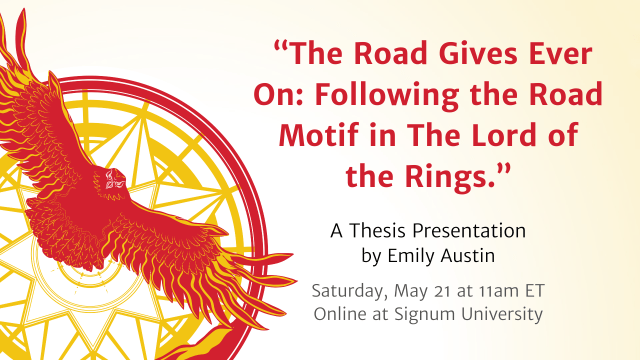
  • Tomorrow, Saturday, May 21st, 11am: Emily Austin, “The Road Gives Ever On: Following the Road Motif in The Lord of the Rings
  • Thursday, May 26th, 3pm: Miriam Davidson, “The Sword Not for its Sharpness: Nonviolent countercurrents in Tolkien’s Epic of War”
  • Wednesday, June 1st, 12noon: Jacob R. Schreiner, “The Logos of Faith: Sub-Creation through Speech-Acts in Tolkien’s Legendarium”

A literary motif, a social question, and a study in the power of words–a great set of projects from three students whom I am proud to say I know. Indeed, I have been the supervisor of two of these projects–Miriam’s and Jacob’s–and Emily has been a guest writer for A Pilgrim in Narnia (see here), and I have used her artistic work in my teaching and writing (see here).

Our Signum University master’s students have the opportunity to write a thesis at the end of their degree program, exploring a topic of their choice. These Thesis Theatres are their opportunity to present their research to a general audience, tease out some of the implications of their work, and answer questions from the audience. I love these free events and have attached some of the others that I have hosted.

It is a free event and all are welcome to attend.

Before the Thesis Theatre details, just a brief couple of notes about Calls for Submissions for essay collections. As I noted earlier, Sørina Higgins and I have conspired to propose an anthology on ecocriticism, environmental concern, and creation care within speculative fiction. In particular, we have some space open for proposals about contemporary writing, especially writers of colour and indigenous imaginative works. Check out our call for:  “Gardeners of the Galaxies: How Imaginary Worlds Teach Us to Care for This One.”

And I would like to note that An Unexpected Journal is featuring a Special Issue on “Shakespeare and Cultural Apologetics,” edited by Drs Joe Ricke and Sarah Waters. I have been fortunate enough to be an expected contributor to An Unexpected Journal, and Sarah and Joe are friends of mind and poetically minded literary critics whom I admire. You can find the full Call here with a Jul 20th deadline–on the list following Calls for Submissions on Special Issues on “Dragons” and “Joy” (which are still open too by the way).

Now, to the details about the three upcoming Signum University Thesis Theatres on The Lord of the Rings and Tolkien’s Legendarium, including links for signing up for the free live Zoom event.

Emily Austin, “The Road Gives Ever On: Following the Road Motif in The Lord of the Rings.”

Date: Saturday, May 21st, 2022

Time: 11am Eastern

Free Registration Link: https://signumuniversity.org/event/thesis-theater-emily-austin-the-road-gives-ever-on-following-the-road-motif-in-the-lord-of-the-rings/

Host: Dr. Sara Brown

Abstract: The Lord of the Rings makes prominent use of “The Road” as a multifaceted symbolic image, but roads also play a more subtly powerful role in the text as a tool of narrative description. Tolkien’s stylistic treatment of roads and paths builds on his longstanding interest in the concept, visible in many earlier writings. In The Lord of the Rings, attention to the characters’ roads as they journey is a recurring motif that becomes particularly central for Frodo and Sam on the way to Mount Doom. This paper uses close reading and digital text analysis to identify four principal ways this narrative attention to roads can manifest, and examines how they undergird and enrich the concept’s thematic significance.

Bio: From an early age, Emily Austin has loved both reading and the visual arts, and pursued ways to combine these interests. Her favorite authors, particularly J.R.R. Tolkien and Jane Austen, shaped both her literary tastes and her artistic imagination, and they continue to provide both academic interest and inspiration for art projects. Born and raised on Oahu, Hawaii, Emily now lives in Indiana with her husband Ryan and runs a business creating art, illustration, and graphic design. Besides reading and painting, Emily also loves travel, photography, and sewing.

Miriam Davidson, “The Sword Not for its Sharpness: Nonviolent countercurrents in Tolkien’s Epic of War”

Date: Thursday, May 26th

Time: 3pm Eastern

Free Registration Link: click here

Host: Dr. Brenton Dickieson

Abstract: The Lord of the Rings highlights Tolkien’s use of characters and narrative to accentuate the courage and honor earned by those who sacrifice themselves in combat. His plot demands, and often justifies, violent action. The people of Middle-earth will not stand by as Sauron works to enslave and kill the free folk. Still, there is a clear and consistent emphasis on the cost and devastation these violent engagements bring. Tolkien’s narrative strongly warns against the lust for power and the will to dominate others while elevating the importance of grace, forgiveness, and not striking without the gravest of need. War victors should be magnanimous, offering reconciliation and forgiveness to the defeated rather than destruction, slavery, or crippling reparations. Discovering the tensions at play between the honor of war and its human devastation, this thesis explores the countercurrents of nonviolence in Tolkien’s The Lord of the Rings. These countercurrents ultimately demonstrate that Tolkien’s representation of war and nonviolence is impacted by his literary mode, educational background, personal beliefs, and exposure to war.

Bio: Miriam Davidson has been practicing as a forensic psychiatric nurse practitioner in the Department of Corrections for the past 15 years. She has a deep-rooted love for fantasy literature and pursued a MA degree to expand and strengthen her reading and writing skills. With the help of her husband and dogs, she spends her free time restoring a 200-year-old lighthouse in Downeast, Maine.

Jacob R. Schreiner, “The Logos of Faith: Sub-Creation through Speech-Acts in Tolkien’s Legendarium”

Date: Wednesday, June 1st

Time: 12pm noon Eastern

Free Registration Link: click here

Host: Dr. Brenton Dickieson

Abstract: J.R.R. Tolkien’s theory of sub-creation has long been studied within his legendarium, and how humanity, being created by God, has the desire to imitate the Creator through sub-creation. However, what is the connection between God’s command for the universe to Be and humanity’s ability to sub-create? This thesis examines logos as “word” and “reason” in creation and its relationship to sub-creation through the investigative lens of speech-act theory. According to J.L. Austin and other speech-act theorists, when one speaks, it is not merely to say words, but by the act of speech, one performs, which produces consequential effects by the speaker. In The Silmarillion, Ilúvatar’s original speech-act brought all of creation into being and allowed the Ainur to sub-create within Arda according to the logical reason and design of the universe and by the word, “Eä!” The same is true in Middle-earth. Frodo and Sam harness the power of the logos in their speech-acts, and in prayer as a speech-act, by having faith, they can sub-create through language and bring about physical changes within their world.

Bio: Jacob R. Schreiner holds a Bachelor of Arts degree in English from Sam Houston State University. His first conference presentation was at TexMoot in 2019 where he presented his paper “God of War and the Norse Oral Storyteller,” and later that year presented at Mythmoot VI on “’What a worm’s made for!’: The Cure to Conquering Dragons in C.S. Lewis’ Pilgrim’s Regress and Voyage of the ‘Dawn Treader.’” At Mythmoot VII, Jacob presented his paper, “A Light for Hobbit Feet: Moral Choices that Defy Darkness in Children’s Fantasy.” His research interests include fantasy, especially the works of J.R.R. Tolkien, speech-act theory, and Germanic philology. Jacob currently runs a blog called The Tolkienian where he analyzes the works of Tolkien, fantasy, and science fiction.

Posted in Feature Friday, News & Links | Tagged , , , , , , , , , , , | 6 Comments