It is day 13 since Hurricane Fiona, and I have been updating my feed on Facebook with daily notes about life without power. But it is day 1 of being restored to the electrical grid. I woke up to this symbol on my phone: 100% Fully Charged. It was a relief.
Physically and emotionally, I’m not quite fully charged. But our devices, fridge, and hot water heater are ready to go. This morning felt very normal: alarm sounds, flick on a light, hot shower, dress, check email and online news, and then hastily throw together lunches since I didn’t give myself enough time to get out the door on time. Typical Thursday.
No generators rumbling rudely day and night, no keeping things in the freezer because the fridge isn’t cold, no bread and peanut butter on the go, no heating hot water on the BBQ, no showering at the gym, no looking at the outage map to see when we might see our community get hooked back up to the grid.
Living 12 days in an “emergency” scenario has been a powerful and unusual experience.
As I talked about in “Day 7 Without Electricity,” “Stone Soup, Cherry Trees, and Shorelines: An Update from Prince Edward Island on Hurricane Fiona,” and some Facebook posts, there have been beautiful aspects of Fiona’s aftermath. We strengthened our relationship with our neighbours as we gathered around to support one another. We were able to give and receive gifts of friendship, time, food, gas, and little reprieves from apocalyptic doom. We have received dozens of lovely notes of cheer and offers of help, and I have a deeper understanding of the unseen webs of support that are part of my daily life. I have also gained a deeper appreciation of how much of my modern life is a gift that I take for granted: hot food, hot coffee, hot showers, cold drinks, safe food, everlasting Internet access, a phone line, light before dawn and after dusk, a warm and dry house.
I have also come to see how fortunate we are. It was during Hurricane Ida last year–where we got something like 120 mm of rain in 90 minutes–when I realized that my home was built for winter storms, but not equipped for tropical storms and hurricanes. As my friend Alan MacEachern notes here, historically, Prince Edward Island is susceptible to summer and autumn storms. His write-up of the “October Gale” 99 years ago is eerily reminiscent of Hurricane Fiona’s impact.
However, I don’t think of PEI as a hurricane place. Ida’s deluge gave me the impetus to prepare for future storms. Thus, we had the ability to keep our freezer cold, save the house from significant water damage, and keep connected with our students and family. These plans were the difference between discomfort and disaster.
But we were also lucky. As lovers of camping, we had supplies that many urban folk wouldn’t even dream of keeping around, like tarps, bungee cords, coolers, lamps, candles, and cooking stoves. With camping in mind, I bought a boxful of outdoor extension cords at a yard sale one year, and we used every inch of cord available to us in the last 12 days. We had our chainsaw stolen, but we had the resources to make a 2-hour pilgrimage and purchase one of the last chainsaws in the Province. We have a wood stove as part of our heat plan in the house, which gave us the ability to heat the house and dry the basement without the need of power.
And, most fortunate of all, we have a huge support network of neighbours, friends, family members, work colleagues, and church folk that could step in if things tilted toward disaster–and who stepped in just to make bad things better.
Even with planning and luck, many things were far more difficult than they should have been. It was clear that I never understood the capacities of what a storm like this could do. Thus, while we battened hatches well, we were only prepared for 3 or 4 days of emergency living, not 12. While my work demands never ceased, from dawn to dusk of every day, I found myself caught up with endless little tasks and unpredictable jobs that were ncecesary to keep my household going–not to mention supporting my wife’s parents, helping out around the neighbourhood, and encouraging my students–many of whom are new to PEI and Canada, and are feeling somewhat adrift.
It has been physically exhausting and emotionally wearisome–especially the gassy, gnawing, rumbling wine and chatter of diesel tractors and chainsaws and generators, which in the last few days have been running at all hours of day and night.
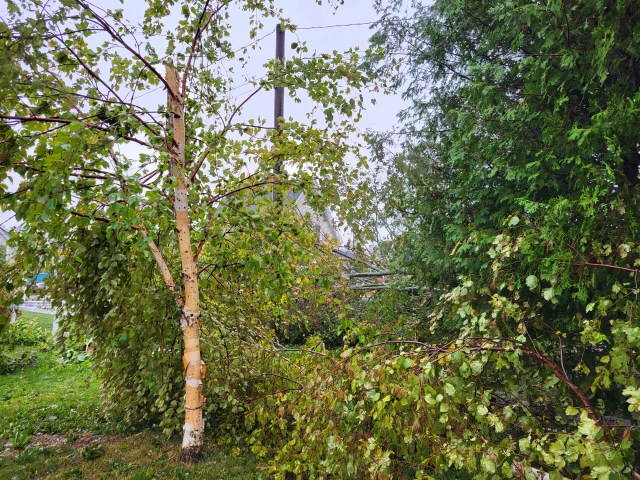
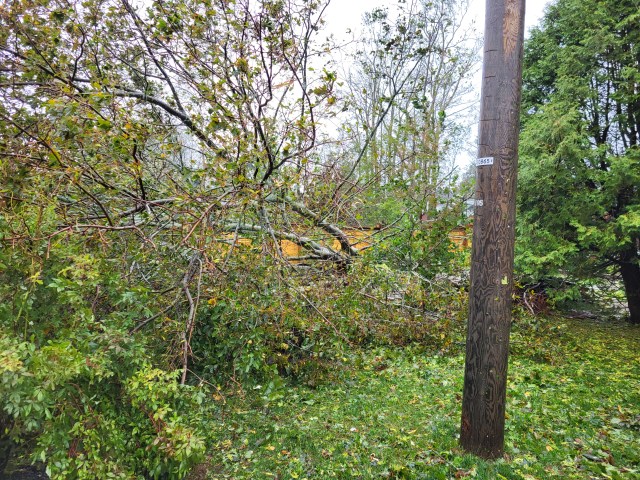
And even as I sectioned my fallen Cherries, Maples, and Birches for firewood, it feels like a loss.
This whole experience has taught me much. It may have been far worse–and is far worse for so many others. Thank you to everyone who sent a nice note, dropped off gas or food, helped us clean up debris and block trees, and waited patiently for delayed emails, messages, and bits of work. While I have been in the dark for nearly two weeks, I have drawn energy from all of you.
I believe in open access scholarship. Because of this, since 2011 I have made A Pilgrim in Narnia free with nearly 1,000 posts on faith, fiction, and fantasy. Please consider sharing my work so others can enjoy it.
Today is the National Day for Truth and Reconciliation here in Canada, what we have been calling Orange Shirt Day for a few years. Today, as Canadians, we remember our historic relationship with the first peoples of this land. We mourn and honour the children who never returned home and survivors of residential schools, as well as their families and communities where the pain reverberates still.
As someone living in Epekwitk, Abegweit, the “Cradle in the Waves: we call Prince Edward Island, PEI, the Island, I am reflective of the fact that this is not merely the ancestral unceded territory of the Mi’kmaq, but the ongoing territory as well. I am open to learning from my neighbours.
On June 21st, I blogged about National Indigenous Peoples Day, an opportunity on the longest day of the year for Canadians to recognize and celebrate the unique heritage, diverse cultures, and outstanding contributions of First Nations, Inuit and Métis peoples. In “An Unfinished Walking Song and Prince Edward Island’s Mi’kmaq on National Indigenous Peoples Day,” I also talk about residential schools and my own growth in understanding of our shared story. It was a hard post to write, but I hope you will take the time to read it.
Today is also Day 7 without electricity, and I’m sporting my orange shirt in front of my beloved tree, downed by Hurricane Fiona. Our Cradle in the Waves has been rocked, stirred, disturbed … the land and shorelines have changed. I blogged about my experience a bit on Tuesday in the post “Stone Soup, Cherry Trees, and Shorelines: An Update from Prince Edward Island on Hurricane Fiona.” I am embroiled with little tasks and jobs tr;lying to keep my household going, support my wife’s parents and neighbours, and help my students keep moving forward, so I don’t have time for a real update. However, I’ll share a bit from a social media post yesterday that works as a follow-up to my Soup-Trees-Shorlines Tuesday update:
Day 6 in the Dark, Random Thoughts and notes of Blessing:
I have received dozens of lovely notes of cheer and offers of help, and I feel blessed by the unseen webs of support that are part of my daily life
we had a big BBQ last night to cook all the meat Kerry’s parents had in the freezer, and a double rainbow made an appearance
did you know that tater tots work well on the BBQ? (lucky)
Tuesday’s “Stone Soup” by Rick (whom I hilariously called Rusty) was such a nice treat–hot, good food made with ingredients from the neighbourhood’s supplies and then given back to the neighbourhood
hot coffee, a blessing remembered
having a generator for part of the day is such a lift that it makes me tear up: I can work, our freezer is cold, our basement is dry
once I understood the limits of a generator, we’ve been able to string extension cords together to plug in neighbour’s freezers, one at a time, which has been neat
a tea kettle draws the most power of any appliance
a chainsaw I have! and itching to use
the gassy, gnawing, rumbling wine and chatter of generators and chainsaws from 7am to 1am is wearisome, though I’m trying to keep it in perspective
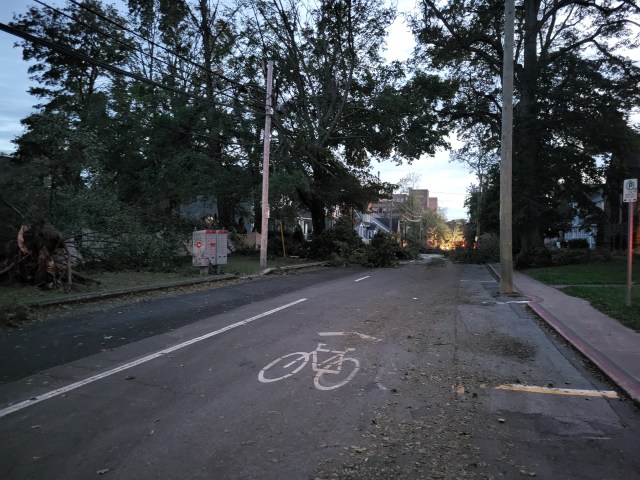
we are waiting for the electricity to come back on by standing on our top floor deck and scanning the community, and then looking at the Maritime Electric outage map–it’s really like an inversed invasion map, as a circle of lightlessness surrounds our home
I could hit a baseball to where the whole block has light (if I could hit a baseball)
Wednesday night Kerry and I walked through our neighbourhood, encouraged by how quickly things have been cleaned up, and amazed at the damage that still exists
it was beautiful to see flickering candlelight behind the curtains
all summer we try to get out of the house to sit by the campfire, away from electric light, but it was cheerful last night to sit beneath a lamp and watch an old TV show I had on my laptop
I think I want to hang solar-powered garden lights so that future apocalypses are more cheerful
it is a blessing to help betimes: a family last night was burning storm debris to cook supper in a metal bowl (with poisonous potentials), and I was able to give them dry wood (from my dry basement), which warmed me in a different way
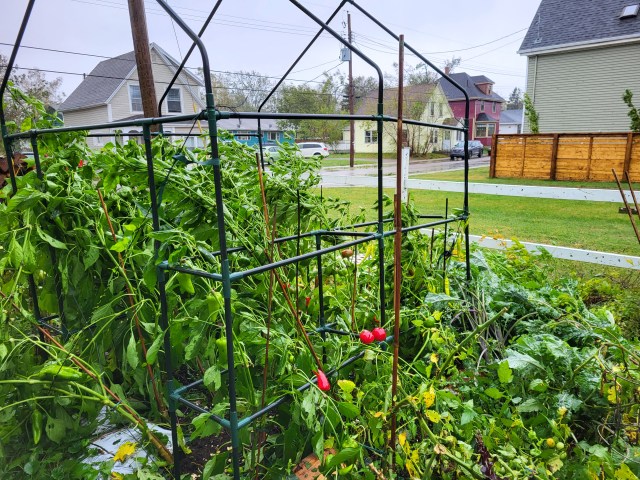
my downed cherry tree is providing frost cover for tomatoes, which survived the storm (amazingly)
a sober note: Hurricane Ian is ravaging the US coast, refugees are scattering through Europe as winter sets in, and we have had warm nights in PEI since Hurricane Fiona; however, only 50% of Islanders have power and the temperature is going to drop
And from a Wednesday Post:
I’ve got gas! No, not that kind! I mean the ole fashioned dinosaur detritus, stinkify the air, run the car and warm the earth kind.
As the post-hurricane Fiona chaos in Atlantic Canada meant gargantuan lines and empty pumps, we decided to wait. We traded generator time for gas around the neighbourhood, and I learned to siphon gas without drinking it, sacrificing my beer-making supplies to the venture. It meant we lost our fridge food, but our basement is dry, our freezer is cold, and there are a half-dozen freezers around us that are still keeping food safe to eat.
Before dawn today, on day 5 without electricity, we went on a gas hunt. We succeeded, and also found bananas and coffee! What a wonder. We will have gas for the generator and car. And if I can find a way to replace my stolen chainsaw, I can get the yard cleaned and scavange some neighbourhood wood for winter.
Happy Wednesday!
I believe in open access scholarship. Because of this, since 2011 I have made A Pilgrim in Narnia free with nearly 1,000 posts on faith, fiction, and fantasy. Please consider sharing my work so others can enjoy it.
Dear friends, I wanted to provide an update on our Hurricane Fiona experience here in Prince Edward Island. Since the storm hit on Friday night, we have been amazed at just how powerful it was. I appreciate the kind personal notes and shows of support via email, Twitter, and DMs. I hope this note will fill folks in while I catch up on correspondence.
In brief: We are safe and well, mostly dry, relatively well fed, and we have intermittent cell access that is increasingly stable.
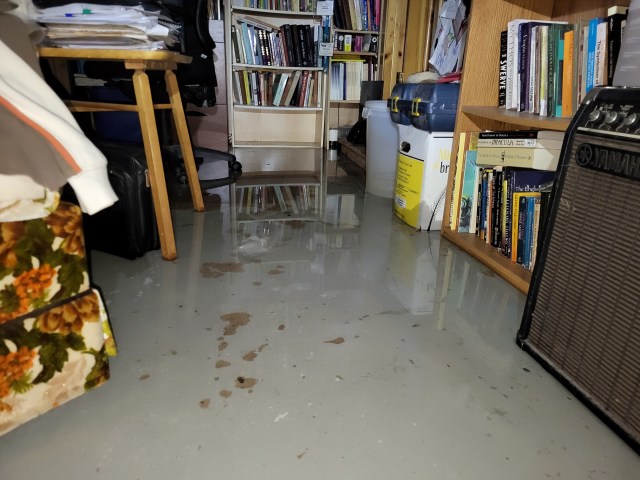
We have been without electricity since midnight Friday or early Saturday morning. It really was a harrowing experience trying to sleep through the night of the storm, waiting for the next transformer to explode into yellow and green light, or the next tree to crack like thunder and fall into the darkness. However, our most pressing issue was a flooded basement—filling my office and family room floor with water when we no longer had power to run the sump pumps. After dawn, in the eye of the hurricane, I was able to get a generator to fire the pumps. It was a close call, but by mid-afternoon Saturday we were mostly dry. We saved the computer equipment and all the books—though Dorothy Sayers’ letters were in some danger.
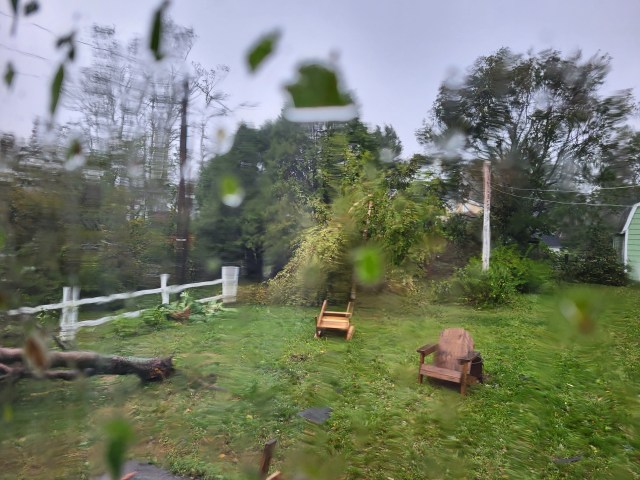
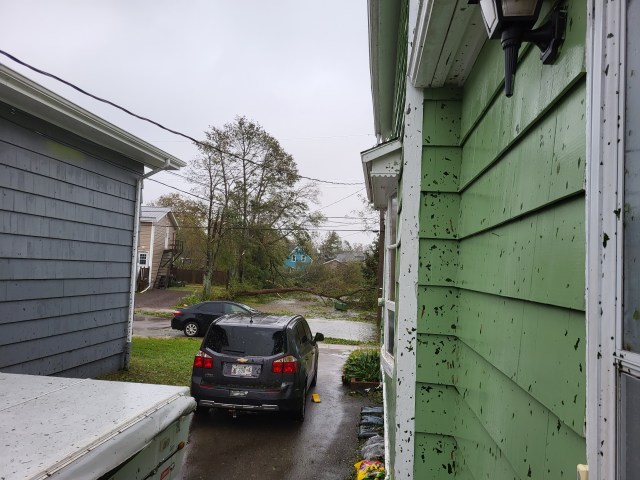
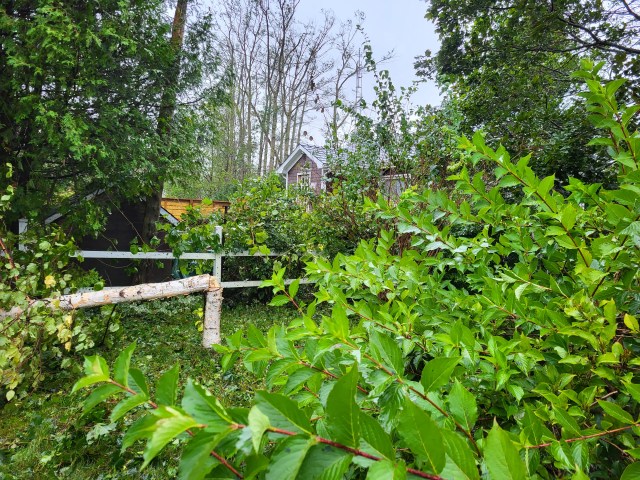
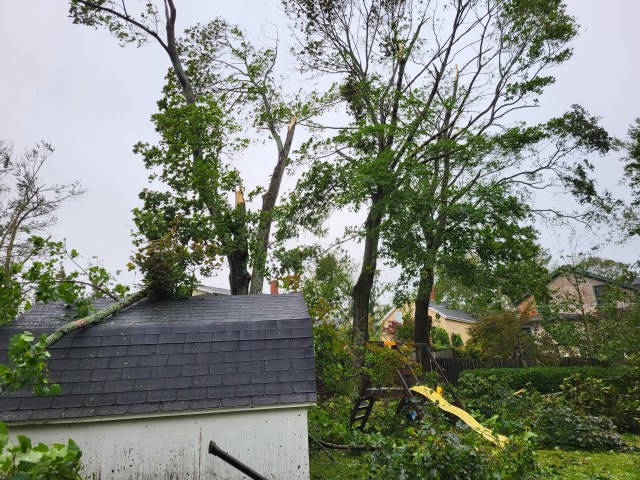
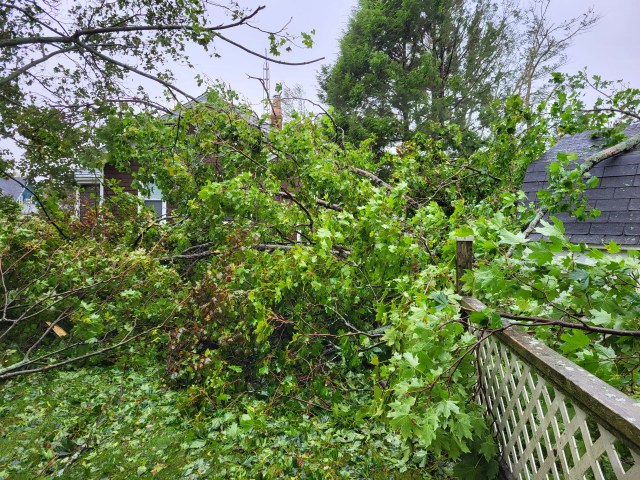
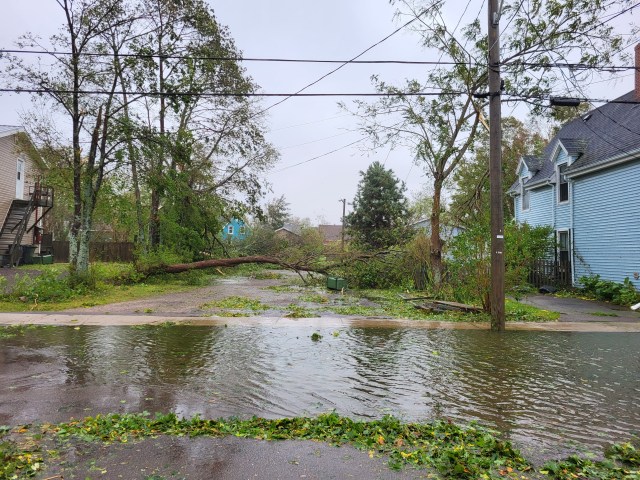
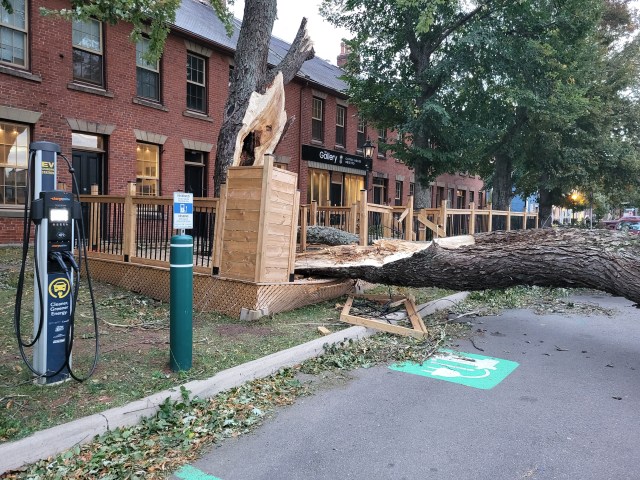
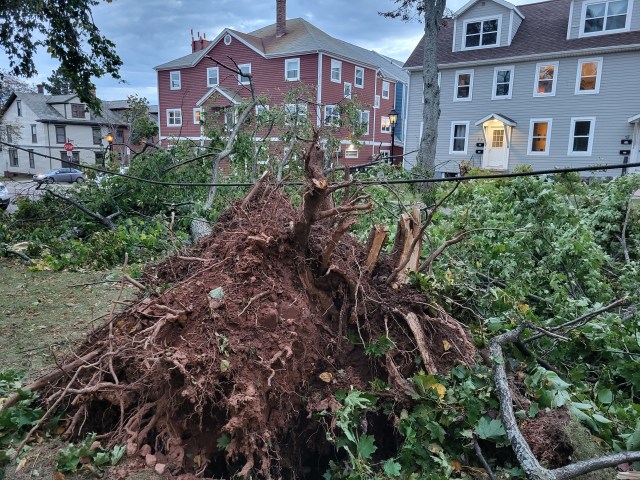
Beyond the water damage, we are thankful that we don’t have any structural problems with our house and barn. We are sad that of the 6 trees on our property, the storm took out 5 of them. About 1/3 of the branches from our young (about 45-year-old) Maple came down, and its sister next door was demolished. However, the Maple tree with Nicolas’ treehouse held firm. Two 15-year-old paper birches fell—though one of them is snapped at a high enough point that it may throw up its crazy white branches and keep going. Saddest of all, is the loss of our 17-year-old Cherry tree. The Cherry provides shade and colour and pollinates with a neighbour’s tree, a place for birds and bees and cats’ fascinations. Its leaves were just turning auburn and burgundy this week. It fell and crushed the dwarf apple tree (and part of the garden) beneath it. It is a loss. Admittedly, that apple tree is the ugliest thing in nature besides mole rats, with tasty wormy apples from branches glued back together after previous storms. It may survive yet.
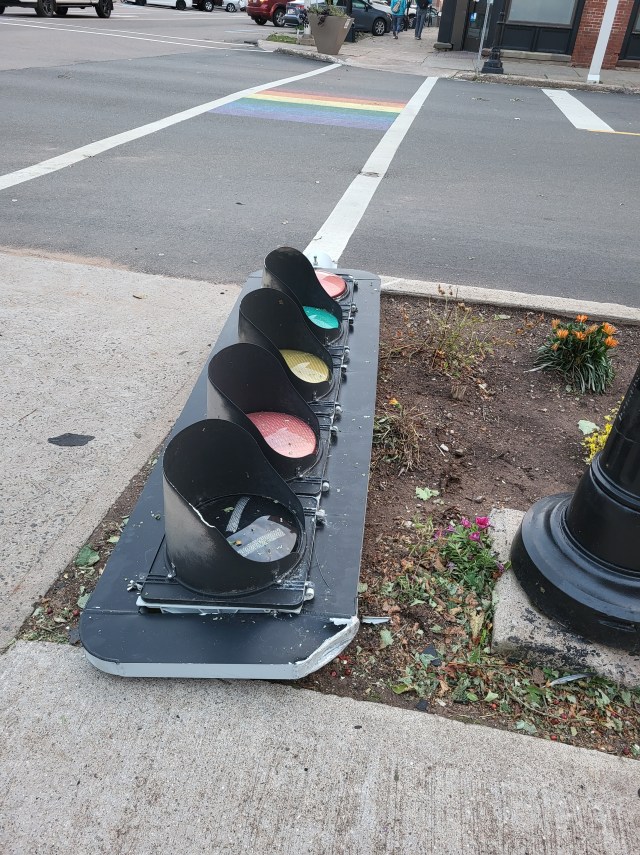
There are many losses that are much greater than ours in the storm—including friends’ homes and the Prince Edward Island land- and shore-scapes, which are forever changed. We did not prepare well for this storm, but we have resources that many don’t have. Though the fridge food is mostly gone, there is a generator that is cycling through the neighbourhood to keep freezer meat from spoiling. We are using it to keep our basement dry and charge laptops and devices for work, connection, and entertainment—for my work did not cease with the storm. We ran out of gas in the generator, but a neighbour came by who had gas but his basement was flooded, so that exchange worked well. If we can get the time and someone to lift the generator, we will siphon some gas to take it to Kerry’s parents’ house—both of whom are fine, but want to warm up the house and keep food from spoiling. We also have a church community that would support us if we needed help.
And, unlike so many folks, we have a wood stove to keep us warm, a BBQ to cook our food (and that of the neighbour’s as freezers thaw), a good amount of data, and a pretty strong network of support.
I really wish my chainsaw hadn’t been stolen, because there is much work to do. I wish we had prepared for a week without electricity rather than a weekend, because we are constantly improvising. I wish I hadn’t = put my back out lugging this generator around (though it’s only spasms now, very light pain, I can do stretches). However, given the damage that others have sustained, we feel fortunate, blessed, and hopeful.
And it is a beautiful blessing to rediscover and re-member neighbourliness. A neighbour had improvised a cooking bowl in his backyard and asked for wood from our winter pile. We could give his family dry wood from our basement and he taught folks in his building how to cook safely. Another neighbour spent two days cleaning up his downed trees and gave me the Maple wood he can’t mill for next year’s fire. I have had one of the local drug suppliers kindly offer me something “stronger than ibuprofen” for my back, which was kind of sweet. My counsellor was able to do a session in candlelight in his office, a real gift—though he reacted to me bringing him home-brewed coffee as if I was the one gifting him! One of our neighbours—whose house we can now see because the trees between us are gone—is going about the neighbourhood collecting items for a chicken soup. We traded some herbs, carrots, and corn for supper tonight. It is a pretty lovely Stone Soup moment.
So, best wishes to you all. We are responding to well-wishers when we get moments of electrical connection. I’m reconfiguring my local classes to alleviate student concerns, but it will be a week or so before work stuff is back to normal for us.
I believe in open access scholarship. Because of this, since 2011 I have made A Pilgrim in Narnia free with nearly 1,000 posts on faith, fiction, and fantasy. Please consider sharing my work so others can enjoy it.
On Thursday, when I heard about Queen Elizabeth’s passing, I shared some brief thoughts with a longer essay about what C.S. Lewis called the “tragic splendour” of royal ceremony. Lewis was referring to a coronation–and, as Stephen Winter says while partly quoting Lewis, King Charles III “will be ‘crowned and anointed by the Archbishop’ in Westminster Abbey in the coming year as every monarch has been in this land for a thousand years.” There will be another liturgy too, a funeral, another sacramental moment. Lewis struggled to find the word for what he was describing as he spoke about the coronation. He tried words like awe, pity, pathos, mystery, and “the situation of humanity itself” to capture an image where monarchy symbolizes humanity’s role as vice-regents on earth, where we are set apart as high priests of creation.
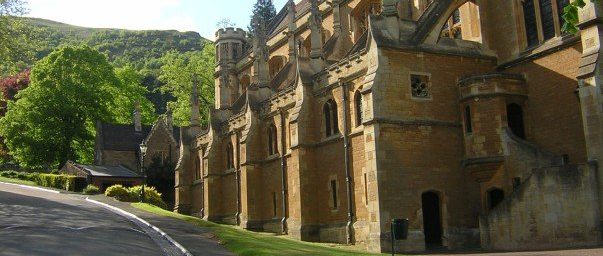
Malvern College Chapel
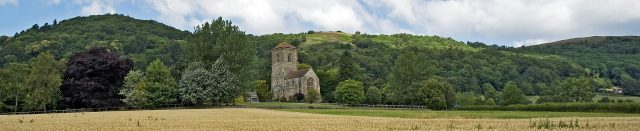
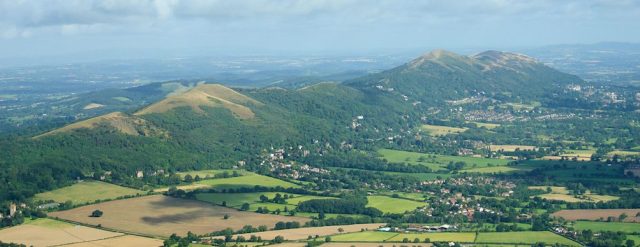
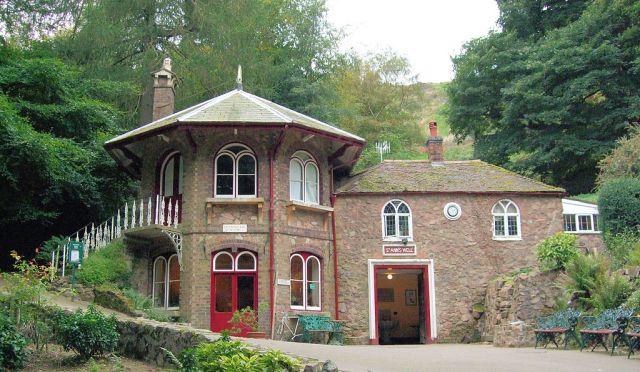
I woke up this morning, made some coffee, and read Stephen Winter’s latest essay on “Wisdom from The Lord of the Rings.” I admire Stephen’s weekly reflections and I try not to miss them–even in busy periods (like now). Stephen and I met digitally as writers both interested in faith, culture, and the Inklings. Stephen is an Anglican priest with a title like “Rector of the Severn Parishes”–though I always miss his title a little bit, partly because in my mind there are seven churches in the Severn Parish, though I might be wrong on that point too. As we hiked the Malvern hills together–where Lewis went to school for a period–Stephen pointed out the River Severn and its valleys. If I remember rightly, he also pointed to the snaking River Monnow dividing England and Wales, and something both Arthurian and Shakespearean stirred within me.
So I thought of Stephen and his church–the Church of England, C.S. Lewis’ church–when the Queen passed on. My grandmother, a closet Anglican, was worried in the 1980s about Charles becoming king because she did not think he would be a good “Defender of The Faith.” For the king is the Head of the Church of England, and is styled Charles the Third, by the Grace of God, of the United Kingdom of Great Britain and Northern Ireland and of His other Realms and Territories King, Head of the Commonwealth, Defender of the Faith. King Charles III is Defender of the Faith and Défenseur de la Foi now in Canada, and he will be named as such at Christ Church Cathedral in Ottawa in the days to come. As a Canadian who grew up without much religious connection, I find these things a bit puzzling. As a fantasy reader, a lover of English history, and a theologian, I must admit to a little fascination.
Thus, I am pleased that Stephen took this week to step out of his Tolkien-specific space to reflect on being “the king’s man having sworn an oath to serve him as a clerk in holy orders in the Church Established,” Stephen thoughtfully links his conversation to Lewis’ prophetic dystopia that concludes the Ransom Cycle, That Hideous Strength. This essay is worth reading because of Stephen’s peculiar perspective on the throne. It is a good note about the relevance of the novel–and there is an Alan Lee painting I had never seen before, which is brilliant. Mostly, though, it is a perceptive comment about power. There is power, Stephen notes–and power to overcome–but that power does not lie where we might expect.
I hope you click through and read Stephen’s thoughtful piece.
That Hideous Strength by C.S Lewis (Pan Books 1983) pp.286-294
The death of Queen Elizabeth II in this last week leaves a huge gap in my life and in the lives of many of her subjects. Her long reign means that you have to be a few years older than 70 to remember any other monarch and I have not reached that age yet. She was Queen for the whole of my life. That is until Thursday 8th September 2022. During her reign she graced our lives with her presence being a constant amidst all the grime of power politics. She was just there, and now she is with us no longer. May she rest in peace. May light perpetual shine upon her.
Her passing led me to think about a reference to monarchy and its significance in That Hideous Strength by C.S Lewis, a book first published in 1945…
I believe in open access scholarship. Because of this, since 2011 I have made A Pilgrim in Narnia free with nearly 1,000 posts on faith, fiction, and fantasy. Please consider sharing my work so others can enjoy it.
I don’t know if anyone was there today to carry on this royal tradition of succession. The media reports of Queen Elizabeth II’s passing had the feeling of children and grandchildren witnessing the passing of a family matriarch rather than the succession of a royal house. Within moments of her passing, though, the news media and social spaces began to celebrate this regal legend. There is much that one can say about the only royal figure that most of us in the Commonwealth has ever known. It occurs to me that my mother and father both lived and died under a single crown–and in a period of dramatic social transformation. It was a bit of a shock to here someone on the radio today speak of King Charles III.
I certainly don’t know about those last moments of the Queen’s life and the beginning of the King’s reign. I’m not even certain that someone is really there to say “The Queen is dead, long live the King!” in that moment. Historians would know who said this phrase at the passing of Victoria, but I do not. I am more struck by the poetry of the proclamation, having read once that someone said “The king is dead, long live the king!” at the passing of Henry VII. As in the greatest magisterial moments of liturgy and inspiration and invention, there is profound history and tremendous possibility in that little phrase.
As a reflection upon the Queen’s passing, I have decided to reblog this piece I wrote earlier this year for the Jubilee celebrations. It uses the life of C.S. Lewis to chart the occupants of the throne from Queen Victoria–another long-living legend–up to the royal situation that existed at dawn this morning. Except for playing with a couple of dates, I have not updated the piece. There is an entire section to add–the reign of King Charles III–who is, not insignificantly, the head of Church of England. Readers can translate the bits below about “Prince Charles,” as well as Duchess Camilla of Cornwall, who is now the Queen Consort of the United Kingdom, and a friend of my son’s.
The post is less sombre than a memorial should perhaps be–and more personal than anything you might see being distributed by a respectable news agency. However, C.S. Lewis’s comments on Queen Elizabeth II’s coronation–and his idea about the “tragic splendour” he witnessed–resonate still. I hope you enjoy.
I must confess that I am not terribly fascinated by royalty. I do like coronation chicken sandwiches, Beefeaters clearly have style, and if the Earl and Countess of Strathearn invited me to be a theologian in residence, it would definitely become a family conversation. Usually, though, I am more interested in dead and fictional royalty than the lives of those who haunt royal halls today.
With the Platinum Jubilee of Queen Elizabeth II, however, I must admit to being curious about C.S. Lewis’ interest in the British monarchy.
After all, Lewis served King and country in war, he became an expert in English and Scottish literature during the long 17th century, and his brother, Warren, was something of a French royal historian whose seven books include The Splendid Century: Some Aspects of French Life in the Reign of Louis XIV. This knowledge and experience is no doubt behind Lewis’ great literary invention, Queen Orual of Glome in Till We Have Faces. Doubtless a Greek echo of Queen Elizabeth I in certain particulars, Orual succeeds her father with a genius for perceptive leadership, alliance-building, courage in battle, and strong social and economic policies.
And, of course, the globally famous seven Narnian Chronicles are bound up with courtly adventures. The Lion, the Witch and the Wardrobeis the story of a revolution against tyranny based upon a prophecy to establish two Sons of Adam and two Daughters of Eve upon the four empty thrones of Cair Paravel. Prince Caspian is likewise a civil war story about recovering the throne from a usurper. The Voyage of the Dawn Treader is about a second Narnian golden age under King Caspian’s reign–an era nearly lost in The Silver Chair, where a regicidal plot must be thwarted by English schoolchildren and a Marshwiggle. By rescuing a lost prince, they can restore the heart of the throne and secure Caspian’s succession. The Horse and His Boy is full of international courtly intrigue and establishes Cor of Archenland and Aravis of Calormen as the future King and Queen of a great Narnian neighbour. The Magician’s Nephew establishes the first King of Queen of Narnia, providing an outline of royal character that will be the testing point of Narnia’s last King in The Last Battle.
The links were enough that I wanted to go into Lewis’ biography to discover what royal touches were there. Frankly, there are not that many links–though this is an important point about Lewis’ biography in and of itself. In walking briefly through the careers of the five British monarchs of Lewis’ life and considering Lewis’ thoughts on the monarchy, we discover some beautifully mundane and some startlingly powerful historical and theological moments.
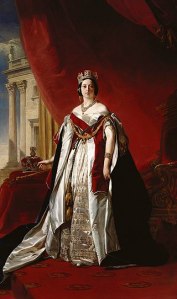
Queen Victoria (1837-1901)
As C.S. Lewis took his first breaths in November 1898, Queen Victoria was entering a year of sorrow that preceded the last months of her life. Then the longest-serving British monarch in history, Victoria reigned for a stunning, era-defining 63 years and 217 days.
The Victorian era was a period of radical change in innovation, technology, industrial development, the institution of the family, mass migration, and British expansion on the global stage. Queen Victoria’s personal sense of morality created a culture of restraint in tension–and sometimes in cooperation–with religious revivalism and activism, an expansion of higher education, early critical moments in women’s liberation, and the slow redefinition of class in England.
In terms of legacy, the Victorian era gave us Dickens, Tennyson, Wordsworth, Eliot, the Brontës, Wilde, Hardy, Kipling, Lewis Carroll and George MacDonald and Anna Sewell, Elizabeth Barrett Browning and her husband, Bram Stoker, H.G. Wells, Sherlock Holmes, William Morris, World Fairs, the Gothic and Classical revivals, the Pre-Raphaelite Brotherhood and some of their sisters and daughters, public museums, photography, early modernization of farm and kitchen, electricity, the idea of a hospital designed not to kill people, and the railway, telegraph, and telephone.
The period, though, also brought poorly managed urbanization, soul-destroying factories, deadly environmental disasters, the Crimean and Boer wars, the loss of English and Scottish rural culture, and an ideological, imperial, church-implicated cultural genocide perpetrated in residential schools throughout the colonies that has caused generations of suffering and has brought shame upon the Christian church.
We might be right in thinking that Lewis as a reader and writer in his formative years gained much from the Victorian literary legacy. Lewis was somewhat anti-progress in terms of technological development, and primarily looked askance at Victorian art and architecture. However, as an Anglo-Irish Oxbridge public intellectual and the son of two University-educated parents from clerical and industrial families, he is truly the child of each of these social, political, and economic cultural moments. In this respect, Lewis biographies by George Sayer and Alister McGrath provide the strongest links to the Victorian cultural background.
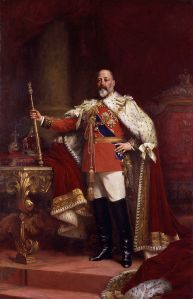
Edward VII (1901-1910)
In 1901 Edward VII, eldest son of Queen Victoria of Hanover and Prince Albert of Saxe-Coburg-Gotha, took the throne following decades of public service as Prince of Wales and other titles as he waited for his mother to turn the clock on the century. While the limitation of his leadership in the period may be clearer with the advantage of history, King Edward VII was known as a peacemaker. Near the end of his reign, a young “Jack” Lewis lost his mother and was beginning to test his literary capabilities. He also began his own sentence at ideological, imperial, residential schools. When Lewis was in his late ’20s, we read Sidney Lee’s Edward VII, but I do know his thoughts on the book or the man.
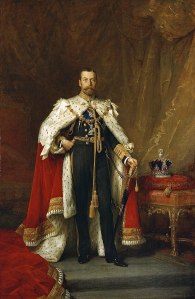
George V (1910-1936)
King George V was the second son of Edward VII and Alexandra of Denmark. He reigned through a dramatic period of revolutionary and reactionary ideas, British constitutional redesign, WWI, the beginning of the withdrawal of the throne from global dominion and the new era of the British Commonwealth (though not the collapse of empires like Germany, Russia, and Turkey), the global economic crisis of the 1930s, and the rise of Nazism. Although he was by reputation a homebody, during WWI he was a visible public figure. He presented himself as a British patriot in his support of the war and his connections with the public. Although the monarchy had been German for centuries, the king set aside the German name Saxe-Coburg-Gotha and inaugurated the House of Windsor, which reigns today.
In his brilliant C.S. Lewis Chronology, Joel Heck reports that in July 1911 the Lewis brothers saw Queen May, Princess Mary, and Prince Edward (later, briefly) drive by. I don’t know if they showed much interest. As a young man, King George V would have been most visible in the war effort. However, Lewis admits to being somewhat distant from the overwhelming social moment of war as he focused on study and writing.
Following the war, Lewis remained distant from political commentary. When they occur, Lewis’ political statements growing up are often sarcastic and elliptical–showing only one side of a letter conversation. For example, when King George V went to Lewis’ hometown of Belfast to open the parliament of Northern Ireland, Lewis quips to his father:
I am sorry you didn’t go and get yourself made an O.B.E. or
something when George-by-the-grace-of-God came to Belfast (27 Jun 1921 letter).
Besides the slighting reference to the King, Lewis is somewhat pessimistic about the Irish policies as a whole–royal or parliamentary. Although concerned about the Irish situation, as in many aspects of social life, Lewis was somewhat protected from the consequences as he shaped a small personal foundation for a peculiarly large cultural platform.
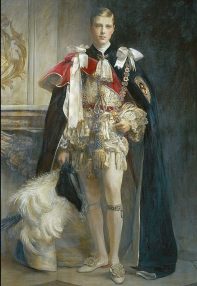
Edward VIII (1936)
King Edward VIII was the eldest son of King George V and Queen Mary. He was a reputed philanderer and impatient with protocol–courtly or otherwise. He occupied the throne for a record-breaking 326 days when he abdicated for a marriage that was deeper to be unacceptable for the head of the Church of England.
As Prince of Wales, Edward attended Magdalen College, Oxford, in the 1910s, before Lewis matriculated to University College and where Lewis was later a don for nearly 30 years.
George VI (1936-1952)
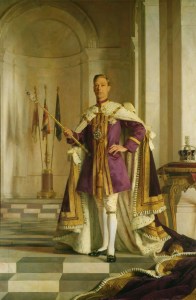
George VI was the second son of King George V and Queen Mary. He unexpectedly ascended to the throne a the age of 40 after living in the shadow of his brother, the heir apparent.
Although he was a reluctant king with a verbal tic and public profile that created some doubts about his qualities as a ruler–now even more iconic in the award-winning film, The King’s Speech–King Goerge VI was instrumental in England’s role in WWII. This began with acts like a Canadian tour in the spring of 1939 that eased Canada’s (and perhaps also the United States, as it included a visit with Roosevelt) pathway to joining the Allies in WWII. However, his reputation solidified with frequent public events in Great Britain to raise the spirits of the people, as well as visits to troops throughout the world. The king and queen communicated resiliency and rugged resistance by remaining in residence in London during air raids–and, indeed, experiencing near-deadly bombing in their home. King George developed a strong relationship with Prime Minister Winston Churchill, which was critical to wartime leadership. As WWII closed, the public flocked to Buckingham Palace in celebration of the king on both VE day and VJ day. And following the war, George VI was part of the rise of the United Nations and the global retreat of the British Empire.
As it turns out, just a few months before the king died, in December 1951, Lewis was nominated by Churchill for the honour of being elected by George VI as a Commander of the Order of the British Empire (CBE). However, so as to distance himself from the appearance of political commentary, Lewis declined in writing to the Prime Minster’s Secretary:
I feel greatly obliged to the Prime Minister, and so far as my personal feelings are concerned this honour would be highly agreeable. There are always however knaves who say, and fools who believe, that my religious writings are all covert anti-Leftist propaganda, and my appearance in the Honours List would of course strengthen their hands. It is therefore better that I should not appear there. I am sure the Prime Minister will understand
my reason, and that my gratitude is and will be none the less cordial.
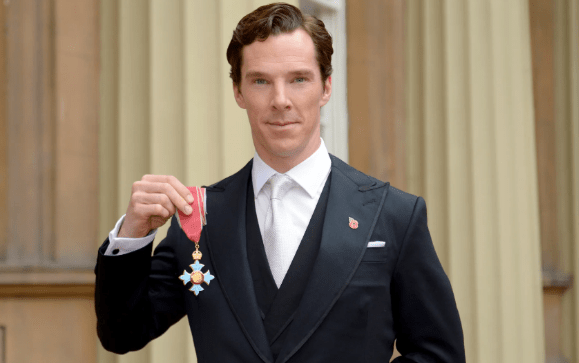
Given the royal nature of the honour and its history of recognizing educational, literary, and artistic contributions, Lewis seems overly cautious on this point. Tolkien was right to accept his honour in 1972, and I am open when my own invitation letter comes.
Queen Elizabeth II (1952-forever 2022)
Queen Elizabeth is the eldest daughter of George VI and Lady Elizabeth Bowes-Lyon. When her uncle Edward abdicated, Elizabeth became heir presumptive at the age of 10. She is now the longest-ruling monarch at 70 years and 116 days (as of the Jubilee; 70 years and 214 days at the time of her death). Elizabeth is the only British monarch to celebrate a Platinum Jubilee. Not long after her Jubilee celebration, she passed Thailand’s beloved Rama IX and became the 2nd longest-reigning sovereign in verifiable history. Nearly two more years would have been needed, however, to surpass King Louis XIV of France and his Splendid Century.
Elizabeth has served through the era of media fascination, from the radio and print to television and social media. Indeed, as part of her war service, like Lewis, she turned to the radio. Elizabeth first spoke on BBC radio when she was 14 years old–and only later served as a mechanic (which I think is pretty spunky of her). Through disaster and illness and waves of popularity and critique, Elizabeth continues to meet her public in their homes from her own home in the visual medium of the moment.
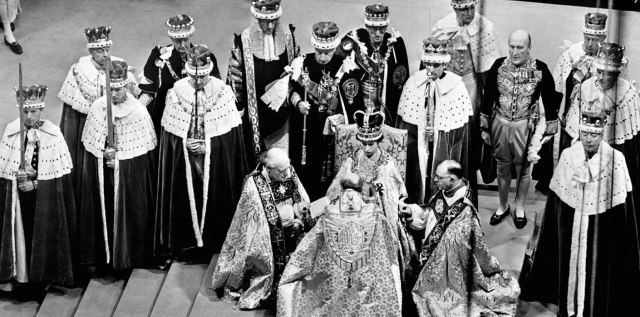
The Coronation of Queen Elizabeth II took place in Westminster Abbey on 2 June 1953, though Lewis chose not to attend. In a 22 Jun 1953 letter to Mary Shelburne, Lewis explains his feeling about the Coronation:
I didn’t go to the Coronation. I approve of all that sort of thing immensely and I was deeply moved by all I heard of it; but I’m not a man for crowds and Best Clothes. The weather was frightful.
Warren, however, watched the coronation on television, and may have been the source of Lewis’ quite distinct view of the matter. Lewis was struck by “the real devout piety shown by the Queen, who obviously took her vows very seriously” (17 Jul 1953 letter to Mrs. Frank Jones). In a follow-up letter to Mary Shelburne, Lewis makes a point about British royal-watching culture and a much deeper connection to the spiritual significance of the coronation:
You know, over here people did not get that fairy-tale feeling about the coronation. What impressed most who saw it was the fact that the Queen herself appeared to be quite overwhelmed by the sacramental side of it. Hence, in the spectators, a feeling of (one hardly knows how to describe it)–awe–pity–pathos–mystery. The pressing of that huge, heavy crown on that small, young head becomes a sort of symbol of the situation of humanity itself: humanity called by God to be His vice-regent and high priest on earth, yet feeling so inadequate. As if He said ‘In my inexorable love I shall lay upon the dust that you are glories and dangers and responsibilities beyond your understanding.’ Do you see what I mean? One has missed the whole point unless one feels that we have all been crowned and that coronation is somehow, if splendid, a tragic splendour.
Through thousands of letters and pages of print up to this moment in his life, there are very few comments about royalty in real life. And then there is this stunning description of the British throne. Lewis speaks not from the mind-numbingly obsessed perspective of the press, or the distant lens of the historian, or the heart-rapt vision of the lover of fairy tales, but from the altitude that only a cosmic point of view can provide. Ritual, sacramentality, awe, pity, pathos, mystery, symbol–an image of monarchy that draws all humanity into the moment of coronation as a people created vice-regents on earth and set apart as high priests of creation.
How have I never seen this note in this light before? Think of the consequence of this kind of view: the moral responsibility, the relational possibility, the sacramental invitation, and the mythopoeic potential.
It is, I suppose, because of this Platinum Jubilee that I am seeing it now.
There are other consequences of this view of the coronation for Lewis. When discussing the event with American correspondent Mary van Deusen, Lewis makes an intriguing comment:
Hasn’t what you are kind enough to say about our Coronation a wider relevance?–that nothing stirs us if it has the sole purpose of stirring us: i.e. the stirring must be a by-product (8 Jun 1953 letter).
That is an intriguing principle of psychological authenticity that public leaders and artists should each consider.
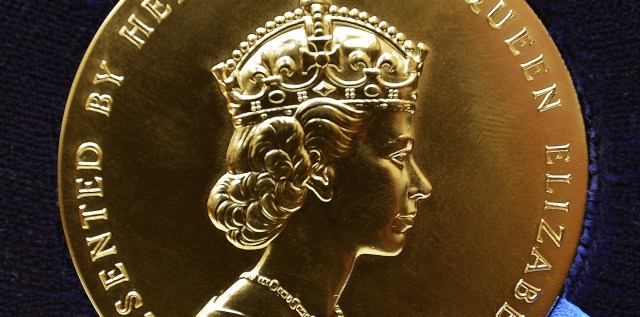
Lewis missed the coronation but had other brushes with royalty in multiple spheres. Friend and fellow poet Ruth Pitter wrote to Lewis about her recent encounter with Queen Elizabeth when she received the Queen’s Gold Medal for Poetry–quite a distinctive honour that puts Pitter in the company of W.H. Auden, Siegfried Sassoon, John Betjeman, Robert Graves, Ted Hughes, Simon Armitage, and Grace Nichols. Pitter–who, incidentally, did not turn down her CBE honour in 1979–writes:
I had been received by the Queen (in October of this year) to present her Gold Medal for Poetry, and I felt that it did me good. One plugs away for half a century, getting little praise and less cash, then suddenly one is summoned to the Palace and given a medal. All is now well: if the highest in the land approves one, we can do without those in between. Besides, it was an Adventure: and to crown all, as I left the Queen, there outside the drawing-room door stood Albert Schweitzer, waiting to be received in his turn!’ (Bodleian Library, MS. Eng. lett. c. 220/3, fol. 136).
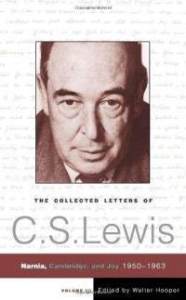
The capital-A “Adventure” is a nice touch, as is the Schweitzer note–so many thanks to Walter Hooper for sharing this discovery as a footnote to Lewis’ 31 Jan 1956 letter to Pitter. In that letter, Lewis shares about a royal encounter of his own:
It’s also amusing that a few nights before getting your letter I dreamed that I was presented [to] the Queen, and found to my horror, half way through the audience, that I was wearing my hat. At the same moment a lady in waiting approached me from behind with the speed of a roller-skater and snatched it off my head with the words ‘Don’t be a fool.’ I left the presence, pensive (as may be supposed) and on my way through a great gallery, finding, without surprise, a photograph of myself on an occasional table, tore it to pieces and went on. I’ve never had the dream of appearing in public insufficiently dressed: but I suppose too much means pretty well the same as too little. So you beat me both by the difference between reality and dream and that between success and failure. And Schweitzer too! Well, you deserve it all.
It is not clear to me that too much is precisely the same as too little, but point taken.
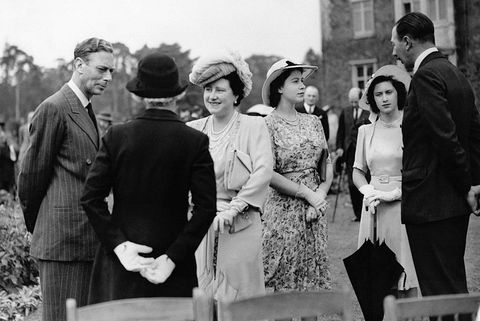
Later that year, on 12 Jul 1956, a Thursday, Lewis was invited to attend a garden party given by Queen Elizabeth II at Buckingham Palace. In a letter the week before, Lewis asks Pitter if she is also going to the garden party and if they would like to go together:
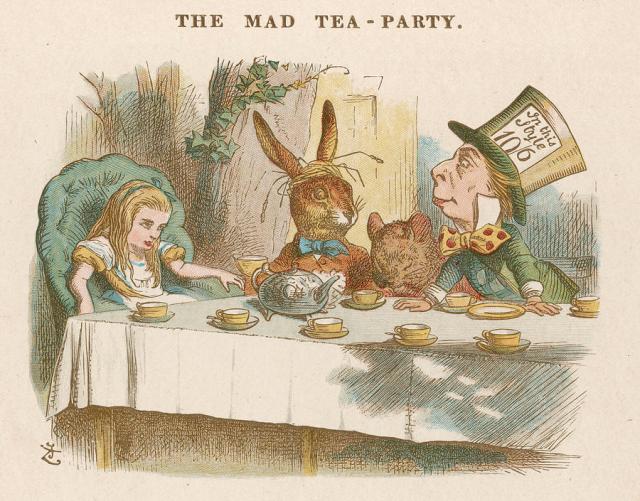
Do you play croquet with the Queen on Thursday. (Croquet is not mentioned in the invitation but I am well-read enough to know that a royal garden party will involve hedgehogs, flamingos, soldiers, Heads-man, and the grin of a Cheshire cat). If so are you coming via Oxford? I was thinking of going up by 1.58 [train] and returning by the 6.45 or 7.35 on either of which we cd. dine. You are an experienced courtier and it would give me great moral support to arrive in your company!
So, perhaps I am wrong: It is not so much Lewis’ expertise as a Medieval and Renaissance literary historian but his knowledge of Alice in Wonderland that provides him with his understanding of courtly life.
Unfortunately, Ruth Pitter was not among the thousands of guests who, to Lewis’ disappointment, so crowded the reception that it made finding a cup of tea impossible. It was one of those lonely-in-a-crowd moments for Lewis until he met a friend. Lewis never saw the queen.
Incidentally, in his peculiar ability to be completely clueless about popular culture and still make occasionally prescient comments, Lewis anticipated the pressures of a media-infused royal culture in a 12 Nov 1957 letter to Vera Gebbert:
If we can accept as true what our papers tell us, the Queen’s trip has been a real success…. I don’t suppose royalty feels the same embarrassment at these kinds of reception as we luckier mortals would in their place. After all, they have been in the limelight since they could walk almost. Look at Princess Anne and Prince Charles–still very young children, and I suppose they would find it odd if they were not photographed when they went out!
Prince Charles, heir apparent to the throne has lived his life thoroughly harried by this “limelight.” And yet he appears (like his mother) to move forward, one step in front of the other. While I have reservations about his role as head of the Church of England, he was affable and personable in his 2014 visit to our community. In spending time with local community leaders, he showed the same kind of curiosity about rural Prince Edward Island culture and the pressures facing churches as he showed in the technical details of our “heritage carpentry” program at our local college (on the site of what was Prince of Wales College, the Protestant university before it joined with St. Dunstan’s University to form the University of Prince Edward Island).
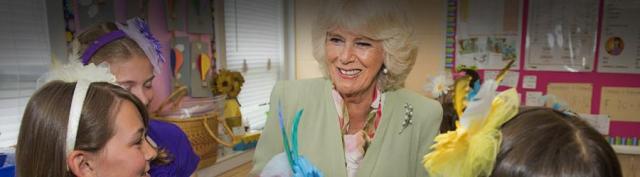
Duchess Camilla of Cornwall, likewise, betrayed any tabloid expectation in her warmth and generosity of spirit. She visited the school where my son attends and my wife teaches. She made fascinators (a kind of feathery hat, I think) with some grade four girls, followed by a series of dramatic presentations. Although I helped prepare the teenage actors for a remarkably abridged and buoyant Royal Shakespearean production–where the kiss of love was substituted with a high 5–I was not cleared by international security to attend the event (for reasons that those who know me would find obvious).
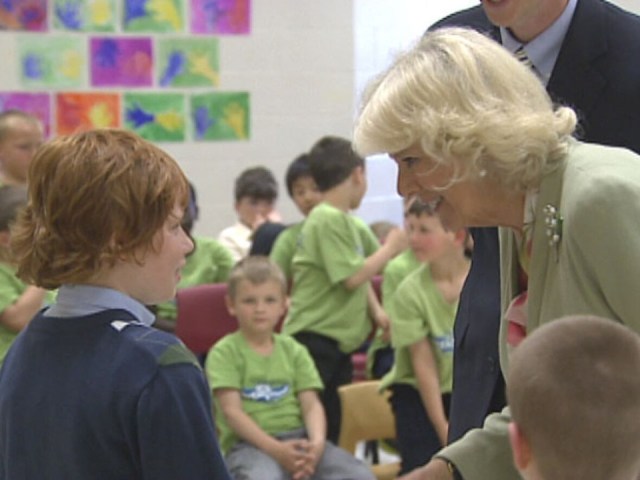
However, my son, then 9 years old, was chosen to recite a poem. With a nervous wink to Her Royal Highness, Nicolas recited “The Road Goes Ever On” by Bilbo Baggins. Here is the Duchess congratulating him on his recitation.
Nicolas, believe it or not, graduates high school in a couple of weeks–no doubt heightening expectations for this Platinum Jubilee [see update on Nicolas here].
That is, perhaps, not a bad place to end this royal exploration–a walking song “Where many paths and errands meet” that has its own tragic splendour for those that know the tale. After all, it takes on new words and new meanings after the Return of the King.
I believe in open access scholarship. Because of this, since 2011 I have made A Pilgrim in Narnia free with nearly 1,000 posts on faith, fiction, and fantasy. Please consider sharing my work so others can enjoy it.

 It is day 13 since Hurricane Fiona, and I have been updating my feed on Facebook with daily notes about life without power. But it is day 1 of being restored to the electrical grid. I woke up to this symbol on my phone: 100% Fully Charged. It was a relief.
 As I talked about in “Day 7 Without Electricity,” “Stone Soup, Cherry Trees, and Shorelines: An Update from Prince Edward Island on Hurricane Fiona,” and some Facebook posts, there have been beautiful aspects of Fiona’s aftermath. We strengthened our relationship with our neighbours as we gathered around to support one another. We were able to give and receive gifts of friendship, time, food, gas, and little reprieves from apocalyptic doom. We have received dozens of lovely notes of cheer and offers of help, and I have a deeper understanding of the unseen webs of support that are part of my daily life. I have also gained a deeper appreciation of how much of my modern life is a gift that I take for granted: hot food, hot coffee, hot showers, cold drinks, safe food, everlasting Internet access, a phone line, light before dawn and after dusk, a warm and dry house.
 But we were also lucky. As lovers of camping, we had supplies that many urban folk wouldn’t even dream of keeping around, like tarps, bungee cords, coolers, lamps, candles, and cooking stoves. With camping in mind, I bought a boxful of outdoor extension cords at a yard sale one year, and we used every inch of cord available to us in the last 12 days. We had our chainsaw stolen, but we had the resources to make a 2-hour pilgrimage and purchase one of the last chainsaws in the Province. We have a wood stove as part of our heat plan in the house, which gave us the ability to heat the house and dry the basement without the need of power.
 Even with planning and luck, many things were far more difficult than they should have been. It was clear that I never understood the capacities of what a storm like this could do. Thus, while we battened hatches well, we were only prepared for 3 or 4 days of emergency living, not 12. While my work demands never ceased, from dawn to dusk of every day, I found myself caught up with endless little tasks and unpredictable jobs that were ncecesary to keep my household going–not to mention supporting my wife’s parents, helping out around the neighbourhood, and encouraging my students–many of whom are new to PEI and Canada, and are feeling somewhat adrift.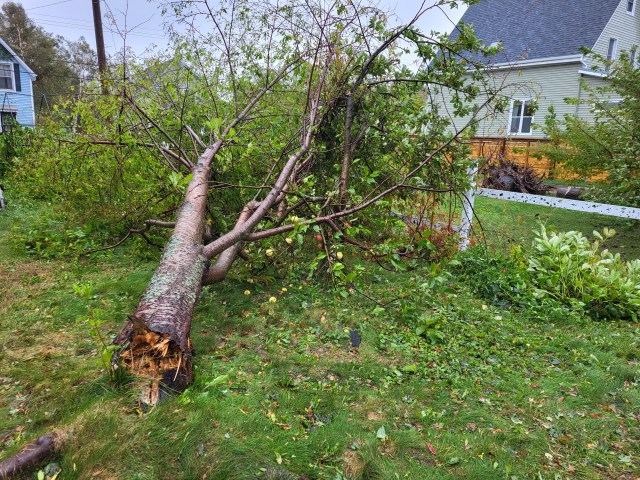

























 A Pilgrim in Narnia