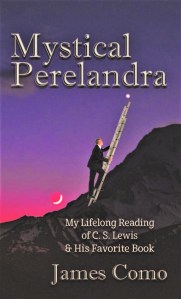
A Review of Mystical Perelandra: My Lifelong Reading of C.S. Lewis and His Favorite Book by James Como

I have to admit that I was a wee bit skeptical when Winged Lion Press editor Bob Trexler asked me if I would consider writing a “blurb” for Jim Como’s new book, Mystical Perelandra: My Lifelong Reading of C.S. Lewis and His Favorite Book.
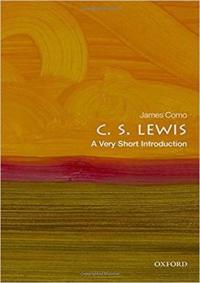
It was not Como’s work that concerned me. Como is an expert in rhetoric and one of the founding members of the New York C.S. Lewis Society–the world’s oldest active society for sharing the enjoyment and considering the impact of C.S. Lewis‘ life and work. I got to see Como’s “Very Short Introduction” volume for C.S. Lewis in galley-proofs (for a reason I can no longer remember), and I purchased it as soon as it hit the stories. I have read about 20 of these Very Short Introductions, and I was surprised this little volume was as good as it is. Though the books in the series aim to balance brevity and thoroughness, Como’s C.S. Lewis is peculiarly successful in this respect. He allows for the strong presence of Lewis’ voice within an accessible introduction to Lewis’ life that a few surprising and refreshing moments.

All well and good. However, with a title like Mystical Perelandra showing up in the midst of a busy term, I took a beat to think about it.
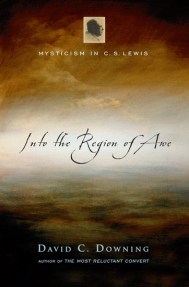
It isn’t the “mysticism” thing–though that might be a stumbling block for some. David C. Downing’s 2005 Into the Region of Awe is at its roots a study of Lewis as a mystic. I admit in my 2014 review (see here) that I found the book both compelling and well-written. Though I don’t see any direct ways it influenced my forthcoming book on Lewis’ spiritual theology (more of that anon), I admitted to David in 2012 that I thought he was on to something. Thus,  I wonder if in some way the last decade of my research on Lewis’ “invitation to spiritual life” is complementing Into the Region of Awe. So I am open to the idea of Lewis as a mystic.

Honestly, my hesitation was that I didn’t want to read something goofy–as some interpretations of Lewis’ work have been–or even something that isn’t a great read.

Yes, I know, that is pretty judgemental. However, there is a good deal of heartfelt material written about C.S. Lewis, and not all of it is good, beautiful, and true as literature, history, and biography. Indeed, there is something of what Robert MacSwain calls “Jacksploitation” in the publishing industry–a rather cynical play on Lewis’ name and fame to create sales without an honest immersion in his work. This kind of thing strikes me as the literary equivalent of cheap logo lunchboxes and Marlboro Man ads.

However, Como knows his material and he tends to write in a lively style. I decided to take a look at the book.

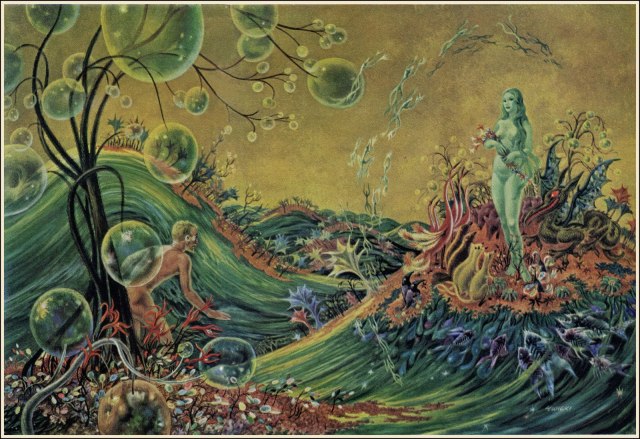
Rather than another difficult piece of work in a busy term, Mystical Perelandra ended up being both refreshing and thoughtful. It was also a helpful resource as I once again taught C.S. Lewis’ strange and beautiful and puzzling novel of the Ransom Cycle, Perelandra. My “blurb bar” is pretty high, but I was pleased to provide a note for the book and wanted to fill that out a bit here. 

In describing a lifetime of reading Perelandra, James Como captures the critic’s dilemma in discussing C.S. Lewis’ singular achievement in ascendent prose in Perelandra:

“To do justice to the mythopoeic depth of the encounter I would have to quote it all.”
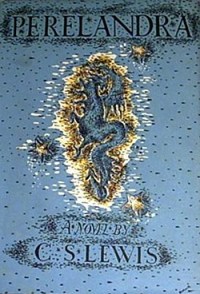
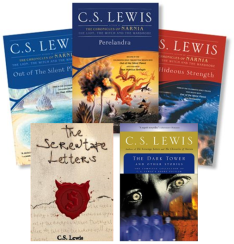
I get this. As in a few other startling literary moments–like the “Weight of Glory” sermon, the denouement of The Last Battle, the closing words of An Experiment in Criticism, and resonant high points in The Screwtape Letters, The Great Divorce, and The Voyage of the Dawn Treader–Lewis presents a grand poetic vision that spans many pages but is meant to be taken into imaginations in a single moment of receptivity. Then, it draws us mythically into something truer and deeper and brighter in spiritual life that is beyond poetic possibilities. Maybe this is what poets always do, but in these moments, including in Perelandra, Lewis is using words to draw us beyond what words can do.

Thus, with no little irony, professor of rhetoric James Como provides a book about Perelandra while admitting to the inadequacy of words to describe it.

To do this thing which cannot really be done, Como draws us into the mysterious heart of the reader’s experience with his in Mystical Perelandra. His reflections are an invitation for us to live within rather than merely analyze Lewis’ literary vision. The result is alchemical, poetic, and mercurial–a narrative spiritual theology where we imbibe the transcendent nature of Ransom’s planetary journey through Como’s imaginative, sacramental, life-integrated, mystical experience as a reader. For Como writes of Lewis’ Perelandra that

“no single book intertwines his intellectual and imaginative powers as well as the breadth and depth of the man himself more fully than does Perelandra. It is nothing less than a mini-summa: of the cosmology and mythology of Western Christendom, of spiritual theology (that is, of spiritual formation), and – especially – of an intensely personal mysticism, a side of Lewis insufficiently explored or appreciated. In short, Perelandra is an effusion” (1).
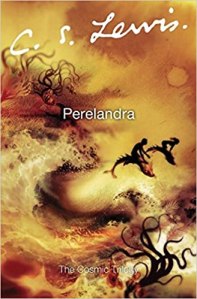
Perelandra is “meta-literary” (4), Como argues–literature that is both immersive and requires immersion in order to experience its full effect. Following Downing and infusing the project both with a critical rhetorical lens and an interest in spiritual theology, “irrupting mysticism” (52) is the motif that Como uses to invite the reader into this fuller experience of Lewis’ heart in Perelandra. To get a sense of what Como is doing chapter 1, “The Tongue is Also a Fire” shows the ways that Como brings together Lewis’ story and writing with his own personal story of transformation in reading Lewis and his expertise as a scholar of words. The result is a startlingly original reconsideration of the story of one of the 20th-century’s most famous converts.

As a writer knowing his limitations as a writer and yet still writing, Como has these moments of ascendency, originality, and circumspection that make the reader’s experience of Mystical Perelandra richer. Here are some examples:

“Upon first reading this passage, I felt meta-theoretical scales drop from my eyes, saw planets line up, heard gears grip into place. My understanding of art deepened exponentially, and then so did my judgments and appreciation” (70).

“These combinations of colors, contours, and experiences; of psychology, cosmology and angelology; of rumination, drama, and violence (both on a floating island and at sea); of
Ransom finally killing the Un-man during a horrific ascent in darkness; his emergence into a world so fresh and beckoning, so utterly glorious – all swept me along through peaks and troughs and loops of excitement, elation, fear and satisfaction” (72)

“Lewis’s psychological insights are everywhere, and everywhere organic, though casually posited” (97)
While I quite loved reading this unusual book, there are certain limitations of Mystical Perelandra that leave me wanting a bit more.

For example, there are moments that Como is resonating with the work of Lewis scholars, including my own argument about “the shape of story” that he discusses in the second chapter and is a critical section in a section of my thesis. However, Como doesn’t treat Lewis scholarship extensively and he seems occasionally antagonistic to certain approaches. In chapter 3 on “Storytelling,” for example, Como critiques Sanford Schwartz’s book on the Ransom Cycle as being “a torrent of learning” in a small book. Schwartz’s literary criticism is thus contrary to the sympathies of Ransom in Perelandra, Lewis writing Perelandra, and Como writing about Perelandra. Besides a strange irony in the comment about “learning” and small books, Como sets Schwartz’s approach over against the core of the story, which he argues is Ransom’s spiritual development (57). Why the contradistinction? Of any writer, isn’t it true that Lewis integrates intellectual and spiritual development, leaving such dichotomies aside?

We see this binary at the heart of Como’s work, where he reduces “spiritual theology” to “spiritual formation”–leaving behind the theological structure of spiritual life that is the typical definition of spiritual theologians. Contrasting his own definition–and this is why the conversation is important–in a way similar to leading spiritual theologians, Como consistently shows in his analysis that Lewis’ spiritual theology is intellectual and thoughtful as well as active and living, even if he reduces the definition to “spiritual formation.”

Thus, quite beyond literature reviews, Como would have benefited from inviting other voices in to his relatively narrow bibliography–though he captures some of the more popular Lewis studies names.
There are other points where I would have wished that Como leave us some breadcrumbs on the trails that he mentions but does not map for us. In the first part of chapter 2, for example, Como provides a brief essay on Lewis and rhetoric and makes this note:

“his even-handed treatment of rhetorical history in his professional work, his notebooks offer virtually no use of rhetoric that is not derogatory, this in spite of Dante, who called it the ‘the sweetest of all the other sciences’” (36).

I would love to see more of the data on that claim, which I believe on instinct to be correct.

Beyond curiosity, I really need to see proof for Como’s undemonstrated claim that when Mrs Moore died Lewis felt the forgiveness of sins (109). And with other claims that strike me as absurd (Owen Barfield learned nothing from Lewis (79)) or disturbing (“I’ve concluded since that much that we take for madness is actually demonic” (105)), we need the author’s argument so that we can find some way of responding.

Finally, there are sometimes background studies that really need a bit more detail and explanation for most readers, such as his references to Newman, Kierkegaard, Frazer, Jung, and some of the mystics and devotional writers in his conversation.
I understand the limitations of this genre of book. And part of the richness of it as a work of literature itself is the broad, sweeping voice and penetrating observations of a senior scholar reflecting on a lifetime of reading. However, a combination of no footnotes and frayed threads is offputting in a way that is not helpful in Como’s daring and fruitful study.

For Mystical Perelandra is a literary risk, with a title and subtitle that will alienate some readers. For the curious and thoughtful reader of Perelandra, this book is a risk that will make our experience richer. Moreover, why should we limit the kinds of questions that we ask of Lewis’ remarkable experiment in space fantasy? Should our responses to Lewis’ most lyrical journey of mythmaking be limited to critical analysis in academic prose? Should we not also invite the mythopoeic response of the storyteller and the literary artistry of the poet? In providing something of the latter, if we are open to the journey, Como’s reflections on Perelandra transport us, like Ransom, to a world of myth and meaning much greater than a book. We should be grateful to Como for providing his essay and to Winged Lion Press for providing a place for a piece like this.
Posted in Reviews | Tagged , , , , , , , , , , , | 17 Comments

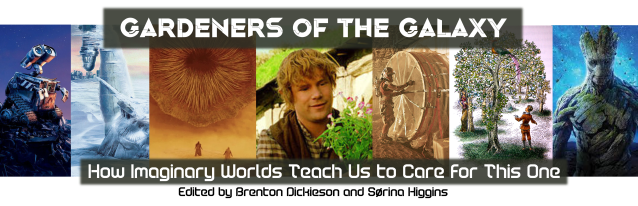
CFP: “Gardeners of the Galaxies: How Imaginary Worlds Teach Us to Care for This One” by Sørina Higgins and Brenton Dickieson (Academic Deadline Extended to May 30th)

I am about to talk about gardening while my own garden is suffering from busy-related neglect. Even my little seedlings, planted with plenty of time for our last frost day (usually about June 10th in Prince Edward Island) have not fared very well. It may be what my grandmother once called a “bean garden summer”–a crop that grows without fail up here in the North Atlantic. At least, it has often done so.

Well, perhaps I am being a little overly dreary. After all, the hops grow without bidding, as do the dandelions. And my garlic pushed through winter cover with the snowdrops. There will be good garden days ahead, I am sure. My garden-dreary mood is perhaps because it is a dreary day, I have had tooth work, and I long to sing my fingers into the earth.

I have, though, survived my marathon of marking, conferences, and papers, which I talked about last week. I was trying to say too much in each paper, but they went well enough. My garden, too, becomes overgrown as I try to cram everything into our tiny growing season. It seems that I have learned to prune tomatoes and space out papers better than I have learned to focus my writing and give my audiences a bit of breathing space for the ideas.

As I take a breath after the busy period, I wanted to say a brief “hello” and note that Sørina and I are extending the deadline for our anthology of essays and creative pieces, Gardeners of the Galaxy: How Imaginary Worlds Teach Us to Care for This One. The open call for academic essay proposals has been extended to May 30th. The deadline for artistic pieces remains September 1st. We welcome questions about academic submissions (email me, at brenton[dot]dickieson[at]signumu[dot]org), and you can send queries about creative submissions to Sørina Higgins (sorina[dot]higgins[at]signumu[dot].org).

The full CFP listing is below, with all the necessary links. Also, check out our promo video, where we introduce the project with cats.

CFP: Gardeners of the Galaxies: How Imaginary Worlds Teach Us to Care for This One, co-edited by Dr. Sørina Higgins and Dr. Brenton Dickieson

As the climate crisis worsens, our home planet and our conversations about it are heating up–and creative writers both reflect and anticipate such concerns. Thanks to the recent ethical turn in science fiction and fantasy, many speculative works offer readers a mirror in which to view our own world. Its beauties and vulnerabilities take on special clarity through the page or the screen. A tale of terraforming another planet reminds us how precious and fragile our home world is. The perennial conflict between nature and technology comes alive when trees march to war. We find insights into healthy, diverse communities by spending time with characters in a fellowship–or on a starship.

Gardeners of the Galaxies: How Imaginary Worlds Teach Us to Care for This One will be an academic, peer-reviewed collection of interdisciplinary essays, co-edited by Dr. Brenton Dickieson and Dr. Sørina Higgins. This volume will explore literature, film, the visual arts, and other creative works (especially Cli-Fi, genre fiction, and speculative lit) that imagine, invent, and embody environmental concerns. Rather than coercing texts to conform to our analyses, however, we want to approach our subjects humbly and earnestly, listening to what they say about creation care, biodiversity, or neighborliness; immersing ourselves in their stories of ecological harmony and disharmony; mourning the disasters they depict; and celebrating the solutions they imagine. In particular, we would love analyses of works that envision ingenious alternatives to large-scale planetary depredation.

Chapter proposals might consider questions such as the following (although this list is by no means comprehensive nor intended to limit lines of inquiry): What kinds of environmental disasters are depicted in contemporary literature, film, and other media? How does a certain genre or medium represent nature, and how have those portrayals evolved over time? Do certain metaphors for land or diction choices about earth impact how people treat the soil, landscapes, or ecosystems with which and in which they live? In a given work, is nature empowered or oppressed, and how do characters respond? What is the significance or impact of the anthropomorphism of animals, plants, landscape features, or celestial bodies? When stories blur the line between the human and the nonhuman, what implications does such destabilization have for our living in community with our nonhuman neighbors? What lessons are conveyed through encounters with extraterrestrial species? What do stories of interplanetary colonization suggest about imperialist urges, their ecological impacts on earth, and strategies for integrating with the Other rather than obliterating or oppressing them? Are there tales in which technology plays an essential role in preserving nature or reinforcing what makes us human? What techniques do creators use to entertain us and draw us into moral considerations without compromising artistic excellence or devolving into propaganda?

Submission Information: 

As this volume will be interdisciplinary, we welcome scholars working in literature, film, popular culture, the fine arts, ecology, history, the social sciences, religion, and related fields. While aimed at a scholarly audience, chapters should be written in a lively, accessible tone, avoiding jargon while employing rigorous theoretical and critical frameworks and engaging deeply with existing research. Interested authors should consider trying out their ideas at TexMoot, Signum University’s Annual Texas Literature & Language Symposium (held in Austin, TX, and online; CFP deadline March 1st), which explores the overlapping theme of “Starships, Stewards, and Storytellers: How Imaginary Worlds Teach Us to Care for This One.”

Please submit 500-word proposals here by May 30, 2022. Notifications regarding acceptance will be made in June 2022. Full papers (5,000-8,000 words, including notes) will be due by November 30, 2022.

In addition to academic submissions, the editors will carefully curate a small number of creative works for possible inclusion in the volume. Poets, short-story writers, essayists, and visual artists are invited to submit the actual piece of work that they would like to have considered here; note length limits on the submission form. These works can be submitted up until September 1, 2022.

Send questions about academic submissions to Brenton Dickieson (brenton[dot]dickieson[at]signumu[dot]org). Send queries about creative submissions to Sørina Higgins (sorina[dot]higgins[at]signumu[dot].org).

Posted in News & Links, Original Research | Tagged , , , , , , , , , , , , , , , , | 14 Comments

My Conference Papers this Week in Canada and K’zoo on C.S. Lewis’ Constructed Language and Intertextuality, with a Note on the Impostor Syndrome

In an intriguing confluence of events, this week is Canada’s annual Congress of the Humanities and Social Sciences, Congress2022–what scholarly Canadians used to call “the Learneds”–and is at the same time as the International Congress on Medieval Studies, hosted by the Medieval Institute at Western Michigan University in Kalamazoo–known simply as “the Congress” or “Kalamazoo” or “K’zoo” and all manner of other cool names to those in the know. And, also intriguingly and a bit terrifyingly, I am somewhat out of my element in both programs.

Congress and Kalamazoo are two excellent programs with merely the Great Lakes between them. Though it may have been manageable to hit my Tuesday CLSG session before arriving at Kalamazoo–only 12 hours further by car–the digital events allow me to attend both sessions and still connect with the Canadian-American Theological Association on Sunday. An online program makes navigating the distance fairly easy, though somewhat less scenic.

At Congress2022, I am presenting at the Christianity and Literature Study Group (CLSG) on Tuesday, May 10th. Every time I have joined them, the folks at the CLSG have been personable, bright, and engaged in the papers that scholars and students brought to the conference. Even last year in our online-only sessions, there was nothing disconnected in this fellowship, where all the high and heady thoughts were still grounded in our Canadian classrooms, connected to our city streets, and rooted in faithful artistry. More than anything, the CLSG is a community very much invested in seeing in new and deep ways–in particular, in understanding the way our institutions and communities have failed to see, in many ways, what First Nations people have been trying to show us. I very much look forward to connecting again.

My own presentation at CLSG is in the “Inklings and Philology” panel. And not being a philologist by profession–or a “pure philologist” as in Tolkien’s self-description (Letters 264)–I am feeling somewhat out-classed.

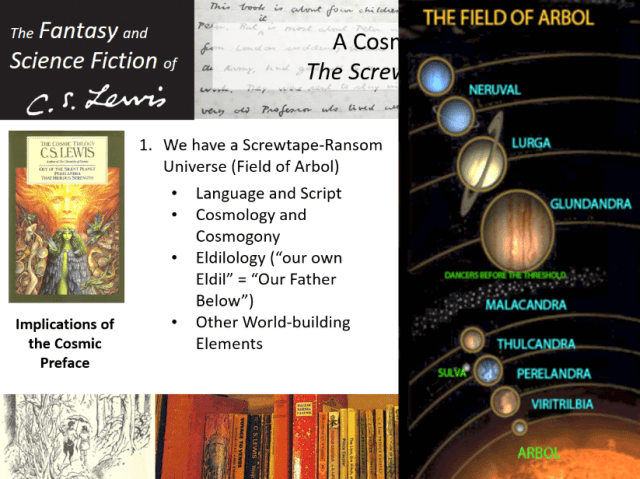
The other two papers are offering strong, technical discussions of Tolkien and philology–intriguingly, both on fäerie-related words–with significance moving out beyond the roots and meanings of these provocative words themselves. My own contribution is more modest and really a tease-up for a fuller conversation within a larger world-building chapter I am writing. My paper, “The Underlying Thought of Old Solar in C.S. Lewis’ Ransom Cycle” plays out the implications of the discovered “Ransom Preface” or “Cosmic Preface” to The Screwtape Letters in two ways: 1) considering more deeply the implications for “Old Solar” as a “Constructed Language” (conlang); and 2) thinking about the mythic root of Lewis’s conlang by asking questions about the two most influential thinkers in Lewis’ life when it comes to the roots of language, language invention, and philology: J.R.R. Tolkien and Owen Barfield. As a background to my “Old Solar” paper, you can read about my work on the “Cosmic Preface” and the links between C.S. Lewis’ Ransom Cycle and The Screwtape Letters here.

And though I am a small thing as a philologist, I do have a series on C.S. Lewis and the Love of Words, which I hope you enjoy.

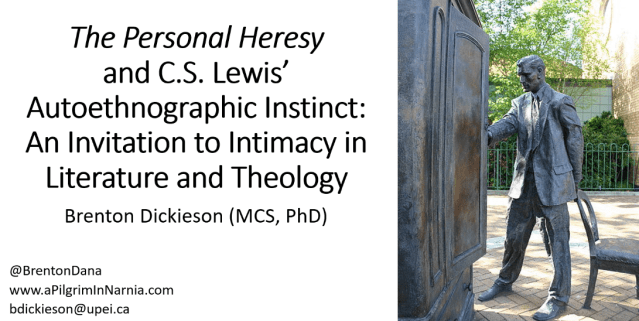
Last year, my CLSG paper was a high-level and complete argument about Lewis and literary theory. While “The Personal Heresy and C.S. Lewis’ Autoethnographic Instinct: An Invitation to Intimacy in Literature and Theology” has deep implications for the way that we relate to one another in our increasingly diverse worlds of connection, I am relieved to be presenting something less complex and a little more playful–even if I am outshone by the philologists on the panel. You can find the abstract and recording of the 2021 “Autoethnographic Instinct” here, including some links to resources.

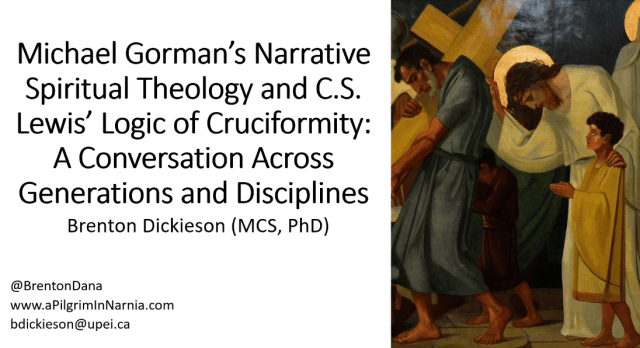
At Congress, I am attending the Canadian-American Theological Association, but am not presenting. You can read about and see a recording of my 2021 paper here, “Michael Gorman’s Narrative Spiritual Theology and C.S. Lewis’ Logic of Cruciformity: A Conversation Across Generations and Disciplines.” I would also note that normally Congress is at the end of May, and on even years I am headed next to the C.S. Lewis and Friends Colloquium at Taylor University in Indiana. The conference has not returned to its pre-pandemic regularity, and my intended 2020 paper still remains in limbo, “’As High as My Spirit, As Small as My Stature’: C.S. Lewis’ Theology of the Small and Monika Hilder’s Theological Feminism.”

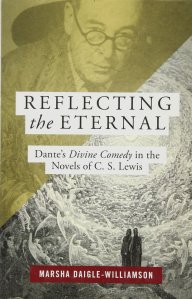
When it comes to Kalamazoo, I am, admittedly, not really in the know–not one of the K’zoo cool kids as I am not primarily a medievalist. Thus, my paper is really a humble suggestion about method within an excellent panel on C. S. Lewis and the Middle Ages I: Dante and the Lewis Circle, hosted by Joe Ricke. My paper is titled, “Medieval Models and Lewisian Intertextuality: A Quest for a New Metaphor.” The panel is in honour of Marsha Daigle-Williamson, who passed away not long ago and has written a brilliant resource book for Lewis scholarship, Reflecting the Eternal: Dante’s Divine Comedy in the Novels of C.S. Lewis, which I reviewed in VII: Journal of the Marion E. Wade Center. There is in Daigle-Williamsom’s excellent work a temptation to think of intertextuality–how a later author uses a previous author’s work–in overly-linear ways. Using Daigle-Williamson’s own research, I am pushing back on that tendency and then using some of Lewis’ peculiar and thoughtful metaphors about intertextuality to suggest more organic and living ways to speak about the way authors hide and reveal their reading within works of literature.

I am something of an impostor in both my CLSG philology panel and the Kalamazoo gathering of medievalists. Thus, rather than shrinking into the background in self-defacement, I have decided to embrace my status as a hobbit among warriors and lean upon what I know. I am, after all, a jackleg of a philologist or medievalist, but not a cheat or a cad or a cozener. So I will lean upon what I know and do my best to learn and grow–for the right nourishment will cause even hobbits to stretch up a bit, and even on the field of battle, a hobbit has been known to make a good thrust.

I include both abstracts below. If you are at Congress or K’Zoo, I hope to see you online!

Dr. Brenton Dickieson, “The Underlying Thought of Old Solar in C.S. Lewis’ Ransom Cycle: Considering New Evidence from the Screwtape Ransom Preface, with a note on Owen Barfield and J.R.R. Tolkien concerning Language and Myth ”

Inspired by a now-famous 1930s sf-writing wager with J.R.R. Tolkien, C.S. Lewis’s breakout interplanetary romance, Out of the Silent Planet (1938), also benefits from Tolkien as one of the early publisher in-house reviewers. In a recommendation letter to Allen & Unwin Publishing, Tolkien discusses the novel’s merits with a particular focus on language. Tolkien says that Lewis had addressed early-draft inconsistencies in revision, so that the linguistic inventions and philology are “more than good enough,” resulting in linguistic aspects that have both “verisimilitude” and “underlying thought” (Letter #26). Lewis’s invention of “Hressa-Hlab” in Out of the Silent Planet develops in the Ransom Cycle to become “Hlab-Eribolef-Cordi,” or “Old Solar.” While con-lang loving readers wished there was more Old Solar in the novels, scholarly interest began as early as 1945 with linguist Victor Hamm. The recent publication of the “Ransom Preface” to The Screwtape Letters imaginatively links the speculative worlds of Ransom’s Field of Arbol and Screwtape’s hell, and offers the first new evidence to emerge in the conversation about Lewis’ language invention. Although there appears to be no Old Solar words that remain in Dr. Ransom’s translation of Screwtape, the Preface reveals a unique aspect of grammar and invites speculation about a Malacandrian lexicography. This paper explores the implications of this grammatical invention, considering its possible connections to Owen Barfield’s “ancient unities” conception of linguistic evolution. In conversation with Tolkien’s understanding of language and myth, this paper concludes with the question of how Lewis’s understanding of a Barfieldian-Tolkienian “original” language within the speculative universe of the Ransom Cycle offers a startling linguistic theoretical contrast to the dominant theory of the 20th century, that of Ferdinand de Saussure.  

Other papers at this conference include:

  • James Doelman, “A ‘fey mood’ and a ‘forlorn hope’ in The Lord of the Rings
  • Greg Maillet, “Fayryȝe or Fay-Magic: What Tolkien Learned from Sir Gawain and the Green Knight”
  • Monika Hilder, “Verbicide or Human Flourishing: C. S. Lewis’s Philology as a Key to Veritas, Libertas, Humanitas
  • Daniel Melvill Jones, “Sacred Space or Sacred Destruction? St. Boniface and the Oak of Geismar in Willibald’s Life of Boniface
  • Mary Arseneau, “Reserved Meaning, Open Interpretation, and Christina Rossetti’s ‘Who Has Seen the Wind?’”
  • David Bentley, “Christina Rossetti’s The Prince’s Progress and Dante’s Fourfold System”
  • Katherine Quinsey, “Classicism and Catholicism in Pope’s Essay on Criticism
  • Clara Joseph, “How an Indian Priest’s Travelogue Challenged Colonialism”
  • John North, “Newman’s Tracts for the Times

Dr. Brenton Dickieson, Medieval Models and Lewisian Intertextuality: A Quest for a New Metaphor

In the 2015 rewriting of her dissertation, Reflecting the Eternal: Dante’s Divine Comedy in the Novels of C.S. Lewis, Dr. Marsha Daigle-Williamson invites readers to imagine the many obvious and subtle links between Dante’s classic text and Lewis’ fiction. Daigle-Williamson’s inquiry is generative in studying the “continuous, multilayered echoes of Dante’s poem” (137) in Lewis’s fiction and is an essential resource for scholars. However, in her curiosity about Lewis’ intentionality in this project of intertextuality, Daigle-Williamson sometimes speaks of “Lewis’s use of Dante” (see p. 201) in a way that is restrictively linear. In this paper, I consider the six kinds of intertextuality Daigle-Williamson identifies, and a seventh—that of “world-building”—that she instinctively models but does not delineate theoretically, encouraging a more multi-layered and complex image of intertextuality. I then consider Lewis’ own working metaphors and images of intertextuality, particularly in his reflections upon medieval concepts of authorship. By his own instincts as a fiction writer, poet, and literary historian, Lewis is a useful conversation partner within theoretical conversations about intertextuality as he discusses organic and immersive links between hypertexts and hypotexts. Scholars will no doubt wish to extend Daigle-Williamson’s work on Lewis and Dante in myriad ways. For those who wish to include Lewis’s literary theory as one of the tools for inquiry, and considering the ways texts move beyond a linear path, I suggest a playful medieval literary metaphor to consider as a model for studying Lewis’s vibrant and dynamic transtextuality in poetry and prose.

Posted in Fictional Worlds, News & Links, Original Research, Studies in Words | Tagged , , , , , , , , , , , , , , | 10 Comments

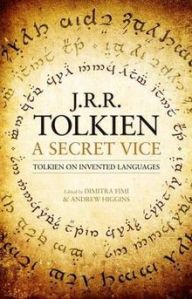
J.R.R. Tolkien’s “Secret Vice” and My Secret Love: Thoughts on Dimitra Fimi and Andrew Higgins’ Critical Edition of A Secret Vice: Tolkien on Invented Language (Throwback Thursday)

At A Pilgrim in Narnia, we have an occasional feature called “Throwback Thursday.” By raiding either my own blog-hoard or someone else’s, I find a blog post from the past and throw it back out into the digital world. This might be an idea or book that is now relevant again, or a concept I’d like to think about more, or even “an oldie but a goodie” that I think you might enjoy.

I wanted to reshare this post on Tolkien’s invented languages for a few reasons. I am setting up a personal re-reading of The Lord of the Rings, and, for me, the languages and elvish scripts of Middle-earth have been part of my joy in reading and rereading Tolkien’s great work. I am also working on the idea of language and mythology in Tolkien, C.S. Lewis, and Owen Barfield for a conference paper next week, so Tolkien’s word-rooted mythology is on my mind. For Tolkien Reading Day, I also rewrote a piece I quite like, “Trees, Leaves, Vines, Circles: Reading and Writing The Layered Worlds of J.R.R. Tolkien’s Fiction: A Note on “Athrabeth Finrod ah Andreth” and “Leaf by Niggle”–and language invention is one of those intricate and implicated parts of reading Tolkien that I talk about in that piece. I have begun reading the newest (and last?) Tolkien collection of writings, The Nature of Middle-earth, edited by Carl F. Hostetter, one of our experts in elvish tongues. And as I was going through some of the rich resources in the Signum University Youtube catalogue, I came across Dimitra Fimi and Andrew Higgins’ lecture series on their book, A Secret Vice: Tolkien on Invented Language, and wanted to reshare that great series.

So, in a confluence of ideas on my mind at the end of a busy term and the beginning of a research period, I thought I would reshare this piece, where I think about my own amateur love of languages as a way of sharing Dimitra and Andrew’s important work on Tolkien, one the master of modern mythmaking conlangers.


It was the fall of 2001. I was rereading The Lord of the Rings in anticipation of the film, which I was sure would be screened even in our rural, mountainside Japanese town. One afternoon, I was killing time at our church, a peculiar community of expats from Thailand, China, Brazil, and North America who worshipped with a tiny group of Japanese confederates. As the church was a multi-use building for fellowship, education, and community service, it was filled with all manner of rigmarole. It was a strange place, and unusual people, but it was our community for a critical part of our young, married lives.

I don’t remember if I was waiting for worship practice or biding time between language classes, but I found some magnets on a whiteboard and began to play.

It is something that I do: play with the bits of letters and words that are kicking around.

The magnets were not just Arabic numbers and Latin letters as we might find in a castoff corner of an American suburban church. The magnets were the remnants of various kits, including kanji and geometry and hiragana. I began to shape the educational flotsam and jetsam into a syllabary, adapted from the Japanese system I was learning, but with characters from my own twenty years of reading fantasy and science fiction. I was quite lost to the project for an hour or two.

Japanese HiraganaThe magnetic oddments served the purpose well, so that when people arrived it was clear to them that I had made what I was calling in my head an “alphabet”—although “alpha” and “beta” had no part in it. The distinctive rhythms and tonal patterns of the Japanese language had entirely infused my mind, but my system didn’t sound like Japanese. It was richer in Ls and Rs, with some gutturals and sibilants from the Hebrew alephbet I was learning at the time. It was the syllabary I wanted to capture from my new culture, not the staccato give and take of Japanese speech–a speech that somehow has contrasts and apologies and the land and something almost monastic hidden in its script.
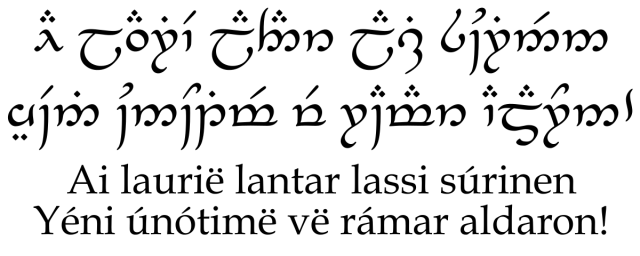
Looking at my whiteboard-child magnet creation, someone noted—it was Mickey, I think—that it looked like something from The Lord of the Rings. And he was right. The liquid nature of my syllabary as it contrasted with harder-edged sounds—what I later would recognize as fricatives to add to my gutturals—was most certainly coming from the Professor himself, J.R.R. Tolkien.

Quenya_Example.svgI can’t remember if I was annoyed at being derivative back then, but I have since become comfortable with that status. When it comes to the constructed languages in fiction (conlangs), Tolkien is the master. Terry Pratchett captures the truth of it well with a quote that is especially resonant given the fact that I was (re)discovering the mythic elements of language invention in the Land of the Rising Sun and a few hundred miles from Fuji:
Tolkien appears in the fantasy universe in the same way that Mount Fuji appeared in old Japanese prints. Sometimes small, in the distance, and sometimes big and close-to, and sometimes not there at all, and that’s because the artist is standing on Mount Fuji.

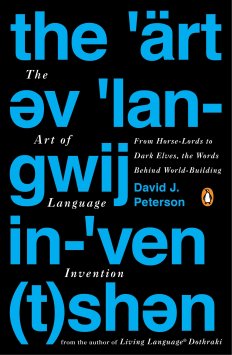
While the conlangs that appear on screen and in print can often be simplistic and perhaps no more than a part of the atmosphere—I’m reading Stephen King’s Desperation, and his elemental-alien-demonic language of Tak is there merely as a tool to invite horror and to give a sense of cavernous, instinct-soaked deadliness—many of our fictional languages are constructed with some complexity. The TV version of George R.R. Martin’s The Song of Ice and Fire is a strong example, which I enjoyed reading about in David J. Peterson’s, The Art of Language Invention: From Horse-Lords to Dark Elves, the Words Behind World-Building.

David J. Peterson The Art of Language InventionBack in 2001, I knew little about Tolkien’s philological idiosyncrasies. I was a fan, reading as a lover of Tolkien’s words and worlds and responding with my own bit of word-playfulness. Good readers do this, I think, sketching out family trees and maps, rewriting the story and playing with its possibilities. And, in the case of a carefully constructed speculative universe with diegetic languages that have some heft, playing with the words of that world is something we love to do.

It was what Tolkien himself relished in doing, of course. As I grew as a Tolkien reader, I came to realize the extent to which his entire legendarium is rooted in language and language invention. While I have played with language forms when writing fiction, Tolkien wrote fiction to give space for his languages to breathe and grow. It is why, I think, Tolkien’s writings feel like they have a mythic quality to them from almost the first pages. And, like a magnet, it is a feature that either attracts or repels readers.

Tolkien was aware of the polarizing nature of invented languages when he finally came public in the early 1930s with his own. Before The Hobbit—long before The Lord of the Rings was in anything like a readable form—Tolkien shared what he called his “Secret Vice” in a lecture in the early 1930s. Tolkien believed in the interconnected nature of language and mythology, and shared this thesis with the Samuel Johnson Society of Oxford in a 1931 talk called “A Hobby for the Home.” For Tolkien in that lecture, it was almost a guilty confession. For us as readers, though, it is pure possibility. As Tolkien’s secret vice of language development is the root of his legendarium, the more we invest in Tolkien’s conlangs, the more we learn about his worlds.

lord of the rings ballantineAs such, Dimitra Fimi and Andrew Higgins’ 2016 publication of J.R.R. Tolkien’s “A Secret Vice” in a critical form is very welcome. A Secret Vice: Tolkien on Invented Language is a beautifully designed edition in the HarperCollins Middle-earth series, and includes critical texts with extensive notes of two of Tolkien’s connected lectures, “A Secret Vice” and “Essay on Phonetic Symbolism.” They also publish a number of related manuscript notes from Bodleian Tolkien MS. 24 which would only be available to people with archival access. The volume closes with a chapter on “The Reception and Legacy of Tolkien’s Invented Languages” and a helpful chronology of Tolkien’s philological and language work in 1925-1933.
Overall, A Secret Vice is excellently done, neither disappearing too deeply into the involved worlds of Tolkienist language scholarship nor skating quickly across the issues. The reviews of scholarship are adequate though not exhaustive, and thus accessible to new students. Some will use this book for a broad-based introduction, while others will use it primarily for the texts.

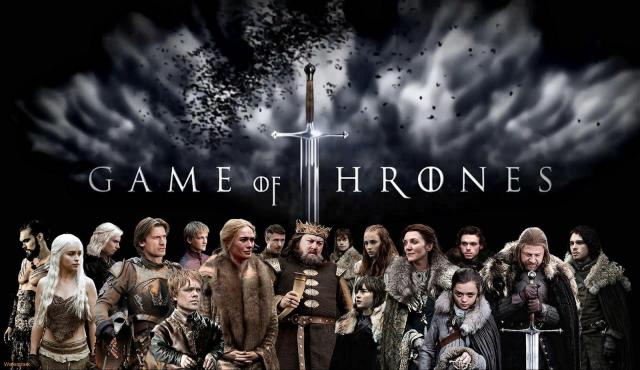
george rr martin the game of thrones fullMy criticism and concerns are issues of publication rather than editorial control. I am eternally frustrated by endnotes, especially in critical editions. This is even less endearing when we are dealing with conlang poetry. My shout into the wind on this issue will do little to shift what is the normal practice in the industry. Beyond that, the “coda” that offers the section on Tolkien language reception could have been longer. A little more detail about the living nature of Elvin tongues would be welcome, but I am surprised we don’t have a significant portion on what is the most extensive and complete post-Tolkien Tolkienist conlang, that of The Game of Thrones on screen. I can only guess that someone else has done this job or that it didn’t fit in the vision of the publishers or others behind the scenes.

These issues are minor and shouldn’t take away from a volume of worth. As a fan, as a curious reader, I’m appreciative of Drs Fimi and Higgins for their work. I also appreciate the generosity of their time and Signum University’s relevant creativity in creating a space to share more on Tolkien’s Secret Vice. In 2016, Drs Fimi and Higgins each led various parts of a three-section academic series on A Secret Vice hosted by Signum University. Here are those sessions, available free to you.

Posted in Reviews | Tagged , , , , , , , , , , , , , | 10 Comments

“Gardeners of the Galaxies” Discussion with Sørina Higgins and Brenton Dickieson on Inkling Folk Fellowship (Fri, Apr 29, 2022, 4pm Eastern)

“Gardeners of the Galaxies? How Imaginary Worlds Teach Us to Care for This One”: A discussion with Sørina Higgins and Brenton Dickieson on Inkling Folk Fellowship (Fri, Apr 29, 2022, 4pm Eastern)

In many parts of the northern hemisphere, all manner of folks are getting out of doors and digging their fingers in cool, rich earth. We do this for food, for beauty, for health and exercise, and for a Hobbit-like love of green, growing things.

In the ways that we attend to our urban gardens, suburban walkways, farms, and public spaces, in the attention we pay to what we eat and where our food comes from, and in the decisions we make about how we live on the planet, we are becoming increasingly aware of how implicated we are with our environments.

That connection deepens with our work as artists, poets, storytellers, and lovers of great, rich literature. These are places where our subcreative acts as little makers reflect a deeper, creative impulse, as J.R.R. Tolkien captures it in his poem, “Mythopoeia.” For lovers of the Inklings and other mythopoeic writers, literature and film are never merely the sum of their value as entertainment, but will always draw us into a deeper understanding of life.

Thus, Brenton Dickieson and Sørina Higgins are interested in exploring “How Imaginary Worlds Teach Us to Care for This One” in an anthology of essays with the working title, “Gardeners of the Galaxy.” They will join the Inkling Folk Fellowship on Friday, April 29 to discuss their open call for essays and artistic pieces and to be part of a larger discussion about the ways in which the effect of going to another “world” in literature or film or fancy can transform and enlarge our perspectives of how we might live meaningfully in the everyday world we inhabit.

So, join us this Friday, April 29, 4 p.m. (EDT), to join the conversation and, maybe, to start working on your essay or creative proposal for the imagined volume (not to mention your garden and chicken coop).

Link to Call for Proposals: 

CFP: Gardeners of the Galaxies: How Imaginary Worlds Teach Us to Care for This One by Drs. Sørina Higgins and Brenton Dickieson

Zoom Link:

Please see the Inkling Folk Fellowship event on Facebook here.

Biographies:

Sørina Higgins is a faculty member at Signum University. She earned her Ph.D. in English from Baylor University in 2021 with a focus on theatre of the modern occult revival. She edited an academic essay collection entitled The Inklings and King Arthur, wrote an introduction to Charles Williams’s Taliessin Through Logres, and produced an edition of Williams’s early play The Chapel of the Thorn. She is also the author of the blog The Oddest Inkling, devoted to a systematic study of Charles Williams’ works.

Brenton Dickieson also teaches at Signum University and is an Associate Professor in Applied Communication, Leadership, and Culture at the University of Prince Edward Island. Brenton researches the intersection between faith, culture, and literature and curates the blog, A Pilgrim in Narnia. He earned his Ph.D. in Theology and Religious Studies from the University of Chester in 2019. His rewritten thesis, The Shape of the Cross in C.S. Lewis’ Spiritual Theology, is contracted with Oxford University Press.

Posted in Reflections | Tagged , , , , , , , , , , , | 3 Comments