A Complaynt on the Letter Y and Wyther Grange of Emily of New Moon

Not long ago, I was listening to an audiobook of Emily of New Moon, one of my favourite of L.M. Montgomery’s novels. In chapter 22, the sensitive, poetic Emily must leave New Moon to visit her Great-Aunt Nancy Priest in her somewhat impressive, somewhat faded home, Wyther Grange. Given Aunt Nancy’s wealth, there is a sense that Emily’s adoptive family hopes that she might be able to win over this unconventional and eccentric old lady, and thus secure Emily’s future. Emily truly is winsome, and projects her own unconventional individuality that intrigues Aunt Nancy. Although there is no way to separate Aunt Nancy with her fortune, dead or alive, Emily does inherit two things from her–though one of these is something that Nancy has stolen from Emily. 
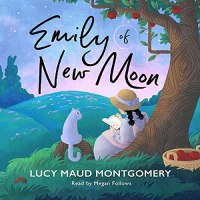
The audiobook reader was generally pretty good–though I have yet to find an absolutely brilliant reading of the novel. I did have hopes of a new discovery last summer. Because I was a child of the last century, Megan Follows was for me the “voice” of Anne, since she starred in the 1980s Kevin Sullivan Anne of Green Gables films. Last summer, Follows released her reading of an audiobook production of Emily of New Moon. It is well done as a performance, and I particularly like Megan Follows’ reading of Sheridan Le Fanu’s 1872 novella, Carmilla. However, the abridgement of Emily was so strange and egregious, that it became the subject of my discussion in the 2021 Emily of New Moon Roundtable (read more here).

Until the great performance comes along, my dog-eared paperback and this other audio reader will have to do.

However, there is one moment in the audiobook that I just cannot get past. When we come to Emily’s critical encounter with Aunt Nancy at Wyther Grange, the reader pronounces “Wyther” as “Why-there” (to rhyme with eye-ther), rather than a soft “wi” sound. I had to stop the tape. I just couldn’t imagine “Weye-ther” to be the correct pronunciation. Though I had never in my life looked up the word, I was certain that “wyther” was most likely a variant of “wither”–as in “shrivelled up,” or “dried up,” like how a vine slowly withers at summer’s end, turning slowly brown after a season where it has reached great heights clinging to some grand wall. 
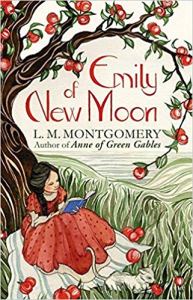
It was, I presumed, an aptly chosen name for Great-Aunt Nancy Priest’s home and the encounter Emily is to have there:

“What do you think of us?” demanded Aunt Nancy. “Come now, what do you think of us?”

Emily was dreadfully embarrassed. She had just been thinking of writing that Aunt Nancy looked “withered and shrivelled;” but one couldn’t say that—one couldn’t.

“Tell the truth and shame the devil,” said Aunt Nancy.

“That isn’t a fair question,” cried Emily.

“You think,” said Aunt Nancy, grinning, “that I’m a hideous old hag and that Caroline isn’t quite human. She isn’t. She never was—but you should have seen me seventy years ago….”

The archaic spelling of “Wyther” would add to the atmosphere of the home for Montgomery and for readers. The word “Grange” as a country home also has an oldish feel, even a century ago. Other uses in her short stories, “Ingelow Grange” and “Penhallow Grange,” have the same kind of old-timey feel. Even the homonymic adverb “whither” evokes a lost world, and is usually used in whimsy and quotation in Montgomery’s prose.

But then … “Why-there?” is kind of an interesting question for the novel at this point….
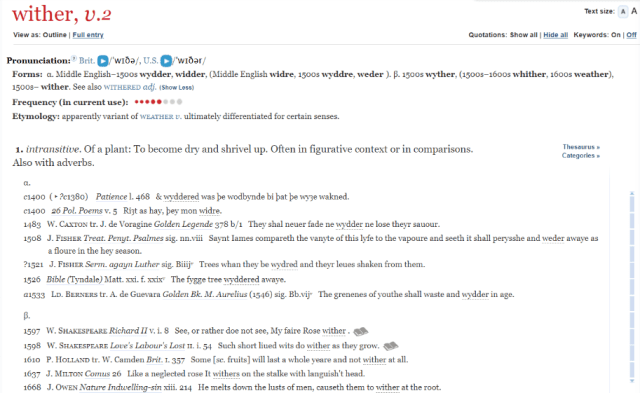
Ultimately, I did look it up, as I often do with words once I have used them to find out how I have guessed aright or made a fool of myself.

Even though the etymology is not terribly impressive in the OED, “wyther” is indeed a variety of “Wither”–and there are a goodly number of variants, though not nearly as many as the adverbial “whither.” Figuratively, “wither” spelled as “wyther” in the Coverdale Bible (Ecclesiasticus 10:17) makes a good counterpoint to our image of Aunt Nancy in the text.  

However, while my instinct was correct, I had to ask myself: why was I so certain and so judgy? After all, the “y” in “judgy” and “Emily” is an “ee” sounds. And “tyre” rhymes with “buyer” and is pronounced like “tie,” being a UK variant of “tire.” “Y” can easily go long…. As in the word “why,” right? And it is sitting right there in WHYther Grange. Still, I can’t imagine there is any such thing as a “wythe”–though “whyȝt” is a kind of wind in Middle English. 

So why all this confusion about “y”? How do I know when I am supposed to pronounce “y” a certain way?

Perhaps it comes down to whether the “y” comes to us from the Greek Upsilon (lowercase υ, though some transliterate as Ypsilon and the uppercase form is Υ), or from the Greek through Latin, or from the Old English rune “yr” (ᚣ), or evolved in vowel shifts both great and small…. Sometimes pronunciation works this way, like how “-ize” and “-ise” words are distinguished in British English because of their etymologies (while Americans have picked a side and Canadians remain confused). 

And obviously, this all works differently when “Y” works as a consonant than when it works as a vowel or semivowel. That whole “a, e, i, o, u and sometimes ‘y’” vowel rhyme is a bit of a bust when it comes to a letter like “w,” isn’t it? And what about “h” in “ah!”, or “gh” in “thigh”? And then there are all those umlauts and accents and ligatures and digraphs. There is the æ in “mediæval” or “dæmon,” but lost in “archaeology” in any spelling I’ve seen. Or the œ that is everywhere in beautiful French words but nearly lost in English, except occasionally, like in “œdipal” or (rarely) all the “pœia” words I like, and remembered in names like “Phoebe” or “Phoenix,” but lost in most œ technical words. What do we do with those? 

I feel let down Sesame Street on this one. 

So as I dig into it, I still am amazed to find that “y” can have a history of letters/sounds as broad as ɘ, i, ɨ, ɪ, j, u, ʊi, v, w, ʏ, or ȝ. It can even steal thorn’s thunder–the þ that we might find in “whyþer”–an offence that you can still see in signs like “Ye Olde Bookshoppe.”

(which, though I mock, looks pretty great as a bookstore)

I would normally blame the Welsh for vowel/consonant complexity, but we can’t even do that here. 

So, in forming this complaynt, and though I might be as hypocritical as yon lady or need hypodermic treatment, and there is a long distance from sylvan wonderlands to the psych ward, I am happy to say that, all myths, sound systems, and lyrical gymnastics aside, and beyond every journey in a canyon of doubt or literary martyrdom, it’s not always clear, even reading Wycliffe and Tyndale–or Emily of New Moon–boy, it’s hard to know how to pronounce “y”–even on a typical day like this.

And still, the audiobook was wrong.

Posted in Reflections | Tagged , , , | 31 Comments

The Sloo/Slow/Sluff of Despond: Today’s Word of the Day and a Spiritual Truth in John Bunyan’s Pilgrim’s Progress

Today’s word of the day arrives as I am rereading John Bunyan’s Pilgrim’s Progress:

I do not always find the Word of the Day terribly enlightening, in part because Merriam-Webster only gives a brief etymology. And it is the stories within the word that I love to learn about.

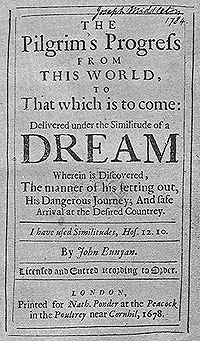
However, this word fascinates me because of its resonance rather than its history as a word. It immediately evokes for me John Bunyan‘s allegory of Christian life, The Pilgrim’s Progress. While I struggle to find sympathy with this strange book, for various reasons I find myself coming back to it again and again. One of those reasons is that I played the Pilgrim, Christian, in an undergraduate musical rendition of The Pilgrim’s Progress, called “The Upward Way.” In a fashion that is more intimate than metaphor alone, the Pilgrim’s tale is in some ways inside of me.

In seeing today’s Word of the Day, “slough,” I could not help but think of Pilgrim’s struggle in the “Slough of Despond.” I remember the debate we had about pronouncing that word in the stage production. Peeking at a revised version of the M-W entry will show why:

slough (noun)

pronunciation: slau̇; in the US (except in New England) ˈslü is usual for sense 1 with those to whom the sense is familiar; British usually ˈslau̇ for both senses 

definition:

1a: a place of deep mud or mire; b or less commonly slew or slue \ ˈslü  \ 1) swamp; 2) an inlet on a river, backwater; 3) a creek in a marsh or tide flat; 2: a state of moral degradation or spiritual dejection

slough (verb)

definition (when pronounced as above): to engulf in a slough; to plod through or as if through mud  (or “slog” through )

slough (noun)

definition (when pronounced as ˈsləf , sometimes spelled “sluff”): 1: the cast-off skin of a snake; 2: a mass of dead tissue separating from an ulcer; 3: something that may be shed or cast off

slough (noun)

definition (when pronounced as ˈsləf , sometimes spelled “sluff”): 1a: to become shed or cast off; b: to cast off one’s skin; c: to separate in the form of dead tissue from living tissue; 2: to crumble slowly and fall away; 3: to cast off; 4a: to get rid of or discard as irksome, objectionable, or disadvantageous —usually used with off; b: to dispose of (a losing card in bridge) by discarding

When I encountered the “Slough of Despond” in my script, I immediately said “sluff”–a fairly common word in my growing-up spaces. As a dairy farm kid, behind the milk barn there was a “Slough” of something much more fragrant than the average pond or bog, but no less miry than Despond, which becomes Christian’s trap in the allegory. If we were to have called our manure pit a “Slough” we would have called it a “sloo.” However, “Slough of Shit” really lacks something of Bunyan’s poetry even as it excels in technical specificity. “Manure pit” seemed to do all that was needed on our little farm.

In that theatre read-through all those years ago, my “sluff” pronunciation got a chuckle: what did I intend to slough off? I was asked. I pivoted quickly, but my “sloo” pronunciation created a debate. “No,” someone said, “it’s pronounced ‘slow,’ like ‘cow.” I know about cows and the sloughs that they create, but that pronunciation clanged in my ear.

Had we the Merriam-Webster Word of the Day, no doubt we would have been able to answer the question directly. For our performances in Atlantic Canada and the Northeast US, “Sloo of Despond” would work, whereas “Slow of Despond” would be the word in our other American shows.

I can’t remember how it all worked out. I doubt that I could have changed my pronunciation partway into a tour, in any case. I now suspect that Bunyan’s pronunciation may have been closer to “slow,” but I don’t know for certain.

What the Word of the Day did for me was to cause me to pause in my reading, giving me a new depth of understanding about the Slough named Despond. Here is the place where Christian and Pliable, walking together, fall into the Slough:

  PLIABLE. Well, my good companion, glad am I to hear of these things: come on, let us mend our pace.

  CHRISTIAN. I cannot go as fast as I would, by reason of this burden that is on my back.

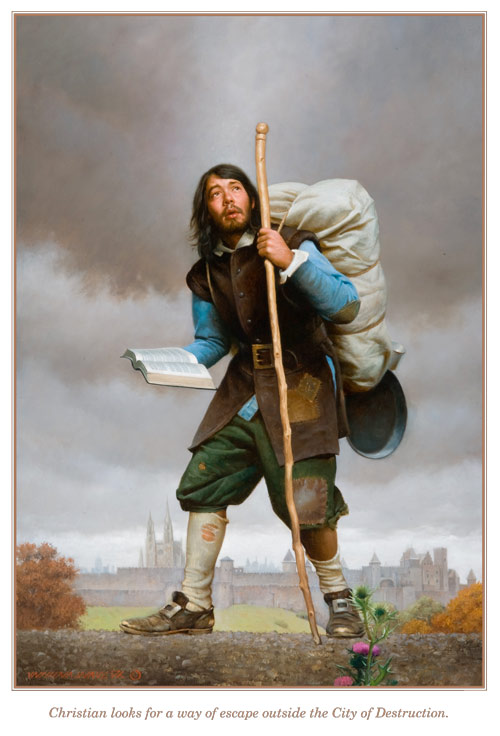
  Now I saw in my dream, that just as they had ended this talk, they drew nigh to a very miry slough that was in the midst of the plain: and they being heedless, did both fall suddenly into the bog. The name of the slough was Despond. Here, therefore, they wallowed for a time, being grievously bedaubed with the dirt; and Christian, because of the burden that was on his back, began to sink in the mire.

  PLI. Then said Pliable, Ah, neighbour Christian, where are you now?

  CHR. Truly, said Christian, I do not know.

  PLI. At this Pliable began to be offended, and angrily said to his fellow, Is this the happiness you have told me all this while of? If we have such ill speed at our first setting out, what may we expect between this and our journey’s end? May I get out again with my life, you shall possess the brave country alone for me. And with that he gave a desperate struggle or two, and got out of the mire on that side of the slough which was next to his own house: so away he went, and Christian saw him no more.

  Wherefore Christian was left to tumble in the Slough of Despond alone; but still he endeavoured to struggle to that side of the slough that was farthest from his own house, and next to the wicket-gate; the which he did, but could not get out because of the burden that was upon his back: but I beheld in my dream, that a man came to him, whose name was Help, and asked him what he did there.

  CHR. Sir, said Christian, I was bid to go this way by a man called Evangelist, who directed me also to yonder gate, that I might escape the wrath to come. And as I was going thither, I fell in here.

  HELP. But why did not you look for the steps?

  CHR. Fear followed me so hard that I fled the next way, and fell in.

  HELP. Then, said he, Give me thine hand: so he gave him his hand, and he drew him out, Psalm 40:2, and he set him upon sound ground, and bid him go on his way.

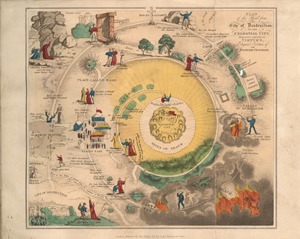
  Then I stepped to him that plucked him out, and said, “Sir, wherefore, since over this place is the way from the city of Destruction to yonder gate, is it, that this plat is not mended, that poor travellers might go thither with more security?” And he said unto me, “This miry slough is such a place as cannot be mended: it is the descent whither the scum and filth that attends conviction for sin doth continually run, and therefore it is called the Slough of Despond; for still, as the sinner is awakened about his lost condition, there arise in his soul many fears and doubts, and discouraging apprehensions, which all of them get together, and settle in this place: and this is the reason of the badness of this ground.

  “It is not the pleasure of the King that this place should remain so bad. Isa. 35:3,4. His labourers also have, by the direction of his Majesty’s surveyors, been for above this sixteen hundred years employed about this patch of ground, if perhaps it might have been mended: yea, and to my knowledge,” said he, “there have been swallowed up at least twenty thousand cart loads, yea, millions of wholesome instructions, that have at all seasons been brought from all places of the King’s dominions, (and they that can tell, say, they are the best materials to make good ground of the place,) if so be it might have been mended; but it is the Slough of Despond still, and so will be when they have done what they can.

In all these years of reading and rereading this text–and bringing it into my story on the stage or in teaching or reading stories about the story–I have missed an aspect of the Slough of Despond, despite it being one of the more personally resonant parts of the story. Today, though, the Word of the Day came as I am reading about Christiana in the “Second Part,” and I laughed about “sluff” and “sloo” and “slow” as I came upon these words again text. But then I stopped up short and reread the passage. It speaks about Christian’s experience of being mired in Despond while his wife Christiana walks on by. In discussing another’s experience, Mr. Fearing’s, though, I read the phrase, “a Slough of Despond in his mind.” Then I kept reading:

He had, I think, a Slough of Despond in his mind, a slough that he carried everywhere with him; or else he could never have been as he was. So he came up to the gate–you know what I mean–that stands at the head of this way; and there also he stood a good while before he would adventure to knock. When the gate was opened, he would give back; and give place to others, and say that he was not worthy. For, for all he got before some to the gate, yet many of them went in before him. There the poor man would stand shaking and shrinking; I dare say it would have pitied one’s heart to have seen him; nor would he go back again. At last he took the hammer that hanged on the gate in his hand, and gave a small rap or two; then one opened to him, but he shrunk back as before. He that opened stept out after him, and said, “Thou trembling one, what wantest thou?” With that he fell down to the ground. He that spoke to him wondered to see him so faint. So he said to him, ‘Peace be to thee; up, for I have set open the door to thee; come in, for thou art blest.’ With that he got up, and went in trembling; and when he was in, he was ashamed to show his face.

In thinking about the Slough of Despond, I think I had always thought of it merely as “sin”–sin that mires us on the way, a kind of boggish intimation of Dante‘s frozen underworld. What strikes me in rereading today is that Despond (as the name suggests) is the psychological reality of sin–the fear it creates in us, the shaking and shrinking, the heart-worry that mires us on the upward way. In my heart, that experience manifests as shame and doubt and creeping fear.

But it is a more specific Slough than just the psychological consequence of sin itself. We see how “sin will find you out” becomes a theme in great works, perhaps best pictured in Raskolnikov in Crime and Punishment or Anna in Tolstoy’s novel–which, by the way, I think that Lewis is evoking in the ghosts of The Great Divorce or Weston in Perelandra or a character like Nikabrik in Prince Caspian–but more complex in the character of Draco Malfoy in Harry Potter, or in Eustace’s story in The Voyage of the Dawn Treader. It is not accidental that “Draco” is a name that evokes “dragon.”

Rather, this Slough of Despond is a result of the spiritual awakening to sin within us, not merely the sin itself. It is the whole collection of “the scum and filth that attends conviction for sin,” for “as the sinner is awakened about his lost condition, there arise in his soul many fears and doubts, and discouraging apprehensions, which all of them get together, and settle in this place….”

This is a striking spiritual discovery for my reading of this tale–and my walking in the world with the pilgrim within me.

Four connected points are worth noting.

First, in an intriguing piece of apologetics within the world-building itself, the Slough of Despond is not made by the King of that land, but is a natural feature in that world–the “run-off”, the sludge, the dross-heap, the tailings pond of awakened sin that works industriously within the people of that land. It is their “Manure Pit” of the mind, the “Slough of Shit” that is refuse of spirituality in progress. All the good earth in the country is not enough to reclaim the land as a soil-bed for fruit-bearing plants.

I don’t know if in Bunyan’s speculative world it is possible to compost the Slough of Despond to enrich the land–like we did on the farm, or like what happens with the character of the man with a lizard (a kind of dragon, one might say) in The Great Divorce.

Second, note that Pliable is able to get away while Christian remains mired in clay. Are we to presume that there is a kind of spiritual liberation in being ignorant of our spiritual state? Christian gains his burden, his awakening to his sinful condition, from his encounter with the story of salvation. Leaving it behind as false hope and a path too hard, Pliable easily walks away.

Third, the idea of a “Slough of Despond in his mind, a slough that he carried everywhere with him” is a terrible break in the allegory. After all, what else is this if not a story that we carry around with us in spiritual life? However, it is a poignant reminder for careless readers (like me) who miss the message in Christian’s tale and need a sequel for it to do its work.

Finally, Christian makes it out of the Slough of Despond, but still has a burden he carries–the very burden that weighted him down within the mire. Eventually, though, he is able to cast off his burden. In a beautiful synchronicity of language, in teaching the text a couple of weeks ago, I said, “And Christian sloughed off his burden….”

So Christian sluffed off his burden–the burden that threatened to drown him in the sloo/slow of Despond. Today’s Word of the Day did its work.

Posted in Fictional Worlds, Reflections | Tagged , , , , , , , , , , , | 23 Comments

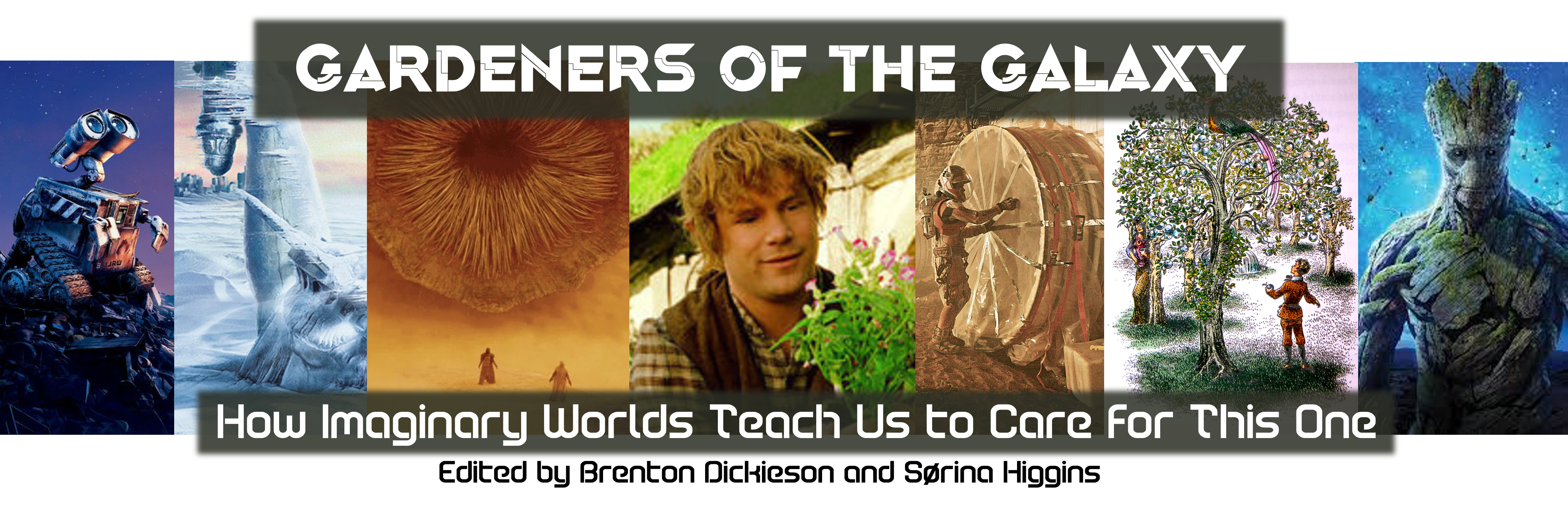
CFP: Gardeners of the Galaxies: How Imaginary Worlds Teach Us to Care for This One by Drs. Sørina Higgins and Brenton Dickieson

Hello dear readers! I am super pleased to announce that I am co-editing an academic book with my long-time friend and scholar, Dr. Sørina Higgins (of The Oddest Inkling fame, with edited volumes like the Mythopoeic Award-nominated Charles Williams play, The Chapel of the Thorn, and the Mythopoeic Award-winning The Inklings and King Arthur). For scholars, critics, and creative folk interested in this project, you can find the CFP below and at https://tinyurl.com/GalaxyGardenersCFP.

I would invite you to watch our be-kittened promo as well. And if you have the ability, please share this CFP with people you think would make great contributors.

CFP: Gardeners of the Galaxies: How Imaginary Worlds Teach Us to Care for This One, co-edited by Dr. Sørina Higgins and Dr. Brenton Dickieson

As the climate crisis worsens, our home planet and our conversations about it are heating up–and creative writers both reflect and anticipate such concerns. Thanks to the recent ethical turn in science fiction and fantasy, many speculative works offer readers a mirror in which to view our own world. Its beauties and vulnerabilities take on special clarity through the page or the screen. A tale of terraforming another planet reminds us how precious and fragile our home world is. The perennial conflict between nature and technology comes alive when trees march to war. We find insights into healthy, diverse communities by spending time with characters in a fellowship–or on a starship.

Gardeners of the Galaxies: How Imaginary Worlds Teach Us to Care for This One will be an academic, peer-reviewed collection of interdisciplinary essays, co-edited by Dr. Brenton Dickieson and Dr. Sørina Higgins. This volume will explore literature, film, the visual arts, and other creative works (especially Cli-Fi, genre fiction, and speculative lit) that imagine, invent, and embody environmental concerns. Rather than coercing texts to conform to our analyses, however, we want to approach our subjects humbly and earnestly, listening to what they say about creation care, biodiversity, or neighborliness; immersing ourselves in their stories of ecological harmony and disharmony; mourning the disasters they depict; and celebrating the solutions they imagine. In particular, we would love analyses of works that envision ingenious alternatives to large-scale planetary depredation.

Chapter proposals might consider questions such as the following (although this list is by no means comprehensive nor intended to limit lines of inquiry): What kinds of environmental disasters are depicted in contemporary literature, film, and other media? How does a certain genre or medium represent nature, and how have those portrayals evolved over time? Do certain metaphors for land or diction choices about earth impact how people treat the soil, landscapes, or ecosystems with which and in which they live? In a given work, is nature empowered or oppressed, and how do characters respond? What is the significance or impact of the anthropomorphism of animals, plants, landscape features, or celestial bodies? When stories blur the line between the human and the nonhuman, what implications does such destabilization have for our living in community with our nonhuman neighbors? What lessons are conveyed through encounters with extraterrestrial species? What do stories of interplanetary colonization suggest about imperialist urges, their ecological impacts on earth, and strategies for integrating with the Other rather than obliterating or oppressing them? Are there tales in which technology plays an essential role in preserving nature or reinforcing what makes us human? What techniques do creators use to entertain us and draw us into moral considerations without compromising artistic excellence or devolving into propaganda?

Submission Information: 

As this volume will be interdisciplinary, we welcome scholars working in literature, film, popular culture, the fine arts, ecology, history, the social sciences, religion, and related fields. While aimed at a scholarly audience, chapters should be written in a lively, accessible tone, avoiding jargon while employing rigorous theoretical and critical frameworks and engaging deeply with existing research. Interested authors should consider trying out their ideas at TexMoot, Signum University’s Annual Texas Literature & Language Symposium (held in Austin, TX, and online; CFP deadline March 1st), which explores the overlapping theme of “Starships, Stewards, and Storytellers: How Imaginary Worlds Teach Us to Care for This One.”

Please submit 500-word proposals here by May 15, 2022. Notifications regarding acceptance will be made in June 2022. Full papers (5,000-8,000 words, including notes) will be due by November 30, 2022.

In addition to academic submissions, the editors will carefully curate a small number of creative works for possible inclusion in the volume. Poets, short-story writers, essayists, and visual artists are invited to submit the actual piece of work that they would like to have considered here; note length limits on the submission form. These works can be submitted up until September 1, 2022.

Send questions about academic submissions to Brenton Dickieson (brenton[dot]dickieson[at]signumu[dot]org). Send queries about creative submissions to Sørina Higgins (sorina[dot]higgins[at]signumu[dot].org).

Posted in News & Links, Original Research | Tagged , , , , , , , , , , , , , , , , | 16 Comments

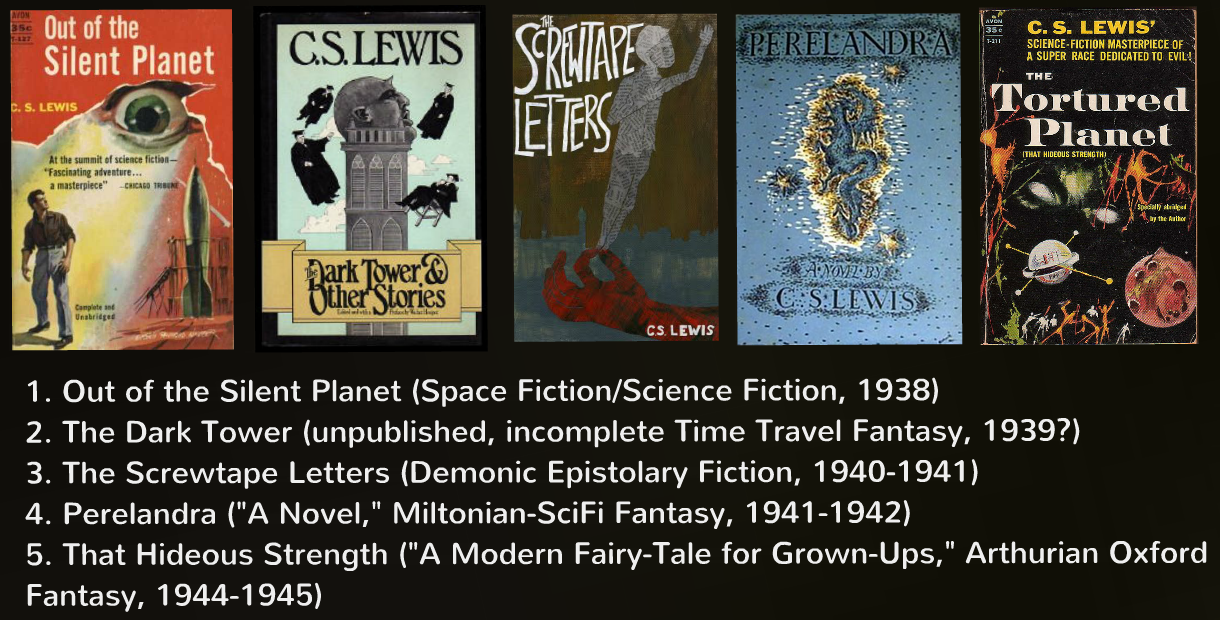
“Reading Lewis’ Ransom Cycle” a Short Course with Dr. Sørina Higgins and the Signum SPACE Program

For some time, I have been wanting to highlight Signum University’s SPACE program. This is Signum’s new, innovative, popular, adult education program. “Academically serious but fun” is how they describe this affordable program that focuses “purely on the love of learning and the joy of studying the material.” I recently had the excuse the provide an invitation to readers to check out SPACE when I heard that Sørina Higgins was offering a course on C.S. Lewis’ Ransom Cycle–which has taken a lot of my academic interest over the last few years (see my paper here). Here is the short course description:

Reading Lewis’ Ransom Cycle by Dr. Sørina Higgins

In this book-club-style class, we will discuss C.S. Lewis’s novels Out of the Silent Planet, Perelandra, and That Hideous Strength. We’ll track his major themes, talk about the background he assumes, enjoy his secondary world, and perhaps cheerfully debate some of his theological claims. We’ll bring in a few of his other works briefly to see how they contribute to his subcreated universe, and we’ll touch on some points scholars have made to help us read these works more deeply.

To make the course work, you have to sign up, purchase a token (or more than one), and then vote for your favourite courses. In the “Fantasy Studies” path with Sørina’s course, there are also conversations about Anime, The Silmarillion, a Fairy Tales course on “Tricksters, Fools, and Villains,” and Tom Hillman’s “Pity in The Lord of the Rings.” Then of course, there are languages from the contemporary to the ancient that bring my “someday” goals a little nearer. Finally, Sparrow Alden’s “Creative Writing Workshop” is really tempting in a difficult term….

You can see more about Sørina’s short course on Lewis’ classic SciFi here, and below are more details on SPACE from the Signum website:

The mission of the SPACE program is to provide numerous and varied opportunities for personal enrichment through learning. SPACE modules are designed to be academically serious but fun, focused purely on the love of learning and the joy of studying the material. SPACE provides fully online access to a serious but low-impact arena for learning, whether you are interested in building a systematic course of study or just pursuing eclectic interests.

Signum University believes in connecting learners with teachers, and with each other! SPACE modules, like all Signum classes, are based on real-time, online small-group discussion sessions. Our modules each last for one month and typically meet twice a week for an hour-long interaction under the direction of the module’s preceptor. Each module provides eight hours of class time.  If you have any questions about the SPACE program, please reach out to space@signumu.org

Embark today on your next learning adventure in SPACE!

SPACE Tokens are each redeemable for participation in one SPACE module. SPACE Tokens never expire; you can use them whenever you like, and you can even give them away to friends!

Our Modules Directory contains the full list of our SPACE modules. Each month, we will publish a list of Candidate Modules; these are the modules that we are prepared to teach in two months. Once you have purchased at least one Token, the Communications Center will email you the link to a simple form on which you can choose among these Candidate modules, selecting your module of choice.

After the candidate month (approximately the 7th of the next month), we will publish the list of Confirmed Modules:  modules that have already received at least four registrations as candidates. If the module you initially selected is not Confirmed for that month, you can register for a module from our Confirmed list instead, or keep your Token to use in a later month. Students can register for one of our Confirmed Modules right up until classes start. If you want to have a say in which modules run in a given month, purchase your tokens and make your selection early!

See the Candidate Modules for April 2022, including Sørina’s “Reading Lewis’s Ransom Cycle” course, and a host of other great choices.


For those who would like to dig into the nuts and bolts of the SPACE program at Signum check out the launch from last fall’s fundraiser day:

Posted in Reflections | Tagged , , , , | 4 Comments

Tolkien Prof Corey Olsen on the Rings of Power Trailer and How to Talk About the Worlds We Love

In my post on the title announcement to the new Middle-earth Prime series, The Rings of Power, I admitted to having a split mind and cautious hopefulness about the film serial. I wrote that:

“my confidence is not high that this studio, in this age, is able to create a rich experience for lovers of the literature. The Dune adaptation gives me hope of the possibility of a brilliant, world-evoking film series that extends, enhances, and fills out my reading experience.”

Superbowl night was fun this year not only because it was my first time out after a long period of COVID restriction measures–and not just because it was a good game–but because we got a one-minute trailer on The Rings of Power.

After an initial foray into the Interweb to see what folks were thinking about this new LOTR trailer, I stared at the screen in horror and then slowly backed away from my computer. Social media was lit on fire by people saying the vilest and most disturbing things to one another.

There are a lot of bridges in online Tolkien fandom, and under these bridges lurk a whole host of trolls.

No doubt, some of these trolls have been bred and marked by some tyranny or other, like the Uruk-hai of Peter Jackson’s invention.

And among even the most friendly Tolkienists are those with a kind of terrifying rigour that is intellectually admirable, but is not how I want to talk about Tolkien’s worlds.

What disturbed me most, however, was the entrenched smallmindedness driven by bigotries of two unequal kinds.

With the introduction of some Black and Brown actors, there is a digital groundswell of indignation. I have no doubt that the studio has encouraged an early response in how they have communicated–like the introduction of Finn to the Star Wars film universe. And I have no doubt that there is just a good deal of ignorance, White presumption, and full-on racism in these responses. During my research for my Master’s thesis on antisemitism, I saw how social media forums about music and horticulture and faith were used to groom young people into all sorts of evil conceptions of people not quite like “them.”

However, I was also disturbed by another response: people who I feel are closer to my tribe, but who reduce any question to the yes/no of racism–as if some of us walk in the world with a kind of pristine cultural view and a heart untainted by the prejudices of era and experience, while all others live their lives looking for pretenses to cloak their hate. Intellectual supremacy has not caused the damage that White supremacy has done, but it betrays the same impetus for a monochromatic worldview rather than one that is enriched by diversity. And, of course, there is still time.

So, in hesitatingly peeking back in on the digital Tolkienverse yesterday, I watched Corey Olsen‘s IGN interview and reaction to the trailer of The Rings of Power. Playing his role as @TolkienProf (more than, say, just President of Signum University), I like Corey’s approach to the analysis. He seems even more buoyant and hopeful than I am, and thus it buoys my hope.

I still don’t have much faith that this team of filmmakers can give us a precise rendering of Tolkien’s rich and complex world, which I love.

And I have been a little fearful about things that might get in the way in the making of this Middle-earth tale–things like Americanization, commercialization, political decisions about casting or location, big-budget choices on the wrong things but thrift in the details, today’s culture of reaction and rage…. Think of the Star Wars film Attack of the Clones or what happened to the Hobbit films, but in the 2020s.

But if a series can fill out my experience of Middle-earth even a little bit–like the original Peter Jackson LOTR films or the audiobook, visual art, and symphony interpretations of Tolkien’s writing have done, and like Tolkien’s letters or variant drafts of the stories often do–I am pleased for more. I am open to adaptation and know that it is something different than the book or poem it is adapting. So that filling-out experience is my best hope for The Rings of Power.

So, still cautious, but I am a little more hopeful with this trailer and Corey’s analysis.

But then there are the Youtube comments and responses on the @TolkienProf twitter feed. As a university teacher, and as someone who loves living in the land of popular culture, what I find more disturbing than the potential Disneyfication or Hollywoodization or CGIification of Middle-earth is the degree of anger and rudeness in the responses to Corey’s video. That the top comment is an unattributed Tolkien scribble with no comment is an indication of the cultural moment, I’m afraid.

The “beardless dwarves” comment is worth talking about, I think. I would love to read all of the History of Middle-earth volume, The War of the Jewels–or, at least, that section–and have the conversation–deeply, thoughtfully, with texts and minds open to the possibilities. I am up for conversations like that. Meanwhile, this is pretty good–and catches the hopeful possibilities I can see in the new film.

Update: When I said, “I’d like a smart conversation,” it turns out that Profs Corey Olsen and Maggie Parke are going to host just such a thing: 

Posted in News & Links | Tagged , , , , , , , , , , , , , , | 22 Comments