

“Why don’t you monetize your blog?” I am asked this question with some frequency by caring folks who see me slogging it out here, week after week, producing well-researched imaginative and literary resources for some of the great storytellers of the last century. Why not cash in?
It is true that I should be smarter about newsletters, search engine optimization, branding, and converting the 100,000 or so people who visit this website from casual readers to “members” of some kind. Honestly, though, this kind of approach isn’t to my taste. I don’t love clickthrough newsletters, paywalls, and the cult-like savvy needed for social media management. I am tempted to a visual redesign, but I admit that I still like that decade-old image in the header: someone who looks suspiciously like C.S. Lewis walking down an English(ish) road. It is just the right image for what I’m doing and I found it entirely by accident. There are other images that might work: a panorama of Gondor, a pathway into Lothlórien, the bridge in the Bridge to Terabithia film, or (one of the few redemptive parts of the Narnia Disney films) a screenshot of Lucy discovering Narnia.
There are options, no doubt. Truthfully, the whole thing makes me weary. If you would like to take up the task of redesign, I would be open to your help! However, website analytics suggest a pretty minimal return for a big culture shift at the open-source, free-access A Pilgrim in Narnia.

But I do love to write, and I love to dig around the digital stacks. So, among the reasons I keep writing and editing free content on A Pilgrim in Narnia is my passion for providing readers with access to research. It is just something that I believe in as a scholar and as a writer.
Moreover, there is the question of impact. A good academic piece by a relatively obscure scholar like myself might get 200 or 300 solid readers over its lifetime. I can usually achieve that in the first day or two of an article, or within the first week of a weighty piece. And some of my experiments of thought–using this space as an intellectual sandbox–have had thousands of readers. Plus, I get to add links and pictures, update the material, and invite others into the conversation. There is an active, dynamic quality to producing open-access materials in today’s digital world. Since I am not being paid to do this work by a university or publishing firm–indeed, I pay to keep this website ad-free–I might as well make it as open as possible.
Therefore, partly in response to student need and partly to encourage great research by you, dear reader–who also may not have a university behind you–I thought I would feature some places where you will find open-access Inklings research beyond my little website.

1. Mythlore: A Journal of J.R.R. Tolkien, C.S. Lewis, Charles Williams, and Mythopoeic Literature (Mythopoeic Society, 1969-today)
Mythlore is a scholarly, peer-reviewed journal published by the Mythopoeic Society that focuses on the works of J.R.R. Tolkien, C.S. Lewis, Charles Williams, and the genres of myth and fantasy. Begun in 1969 as a literary zine, Mythlore has been critical to the development of scholarship–with a particular focus on the Inklings, specifically, and fantasy studies more broadly. I have a handful of old copies of Mythlore that I love to read through from time to time. And because of brilliant leadership and innovative thinking, the entire text of Mythlore from 1969 onward is available free, online, with no embargo (click here). Mythlore is widely indexed, but as a free, text-searchable, open-access journal with a strong index, Mythlore provides me with a fingertip-ready research tool.
Speaking as a contributing scholar (you can see my piece on the Ransom Cycle here), it is worth noting that Mythlore does not charge any author fees for publication (I think none of these Inklings studies resources do), copyright remains in the hands of the creator, submission and editorial processes are quick and light, the peer-review process is respected, and simple metrics are available for understanding publishing impact. Mythlore is a strong go-to research resource and a journal I follow with each issue.
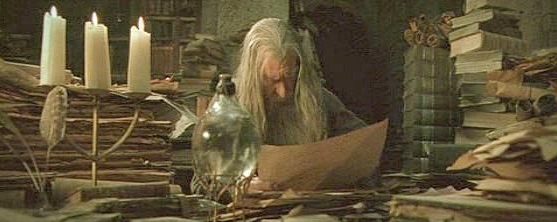
2. Mallorn (Tolkien Society, 1970-today; 2-year Society Embargo)
Mallorn is the peer-reviewed journal of the Tolkien Society and quite famous within its own circles. It publishes articles, research notes, reviews, original poetry, and artwork on subjects related to, or inspired by, the life and works of J.R.R. Tolkien. Mallorn is the more scholarly companion to Amon Hen, which is a member-driven newsletter of the Tolkien Society. Historically, I believe Mallorn evolved out of Vera Chapman’s Belladonna’s Broadsheet, and functioned also as a Tolkien Society bulletin in the early days. While Tolkien Society membership is pretty accessible, especially for students, the digital age and recent Mallorn leadership means that the 50-year resource is completely available online to everyone. All past issues of Mallorn are available on the Mallorn website except the issues published within the past two years, which are embargoed and available only to members of the Tolkien Society.
Find the full catalogue here, and I would encourage you to, join the Tolkien Society if you are a fan and scholar.

3. Inklings Forever (1997-2016)
I have been pretty open about the high regard I have for the C.S. Lewis and Friends Colloquium, a biannual conference at Taylor University in Indiana. Indeed, it was my first academic conference presentation, where I offered my paper, “The Pedagogical Value of The Screwtape Letters for a New Generation,” which won 2nd place for a paper in the Scholar/Faculty Writing Category, as awarded by the C.S. Lewis & the Inklings Society. The paper is frankly a wee bit amateurish, but a cool enough study, I think, and unusual enough to be noticed.
One of the great things that the Colloquium has done is to gather the conference proceedings and publish them. The most recent volume, The Faithful Imagination, was edited professionally by Joe Ricke and Ashley Chu and published by Winged Lion Press (see review by Allison McBain Hudson here). All of the essays, talks, and literary notes from 1997-2016 in Inklings Forever are available here for free, with a pretty good search engine for discovery.
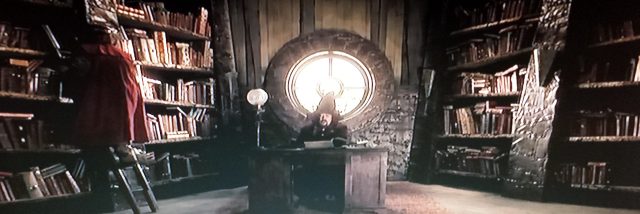
4. Signum University Materials (2013-today)
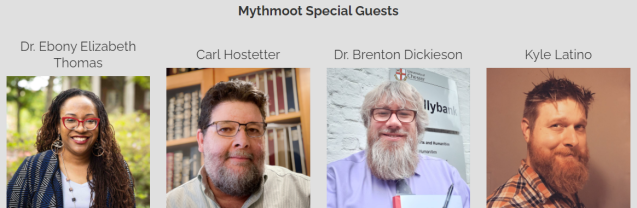
This is a smaller resource than the other open-source society and conference journals, but it is a resource that will no doubt grow in time–and others like it in reading collections throughout the world. Though some library materials are reserved only for students, there are some streams of content that are open to researchers who happen by Signum University’s website. The annual conference, Mythmoot, is an intriguing resource. While there is not yet an easy way to search these materials, the themed conferences include abstracts and sometimes the full-texts of various papers and presentations by the Signum community over the last near-decade. With a little patience, combined the huge wealth of free resources available at the Mythgard Academy and Signum Youtube channel, a good researcher will find some needed materials. In particular, the “Thesis Theater” playlist has the original research of a couple of dozen MA students talking about their final project–and usually open to sharing their thesis with researchers.
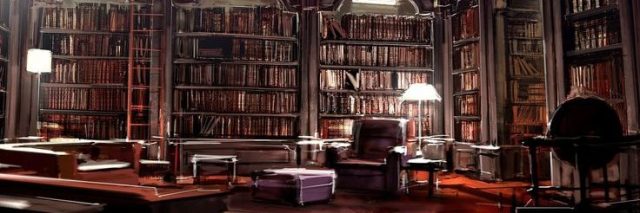
5. Free Materials Among Print Journals
Finding the right open-source material is always a challenge. Even though I am a faculty member at several libraries, I am always using my networks to find things that I need. There are some resources that we use as go-to places for accessible research:
- Open JSTOR and Artstor, offering tools for search for materials online and in partnership with the libraries where you do have access
- Also check out Open Access On MUSE
- DOAJ.org lists open-access journals and articles
- Google Scholar, a weirdly dated but moderately helpful resource for materials where you have specific texts or search-words; it does not distinguish between reviews, articles, and other academic resources–though it does list most of what I’ve done in the last 10 years (not everything is linkable)
- Google Books, deeply limited but sometimes quite helpful in searching a phrase or two or finding an outdated resource, and includes the Books Ngram Viewer–a visual history of term usage
- Kindle Samples are a good way to get a sense of what books might be helpful in your research and often includes a copy of the introduction or preface
- Universities usually archive their MA and PhD thesis and dissertations, though some may be embargoed; and check your national research resources: Canada, for instance makes all of their publicly funded major projects searchable (see here, where there were four dozen results each for “C.S. Lewis,” “Tolkien,” and “L.M. Montgomery”)
Beyond these open-access depositories, it is worth noting that The Journal of Inklings Studies and SEVEN: Journal of the Marion E. Wade Center offer their book reviews and occasional other feature articles for free online. These are both leading journals in which I would be proud to see my research–and in each I have published reviews or review essays (see this recent review, this review essay on Marsha Daigle-Williamson’s Reflecting the Eternal, and this substantial piece on Monika Hilder’s trilogy of Lewis studies books, behind a paywall). Sehnsucht: The C.S. Lewis Journal is a uniquely focused project that consistently produces high quality content. Sometimes, however, I can read enough of a preview on Google Books to see whether or not I need to order the article–such as my piece with Charlie W. Starr on “The Archangel Fragment.” Recently, Sehnsucht has been more widely indexed and available through libraries or digital purchase online.
There are also some broader resources for scholars in the field with full or limited access:
- North Wind: A Journal of George MacDonald Studies, housed at St. Norbert College in De Pere, Wisconsin, is open-source with a strong digital collection of archived material and linked resources (I am on the editorial board for North Wind)
- The official Owen Barfield website has numerous resource for this essential thinker
- The Journal of Tolkien Research is peer-reviewed, online, and open sourced
- The Charles Williams Quarterly has their archive online (1976-2008)
- Fafnir: Nordic Journal of Science Fiction and Fantasy Research (open source)
- Science Fiction Studies (text available of some older issues)
- Science Fiction Film & Television journal (select free articles)
- The Journal of Popular Culture (select free articles)
- The Looking Glass: New Perspectives on Children’s Literature is struggling to work through the COVID interruption, but has much of their material available online
- Janet Brennan Croft’s 2016 article, “Bibliographic Resources for Literature Searches on J.R.R Tolkien,” has anticipated this resource post with a section on tools for the unaffiliated scholar.
- Make sure that you check out your local libraries. Many state and provincial libraries purchase databases which are then available through your local public library with your library card or have cooperative agreements with local universities and colleges. You never know what your local librarian can do for you!
- Check out the Signum University lib guide for Fantasy Literature, C.S. Lewis and the Inklings, and J.R.R. Tolkien
- The Science Fiction and Fantasy Research Database (https://sffrd.library.tamu.edu/site/) is a free index to books and articles on SF and fantasy topics. Live since 2000, this is not a full-text source but a free online index. The database currently indexes just under 127,000 items in multiple languages, with the preponderance of the items in English–including thousands of results for the Inklings (thanks to master librarian Hal W. Hall for sharing this index)
- Clive Shergold has an unusual and helpful way of re-listing The Tolkien Journal, Mythlore, The Journal of Tolkien Research, and Mallorn, as well as the full table of contents of the Proceedings of the J R R Tolkien Centenary Conference 1992, as well as the full Proceedings pdf, with index.
- The various reading rooms of great figures often have great resources; check out my list of “C.S. Lewis Manuscript Collections and Reading Rooms“
- I also have “A Guide to Doing C.S. Lewis Research at the Bodleian“
Don’t forget to Google a scholar to find their pieces on their own Academia page, LinkedIn, or their website. You can even reach out if you are in need–but a note that scholars get very frequent requests for help and cannot always respond.
There is a lot of great “nerd” stuff on the web that has content that might be dynamic and useful, even if it is not peer-reviewed–like A Pilgrim in Narnia and our friends! The Tolkien world, in particular, has had stunning online resources for decades.
Finally, I would give a nod to The Journal of L.M. Montgomery Studies, the leading academic journal in the field that is completely open access and welcomes artistic as well as academic content–including my study, “Rainbow Valley as Embodied Heaven: Initial Explorations into L.M. Montgomery’s Spirituality in Fiction.”
Now to you, dear reader: what open-source or partially free academic resource would you recommend to others? I cannot list all the cool nerd sites, but I can link resources for traditional researchers in a digital age.


 One of the earlier biographers of
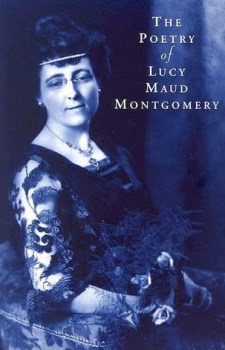
  I acknowledge gratefulness to the editors, John Ferns and Kevin McCabe, as well as the Montgomery family, for bringing this collection to print in the 1980s. As a first major step in Montgomery’s poetic recovery, it is an essential volume–particularly in the pre-internet age.
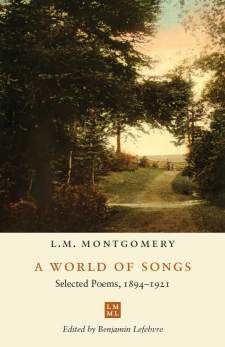 There are few poems that simply are not good and none that lack value. The arrangement of the poems by the editors is fair, but does not show the skill of the recent Benjamin Lefebvre World of Songs collection. Reading in the collected order, I found a repetitiveness in the first half of the book: seasons, water, land, wood, sunrise, sunset, night, etc. Reading chronologically–which, by the way, was a great deal of work because the editors did not date the poems, but Rea Wilmshurst and Carolyn Strom Collins have created bibliographies in concert with a whole host of contributors working collectively–I found an exciting and engaging collection with a sense of the seasons of Montgomery’s poetic life. Oddly, there is no index and no list of where the poems were published or discovered. While being grateful to Ferns & McCabe for this publication, I eagerly await a critical edition of Montgomery’s poetry.
 This last observation, however, shows a critical weakness in this introduction. Too often McCabe provides no examples–or only brief sketches of the scene–in making what are pretty sweeping and important claims.
 These strong points, however, are counter-balanced by missing links in his work as an editor. For example, the weakness of McCabe’s sketch of Montgomery as driven by her own sense of orphan-hood is, perhaps, forgiven when we think about the lack of biographies in near the time of publication. However, that McCabe seems to be unaware of the dozens and dozens of stories Montgomery published in her early years of writing–i.e., with regards to his suggestion of a turn from poetry to prose–makes me wonder if McCabe could have been more invested in what was known of Montgomery’s biography at the time. Ultimately, this is an introduction with a thesis that the editor asserts rather than argues. His writing is often breathtaking, as broad landscapes are. I am not sure that he has understood the contours of shape and colour, shadow and light in Montgomery’s poetry.
 It isn’t that I completely disagree with McCabe. I think his divided-self argument is deeply problematic–not because Montgomery did not have a voluble and divided self but because he is unable to explain what is integrative about her perspectives. Because Montgomery created a public self and a private self, it does not mean that there is no single self. Self-consciousness about segmentation is evidence itself of holistic thinking. Moreover, Montgomery’s journals should be evidence enough to show how stunningly complex making generalities about her “interior” life can be. McCabe’s sketch of Montgomery’s growth as a poet has some truth in it–though some of my favourite Montgomery poems are after Anne of Green Gables, and some of her ethical and religious verse is surprisingly good as popular poetry. But what about her growth as a religious person?
 However, I was able to enjoy a great time of connection with the
  This piece is part of a long-term project on Lewis and literary theory. Some of the implications are in my (hopefully) forthcoming book,
  Short Abstract
 Longer Abstract
 Resources for More



 A Pilgrim in Narnia