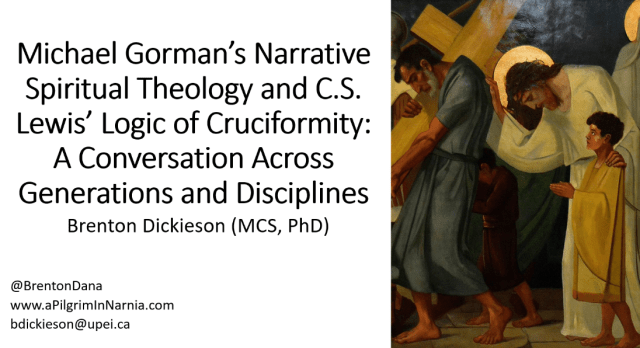
Michael Gorman’s Narrative Spiritual Theology and C.S. Lewis’ Logic of Cruciformity: A Conversation Across Generations and Disciplines by Brenton Dickieson

My past past few days has been taken up by Canada’s annual Congress of the Humanities and Social Sciences, Congress2021–what scholarly Canadians used to call “the Learneds.” It was certainly a learning experience for me–and I am a bit mentally tapped as I start a new week of work.

At the Canadian-American Theological Association (CATA), I presented material from my forthcoming book, The Shape of the Cross in C.S. Lewis’ Spiritual Theology. As I hunt for a publisher, this presentation allowed me to return to one of my early discoveries for C.S. Lewis. As CATA is filled with dynamic, bright, and integrative thinkers, I was able to think about the implications of my work both for Lewis studies and for theological method. 

I am pleased to be able to share a video of the lecture for you. This video is not of the live conference paper but prepared specially for you. I hope you find it a fruitful discussion. There are some resources below (including abstracts, a PDF of the slides, and links to background reading) that might be helpful.

“Michael Gorman’s Narrative Spiritual Theology and C.S. Lewis’ Logic of Cruciformity: A Conversation Across Generations and Disciplines” by Brenton D.G. Dickieson

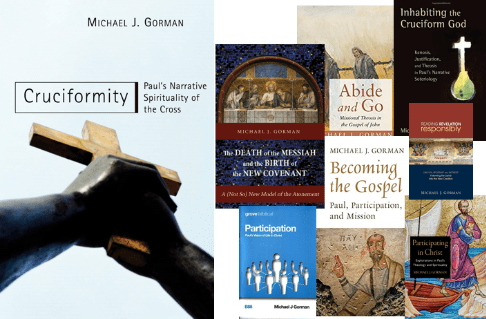
In 2001, Michael J. Gorman produced a ground-breaking study in biblical theology. Cruciformity: Paul’s Narrative Spirituality of the Cross was unique in its focus on Pauline spirituality as revealed in the story patterns within the text. For Paul, the cross is not merely the redemptive hinge of history but also the normative pattern for Christian spirituality. Discipleship is cross-shaped, so the believer’s life echoes the death and resurrection of Christ. Paul captures this cruciform principle of spirituality in narrative patterns of the cross embedded in his letters, speaking less in terms of theological systematization and, more commonly, in terms of pastoral, spiritual theology. The cross event, then, invites believers into narrative unity with Christ in spiritual life.

Though writing as a popular theologian lacking Gorman’s systematic treatment, and writing in an older generation, C.S. Lewis anticipates Gorman’s approach to Pauline narrative spiritual in intriguing ways. There is, I argue, a “Logic of Cruciformity” evident in Lewis’ apologetics trilogy and throughout his corpus. The Pauline cruciform spirituality that Gorman describes is the all-encompassing, integrating narrative reality that informs all of Lewis’s life and works. This proto-theological instinct in Lewis makes Gorman useful for framing Lewis’ ideas into a coherent whole. Moreover, the fact that Lewis’ nonsystematic understanding of Cruciformity is revealed not only in his theological works but also in his popular fiction and literary theory confirms Gorman’s interest in the embedded, storied nature of spirituality and the power of these patterns for creating narrative unity between the cross event and spiritual life.
Resources for More

Here is a PDF of the slides that I will use for my paper: Dickieson-CSL-Gorman Cruciformity CATA 2021.

Checking out my biography will give you a sense of the kinds of things I’m am doing as a theologian of literature and literary theologian. This work will be part of what will appear (hopefully) as The Shape of the Cross in C.S. Lewis’ Spiritual Theology, and came out of my PhD research (which you can read about here). I first discerned the heart of this particular work in the autumn of 2013, preparing for a conference at the Atlantic School of Theology in Halifax, NS (you can see the details here). I wrote my initial findings in a chapter entitled “‘Die Before You Die’: St. Paul’s Cruciformity in C.S. Lewis’s Narrative Spirituality” in Both Sides of the Wardrobe: C.S. Lewis, Theological Imagination, and Everyday Discipleship, edited by Rob Fennell (Eugene, OR: Resource Publications, 2015), pp 32-45. For a popular, brief vision of these findings, see my guest blog post at “Theological Miscellany” of the Westminster Theological Centre.

If you are interested in publishing The Shape of the Cross in C.S. Lewis’ Spiritual Theology, of if you are a researcher looking for the larger, detailed chapter in my embargoed thesis, “The Great Story on Which the Plot Turns”: Cruciformity in C.S. Lewis’ Narrative Spiritual Theology, email me: junkola [at] gmail [dot] com.

Finally, I do recommend Michael Gorman’s biblical-theological works as smart, excellently conceived and executed, and practically oriented.
Posted in Original Research | Tagged , , , , , , , , , | 10 Comments

“The Personal Heresy” and C.S. Lewis’ Autoethnographic Instinct: An Invitation to Intimacy in Literature and Theology (Congress2021 Paper)

Personal Heresy 1st slide

As I noted yesterday, this week is Canada’s annual Congress of the Humanities and Social Sciences, Congress2021. In the same morning, I am presenting twice, at two different societies–at the Canadian-American Theological Association with a paper on C.S. Lewis’ spiritual theology, and at the Christianity and Literature Study Group (CLSG). For the CLSG, I am presenting my paper “The Personal Heresy and C.S. Lewis’ Autoethnographic Instinct: An Invitation to Intimacy in Literature and Theology.” At its simplest, “autoethnography” simply means self-writing, where we implicate our selves–our stories, our bodies, our worldviews, faith, hopes, and dreams–in our research and writing. In autoethnographic writing, our lives become a “text,” part of the data set for our work of reflection.

This piece is part of a long-term project on Lewis and literary theory. Some of the implications are in my (hopefully) forthcoming book, The Shape of the Cross in C.S. Lewis’ Spiritual Theology, but it won’t be fully worked out there. As I continue to tease these ideas out, the CLSG community is a great collection of writers, teachers, and scholars thinking about literature and theology–and thus a good space to tentatively draw out a thread of my discoveries thus far.

Lewis till we have faces 9There are three other Lewis papers at this year’s CSLG:

  • Katharine Bubel and Laura Van Dyke (Trinity Western), “The Liminal Land of Glome in Lewis’s Till We Have Faces: A Myth Retold” (in the Environmental Relations/Narratives of Nature section)
  • Monika Hilder (Trinity Western), “Darwin or Ptolemy? Asking Mr. C.S. Lewis About the Divided Human Consciousness” (in the The Inklings: Inner Relations section)
  • Brett Roscoe (The King’s University, Edmonton), “The Fear of the Lord in C.S. Lewis’ The Chronicles of Narnia” (in the The Inklings: Inner Relations section)

Katharine Bubel and Laura Van Dyke gave their brilliant paper already, challenging me to rethink some imaginative contexts for Till We Have Faces (including an intriguing Charles Williams link). I have already talked about the importance of Monika Hilder’s work in Lewis studies, and I look forward to Brett Roscoe’s thoughts as a medievalist.

Despite what my longer description below promises, I am not sure I get quite to “clarity” in my presentation. My conclusions are tentative–not because I don’t think I am reading Lewis correctly, but because it is hard to talk about Lewis on the way he thought about reading and writing without talking about everything he thought on the matter. I hope that this over-full presentation, though, will inspire us to weave our own story into our work as teachers, storytellers, and researchers.

The Personal Heresy and C.S. Lewis’ Autoethnographic Instinct: An Invitation to Intimacy in Literature and Theology” by Brenton D.G. Dickieson

lewis personal heresy 4Short Abstract

In his diverse literary catalogue, C.S. Lewis makes numerous attempts to tell his life story, uses poetry to frame philosophical beliefs, writes himself into fiction, narrates stories and lectures with intimacy, and uses his own experience as evidence for argumentation. Lewis displays a tendency for what later critics will call an “autoethnographic” instinct. Lewis shows a proto-critical instinct for autoethnography that sits in interesting tension with his own literary theoretical work in The Personal Heresy. This autoethnographic instinct, however, invites fruitful possibilities for those who would seek to undertake an exploration of Christianity and literature in a Lewisian vein.

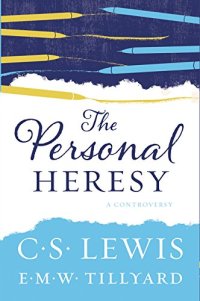
Personal Heresy by CS Lewis 60sLonger Abstract

Of the forty-five books C.S. Lewis completed in his lifetime—a literary catalogue that spans diverse genres of fiction, nonfiction, and poetry—an almost unrecognized unity in this diversity is the degree to which Lewis is present as a voice in the text. Lewis makes numerous attempts to tell his life story, uses poetry to frame his philosophical beliefs and religious doubts, writes himself into his fiction, narrates his stories and lectures with personal intimacy, and uses his own experience as evide nce for his literary and theological arguments. Lewis argues in his inaugural Lecture from The Chair of Mediaeval and Renaissance Literature at Cambridge University that “my conviction is a historical datum to which you should give full weight” (“De Descriptione Temporum” 14) In “On Stories,” Lewis confesses that he must be “autobiographical for the sake of being evidential” (93).

Lewis displays not only a tendency to be autobiographical but an instinct for what later anthropologists, theologians, and critics will call “autoethnography.” In this paper, I set the context for autoethnography as an emergent discipline using the critical approach to literature and theology by Heather Walton and others. In considering Lewis’ extensive and diverse corpus, I argue that Lewis shows a proto-critical instinct for autoethnography. Lewis consistently offers a critique of modern scholarship as critical, distant, external study and turns to autobiographically integrated explorations of literature, philosophy, and religion.

The autoethnographic nature of Lewis’ poetry and prose problematizes his literary theoretical work. In The Personal Heresy (1939), Lewis warns against confusing the author and the text: to “see things as the poet sees them,” Lewis argues that we must share the poet’s “consciousness” but “not attend to it” (14)—an argument used as the launching point for the famous essay on “The Intentional Fallacy” by Wimsatt and Beardsley. Thus Lewis, a thoroughly autographic writer of fiction, nonfiction, and poetry, shares in the legacy of the so-called “New Criticism” and the eventual “death of the author” movement.

This tension is particularly intriguing when we consider that Lewis’ Experiment in Criticism (1961) is specifically about the experience of reading and predicts the critical turn to readers’ response. Moreover, in his final work of literary history, The Discarded Image (1964), Lewis criticizes readers who do not respect the cultural distance between their own context and that of the text. He compares these readers to English tourists “who carry their resolute Englishry with them all over the Continent, mix only with other English tourists, … and have no wish to realise what those ways of life, those churches, those vineyards” mean to locals (x).

Clarity is needed bridge the divide between Lewis’ theory and praxis on this point. When this clarity is achieved, Lewis’ work invites fruitful possibilities for those who would seek to undertake an exploration of Christianity and literature in his vein.

Lewis De Descriptione Temporum

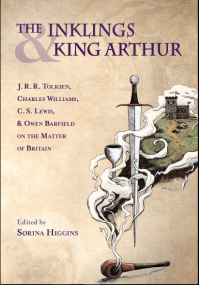
Sorina Higgins Brenton Dickieson Inklings and King ArthurResources for More

Here is a PDF of the slides that I will use for my paper: Dickieson-CSL Autoethnographic Instinct-CLSG 2021. You can also find my still-being-updated “Resource Sheet” in this Google Doc link.

Checking out my biography will give you a sense of the kinds of things I’m am doing as a theologian of literature and literary theologian. This paper is part of a long-term project on Lewis and literary theory. There are some threads and implications are in my (hopefully) forthcoming book, The Shape of the Cross in C.S. Lewis’ Spiritual Theology (which came out of my PhD research; you can read about that here). My other published work of literary theory and Lewis is “Mixed Metaphors and Hyperlinked Worlds: A Study of Intertextuality in C.S. Lewis’s Ransom Cycle,” in the Mythopoeic Award-winning The Inklings and King Arthur: J.R.R. Tolkien, Charles Williams, C.S. Lewis, and Owen Barfield on the Matter of Britain (ed. Sørina Higgins, Apocryphile Press), pp. pp. 81-113.

If you are interested in publishing The Shape of the Cross in C.S. Lewis’ Spiritual Theology, of if you are a researcher looking for the larger, detailed chapter in my embargoed thesis, “The Great Story on Which the Plot Turns”: Cruciformity in C.S. Lewis’ Narrative Spiritual Theology, email me: junkola [at] gmail [dot] com.

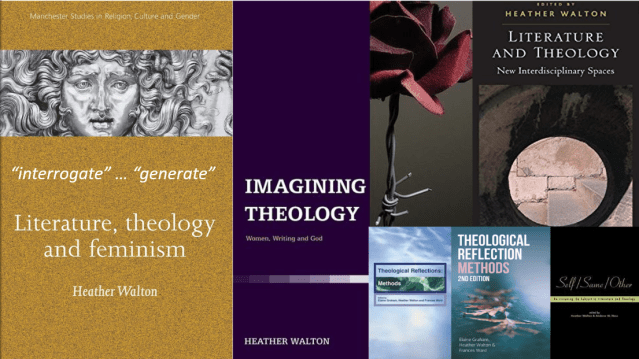
Finally, I do recommend the approaches of Heather Walton (and some of her friends, colleagues, and students of the University of Glasgow) to theological reflection, feminist theology, and her work in theology and literature.

Heather Walton and Friends Literature and Theology books

Posted in Original Research | Tagged , , , , , , , , , , , | 14 Comments

Michael Gorman’s Narrative Spiritual Theology and C.S. Lewis’ Logic of Cruciformity: A Conversation Across Generations and Disciplines (Congress2021 Paper)

This week is Canada’s annual Congress of the Humanities and Social Sciences, Congress2021–what scholarly Canadians used to call “the Learneds,” I believe, a short form of “the Learned Societies” that make up the conference. I am presenting twice, at two different societies–and in the same morning! this is a reality for this huge conference–and I am showing some restraint in only haunting two of the four Congress societies in which I am active. Last spring, I had intended to trip across Western University’s campus from event to event on my way to the C.S. Lewis and Friends Colloquium at Taylor University in Indiana. With all things delayed, this year’s Congress is digital–making navigating the distance fairly easy, though somewhat less scenic.

At the Canadian-American Theological Association, I am presenting material from my forthcoming book, The Shape of the Cross in C.S. Lewis’ Spiritual Theology. As I hunt for a publisher, this presentation allows me to return to one of my early discoveries for C.S. Lewis. Then I am able to throw the discussion forward, suggesting that there are implications of my work both for Lewis studies and theological method. Here is my paper abstract. Beneath it, those who are interested in the topic can find some links and resources.

“Michael Gorman’s Narrative Spiritual Theology and C.S. Lewis’ Logic of Cruciformity: A Conversation Across Generations and Disciplines” by Brenton D.G. Dickiesons

In 2001, Michael J. Gorman produced a ground-breaking study in biblical theology. Cruciformity: Paul’s Narrative Spirituality of the Cross was unique in its focus on Pauline spirituality as revealed in the story patterns within the text. For Paul, the cross is not merely the redemptive hinge of history but also the normative pattern for Christian spirituality. Discipleship is cross-shaped, so the believer’s life echoes the death and resurrection of Christ. Paul captures this cruciform principle of spirituality in narrative patterns of the cross embedded in his letters, speaking less in terms of theological systematization and, more commonly, in terms of pastoral, spiritual theology. The cross event, then, invites believers into narrative unity with Christ in spiritual life.

Though writing as a popular theologian lacking Gorman’s systematic treatment, and writing in an older generation, C.S. Lewis anticipates Gorman’s approach to Pauline narrative spiritual in intriguing ways. There is, I argue, a “Logic of Cruciformity” evident in Lewis’ apologetics trilogy and throughout his corpus. The Pauline cruciform spirituality that Gorman describes is the all-encompassing, integrating narrative reality that informs all of Lewis’s life and works. This proto-theological instinct in Lewis makes Gorman useful for framing Lewis’ ideas into a coherent whole. Moreover, the fact that Lewis’ nonsystematic understanding of Cruciformity is revealed not only in his theological works but also in his popular fiction and literary theory confirms Gorman’s interest in the embedded, storied nature of spirituality and the power of these patterns for creating narrative unity between the cross event and spiritual life.

Resources for More

Here is a PDF of the slides that I will use for my paper: Dickieson-CSL-Gorman Cruciformity CATA 2021.

Checking out my biography will give you a sense of the kinds of things I’m am doing as a theologian of literature and literary theologian. This work will be part of what will appear (hopefully) as The Shape of the Cross in C.S. Lewis’ Spiritual Theology, and came out of my PhD research (which you can read about here). I first discerned the heart of this particular work in the autumn of 2013, preparing for a conference at the Atlantic School of Theology in Halifax, NS (you can see the details here). I wrote my initial findings in a chapter entitled “‘Die Before You Die’: St. Paul’s Cruciformity in C.S. Lewis’s Narrative Spirituality” in Both Sides of the Wardrobe: C.S. Lewis, Theological Imagination, and Everyday Discipleship, edited by Rob Fennell (Eugene, OR: Resource Publications, 2015), pp 32-45. For a popular, brief vision of these findings, see my guest blog post at “Theological Miscellany” of the Westminster Theological Centre.

If you are interested in publishing The Shape of the Cross in C.S. Lewis’ Spiritual Theology, of if you are a researcher looking for the larger, detailed chapter in my embargoed thesis, “The Great Story on Which the Plot Turns”: Cruciformity in C.S. Lewis’ Narrative Spiritual Theology, email me: junkola [at] gmail [dot] com.

Finally, I do recommend Michael Gorman’s biblical-theological works as smart, excellently conceived and executed, and practically oriented.
Posted in Original Research | Tagged , , , , , , , , , | 7 Comments

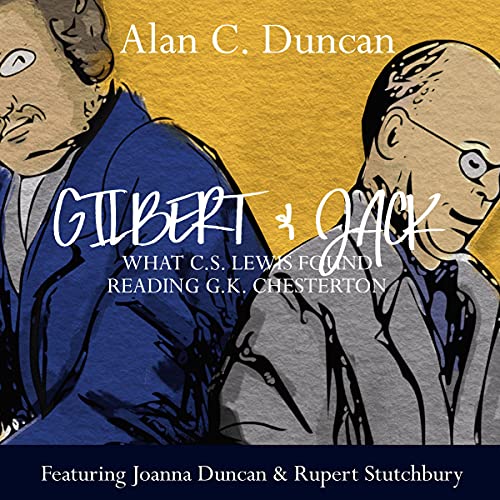
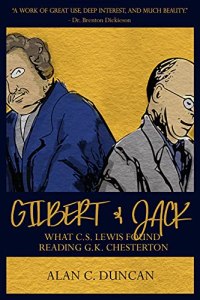
“Gilbert and Jack: What C.S. Lewis Found Reading G.K. Chesterton”: Audio Drama by Alan C. Duncan

I am sometimes asked to provide a blurb for an upcoming book, usually something to do with C.S. Lewis and the Inklings. I rarely get the book read in time to meet a publisher’s schedule, so don’t bother heading to your bookshelf to see if I am there on those glowing inside flaps–though I did get my note in on time for Christine Norvell’s second edition of Till We Have Faces: A Myth Retold: A Reading Companion.

In the past little while, though, I have been in dialogue with Alan C. Duncan, an American writer and broadcaster. Though we have never met, Alan reached out to me because, if I recall, of my archival work on C.S. Lewis and some of my writing about the Marion E. Wade Center in Wheaton, IL. Alan had a kind of cool project in mind. Inspired by the possibilities, Alan travelled to the Wade archive to read the marginal notes that C.S. Lewis made on his copies of G.K. Chesterton‘s books. Chesterton was one of Lewis’ literary guides and spiritual masters, and the Wade keeps these books safe for researchers. It seems like a natural fit, as we see in this brief clip from a Society of Gilbert Keith Chesterton interview (the full clip is below):

After he had done the hard work of spending the hours and days reading marginal notes–and sometimes Lewis’ scrawl is pretty challenging to read–Alan and I dialogued a bit about the potentials of his project. My help was actually pretty limited. Alan went away and set to work pulling all of these notes into a project that would be meaningful to others. The outcome includes a Kindle ebook. What Alan invited me to preview, though, was the audiobook that he wrote and produced. Without saying anything negative about the book version, I found full cast audiobook not only excellently produced but also compelling on a personal level.

And I told him so. As a result, Alan included a brief blurb in the Audible description:

“One of the things that makes this a unique project is the archival work. In Gilbert and Jack, Duncan makes dozens of links that come from personal notations in Lewis’ copies of Chesterton’s books, providing an introduction to their theological kinship that we are unlikely to get anywhere else.” (Dr. Brenton Dickieson)

I think, though, that is worth sharing the longer version of the blurb which he wisely edited for Audible but has kept in the book and on various parts of social media:

In a skillfully produced and casted audio performance, Alan Duncan is able to narrow in on one of the more powerful and effective literary mentorships of the 20th century, that of C.S. Lewis and a critical influence in his faith and life, G.K. Chesterton. Yet, little is known in the popular world about how important Chesterton was to Lewis’ faith formation and intellectual development. Duncan’s “Gilbert & Jack” seeks to close that gap, using the good old-fashioned tools of close-reading to make literary links between the two British Christian thinkers. One of the things that makes this a unique project, though, is the archival work. In “Gilbert & Jack,” Duncan makes dozens of links that come from personal notations in Lewis’ copies of Chesterton’s books, providing an introduction to their theological kinship that we are unlikely to get anywhere else. This is a huge wealth of notations, and Duncan allows the reader to draw their own conclusions about the value and uses of the material, while also sharing personal essays of their own spiritual encounters. Because of their approach–both personal and academic–listeners can get a sense of the joy of doing Inklings archival work at places like the Marion E. Wade Center in Wheaton, IL. The result is a work of great use, deep interest, and much beauty–all within a devotional cast.

The longer blurb captures what I think is best about the project: careful close reading, evidence-based links between Chesterton and Lewis, and nerdy archival work all brought together in a personal story of discovery.

I should note a couple of things.

While I liked Alan’s initial ideas, I was not overly hopeful about an audio version. My confidence in small-project film and dramatic productions isn’t very high, so I had pretty low expectations. Alan has shifted my expectation of what is possible for small-budget projects. The excellence and entertainment value of the production enhances the work at the core.

And part of that work is the personal journey. I would be pleased to have read a long, boring, 40-page academic article that I would find quite exciting. However, Gilbert & Jack is not merely a long article or short-book write-up of archival findings, but a faith-implicated study of the link between these two famously popular British Christian public intellectuals. I believe this is a strength of the project, though it means the material is coming from a rooted perspective.

If you look up the background of the American Policy Roundtable that published the book, most will recognize it as a deeply conservative and very pro-American think tank. The Roundtable is a constitutional conservativism rather than the kind of conversation the current US Republican party is most interested in. Not being in that context but believing the US to be one of the greatest political experiments in history with a great propensity for creating a space for human flourishing, I wish the Roundtable could see “liberty” in a broader way. I have never understood why liberty-loving Americans of conservative leanings don’t have a love of liberty for those who want to be free to live morally different lives (like LGBTQ+ folk). I don’t understand why liberty-loving Americans who find by C.S. Lewisgovernment systems so distasteful and abusive of freedom–and I largely agree–can’t see how those systems can select out certain kinds of people on the margins for greater abuse than others. The Hebrew prophets saw it. And why do American conservatives in conversation with C.S. Lewis avoid Lewis’ argument that anti-environmental policy restricts the freedom (without consent) of future generations? Or that the state must intervene to ensure people are treated equally? C.S. Lewis’ liberty-loving thread in his work will always be subversive and cuts both ways against anti- and pro-state action–as we see in a humorous form at the close of The Lion, the Witch and the Wardrobe:

“And they made good laws and kept the peace and saved good trees from being unnecessarily cut down, and liberated young dwarfs and young satyrs from being sent to school, and generally stopped busybodies and interferers and encouraged ordinary people who wanted to live and let live.”

While my reading of Gilbert & Jack picked up the American context and a faith journey of a conservative Christian, I did not sense a kind of backdoor political recovery movement. What I think Alan Duncan does is to take two Christian thinkers that he admires, read them well, and then draw them into his own context in meaningful ways. This is where G.K. Chesterton and C.S. Lewis can shine for theological conversation, popular philosophical debate, ethical exploration, spiritual development, and for the pursuit of social justice in all kinds of contexts.

Sometimes people roll their eyes, for here is another conservative or another American taking these figures up to challenge, reshape, and communicate their conservative, American perspectives. But frankly, they’re just better at doing it! When read well, neither Gilbert nor Jack would make an American conservative–and, particularly, an American Evangelical as in the case of many other projects–very comfortable for very long. CSL & GKC are too subversive, ironical, inversive, counter-cultural, and rooted in a worldview and place much different than the context in which they are being read. If we take it seriously, their thought will challenge our own.

And is that not the journey we share as Christians–not a commitment as a nation, time, ideology, or political movement, but a commitment to the discovery of truth, the doing of goodness, and the sharing of beauty? Thus, I am not afraid of honest disagreement–though I will always resist appropriations that are essentially rebranding attempts for ideological purposes.

So I would encourage you to read and enjoy Gilbert & Jack: What C.S. Lewis Found Reading G.K. Chesterton for its inherent value. You can find the kindle book on Amazon in your country, and you can find the audiobook at Audible or through Alan Duncan’s website.

Posted in Memorable Quotes, News & Links, Reviews | Tagged , , , , , , | 18 Comments

“Just Enough Light: Some Thoughts on Fantasy and Literature,” the 2021 Tolkien Lecture by Guy Gavriel Kay

I was pleased last week to watch the 8th annual J.R.R Tolkien Lecture on Fantasy Literature, an annual lecture on fantasy literature held at Pembroke College, Oxford, this year broadcast online.

The Tolkien Lecture on Fantasy Literature was established in 2013 at Pembroke College, Oxford, where J.R.R. Tolkien worked for twenty years as a professor of Anglo-Saxon. Speakers in the series are given freedom to discuss any aspect of fantasy literature, broadly defined. The aim is to honour J.R.R. Tolkien’s legacy by promoting, and contributing to, the study of fantasy, and they have drawn past speakers such as Kij JohnsonAdam RobertsLev GrossmanTerri WindlingSusan CooperV.E. Schwab, and Marlon James. Last year, COVID-19 interrupted R.F. Kuang’s lecture, though, Gabriel Schenk hosted a video roundtable with past speakers and Kuang was able to attend, which was pretty cool.

The 2021 speaker was Guy Gavriel Kay, whom I have talked about from time to time here at A Pilgrim in Narnia. It continues to puzzle me as to why Guy Gavriel Kay remains Canada’s least well-recognized international-profile writer. In my piece here, I speculated that it is because (except for a book of poetry, Beyond This Dark House, for which Kay included a tour stop in Prince Edward Island) his entire publishing life has been solidly within the fantasy genre, and that’s simply not one of our privileged genres here in Canada. Margaret Atwood could most clearly challenge our Canadian temptation to realism as she writes solidly in science fiction, dystopic, and mythic modes, even beginning a PhD that thought about the work of folks like Tolkien and Lewis. Instead, though, Atwood carves out a definition of “speculative fiction” that allows her to remain an orthodox Canadian writer (though she is no doubt a heretic in many interesting ways).

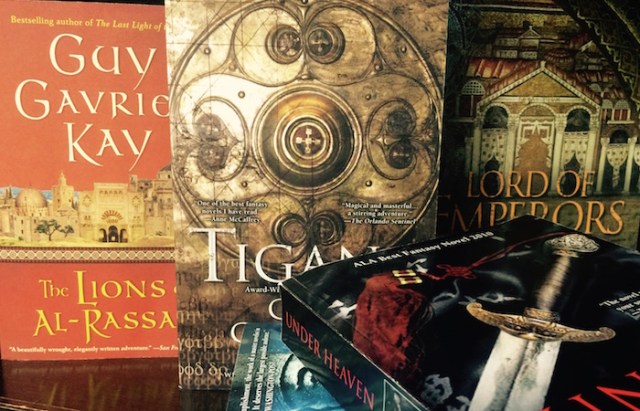
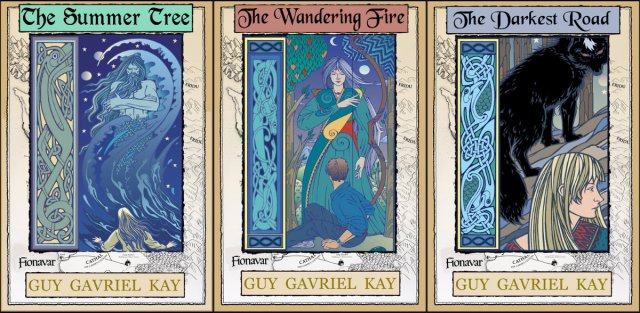
As he describes in this Guardian piece, Guy Kay honed his craft as a Tolkienist, working on the most well-known of the posthumously published Tolkien works, The Silmarillion. Kay’s literary and gorgeous urban fantasy meets Tolkien-like Nordic epic, The Fionavar Tapestry, remains one of my absolute favourite series ever. What many don’t know, but Canadians are starting to recognize, is that as Kay moved away from Tolkien-like fiction, he was able to carve out a genre in which he has become a master. The eleven novels since The Fionavar Tapestry are strong literary works of historical fiction that include some sort of fantastic thread within that entirely realistic literary world.

Kay has published fourteen novels which have been translated into 30 languages and have appeared on bestseller lists around the world. Kay has twice won the Aurora Award, is a multiple World Fantasy Award nominee, and won that award for the rich novel, Ysabel. He also won the Sunburst Award for Under Heaven, and is the recipient of the International Goliardos Prize, presented in Mexico City, for his contributions to the literature of the fantastic. Both Under Heaven and River of Stars won the Prix Elbakin in France for best foreign language speculative fiction work. His most recent work is A Brightness Long Ago. In 2014, Guy Kay was invested with the Order of Canada, my country’s highest civilian honour, joining other great literary lights.

I hope you love this enigmatic and somewhat playful lecture. Guy certainly showed up, throwing himself imaginatively into the genre of a digital lecture from home to the world. Kay’s authorized website may be found at brightweavings.com. You can find him on Twitter with some frequency as @guygavrielkay.

Posted in Canadian literature, Fictional Worlds, News & Links, Thoughtful Essays | Tagged , , , , , , , , , , , | 17 Comments