Share with Me a Woman’s Voice on Shakespeare, with Thoughts on The Merchant of Venice

Yes, I know, it is kind of a strange request: Share with Me a Woman’s Voice on Shakespeare. Moreover, it is one that I cannot necessarily follow up on fully. But let me explain.

The other day, I finished up The Merchant of Venice. I am trying to read a Shakespeare play a month in 2021, and I admittedly got a little caught up in the story. How is it that one of the most empathetic speeches in Western history–“If you prick us, do we not bleed?”–is spoken by one of the most of one of the most unsympathetic villains of Shakespeare’s plays? I must share the brilliant quotation:

I am a Jew. Hath not a Jew eyes? hath not a Jew hands, organs, dimensions, senses, affections, passions? fed with the same food, hurt with the same weapons, subject to the same diseases, healed by the same means, warmed and cooled by the same winter and summer, as a Christian is? If you prick us, do we not bleed? if you tickle us, do we not laugh? if you poison us, do we not die?

Of course, I left important bits out there. But still, to create Shylock such as he is and then have him speak these words….
And how did Shakespeare have the courage to put one of the most elegant courtroom drama solutions–“Take then thy bond, take thou thy pound of flesh; / But, in the cutting it, if thou dost shed…”–in the voice of a person who by birth and education is the least qualified to speak. And listen to this speaking:

The quality of mercy is not strained.
It droppeth as the gentle rain from heaven
Upon the place beneath. It is twice blest:
It blesseth him that gives and him that takes.

Beyond that, I have other questions, having only really read The Merchant of Venice before to think about the antisemitic content. But I want to go further. A spoiler here, is The Merchant of Venice like The Sixth Sence or The Game, where there is a twist, a joke, that once you see it you can never re-watch the film again for the first time? Does the audience know the identity of the Doctor-Judge even if the characters on the stage do not? Does the secret get out in town after the first night of the play being staged, thus changing the audience response? In pubs and up ladders and near cattle troughs, are people saying, “oh wait now for that bit in the end–this Shakespeare bloke has pulled a great joke there!” Or could people go fresh to the play, receive it and enjoy it in that moment?
And cultural speaking, in a different way: You have a man dressed as a woman playing a man. You have an outsider (woman) judging an outsider (Jew). The play is rife with antisemitism without elegance, and it is unclear to me if this racism is the result of Shylock’s villainy or the cause of it. In Elizabethan times, women have been ejected from the stage and Jews long-since exiled from England. Yet here Portia and Shylock play. Was that as profound to that generation as it is to ours? And the Doctor-Judge’s elegant solution: does it matter if it is clearly unjust, even though it might be legally correct and is a brilliant courtroom stunner? Or does the fact that it is an elegant solution and the Jewish bond-holder gets his desert enough?

Well, so, questions on and on. I am no strong Shakespeare reader, having largely grown up with a high-class Canadian education (thus, good teachers walking with us through a curriculum that aims at making us mediocre, well-behaved taxpayers; like the fabled Inuit and their words for snow, Canadians learn 52 ways to apologize). Thus I am stronger in stories about how to survive barren wastelands, lists of French verb paradigms, theories about crop rotation, and numerous certificates in sexual education than I am about useless things like Shakespeare or music, mathematics or physics. But I am a good reader, so 2021 is my chance to enjoy–or suffer through, if it doesn’t go well–some Shakespeare.

It could go either way. I’m sure I missed something in The Tempest and am loving Hamlet.  But as I think about The Merchant of Venice, and of Shylock and Portia in particular, I realize that I am a wee bit limited not just in my reading of the bard but in my conversations about his work and world. On Shakespeare, I’ve read Goethe, Coleridge, Shelley, T.S. Eliot (and whoever it was that Eliot wrote that preface for, whom I have forgotten), C.S. Lewis, Charles Williams, Peter Holland, Peter Ackroyd, Harold Bloom (who never stops talking about Shakespeare, even from the grave), Jorge Luis Borges (in roundabout ways), and Stephen Greenblatt–adding to the voice the mostly Canadian male teachers who brought me Shakespeare. Even the margin notes of my Shakespeare copies are by Dr. Eddie Edmonds, a student of C.S. Lewis and J.R.R. Tolkien who began the school of education here in Prince Edward Island. I am grateful for these books and these notes, these teachers and scholars. However, if you notice a theme, they are all men. Nothing against men–some of my best friends are men. But I am wondering if there are other wise and witty voices out there who can help me think about my questions.

Therefore, dear reader, can you share with me great, accessible women scholars who can give me a different voice on Shakespeare?
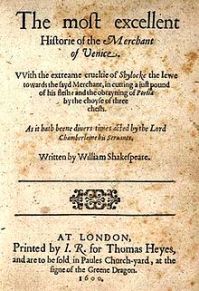
I want to hear your ideas, but I am admittedly a little limited in how I can respond. I already have all my paper/Kindle reading lined up for the year, and would like to read something next to the texts themselves. So although I want to hear of all kinds of women authors and critics, I am looking for something I can read by ear–a lecture series or audiobook (no abridged versions please). Please add a comment here or tweet me @BrentonDana to get me started on broadening my very limited understanding of Shakespeare’s work.

Besides the limitation of form, I should also add that I’m partly spurred on by Lauren and Hannah at the Bonnets at Dawn podcast. I had a session with them a couple of weeks ago and they recommended Helena Kelly’s Jane Austen, the Secret Radical, which I will read with interest. In one of their podcast, they mention How to Suppress Women’s Writing by Joanna Russ, which is also in my queue. I am also going for a 50:50 gender split on reading this year–a difficult task when 10% of my reading is Shakespeare, another 20% C.S. Lewis, and 10% Tolkien and the Inklings (not to mention the fact that I finished my Harry Potter readthrough already, and most of Octavia Butler, and that I’m itching for some good, long Stephen King books). We’ll see. I don’t need to die on this hill, but it is an interesting challenge and so far in 2021, I have succeeded.

In any case, I would appreciate your suggestions. Is there a good, critical, well-written lecture series or audiobook by a woman scholar of Shakespeare that I could bring with me as I walk and do dishes and garden this spring?
 

Posted in Reflections | Tagged , , , , , , , , , , , , , , , | 16 Comments

Avoiding The Road, 31 Years

For fifteen years I have avoided The Road. Perhaps longer.

I did not need the book description to know that I would avoid reading it. I picked it up, held it in my hand, and I knew. It was Cormac McCarthy. There was a little boy in it. That was all it took.

I have avoided other stories too. I have never watched Blood Diamond or The Pursuit of Happiness. I stopped reading The Kite Runner during the kite battle, before Hassan finds the kite. I turned off The Walking Dead as the bullet sliced through the deer. The boy fell in dead leaves and I have never watched another moment. I did watch Life is Beautiful. I had to, and I wept in front of my students, as if a man can be broken by fiction.

There are probably more stories that I have left in my spiritual wilderness over the years. I cannot know. It was never a conscious choice, a mental category that framed my yes and no. It was just there.

It is not for the words themselves that I set The Road aside. Its sparse narrative, torn images of a grey world, reveal the skeins of a thousand untold tales. In those few words, a reader could learn to hate the sky, or love water, or forget the way forever. It is brilliant. It is hard.

It was never the words, or even the images. It was the story.

It is always the story.

And in 2006 Cormac McCarthy told the story that I have never had the courage to tell.

Seasons change by the slow arc of the earth. Lives change by the collection of postcards and phone bills and mismatched socks. Somewhere over the unmeasured, bending moments of life, my reason for avoiding The Road has itself bent. But where it was uncertain in seasons past, it is certain to me now:

It is my newborn son, wet and bruised and naked, skin turning blue because breath would not come, a sliver nearer to life than death.

It is my son, curious simian gate, tiny fingers slipping from mine in the crowd.

It is my son, at the breakfast table, cereal soggy because he has too many questions to ask.

It is my son, tender-hearted, curious, and artistic in a world that breaks hearts, crushes questions, and has moved on to better things than beauty.

Grief has a way of distilling life, so that the pixels of hard universal fact blur in the radiant palette of yellow to green to blue. So all of my life as a father is found on a single night, this night, when I was just a boy.

Smoke makes a sound as it suffocates you, exchanging cells of life for cells of death in your lungs. And I awoke.

I stood there in the darkness, rushing heat and smashing glass and thickening grey breath. I was inches from his door, my brother’s door. He would not wake on his own, I knew. He slept beneath heavy blankets, stuffed animals squeezed against his sweaty cheeks.

I could have touched that panelled door.

But I was afraid, and I turned away, trusting my father to save us. I knew he would do anything to see us live.

Fathers do anything to see their sons live, and live well.

My bare toes froze in the unseasonable cold. The front door closed to the flame and smoke. They remained inside, my father and brother. It was the end of their road.

And while I used to mourn my father and my brother, now I mourn my son, still living. If I were gone, what he would miss. What I would miss. My father missed so much.

So for thirty-one years I have avoided The Road. Perhaps longer.

Posted in Reflections, Reviews | Tagged , , , , , , , , , , | 7 Comments

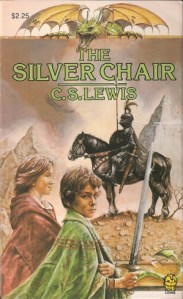
“An Older Wardrobe: Echoes of Deuteronomy in The Silver Chair” by A.J. Culp

As a child, I wasn’t much of a reader. But I was a listener. I loved listening to stories—to stories told and stories read. And the Chronicles of Narnia were some of my favourites, with my mother often reading them to me and my sisters before bed. Later in life, I would come to realize that C. S. Lewis was much more than a good storyteller, that he was a man with an unusual ability for seeing into the bone and marrow of humanity and for bringing this to life in story. And I found him especially skilled at enlivening one particular area of human existence: the reading of Scripture.

One such instance of this was when I was completing my seminary studies. I would often read fiction in the evenings, and at one point I re-opened The Chronicles of Narnia. As I came to the sixth book, The Silver Chair,[i] something caught my attention for the first time: the scene from which the story unfolds has deep echoes of the Bible. In that scene Jill receives instruction from Aslan about her mission, to rescue her companion Eustace and to find the lost Prince Rilian. Aslan has given Jill four signs to guide her journey but suspects she has not grasped them:

“Child,” said Aslan, in a gentler voice than he had yet used, “perhaps you do not see quite as well as you think. But the first step is to remember . . . remember, remember, remember the signs. Say them to yourself when you wake in the morning and when you lie down at night, and when you wake in the middle of the night. And whatever strange things may happen to you, let nothing turn your mind from following the signs. And secondly, I give you a warning. Here on the mountain I have spoken to you clearly: I will not often do so down in Narnia. Here on the mountain, the air is clear and your mind is clear; as you drop down into Narnia, the air will thicken. Take great care that it does not confuse your mind. And the signs which you have learned here will not look at all as you expect them to look, when you meet them there. That is why it is so important to know them by heart and pay no attention to appearances. Remember the signs and believe the signs. Nothing else matters.”[ii]

I soon discovered this echoed Deuteronomy, where Moses prepares Israel to live without him in the promised land. Time and again he calls the people to remember what the Lord had done in Egypt and the wilderness so that they might live rightly in the land. It was interesting to me that Deuteronomy, like The Silver Chair, cast memory as a vital guide for the people and portrayed its preservation therefore as a chief calling of the people.

I was fascinated by Lewis’s use of Deuteronomy in the book and wondered how it compared to the perspective of biblical scholars. But when I went searching, I was surprised by what I found: very little. The question had awakened a curiosity in me and I couldn’t leave it alone, so when my wife and I moved to England for my PhD the following year, I changed my topic up arrival. Instead of the original topic, I decided to pursue the question of memory in Deuteronomy (the fruit of this work can now be found in my book: Memoir of Moses: The Literary Creation of Covenantal Memory in Deuteronomy [Fortress Academic, 2020]).

Through my research I would learn that Lewis does not echo Deuteronomy alone, but appears to combine ideas from both Exodus and Deuteronomy. To be sure, Deuteronomy serves as the governing framework for that scene in The Silver Chair: framing the story, firstly, as a great and challenging journey for which memory is vital, and characterizing the practice of memory, secondly, as a diligent and daily exercise (see Deut 6:4–9). But he also uses an element from Exodus, namely its notion of memory proper. In Deuteronomy, people remember God’s acts in order to motivate obedience to his commands; but in Exodus, people remember the commands themselves (compare Exod 20:8 and Deut 5:15). In terms of human memory, this means Deuteronomy focuses on episodic memory (images and experiences) and Exodus on semantic memory (words, facts, etc.).

In Aslan’s insistence that Jill remember the “signs,” therefore, it appears Lewis has adopted Exodus’s notion of memory, for it focuses on semantic memory: namely, the list of signs.  And what it means is that the memory motif in The Silver Chair represents a tapestry of interwoven ideas from both Exodus and Deuteronomy. I cannot say whether this merging of ideas reflects something intentional by Lewis, but I do think it represents a classic Lewis trait: an imagination saturated in Scripture that has produced a deeply theological exposition in story.

[i] C. S. Lewis, The Silver Chair (New York: HarperTrophy, 1953).

[ii] Lewis, The Silver Chair, 25–26.


Although he now serves as lecturer in Old Testament and Biblical Languages at Malyon Theological College in Brisbane Australia, A.J. Culp originally studied English literature and writing. It was during those studies that he came to appreciate C.S. Lewis’ imaginative exposition of Scripture, which still influences his work today. For more of A.J.’s work, see https://malyon.academia.edu/AJCulp.

Posted in Reflections | Tagged , , , , , , | 17 Comments

My 18 Phrenetic Stages of Academic Paper Writing, Or Why Writing is So Hard

Writing is both beautiful and challenging, with heart-breaking hopefulness in the shadows of sheer impossibility. By creating this digital space, I have been able to create a writing environment where I can bypass many of the dead-ends and disasters of the writing journey. On A Pilgrim in Narnia, I am unpaid and unsupervised, thus I am no longer tethered to soul-destroying expectations of the publishing industry. Of the 1,100 blog posts here, 700 or 800 of them are pieces I have shaped out of my own curiosity, creativity, and desire to says something in the moment. Of those, about 200 articles are pieces that I spent a great deal of time shaping–often hours–containing a new reading or original thought that exists nowhere in the world. And about 100 of these posts are places where I can edit and share the work of others, allowing writers and artists and scholars to speak to the world on this little platform that plays in the intersectional space of faith, fiction, and fantasy.

But a website like this cannot be all writerly things in all seasons. I have a novel or two that I want to get into the world, and an academic fantasy blog with a ten-year-old design cannot replace the tactile experience of holding a book. I have never found this to be a good place for sharing fiction, in any case, and will need to find my way to the places that produce long- and short-form fiction for the tale-hungry masses. I have an academic book near completion and another in design. Because I would like, one day, to have an academic post that allows me to teach and write and serve the community, I need to throw myself into the long and winding paths of academic publication. I have found over the years that Twitter is a good outlet for a certain kind of creativity, and it would probably be good for my CV to move nonfiction pieces out into other outlets. So http://www.aPilgrinInNarnia.com has some limitations.

And then there is the Academic Essay–the various channels of peer-reviewed book chapters and journal articles. This is an absolutely critical element of my work and one that needs focus. Up to this moment, I have been able to produce about one peer-review or long academic piece a year–though they tend to get completed at various points and times, as I am able and as publishers are ready for it. Here is my list thus far:

  • 2012: “The Pedagogical Value of The Screwtape Letters for a New Generation,” Inklings Forever VIII (2012): 12-29 (begun as a 2012 conference paper, written 2011-12).
  • 2013: “The Unpublished Preface to C.S. Lewis’s The Screwtape Letters,” Notes and Queries 60, no. 2 (2013): 296-298 (begun with archival work in 2012, written 2012-13).
  • 2013: “Nuestra Señora de las Sombras: The Enigmatic Identity of Santa Muerte,” Journal of the Southwest 55, no. 4 (Winter 2013): 435-471. Co-authored with Pamela Bastante (a long-term, team-based research project resulting in this article and a 2012 conference presentation).
  • 2015: “‘Die Before You Die’: St. Paul’s Cruciformity in C.S. Lewis” in Both Sides of the Wardrobe: C. S. Lewis, Theological Imagination and Everyday Discipleship (ed. Rob Fennell, Resource Publications, 2015), pp. 32-45 (begun as a 2013 conference paper, written 2013-2015).
  • 2018: “Mixed Metaphors and Hyperlinked Worlds: A Study of Intertextuality in C.S. Lewis’s Ransom Cycle” pp. 81-113 in The Inklings and King Arthur: J.R.R. Tolkien, Charles Williams, C.S. Lewis, and Owen Barfield on the Matter of Britain (ed. Sørina Higgins, Apocryphile Press) (begun as a Mythcon panel in 2014; written 2014-2015; proofs in 2017; the book won the 2018 Mythopoeic Award for Inklings Scholarship).
  • 2019: “The Archangel Fragment and C. S. Lewis’s WWII-era World-building Project,” Sehnsucht: The C.S. Lewis Journal 13 (2019): 11-28. Co-authored with Charlie W. Starr (begun with archival work in 2018, written 2018-19 and Sehnsucht published it very quickly).
  • 2020: “Rainbow Valley as Embodied Heaven: L.M. Montgomery’s Narrative Spirituality in Rainbow Valley,” Journal of L.M. Montgomery Studies (begun as a 2018 conference paper, written 2018-19, last edits in early 2020).
  • 2020: “A Cosmic Shift in The Screwtape Letters,” Mythlore 39, no. 1 (2020): 5-33 (begun as a response to the “Ransom Preface” work in 2012-13, with a Mythcon presentation in 2014 and a C.S. Lewis & Friends conference paper in 2016; most of the writing was 2012-14, with significant revisions in 2016; much of summer 2020 was dedicated to completing this long project and Mythlore published it very quickly).
  • 2021: “Making Friends with the Darkness: L.M. Montgomery’s Popular Theodicy in Anne’s House of Dreams,” accepted with slight revision for peer-review publication in The Journal of L.M. Montgomery Studies (initial notes made in 2019, prepared to present in the 2020 Montgomery conference, moved online; wrote the paper in June 2020 and spent much of summer 2020 revising; winner of the L.M. Montgomery Institute’s 2020 Elizabeth Epperly Early Career Paper Award; accepted peer review in 2020; in revision; the digital presentation is not yet complete).

2020 was a really strong year for me, with PhD graduation, two peer-review publications and one paper award (as well as a host of lectures, talks, workshops, and presentations). However, the flurry of activity in 2020 is really the result of years of pretty steady work punctuated by periods of extreme writing sessions–usually, a spring and fall writing retreat each year, and a great deal of editing in the summer and winter. In four days in June 2020, for example, I wrote a 10,000-word paper. In June 2018, I did a 7,500-word paper in a single day and a 3,500-word paper in a single week. I will need two spring retreats this year as I have two keynote speeches and three paper presentations (though one is roughed in already). I have come to realize that I work well in the undulating patterns of intensity and rest.

However, even though I have shaped myself over the last 17 years as an academic and nonfiction prose writer, producing a huge portfolio of work in quite diverse genres and media, I still find this writing really, really difficult. Part of it is the workload that I have taken on. Another part is the distraction-laden environment that I am in. While writing this note, I have had to answer two phone calls and an emergency email, I wrote a strong page of notes for a talk that jumped out of this writing here, and I am thinking about my lecture on the Aorist and Future Passive in the Greek language, which I am giving in an hour. I think I need to make an infographic. There is always something fluttering not far from the centre of my vision.

But, most of all, academic writing is hard because of successive layers of challenges and choices along the way. Will a concept work out? Is my instinctive reading correct? What’s the right mode or media for this discussion? Do I actually have anything to say? Can I pull this off? Is it good, true, and beautiful? These are the questions that continually cycle through my imagination at every single step of a long process–from the spark of an idea to the selfie with the journal or book that just landed in my mailbox. Writing, even academic writing, is a deeply personal and psychologically fraught endeavour. Adding to the reality that it is hard in the sense of extensive research, deep reading, finding clarity of thought, wrestling huge swaths of material into place, ensuring that the work is logically sound, and finding a creative and winsome way of communicating complex ideas, it is a process filled with doubt and discouragement.

And in the end, there is the haunting question of “why?” No one pays me. None of this has led to an academic job. I know a few people read the work, but rarely is there deep academic engagement. What is it all for?

Deep in revisions in response to peer-reviewer comments, these are the thoughts that ran through my mind yesterday. These peer-review comments are great (not often the case), but they are critically challenging and pull me in different directions. I’ve been wrestling with the same paragraph on my screen for 10 days. I have been uncertain of how to resolve another section and have spent two weeks thinking and reading. And one of the comments is basically “redraw the entire imagistic thread of your piece,” which I don’t have the heart to do. Or the need, necessarily. For after these weeks of wrestling with this post-submission draft, I have broken through and have a full draft that responds to my invisible peers’ concerns.

As I teetered on the edge of giving it all up yesterday–or rashly resubmitting without due care–I began a Twitter thread that captures the interiority of academic writing here. I thought I would share it with you. Right now, I’m on step #13–but the hasty step #14 haunts and threatens me. I could jump at any time. However, if my wiser self prevails–we are all Gollum and Smeagol when writing, I think, at least in some moments–I will let this sit for a few days and come back fresh next week. In the journey of writing, there are few shortcuts, though some paths become more familiar. In academic writing, there is no way around the mountain and no way to avoid slaying the Demogorgon who guards the gate. So I will do the work to finish this piece well.

Still, I thought I would share this Twitter thread with you. Perhaps it will encourage you to know that you do not wander alone–or to prepare you who are new to academic writing for the perils in the path.

Posted in Reflections | Tagged , , , , , , , | 15 Comments

Susanna Clarke’s Piranesi, Owen Barfield, Language, Childlike Faith, Joy, and the Inklings

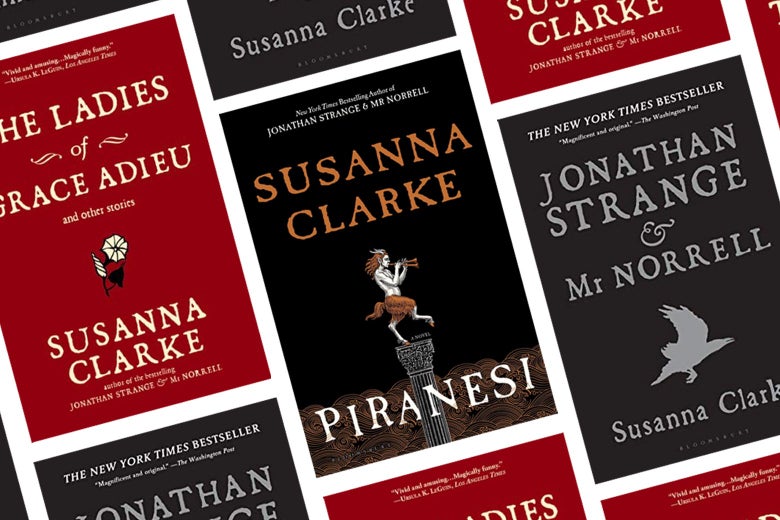
I have just begun reading Susanna Clarke’s weighty novel, Jonathan Strange & Mr. Norrell. I mean “weighty” in the literal, physical sense: I am finding this 1,000-page wonder, a book I did not believe could be written in this century, a difficult one to hold comfortably while reading in bed! But it is also weighty both in its material–a Regency-era fantasy presenting an alternative world not far off our own maps–and its impact. Incredibly, it was longlisted for the 2004 Man Booker Prize; less surprising, it won the 2005 Hugo Award for Best Novel, as well as the World Fantasy Award, the Locus, and the Mythopoeic Award for Adult Lit. Jonathan Strange & Mr Norrell is one of the books of the decade.

And I am enjoying it. True, I have needed supplementary physiotherapy to adjust for the weight of the tome. But I am pleased to finally get to Strange & Norrell, which has been tempting me for years.

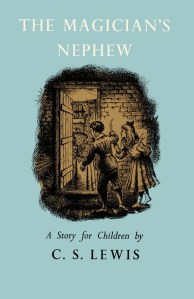
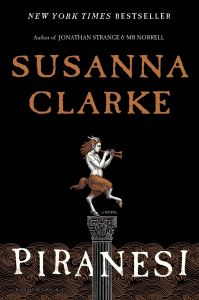
Besides the desire for a SHANWAR 2021 read, part of my reason for pulling Jonathan Strange & Mr. Norrell off the bookshelf now is because Clarke has recently published Piranesi, a dramatic fantasy experiment in fiction. I had heard that there is a significant connection to C.S. Lewis’ Narnian prequel, The Magician’s Nephew. This novel has been noted for its fantastic evocation by J.K. Rowling, and continues to fascinate readers and writers alike. A quote from Uncle Andrew is also the epigraph to Piranesi, inviting us to think about the possible links between these two fantastic worlds.

Because I study literature and the spiritual life, someone recently sent me an interview with Susanna Clarke by Sarah Lothian of the Church Times. Lothian notes the importance of The Magician’s Nephew for its ability to help her think about difficult questions of life. While it seems that no doubt The Magician’s Nephew is worth reading with Piranesi, it is actually Owen Barfield who seems to be the most important influence behind the new novel. Barfield’s philosophical treatments of the evolution of language–captured in philosophical books like Poetic Diction and Saving the Appearance, or more popularly in things like History in English Words–is one of the critical unseen realities that binds together the work of J.R.R. Tolkien and C.S. Lewis. It also seems to be the core material for a literary experiment by one of the 21st-century’s most important speculative fiction writers, Susanna Clarke.

This note remains just a teaser, as it will take me weeks to read Strange & Norrell before I finally get to Piranesi. However, I thought it was worth sharing the Church Times interview. This podcast is actually quite lovely as a whole. Clarke talks about Owen Barfield’s work about 30 minutes in, with an intentional nod to Lewis, Tolkien, and the Inklings and a thanks to Malcolm Guite. But beyond these literary Inklings’ links, it is a winsome conversation about Clarke’s own faith journey, as well as a cautious invitation to a childlike faith and a robust invitation to consider religious joy.

You can find the podcast here or click below.

Posted in News & Links, Reflections | Tagged , , , , , , , , , , | 45 Comments