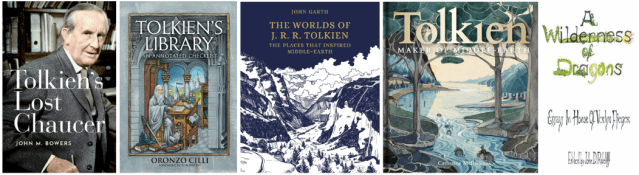
 Tolkien’s Lost Chaucer is a book about a book that was doomed from the start.
As I have been preparing for a Canterbury Tales section in a class I’m teaching, I have been using this recent winner of the Mythopoeic Award for Inklings Studies for some time—allowing glosses on texts and conversation points to help me think about bringing Chaucer’s work into our world today. A couple of weeks ago, I finally decided to settle down and read Tolkien’s Lost Chaucer by medievalist and Tolkien lover, John M. Bowers.
 A Chaucer specialist, Bowers has also written about Langland, the Gawain and Pearl poet, “Piers Plowman,” and Chaucer echoed in later writers, like Shakespeare and Tolkien. As someone who has gotten to play a bit in the archives, I was attracted to Tolkien’s Lost Chaucer because it uncovers the story of an unpublished Tolkien book. Through much of the 1920s, as Tolkien is working as a Reader and then Professor at Leeds University, followed by his appointment as Rawlinson and Bosworth Professor of Anglo-Saxon at Oxford, and as he first meets C.S. Lewis and is writing “The Nameless Land” and the Lay of Leithian and is sketching out what will be his mythology—in the midst of all these scholarly and imaginative moments, and as his family is steadily growing—J.R.R. Tolkien, it turns out, was working on a Clarendon edition of Chaucer.
When I first saw the book release a couple of years ago, Tolkien’s decision to produce an inexpensive, accessible Chaucer reader came as a surprise. I don’t think I was alone in having this gap in my mental Tolkien timeline. Selections from Chaucer’s Poetry and Prose was to be a student edition for Clarendon editor Kenneth Sisam, and was meant to be a partnership with superstar medievalist George S. Gordon. Bowers’ publication brings to light hundreds of pages of archival material—commentary, outlines, glossaries, editorial notes, teaching notes, and other bits of Tolkienist Chaucerania. It also reveals a constellation of critical moments that have seemed (to me, at least) to be only individual points of light.
 The idea of a Clarendon Chaucer makes sense. In 1922, Tolkien had just completed A Middle English Vocabulary for Sisam’s Fourteenth Century Verse and Prose, published a few months earlier (most of us would have that bound together as A Middle English Reader and Vocabulary). At that time, a different Gordon (E.V., V for Valentine) and Tolkien began working on an edition of Sir Gawain and the Green Knight, which they successfully published in 1925. The shared Clarendon Chaucer makes sense of Tolkien’s election over Sisam to an Oxford chair, despite the fact that Tolkien had a very short academic CV. It also makes sense of Tolkien’s ground-breaking Chaucer paper, “Chaucer as a Philologist: The Reeve’s Tale” in 1934 or his various stage performances of Chaucer (like the Nun’s Priest’s Tale in 1938 and the Reeve’s Tale in 1939, the latter including edited his text as a hand-out). Tolkien lectured with some frequency on Chaucer, included Chaucer in his “Valedictory Address,” and Chaucer was the subject of his last academic publication (an etymological sketch of “losenger”—which is, awesomely, not a cough drop, but a loser, a cad, a lying rascal).
What I did not realize, but what philologists and Tolkien scholars are able to attest, no doubt, is Bowers’ grand claim of Tolkien as a hidden Chaucerian: “Chaucer was part of Tolkien’s mental furniture, so to speak, that he spent a lifetime rearranging” (3).
Tolkien spent much of a decade concentrated on the project of bringing out a Chaucer reader—and, indeed, it occupied part of his mind for nearly three decades. Tolkien’s Lost Chaucer tells the story of Bowers’ unlikely discovery of a cache of Tolkien materials in the Oxford University Press Chaucer archive. Blessedly, Bowers provides far too much detail in the background contexts of people, place, and text—things that Tolkien lovers will revel in and non-specialists need for context. Bowers provides a suitably boring and tight text critical chapter, and then 80 pages of conversation about notes, walking through Tolkien’s various concentrations on Chaucer’s work: extracts from The Romaunt of the Rose; The Compleynte unto Pite; extracts from The Book of the Duchesse; The Parlement of Foules; the Boethian lyric, The Former Age; Merciles Beaute; To Rosemounde; Truth; Gentilesse; Lak of Stedfastnesse; Compleint to his Empty Purse; Boethius de Consolatione Philosophie; The Prologue to the Legend of Good Women; The Legend of Cleopatra; an extract from the introduction to The Astrolabe; and the selections of The Canterbury Tales (The Prologue and extracts from The Reeve’s Tale, The Monk’s Tale, and The Nonne Preestes Tale. The book ends with a long chapter, “Chaucer in Middle-earth,” and then a coda on “Fathers and Sons”—two chapters primarily dedicated to parallels between the works and lives of Chaucer and Tolkien.
 The book ends by focussing on these parallels. However, the entire book is really about how the fertile imagination and poetry of Chaucer provides an unceasingly rich bed for Tolkien’s scholarship and mythopoeic work. Tolkien’s Lost Chaucer really does reveal Tolkien’s thinking about words, accents, language development, regional dialects, poetic beauty, storytelling, character development, and moral and creative rooting. It is also an excellent book for showing Tolkien’s process as a thinker and editor. Readers of the Middle-earth histories and other Tolkien archival collections (like Christopher Tolkien’s publication of Beowulf) will recognize the patterns of intensive work, attention to detail, harried productivity, and chronic procrastination endemic to Tolkien’s lifetime at the desk.
When I mention “parallels” between Chaucer and Tolkien, I really mean that this is what the book is about. These parallels are often striking, sometimes surprising, and almost always thoughtful (even when they are peculiar). I wish, as I always do of writers about intertextual influence, that Bowers would have better distinguished the different kinds of probability of influence on a case-by-case basis. Usually, though, the reader can make that decision, deciding if this is a Chaucerian moment in Tolkien or merely a striking coincidence.
Moving in on this study of text parallels, biographical creativity, and intertextual influence, Bowers’ approach is going to strike some readers as strange and unexpected. In the study on Walter W. Skeat in the “Four Chaucerians” chapter (including not just Skeat the great Chaucer text editor, but the aforementioned Kenneth Sisam, George S. Gordon, and C. S. Lewis), I am quite struck by the psychological criticism Bowers applies:
“Tolkien would surely have recoiled at this suggestion since he heaped scorn upon ‘so-called psychologists’. He disdained psychological analyses of his works and wrote mockingly about identifying personally with his character Faramir: ‘let the psychoanalysts note!’” (46, quoting Letters, 232 and 288, and Henry Resnick, ‘An Interview with Tolkien’, Niekas 18 (1967), 37–47 at p. 38).
 Yet, Bowers goes ahead and does this precise thing anyway:
As much as he would have objected to Freudian interpretations of his fiction, Tolkien would surely have objected to the impertinence of having his editorial efforts psychoanalysed in terms of some Oedipal contest with his scholarly father-figure Skeat—yet this is exactly what I venture to do in the paragraphs that follow.
“Old-fashioned but not entirely outmoded, Harold Bloom’s 1973 Anxiety of Influence described an agonistic struggle between the literary newcomer and his powerful precursor which can readily be translated into the generational rivalries between scholars. Tolkien’s lectures routinely enacted this pattern of establishing his own authority by first dispatching his father-figures. ‘Beowulf: The Monsters and the Critics’ began with a dismissive anecdote about Joseph Bosworth, for example, before mocking wrong-headed critics like Archibald Strong and even expressing dissatisfaction with those he admired like W. P. Ker.²⁹ Derek Brewer recalled the 1946 lectures on Gawain in which Tolkien confined himself to ‘doing obscure (to me) battle with some mysterious entity, prophetically as it may now seem, called something like “Gollancz” ’.³⁰ This was Sir Israel Gollancz (1863–1930) whose editorial work on the Gawain Poet provided Tolkien with many opportunities for finding fault with a distinguished predecessor.
“Bloom provides six models useful for assessing Tolkien’s struggles with Skeat’s enormous scholarly presence, especially his 420 pages of annotations distributed over four volumes of his Oxford Chaucer, even if those struggles never assumed the drama of ‘major figures with the persistence to wrestle with their strong precursors, even to the death’” (46-47).
 This initial essay is actually pretty engaging and, overall, restrained and well done. In particular, Bowers doesn’t strike me as reductionistic, which can sometimes be the case in this sort of head-shrinking study. Tolkien, for Bowers, is never just striking out against the pressure of those that have gone before, never just his instincts and fears and intense hopes. Where I don’t think Bower has finished the job is with relation to the dozens (probably hundreds) of Chaucer-Tolkien parallels, in life and in fiction. It is good to test what Bowers calls “subliminal influence” (216) by simply looking at the data, the texts in comparison. However, I am not sure that this statement is supported by evidence:
“only gradually and in some sense grudgingly did [Tolkien] come to appreciate how these Chaucerian tale-tellers influenced the creation of his own characters and storylines” (249).
Did Tolkien ever see that he was taking up Chaucer, his tales, and his frameworks in his own fiction and poetry? Perhaps the evidence is there and I have missed it, but I have a sense that Bowers was lost in his own Anxiety of Influence-matrix and has overdetermined Tolkien’s self-understanding on this point. Thus, it strikes me that interpreting Chaucer through the “Anxiety of Influence” lens in Tolkien’s “Valedictory Address” is more cute than helpful.
 I have other points of concern, though far fewer than a sharp Tolkien medievalist would want to draw out.
There are times when I am concerned about the conclusions of absence that he draws from lack of evidence. For example, Bowers quite rightly says that,
“Lewis even pressed his friend to complete The Silmarillion.”
It is the next step that we are missing evidence for:
“and yet—this is the key point—the same encouragement was not apparently invited for Tolkien’s academic writings” (75).
Is it really true that
“Tolkien did not apparently seek his advice before delivering ‘The Monsters and the Critics’ where he had so many nasty things to say about literary critics—such as Lewis was” (75).
Perhaps because we have Lewis’ handwriting on the Beowulf translation and not the lecture drafts, that’s an indication that they never talked about Tolkien’s theories about Beowulf (text, character, or criticism). And maybe Bowers is correct that it takes Lewis’ conversion in the early ‘30s to really cause Tolkien to trust him on a creative level. However, this seems to push far past what we can know.
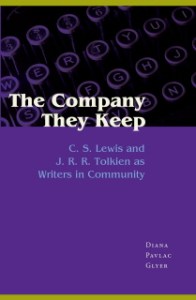 And, frankly, I am more in the Diana Glyer camp of the rich interconnectivity of their work (in The Company They Keep and Bandersnatch) than Humphrey Carpenter’s vision of the artist-creator as the lone, original genius, working in isolation. Glyer’s project is actually far closer to what Bowers is doing, though Glyer is only footnoted (and after Carpenter. This is perhaps a generational, cultural point more than anything. Bowers as a Rhodes Scholar and medievalist and Chaucerian who landed at Oxford in the moments after Tolkien’s death brings much to us that is now lost in time. He is bright and critical and generative in thought. On this point, however, I think he is swayed by a Carpenter image of the creator rather than a Glyer one.
Of course, I am open to looking at the evidence, when it appears. The problem with assertions from an absence of evidence is that I don’t know how to test this idea out. On the smell test—as someone deeply interested in the mental mapping of Tolkien and Lewis in the ‘20s and ‘30s—I don’t think it sounds right.
While I quite enjoyed this book, there is one absolutely critical downside: We do not get the full text transcription (or a reasonable edition) of what Tolkien may have produced of a Clarendon Chaucer (incomplete as it might be). The problems with this book are myriad, as the edition Tolkien would produce is based upon a Chaucer critical text that we would no longer follow as the best and fullest representative of Chaucer’s work. It also excludes what Bowers calls elsewhere “the naughty bits,” which we as teachers and readers today are not as bothered by (and may even delight in).
Granted all of these barriers for reproducing the entire archival find, why not just the Glossary and Notes? Bowers does include an appendix with the potential outline of a Clarendon Chaucer, and another appendix with an incomplete but interesting mini-essay, “An Introduction on Language.” Indeed, readers should go there first before reading the rest of the book. However, though I can glean much from Bowers’ extensive essays as he uses the glossaries, introductions, notes, and paratextual materials, and though I get some material from the few archival photographs, I do not have these resources myself.
 The photographic inserts are very welcome, providing us with ten photocopies of manuscripts and typescripts (with notes) related to the archival discovery. Knowing how photographic figures are expensive to produce, it makes me even more grateful to see Tolkien’s (fairly clear) handwriting for introductions, as well as the editorial process. For example, the reproduction of Tolkien’s headnote to his commentary on the Canterbury Tales begins, “It is easier to plan a big book than to write it.” Bowers is right to note the prophetic value of such a declaration. Still, I want the glossary, the introductions, the explanatory—the book (even without Chaucer’s poetry) that Tolkien failed to write but that would both enrich my reading of Chaucer and inform my understanding of Tolkien as a scholar, writer, editor, and creator.
I particularly love the story of the manuscript discovery, the “fact and fiction” convergence that is itself a surprising moment of history. The combination of historical curiosity, linguistic interest, and literary links provides a tone that is, for the most part, readable and forward-moving. However, Bowers is an academic, and this is a University press book, and it reads as such. After all, there is a great deal of information on various kinds of levels, so it is a sophisticated book.
However, there are moments where I wish the academic tone was lost—or, specifically, that Bowers would lose academic habits of tone that we tend to collect. Readers can skip this paragraph if they like. Given his expertise, the degree of serious care Bowers put into this book, and the importance of his discoveries, I wish he would reduce writing that distances the reader from his work. For example, there is a tendency to use passive voice constructs and circumlocutionary writing: “His Chaucerian expertise was most fully displayed in…” (3); “his Clarendon Chaucer was not mentioned in … was entirely unknown … was known about” (13) “… was mailed … was typed … was allowed … was presumed … was rendered impossible by…” (20-22); “Only one title on Gordon’s trimmed-down 1922 list was dropped” (23); “Carpenter guessed the election’s outcome was the doing of George Gordon” (28), “some batches had been sorted into…” (36), and so on. All throughout are phrases like “was redacted,” “was forced,” “was restricted,” “was assigned,” and the like, as well as phrases that hide the action, like “came to light” and uses of “discovery.” This tucked-in speech even happens with active movements, lessoning the impact of great work: “Scull and Hammond provided tantalizing hints that made discovering what materials he surrendered in 1951 into a worthwhile quest” (14); “what awaited discovery” (20); “A mystery surrounds the Text’s proofs discovered in the grey box in OUP’s basement” (80); “Other discoveries included” (132); the “remains had been discovered” (133); “the discovery of a work” (214); “In his fine essay on The Lord of the Rings, W.H. Auden observed that a quest typically leads to some unexpected outcome discovered only when the quester has come to the end” (18, referring to Auden’s “The Quest Hero”); and “Discovery of the Clarendon Chaucer alerts us to a whole new collection of ingredients previously unrecognized in Tolkien’s great Cauldron of Story” (242). Besides the fact that it produces sentences that make my eyes swim (within the prose of a pretty smart and vivid writer), this perambulatory writing softens the responsibility at points where it is critical. What an emphatic difference it would make to our understanding of Tolkien’s psychology if we tried to make a sentence like these in the active voice: “Tolkien was easily distracted by side projects” (14) or Tolkien’s “own lack of prejudice was forcefully voiced” (23).
 Setting aside my “Lessons for Effective Writing,” Tolkien’s Lost Chaucer is a great resource that is, at most points, a lot of fun to read. In the end, it is the story of a book that Tolkien failed to complete. This is not a new story for Tolkien. Bowers captures some of Tolkien’s perfectionism and procrastination in projects pretty well by comparing Skeat—Tolkien’s predecessor as a Chaucer scholar—with Tolkien as a writer:
“Famous even during his lifetime for the prodigious number of publications, Skeat attributed this productivity to rigorous self-discipline: ‘It is astonishing how much can be done by steady work at the same subject for many hours every day.’ The preface to his Etymological Dictionary of the English Language went farther in explaining how he adhered to strict constraints of time: ‘my usual rule has been not to spend more than three hours over one word.’ He admitted that this discipline left him unhappy with many results, but at least he finished one project and moved along to the next without allowing himself to be hobbled by the fastidiousness that plagued other scholars like Tolkien. Sisam made a point of emphasizing Skeat’s virtue in this regard, working always with a time-limit rather than aiming at perfection, with the result that his Student’s Pastime could list seventy-three books in print by 1896” (43).
Tolkien, however, described himself as a “pedant,” who was “devoted to accuracy even in what may appear to others unimportant matters” (16; see Letters 372). Instead of 28-page Glossary and Notes, Tolkien produced a far greater and more detailed section. Even when Sisam suggested an expanded 44-page section, Tolkien was not able to meet these expectations. What Bowers discovered in the library was a 160-page batch of annotations in typescript and manuscript (along with a number of essays and introductory pieces, some of which were not his responsibility but Gordon’s). Tolkien had grandly overshot the mark. Even when he produced tighter, shorter notes for SIsam, Tolkien greatly exceeded the needs of an undergraduate Chaucer companion and was unable to complete other aspects of the text.
Perhaps Bowers shows understanding when he makes this claim:
“With this sense of living in some historical aftermath, he also embodied the pessimism of the philologist who surveyed ancient achievements and saw only the long defeat” (240).
 After all, Chaucer himself began late and never finished his work—indeed, did Chaucer ever finish anything of substantial length? Tolkien complicated the task of what was supposed to be an easy, breezy volume for student readers by intricate detail, but also by continually offering corrections on the core Chaucer text—a text that Clarendon had intended to simply reproduce. Even under pressure, Tolkien kept redoing the work over and over again:
“These pages contain some further alterations by Tolkien, always the niggler” (81).
Pessimism may be warranted at times. I would argue, though, that the real problem is not simply Tolkien’s inability to do the job that was actually assigned. It is that, of course—but the simple statement does not capture the complexity of the situation. This project was doomed from the beginning—not because Tolkien could not do the job, for he did so with E.V. Gordon and Gawain. Rather, this failed Chaucer volume is the result of three linked factors: 1) the wrong timing; 2) the wrong partner; and 3) the wrong kind of project.
Tolkien took on this partnership with George Gordon in a synchronicity of timing that probably enhanced (or maybe ensured) his success in securing an Oxford Professorship. Gordon was influential in academic appointments and would have had the potential for this Chaucer partnership front of mind. However, Tolkien and his young family were, at the same time, trying to balance their lives while he took two successive promotions—including a move to Oxford. Tolkien committed to the Chaucer project just as he was completing his vocabulary for Sisam, and while he was working on the Gawain project (which would not be complete until 1925).
And in going to Oxford, Tolkien made two critical shifts. He must begin lecturing a new set of curriculum as Anglo-Saxon Professor, requiring a great deal of (pleasurable) time. He also moves from an editorial situation where, at Leeds, he is working quite near his editorial partner, E.V. Gordon. Bowers helps us imagine how Gordon frequently leans against Tolkien’s office door until they get the job done—late, but done well and in a reasonable time. G.S. Gordon as a partner is distant: there are months and years that go by as Tolkien and Gordon let letters and work sit unattended in the in-between times. George Gordon is a media darling and a strong public figure, but it isn’t clear he ever completed anything of substance on this project, leaving Tolkien largely on his own, adrift in a sea of possibilities.
 Thus, with those situational moments colliding, we are driven to realize that this just wasn’t the project for Tolkien—at least not at this time. Tolkien wanted to live deeply in the poetry and the words. He wanted to produce a masterful Glossary and Notes, based on a revised text that brings the reader the most intricate possible benefits. He wanted to discover the text—both in the older and newer senses of the word. The project Sisam gave him was a quick, popular, useful companion volume based on a set text, cheap to produce, and meant to enhance Chaucer literacy and simultaneously raise the profiles of Tolkien, Gordon, and the press. In the end, Bowers recognizes what was in Tolkien’s heart as a scholar:
“Looking back over his career in 1959, Tolkien reckoned that he was singularly equipped for the job: ‘I would always rather try to wring the juice out of a single sentence, or explore the implications of one word, than try to sum up a period in a lecture, or pot a poet in a paragraph’ (Essays, 224). He had anticipated this claim allegorically in Leaf by Niggle when describing his hero: ‘He used to spend a long time on a single leaf, trying to catch its shape, its sheen, and the glistening of dewdrops on its edges.’ (108)
Thus, I do not think it is just philologist pessimism or Tolkien’s long defeat. In the end, Tolkien produced more pages of material than the volume was designed to hold—not including Gordon’s contributions or the Chaucer texts. As the war broke in autumn of 1939, the glossary’s printing trays were broken up, the metal was melted down, and Clarendon received a war credit for the materials that had been the plates for part of the project. The Clarendon Chaucer was set adrift. Though Sisam and a subsequent editor tried to wrangle, maneuver, cajole, or bribe a text from Tolkien, they were unsuccessful. They ultimately had to hire a car to collect the paperwork from Tolkien in 1951, who seemed personally hurt at having to part with his papers.
So the project was doomed from the start.
Bowers writes that
“J.R.R. Tolkien would have become Geoffrey Chaucer’s most famous editor if he had completed his Selections from Chaucer’s Poetry and Prose” (13).
 I have no doubt. Clarendon was not able to use anything from Tolkien or Gordon, even after 30 years of patient waiting. But if he had been given a project like the Riverside Chaucer and a strong editorial team to guide him, Tolkien may have completed something of substantial value.
Doomed, yes. But any reader of Tolkien’s legendarium will remind us that “doom” has more nuance than inexorable ruin. As fate would have it, Tolkien was still able to produce thoughtful work in Chaucer even after losing his papers in the 1950s. And six decades after their seizure, Bowers and the OUP archivists—in partnership with the Bodleian—were able to discover and pull together a substantial and rich treasury of material. While Tolkien’s Lost Chaucer is not yet that full book, it is a good book. We cannot know how fate will treat Tolkien’s Chaucerian achievement. As Chaucer writes in his translation of Boethius, the destiny of a reason-bound universe (as I read it when combined with the sense of “doom” and near-providential destiny in The Lord of the Rings and The Hobbit):
… haþ doom by whiche it discerniþ and demiþ euery þing.

I believe in open access scholarship. Because of this, since 2011 I have made A Pilgrim in Narnia free with nearly 1,000 posts on faith, fiction, and fantasy. Please consider sharing my work so others can enjoy it.

 If the history of Mary Robinette Kowal’s Lady Astronaut Universe were the same as the one that you and I share, I would be writing to you as a dead man.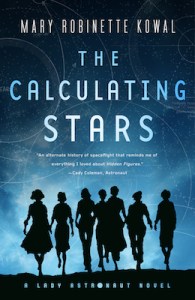
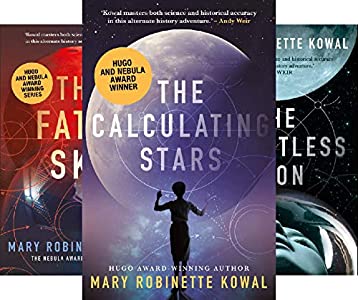 Not lost in world-building details, the structures of catastrophe and the struggles for liberation in the Lady Astronaut Universe are the context for stories of personal growth, trial, and triumph. The Calculating Stars and The Fated Sky (2018) are from Elma York’s viewpoint, a friendly and self-conscious intellectual working as an IAC (human) computer with an unusually adept and intuitive mathematical sense. Elma finds herself in a battle to be heard as the mathematician who predicted the first global winter and subsequent global warming, as well as a skilled pilot vying to be the first woman in the space program. Her real battle, however, is with a general anxiety disorder that is triggered by stress and tragedy and an intense fear of the media or interpersonal conflict. With a winsome sense of relational connection and a rugged commitment to the possible, Elma finds a way to become “the first Lady Astronaut” (insert an earnest and upbeat 1950s TV commentator voice here).
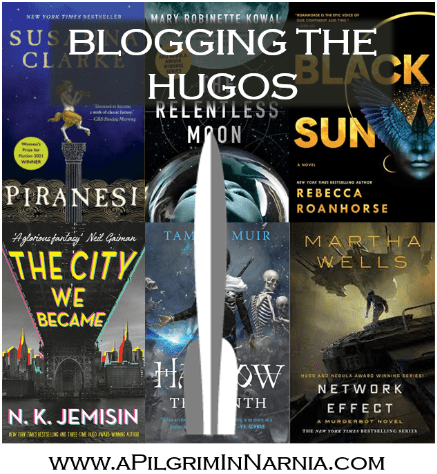
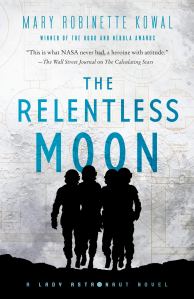 In The Relentless Moon (2020)—the first nominee in my Blogging the Hugos 2021 series—Elma York is on her way to Mars. Back at home, a Moon colony is steadily being established. Elma’s pilot-friend, politician’s wife Nicole Wargin, is a few steps from becoming one of the early settlers on the Moon after a number of successful supply flights and her early work as a pilot in setting up the infrastructure for the first Moonbase.
 While The Fated Sky drifts a bit, The Relentless Moon is longer than necessary, and the first-person narrative is (to my taste) far too restrictive, these are pretty fun books that have an important social contribution. Commentators will no doubt want to highlight the strong women and people of colour who find ways to effect change against all odds and in the face of layers of oppositions. The Lady Astronaut Universe books are certainly provocative in rewriting the 1950s and 1960s so that the world requires more than a tepid and slow-moving response to segregation and sexism. Our cultural revolutions have never really feared the Sword of Damocles, so the social equality possibilities in these books erupt with satisfying intensity, while much (frustratingly, especially in terms of class and privilege) remains the same.
 And, perhaps most surprising of all in such a hard-science wired series, the Lady Astronaut books feature characters trying to make authentic religious connections.
 I don’t read a novel for its “contributions,” but for its story—the characters, the world, the poetry, the imagery, the journey before and within me. If these novels failed in story, they would have little to say about the social moment. And it is the storytelling, overall, that makes the subtle transformations of cultural expectations shine in this trilogy.
 Blogging the Hugos 2021 (Tentative Schedule)
 Mary Robinette Kowal’s The Relentless Moon and the Lady Astronaut Universe (11/10/21)






 A Pilgrim in Narnia