Hello fair pilgrims! I wanted to pause for a bit and talk about the “C.S. Lewis Studies Series” here at A Pilgrim in Narnia. Quite honestly, although I had sketched out a “5 Books” series (you can see me testing the idea here, here, and here), this was not something that I had planned. Instead, the “C.S. Lewis Studies Series” is a feature that has emerged naturally in 2021.
I want to provide resources to Lewis readers, stimulate new and better scholarship, challenge scholars and historians who dialogue with Lewis to deepen their work, and give emerging scholars a footing. And I want to share some of my PhD discoveries that will never otherwise find their way to print. Therefore, I am shifting the focus a bit. With “The C.S. Lewis Studies Series,” I am opening the door to a greater variety of resources pieces that I and others can provide to readers. This will also allow me to rebrand some of the previous articles and posts to provide an easy-to-find research guide for scholars, essayists, period historians and biographers, pastors and teachers, and avid Lewis readers.
So here is a list of reviews, bibliographies, articles, and resource packs for The C.S. Lewis Studies Series, followed by a note about how you can get involved.
Planned Future Posts in The C.S. Lewis Studies Series
“Lewis Studies Books from Friends of the Inklings”
“5 Thoughtful Essay Collections”
“The 5 Most Important Lewis Studies Books that Scholars Fail to Read”
“Some Helpful Resource Guides”
“5 Great Tolkien Studies for C.S. Lewis Readers”
“Intriguing Lewis Studies Books in 2021”
How Can You Get Involved? (Volunteer Opportunities and Call for Posts)
Can you design a banner/poster that is actually good? I am not a visual designer–evident by the banner above–but I do love good visual design. If you would like to volunteer to design something, I would love to hand that power over to you.
Indeed, if there were someone who wanted to volunteer to do site design and organization, there is a good amount of work to be done to keep this website open and free to users.
You could write a review of a C.S. Lewis studies book, special journal edition, or series of articles. Reviews must contain bright, sharp, and tight writing, be positive (when possible) but critical, and written in a tone that is front-facing for a non-academic audience while providing a resource for scholars. You can come up with this review yourself from something on your bookshelf. Or, if you would like to be added to a list of potential reviewers when publishers and editors contact me, you can send me an email: junkola[at]gmail[dot]com. You will need to be a graduate student in a relevant field (literature, religion, theology, history, etc.), have completed a graduate degree, or have an active writing portfolio. If interested, email your full contact information, a brief bio (including what you have published), and a list of topics you would be comfortable reviewing.
Do you have a relatively up-to-date literature review in something you have written (e.g., from an Honours, MA, or PhD thesis or as background to a larger project) that is not published elsewhere but would be of interest? It could even be in a related field, like another one of the Inklings or literary friends of Lewis, 20th c. Fantasy writers, methods for studying children’s literature, Oxford or Belfast histories, etc. This series might be the place to share your discoveries with others.
If you are a Lewis scholar with a completed PhD or upcoming book or major article, I am open to scholars sharing their discoveries in a guest post where the interest for the reader is not merely “this is what I found” but also “here is my process of discovery.”
Or you may want to write a new guest post for The C.S. Lewis Studies Series. There are many areas where I am simply not able to guide readers and researchers. Here are some ideas for guest posts:
“The Best Oxford C.S. Lewis Society Talks You Should Read”
“5 Great Youtube Lectures on C.S. Lewis”
A post about Lewis-related devotional material
“C.S. Lewis and Philosophy: A Review of Key Texts”
“5 Cool Lewis Studies Articles You Are Unlikely to Stumble Upon”
“5 Tolkien Studies Books Lewis Scholars Should Read” (or Inklings Studies, War Histories, Liturgy Studies, Anglican Histories, etc.)
“The 5 Owen Barfield Books (or Ideas) that Changed C.S. Lewis the Most”
A post on Lewis and leadership, rhetoric, or communication
A review of what is happening in Lewis studies outside of the West (i.e., the southern hemisphere, East Asia, Eastern Europe, etc.)
“C.S. Lewis in Japan” (or some other interesting place)
“The Top 5 Lewis Studies Books that Brenton Forgot to Read” (if it was done well with humour and knowledge)
I intend to write some “Top 5” Lewis original material for the winter and would be open to your ideas or blog posts there as well. Feel free to send a pitch to junkola[at]gmail[dot]com. You will want to have familiarity with my work and read my piece “Why I Don’t Write Bad Book Reviews” (which I have diverged from a bit, but not much).
I believe in open access scholarship. Because of this, since 2011 I have made A Pilgrim in Narnia free with nearly 1,000 posts on faith, fiction, and fantasy. Please consider sharing my work so others can enjoy it.
At the virtual Mythcon 51 earlier in the fall, there was a good bit of buzz about the Mythopoeic Awards. As readers will know, I pay attention to the awards–so much so that this year they have stimulated a limited series (see Part 1, Part 2, and Part 3) as well as the C.S. Lewis Studies Series. As COVID-19 has delayed on-site conferences–one of the award-winners (a past winner) says in the reception speech, “I wish I was there, in person! No, I really wish I was there in person. I love my garden but I have been in here for a really long time now!”–the awards have been delayed.
However, it also means that the award ceremony is now on Youtube. In this post, I’ve added the award shortlists for each of the four categories, followed by the Award announcements including winner speeches–“I get a little lion statue! Wee!”–and then some details about the awards.
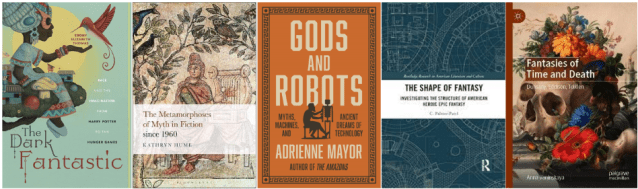
I have already talked about this list, and I am not sharing here my feelings about the award categories where I have a good sense of the field. However, I do want to congratulate each of the shortlisted projects, particularly in the scholarly fields. In the Fantasy Studies category, there was a lot of interest about Anna Vaninskaya’s work at Mythcon. And though I have not read Adrienne Mayor’s Gods and Robots (though I certainly will), Kathryn Hume has been a leader in Fantasy Studies since her 1984 Fantasy and Mimesis, Charul Palmer-Patel’s book really is an elegantly designed and thoughtful study, and I have already admitted that Ebony Elizabeth Thomas‘ The Dark Fantastic is one of the more important studies of the past decade.
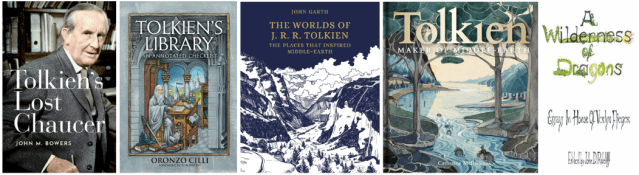
In the five Tolkien Studies that made the Inklings Studies shortlist, I find it difficult to complain about any of the projects. John Rateliff has done such important work in The History of the Hobbit, and Verlyn Flieger is a master; thus, a thoughtful and energetic essay collection is certainly a temptation to Tolkienist. John Garth’s The Worlds of J.R.R. Tolkien: The Places That Inspired Middle-earth is brilliant and beautiful and so helpful to readers, and I hope that some visual producer will see the value of the project as a documentary. Oronzo Cilli’s Annotated Checklist of Tolkien’s Library is a helpful resource, and right now I am reading the unusually good John M. Bowers’ Tolkien’s Lost Chaucer. Catherine McIlwaine’s gorgeous book project, Tolkien: Maker of Middle-earth, did not win–and perhaps this is not the best award for this particular book. However, this huge, colourful catalogue of the Bodleian Library Tolkien exhibit is one of my absolute favourite Tolkien resources.
I won’t speak to the fiction, which will take me a decade to get through, given how much of my novel reading is committed to my own peculiar categories of the good (J.K. Rowling, Stephen King, Marilynne Robinson, Frederick Buechner, and a number of Black women sf writers dominating the field), the dead (Tolkien, Lewis, Ursula K. Le Guin, Frank Herbert, L.M. Montgomery, Madeleine L’Engle, Jane Austen, Shakespeare, the classic novel and classic sf), and the pressing (like, what I have to teach this year, what books smart kids in my life are most interested in, challenges like the Hugo 2021 novel finalists, and my failing attempt to follow great Canadian literature). I will, though, remind readers that any Mythopoeic Society member can nominate books, and they will be looking for these nominations in the new year.
Mythopoeic Scholarship Award for Myth and Fantasy Studies
The Mythopoeic Fantasy Award for Adult Literature is given to the fantasy novel, multi-volume, or single-author story collection for adults published during 2019-2020 that best exemplifies the spirit of the Inklings. Books are eligible for two years after publication if selected as a finalist during the first year of eligibility. Books from a series are eligible if they stand on their own; otherwise, the series becomes eligible the year its final volume appears.
The Mythopoeic Fantasy Award for Children’s Literature honors books for beginning readers to age thirteen, in the tradition of The Hobbit or The Chronicles of Narnia. Rules for eligibility are otherwise the same as for the Adult literature award. The question of which award a borderline book is best suited for will be decided by consensus of the committees. Books for mature “Young Adults” may be moved to the Adult literature category.
The Mythopoeic Scholarship Award in Inklings Studies is given to books on Tolkien, Lewis, and/or Williams that make significant contributions to Inklings scholarship. For this award, books first published during the last three years (2018–2020) are eligible, including finalists for previous years.
The Mythopoeic Scholarship Award in Myth and Fantasy Studies is given to scholarly books on other specific authors in the Inklings tradition, or to more general works on the genres of myth and fantasy. The period of eligibility is three years, as for the Inklings Studies award.
I believe in open access scholarship. Because of this, since 2011 I have made A Pilgrim in Narnia free with nearly 1,000 posts on faith, fiction, and fantasy. Please consider sharing my work so others can enjoy it.
Part 5: Recent and Foundational Studies on Lewis and Gender
With this piece, I want to tilt the study a little bit and unroot myself from a focus on recent work to focus on a perennial question in Lewis studies. The fact that Kat Coffin’s 2019 guest article “How do you Solve a Problem like Susan Pevensie?” is one of the top 5 most read pieces in almost every week is testimony to how keenly readers feel the questions of gender in Narnia. This Susan piece, combined with the article that spurred me to invite Kat to write for A Pilgrim in Narnia (my own “Girls, Boys, and the Maps in Their Heads: A Reflection on Narnia“) and my follow-up post to the Susan piece (“8 Questions about the Problem of Susan Narnia Debate, or How to Read Well“), have been read more than 20,000 times. While the conversation sometimes makes some people anxious, the question of Lewis and gender is deeply meaningful to many reader.
And, we have to admit, “Lewis and gender” is a topic fraught with tensions, littered with work of sub-par value, and–for those who take the questions seriously and who are willing to read well–profoundly valuable as an entry point to Lewis studies.
Indeed, I cannot think that there is an area of Lewis’ thinking and life that is more scrutized than this one. While Lewis was an Edwardian Oxbridge male thriving within a male-centred academic environment, studying largely male-centred classical, medieval, and renaissance literature, and writing often in modes defined in that period by male writers (fantasy literature, sf, literary criticism, apologetics)–and, indeed, a figure who for most of his life had no sisters, mother, wife and very few women students, colleagues, and peers–a student who truly attends to the question of Lewis and gender will discover that Lewis’ understanding of gender is complex, nuanced, and at times surprising. Neither glib designations of misogyny nor hallowed elevations to sainthood gets to the truth of the way that Lewis thought about women and men, gender and sexuality, in his teaching, his fiction, and in the various spaces of his personal life.
In this piece, I am offering something akin to a classic literature review (with pictures, because I like pictures of book covers). I have left most of the in-text conversation to the side, using the character of Jane in That Hideous Strength to highlight some of the views. In the manuscript that I am editing on my screen right now, I argue the various positions and press scholarship for a closer reading of Lewis’ life and writings. In this post, however, I will mostly present the ideas of the critics as they appear in history.
The First Generation of Critics on Lewis and Women
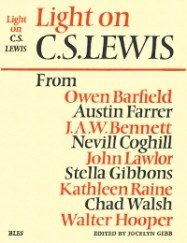
As early as the first volume dedicated to Lewis after his death 1963, critics brought concerns about Lewis and women in his public work. In an otherwise glowing article in publisher Jock Gibb’s 1965 collection, Light on C.S. Lewis, Stella Gibbons admits that there is “much of the ‘crusty bachelor’” in That Hideous Strength. The protagonist Jane, Gibbons claims, is subjected to gender-role moralizing that shows in Lewis an attitude that is “narrow and unkind.”[1] This cautious criticism begins a strong re-assessment of C.S. Lewis and gender from the 1970s to the current day, predominantly by women Lewis critics.
Though it is rare that scholarly critiques are unmitigated in their condemnation, some early criticisms of Lewis’ work are pointed and often personal. In 1976, Margaret Hannay writes that “St. Clive” has become an
[Evangelical] authority on almost every aspect of Christian life and doctrine, including, unfortunately, the ‘place’ of women. The more Lewis’ works are used to enforce the idea of the domination of men and the subordination of women, the less attractive these works become to … intelligent men and women….[2]
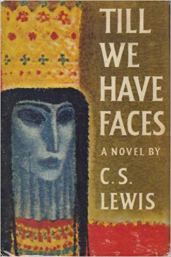
Though this concern may have more to do with how Lewis is used by readers—an ongoing concern, for now in 2021, Lewis’ writings are being used to support anti-vaccination conspiracies in North America—Hannay describes the “chauvinistic elements which have irritated so many women.”[3] Perhaps the first critic to offer a developmental hypothesis in Lewis’ thought, Hannay argues that through his encounter with powerful women later in his career, like poets Dorothy L. Sayers and Joy Davidman, Lewis’ view changed from fairly typical period chauvinism to a more open and egalitarian perspective. While she provides other examples, Hannah sees this growth especially in the character development, setting, and narrative of Till We Have Faces (1956) as it stands in great contrast to his previous adult fiction like That Hideous Strength (1945), and in his late-in-life nonfiction works like The Four Loves and A Grief Observed. Hannay believes that Lewis’ Oxford reputation for women-hating was undeserved in real life, though he deservedly gained such a reputation in his WWII-era science fiction and his editorial writings about the roles of women.
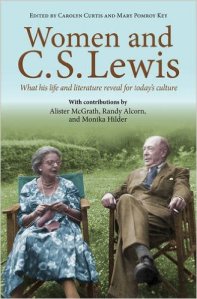
In the fourty years of scholarship since, many critics have wanted to defend Lewis against charges of misogyny and sexism by demonstrating positive or counter-stereotypical roles for women and girls in his writing as well as Lewis’ positive relationships with women. These critics include Kathryn Lindskoog,[4] Corbin Scott Carnell,[5] Nancy-Lou Patterson,[6] Karla Faust Jones,[7] and, more recently, many of the popular-level essays in Carolyn Curtis and Mary Pomroy Key’s edited volume Women and C.S. Lewis (2015). While a few scholars chose to ignore what readers identify as problematic moments, many of the essays of the 1970s and 1980s were trying to look seriously at the problematic parts of Lewis’ most public work and either contextualise the materials or interrogate earlier readings by discussing egalitarian, contrasting, or hopeful currents within his life and writing.
Lewis Masked and Mirrored in Kath Filmer’s Analysis
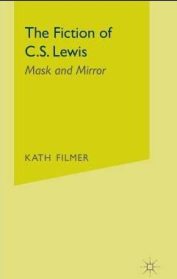
Kath Filmer’s 1993 monograph, The Fiction of C.S. Lewis: Mask and Mirror, marks a turning point in the field as she offers the first book-length feminist critique of Lewis’ thought. Filmer is disturbed by various resonances within Lewis’ fiction and “the misogynist and the chauvinist beliefs” embedded in his work.[8] Filmer proposes that Narnian evil is distinctly feminine, with the White Witch as the prime example: “a self-deceived, self-worshipping creature,” a blood-thirsty “devouring goddess image” that represents “the negative and fearful aspects of femininity which seem to have had a profound influence upon C.S. Lewis.”[9]
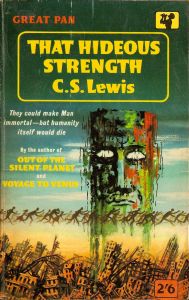
One of Filmer’s focal points is the character of Jane in That Hideous Strength. At the end of the novel, Jane is retired of her role as seer: “You will have no more dreams,” Dr. Ransom, Pendragon and Fisher-King says to her by way of parting benediction, “Have children instead.”[10] Jean Graham suggests that this moment confirms that Jane’s “redemption” is bound up in
“taking care of her husband and bearing children in submission to Mr. Fisher-King.”[11]
While Alicia Burris admits that Ransom’s parting words “seems to be referring to the visionary dreams that Jane has throughout the novel” and not “dreams” in the sense of personal ambitions, she suggests that “it raises the question as to whether Jane must give up all personal dreams for the sake of her marriage” and whether “scholarly dreams are inappropriate because she is married and must therefore restrict herself to the domestic.”[12] Burris is here in conversation with Gretchen Bartels, who analyses what she calls Lewis’ “theoretical dislike of the emancipated woman” as it is paired with his “theological understanding of gender.”[13] Burris concludes her analysis of That Hideous Strength suggesting that here we see the deepest problem of Lewis’ sexism:
“The Problem of Jane, which supersedes the Problem of Susan [in The Last Battle], is that for Lewis’s theology to map onto Jane’s experience, she must give up her status as an emancipated woman and instead dwell in the domestic sphere.”[14]
While critics like Bartles and Burris use these moments to reveal Lewis’ real philosophy of gender, Filmer takes her interpretation even further. Filmer claims that Jane “aligns herself with the spirit, if not the actuality, of the evil at Belbury,” which is the pathway for Lewis’ female characters that are not virgins.[15] The climax of Jane’s development comes when she “is ready to submit sexually to her husband” in a way that is paradigmatic of all female submission to the male.[16] Filmer concludes that in making the scene a moment of revelatory light, Lewis is being dishonest, for he is not truly suggesting “the triumph of the good” but “the triumph of the male.”[17] In Jane’s character, then,
“we are treated to a brief but telling glimpse … of the misogynist and the chauvinist beliefs that so taint his spiritual vision.”[18]
The word “misogyny” is ambiguous in Filmer, used for any development of a female character with a negative character trait as well as for the deepest, most problematic aspects she reads in Lewis’ fiction. It is unclear if Filmer simply means “sexism” by the term or if she thinks that Lewis actually hates women (as the etymology and earlier usage suggests). Focussing upon Lewis’ fiction and setting aside, at least for the monograph, his nonfiction and biography and his theological commentary, Filmer argues that Lewis’ fiction masked and mirrored his own monstrous misogyny, however defined. In the case of Jane, the inequity of her character development in Filmer’s analysis is because Lewis has a personal, suppressed “preference for things masculine”[19] rather than a coherent theological understanding of gender that is open to criticism on its own terms.
Many critics have, on the surface, ignored Filmer’s arguments, though Monika Hilder (discussed below) and Nancy-Lou Patterson have taken the time to respond. In responding to Filmer’s “monstrosity” thesis,[20] Patterson critiques Filmer’s approach to Jane on methodological grounds: in particular, Filmer fails to distinguish who is speaking in the text, and in what context.[21] At one point, Filmer asserts that
“there is no attempt to show women … who are simply intelligent and highly competent.”[22]
This is “simply not true,” Patterson rebuts, showing through text analysis that there is only one unintelligent and another incompetent character who ultimately align themselves with Ransom’s company, and both are men (Tom and Mark, each of whom arrives after the climactic battle). Patterson argues that the heroes of St Anne’s in the text are “individual, feisty, independent, fully developed” resisters of the N.I.C.E. who live “cooperatively in the presence of a leader with whom they have cast their common lot,” and who “are constantly engaged in consultation, discussion, analysis, shared life, group participation, and mutual aid.”[23] After all, Patterson reminds readers, Ransom himself admits that obedience is
“more like a dance than a drill—specially between man and woman where the roles are always changing.”[24]
Mary Stewart Van Leeuwen, the Christian Scholar’s Review Symposium, and a Second Generation of Lewis Gender Critics
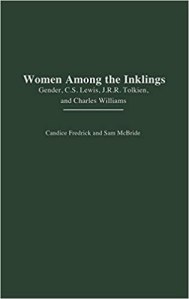
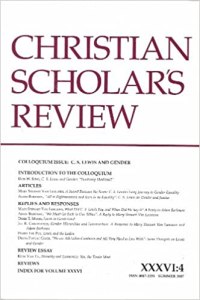
These early gender considerations of Lewis and Filmer’s book created the foundation for a wide-reaching conversation that began in the 2000s. Candice Fredrick and Sam McBride published Women Among the Inklings (2001),[25] following up with a later paper focusing upon females and combat in the fantasy of Lewis and Tolkien.[26] In the same period, Mary Stewart Van Leeuwen’s 2004 C.S. Lewis Lecture at the University of Tennessee, Chattanooga, heightened the conversation. This piece was particularly important as it created the foundation for vigorous debate on Lewis and Gender in a colloquium issue of the Christian Scholar’s Review in 2007. The special issue centres on two arguments, one by social scientist Van Leeuwen about Lewis’ developing egalitarianism, and one by philosopher Adam Barkman on Lewis’ fundamental hierarchicalism, with responses from leading Lewis scholars.
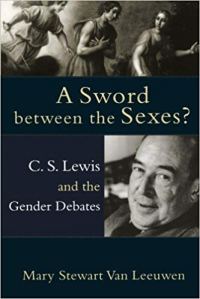
Van Leeuwen’s reworking of her keynote lecture concurs with Hannay’s thesis by suggesting a developmental pathway for Lewis, moving from a traditionalist, androcentric hierarchicalism and essentialism rooted in classical and medieval archetypes toward an intriguing and inviting near-egalitarianism in his late-in-life thought. In this article and her follow-up book, A Sword Between the Sexes (2010), Van Leeuwen argues that although they were often idiosyncratic, diverse, and not altogether consistent, many of Lewis’ views of gender
“can be explained at least partly by his historical and personal circumstances.”[27]
Van Leeuwen demonstrates a series of clarifications, reversals, and deepenings of views, particularly in later books like Till We Have Faces, The Discarded Image, The Four Loves, and A Grief Observed. As these works are lesser known, many readers continue to carry around a false
“portrait of Lewis as the unchanging defender of gender stereotypes and gender hierarchy.”[28]
In the monograph, Van Leeuwen extends both her data on Lewis’ life and work and her critique as a social scientist. She carefully considers Lewis’ understanding of sex and gender, looking at contextually implicated, literary, and idiosyncratic views of gender roles, hierarchicalism, sex stereotypes, and equalities. Though Lewis purported to represent a “mere Christianity” in his teaching, Van Leeuwen argues that many of his views are not representative of most Christians in most times and places. As a result, his personal beliefs as a public intellectual unintentionally blur his message—and in a way that until this very day bends the gender conversation in American Evangelicalism, the community of Lewis’ most committed readers.[29]
In considering Lewis’ adult relationships with women and putting Lewis in conversation with philosopher Elizabeth Anscombe and author Dorothy Sayers—two other contemporary Oxonian Christian public intellectuals—Van Leeuwen suggests that Lewis was “A Better Man than His Theories,” living authentically and generously with women students, friends, partners, and mentors while continuing to hold some hierarchal and essentialist views.[30] Van Leeuwen demonstrates that in providing his readers with “generalizations” about women and men, he claimed universal experiences despite never having looked for evidence of that universality. While Lewis is effective against materialist reductionism, he carries his own untested Cartesian-Aristotelian-Jungian dualism that bends his views of gender and the social scientific enterprise.[31] Beyond the social scientific critique, and though she never mentions Filmer, Van Leeuwen’s thesis is the precise opposite of Filmer’s, who argues that “there was no marked change in Lewis’s attitudes and beliefs.”[32]
The Christian Scholar’s Review colloquium included a second keystone paper, Adam Barkman’s “‘All is Righteousness and there is no Equality’: C.S. Lewis on Gender and Justice.” While Van Leeuwen is working as a social scientist, specifically a psychologist, Barkman is working as a philosopher, placing Lewis in conversation with Aristotle and 20th-century systematic theologians of what he calls “Christian orthodoxy.” He provides a focussed survey of Lewis’ ideas of gender, celebrating Lewis’ presentation of what he thinks biblical-historical hierarchical Christian belief should be:
“[A]lthough men and women can both achieve the same level of spiritual excellence and may have the same cognitive powers, they are not equal in spiritual essence (which includes function) and may not be equal in spiritual value.”[33]
By “spiritual essence,” Barkman means “the inherent nature of a given thing.”[34] Though he admits the conclusion is “repugnant” to some, including progressive Christians and conservative Evangelicals who want to assert ontological equality, Barkman’s paper is meant both as a defence for reading Lewis this way (against the readings of scholars like Van Leeuwen) and for the idea that Lewis’ hierarchal Aristotelian position is “in line with orthodox Christianity” and is of “contemporary worth.”[35]
The remainder of the journal colloquium includes respective replies by Van Leeuwen and Barkman and responses by several Lewis scholars. Largely agreeing with Barkman on Scripture, Van Leeuwen clarifies Lewis’ view of Scripture[36] and notes that
“Lewis made no appeal to the Gospels to defend his theory of gender archetypes and hierarchy, for the simple reason that there is nothing clearly there to draw on.”[37]
This point is the foundation for one rail of her critique of Barkman: that his use of “selective Pauline texts … in attempting to read his Aristotelian/medieval cosmology back into Scripture, the younger Lewis” was in grave error regarding trinitarian and incarnational theology.[38] This error is Barkman’s as well, Van Leeuwen argues, and it is one that Lewis left behind as he
“finally acknowledged the confessional non-negotiability of Nicene Trinitarianism.”[39]
Barkman’s response to Van Leeuwen is to emphasise his criticism of her developmental thesis
“because she fails to look at all the evidence, but also because she shockingly ignores Lewis’s biblical reasons for believing in gender hierarchy and gender essentialism.”[40]
In response, Doris Myers disagrees with Barkman on the logical flow of his argument: that
“the Bible teaches gender inequality; C. S. Lewis believed the Bible; he therefore believed in gender inequality throughout his life.”[41]
Myers draws out two frequently occurring problems in Lewis studies: Lewis’ chronology and his biblical hermeneutics. On the latter point, Myers wishes that scholars were cognizant of the particularly Anglican approach to Scripture of Lewis’ time. Most of the respondents share Myers’ concern that readers are not clear about Lewis’ biblical hermeneutics. Joe Christopher argues that “Barkman is presenting only part of a complexity”[42] and that Van Leeuwen has not fully appreciated the way Lewis roots gender in Scripture and myth. Harry Poe presses both Van Leeuwen and Barkman on the period of Lewis’ formation regarding thoughts on gender and hierarchy, and agrees with the developmental thesis, since “Lewis changed his mind in small matters and in great.”[43] Poe is convinced by Van Leeuwen’s quotation of a passage in A Grief Observed that demonstrates that Lewis eventually grew in his understanding, even if he did not achieve full Pauline mutual submission:
“In one paragraph, Lewis smashes the essentialist/hierarchical theory to bits…. Here Lewis describes a perfect egalitarian relationship of equals in which both play different parts over the course of the relationship.”[44]
Poe argues that Barkman conflates Aristotle’s hierarchicalism and orthodox Christianity and thus fails to note Lewis’ growth as a person, including his shifting understanding of St Paul and marriage, and his redefinition of “headship” as “rooted in voluntary suffering and self-giving rather than in an essentialist Aristotelian hierarchy.”[45] Furthermore, Barkman’s definition of Lewisian-Aristotelian “essence” is, according to Poe, fundamentally opposed to Lewis’ view of the fall of humanity.
Concluding the print-colloquium, Diana Pavlac Glyer notes the clearest result of the discussion: an acknowledgement that
“Lewis’s views on gender, like his views on most things, are more complex than most people realize.”[46]
Glyer’s essay seeks more precision, such as with Lewis’ complex language and ideas about feminine and masculine, female and male, and women and men as terms. Glyer believes that despite his complexity, depth, and sometimes surprising definitions, Lewis’ gender-loaded terms of quality are problematic: Lewis uses the term “masculine” as “an umbrella term for strength, initiative, courtesy, protection, frankness, and chivalry, and ‘feminine’ to mean tenderness, responsiveness, tact, and beauty.”[47] Dissatisfied with the “thinness” of abstract language and the “splintered” nature of contemporary word usage, as Lewis is an imagistic thinker, Glyer argues that more study is needed.
Glyer agrees with Van Leeuwen and others about development in Lewis’ ideas and the importance of contextual reading. Glyer is not certain, however, that his basic commitment to essentialism changes much in his life. Still, Glyer argues that it is important to look at the quality of Lewis’ term-usage, noting an essential egalitarianism within an unequal world, a more well-rounded view of human personality than one might immediately suppose, a literary interest in his use of gender and sex language, and a softening of an increasing sophistication in his use of gender language—all rooted in a “deeply ingrained pragmatism.”[48] Given Lewis’ particularity, scholars must be careful about drawing universal or theoretical implications. Emphasising the need to understand the integrated reality of Lewis’ life and thought to contextualise his ideas properly, Glyer concludes with a methodological suggestion:
“[W]e will not do too badly if … we seek to follow his example: to advocate unity, to admit liberty, and to practice love.”[49]
Ann Loades and Lewis’ Christological Inversion
This journal colloquium was part of an ongoing scholarly conversation about the oft-discussed views of Lewis and gender in literary criticism.[50] Theologian Ann Loades’ articles in 2010 on C.S. Lewis and gender evaluate Lewis’ view on the ordination of women,[51] Lewis’ British context concerning women (Edwardian culture, Oxford, WWI, etc.),[52] and his use of gender as metaphor and as part of his worldview.[53] In conversation with Van Leeuwen, Loades demonstrates the transformation of gender-tagged language that was endemic to his world and his usage. Loades contrasts the patterns of masculinity in Lewis’ experiences of abuse in boarding schools with Lewis’ own much more creative, generous, and capacious views.[54] Loades distinguishes between Lewis’ theoretical play of ideas and what is deepest in his work. In those deeper wells, in particular on the Christological level, Loades suggests that readers “need not follow CSL either in the ventures of his imagination or of his opinions,” but notes that
“his understanding of Christ offered a most significant alternative to the cruelty, violence, intimidation, self-seeking, and manipulative behavior of which he was so critical….”[55]
The muscular masculinity of his culture is contrasted with Lewis’ Pauline Christology as a “most significant alternative” that
“captures something of what he believed about the importance of forgiveness and self-sacrifice in human life.”[56]
Rather than dismissing the problematic aspects of Lewis’ work, Loades looks for inversive or transformative moments in his life and writings. Lewis’ Christological inversion of gender characteristics is significant, Loades believes, as it is pinned to
“Lewis’s portrayal of the loving, self-denying, endlessly crucified Christ.”[57]
This link can be positive or negative, and the “regrettable” aspects Loades records are often problematically gendered.[58] Regardless, Loades argues that it is Lewis’ lived experience that most clearly demonstrates the critical importance of his imitatio Christi spirituality as it transforms the ideas of masculinity he received from his culture. Though Van Leeuwen, Hannay, and Poe each suggest that Lewis’ view of marriage relations transform dramatically by the late 1950s, as seen in A Grief Observed, Loades finds even in his earlier views on marriage something quite striking. Recognising that in marriage his love should look “most like a crucifixion,”[59] Lewis models his understanding of a cruciform posture in spiritual life where one becomes “not merely Christlike, but more ‘feminine’”[60]—a view Loades intensifies by noting Lewis’ self-sacrificial care of the dying Joy Davidman. Elsewhere, she argues for a Lewisian view of “Christ-likeness” bound up with a “normative mutuality of give-and-take” that cannot ever be one-sided.[61] Where Lewis fails theoretically, Loades suggests, is in weighting this Christlikeness on one partner’s roles, in suggesting that self-death for the other was the normal posture for the male alone, for “[b]oth may be Christ-like if either is to be.”[62]
Monika Hilder and the Lewisian Spiritual “Feminine” Heroic
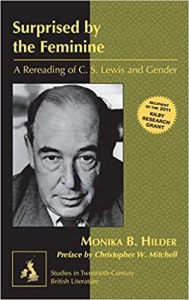
Deeply interested in what she calls “theological feminism” is Canadian literary critic Monika Hilder, whose 2002 article, “The Foolish Weakness in C.S. Lewis’s Cosmic Trilogy: A Feminine Heroic” is subsequently worked out in a trilogy of books on Lewis and gender,[63] offers a transformative vision of Lewis’ life and work. In dialogue with the critics discussed above—including Filmer, whose book clearly invited response but is often ignored–Hilder’s approach to Lewis’ entire corpus argues that rather than a developmental thesis (so Hannay, Poe, Van Leeuwen, and to a certain extent, Loades), Lewis is operating with an embedded system of gender thought that requires a rereading of his entire project. Hilder develops a framework which she describes as a “feminine heroic” that exists with remarkable consistency throughout Lewis’ work. As readers have become increasingly conscious of how gender stereotypes and assertions of sexual hierarchies have contributed to the suffering of women historically, Lewis’ playful, medieval-soaked imagistic approach to gender might suggest damaging exclusivities. Granted that history of abuse and exclusion, Hilder argues that by contrast, Lewis
“uses gender metaphor … to convey spirituality in a surprisingly gender-inclusive way.”[64]
Rather than merely confirming historical sexism, within his often dangerous and troublesome play with literary ideas of sex and gender Lewis offers pathways to women’s liberation and relational interdependence by subverting the values embedded within misogynistic gender assumptions.
In particular, Hilder demonstrates that
“without exception, Lewis extols as heroic qualities that which Western thinking has gendered as ‘feminine.’”[65]
In contrast to “masculine” heroic qualities that tend to be valued in literature and culture in the West, Lewis inverts these values by highlighting a spiritual feminine perspective in his fiction. Hilder contrasts a classical “masculine” heroic model with a spiritual “feminine” heroic model to develop a concept of “theological feminism” in Lewis’ work. The result is that gendered characteristics within the classical masculine heroic model are subverted, inverted, and transformed into more deeply rich feminine-spiritual heroic traits in the characters and narrative development of his fiction; reason is twinned with and superseded by imagination, autonomy by interdependence, activity by passivity, aggression by care, conquest by submission, deceit by truthfulness, and pride by humility. Without blindly valourising Lewis, and with particular attention to detail, Hilder treats with great care the grand experiment of gender imagery that saturates Lewis’ work, revealing a theological feminism that gives cultural-critical energy to a new image of liberation and joy.
Hilder demonstrates that the shining values of Lewisian heroes take up the dramatic figure of the feminine-spiritual hero, engendering a spirit of imagination, interdependence, thoughtfulness, truthfulness, humility, and a wise understanding of human relationality. That is, feminine-spiritual heroes know when to rely on friends, when to submit to greater authority or wisdom, and when to take a stand. In the Ransom books and Narnia, some of the greatest moments include the recovery of the character from a masculine-classical model to a feminine-spiritual one, including Lucy’s recovery of trust, Eustace’s and Edmund’s loss of self, and Mark’s and Jane’s conversion from independent, flailing, self-doubtful masculine characters to humbled-yet-robust feminine heroes receptive to connection.
In her analysis, Hilder attends to classical-masculine traits as they are teased out in the overarching narrative of the independent, self-reliant, hubristic hero of strength in the classical model often reproduced in speculative fiction. She then contrasts this narrative with the creative, imaginative, sensitive, self-surrendering, humble (feminine) hero of spiritual imagination. Though each of the “spiritual heroes” in Lewis’ task has his or her own classical heroism to overcome and repent of, Lucy is perhaps the greatest example in the corpus of the spiritual hero. The anti-Lucy, then, must be the White Witch—not a stereotype of the corrupt, immoral crone, but a classical image of masculine leveraging of power that fails in the face of self-sacrificial love. Lewis thus redraws a picture of what a person of strength and valour looks like, pitting Lucy against the White Witch or Uncle Andrew.
Hilder, therefore, offers an immanent critique of Lewis readers who have too quickly judged gendered characteristics by their own masculine classical expectations of heroic strength. In integrating Lewis’ entrenchment in gendered identity markers rather than demonising them or explaining them away, Hilder demonstrates that Lewis subverts the primary classical masculine trope of the hero with a new vision for understanding human being in the world. While the classical hero strikes out alone to actively carry out violent conquest according to his proud certainty, Aslan is the spiritual hero who humbly submits to the violence, receiving it unto his body in love. There can be no greater contrast between the power principle of classical hero stories than Aslan in his passion. Yet Aslan’s self-abdication taps into a “deeper magic of humility,” a spiritual story “of death to greater life.”[66] Hilder argues that Aslan is paradigmatic of a medieval feminine spiritual hero that defines the truly heroic in his fiction, and thus is a feminine character in Lewis’ critical inversion. These inversions are what John Bowen calls the
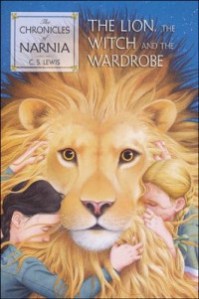
Hilder uses this framework to work through the catalogue of Lewis’ fiction. In The Lion, the Witch and the Wardrobe with its theme of royalty and “becoming yourself,” the four Pevensie children move along individual paths towards certain truths about leadership, “a high and difficult calling,” and
“spiritual heroism [that] is a transformative and lifelong commitment.”[68]
In taking on the mantle of leadership, “the Pevensies grow into ‘feminine’ spiritual heroes” in contrast to the “‘anti-royal’ nature of the ‘masculine’ classical heroic ethos in the White Witch” and those who have chosen her side.[69] Each character in Narnia, Hilder argues, “wrestles with the opposing heroic paradigms and experiences the life-or-death drama that unfolds” in their ultimate transformation into a spiritual-feminine hero.[70] Prince Caspian, for example, “flees the heritage of Telmarine ‘masculine’ imperialism for the true Narnian kingdom of ‘feminine’ spirituality” and must learn to “be at peace with this paradox” of leadership strength in weakness.[71] Whether in Aslan’s Stone Table sacrifice, Edmund’s moral quandary, or the Narnian resistance against tyranny, an imaginative, cooperative, receptive, empathetic, truthful, humble, self-sacrificing spiritual posture is the definition of faithful Narnian leadership. Each character learns to adopt this posture in order to find their Narnian transformative courage—whether it is the courage to assert one’s own convictions, the courage to confront a friend, or the courage of battle and adventure.
Hilder’s argument for the feminine spiritual inversion in Lewis’ work cuts across some of the conversations about Lewis and gender. In an intriguing response to “the Problem with Susan,” Hilder suggests that Susan’s rejection of Narnia for lipstick and parties is not a judgement against the feminine in the text (or against sexuality in general) but Susan’s particular rejection of a feminine heroic for masculine societal expectations for “grown-up” women. Beyond gendered symbols of growth, Lewis viewed the desire to reject childish realities for adultish things as “a mark of really arrested development.”[72] Thus, Hilder argues, Susan turns to lipstick and parties not as an expression of adult femininity but as a rejection of the Narnian childlike posture of transformative power. As noted before, Jill takes up traditionally male roles in The Last Battle in being an excellent scout and marksman. In Hilder’s argument, these are “noteworthy” traits. That Jill takes up these male-patterned skills with excellence, however, is “beside the point of what constitutes her spiritual heroism,” which is the
This pattern of humility, loyalty, and feminine spiritual response continues in other parts of Lewis’ fiction. Ransom in outer space must learn to surrender to Maleldil’s will and submit his mind, fears, will, and body in order to become a heroic instrument of transformation:
“Ransom’s ethos of ‘feminine’ surrender, paradoxically, is what empowers him with unparalleled courage against the foe.”[74]
In extensive contrast of the “‘masculine’ classical heroism posed in the N.I.C.E. and the … ‘feminine’ spiritual heroism developed in the community of St. Anne’s,” all the characters of That Hideous Strength have to decide “whether to choose self-reliance or obedience to the divine.”[75]
Ultimately, Hilder challenges readers in the expectations they bring to the text. Because we
“tend to read ‘gender’ through the lenses of classical heroism, … we tend to misread Lewis’s representation of gender” and “miss much insight into the spirituality that Lewis’s application of gender metaphor offers.”[76]
In challenging the reader, Hilder’s interest is partly to counteract “a deep-going epistemological chauvinism” in Western culture that results in “the double cultural marginalisation of both spiritual heroism and femininity.”[77] Hilder is offering a feminist analysis that is also a feminist self-critique and an opportunity for seeking greater gender freedom:
“My argument is that a rereading of Lewis’s affinity with hierarchical cosmology … [is] a living picture of spiritual liberation which the socio-political paradigm misses.”[78]
Lewis’ “theological feminism,” the grand inversive revolution of power matrices in Hilder’s terms, “convey[s] spirituality in a surprisingly gender-inclusive way” as it subverts “typical gender discourse in ways intended to challenge and to liberate from chauvinism.”[79]
Whither Lewis and Gender Studies?
Not all Lewis critics find Hilder’s argument convincing, as we see of Barkman above, who looks to Lewis to restore gender hierarchies, essentialism, and complementarianism. Critiquing theses of inversion from another angle, Laura Lee Smith argues that
“even if we admit that Lewis was engaging in a countercultural theological feminism,… we should not expect feminists to embrace Lewis as a long-overlooked ally.”[80]
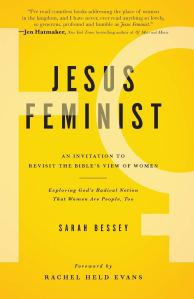
By contrast, Evangelical “Jesus Feminist” Sarah Bessey intimates this inversive argument, asking readers to imagine that “Aslan is on the move” as she speaks of a growing spirituality of Christlike egalitarianism. This Aslanic egalitarianism is
“destabilizing old power structures” and moving outside of sacred cells to be with misfits, rebels, courageous lovers, the vulnerable, and those deemed “not worthy enough or right enough.”[81]
No single reading of Lewis’ understanding of gender and sexuality will be convincing to all.
I do not know if Hilder has won the day or if it is coincidental, but it appears that there is a détente of sorts in Lewis studies. While public intellectuals like Philip Pullman continue to critique Lewis for his views, and while girl and women readers often speak with dismay about their experience of reading about Susan’s fate in The Last Battle or dismissive sexism in That Hideous Strength or The Screwtape Letters, the heat seems to have been turned down on the question since Hilder’s trilogy of books has appeared. The largely positive and thoughtful tone of Carolyn Curtis and Mary Pomroy Key 2015 edited volume, Women and C.S. Lewis: What His Life and Literature Reveal for Today’s Culture, shows how there can be a fruitful conversation about Lewis’ life and works when we ask questions like, “how do girls read Narnia?”, “how did Lewis grow in his understanding of gender?”, “how did Lewis’ friendships influence his thought?”, and “how can we understand the complex and difficult moments in his fiction and lectures?” And we continue to see thoughtful reflections from women scholars and writers, including Edith Humphrey’s chapter “Sacrament and Essence, Masculine and Feminine” in her 2017 study, Further Up and Further in: Orthodox Conversations with C.S. Lewis on Scripture.
I know that there is some madness in suggesting that we might be coming to a point of thoughtful precision and evidence-based conversation within what is certainly the most dynamic moment of change in perspectives on gender in this generation. Perhaps there is a method to the madness, as Kat Coffin’s very reasonable resistance piece to both blind defences and sweeping erasures of Narnia, “How do you Solve a Problem like Susan Pevensie?,” has been read broadly and shared positively by leading social media figures in both egalitarian and far-right movements.
Who knows how this might turn out?
However, I suspect that scholars, critics, intellectuals, influencers, and essayists who are interested in C.S. Lewis and gender will go in one or more of several directions:
the question of gender within transgender conversations;
a consideration of how Lewis might be a somewhat surprising partner in ongoing women’s liberation discussions (such as the recent MeToo movement);
“queer studies,” both generative and critical;
a masculinity studies approach;
evidence-based studies of who women and girls read Lewis; and
studies that work to integrate Lewis’ views about gender with his philosophical, political, theological, or social thought.
My own work sits largely in the last category. I have provided “A Bibliography on C.S. Lewis and Gender (Secondary Sources),” which lists more resources for the eager scholar who would like to continue the conversation. For those that do, I suggest that there are 8 key questions that we need to ask and answer when reading Lewis (and many other figures) well on questions about gender.
What is the Distinction between Sexism and Misogyny? (i.e., can we be clear about our terms rather than use words as weapons?)
How do Biography and Public Works Fit Together? (this is actually a pretty sophisticated problem of historiography and biography-writing)
Is Lewis’ Theology of Gender “Merely Christian”? (i.e., in what ways are Lewis’ views unique?)
Did C.S. Lewis Grow or Change in his Views?
Have we Negotiated the Personal Heresy (i.e., can we distinguish between Lewis’ views and that of his characters and narrators?)?
When Society Changes and Books Don’t, How Do We Prepare Readers for Troubling Aspects?
What are Authentic Ways to Read a Text?
How do we Read Authors from Other Times and Places?
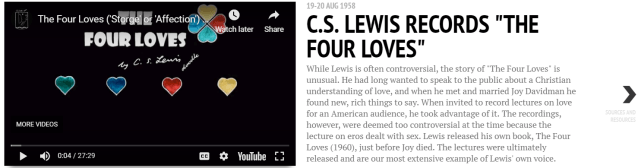
Related to Lewis and gender, in this Signum Symposium in Fall 2019, as an extension of my course “C.S. Lewis and Mythologies of Love and Sex,” I hosted a discussion on “C.S. Lewis, Gender, and The Four Loves.” I use Lewis’ lecture series and book, The Four Loves, to structure this “open class.” The book is provocative and in many ways on the mark, but also troubling and problematic to many readers. Spending time with the difficulties, I believe, can be a fruitful exercise.
[1] Stella Gibbons, “Imaginative Writing,” in Light on C.S. Lewis, ed. Jocelyn Gibb (New York: HarperCollins, 1965), 93. Gibbons also feels the character of Mrs Beaver is too stereotypical of a fussy woman, 93.
[2] Margaret Patterson Hannay, “‘Surprised by Joy’: C.S. Lewis’ Changing Attitudes Toward Women,” Mythlore 4, no. 1 (1976): 15. See also Margaret Patterson Hannay, “C.S. Lewis: Mere Misogyny?”, Daughters of Sarah 1, no. 6 (1975): 1-4; Doris T. Myers, “Brave New World: The Status of Women according to Tolkien, Lewis, and Williams,” Cimarron Review 17 (1971): 13-19.
[4] E.g., Kathryn Lindskoog, “C.S. Lewis: Reactions from Women,” Mythlore 3, no. 4 (1976): 18-20, where she challenges Barfield’s claim of misogyny directly by appealing to women’s experiences in reading and affirmational moments in Lewis’ life and writing. See also Lindskoog, Mere Christian, 20, and Lindskoog’s entries in The C.S. Lewis Readers’ Encyclopedia, ed. Jeffrey D. Schultz, and John G. West, Jr. (Grand Rapids: Zondervan, 1998) on “Sex” (429) and “Women” (429).
[5] Corbin Scott Carnell, “The Meaning of Masculine and Feminine in the Work of C.S. Lewis,” Modern British Literature 2 (1977): 153-159. Carnell’s conclusions here are part of the assumptions in his Bright Shadow, esp. 167-169, 124-127.
[6] From a Jungian perspective, see Nancy-Lou Patterson, “Guardaci Ben: The Visionary Woman in C.S. Lewis’ Chronicles of Narnia and That Hideous Strength,” Mythlore 6, no. 3 (1979): 6-10 and Mythlore 6, no. 4 (1979): 20-24; Patterson, Ransoming the Waste Land, 227-33.
[7] Responding to Dorothy L. Sayers’ question, “Are Women Human?” in Unpopular Opinions (London: Victor Gollancz, 1946), 106-116. See Karla Faust Jones, “Girls in Narnia: Hindered or Human?” Mythlore 13, no. 3 (1987): 15-19.
[8] Kath Filmer, The Fiction of C.S. Lewis: Mask and Mirror (St. Martin’s Press, 1993), 27. See also Cath Filmer-Davies, “C.S. Lewis” in The Oxford Handbook of English Literature and Theology, edited by Andrew Hass, David Jasper, and Elizabeth Jay (Oxford University Press, 2007), 655-668.
[24] Lewis, THS, 149; see Patterson, Ransoming the Waste Land, 269-270. Beyond Narnia and That Hideous Strength, Filmer is probably not alone in reading Lewis’ character Peggy in “The Shoddy Lands” as a female “embodiment of petty selfishness and greed” that taints Lewis’ spiritual vision (Film, Mask and Mirror 90).
[25] Candice Fredrick and Sam McBride, Women Among the Inklings: Gender, C.S. Lewis, J.R.R. Tolkien, and Charles Williams (London: Greenwood Press, 2001).
[26] Candice Fredrick and Sam McBride, “Battling the Woman Warrior: Females and Combat in Tolkien and Lewis,” Mythlore 35, No. 3/4 (2007): 29-42. See also Ernelle Fife, “Wise Warriors in Tolkien, Lewis, and Rowling.” Mythlore 25, nos.1-2 (2006): 147-162.
[27] Mary Stewart Van Leeuwen, “A Sword Between the Sexes: C.S. Lewis’s Long Road to Gender Equality,” Christian Scholar’s Review 36, No. 4 (2007): 392.
[30] Mary Stewart Van Leeuwen, A Sword Between the Sexes: C.S. Lewis and the Gender Debates (BrazosPress, 2010), 109-138. In a similar vein, close friend of Lewis and fellow Inkling, Owen Barfield, admitted to the New York C.S. Lewis’ Society in 1972 that on the theoretical level Lewis could very well be considered a misogynist, though he was not a misogynist in his personal life, Green and Hooper, C.S. Lewis, 213-214.
[31] The central work of this critique is in Van Leeuwen, Sword, 139-165.
[36] See in more detail Van Leeuwen, Sword, 64-70.
[37] Mary Stewart Van Leeuwen, “What Did Lewis Say, and When Did He Say It? A Reply to Adam Barkman,” Christian Scholar’s Review 36, no. 4 (Summer 2007): 439.
[40] Adam Barkman, “‘We Must Go Back to Our Bibles’: A Reply to Mary Stewart Van Leeuwen,” Christian Scholar’s Review (2007): 445.
[41] Doris T. Myers, “Lewis in Genderland,” Christian Scholar’s Review 34, no. 4 (Summer 2007): 456.
[42] Joe R. Christopher, “Gender Hierarchies and Lowerarchies: A Response to Mary Stewart Van Leeuwen and Adam Barkman,” Christian Scholar’s Review 36, no. 4 (Summer 2007): 463.
[43] Harry Lee Poe, “Lewis and the Ladies,” Christian Scholar’s Review 36, no. 4 (Summer 2007): 472.
[46] Diana Pavlac Glyer, “‘We are All Fallen Creatures and All Very Hard to Live With’: Some Thoughts on Lewis and Gender,” Christian Scholar’s Review 36, no. 4 (Summer 2007): 477.
[50] E.g., Jennifer L. Miller, “No Sex in Narnia? How Andersen’s ‘Snow Queen’ Problematizes Lewis’s Narnia,” Mythlore 28, nos. 1-2 (2009): 113-130; Emerson, “Innocence as a Super-power,” 131-147.
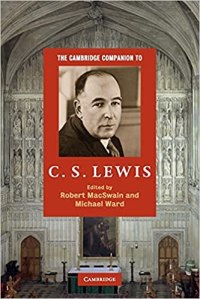
[51] Ann Loades, “On Gender,” in The Cambridge Companion to C.S. Lewis, ed. Robert MacSwain and Michael Ward (Cambridge: Cambridge University Press, 2010), 162.
[52] Ann Loades, “C.S. Lewis on Gender,” Priscilla Papers 24, no. 1 (2010): 19-20.
[53] Ibid, 168-170; Loades, “Lewis and Gender,” 20-23.
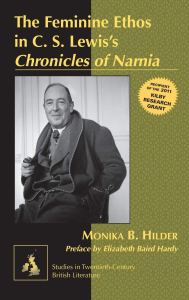
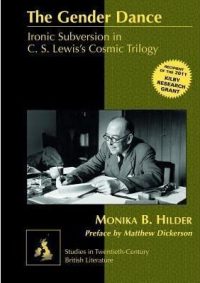
[63] Monika B. Hilder, “The Foolish Weakness in C.S. Lewis’s Cosmic Trilogy: A Feminine Heroic.” SEVEN: An Anglo-American Literary Review 19 (2002): 77–90; The Feminine Ethos in C. S. Lewis’s Chronicles of Narnia. Studies in Twentieth-Century British literature 10. New York: Peter Lang, 2012; The Gender Dance: Ironic Subversion in C. S. Lewis’s Cosmic Trilogy. Studies in Twentieth-Century British Literature 11. New York: Peter Lang, 2013; Surprised by the Feminine: A Rereading of C. S. Lewis and Gender. Studies in Twentieth-Century British Literature 12. New York: Peter Lang, 2013.
[80] Laura Lee Smith, review of Surprised by the Feminine: A Rereading of C.S. Lewis and Gender, by Monika B. Hilder, Mythlore 34, no. 1 (2015): 167.
[81] Sarah Bessey, Jesus Feminist: An Invitation to Revisit the Bible’s View of Women (Howard Books, 2013), 15.
Thanks for reading C.S. Lewis Studies Series. If you would like to support my free, open-sourced scholarship, please share your favourite pieces on social media or by email and reference material when you use it in your writing and teaching.
I believe in open access scholarship. Because of this, since 2011 I have made A Pilgrim in Narnia free with nearly 1,000 posts on faith, fiction, and fantasy. Please consider sharing my work so others can enjoy it.
Today, I want to focus on C.S. Lewis Reception Studies. “Reception Studies” is such a huge field, including approaches like reader response criticism, the new historicism, book histories (and book biographies, as we’ll see), studies of publication trends, pedagogical approaches and syllabus treatments, library and archival studies, transmedia and adaptation studies, text criticism (in the sense of versions and variants), studies of fan culture and fan fiction, genre histories, thoughts about the “intended reader,” mass media biography-making, the author’s “legacy,” and more. It’s a big field.
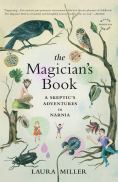
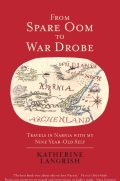
I could include, for example, books where the author writes herself into conversation with C.S. Lewis, such as Katherine Langrish‘s From Spare Oom to War Drobe: Travels in Narnia with My Nine Year-old Self (2021) or Laura Miller’s The Magician’s Book: A Skeptic’s Adventures in Narnia (2008)–two beautifully written books of personal and literary essays from two different angles. I have left them out for the simple (and I hope, forgivable) reason that I haven’t read all of Langrish’s book yet and it is a decade since I read Miller’s.
In a similar vein, there are quite a number of very engaging “encounter books,” as I call them in my mind–books where readers (and sometimes students and friends) of Lewis share their encounter stories. These narratives are widely spread through prefaces and book introductions, but my bookshelf has a number of collections of these tales:
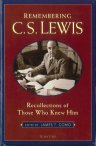
James T. Como, Remembering C.S. Lewis: Recollections of Those Who Knew Him (2005), with pieces by Leo Baker, Alan Bede Griffiths, A.C. Harwood, John Wain, Adam Fox, Gervase Mathew, Walter Hooper, Roger Lancelyn Green, George Sayer, and Austin Farrer
Mary Anne P: Inspiring Stories of Encounters with C.S. Lewis (2009), including pieces by Walter Hooper, Marjorie Lamp Mead, Randy Alcorn, Francis S. Collins, Charles Colson, Jill Briscoe, Philip Yancey, Joy Davidman, David C. Downing, Lyle W. Dorsett, Michael Ward, Anne Rice, Elton Trueblood, Jerry Root, George Gallup, Jr., Don W. King, Earl F. Palmer, and Pierce Pettis
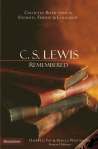
Harry Lee Poe and Rebecca Whitten Poe, C.S. Lewis Remembered: Collected Reflections of Students, Friends and Colleagues (2006), including pieces by Owen Barfield, Walter Hooper, Alistair Fowler, Peter Milward, Barbara Reynolds, Sarah Tisdall, Laurence Harwood, and Francis Warner
Stephen Schofield, In Search of C.S. Lewis (1983), with pieces by Kenneth Tynan, Eddie L. Edmonds, Jill Freud, Kathryn Lindskoog, George Sayer, H.C. Chang, Naoyuki Yagyu, Ruth Pitter, and Malcolm Muggeridge
By simply listing them or by selecting a few names, I mean no slight–only to say that these essays have been variously heart-warming and informative to me.
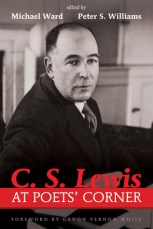
That so much work was done at around the time that the Disney adaptation of The Lion, the Witch and the Wardrobe was being released is, itself, a part of “Reception Studies.” There have been other clusters of activity, such as the years after Lewis’ death in 1963, including events I have blogged about: an obituary by John Wain, a note by J.R.R. Tolkien (in response to a memorial by George Bailey), and essay collections by George Watson, John Lawlor, and Jock Gibb. The 1998 centenniel of Lewis’ birth spurred a lot of this kind of activity, especially as Mythcon was held at Wheaton College with a particular focus on celebrating the life and letters of C.S. Lewis. Beyond this event, there were pieces like J.I. Packer’s “Still Surprised by Lewis” in Christianity Today (1998) that sought to weave together personal memories and the legacy of an author whose works still live. And, greatest of all is the flurry of activity around the 50th anniversary of Lewis’ death in 2013, including C.S. Lewis at Poets’ Corner (2016), edited by Michael Ward and Peter S. Williams and Both Sides of the Wardrobe: C. S. Lewis, Theological Imagination, and Everyday Discipleship (2015), edited by Rob Fennell (and which includes an essay by me).
As you can probably see, the list of possible books could grow dramatically. Anyone who is a specialist in this sort of work will immediately see how very limited I am in this intriguing area–though one that is outside of my knowledge, for the most part. I hope you experts will forgive me. And in exchange, I will admit that this entire post is really to highlight three works that I think are under-considered: Alan Snyder’s American Lewis historical approach (and see my note about Mark Noll), Stephanie Derrick’s recent reception study (which deserved a Mythopoeic Award nod, I think), and Sam Joeckel’s brilliant and challenging study of Lewis as a public intellectual. If you think I am missing something crucial, let me know.
Part 5: Recent and Foundational Studies on Lewis and Gender
C.S. Lewis Reception Studies (A Selection)
Edwin W. Brown, with Dan Hamilton, In Pursuit of C.S. Lewis: Adventures in Collecting his Written Works (2006).
While I have talked about my toy collection of interesting C.S. Lewis books (see here), among the master collectors of Lewis was the late Edwin W. Brown, an American doctor. He began collecting in the 1960s and was instrumental to those who built the archival collection in The Center for the Study of C.S. Lewis & Friends at Taylor University in Upland, IN. In those book-finding decades, Dr. Brown had collected multiple 1st editions of most of Lewis’ books, as well as an extensive collection of Lewis letters and two original manuscripts—a rare thing indeed. In 2006, with the help of his friend and George MacDonald editor, Dan Hamilton, Dr. Brown wrote up his experience of collecting C.S. Lewis artifacts, providing a guide for collectors and scholars. The delightful In Pursuit of C.S. Lewis is being updated by Dan Hamilton and has been useful to me as a scholar who plays in the archives. And, as I admit in this review I wrote while sick with a cold seven years ago, it was a lot of fun to read (for a book about books, I mean). Interested folks should also check out “The Disordered Image,” an image catalogue of Lewis’ books collected and maintained by Gordon Greenhill, a Lewis scholar and audiobook reader.
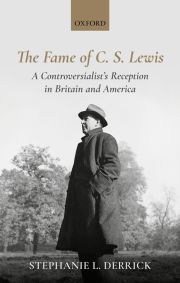
Stephanie L. Derrick, The Fame of C.S. Lewis: A Controversialist’s Reception in Britain and America (2018)
I had been anxiously waiting for this book when it finally arrived in 2018. Dr. Stephanie Derrick, while she was a Ph.D. student, was one of the people who revealed C.S. Lewis’ lost “Christmas Sermon for Pagans,” and I have used her dissertation on the reception of Lewis. While I am disappointed that The Fame of C.S. Lewis is not a little longer–hardly a terrible critique for most writers–this conversion of a thesis to a hybrid academic/popular-level book is a lot of fun to read. Based on research that many of us have no chance to undertake, Derrick keeps pressing on the question about why Lewis was so well received in the US, how he was viewed in the UK, and how his image grew globally in the 55 years since his death. Derrick’s volume is one of the more important reception studies in Inklings scholarship and, I think, deserved a space on the Mythopoeic Award shortlist.
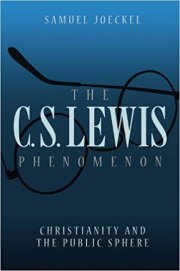
Samuel Joeckel, The C.S. Lewis Phenomenon: Christianity and the Public Sphere (2013)
The C.S. Lewis Phenomenon is one of the most important Lewis studies text that Lewis scholars fail to read. In this long, weighty study, Joeckel names the ways in which Lewis’s presentations of Christianity in both his fiction and non-fiction depend upon the conventions of the public square. There are two main arguments in this book. First, Joeckel shows the ways in which Lewis plays the role of a public intellectual–providing a great deal of material for students of Lewis’ rhetoric and communication, as well as biographers and those interested in reception studies and apologetics. Second, by conceiving of Lewis as a public intellectual, Joeckel then provides a useful meta-critical lens for exploring Lewis’ symbiotic relationship to the public sphere. Joeckel’s sophisticated and elegant argument reveals an image of Lewis as a man both in and out of his time–and provides worrisome and intriguing reflections on the Lewis industry and how Lewis has been “shaped” by journalists and readers since the beginning of his work as a public intellectual. Yes, this is a difficult book to read and quite long. However, the literary criticism is often bracing and generative, and Lewis scholars ignore it to their own intellectual poverty.
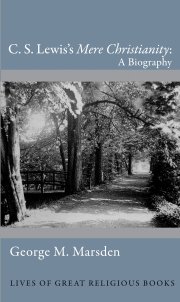
George M. Marsden, C.S. Lewis’s Mere Christianity: A Biography (2016)
Mere Christianity is no doubt C.S. Lewis’s most important Christian work, originating as a series of BBC radio talks broadcast during the dark days of WWII and becoming (probably) the most influential work of popular apologetics in the century. In this book “biography,” American historian of religion George Marsden tells the story of the extraordinary life and afterlife of this much-beloved and occasionally maligned book. Honestly, I was surprised how good this was. I know I am being fussy when I want so much more in a reception study, but I wish it was 100 pages longer. However, for what it is designed to be, Marsden’s book about a book is a pretty great, quick read. C.S. Lewis’s Mere Christianity pairs well with Justin Phillips’ C.S. Lewis at the BBC/C.S. Lewis In A Time Of War (which I reviewed here) and a series of careful papers by Bruce Johnson in the last decade.
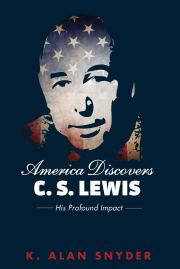
K. Alan Snyder, America Discovers C.S. Lewis: His Profound Impact (2016)
Like George Marsden, Alan Snyder is an American historian, though his work is typically focussed on political history. Drawn in by C.S. Lewis’ continuing influence in the world outside of Great Britain, Snyder turns to the question of Lewis’ particular impact on the American reading public, starting with the publication of the American version of The Screwtape Letters in 1943. As Snyder argues–supported by Derrick, who looks at the question from a different angle–Lewis has not only influenced the lives of Americans we may consider prominent, but also the multitude of individuals who have come across his works and have been deeply affected spiritually by what they read. Lewis readers are constantly telling the story of how, because of his works, they are able to drink from deeper wells or explore adventurous lands of the mind and spirit. With historical acuity, Snyder documents Lewis’ impact on Americans from Lewis’ lifetime until the last decade. In seeking to understand why Lewis was so taken up in America and why his popularity grows, Snyder takes time to consider some of the key figures who have curated Lewis’ legacy, including Chad Walsh and Walter Hooper (see Walsh below, and you can see my own note about Hooper here). Alan is an active blogger, and you can see his work at Pondering Principles.
Snyder’s study has ongoing relevance, as we see in Derrick’s work, but also in a brand new essay by American religious historian Mark Noll, “C. S. Lewis in America, 1933-1947,” an extremely focussed and detailed study in the 2021 gedenkschrift, The Undiscovered C. S. Lewis, edited by Bruce R. Johnson (with thanks to Mark for allerting me of the essay some years ago and sharing the spreadsheet behind the essay while doing my research).
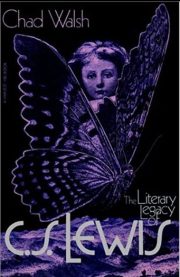
Chad Walsh, The Literary Legacy of C.S. Lewis (1979)
As almost everyone has argued, Chad Walsh is pretty critical to the reception of Lewis in the Americas. One of the earliest biographers, a thoughtful critic of his poetry and fiction, and the man who helped introduce Joy Davidman to Lewis’ works, Walsh opened up possibilities for Lewis readers through decades of writing and speaking. Walsh’s major biographical study, C.S. Lewis: Apostle to the Skeptics (1974), is a must-read prequel to his broad consideration of Lewis’ “Literary Legacy.” Walsh works to bring together Lewis the Christian apologist and Lewis the writer of science fiction and fantasy in a unified whole. As a legacy piece, this work is quite datad. And yet, Walsh’s ability to draw out critical moments of Lewis’ poetry, fiction, and criticism highlight his dynamic originality. Well-written and thoughtful, this is the first major critical study to examine Lewis’ work as the creation of a single unique mind, and pairs well with Owen Barfield On C.S. Lewis (particularly the “5 C.S. Lewises” essay). As the study is long out of print and hard to find, The Literary Legacy of C.S. Lewis is helpfully reprinted in the C. S. Lewis Secondary Studies Series, edited by William Griffin for Wipf and Stock.
Thanks for reading these mini-reviews and bibliographies. If you have literary studies from 2011-2020 that you think I am missing, let me know. The next piece will include some “Lewis and Gender” studies. You can see the three articles composed of a dozen reasons why I think that Lewis scholarship (as a whole) is not as strong as Tolkien scholarship (as a whole):
I believe in open access scholarship. Because of this, since 2011 I have made A Pilgrim in Narnia free with nearly 1,000 posts on faith, fiction, and fantasy. Please consider sharing my work so others can enjoy it.
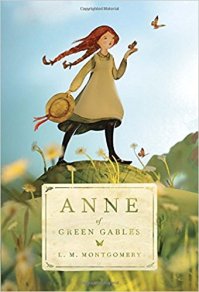
It is a gorgeous fall day here in Prince Edward Island on this first day of October. Our autumns usually begin about the third week of August, which makes for a heart-breakingly short summer for Islanders–and for visitors from around the world who want to see our fair province, the Land of Anne, the Garden of the Gulf, Birthplace of Confederation, Epekwitk, a land cradled in the waves, Abegweit, land of the red soil.
It’s true, we do have brilliant summers. But if you can account for some dynamic weather, the autumnal hues, quiet shops, and cool nights make PEI a great fall destination. Often enough, we have a garden-gate summer in September, with a week or so of warm temperatures and white-cloudy blue skies, occasionally interrupted by a bright sun shower. And Octobers! With apples ready for picking and leaves bursting into flame-light, an October drive down our red-clay roads or hike in our creek-side trails is a brilliant experience.
It is no wonder that Anne Shirley, alive with wonder at the beauty and love of her newfound Green Gables home, cannot help but leave us with an exclamation for the ages:
October was a beautiful month at Green Gables, when the birches in the hollow turned as golden as sunshine and the maples behind the orchard were royal crimson and the wild cherry trees along the lane put on the loveliest shades of dark red and bronzy green, while the fields sunned themselves in aftermaths.
Anne revelled in the world of colour about her.
“Oh, Marilla,” she exclaimed one Saturday morning, coming dancing in with her arms full of gorgeous boughs, “I’m so glad I live in a world where there are Octobers. It would be terrible if we just skipped from September to November, wouldn’t it? Look at these maple branches. Don’t they give you a thrill—several thrills? I’m going to decorate my room with them.”
“Messy things,” said Marilla, whose aesthetic sense was not noticeably developed. “You clutter up your room entirely too much with out-of-doors stuff, Anne. Bedrooms were made to sleep in.”
“Oh, and dream in too, Marilla. And you know one can dream so much better in a room where there are pretty things. I’m going to put these boughs in the old blue jug and set them on my table” (Anne of Green Gables, ch. 16).
“I’m so glad I live in a world where there are Octobers,” Anne cries out, thrilled with her world. I am glad too, and wanted to wish you the best this month, dear reader.
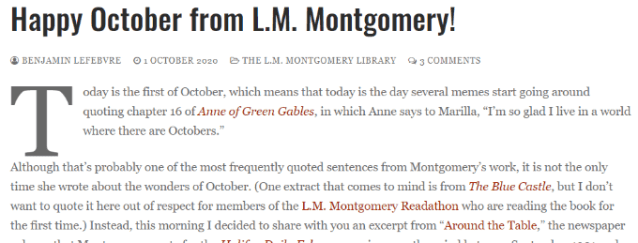
And in doing so, I thought I would invite you to visit Benjamin Lefebvre’s blog post, “Happy October from L.M. Montgomery!” Ben fills out Anne’s declaration with a youthful note from Montgomery the newspaperwoman a few years before Anne found her to the page. This is also an excuse to introduce Anne lovers and Montgomery fans to Ben’s work as a curator of Montgomery’s work and legacy. His L.M. Montgomery Online website is an unusually complete bibliographic resource for Montgomery studies. Among other resources, he includes biographical links as well as an invitation to the L.M. Montgomery Readathon (which I referenced in my Emily of New Moon Round Table post and you can find on Facebook). Among other projects, Ben is the editor of the three-volume L.M. Montgomery Reader and The L.M. Montgomery Library, which includes, thus far a poetry collection (A World of Songs), the nonfiction collection A Name for Herself referenced in his October blog, and an upcoming story collection.
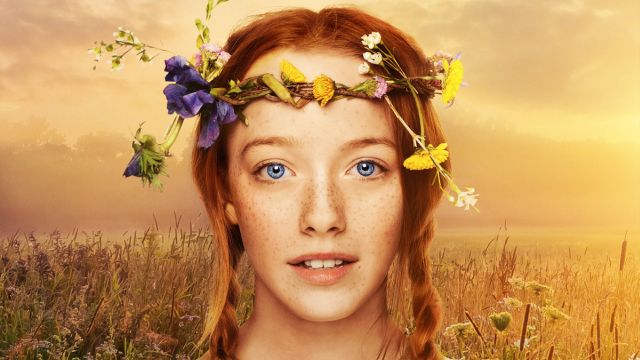
I hope you enjoy Ben’s work, including the lovely autumn Anne photo above.
To read further, click here. You can find the L.M. Readathon here. Also, there are some other cool Montgomery resources, including the L.M. Montgomery Literary Society. They are much deeper than their Facebook page, but if you head there you can find a lovely September quotation from Emily Climbs, the novel we are reading in the Readathon right now.
I have enjoyed two of the major Anne film projects: the Kevin Sullivan Anne miniseries of the mid-1980s, starring Megan Follows (who I admit is still kind of “Anne” in my imagination), and the CBC-Netflix Anne With an E serial. So I am disappointed that I cannot recall this Anne quote on screen that I could share with you all (or on the two major stage projects, Anne of Green Gables: The Musical at the Confederation Centre of the Arts, or Anne & Gilbert at the Guild). Oh well, here is an opportunity for the next adaptation in the years ahead. Meanwhile, Happy October!
I believe in open access scholarship. Because of this, since 2011 I have made A Pilgrim in Narnia free with nearly 1,000 posts on faith, fiction, and fantasy. Please consider sharing my work so others can enjoy it.


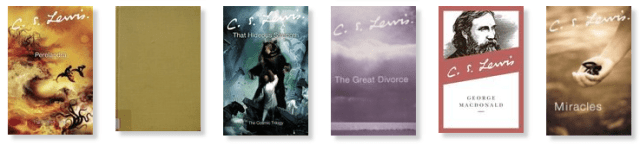 I have done some background posts over the years, like the chronological reading project, thoughts about the Problem of Susan debate, the “How to Read All of C.S. Lewis’ Essays” post, and some bibliographies, reviews, and resource lists from time to time. But I was provoked in the springtime by the Tolkien studies sweep of the Mythopoeic awards nomination list to think about what might be at the root of what I perceived as a difference between Lewis studies and Tolkien studies projects. In doing this, a reader challenged me to acknowledge where I thought the strengths were in Lewis studies. Thus, I began the “Good C.S. Lewis Studies Books That Did Not Win the Mythopoeic Award” series. With its gangly name and my own pivot away from my PhD to other projects, the series has grown and changed.
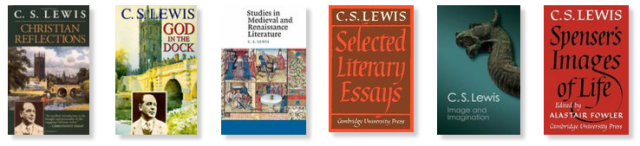 I want to provide resources to Lewis readers, stimulate new and better scholarship, challenge scholars and historians who dialogue with Lewis to deepen their work, and give emerging scholars a footing. And I want to share some of my PhD discoveries that will never otherwise find their way to print. Therefore, I am shifting the focus a bit. With “The C.S. Lewis Studies Series,” I am opening the door to a greater variety of resources pieces that I and others can provide to readers. This will also allow me to rebrand some of the previous articles and posts to provide an easy-to-find research guide for scholars, essayists, period historians and biographers, pastors and teachers, and avid Lewis readers.
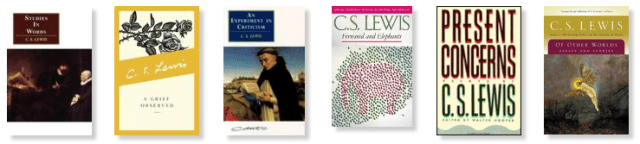 Guides for C.S. Lewis Researchers
 Pieces on Lewis and Reading Books He Thought Important
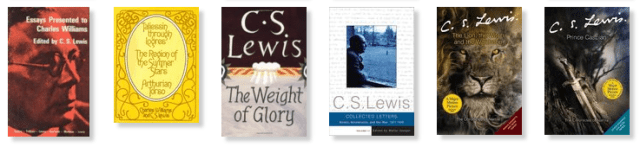 C.S. Lewis Studies Literature Reviews
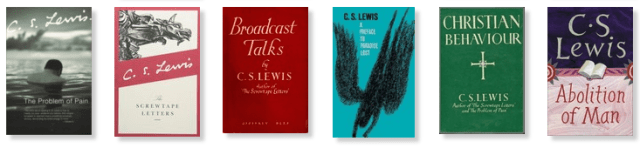 Scholarly Lewis Studies Reviews and Review Essays
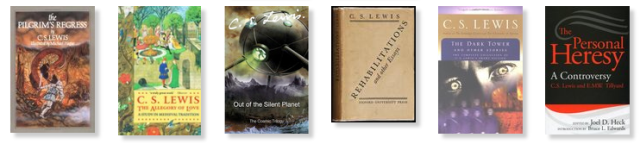 Resources for Archival Research
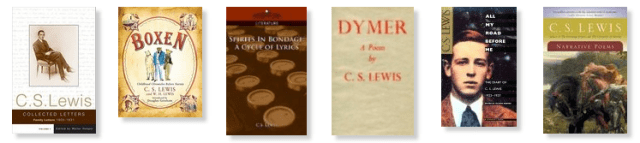 How Can You Get Involved? (Volunteer Opportunities and Call for Posts)
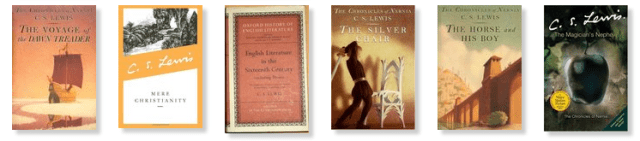 Or you may want to write a new guest post for The C.S. Lewis Studies Series. There are many areas where I am simply not able to guide readers and researchers. Here are some ideas for guest posts:







 A Pilgrim in Narnia