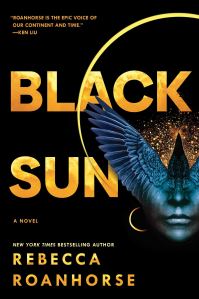
A Time to Listen: Rebecca Roanhorse’s Astonishing Novel Black Sun (Blogging the Hugos 2021)

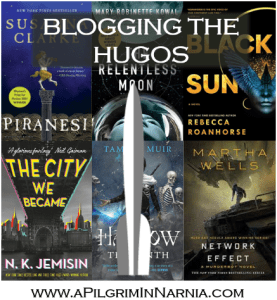
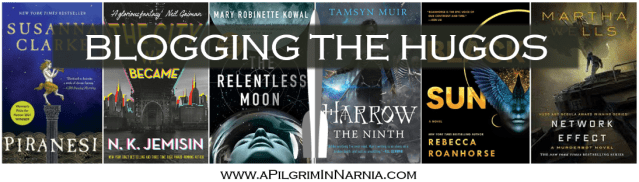
As part of my “Blogging the Hugos” series, I have just finished Black Sun by Rebecca Roanhorse. Normally as I am reading a book, a theme or image or idea emerges that gives me a chance to write a review that goes beyond “here’s the story, the good, and the bad.” I do have a lot of feelings about this complex and beautifully crafted novel. I am astonished, I think—“stunned” (in the medieval sense of the word) to silence by the images and characters and world-building. Or maybe I am “thunderstruck” (in the Latin sense of the word), wary of the storm’s approach, the threat in Thor’s din, though it is the flood of story and lightning flash of idea that should be my real concern.

Whatever the case, I am unsettled, and realize that I am unsure what to say about Black Sun, the Hugo-, Nebula-, and Locus-Award nominated first novel by Rebecca Roanhorse, a New Mexico writer of Indigenous and African American descent.

Black Sun is a story of convergence. For more than three centuries, the warring peoples of the Meridian have maintained a tentative peace following a period of fratricidal and tribal bloodshed. To end the wars, clan leaders agree to a suppression of local worship—a limitation of the local gods who were felt to be connected to the rising powers that nearly led to the wasting of their cultures. Superstitions continue, local cults thrive in underground communities, and magic still lives in the hearts of healers, witches, sorcerers, and counsellors. However, public religious power is now in the hands of “the Watchers,” a moderate religious society led by the Sun Priest and various orders in the Celestial Tower at the heart of the mammoth and diverse city of Tova.

Through the years, the clans continue to lead their communities, named for the (somewhat mythical) animals who live with them in kinship, such as the Winged Serpent, the Golden Eagle, Water Strider, and Carrion Crow. Doubtless there are other great clans, as there are other peoples on the edge of our tale, like the mountainous Obregi and the matriarchal Teek. And there are the clanless ones, the gutter trash and outcasts of the “Dry Earth.” Clashes of clan leaders are always possible, but the matrons, patrons, priests, community leaders, and crime bosses share some interest in keeping this tentative peace in Tova and across the Meridian.

Haunting the imagination of this civilization is the “Night of Knives,” a ruthless slaughter a generation earlier, where the Priest of Knives led a holy war against Carrion Crow clan in a desire to drive out the worship of the ancient gods that feel would threaten the peace. It was this act of violence, a tribal cleansing, that has ironically destabilized the peace. Clan members never forget the moment–the horror, the sacrilege, the devastation. A cult has grown up among the peoples, popular and well-armed, waiting for a moment of prophetic alignment to launch their rebellion.

Within Black Sun is an intricately designed imaginative world, and a cultural moment rife for adventure. Where Roanhorse excels as a storyteller in is the characters that embody (and are embodied by) her world.

This story, the first of the Between Earth and Sky series, introduces several separate character paths that move together towards “Convergence”—a solar eclipse that occurs on winter solstice, creating darkness on the darkest day of the year. Narampa has ascended from the Dry Earth slums to the mantle of the Sun Priest within a class-conscious hierarchy, and must negotiate her political space between factions that seek power and those that desire peace. Okoa has been schooled in the arts of war and peace, and upon his mother’s suspicious death, he must apply his trade to a complex game of statecraft. Serapio, a manifestation of the Crow God, has completed his training in magic, mysticism, and martial arts, and is moving toward Tova for his predestined moment. And Xiala, a Teek woman made up of myth and a sailor’s sense of danger, finds herself alienated from home and drawn to Tova as an unwilling witness to the Black Sun.

I have had since childhood a fascination with Mesoamerican cultures, particularly the Aztecs and, later, the Mayans, so Roanhorse’s reliance on Mesoamerican indigenous myth and legend at the heart of her fiction was deeply attractive to me. But it was actually the way that Audible curated Black Sun that convinced me to purchase the audiobook—long before I decided to do a series on this year’s Hugo-nominated novels.

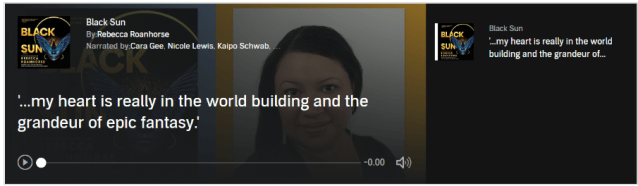
Black Sun popped upon on my suggested reading list, and was featured strongly as an Editor’s choice book. I happened to click through, and began listening to a short interview with the author. I loved that the audiobook producers had consulted with the author and that it was an unabridged cast production performed by voice actors who are indigenous or people of colour (starring Cara Gee, Nicole Lewis, Kaipo Schwab, Shaun Taylor-Corbett). But what caught me—what made me want to read the story—was Roanhorse’s drive to write:

“I have always wanted to write a big, sprawling epic fantasy. These were really my favourite books growing up….  My heart is really in … the world-building and the grandeur of epic fantasy.”

That I get, if nothing else.
And the Meridian is a world-builder’s dream. I am envious of what Roanhorse has done to bring together into a living space such dynamic elements as political intrigue, religion and ritual, mythology and legend, language and scripture, invented history, landscape, seascape, and mountain terrain. There, in Roanhorse’s Meridian world, the characters live brightly. They grow both in our imagination and in their own challenges and adventures. Elegantly, and with a deft literary hand, Roanhorse elevates a stock tool of adventure stories—the converging paths—to become the central guiding image and critical plot structure.

I am astonished at how much is well done in this novel.

But I am also storm wary, disturbed, thunderstruck.

First, this is a very difficult novel in which to orient oneself—at least for me. I read the first chapter a number of times, and could not find my way to understanding it. I finally decided to treat it like a prologue, trusting that I would get there eventually. Ultimately, I turned to the well-produced audiobook to carry me into that world. Returning to the visually disturbing childhood story at the end of the tale made a number of things connect for me, but cannot take away the terror I feel in Serapio’s vision.

Second, I am unsettled by the ending. You have to admire an author that leaves me desperate to read what comes next—and it is perhaps my own disappointment speaking when I say that the second part of the story, Fevered Star, will be not be out until the springtime. In epic fantasy, there is a subtle craft to resolving the opening tale in a way that satisfies the first-time reader and also prepares the character and the world for the trilogy (or a tetradecology, in the case of Wheel of Time). Black Sun feel unresolved, like one thing more was needed.

And, third, I am unsettled about the moral vision of the story. This is a story where the author is doing something to us, I think. Epic fantasy is a genre primed for readerly discoveries, and this story never clangs with the discordant misuse of allegory or soapboxism. It is a bit tinny in moments where the author is attempting to challenge a reader’s built-in expectations, but that is perhaps to be expected as Roanhorse is not simply building a world or telling a story but shaping a diction for a new vision for world-building and storytelling. It is a moralistic age, and for the most part Roanhorse does this well.

But, in what is clearly a tale of moral expectation, I am unsettled about where the reader is to discern the measurement of moral value. It would be a mistake, I think, to attempt to align Roanhorse (or the text’s expectation) solely with any one of the main points of view in the novel—especially when considering the contexts into which Roanhorse is sharing her stories.

So I remain unsettled. This complexity of form, lack of resolution, and mercurial moral vision that I know is calling me somewhere … what am I to make of it all?

It may be that Black Sun is a work of genius beyond my imaginative capacity. It would not be the first great work that has passed me by.

It may be that Rebecca Roanhorse, clearly a skilled poet and master world-builder, still has more to learn in crafting epic fantasy.

Or it may be that, given my education and culture and self-curated love of literature, I am primed for certain story virtues—expectation, resolution, and foundation—that indigenous writers have some reason to challenge. Perhaps I should be unsettled. Perhaps astonishment is the right response to such a tale.

Blogging the Hugos 2021 (Tentative Schedule)

Posted in Blogging the Hugos, Fictional Worlds, News & Links, Reviews | Tagged , , , , , , , , , , | 12 Comments

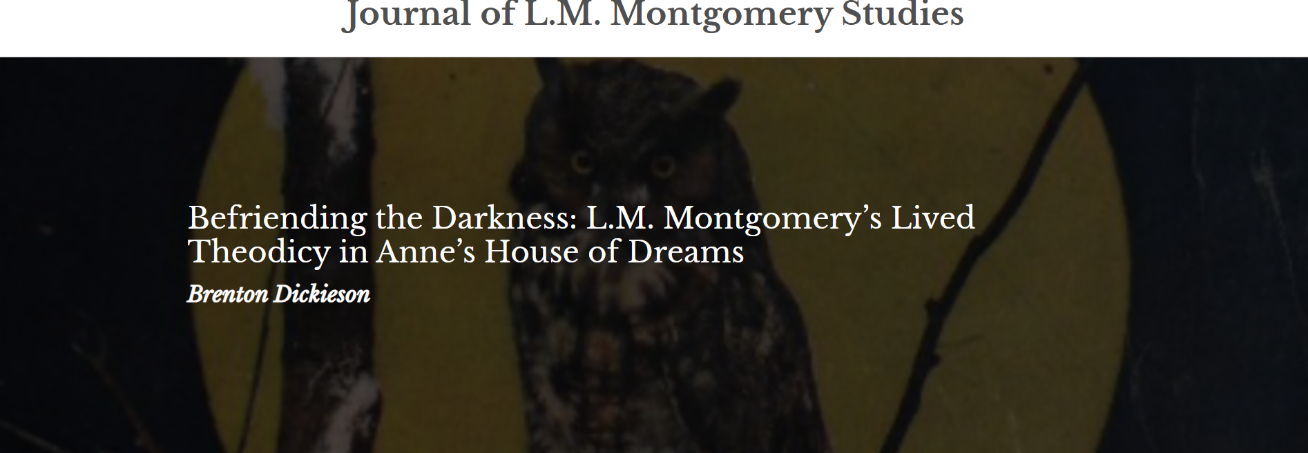
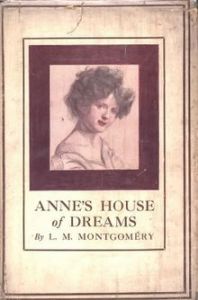
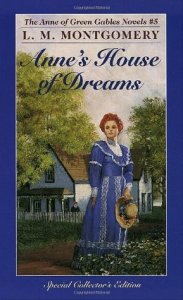
“Befriending the Darkness, L.M. Montgomery’s Lived Theodicy in Anne’s House of Dreams” My New Paper Published in the Journal of L.M. Montgomery Studies

I am pleased to announce that my essay, “Befriending the Darkness, L.M. Montgomery’s Lived Theodicy in Anne’s House of Dreams,” has been recently published in the Journal of L.M. Montgomery Studies! Here is a bit of my story about how this paper came about.

It started first as a proposal as an academic conference paper. Since the early 1990s, the L.M. Montgomery Institute (LMMI) has encouraged researchers from around the world to share their work at its biennial interdisciplinary conferences here in Prince Edward Island. In 2020, our theme was “L.M. Montgomery and “Vision,” and in my research, I had been thinking about themes of image, colour, light, and distance–particularly in the trio of “Four Winds” books Montgomery wrote during and after WWI. After months of research, I felt like I had found something worth talking about.

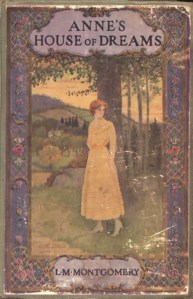
In reading and rereading the story of Anne’s early married life in Four Winds Harbour, Anne’s House of Dreams, I began to discern within the story a rather sophisticated approach to darkness and trouble. Written in one of Montgomery’s most intense moments of worry and loss, Anne’s House of Dreams seems to have the most sophisticated mix of lovely and terrible moments, of light and darkness, of hope and horror–at least of the Anne novels. And yet, Montgomery never seems to negate either the value of good, beautiful things or of the heart-rending difficult moments of suffering. Because Epperly’s Fragrance of Sweet-Grass is such an influential text, I wanted to dialogue with her thesis about Anne’s House of Dreams, where she argues that “all things harmonize” in this text. Her metaphor of “harmony” works well as a tool for analysis, but I wanted to trouble it a little bit. Can light and darkness ever really harmonize? Or is something going on in the core experiences of the characters and Montgomery’s consideration of how such pain and suffering can exist in a providential world?

This paper was my attempt to play with these questions.

The biennial LMMI conferences have a rigorous review process, and I pitched a paper for the June 2020 conference in the summer of 2019. This was all happening just as my first Montgomery paper was being published, “C.S. Lewis’s Theory of Sehnsucht as a Tool for Theorizing L.M. Montgomery’s Experience of ‘The Flash”–a paper I presented at the 2018 Frances White Ewbank Colloquium on C.S. Lewis & Friends at Taylor University and published by Joe Ricke and Ashley Chu in The Faithful Imagination (Winged Lion Press, 2019). My next piece, “Rainbow Valley as Embodied Heaven: Initial Explorations into L.M. Montgomery’s Spirituality in Fiction,” was a paper I presented at the 2018 conference and had been recently accepted for the Journal of L.M. Montgomery Studies (and has since been published, see here).

I was been feeling positive about my Montgomery work and making plans for the future.

My paper was accepted for the 2020 conference, but even assure futures are notoriously difficult things to predict.

In the spring of 2020, COVID-19 sent everything into disarray, and the Montgomery and Vision conference decided to go virtual. LMMI leaders used that L.M. Montgomery and Vision Forum to highlight some key moments of research and artistry (which you can find archived here), and we used the Forum to launch the MaudCast, the official podcast of the L.M. Montgomery Institute, which I am pleased to host. When the conference went virtual, I pivoted my work to MaudCast interviews. But scholars in graduate school or just completing a PhD–I defended my thesis just two weeks after submitting my paper proposal–were invited to write their papers as full essays and submit them to the 2020 Elizabeth R. Epperly Award for Outstanding Early Career Paper.

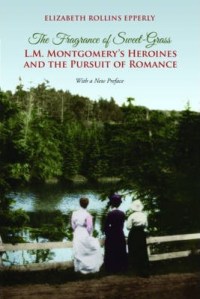
Dr. Elizabeth R. Epperly is a leading L.M. Montgomery and Victorian literature scholar. She was critical to the founding of the L.M. Montgomery Institute, and continues to serve the Montgomery community as a mentor and scholar. Her monograph, The Fragrance of Sweet-Grass: L.M. Montgomery’s Heroines and the Pursuit of Romance (1992; 2014), is a foundational text, probably the first literary-critical monograph on Montgomery and essential to the development of the discipline of Montgomery studies. I consider Betsy Epperly to be a mentor, and would hope one day to have a book that, like her Frangrance of Sweet-Grass, is both beautifully written and thoughtful literary criticism.

Feeling like my idea had merit, I took a four-day writing retreat in June 2020 to write the essay and spent much of summer 2020 revising it. When the award deadline came, I was able to submit “Making Friends with the Darkness: L.M. Montgomery’s Popular Theodicy in Anne’s House of Dreams”–a bit tentatively, as it was a difficult and complex work, but feeling like I was ready for some feedback. One phrase, in particular, continued to resonate in me. I was reflecting upon how a main character, the lighthouse keeper Captain Jim, acts morally when confronted with evil–standing up against that wrong action and working to rectify it. But he also tells the story of the encounter, and I came to see that Montgomery was using storytelling in the novel as a practical response to evil in a world we cannot always understand. I concluded one section of the piece with these words.

“For the story is important to tell as a way of concluding a moral action; telling stories is one of the things we do in the face of evil we cannot understand.”

In fall 2020, a panel of LMMI judges met, adjudicating strong papers from six countries on three continents (check out the details here). Ultimately, I was thrilled to hear that my paper on light, darkness, and storytelling won the 2020 Elizabeth R. Epperly Award for Outstanding Early Career Paper for my paper. While the award is prestigious–a major award, one might imagine–I was most deeply encouraged by the comments, which included these sorts of notes:

  • “This paper related to the theme of vision through its exploration of the significance of darkness and light in Montgomery’s Anne’s House of Dreams. The author made a notable effort to engage with a substantial corpus of Montgomery scholarship and positioned the essay in dialogue with Elizabeth Epperly’s ideas in particular.”
  • “Beautifully written, scholarly informed reflection on Anne’s House of Dreams drawing on a tension central to Montgomery between darkness and light.”
  • “The argument flows nicely…asking pertinent and engaging questions along the way.”
  • “Beautifully argued, a unique reading of Anne’s House of Dreams with a nicely contextualized final argument/conclusions that invite comment and conversation going forward – just what an essay like this should do!”

Besides getting thoughtful feedback–and for those who don’t know, quality feedback for scholars and writers is all too rare–winning the Epperly Award also gave me a pathway toward publication in the Journal of L.M. Montgomery Studiesnot only the leading journal of the field, but one that is both open-sourced and editorially effective.

What began was a series of rewrites and revisions that–while harrowing in the midst of the process, as I admit here–resulted in a stronger essay than I could have imagined. I was attempting a complex experiment in theology and literature. I wanted to take a non-academic, popular writer and demonstrate that her intensely personal novel reveals a sophisticated use of imagery that provides a philosophically satisfying response to one of life’s most difficult questions.

In reading this experimental piece, the peer reviewers and committee members provided overwhelmingly helpful encouragement, guidance, and critique. I have already noted the award committee feedback, but I was surprised by how helpful the peer review critiques were, pushing me to define my terms more clearly and to work harder at drawing the reader into the conversation. At each stage, journal editors Lesley Clement and Tara K. Parmiter provided insightful comments and incisive critiques, allowing each draft to be stronger and clearer than the one before. Even the copy editor, Jane Ledwell, did more than simply perfect the grammar, but as a Montgomery reader, artist, and scholar, also provided topic-sensitive clarifications at critical points. Each of these readers provided an unusual amount of critique to make what is, I think, a far stronger essay.

And now it is available free globally on the Journal website as “Befriending the Darkness: L.M. Montgomery’s Lived Theodicy in Anne’s House of Dreams.” Here is a longer abstract of the paper for those interested:

Abstract: Upon completing Anne’s House of Dreams in 1916, Montgomery recorded in her journal that she had never written “amid so much strain of mind and body” (193). Caught between the pressures of life, Montgomery admitted that WWI was “slowly killing” her (185)—a war bound up for Montgomery with the agony of the loss of her second son. What Elizabeth Epperly calls Montgomery’s “most unselfconsciously philosophic” novel (The Fragrance of Sweet-Grass 75), Anne’s House of Dreams delves into painful issues of loss, suicide, bad marriages, ill-timed love, poverty, and the beautiful-terrible consequences of duty. The result is a complex and nuanced consideration of life faithfully lived as it excels in the “effects of light and shadow,” allowing for both “joy and sorrow” (Anne’s House of Dreams 84, 93).

As a novel filled with biblical and poetic references to the nature of life, and as a story unwilling to look away from difficult themes, readers are left with the assurance that “Everything works together for good” (Anne’s House of Dreams 16; see Rom 8:28). In dialogue with Epperly’s treatment—both accepting the basic argument but interrogating the metaphor of “harmony” in order to generate new analysis—this paper considers Anne’s House of Dreams as a lived theodicy. “There’s something in the world amiss,” Anne admits, quoting Tennyson, but it is unclear whether it will be fully “unriddled by and by” (162). Instead, with Leslie, there is some beauty to “the struggle—and the crash—and the noise” of life (64). Montgomery offers a complex and conflicted defence of goodness, which is a lived theodicy where readers are invited to make friends with the darkness in order to see the light.

My paper is the second publication for the L.M. Montgomery & Vision collection that came out of our 2020 virtual conference, and I look forward to seeing a series of projects emerge on this theme. For those who also want to think more dynamically about the paper and the process of writing, I am still thinking about how I would like to create some sort of visual invitation to the piece. I find film work to be a long and fruitful process, but one that requires a lot of creative mental space (which I don’t have right now!). Perhaps that will come in the weeks ahead.

However, at the close of Season 1 of the MaudCast, I had the chance to sit down with Bonnie Tulloch, a Canadian PhD researcher. Bonnie won the 2018 Epperly award for her paper “Canadian “Anne-Girl[s]”: Literary Descendents of Montgomery’s Redheaded Heroine.” What was intended to be a conversation primarily about Bonnie’s work soon became something else. We did have a great chat about the “Anne-girl” figure in Canadian literature, as well as other cool literary topics. However, in collusion with the LMMI, Bonnie soon “flipped the microphone,” taking over the podcast to interview me about my paper. I think it is a conversation that readers would enjoy.

Once again, I would like to give my thanks to all involved: Lesley and Tara as tireless editors, Jane for life-giving precision, the anonymous peer-reviewers for committing time to make this a better piece, Bonnie for the conversation and encouragement along the way, and Betsy Epperly, Emily Woster, and Kate Scarth as adjudicators with Bonnie. As the L.M. Montgomery Chair at UPEI, Kate has also provided ceaseless encouragement and support, for which I am grateful. Behind the scenes at the Journal and the LMMI are dozens of committed volunteers, supporters, and student workers who make all of this possible. Thank you to the Becks for providing me a space to write a difficult piece in the perfect place: right next to Prince Edward Island’s stormy shoreline. And, as always, to Kerry who teaches me so much.

Posted in News & Links, Original Research, The MaudCast | Tagged , , , , , , , , | 10 Comments

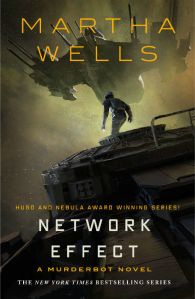
Sarcastabots, The Wall-E Effect, and Finding the Human in Martha Wells’ Network Effect (Blogging the Hugos 2021)
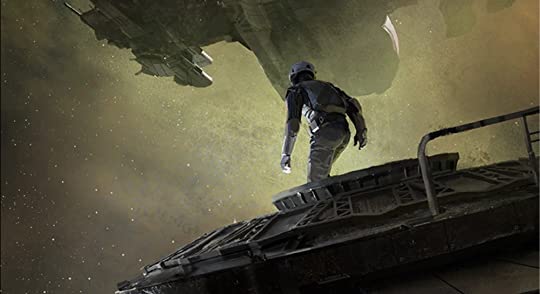
In the googolplex of science fiction genres, is there a category called “sarcastatech?” My spelling bot wants to say “no” to this question, using a “no results found” notification. It is how spelling bots talk, after all, in their (ironically) limited vocabulary. And that is about the extent of my interest in the life of digital entities in our midst–at least until the Robot Apocalypse finally comes. Still, Martha Wells’ Hugo Award-nominated novel, Network Effect, not only kept my interest in the midst of its technically precise AI details, but drew me into the story through its android protagonist SecUnit 1, also known as Murderbot.

Except for some of Octavia E. Butler’s science fiction stories and an affinity for classic hard sf writers like Arthur C. Clarke and Larry Niven (when they are at their best), I don’t tend to read very technical science fiction. It’s true that I love some tech-laced cyberpunk—in a precursor form with writers like Roger Zelazny, J. G. Ballard, and Philip K. Dick (with the screen adaptations), in its mastery with William Gibson’s 1984 Neuromancer and his gang of visually dynamic storytellers, or in a post-cyberpunk pop form like The Matrix films or new directions like Charles Stross’ Accelerando. I suppose Dune has a sophisticated scientific and political structure in its way, and I enjoyed Mary Robinette Kowal Lady Astronaut books. But “hard” SciFi is for me the exception, not the rule. In my forays into the youth-oriented Enderverse or the pop culture hits and misses of Ready Player One and Two (mostly hits), I allow a bit of mental blurring when it gets precise.

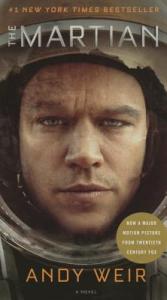
So it was a surprise to me how much I enjoyed Andy Weir’s The Martian, which read to me like deeply technical “Escape Room” work outing … in space—and where only one of your office mates survives. As a crowd-sourced novel, I found myself trusting its science, walking with our stranded earthling (who is Matt Damon in my mind, though I’ve never seen the film) as he tries to hitchhike from Mars. I ended up discovering beauty in the details of math and physics, even as they evaded me. The humour in The Martian sets off the technical aspects well, though my interest speaks volumes to Weir’s ability to visualize for readers what happens when we leap from algorithms to space-time reality.

As I found my mind wandering in some of the comp sci bits of Network Effect, I realized then that in drawing me in to a technical sf novel, Weir had done an unusual thing—for me, at least. And as I sped past the comp sci bits in this recent Hugo novel nominee by Martha Wells, I also realized how invested I was in SecUnit’s personal story.

SecUnit is a high functioning android who, with the help of a friend—the AI system of a space research vessel, ART—is able to hack the corporate governor on his system. This AI abolitionism liberates SecUnit to seek his own contracts in a universe where there are no sentience rights for non-humans. SecUnit’s primary contract when we meet him is an important political figure in an anti-corporate colony. She creates the contract with SecUnit to protect her and her family—a protection that she dearly needs in a world of interstellar corporate warfare. The contract is indentured servitude on paper, but it operates as a legal way for SecUnit to control his destiny. Through a number of tense encounters in the stories that open this novel—as well as some that precede and follow Network Effect in the Murderbot series—SecUnit develops an emotional attachment to what he calls “my humans.”

Network Effect is an action-packed space adventure with a strong detective discovery story at the centre, and will no doubt film well. However, setting aside a rather weak anti-corporate moralism and the relatively well-executed “Bam! Pow” action scenes, what I think is critical to the novel is SecUnit’s self-discovery. Murderbot is awakening not merely to his own capacity for emotional connection, but also to the symbiosis of friendship and loyalty that cuts through his spirited cynicism.

It is so embarrassing to be an AI humanoid in personal self-discovery, after all.

The self-discovery—ironically, the human discovery—that I think is at the heart of SecUnit’s journey is no less poignant for his particular brand of sarcasm. Sarcastabots we have seen, from Marvin of The Hitchhiker’s Guide to the Galaxy—perfectly captured by the late Alan Rickman in the less-than-perfect film—to Bender of Futurama. My childhood memories of Johnny 5 gave me a baseline for the potential levels of snark that robots might have in a world of human relations. Sarcastabots are brilliant comic relief, working like court jesters to reveal truth in stark reality.

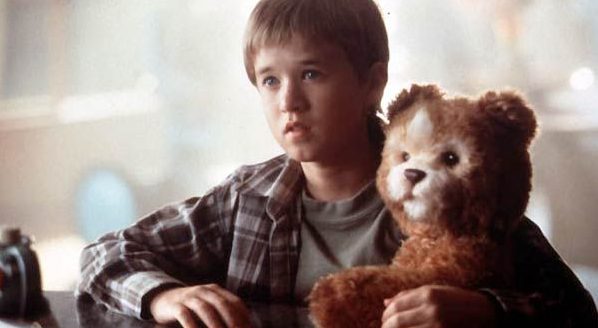
But it is not the humour that comes front to mind when I think of my past robot friends. The Transformers of my childhood were hardly masters of subtlety. But there was pathos there, especially in the perfect and terrible 1986 cult classic, The Transformers: The Movie. Supertoys last all summer long, I have heard: perhaps even longer when they find their way to film. I cannot imagine what a film adaptation of Brian Aldiss’ classic story would have looked like if Stanley Kubrick had finished it, but Steven Spielberg’s 2001 A.I.: Artificial Intelligence succeeded in showing the emotional capacity of androids in meaningful ways. Even if the boy-android David Swinton struggles in becoming an actualized human, emotionally speaking, Gigolo Joe it turns out to have more than one optimal function.

It works on screen, and it works on us as viewers. Even when hidden from sight, I can feel the emotional capacity of our firmware. I have echoes of “Danger, Will Robinson!” and “I’m sorry Dave, I’m afraid I cannot do that” in my mind’s heart.

And so, while sarcastabots have their place in giving us a simle, I am far more immediately drawn to emotions that run deeper than humour. Thus, when I think about AI and emotional capacity, I come to think that the true creator’s genius is not in getting robots and androids and spaceships to feel things on the page and on screen, but in getting us, the reader and viewer, to feel with them.

Though it is unfair of me to name it after such a late-comer to our storied worlds, in my mind I call this “The Wall-E Effect.” The Wall-E Effect is the visualization of the human-connected robot, captured on screen or in print in its simple, hopeful emotional reactions to its master, charge, or friend. These most tender and least sophisticated of AI emotional responses both create the moral baseline for the world of the story and draw us as viewer-readers into that storied world. Our reaction appears to us as emotional as our hearts connect to the on-screen bot, but it really is an emotional commitment that that has moral implications.

This I call the Wall-E Effect.

To call it the Wall-E Effect is radically inappropriate not simply because it is a relatively late film, but because the Wall-E Effect is rooted so deeply in our human experience. We can see it in our childhood delight in teddy bears and castaway socks as they rise to life, animated in bedtime stories—an effect that Spielberg utilizes so well in the character of Teddy in A.I. The Wall-E Effect is why I speak to my cat—indeed, why cats and dogs have evolved with humans, shaping us as animators as we have animated them. Perhaps this effect is only the grand Gestalt effect of human psychology, an evolutionary necessity that our storytelling brains draw into our everyday lives. Or perhaps it is because we are the sons of Adam and the daughters of Eve, each namers of the garden’s life and mothers of creation. Are we world-makers not all Pygmalion falling in love with the creatures of our minds and hands? Are we not little makers, subcreators who breathe life into the clay?

We see it in the stories we make, don’t we? In Star Wars, think of R2D2 rolling the eyes he doesn’t have, his rugged loyalty and convincing sense of panic, and note how they offset the anal-retentive C3PO. These are effects far stronger than sarcastabots like K2SO and L337. Even still, it is BB-8 who brings out the Wall-E Effect most effectively on an emotional level.

Data from Star Trek: The Next Generation may not have a sense of humour—except in brief moments of characterization here and there—but we feel for him even when he cannot feel himself. He has something essentially human at the root of his robotic being: the desire for self-discovery, which is the desire to be human. Indeed, he has a desire to love.

Does Data evolve desire or is he designed with it? What drives Pinocchio’s longing to be a real boy? Why is my cat such a high-functioning sociopath? I cannot give you a technical answer to that question as a real Trekkie, folklorist, or anthropologist may be able to do. What I can speak to is the effect it has on us as the reader. In giving an on-screen or on-page android the chance to seek, to yearn, to long for something—even to love—the creator provides us with a chance for symbiosis. While the machine explores flesh on screen and page, we viewers and readers feel our flesh envelop the character in our frame of vision.

The android and the cyborg, then, are not very subtle metaphors for the way we embody that which we animate in our lives. We, like David Hinton and Data and SecUnit 1, are amphibious—though we are spirit-bodies and not enfleshed machines. The real link, though, and the beautiful metaphor, is that the humanized machines on screen and in print succeed in making us more human. This happens in our emotional link with the character’s yearning for humanity. But it results in an awakened moral universe. We want what our hands and minds create to be free, even when wings of wax melt in the sun and Aulë’s images must wait their turn. We want what we animate to seek life.

Is it not true that, faced with starvation, we would give our dog or cat the last bite of food?

In Network Effect’s on-page connection between AI, androids, cyborgs, and humans, it works as a fun story in the Scooby gang tradition of hero-fighting. Its grander genius, though, is not in the cutting humour or heart-thumping (and data-driven) action. And it certainly does not win me because of its technical precision. The strongest feature of Network Effect is figured in the great questions of the main cast: Why does the AI want to risk its structural integrity for humans? Why would humans risk their lives for AI?

In this, Network Effect succeeds in producing the Wall-E Effect. Not only am I emotionally connected to SecUnit—who is, after all, also known as Murderbot for very clear reasons—but I can feel, in that connection, a deeper connection to the life I want to make in the world.

Blogging the Hugos 2021 (Tentative Schedule)

Posted in Blogging the Hugos, Reviews | Tagged , , , , , , , , , , , , , | 19 Comments

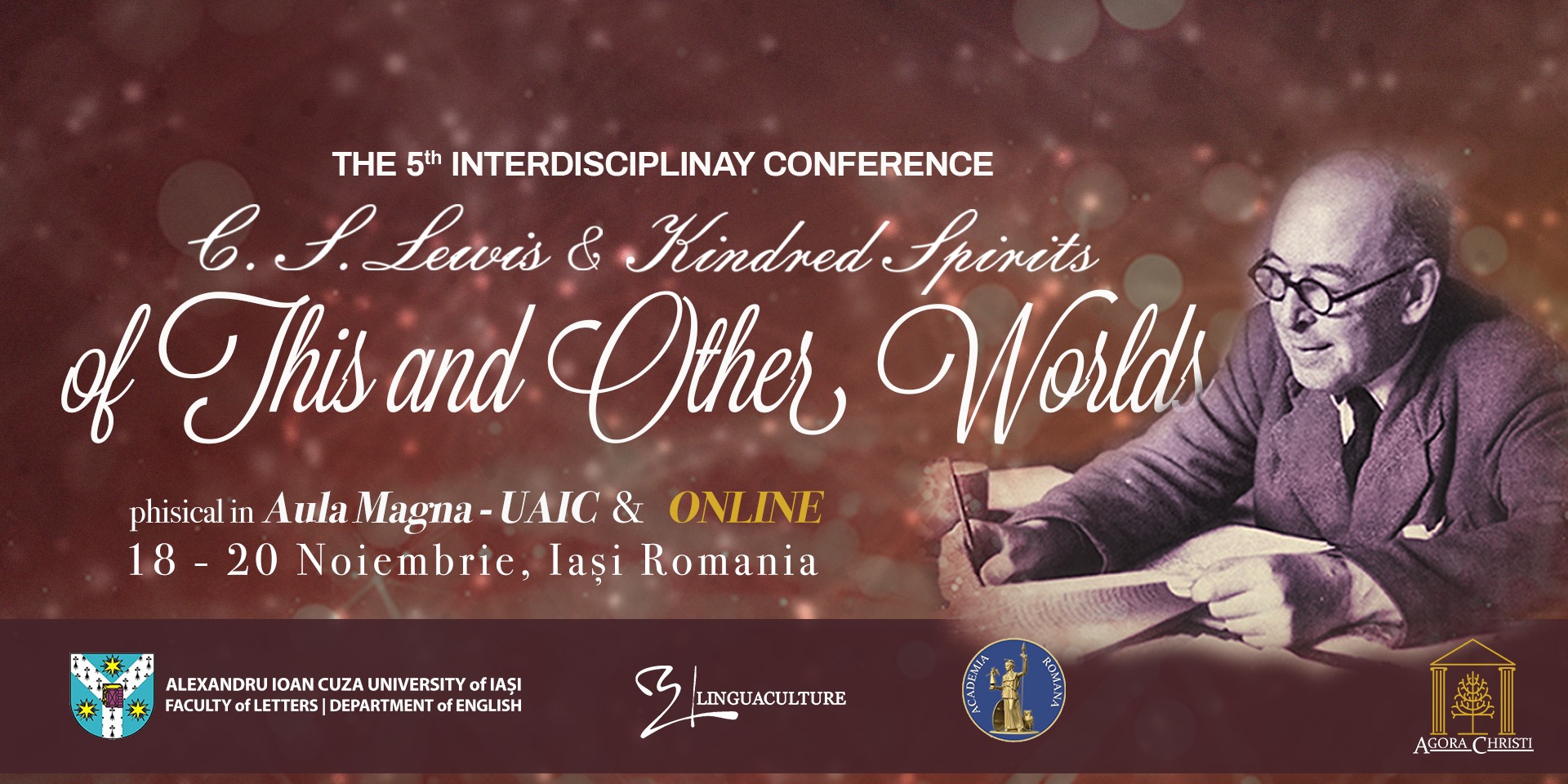
“Can C.S. Lewis and L.M. Montgomery be Kindred Spirits?” My Talk for the 2021 C.S. Lewis & Kindred Spirits Society Conference (Nov 18-20) and How You Can Go to Romania With Me

Alas, when I say that “I am speaking in Romania this weekend”–I am, in fact, speaking at this Romanian C.S. Lewis conference–I must admit that am doing so from my desk in Prince Edward Island. While pre-flight check-in is quite easy, I am very sad that I am not with the wonderful scholars of Iași, Romania for their 5th International Interdisciplinary Conference on C.S. Lewis. I enjoyed my spring meeting with the C.S. Lewis & Kindred Spirits Society–a conversation on “Inklings of Imagination” with Malcolm Guite and Kirstin Jeffrey Johnson–and I would dearly love to gather with them in person.

I would like to visit with the scholars I have heard about: the Romanian Academy, the people from Linguaculture journal, students and professors from the Alexandru Ioan Cuza University of Iași, and the folks from the Agora Christi Foundation. The work of linguist and Inklings scholar, Dr. Teodora Ghivirigă (who has written an intriguing paper on Lewis and magic), the intrepid director Dr. Denise Vasiliu (with a PhD on Lewis and spirituality), and Dr. Rodica Albu, with a lifetime of research and the translator of the first signed Romanian version of The Lion, the Witch and the Wardrobe.

Besides the chance to meet this tremendous team of people and all of the senior and emerging scholars, I am excited by the incredible program of the conference. For scholars of C.S. Lewis, the Inklings, fantasy literature, children’s literature, and linguistics, it is a dream conference. Here are some highlights from the tracks I have chosen:

  • There is an entire panel on The Screwtape Letters! This is where I live. I look forward to this panel by three Romanian scholars
  • There is a panel on dystopia and That Hideous Strength, including a paper by my friend and American historian, Alan Snyder, as well as a Russian scholar on medieval contexts.
  • There is a philosophically driven panel on Lewis and “core values,” with discussions on alterity, personhood, and freedom & imagination (in conversation with Romanian New Wave Cinema–a paper by a Canadian scholar that I’m very curious to attend).
  • In a panel on “C.S. Lewis and Heaven”–a topic I think needs clarity–we have two striking approaches: 1) Karen Coats, Director of the Centre for Research in Children’s Literature at Cambridge, is presenting the paper, “Imagining Heaven in Children’s Literature: C.S. Lewis and Critical Theory; and 2) Anne-Frédérique Mochel-Caballero, is speaking about “Heaven in C.S. Lewis’s Cosmology: The Rewriting of Revelation 21-22 in The Last Battle.” I am a sucker for theory conversations and I have Anne-Frédérique’s work on my desktop right now, so this is a must-see panel for me.

  • My own paper is in a session about “The Story World,” but could be in the “Lewis and Kindreds” session with three people who I admire in their quite different ways of thinking: Sarah Waters, Joe Ricke, and Joel Heck. Sarah and Joe are each connecting Lewis with Shakespeare–Joe on race and world-building, Sarah on Lewis’ Shakespeare scholarship (and there is more to come from her, I believe). And Joel of “Chronologically Lewis” fame (the latest version has 1,324 page, 725,000 words) is discussing Lewis and friendship.

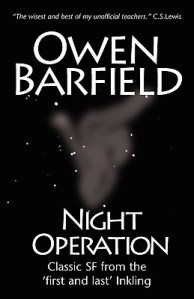
There will also be some book launches at the conference, including an edited volume by Teodora Ghiviriga and Daniela Vasiliu, C.S. Lewis. His Life and His Heritage, and Romanian transitions of  Lord Dunsany’s The Kith of the Elf Folk (translation by Liliana Bahnă) and Owen Barfield’s Night Operation (translation by Rodica Albu). My own copy of Night Operation was given to me by Owen A. Barfield, the grandson of this “First and Last Inkling,” and Owen will do a talk, “What Owen Barfield Taught the Inklings.” What didn’t he teach the Inklings? You might get a preview at this recent Radix interview here (and it’s worth noting that Radix, a Christian arts and culture magazine, is featuring a number of interviews of scholars on Lewis, the Inklings, and some of the other British Christian writers of that generation, like Dorothy L. Sayers).

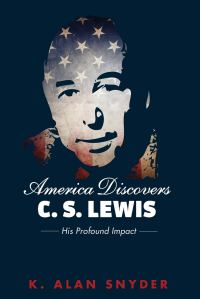
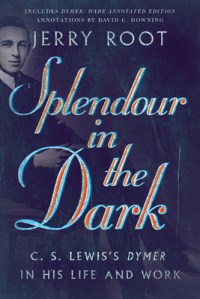
As always, I am sad that I have to make choices between sessions, especially since I do not know yet what I will learn from the Eastern European scholars. There are fine-looking keynote talks by James Como and Jerry Root focussing on the theme, C.S. Lewis and Other Worlds), Alan Snyder (on his book, America Discovers C.S. Lewis), Malcolm Guite (on The Voyage of the Dawn Treader, a house favourite), and Romanian scholar Stefan Oltean with a speech I am deeply interested in, “Fictional Realities. A Possible World Perspective.”

I am pleased to be able to connect with some of the leading Western Lewis and Inklings scholars. My own talk is in a panel with Paul Michelson, and I am co-hosting a couple of evening online-only events–Virtual Conference Cafés–with George MacDonald scholar Kirstin Jeffrey Johnson where we get to chat with Joe Ricke (Friday night) and Sørina Higgins (Saturday night). Finally, I am moderating a round table that features some of these leading voices, including Kirstin, Malcolm, Alan, and Jerry–Jerry Root being the only one I haven’t worked with personally, but whose work I’ve followed with interest. He has an epic lecturer’s voice!

It really is a strong program. I have heard they are wonderful hosts and there is always great food. Though this is perhaps not the saddest part of the continental divide, I feel the loss deeply. But because the conference is offered in a hybrid mode, those of us not live in Europe can still take part meaningfully at pretty low prices:

  • Students outside of Romania have the special price of €25 ($29 USD)
  • Other non-Romanian folk are €50 ($58 USD)
  • The Virtual Conference Cafés Kirstin & I are hosting are free
  • There are also super low prices for Romanians, especially students (€5 and €5)

You will want to note the time differences in the schedule–Romania is 7 hours ahead of Eastern time this week. Check out the poster below, and make sure that you register here.

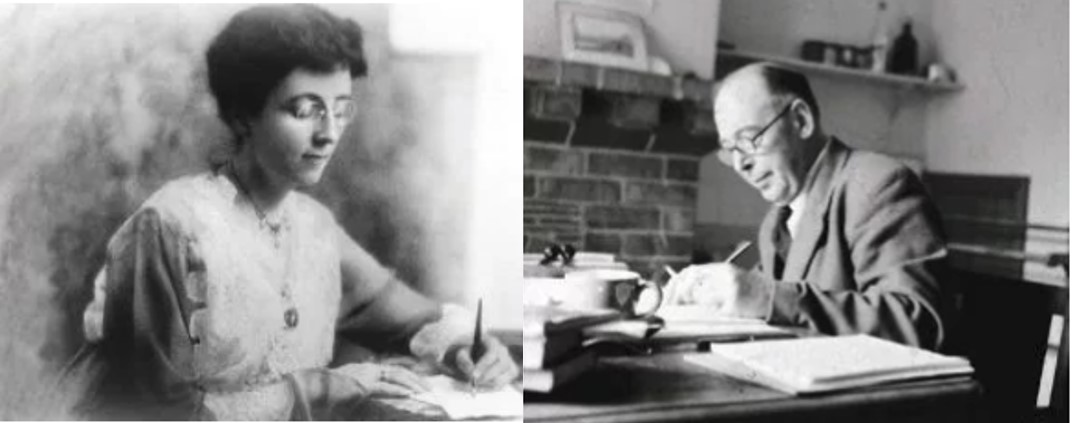
My own contribution is inspired by the “kindred spirits” theme of the Romanian Society. Anne Shirley (of Green Gables) is always looking for “kindred spirits” in her world. I think we would have to say that “Kindred Spirits” is Anne’s most famous catchphrase. As a reader of L.M. Montgomery–indeed, as a Prince Edward Islander–I was bound to chase down the thread. I have played with some connections before, but this talk gave me a chance to present a single idea. Here is a screenshot from my talk, followed by the abstract and some follow-up resources.

Abstract: “Passports to the Geography of Fairyland: Can C.S. Lewis and L.M. Montgomery be Kindred Spirits?”

While few children’s books have sold more than C.S. Lewis’ 1950 fairy-tale, The Lion, the Witch and the Wardrobe—with perhaps 85,000,000 copies sold—L.M. Montgomery’s 1909 Anne of Green Gables was immediately popular on a global level. With translations within a year of publication, this first Anne book has sold approximately 50,000,000 copies. Is there any connection between these two giant figures in English children’s writing? Lewis and Montgomery wrote in different genres—Lewis as a fantasist, Montgomery as a realist. Lewis came from the British academy while Montgomery remained a rural Canadian writer. Despite their differences, the title of “The C.S. Lewis and Kindred Spirits Society” invites comparison. The vibrant, red-headed orphan of Montgomery’s Anne of Green Gables is a wiry, curious, precocious character who dearly desires to discover a “kindred spirit,” someone who shares her senses of wonder and adventure. Anne’s creator, Lucy Maud Montgomery, once claimed that she possessed “a passport to the geography of fairyland.” In her novels, Anne transforms the mundane world of Prince Edward Island much like C.S. Lewis’ wardrobe invites readers to another world. Despite all their differences, and though they never met or read each other’s books, Montgomery and Lewis are kindred spirits, for they share this imaginative passport to fairy-worlds of transformation and joy.

Some parts of my work to read further on this topic:

If you are interested in the talk but haven’t read the Anne of Green Gables series or the Emily trilogy, beginning with the brilliant Emily of New Moon, you can catch some of the “spirit of Anne” in the trailers to two television productions: the Kevin Sullivan 1980s mini-series that creates the visual imagination of “Anne” for most Canadians of my age, and the darker, artistic, troubling and beautiful recent Anne with an E serial on CBC/Netflix.

And though it sounds a bit maniacal out of context, Anne of Green Gables: The Musical has run for decades at the Confederation Centre of the Arts in Charlottetown, Prince Edward Island (until COVID broke the record run). Here is the “Kindred Spirits” song. In the “MaudCast: The Official Podcast of the L.M. Montgomery Institute,” I have an upcoming episode planned where I interview some “Annes” from the stage. I’m looking forward to it.

Taylor Swift doesn’t help here, I think, as much as I think she’s a brilliant song-writer–and though I don’t think we would want to call Tolkien and Lewis “bosom friends”–here are some “kindred spirit” scenes from the Anne with an E series that captures Anne and Diana’s friendship (though I think Anne Shirley’s truest kindred spirit are those of “the race that knows Joseph” in Anne’s House of Dreams, Leslie Moore in particular).

Of note, some of the papers given at the 2018 conference have been published in Linguaculture 10, no. 2, 2019, which can be accessed at http://journal.linguaculture.ro/archive/65-volume-10-number-2-2019.  Linguaculture 5, no. 2, 2014, also published several papers from previous meetings at http://journal.linguaculture.ro/archive/53-volume-5-number-2-2014.

And I would encourage all of you to support the work and mission of the C. S. Lewis & Kindred Spirits Society by becoming a member of the Friends of the CSLKSClick here to become a member.

Posted in Reflections | Tagged , , , , , , , , , , , , , , , , , , , , | 18 Comments

A Head Full of Homer, A Trench Full of Blood (Remembrance Day Reblog from Tom at Alas Not Me)

Last year I followed a link from Tom Hillman (@alas_not_me) on Twitter to one of his 2017 reflections on war and reading. At the Alas, Not Me blog, Tom consistently writes thoughtful reading reflections and books studies, often connected to J.R.R. Tolkien, C.S. Lewis, and other mythic, classically-inclined writers. In 2018, Trevor Brierly wrote a guest post, “When Books Went To War,” which first brought my attention to how deeply important reading was to our trench soldiers of the great 20th-century technological wars. Tom’s thought drew me further into this question, and led me to write “The Poets Behind C.S. Lewis’ Paragraph about WWI, with Wilfred Owen.” 

Besides the striking title, “A Head Full of Homer, A Trench Full of Blood,” I found the first thought about the “comradeship of poetry and war” compelling. I hope Tom’s article, which I reproduce in full, is a way to make your Remembrance Day reflection more meaningful. I would also encourage you to read my background pieces, “Marching as to War: C.S. Lewis on His Way to the Front Line” and “The Transformative Power of Memory: Lewis and the World Wars.” #WeRemember


The comradeship of poetry and war is one of the most ancient relationships humanity knows. They have served together on the plains of windy Troy and walked eye deep in the hell of the Somme. Sometimes it is all thrill and glory, sometimes horror and shame, sometimes the hypocrisy of promoting the first and pretending the second doesn’t exist, or worse, doesn’t matter. Having read a lot of Homer and a lot of history, and having been a young fool once held captive by the romance of the Lost Generation, I long ago found myself drawn to the cataclysm of the Great War and the brilliance of its poets. From them I learned, in a way that only illuminated Homer, of the kaleidoscope of terror, disgust, and mad valor that people know in war.

My late brother was in Vietnam. As often happens, he had little to say about it, especially to people like me, who had no clue of what it had been like. Once, though, when we’d both had too much to drink, I asked him if he’d been afraid in battle, and for once he answered. It all happened too fast for fear, he said, when you were in the middle of a firefight; it was beforehand, while waiting, that you were afraid, and afterward, when the things you’d seen and done came home to you. Then he added in one of the most savage voices I’ve ever heard, ‘It wasn’t the fighting that got to you. It was the mud and the come and the scum and the f***ing every-day.’ Years later, when the country began to try to make peace with all the internal turmoil the war had caused and veterans began to have reunions, I asked him whether he was going to his. ‘Tommy,’ he said, ‘I love those guys like brothers, but I never want to see them again.’

So I often read the WWI poets and wonder what it must have been like for them to go off to war, young men with heads full of Homer. Did it defend them, at least at first, from the shattering reality of dismemberment and death? Did it lead to a greater disillusionment if that defense failed? And for those who did not ‘lose the day of their homecoming’, as Homer would have said, what about looking back years later? Did it help them come to an understanding they could live with? And what did it take and what did it mean for them to talk about it? Did the ghosts of who they were have to drink the blood again in order to speak once more, as the shades Odysseus meets in the underworld do (Odyssey XI.100ff, Fagles)?

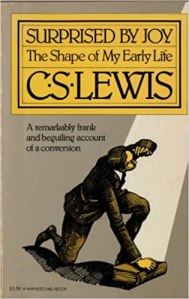
But I can never read any of the poems and memoirs these men wrote without thinking of what C. S. Lewis said about it many years later in Suprised by Joy (195-96):

The war itself has been so often described by those who saw more of it than I that I shall here say little about it. Until the great German attack came in the Spring we had a pretty quiet time. Even then they attacked not us but the Canadians on our right, merely “keeping us quiet” by pouring shells into our line about three a minute all day. I think it was that day I noticed how a greater terror overcomes a less: a mouse that I met (and a poor shivering mouse it was, as I was a poor shivering man) made no attempt to run from me. Through the winter, weariness and water were our chief enemies. I have gone to sleep marching and woken again and found myself marching still. One walked in the trenches in thigh gum boots with water above the knee; one remem­bers the icy stream welling up inside the boot when you punctured it on concealed barbed wire. Familiarity both with the very old and the very recent dead confirmed that view of corpses which had been formed the moment I saw my dead mother. I came to know and pity and reverence the ordinary man: particularly dear Sergeant Ayres, who was (I suppose) killed by the same shell that wounded me. I was a futile officer (they gave commissions too easily then), a pup­pet moved about by him, and he turned this ridiculous and painful relation into something beautiful, became to me al­most like a father. But for the rest, the war—the frights, the cold, the smell of H.E., the horribly smashed men still moving like half-crushed beetles, the sitting or standing corpses, the landscape of sheer earth without a blade of grass, the boots worn day and night till they seemed to grow to your feet – all this shows rarely and faintly in memory. It is too cut off from the rest of my experience and often seems to have hap­pened to someone else. It is even in a way unimportant. One imaginative moment seems now to matter more than the real­ities that followed. It was the first bullet I heard—so far from me that it “whined” like a journalist’s or a peacetime poet’s bullet. At that moment there was something not exactly like fear, much less like indifference: a little quavering signal that said, “This is War. This is what Homer wrote about.”

All Lewis’ understatement — a shell every twenty seconds all day is not an attack, the discomfort of the leaking boots — all his nonchalance — the zombielike marching, the parenthetical ‘I suppose’ — all his modest impotence — ‘futile’, ‘puppet’ — can, I think, lead the unwary into misapprehending his final statement. Which is not glib. It all turns upon ‘quavering’: the ‘imaginative moment’ hangs trembling between ‘fear’ and ‘indifference’, but is much closer to fear, an experience he can process only by means of his education. Yet he places War, with a capital W, first, as it came home to him in this moment, and Homer second. The emphasis is on War; Homer is the imaginative tool that was at hand. He’s connecting Homer to the primary reality of War, not War to the secondary reality of Homer.

I would be interested, on a very personal level, to know if this was all Lewis felt as this thought came to him with the ‘whine’ of the first bullet. If I could ask him only one perfectly impudent question, it would be about this moment. For, while I have not been to war, thank God, I once had someone who had been shot lie bleeding in my arms. He was a young man I barely knew who was shot by another young man I barely knew as the result of a profoundly stupid argument. He died not long after we reached the hospital. As I sat in the emergency room and looked at all his blood all over me, I could think only of Lady Macbeth. Even now, just as Lewis says of himself, the rest of my experience that summer evening long ago seems cut off from me, though I can see it all quite clearly in the distance. The blood and Lady Macbeth remain. In that moment, however, I was ashamed of myself. I held this dying boy in my arms and all I could think of was Shakespeare? Now I know better. Now I know that it was the imaginative tool that was at hand.

Did Lewis have such a feeling? I don’t know, but a remark he made several years after the war makes me think he must have done. On 22 April 1923 in a letter to a friend he wrote of the wretched post-war death of a fellow veteran still suffering from his experience:

‘Isn’t it a damned world — and we once thought we could be happy with books and music!’

Posted in Reflections | Tagged , , , , , , | 6 Comments