The Office Hours Dialogues: What I Am Looking For in a Research Paper (Part 1)

The student stared at me in horror.

“You do what when you grade research papers?” Skyler asked.

“After looking at the title,” I repeated, “I flip to the bibliography.”

I have had this conversation dozens of times, and I must admit that I love it when a bright student figures it out. I held their paper upside down on my knee as we sat in the well-worn chairs that had migrated into the sessional faculty office. Skyler was completely unaware of the bare walls and motley collection of spare computer parts. A sociology adjunct was working quietly in the corner, studying conspiracy theorists.

“But why?” Their look of shock had turned to disbelief.

“For me, the title and the first line are about whether you have taken time to invite me into your piece–a sense of your creativity and awareness that there is a reader (me). It’s true that your paper formatting on the first page reveals your commitment to professionalism, but first-years make the same mistakes–and almost always about spacing.”

They glanced briefly down at their paper with a worried look.

“In a Works Cited page, though, I can see a number of things at a glance. Do you have a sense of proportion? Have you partnered with a citation engine or merely allowed it to do the work? Have you gone deep or wide in your research? Is each of your sources someone who has gone deep enough into their study to tell you something?”

“You can see all of that?” they asked. Their expression was turning from disbelief and anxiety to something like curiosity.

“I can see all of that in just a few seconds,” I answered. I don’t know if I had a twinkle in my eye, but I was trying to project one.

“Especially, though, my real question is this: Have you chosen the best sources for your particular argument?”

“How do you know if they are the best sources?”

“Excellent question. That’s when I have to turn back to the first page and read. There are two kinds of ‘best’ that I’m looking for in a References list. First, are your research conversation partners credible?”

“You keep saying ‘conversation partners,” they interrupted with a quizzical smile. “What do you mean by that?”

“Skyler, remember what I said in my lecture about cherry-picking research?”

“Yeah, I play soccer, so it made me laugh. You don’t want our research to look like we came up with an idea and then went and found the sources needed to prove it.” As they seemed much more comfortable now in something they know well, I decided to press in a bit on it.

“Good. I’m curious, Skyler. In soccer, are the best scorers the forwards or midfielders who sacrifice their team so they can be in the right place for a pass?”

“No. Soccer has too much space on the field. On the wings, it doesn’t have to be man-to-man like football, basketball, or hockey.”

“Oh, I get it,” I answered. I was on thin ice here, using a soccer metaphor, but I skated toward the net. “Defensively, you can triangulate them with your own goal.”

“Yep, our coach just said that, actually. Well, sort of. He drew a triangle on the strat board. The further out of play a player is, the longer we have to create a defence.”

“Well, that’s a neat analogy. You would understand better than me: Who are the best scorers in soccer at your level?”

Skyler thought for a moment.

“Honestly, I don’t know. It’s about footwork and speed, I guess, but also the ability to see the play. Most goals come from a melee in front of the net after a race from the wings. But it isn’t a straight-on thing. When it’s me in the mob, I almost never get the goal when I see the opening and take it. Goaltenders are too smart. It only works when I can make a good close pass.”

“So you get the assist, not the goal?”

“Sure, but I will often get the pass and have a chance to score. The best scorers are the best playmakers too.”

“I think that’s how it works with scholarship, Skyler. You know how we keep talking about Collaboration?”

“You never stop talking about it!” they joked.

“Right, well, I like how, in the sciences, papers are published in partnerships or a full team. But it is more than teamwork. In research, we have a sense that we are part of a community of discovery. We don’t launch out on the adventure of learning alone. We have been taught by others, and we enter the scholarly conversation at a certain point. Most of the research we do in our undergraduate degrees is to learn how to learn. Beyond that, our goal is to add to scholarship in some way.”

“Oh, like Sandy trying to solve the impossible math question. It’s about learning, but someday that exercise will create something new.”

“You’ve got it.”

“By the way, ‘community of discovery’ and ‘adventure of learning’ are kind of cheesy.”

“Ah, well. Sometimes, after-school specials actually teach us something.”

We both laughed, mostly because another student had made fun of me for a similarly cheesy statement during class that morning.

“So,” I continued. “Research is about entering a conversation. The game is already in play when you are subbed in. Like your play, your research has to be part of the full game, right?”

“I get it,” they affirmed. Suddenly, the light came on.

“Then by ‘credible scholarship,’ you don’t just mean accurate?”

“Accurate, yes, but deeper. If a paper in your bibliography is so complex that you can’t test the logic with your current understanding, it isn’t ‘credible.’ You can’t say something is credible if you can’t test its credibility, right?”

“I get it. So when you look at our Works Cited page, you are checking to see that it is full of good scholars who write in such a way that we can use their work in our research.”

“Right,” I answered eagerly. “When we contribute to scholarship, that also means we contribute to student learning. That’s why, when I can, I write my papers in such a way that smart readers can understand what I’m saying. And I want them to test my argument, so my references and footnotes need to be clear.”

“That’s why you give your stuff away on your website.”

“Well, folly comes in all kinds of forms. But I do prioritize placing my work in open-sourced journals or giving it away on social media or on A Pilgrim in Narnia.”

“So the citations in our References list have to be from the best scholars and accessible to us.”

“Sure thing. But it doesn’t have to be scholars, exactly. A TikTok influencer might be the best person to talk about parasocial relations. A farmer might be able to say more about breeding in a few lines than an Ag researcher can say in a chapter.”

“Oh, I see,” Skyler responded, building in excitement. “That’s what you meant about the two ways of seeing.”

“Right, exactly. We learn one thing from an anthropologist and another thing from the indigenous person they are studying.”

“I don’t know anything about Anthropology, but I got what you were saying when you talked about lovers in love–how the lover in love teaches us something different than the neuroscientist.”

“It wasn’t actually me who came up with that.”

“Yeah,” they said. “The Narnia guy.”

“Yes, that guy. And that brings us to the second kind of thing I can see in your bibliography: Are your references the best sorts of resources for your study? If you think of the 3S approach to research–Statistics, Stories, and Studies–you should be using case studies and personal testimonies for one kind of research, data analysis for another, and historical review for a third.”

“Can you have a mix of those?”

“Absolutely. It’s about the kind of writing you are doing. A student newspaper write-up of the Hippies of Harmony Happy Hallowe’en Horror House is going to be different than an academic research paper, a literary analysis, a lab report, or a pitch to investors, right?”

They nodded, eyes brightening. I seized the moment to press in.

“Interdisciplinary disciplines may include a lot of different kinds of research. History, Religious Studies, Social Psychology, Diversity and Social Justice Studies, Applied Communication, Leadership, and Culture….”

“I’m actually an ACLC Major!”

“Great! I love that program. A paper in any of these fields and a dozen others could combine all three of the S-research trio. A Social Psych References list often has YouTube videos, archival research, big data analyses, case studies, and experimental results.”

There was a sudden dawning in their eyes.

“Ah, that’s what my Religious Studies prof meant when she said we could choose any research methodology we wanted.”

“Yep, exactly. When I teach in Religious Studies, I use as many methods as I can so I can connect with as many different kinds of learners as possible, and so I can….”

“So you can model it for your class! I get it. Sorry for interrupting.”

“No problem, that’s exactly it. I keep harping on about it in class, but modelling lifelong learning and curiosity is key to my teaching philosophy.”

They flashed me a knowing smile. It is something I talk a lot about.

by Dominid Kranes“This paper here,” I continued, holding it up. “Is a first-year foundation course paper. Although all the papers have a single theme for the semester, you were able to choose any research question and any way of answering it.”

“Except we must consult two peer-reviewed essays or chapters, right?”

“Not just consult, but utilize. It has to be meaningful. I love your project idea, where you have students audition for a role by reading famous Hollywood lines. I can’t wait to see whether AI can estimate their educational history by their reading. Having our Theatre Studies prof do the same analysis as a control is pretty neat.”

“I’m really excited about the experiment. I was afraid I wouldn’t think of anything.”

“Awesome. But before you experiment on your fellow humans and take a professor’s valuable time, I want to know who else has done this experiment, or something like it. What have they learned? What mistakes did they make that you can learn from?”

“I see,” they answered. They looked down at their paper, pondering.

“What is your research question, Skyler?”

“‘Can AI software detect educational backgrounds based on voice patterns?'”

“No, that isn’t it.”

“It isn’t?”

“It isn’t how you described it to your team. Are you trying to test AI capacity–whether it is good enough?”

“Kind of. Not really. I want to know about bias.”

“Exactly! So what’s your real research question?”

“I think it’s something like, ‘What biases does AI have when it comes to different accents?'”

“You are getting there. Do you think there is any research yet on AI and bias?”

“Tonnes,” they said. They were looking down at the paper resting against my knee.

“So,” I asked. “Did you want to submit this research background paper now, or would you like a bit more time with it? The deadline isn’t until Thursday.”

They looked at me with determination.

“I would like it back, please.”

“You know what to do?” I asked, handing them the paper.

“I do,” they answered, revealing new confidence behind the weariness students project at this time of term.

“Excellent. I look forward to reading it!”

“Thanks. See you Thursday.”

“See you then, Skyler.”


Readers may also appreciate the following pieces:

A Garden Gate Summer Note on Teaching and the First Days of School

What I Want from AI

A Rationale for Teaching C.S. Lewis’ Fiction in The Wrong Order

Teaching Students to Ask Their Own Questions, with the Right Question Institute

Clarity, Care, Connection, and Credibility: Lessons from 15 Years of Online Teaching”: My Talk at the UPEI Community Teaching Conference

Experimenting on Students: A Thought about Playfulness and Personal Connection in Teaching
Posted in Reflections | Tagged , , , , , , , , , | 5 Comments

What I Want from AI

Artificial intelligence is all the rage these days. While there is good reason to doubt the truthfulness of the title, GenAI–generative artificial intelligence–public attention is deeper than the media, either the social or unsocial kind. In my world, writers, artists, teachers, content providers, and designers are in some degree of distress. The first wave of 2020s AI has gobbled up a googolplex of pages of original content and republished it without consent or credit in billions of images, essays, and answers to inane questions. And with plagiarism, there is always job displacement–and I would humbly suggest that as a class, free-range artists, writers, and academics are on rocky economic ground.

Some of this is not new. Our digital platforms have been shaping us in myriad ways for years. For example, autocorrect just corrected my “googolplex” and changed it to Googleplex.

However, teachers are facing the peculiar challenge of nearly untraceable plagiarism in the classroom. And the classroom is now a hybrid space, a digital chimera of the post-Information Age. I have caught a number of students using AI translators or writers to do portions of their work. In this situation, I observe that the classroom door is an almost magical device: it works both to invite students in for learning and to send them into the world, prepared or not. As it was snowing fiercely here in Prince Edward Island this morning, I suspect that some students will choose to engage meaningfully rather than be sent out with a Plagiarism Badge into a Canadian Winter of inflationary discontent.

With all of these factors in mind and seeing the potential of many emerging AI tools for research and teaching, our brilliant Inquiry Studies team at UPEI set to the task of redesigning the Autumn curriculum. We set the theme as “Smart Digital Engagement,” and rewrote our foundation-year course to shape students as inquirers who can develop a healthy relationship with AI, learn to choose the right tool for the right job, and discern the frenetic voices of social culture.

Autocorrect just changed my “phrenetic” to “frenetic.” Interesting.

Along with the thousands of teachers who are struggling to discern a good path in the jungle of AI implications, we are doing our best to figure out how to engage well.

As a science fiction nerd, though, I must admit that I find little of this “sudden technological leap” surprising. Nor are the implications new. Honestly, we have been reading and writing about the possibilities and implications of human-machine hybridity for generations. The loss of one’s humanity in one’s human activity is a theme that goes back to the ancients, including the Bible. Even culture-watchers who are not SF nerds should see the signs: In North America, we have bred functionalism into the DNA of our children; is it any surprise that when given the chance, students are apt to choose function over art, ethics, or identity? We left the path of wisdom some time ago when we decided that the heart of man was composed merely of walls, cavities, atriums, and valves.

Note that autocorrect did not correct my Latin there. It also has not been correcting my homonym errors, which are pro-fuse.

Beyond ethical and spiritual implications, there is the sheer question of technique. What tools will we have access to?

And it is here that I go from thinking, “I’m glad that everyone is suddenly interested in science fiction and philosophy,” to, “Come on, already! Why are the tools so slow in coming?”

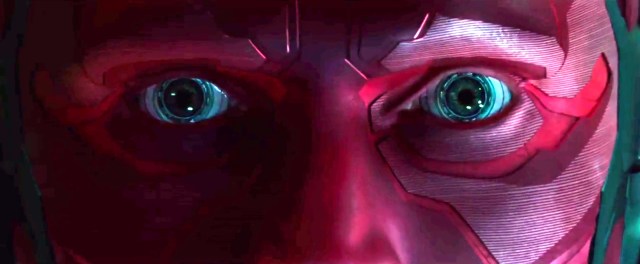
Seriously, I want my own version of J.A.R.V.I.S.–before his incarnation, of course. The sarcastic butler voice is a bonus, provided my AI tools can effectively become my executive assistant, life coach, conversation partner, debate opponent, database manager, research assistant, and grammar-checker who, by all the gods of tin and wire, can actually learn from me as a writer.

I am desperate for all of this right now. But of course, I’m an avid reader of dystopia fiction. I won’t sell my soul until I know who the masters are. After all, I leave a socioecological footprint on this planet with my life, and that has now been twinned by my digital footprint. There are highwaymen waiting in ambush on the hedges of each identity road.

In preparation for our fall term, we were reflecting on how AI tools can be helpful. I have been playing with tablet apps, and so I decided to make a poster of my own need for digital enhancement tools. It is very much a “me” thing, and I thought it was worth sharing–not least because I have not done that much writing and sketching on paper since the 1900s. I am still working on my handwriting neatness, but the tablet is a digital tool that works for me in this age of screens that, like doors, work both ways.

Posted in Reflections | Tagged , , , , , , , , , , , , | 6 Comments

Living in a World with Octobers: An Anne of Green Gables Greeting from Prince Edward Island

It is another gorgeous and breezy October day here in Prince Edward Island. Our Autumns usually begin about the third week of August: the evenings turn cool while fine days are punctuated with ocean storms. An early tilt to Fall makes for a heart-breakingly short Summer for Islanders–and for visitors from around the world who want to see our fair province, the Land of Anne, the Garden of the Gulf, Birthplace of Confederation, Epekwitk, a land cradled in the waves, Abegweit, land of the red soil.

It’s true, we do have brilliant summers. But if you can handle some dynamic weather, the autumnal hues, quiet shops, local restaurants, long hiking trails, and cool nights make PEI a great Fall destination. Often enough, we have what I call a Garden Gate Summer, with a week or so of warm temperatures and white-cloudy blue skies, occasionally interrupted by a bright sun shower.

And then there are Octobers! With apples ready for picking and leaves bursting into flame-light, an October drive down our red-clay roads or hike in our creek-side trails is a brilliant experience.

It is no wonder that Anne Shirley, alive with wonder at the beauty and love of her newfound Green Gables home, cannot help but leave us with an exclamation for the ages:

October was a beautiful month at Green Gables, when the birches in the hollow turned as golden as sunshine and the maples behind the orchard were royal crimson and the wild cherry trees along the lane put on the loveliest shades of dark red and bronzy green, while the fields sunned themselves in aftermaths.

Anne revelled in the world of colour about her.

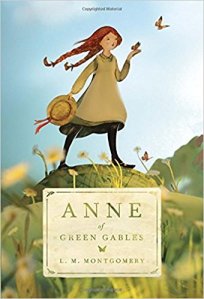
“Oh, Marilla,” she exclaimed one Saturday morning, coming dancing in with her arms full of gorgeous boughs, “I’m so glad I live in a world where there are Octobers. It would be terrible if we just skipped from September to November, wouldn’t it? Look at these maple branches. Don’t they give you a thrill—several thrills? I’m going to decorate my room with them.”

“Messy things,” said Marilla, whose aesthetic sense was not noticeably developed. “You clutter up your room entirely too much with out-of-doors stuff, Anne. Bedrooms were made to sleep in.”

“Oh, and dream in too, Marilla. And you know one can dream so much better in a room where there are pretty things. I’m going to put these boughs in the old blue jug and set them on my table” (Anne of Green Gables, ch. 16).

“I’m so glad I live in a world where there are Octobers,” Anne cries out, thrilled with her world. I am glad, too, and wanted to wish you the best this month, dear reader.

This has also been an Anneishly splendid October as I am teaching a SPACE class on Reading Anne of Green Gables as Fantasy.  It is an idea that I have wanted to test, rereading the iconic Anne of Green Gables as if it were a fantasy book rather than as realistic youth fiction (as it has traditionally been sold). I am using literary theory from fantasy, science fiction, fairy tale, and myth studies to see how we can meaningfully read this classic tale in new ways. The class is full of bright, eager students from around the world, and it is fun to see the text dance in our imaginations like Anne does. 
It also has been an unusual October for teaching online. Usually, I schedule classes so that I am always at my desk: good camera and microphone, okay lighting, super great Internet, all my books around me…. it’s the ideal teaching pod. In the first 6 classes of this month, however, I was in 5 different locations and had to reschedule one class. The rescheduled evening was because I was attending a solo concert by Canadian folk-rock legend Bruce Cockburn. Almost a patriotic duty and spiritual requirement for me to go. I have been waiting to see him since I was a teenager. 
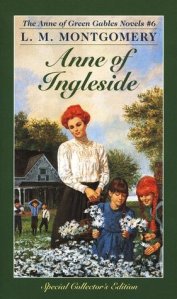
Of the first 5 classes, one was at home in my teaching space. The others were in an alumni room at Acadia University (after a lecture by Dr. Willie James Jennings), a north shore PEI cabin (writing retreat), the garret of a north shore PEI restaurant, once the mill my family used for milling grain (faculty dinner), and in the house of L.M. Montgomery’s grandfather, a famous Canadian Senator, which was being built as Montgomery was little and is the model for the “Ingleside” house in the later Anne books (as part of a media event with Montgomery colleagues). 

Perhaps that’s the thing about Octobers here. When October begins, the trees are green with splashes of yellow and the occasional glimpse of red. By All Hallows’ Eve, the trees are largely stark and bare, with bright white birch bark that shines out of the wilds and reflects the setting sun in oranges and reds. Octobers are unpredictable, with loveliness, wildness, and brisk winds that take our breath away. I was probably tempting PEI fate to dare to follow Anne in October.

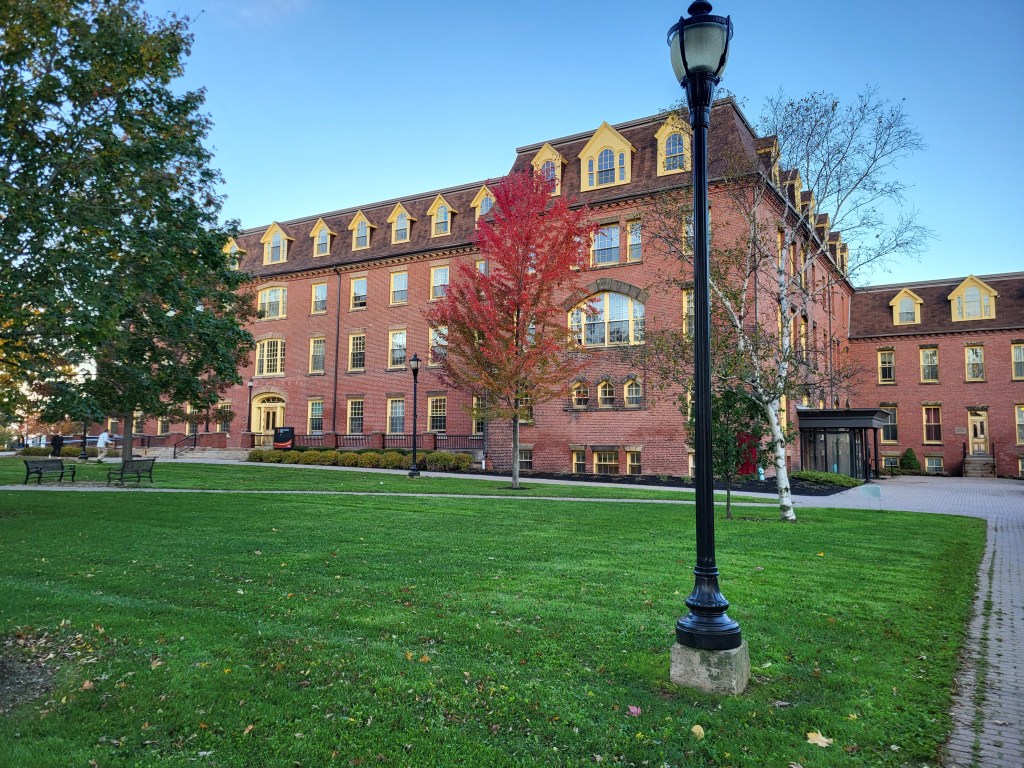
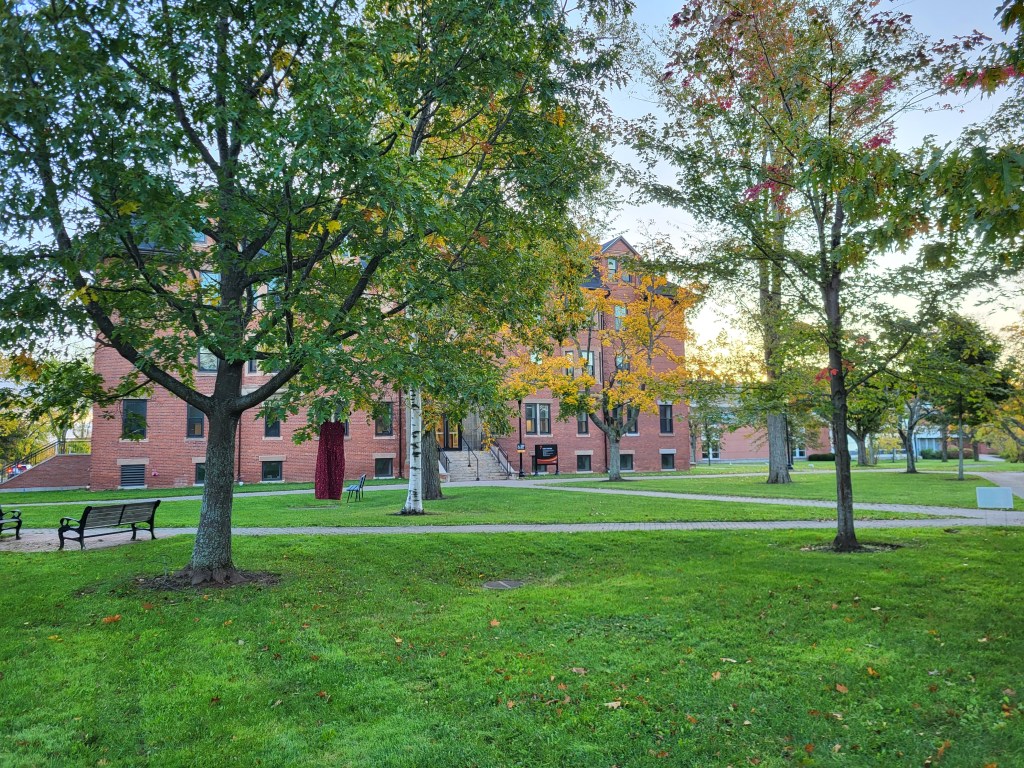
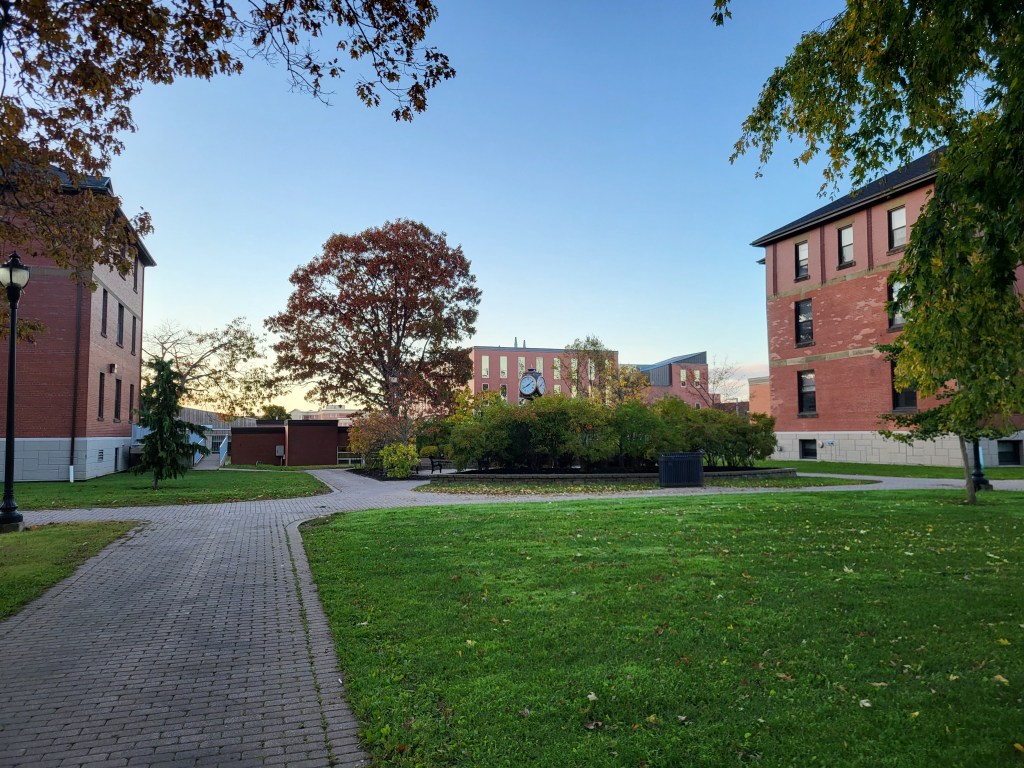
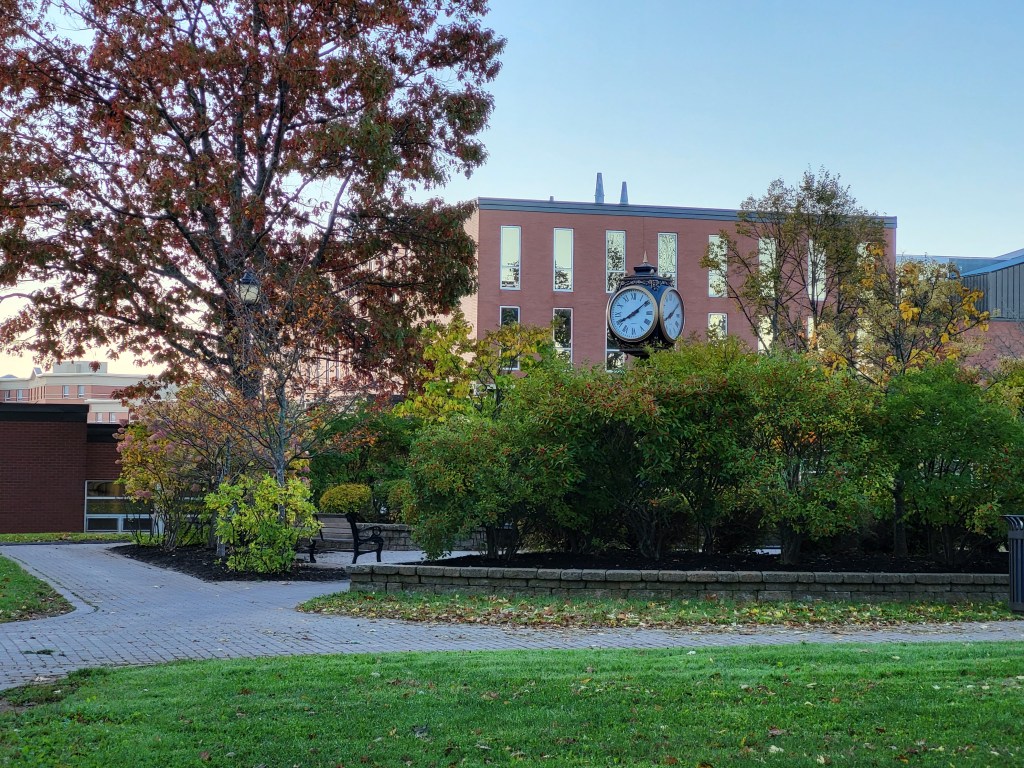
I have enjoyed two of the major Anne film projects: the Kevin Sullivan Anne miniseries of the mid-1980s, starring Megan Follows (who I admit is still kind of “Anne” in my imagination), and the CBC-Netflix Anne With an E serial. So I am disappointed that I cannot recall the above Anne quote on screen so that I could share it with you all. I suppose that leaves an opportunity for the next adaptation in the years ahead. But both films have some lovely autumnal scenery, some of which is set in Prince Edward Island. Meanwhile, Happy October! And I hope you enjoy a bit of visually Octoberish PEI–first some pictures I took at the UPEI campus, and then from someone on YouTube who is able to fly.

Posted in L.M. Montgomery, Reflections | Tagged , , , , , , , , , , , , | 6 Comments

Sharp Novel Minds and Pithy First Lines, with Jane Austen, C.S. Lewis, J.R.R. Tolkien, Dorothy Sayers, Geo. MacDonald, G.K. Chesterton, Ray Bradbury, N.K. Jemisin, Nalo Hopkinson, Margaret Atwood and more!

Sacrificial Fire for Fickle Gods (2023)
by Brenton Dickieson

O! to speak life-words of fire
In a fashion sweet and plain:
For pith-like wit, ink-painted flight,
A Titan’s theft of flame.

Lo! in conjuring these trickster lords,
Who rule not day but night,
Hermes wreathes my clarion words,
With dull quicksilver light.


Ah well, it really is hard to say everything in the first few words. In an old piece I quite like about “Great First Lines,” I included what I think to be one of the most complex, clever, and complete first sentences of a novel I have ever encountered:

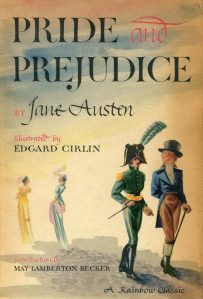
Jane Austen, Pride and Prejudice (1813)

It is a truth universally acknowledged, that a single man in possession of a good fortune, must be in want of a wife.

I also give a nod to what I think is C.S. Lewis’ best first line in The Chronicles of Narnia:

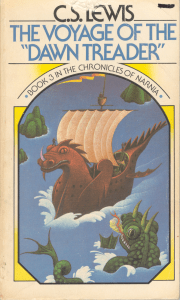
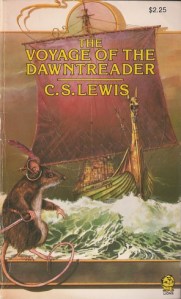
C.S. Lewis, The Voyage of the Dawn Treader (1952)

There was a boy called Eustace Clarence Scrubb, and he almost deserved it.

Each of these is brief, evocative, and humorous in its unique way, though neither is quite so abrupt and shocking as:

Herman Melville, Moby Dick (1851)

Call me Ishmael.

I tried to evoke this opening in a philosophical novella, Wish for a StoneThe book is written, not published, because I can’t quite get it right. I wanted to nuance Melville’s launch of the tale with this famously dizzying opening:

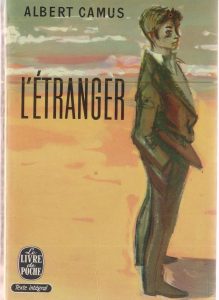
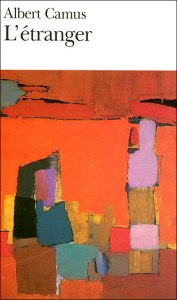
Albert CamusL’Étranger (1942)

Aujourd’hui, maman est morte. Ou peut-être hier, je ne sais pas.

Today, mama is dead. Or maybe yesterday, I don’t know.

I have provided my own inadequate translation because no translation is quite able to capture the ambiguity of the text in French. Even the title contains this mercurial wavering that blurs the whole novel, like a hazy sun reflecting on the sand.

Here are some choices for translating with the novella in mind L’Étranger:

  • The Stranger
  • The Outsider
  • The Alien
  • The Estranged
  • The Foreigner
  • The Extraneous
  • The Unfamiliar
  • The Drifter
  • The Wanderer
  • The Outlander

Further choices become less poetic but not less apt, like The Beyonder, The Evacuee, or  The FloaterThe Outcomer is interesting, but perhaps the opposite of what is happening in the story. It is a tale of migration and alienation but not an exodus. Selecting the right title in English would take a Camus scholar with a remarkable poetic capacity, a knowledge of North African colonial French expression, and an intimate sense of the nuances of the kinds of French in Camus’s library (e.g., regional and from Middle French up to WWII). I am not such an one as this.

Today, I began a modern American classic that has the pith of Moby Dick but the nuance of Pride and Prejudice:

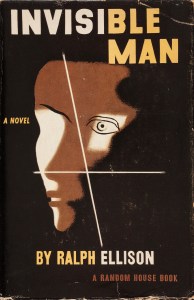
Ralph Ellison, Invisible Man (1952)

I am an invisible man.

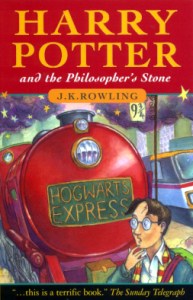
That line, and the title, say a great deal with a handful of words. The challenge of writing that perfect first sentence is great–and can even cause confident writers to freeze in terror. But many press through. I have heard that J.K. Rowling went through more than a dozen drafts of the first chapter of Harry Potter and the Philosopher’s Stone, trying to get it right. Rowling chooses an opening that is the most anti-Harrylike characteristic of the orphan’s tyrannical upbringing:

J.K. Rowling, Harry Potter and the Philosopher’s Stone (1997)

Mr and Mrs Dursley, of number four, Privet Drive, were proud to say that they were perfectly normal, thank you very much.

It is very well done, leaning on the Baggins side of the Took vs. Baggins tension, but a risk not to have either Harry or magic at the beginning of a Harry-centred fantasy.

My Wish for a Stone opening needs work, though it may be indecent to awake that slumbering dwarf. The first line is not the only challenge, and I think I could create a good opening if I set my mind to it. My own attempt to parody Austen’s genius opening is pithy but lacks the punch of its predecessor:

It is a truth universally acknowledged that the man in possession of a good wife must be in want of a fortune.

Funny, perhaps a good tale for a good teller, but a Reader’s Digest opening at best.

My sense is that C.S. Lewis rarely struggled to find the first line once he got the story. The scant archival evidence does not show much editing from the last draft to the published book. But none of the Narniad openings is as pithy as the “Eustace Clarence Scrubb” in The Voyage of the Dawn Treader. Like George MacDonald‘s fairy tales (certainly a model for Lewis), Narnia begins with a “Once upon a time…” feeling, though never formulaically so. I don’t find MacDonald‘s fantasy striking from the first splash of ink, but his Scottish novels are sometimes jarring to begin:

George MacDonaldMalcolm (1875)

“Na, na; I hae nae feelin’s, I’m thankfu’ to say.

And the pithiest of his tight-fisted Scottish wit:

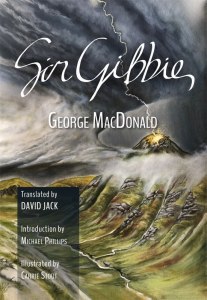
George MacDonaldSir Gibbie (1875)

“Come oot o’f the gutter, ye nickum!”

Shocking openings work well for a certain atmosphere, and none captures the essence of the fictional world of the book better than this classic:

Dante Alighieri, Inferno (1300-13020)

Midway this way of life we’re bound upon,
I woke to find myself in a dark wood,
Where the right road was wholly lost and gone.

I am using Dorothy L. Sayers’ translation among the many famous ways to capture Canto 1 of the Italian verse. I have just completed all of the Lord Peter Wimsey novels, which I quite liked–though I do not read them for their first lines, specifically. The successful opening to her first novel, Whose Body (1923), contains a clipped, silent joke that adds a cutting edge to the mystery. Most of Sayers’ first lines after this are satisfying mostly to the Lord Peter insiders, but here are a couple worth noting:

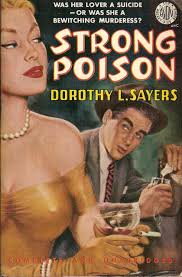
Dorothy L. Sayers, Strong Poison (1930)

There were crimson roses on the bench; they looked like splaces of blood.

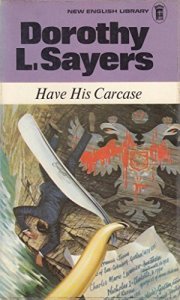
Dorothy L. Sayers, Have His Carcass (1932)

The best remedy for a bruised heart is not, as so many people seem to think, repose upon a manly bosom.

Pithy but not brief, it is very much in the line of Sayers’ humour. Likewise, another of the Detection Club authors, G.K. Chesterton, lacks brevity on the opening page, but contains all the secret of his humour:

G.K. ChestertonThe Napoleon of Notting Hill (1904)

The human race, to which so many of my readers belong, has been plaing at children’s games from the beginning, and will probably do it till the end, which is a nuisance for teh few people who grow up.

C.S. Lewis‘ nonfiction has something of this Chestertonian humour, and perhaps the “Eustace Clarence Stubbs” bit is in that vein. Of his fiction, though, it may be that the opening to his last novel, a literary myth retold, is the most sophisticated and provocative of all:

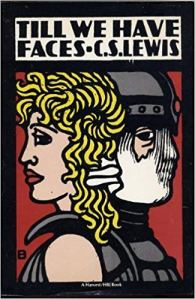
C.S. Lewis, Till We Have Faces (1956)

I am old now and have not much to fear from the anger of gods.

It is not comedic in Chestertonian or hey nonny, nonny! kinds of way. However, like the opening of Pride and Prejudice, this first line also captures layers of complexity, nuance, self-delusion, and truth. And like in Austen’s novel, there is hidden within this first line the question of whether a tragedy can become a comedy (in the classical sense).

You can read here for some of Lewis’ great first nonfiction lines, but I have argued elsewhere that the opening of his late-war dystopia captures the structure of the whole novel:

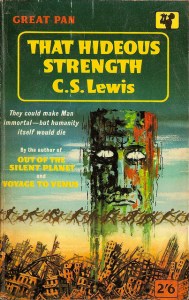
C.S. Lewis, That Hideous Strength (1945)

“Matrimony was ordained, thirdly,” said Jane Studdock to herself, “for the mutual society, help, and comfort that the one ought to have of the other.”

It is full of pathos and irony and either false or true hope, depending on how you read the tale.

Still, it is far less pithy and punchy than the novel that, though conceived independently, is in some ways an answer to Lewis’ That Hideous Strength:

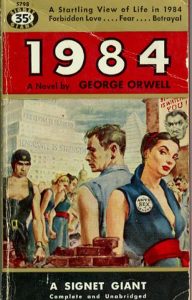
George Orwell, 1984 (1949)

It was a bright cold day in April, and the clocks were striking thirteen.


There is an art to capturing the atmosphere of a postapocalyptic dystopia in its first lines that many of the masters do well:

N.K. JemisinThe Fifth Season (2015)

Let’s start with the end of the world, why don’t we?

Ray BradburyFahrenheit 451 (1953)

It was a pleasure to burn.

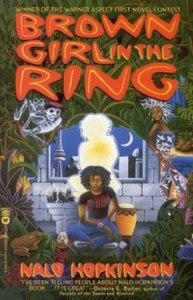
Nalo HopkinsonBrown Girl in the Ring (1998, from ch. 1)

Ti-Jeanne could see with more than sight.

Margaret AtwoodThe Testaments (2019)

Only dead people are allowed to have statues, but I have been given one while still alive. Already I am petrified.

I snuck the second line in there because Atwood has succeeded in capturing the essence of the fictional world of the Northeast US after environmental apocalypse and military rule, but she also succeeds in creating an impossible-to-write follow-up to The Handmaid’s Tale. In his Dying Earth/Long Walk 1980s apocalyptic series, Gene Wolfe also succeeds in a pithy first line that enters the voice of the whole tale:

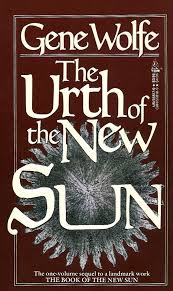
Gene WolfeThe Urth of the New Sun (1987)

Having cast one manuscript into the seas of time, I now begin again. Surely it is absurd….

“I will not always be grave,” Aslan says to the exhausted hero, Jill Pole, near the end of The Silver Chair, after she rescues the enthralled prince and thus prevents a Narnian apocalypse. And these lines need not be either grave and earnest or whimsically philosophical. Sometimes they simply do a great job of bringing us into the story with a kind of unexpectedness:

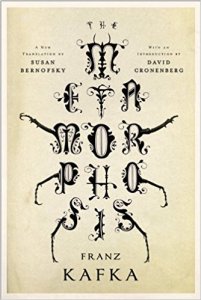
Franz Kafka, Metamorphosis (1915)

As Gregor Samsa awoke one morning from uneasy dreams he found himself transformed in his bed into a gigantic insect.

J.R.R. TolkienThe Lord of the Rings (1954-55)

When Mr. Bilbo Baggins of Bag End announced that he would shortly be celebrating his eleventy-first birthday with a party of special magnificence, there was much talk and excitement in Hobbiton.

Kafka’s sardonic catastrophe gets us there immediately, and Tolkien writes a lovely hobbitish opening to his epic. And Tolkien is smart to take “eleventy-first” for a spin. Still, it is nothing like his earlier tale:

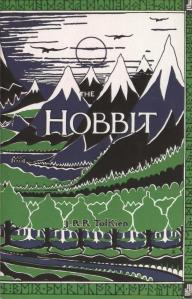
J.R.R. TolkienThe Hobbit (1937).

In a hole in the ground there lived a hobbit.

Pithy and evasive, this line also captures something of the legendary history of how Tolkien discovered Middle-earth while writing this line on a blank piece of university examination foolscap. Like Tolkien, the reader must go on a bit to figure out what a hobbit is, what his hobbit home is like, and how he saves the world.

It is a grand ending to a swift beginning–or perhaps the opposite! This reflection, however, has been far from brief, though it has its pithy moments, and I hope I can emulate the sharp and novel minds of those who have contributed. This post is, we must admit, a long one, which makes me wonder about the great novel openings that are far from pithy. That cannot be antipathy, of course, but lines of a certain weight and heft. It is a subject of past depth worth exploring at some height at a future time.

Posted in Creative Writing, Memorable Quotes, Reflections | Tagged , , , , , , , , , , , , , , , , , , , , , , , , | 32 Comments

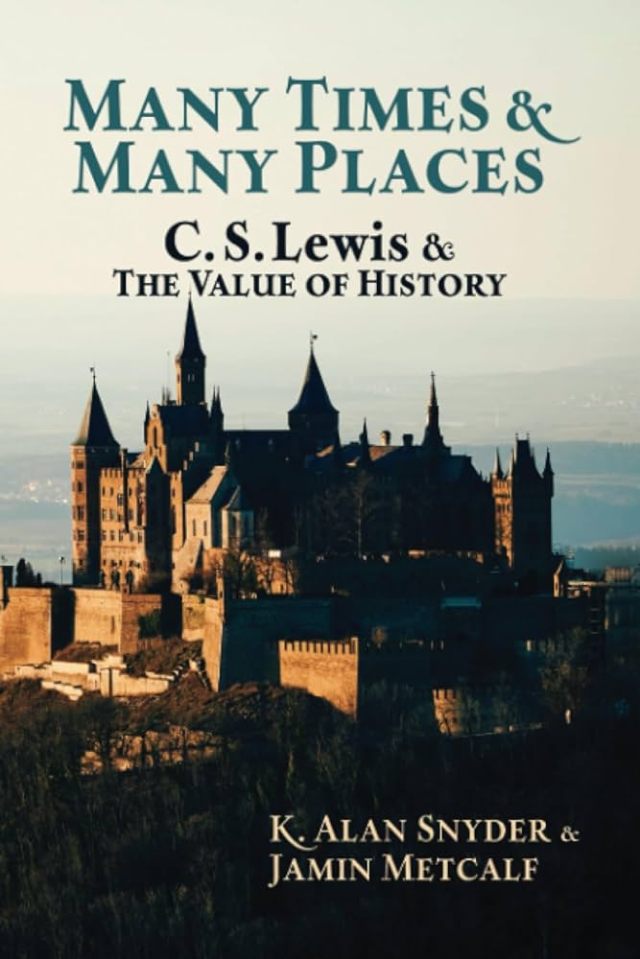
Many Times and Many Places: C.S. Lewis and the Value of History by Alan Snyder and Jamin Metcalf

Avid C.S. Lewis readers will know that he is more than any one of his profilesthe Narnian, an apologist for everyday folk, a controversialist, and the like. I have been working for some time to help readers avoid narrowing their field of vision. Certainly, Lewis was an apologist, but if we look at everything he wrote as if he is writing apologetics, we are going to miss much of the beauty, nuance, and imaginative invitation in his work.

Thus, I was pleased to see Alan Snyder and Jamin Metcalf move beyond the most common cardboard images of Lewis to seriously consider his work as a literary historian–which, indeed, is his greatest contribution to literary studies. Going one step deeper, Many Times & Many Places: C.S. Lewis and the Value of History applies the particular lens historians use to survey his work as a whole.

Because Snyder and Metcalf are able to avoid limiting their vision to Lewis as a fantasist, apologist, or cultural critic, they are able to bring fresh insight into the historical instincts in his life and writings. With clarity of purpose and an uncluttered approach to the question, Snyder and Metcalf enlighten aspects of Lewis’ vocation as a literary historian. This new study reveals how Lewis avoided ideological traps and was thus able to discern meaning in history. We are also invited to think about the deep cultural-historical roots of Lewis’ imaginative fiction.

On Lewis’ fiction, I would be intrigued to know what Snyder and Metcalf might produce if they wrote a series of short argumentative essays rather than a survey. After all, their unique approach is not simply an historical point of view much needed in C.S. Lewis studies. They are, by their own argument, historians who live within their own particular times and places. I would also like to see Snyder and Metcalf press in at a deeper level on how the Incarnation of Christ becomes a hingepoint in history. Tinidril, the goddess of Perelandra, views the Incarnation in history as the turn of a corner or a wave that, once it has come, makes everything after it different. Is this aspect of Lewis’ historical imagination central to a distinctively Christian view of history, or part of a complex of ideas? I am hungry to think about this more.

Fortunately, Snyder and Metcalf provide an accessible foundation for historical study, some tools to begin, and space to ask more questions. Beyond a general appreciation for the approach and this book as a resource, we must be especially grateful for one particular aspect of their work. In Many Times and Many Places, we get a rare glimpse of Lewis’ genius for being able to bridge the divide between different times and places without annihilating the unique cultural diversity of historical and literary moments as they provide a prophetic voice and aesthetic grandeur to our world.

Many Times & Many Places: C.S. Lewis and the Value of History is available through Winged Lion Press, available now.

See more at Alan Snyder’s blog, Pondering Principles.

Posted in Reflections | Tagged , , , , , | 6 Comments