A Brace of Tolkien Posts for his 132nd Birthday (#TolkienBirthdayToast)

As J.R.R. Tolkien was born 69,425,820 minutes ago, give or take. The Tolkien Society is again raising a toast to the Professor on his birthday, 3 January 2023 (see here). After Bilbo left the Shire on his eleventy-first birthday in The Lord of the Rings, Frodo toasted his uncle on their shared birthday each year. Tolkien friends, fans, and fellows continue the tradition, toasting the maker of Middle-earth on this day. J.R.R. Tolkien was born in South Africa on 3 January 1892, making this (if he had had Hobbitish longevity) his 132nd. The Tolkien Society invites us to celebrate the birthday by raising a glass of comfort or joy at 9pm your local time, simply toasting “The Professor!”

In honour of Tolkien’s birthday, I like to update the catalogue of Tolkien posts featured here on A Pilgrim in Narnia. I am in the midst of a monograph going to my editor very soon, and so 2022-23 has been a bit thin on new or substantially rewritten content. Still, I wrote or rewrote 8 Tolkien-related articles, reflections, reviews, or blog posts, and I reblogged two new essays that I thought were pretty great.

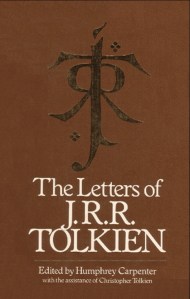
Tolkien posts continue to be popular among readers of A Pilgrim in Narnia. 4 of the top 15 most-read pieces are about Tolkien. The text that continues to top that Tolkien tally is my “Approaching The Silmarillion for the First Time,” the 2nd most-read post of 2023. Reflections inspired by Tolkien’s correspondence continue to spin, like “The Tolkien Letters that Changed C.S. Lewis’ Life” and “The Tolkien Letter that Every Lover of Middle-earth Must Read.” Another one of these letter-posts is “The Shocking Reason Tolkien Finished The Lord of the Rings,” which cracked the top 15 among 2023 readers. When I wrote this sassily titled piece, I was on the eve of one of the most challenging times in my life. Now, as I struggle to finish a writing project in another deeply difficult time, I have come to find comfort in it. I’m glad people are reading it.

While it peaked in 2022, my tribute to Christopher Tolkien was also popular this past year.
That said, it has been a hard couple of years for me, Tolkienistically speaking. In 2022, I was supervising Tolkien projects and spoke at Tolkienmoot in the summer (really, I just joined in the fun). I read and (positively) reviewed Carl Hostetter’s editorial gift to scholars and fans, The Nature of Middle-earth. It should appear in Sehnsucht: The C.S. Lewis Journal in the coming months. It has been a great couple of years reading what I catch myself thinking of as the “nonfiction” of the legendarium–The Nature of Middle-earth fits the bill, but I’m also thinking of The Silmarillion, Sauron Defeated, and Unfinished Tales of Númenor and Middle-earth, as well as a few other points in History of Middle-earth (e.g., see here).
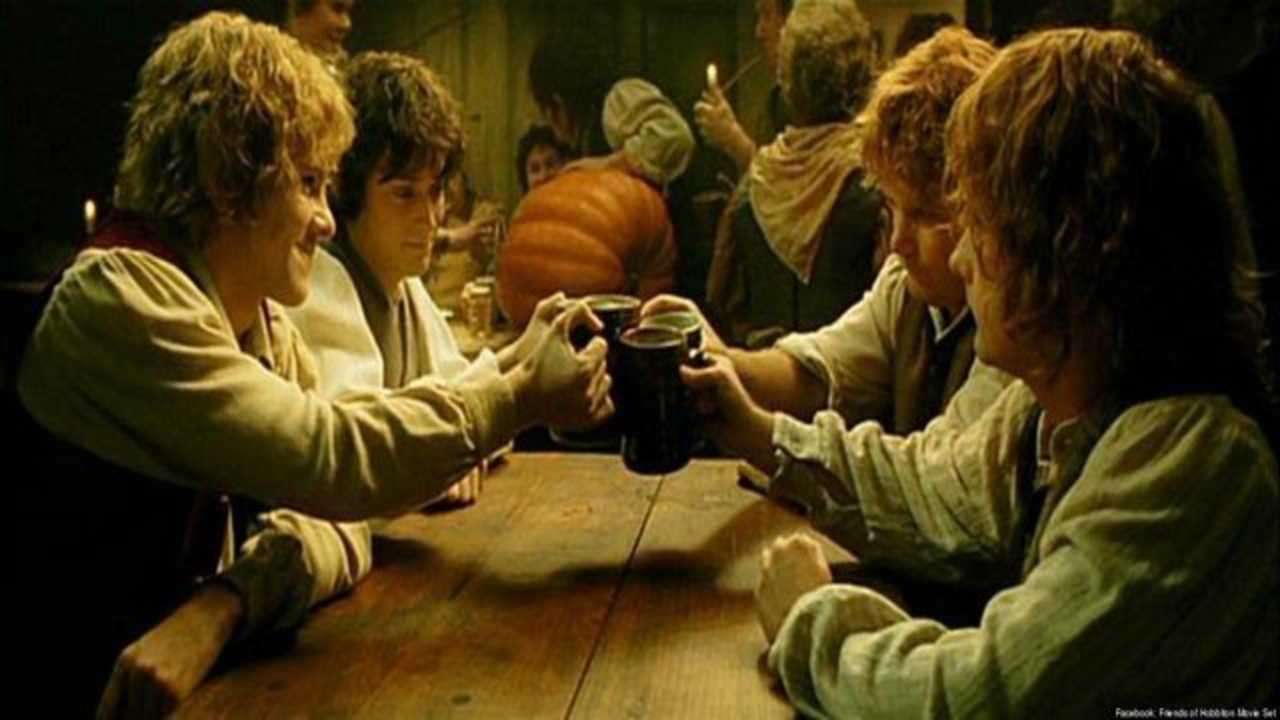
And despite my deep desire to do so, I wasn’t able to make space this year to write about my thoughts or to read either The Lord of the Rings or The Hobbit. These stories genuinely refresh my spirit and invite joy, so I miss them when they are not part of my year. And while I began 2022 with the hopeful news of a new Tolkien adaptation, the digital debate was so often infused with invective designed to strike at the most intimate parts of our human being and living. I became ashamed of my literary, religious, and activist communities as everything turned sour. I lost heart. Despite a dozen attempts to rewrite my “Approaching The Silmarillion for the First Time” article and provide an update to my “J.R.R. Tolkien’s Texts on The (Down)Fall of Númenor” piece (following great reader notes and the release of the Brian Sibley edited, The Fall of Númenor), I simply could not complete anything.

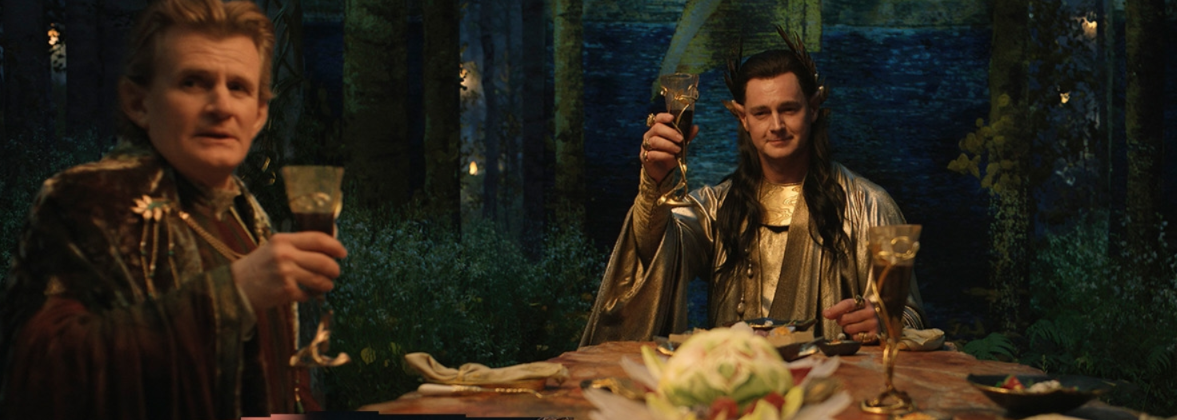
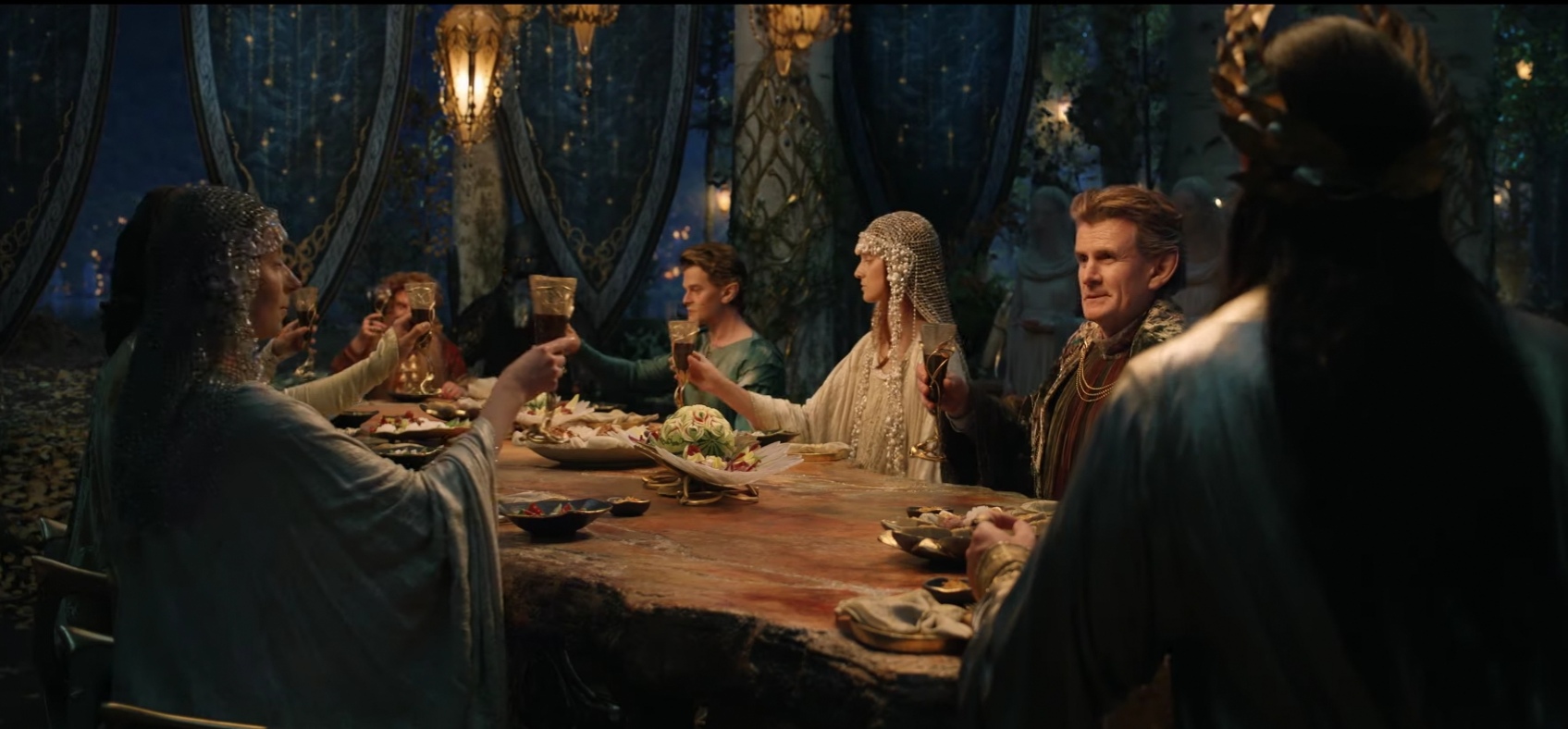
Wisely, perhaps, I stepped out of the conversation and stopped watching the Rings of Power Amazon Prime serial. While I have been called immoral and disloyal, I have found that adaptations on the stage, in film or on television, and by audiobook can enrich my experience of reading the texts that are most meaningful for me. Although I am in the same place a year later, I look forward to a season ahead when I can return to the simple pleasures of reading and watching beyond the courts of rage.
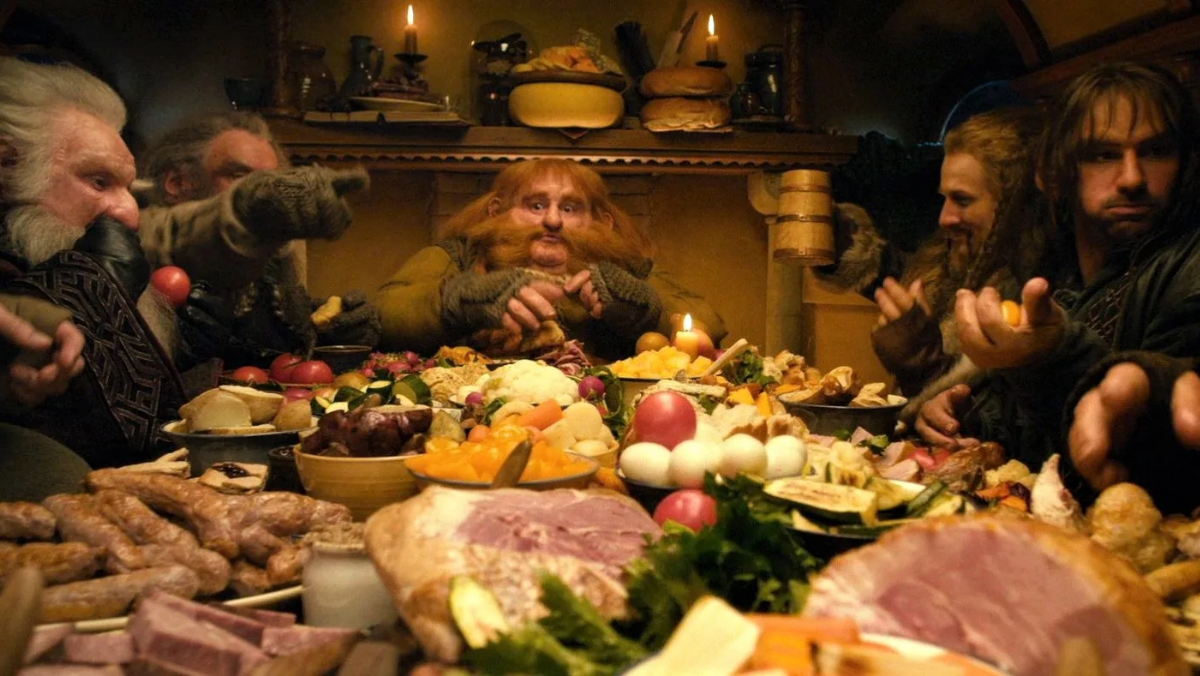
Here at A Pilgrim in Narnia, I desire to curate a space for people who love the simple pleasures of a well-told story and a well-built world. Thus, this “brace” of Tolkien posts. Over 110 article links are now listed here–far more than a brace, methinks. So, I hope this great feast of guest bloggers, hot links, and feature posts will complement your Tolkien reading and inspire you to widen and deepen your Tolkienaphilia. And, of course, a glass raised to the Professor for all of the 6887 weeks since his birth, and, I hope, 6887 weeks of great reading to come.
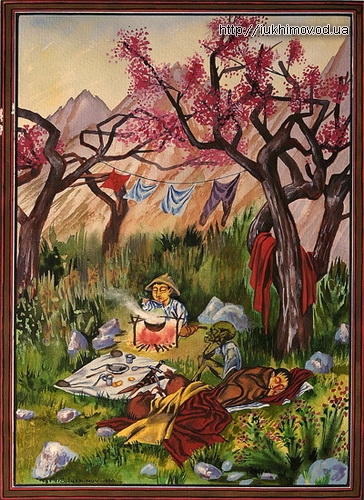
Frodo, Sam and Gollum in Ithilien

Tolkien’s Ideas at Work in Word

Tolkien’s work is rich with reflections on the world around us. In posts like “Let Folly Be Our Cloak: Power in the Lord of the Rings” and “Affirming Creation in LOTR” (updated in 2021), I explore themes related to ideas that are central to Tolkien’s beliefs. The latter idea, creation and good things green, is also covered with Samwise Gamgee here and with Radagast the Brown here. One that resonates long after the first reading is the theme of Providence, which I explore in “Accidental Riddles in the Invisible Dark” (updated for Hobbit Day 2021 here). I reblogged Stephen Winter’s “”Your Fingers Would Remember Their Old Strength Better, if They Grasped a Sword-hilt’: Gandalf and The Healing of Théoden” to capture a similar inspiration from the text.

I would also encourage readers to check out the annual J.R.R. Tolkien Lecture on Fantasy Literature at Pembroke College, Oxford. Tolkien editor and historical fantasist Guy Gavriel Kay was the 2021 lecturer, which I discuss here: “Just Enough Light: Some Thoughts on Fantasy and Literature.”

One surprising connection was “Simone de Beauvoir and the Keyspring of the Lord of the Rings“–a pairing that many would find unusual and includes some great old footage. Guest blogger Trish Lambert concluded the discussion with “Friendship Over Family in Lord of the the Rings.” Author Tim Willard talks about “Eucatastrophe: J.R.R Tolkien & C.S. Lewis’s Magic Formula for Hope.” And you can follow Stephen Winter’s LOTR thought project here and Luke Shelton’s Tolkien Experience Project here.

Perhaps Tolkien’s most central contribution beyond the storied world is his idea of subcreation in the poem, “Mythopoeia” and in other works like the essay, “On Fairy-stories” and the allegorical short story, “Leaf by Niggle.” I have been reading a lot about this concept–partly because of students working on the idea–and appreciated poet-philosopher Malcolm Guite’s take on it here.
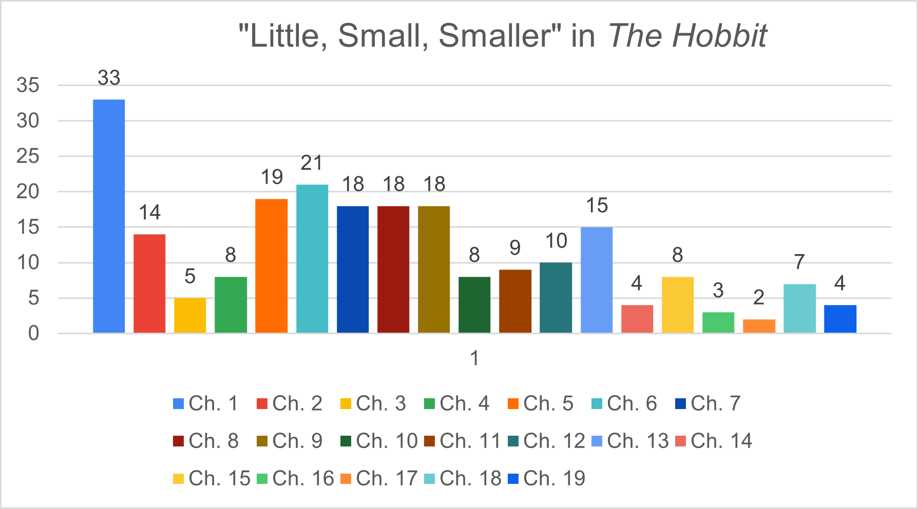
I have admitted before that my Tolkien reading and writing is just pure enjoyment. I don’t pretend to have much original to say on the scholarly level. My most important contribution, I think, is my Theology on Tap talk, called “A Hobbit’s Theology,” which I rewrote in 2021 for Northwind Theological Seminary’s doctoral degree in Romantic Theology (which has a Tolkien studies track). It is one of the ideas I am struggling with, most specifically in my academic work, and I hope to do some future writing on the topic. Out of that same lecture series came this piece, “‘Small’ and ‘Little’, a Literary Experiment on J.R.R. Tolkien’s The Hobbit,” where I used some word-date analysis by Sparrow Alden and her “Words That You Were Saying” Tolkien word-study blog.

Sparrow’s research, I should note, is part of a strong community of Tolkien digital humanities research (e.g., Emil Johansson’s LOTRProject, or Chiara Palladino and James Tauber’s , or Joe Hoffman’s blog, or this resource list here), and is definitely worth checking out.

In a similar mode–thinking of Tolkien’s work through a theological lens–is Mickey Corso’s excellent work on Tolkien and Catholicism. The video conversation of “The Lady and Our Lady: Galadriel as a ‘Reflexion’ of Mary,” A Signum Thesis Theatre on Tolkien and Catholicism by Mickey Corso, is now online. In this mode, I blogged “’Joy Beyond the Walls of the World, Poignant as Grief,’” a conversation between J.R.R. Tolkien and Frederick Buechner. As a Tolkien Easter reflection, I reblogged Wade archivist Laura Schmidt’s piece, “Wounds that Never Fully Heal.” Also, check out a couple of video conversations: “Inklings of Imagination” with myself, Malcolm Guite, and Kirstin Jeffrey Johnson on the theological imagination, and “Imaginative Hospitality” from a theological angle with Kirstin Jeffrey Johnson, Diana Glyer, Michael Ward, and Fr. Andrew Cuneo.
Tolkien as a Writer

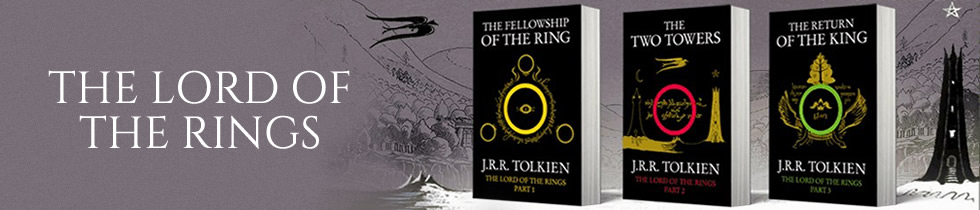
I remain fascinated by Tolkien’s development as an author. The most popular of the pieces I wrote was the coyly titled, “The Shocking Reason Tolkien Finished The Lord of the Rings.” The reason is, of course, not all that shocking, but could be helpful for the subcreators amongst us. Two more substantial posts on the topic are “12 Reasons not to Write Lord of the Rings, or an Ode Against the Muses” and “The Stories before the Hobbit: Tolkien Intertextuality, or the Sources behind his Diamond Waistcoat.”
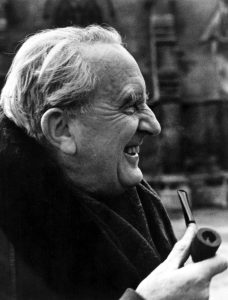
C.S. Lewis also took an interest in Tolkien’s formation (see “Book Reviews” below). You can read more about it in Diana Pavlac Glyer’s Bandersnatch, and in this blog post, “‘So Multifarious and So True’: The C.S. Lewis Blurb for the Fellowship of the Ring.” Lewis’ support for Tolkien did not go unrewarded. Besides the great joy of Tolkien’s work, there was a time when Tolkien interceded a time or two on Lewis’ behalf. Friendship goes both ways. Tolkien historian John Garth takes some time to explore this literary friendship further in his detailed explanation of “When Tolkien reinvented Atlantis and Lewis went to Mars.”

One post from 2018 created a lot of (pretty positive) controversy. In “Lewis, Tolkien and Different Views of Fan Fiction” I invited thought about two trends: Tolkien readers’ resistance to fan fiction (in concert with Tolkien himself), and a strong trend of good fanfiction from Tolkien lovers. The post is worth reading, but so are the 100+ comments. But my most substantial and original written piece on Tolkien’s writing, I think, is the 2020 article, “Trees, Leaves, Vines, Circles: The Layered Worlds of J.R.R. Tolkien’s Fiction, A Note on ‘Athrabeth Finrod ah Andreth,’” which includes art by Emily Austin.

And one of the more popular posts of 2016 was a very personal one about me as a writer and researcher, “Battling a Mountain of Neglect with J.R.R. Tolkien.” Though I am still not sure if I should have written that post, it has connected with readers. In retrospect, 2016 was a very difficult year in many ways.

In a more jocular frame of mind, in 2023 I included The Hobbit and LOTR in “Sharp Novel Minds and Pithy First Lines, with Jane Austen, C.S. Lewis, J.R.R. Tolkien, Dorothy Sayers, Geo. MacDonald, G.K. Chesterton, Ray Bradbury, N.K. Jemisin, Nalo Hopkinson, Margaret Atwood and more!

The Tolkien Letter Series

Tolkien’s letters remain a rich resource for researchers that is available to everyday readers–and usually available used for a pretty low price. In these letters, I discovered the tidbits on writing above, as well as notes like “The Tolkien Letters that Changed C.S. Lewis’ Life” (which remains a top 10 post). But it goes much deeper. In “The Tolkien Letter that Every Lover of Middle-Earth Must Read“–also a top 10 post–I include much of a draft that Tolkien wrote to a Mrs. Mitchison that fills in much of the background to Middle-earth. I also took the time to put Tolkien’s great “I am in fact a Hobbit (in all but size)” quotation in context, which I updated in 2020 with a note on books and their authors.

A more sober but quite moving letter is the one that I featured in this popular post from fall 2018: “The Last Letter of J.R.R. Tolkien, on the 45th Anniversary of His Death.” It is a post to read when raising a toast. And now, with the passing of Christopher Tolkien, son of the genius, I have added a second toasting post. In my 2020 tribute piece, Christopher Tolkien, Curator of Middle-earth, Has Died, there is also a pretty poignant letter from his father. I hope you enjoy it.

The letters afforded me some time to think about some other ideas. In a longer popular post that any conlanger will know is poorly named–“Why Tolkien Thought Fake Languages Fail,”–I discussed Tolkien’s own constructed language program and surmised with the Professor that conlangs fail when they lack a mythic element. I think I am mostly correct. And the essay is quite fun, even if I am missing some key elements. I was able to push further when I did a personal response to new Tolkien language research in this post: “J.R.R. Tolkien’s “Secret Vice” and My Secret Love: Thoughts on Dimitra Fimi and Andrew Higgins’ Critical Edition of A Secret Vice: Tolkien on Invented Language.”
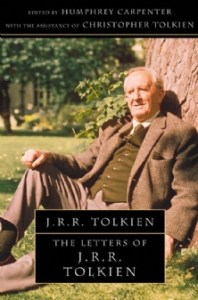
Recently, I was thinking through the relationship between C.S. Lewis and T.S. Eliot. In the midst of that search, I found Tolkien’s 30 August 1964 letter to Anne Barrett of the publisher, Houghton Mifflin. On the anniversary of that letter, I shared this piece: “Great and Little Men: J.R.R. Tolkien’s Letter about C.S. Lewis and T.S. Eliot.” As with much of Tolkien’s praise of Lewis, there is a slighting comment or two. And yet, it is a powerful bit of testimony to the content of C.S. Lewis’ character, in his friend’s estimation. In this vein, check out “C.S. Lewis and J.R.R. Tolkien: Friendship, True Myth, And Platonism,” an academic paper by Justin Keena published here on A Pilgrim in Narnia.

Finally, a little fun with the post, “When Sam Gamgee Wrote to J.R.R. Tolkien.” As you might guess, it is about a real-life Sam Gamgee who sends a note to the maker of Middle-earth. And, of course, when the season of advent returns, check out the Father Christmas Letters. While there are others with better Father Christmas Letters posts and articles, my piece got picked up on Reddit in 2021, so I touched it up again for that Christmas Day reading.

The Silmarillion Project
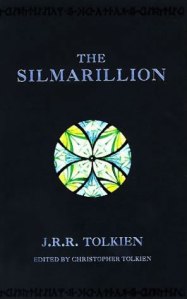
This is a newish feature for me, partly because 2017 was the year I completed The Silmarillion in its entirety in a single reading (rather than the higgledy-piggledy approach of cherry-picking stories and languishing in the mythic portions, as I am wont to do). I reread it in early 2020 and mid-2022, this time by audiobook, and enjoyed it deeply. Still, I find it a challenge. I thought I would take advantage of my status as a Silm-struggler to offer suggestions and resources to people looking to extend their reading of the Legendarium.

In “Approaching “The Silmarillion” for the First Time,” I made a few suggestions for readers intending to read this peculiar book for the first time. If you are a fellow Silm-struggler, I hope this helps you get a fuller experience of a beautiful collection of texts. That experience inspired me to write “A Call for a Silmarillion Talmud,” an unusual post for Tolkienists with more creative and technological skills to consider.

Finally, I had to write as a fan and scholar together in considering the cycle of Lúthien and Beren. In “Of Beren and Lúthien, Of Myth and the Worlds We Love,” I talk about my love of the story and its links to the Legendarium while noting my hope for the 2017 release of the Beren and Lúthien materials and sharing some Silmarillion-inspired artwork. In my tribute to Star Wars, I speculate that to the degree that Star Wars succeeds, at least for me, it is mythopoeic–a myth-making project, a myth itself, or something like it.

Thinking about Tolkien Studies

Over the last few years, I have slowly been gathering an understanding of Tolkien studies as a discipline. I am far from an expert, but I have been struck by the most robust Tolkien books and essays I have encountered. Verlyn Flieger‘s Splintered Light is a lyrically beautiful critical study: it is tight and thematically vibrant, invested in the entire corpus, and yet wholly accessible as a single study of light and darkness. John Garth‘s Tolkien and the Great War is not simply one of the best Tolkien historical works I have read, and is by far my favourite study on WWI. There are numerous vital medievalist approaches to and with Tolkien, and Tom Shippey is a Tolkien scholar of great clarity and energy. Among younger scholars, I greatly admire Dimitra Fimi’s Mythopoeic Award-winning Tolkien, Race, and Cultural History: From Fairies to Hobbits. I carefully watch what her students and colleagues are doing.

Inspired by this work–and a sense of frustration in Lewis studies–I began reflecting on Tolkien Studies in 2021. The result was a somewhat saucy but generally thoughtful series on “Why is Tolkien Scholarship Stronger than Lewis Scholarship?” in three parts:

You can read a somewhat tongue-in-cheek response by Joe Hoffman that I quite like through “The Idiosopher’s Razor: The Missing Element in Metacritical Analysis of Tolkien and Lewis Scholarship.”
Though I’m still catching up in 2023, my work turned out to be once again relevant as “Tolkien Studies Projects Swept the Mythopoeic Scholarship Award Shortlist in Inklings Studies.” While my vote was for Garth’s The Worlds of J.R.R. Tolkien (see my blog post on the results here), the 2021 winner was John M. Bowers for Tolkien’s Lost Chaucer. A smart and helpful book from a Chaucer specialist who came to love Tolkien’s work later in life, I wrote a substantial review and response, “The Doom and Destiny of Tolkien’s Chaucer Research: A Note on John M. Bowers, Tolkien’s Lost Chaucer,” after working through the text while teaching Chaucer locally.

Interested in continuing to resource Inklings readers, I published “5 Ways to Find Open Source Academic Research on C.S. Lewis, J.R.R. Tolkien, and the Inklings“–a living post aI have updated as scholars and librarians have written in. And I have edited and published a guest essay by G. Connor Salter, “Lewis and Tolkien among American Evangelicals“–an important contribution to reception studies.

Reading Tolkien in Community
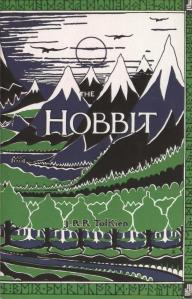
One of my first digital exchanges was participating in The Hobbit Read Along–you can still see the great collection of posts online. While doing this shared project, I was reading The Hobbit to my 8-year-old son. It was a great experience, but I made the mistake of voicing accents to distinguish characters early on in the book. That’s fine when you’ve got oafish trolls or prim little hobbits. But a baker’s dozen of dwarfs stretched my abilities! You can read about my reading-aloud adventures here.

In reading aloud, I was really struck by the theme of providence in The Hobbit. I’m sure others have talked about it, but “Accidental Riddles in the Invisible Dark (Chapter 5)” is an excellent example of that hand of guidance behind the scenes (touched up for Hobbit Day in 2021).

In 2021, I used Tolkien Reading Day (March 25th) to share some of my fun Tolkien bookstore discoveries and to think about Tolkien’s audiobooks as “adaptations” or interpretations: “Reading J.R.R. Tolkien by Audiobook and Adaptation: Thoughts on a Portland Discovery.” In this piece, I talk about The Green Hand in Portland, ME (I visited again in the summer of 2023, but did not have any Tolkien epiphanies), and how at Enterprise Records, I found a beautiful library withdrawal vinyl collection of the Nicol Williamson’s abridged reading of The Hobbit. Spinning this record, and thinking about Andy Serkis’ version of The Hobbit, I discuss what audiobook readings do for me on an imaginative level. I also talk about some of my Tolkien collectible books I’ve discovered hither and yon. None of these are super valuable: a US 1st edition of The Silmarillion that I got for $10 at a used bookstore (and I added a UK 1st edition this year for $20), a nice boxed illustrated anniversary edition of The Hobbit, the original wide-sized printing of the Tolkien-illustrated Mr. Bliss, and my UK 2nd edition Lord of the Rings, which looks nice on the shelf. Truth be told, I also love the design of the Middle-earth volumes from the last decade or so, and my wife and I were pleased to give our son hardcover editions of Beren and Lúthien and The Fall of Gondolin for Christmas.

The Hobbit - The Battle of the Five Armies - Evangeline Lilly

Film Reviews

When the teaser trailer of the third film, The Battle of Five Armies, was released, I wrote “Faint Hope for The Hobbit.” Although it is clear in the trailers that this is a war and intrigue film, I still had some hope I would enjoy it. The huge comment section shows in that post shows that not everyone agreed it was possible!

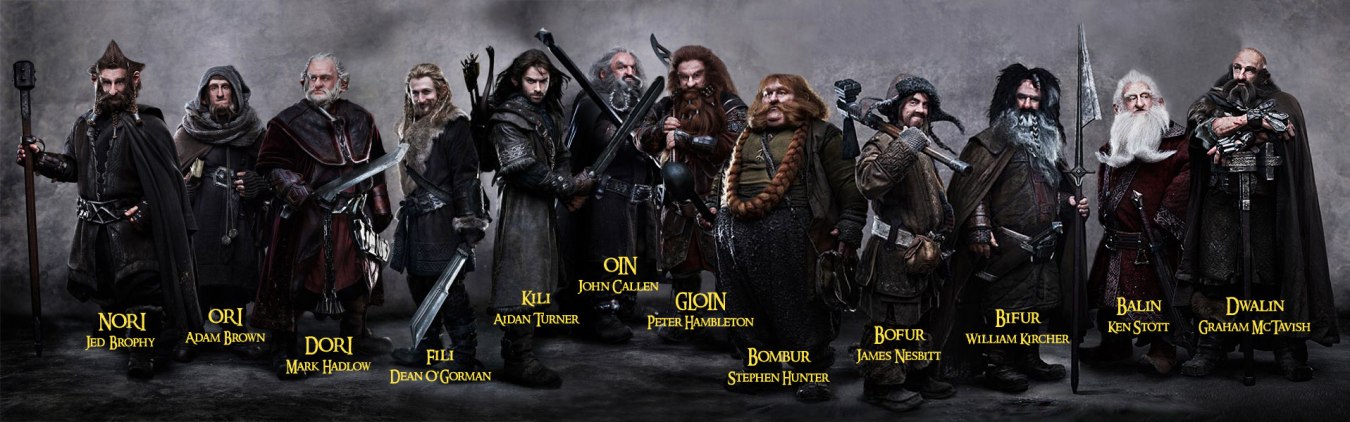
My review of An Unexpected Journey captures the tug back and forth I feel about the films. I called it “Not All Adventures Begin Well,” and it is a much more positive review than many of the hardcore Tolkien fans or academics. And it gives this cool dwarf picture:
What Have We Done?” These words are breathed in the dying moments of the second installation of The Hobbit adaptation, The Desolation of Smaug. In this review, I think about what it means to do film adaptations. While I do not hate this Hobbit trilogy, I think Peter Jackson got lost.

When I finally got to The Battle of 5 Armies, I decided doing a Battle of 5 Blogs would be fun. 5 other bloggers joined it, making it a Battle of 6 Blogs! But the armies are pretty tough to count, anyhow. I titled my blog “The Hobbit as Living Text.” It was a controversial approach to the film, I know. Make sure you check out the other reviewer’s link here. Some of us chatted about the films in an All About Jack Podcast, which you can hear here and here.
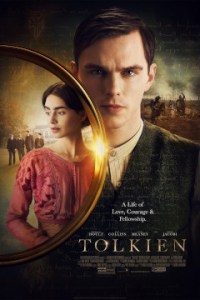
While these aren’t substantial reviews, I featured two indie films: a documentary on Tolkien’s Great War, and a fictional biopic recreating Tolkien’s invention of Middle Earth called Tolkien’s Roadboth inspired, perhaps, by John Garth’s work.

Though the Hobbit films were unsatisfying, I still miss having a Tolkien-Peter Jackson epic to watch in theatre at Christmastime. 2019 supplied us, though, with the Tolkien biopic. Besides posting the trailers, I did lead-up posts like “Getting Ready for TOLKIEN: John Garth and Other Resources.” I still encourage people to read John Garth’s Tolkien and the Great War before watching the film, but I am not like many Tolkien fans who simply could not connect with the film. I reviewed it in three different ways, in three different places:

As I discussed above, I have decided to reserve judgment on the new Amazon Prime Rings of Power series–though I was excited enough to share the title announcement on the Blog nearly two years ago. Even with the announcement of the trailer, I could sense the tensions around the project and was trying to find a way through it. When I do write about the Rings of Power adaptation, I will likely be too late to be relevant! I am quite fine with that.
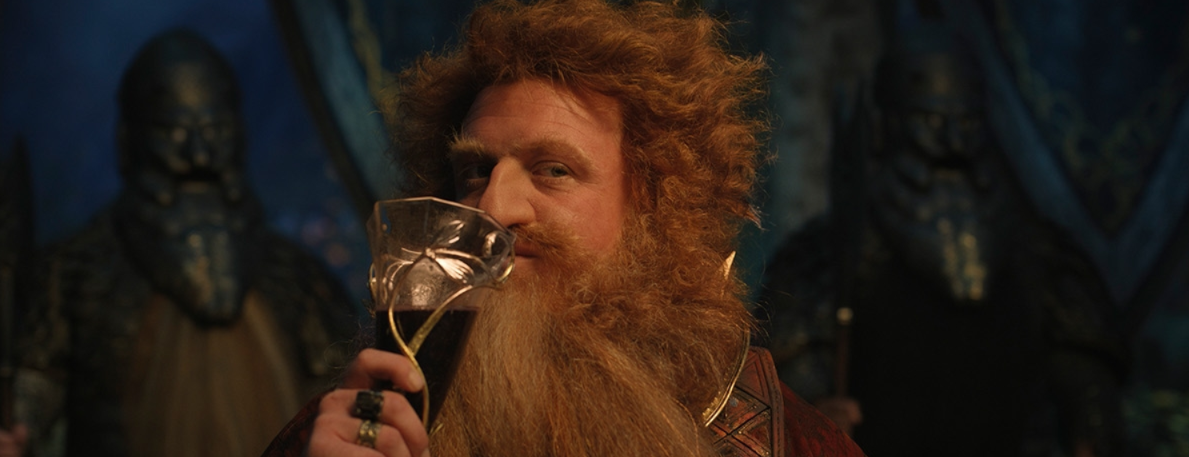
While I fled the Rings of Power arenas of debate, I spoke at Tolkienmoot in 2022 on the Second Age of Middle-earth, specifically the dissipation of Númenor. Thus my “J.R.R. Tolkien’s Texts on The (Down)Fall of Númenor” piece was anticipating both the Rings of Power series and the The Fall of Númenor, and Other Tales from the Second Age of Middle-earth edited by Brian Sibley, but was also the result of my thinking about that fine summer meeting.

Book Reviews
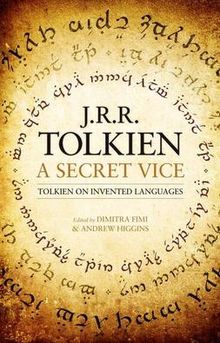
secret_vice

There was no more excellent friend of The Hobbit in the early days than C.S. Lewis. In “The Unpayable Debt of Writing Friends,” I talk about how, if it wasn’t for Lewis, Tolkien might never have finished The Hobbit, and the entire Lord of the Rings legendarium would be in an Oxford archive somewhere. Lewis not only encouraged the book to completion but also reviewed The Hobbit a few times. Here is his review in The Times Literary Supplement.

Lewis is not the only significant reviewer of The Hobbit. When he was 8, my son Nicolas published his review just as the first film was coming to the end of its run. When I was posting Nicolas’ review, I came across another young fellow–the son of Stanley Unwin, the first publisher to receive the remarkable manuscript of The Hobbit. Unsure how children would respond, he paid his son, Rayner, to write a response to the book. You can read about it here: “The Youngest Reviewers Get it Right, or The Hobbit in the Hands of Young Men.”

I have also done more book reviewing in the last couple of years on this blog. I note Fimi & Higgins’ “Secret Vice” above, as well as my review of Bower on Tolkien’s Lost Chaucer. I reviewed Verlyn Flieger’s edition of Tolkien’s The Story of Kullervo, which I quite loved. I also reblogged John Garth’s review of Tolkien’s Lay of Aotrou and Itrou–also edited by Flieger, and also gorgeous.

Tolkien and Art
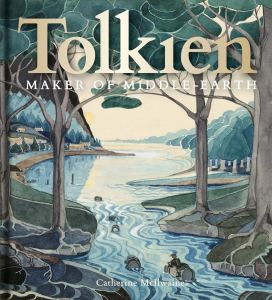
I am fascinated by Tolkien’s own artwork. In some of the Tolkien letters we find out how his humble drawings came to be published with the children’s tale. I decided, though, that I wanted to explore it a little more, and so I wrote, “Drawing the Hobbit.”

There have been many other illustrators since–including Peter Jackson, whose work as a whole is visually stunning, even for those who don’t feel he was true to the books. One of my favourites was captured in this reblog, “Russian Medievalist Tolkien“–a gorgeous collection of Sergey Yuhimov’s interpretation of The Hobbit.

With the great new editions of unpublished Tolkien by his son, we also get to see some of Tolkien’s original art. I continue to be fascinated by this dragon drawing. What an evocation of the Würme in medieval literature! 

I was also blessed throughout the year to wander through two beautiful and rich newish Tolkien books: John Garth‘s The World of J.R.R. Tolkien and the Bodleian Library exhibit text, Tolkien: Maker of Middle-earth, edited by Catherine McIlywaine.

I know that the world of Tolkien art is rich beyond my imagination. However, I would like to note that (with permission) I have been using some of Emily Austin’s Inklings-inspired art in my lectures, and keep her 2018 “Niggle’s Country” in my office.

Tolkien’s Worlds and World-building
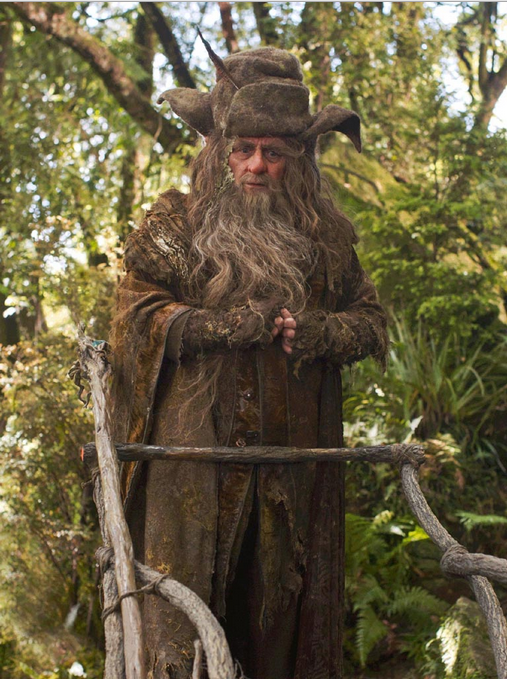
radagast-the-brown

I would like to spend more time thinking about the speculative universes of J.R.R. Tolkien. Meanwhile, I encourage you to read Jubilare’s reblog of the Khazâd series. It’s just the first of a great series but it shows you a bit of the depth of Tolkien’s world behind the world. In reading up on the Wizards of Middle Earth–the Brown, the White, the Grey, and the two Blues–it struck me how relevant Radagast the Brown is to us today. I take some time here to put a comment that Lewis made about Tolkien’s work in the context of other speculative writers, especially J.K. Rowling.

You can also check out the work of people like the Tolkienist, the links on the Tolkien Transactions to catch what kinds of conversations are about these days, or the academic work of people like David Russell Mosley. And, of course, we are all interested in Tolkien’s work on Beowulf. I read it in 2017 for the free SignumU three-lecture class with Tom Shippey, which is now free on the SignumU youtube channel. Signum continues to offer an MA in Tolkien Studies, and you can feel free to reach out to me for information.

While the Inklings and King Arthur series in Winter 2017 touched on Tolkien all throughout, there are two posts of particular interest. Prof. Ethan Campbell writes about “Wood-Woses: Tolkien’s Wild Men and the Green Knight,” and intertextuality expert Dale Nelson writes about “Tiny Fairies: J.R.R. Tolkien’s ‘Errantry’ and Martyn Skinner’s Sir Elfadore and Mabyna.” Beyond these, we are always on the lookout for new research. So check out the Signum University thesis theatre with Rob Gosselin. I chatted with Rob about his MA thesis on “J.R.R. Tolkien’s Sub-creative Vision: Exploring the Capacity and Applicability in Tolkien’s Concept of Sub-creation.” It’s not only a great conversation about world-building, but a very personal one.

Finally, this post includes resources for Tolkien readers (in conversation with Ursula K. Le Guin): “John Garth, Maximilian Hart, Kris Swank, and Myself on Ursula K. Le Guin, Language, Tolkien, and World-building.”

And Just For Fun….
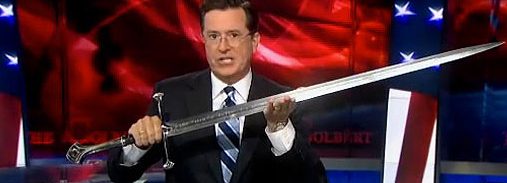
Well, before the fun but still interesting, I hope, is my post “Stephen Colbert, Anderson Cooper, C.S. Lewis, Tolkien & Me: Thoughts on Grief.” Not super heavy on Tolkien, but we do know that Stephen Colbert is a fan. 2020 also saw two new pieces on Tolkien’s friendships. One was Pilgrim favourite Diana Glyer on The Babylon Bee, talking about “The Tolkien and Lewis Bromance.” The other piece on friendship is “C.S. Lewis and J.R.R. Tolkien: Friendship, True Myth, And Platonism,” a Paper by Justin Keena. This was the top guest post of 2020, and one of the few times a long, academic paper had gotten a lot of traction on A Pilgrim in Narnia. I think that is a testimonial to Justin’s work, but also a comment about how readers like that Lewis-Tolkien connection that I’ve brought out in some of those letter posts noted above.

For the fun of it…. Weirdly, the top 2019 Tolkien post is my note on “Philip Pullman as a Reader of C.S. Lewis and J.R.R. Tolkien.” It’s short and light and good to get the blood-boiling.

And have you caught my post-Mythmoot post, “The First Animated Hobbit, and Other Notes of Tolkienish Nonsense“? Terribly awesome, awesomely terrible.

Oh, plus this. Or this!

Posted in News & Links, Reviews | Tagged , , , , , , , , , , , , , , , , , | 10 Comments

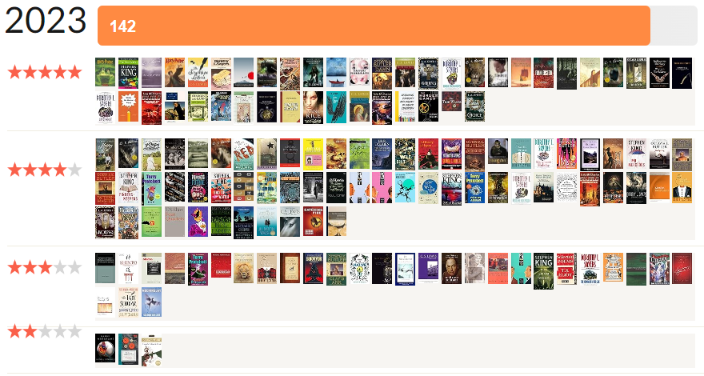
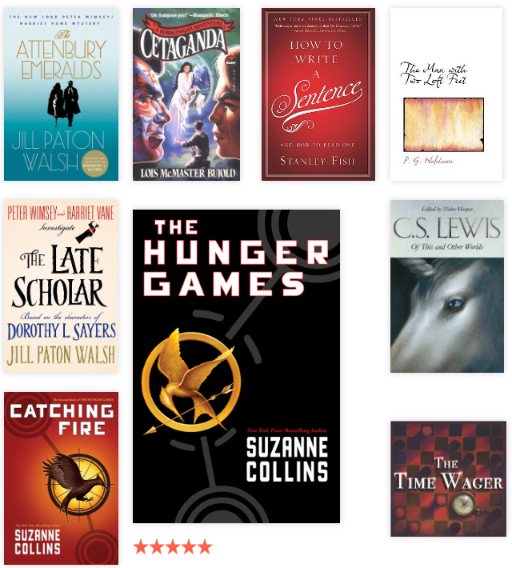
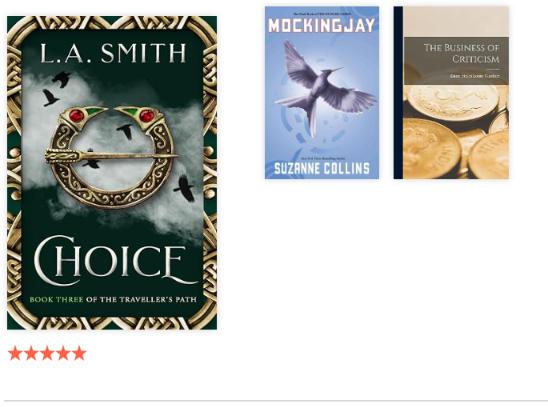
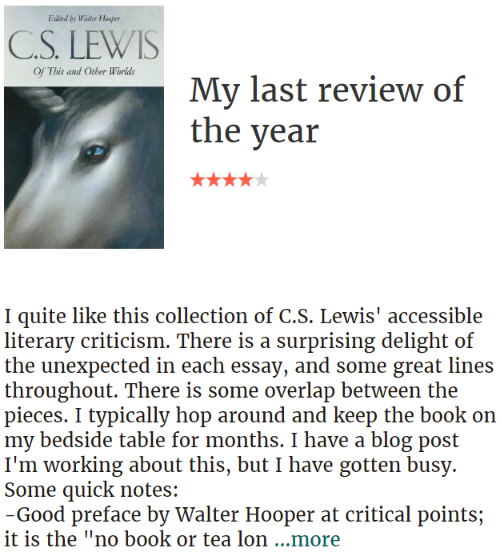
2023: My Year in Books: The Infographic

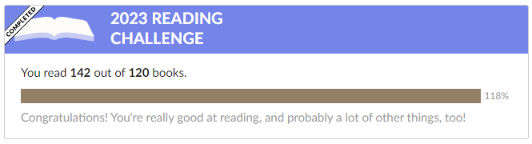
Happy New Year everyone! I wanted to share the Goodreads “My Year in Books” infographic, with some brief reflections to follow. You can see the interactive online infographic here, or read on.

“Congratulations! You’re really good at reading, and probably a lot of other things, too!” I’m starting to think Goodreads is repeating some themes. 2023, though, was a challenging year, and reading played a critical role in helping me heal.

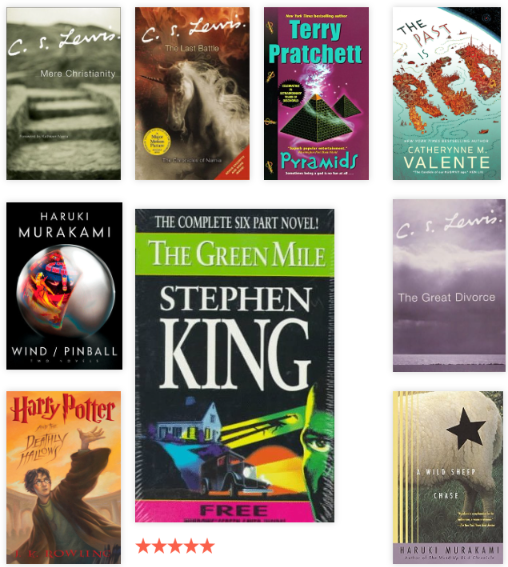
Here is the rest of the infographic. Best wishes in the literary year to come!


Posted in Reflections | Tagged , , , , , , , , , , , , | 3 Comments

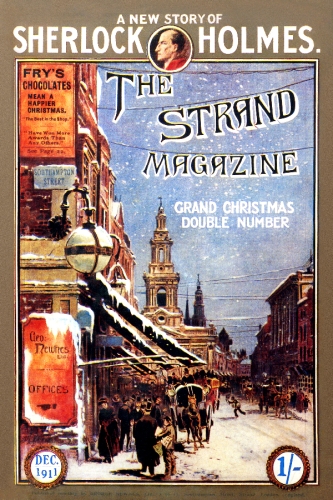
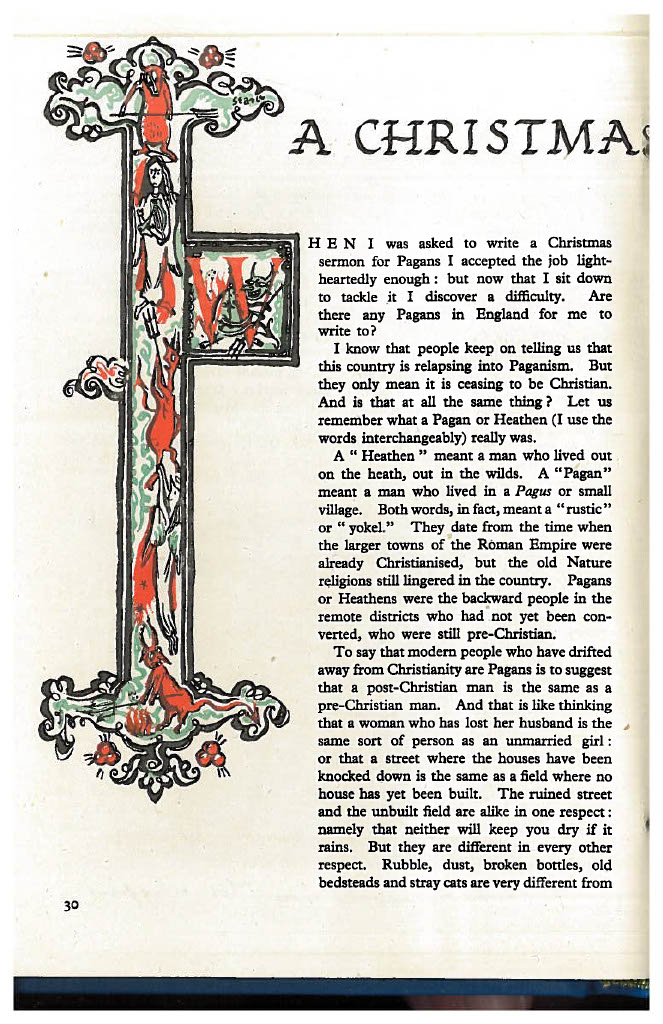
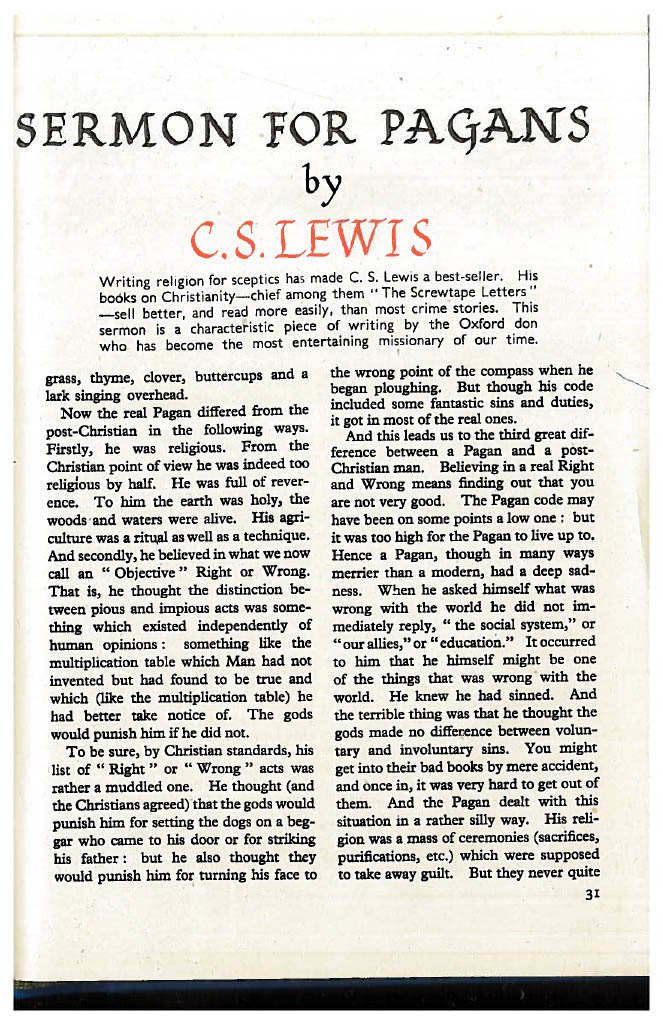
C.S. Lewis’ Christmas Sermon for Pagans in the Strand

I have spoken often enough of literary Providence: from time to time, the book we really need falls from the shelf, lands in our mailbox, or gets handed to us by a friend (or enemy) just when we need it. In scholarship, for me, that has meant finding out-of-print materials in used bookstores, being gifted poor-condition-but-still-costly 1st editions, and being part of a great social media community of scholars who often do the impossible. In archival research, there is also a kind of serendipity at play. In my own life, it was the discovery and publication of an unpublished preface of The Screwtape Letters that opened up new possibilities for reading Lewis’ work. Time and again, the magic of archives leads people to reveal the lost-but-found works of C.S. Lewis
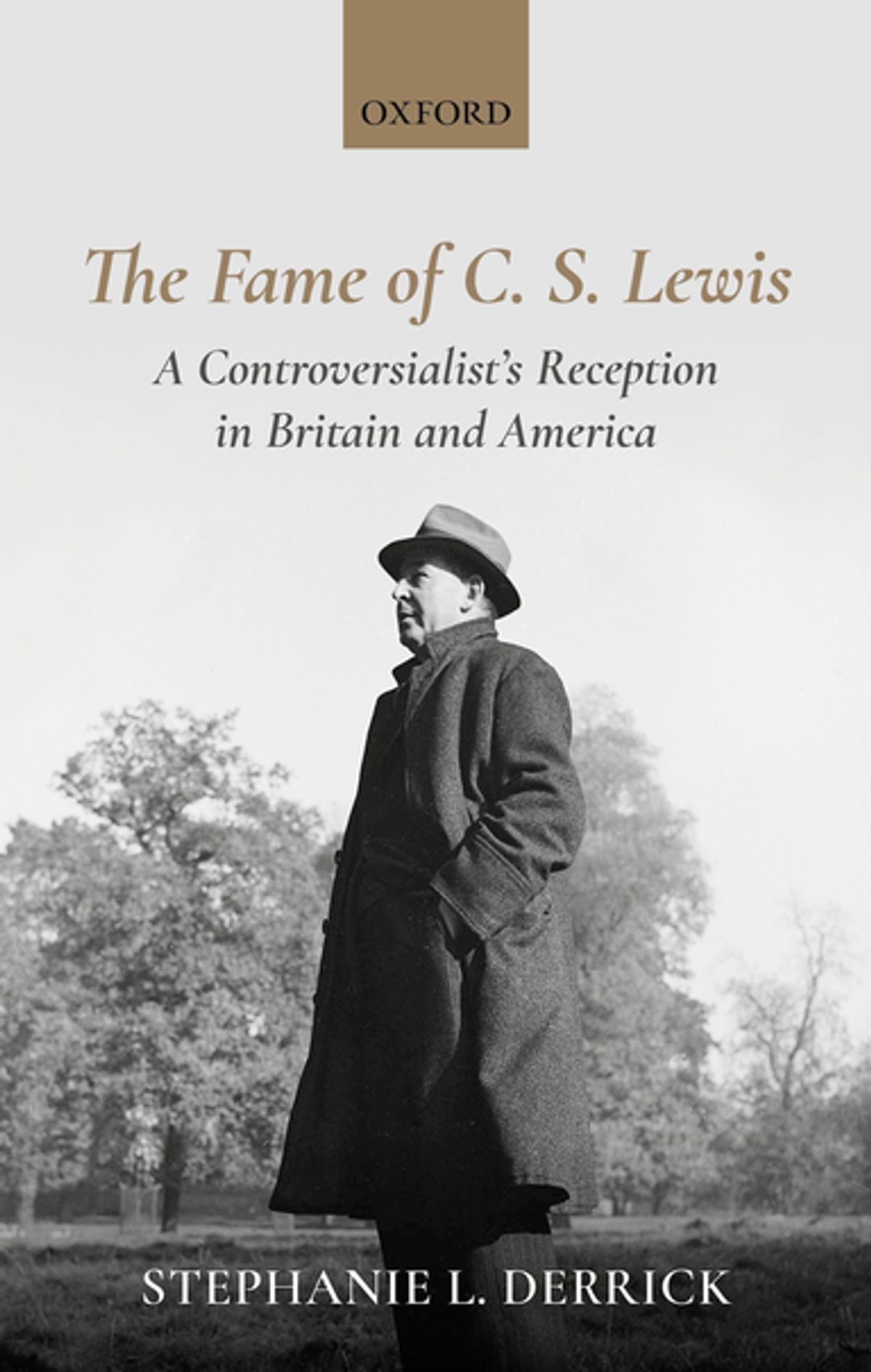
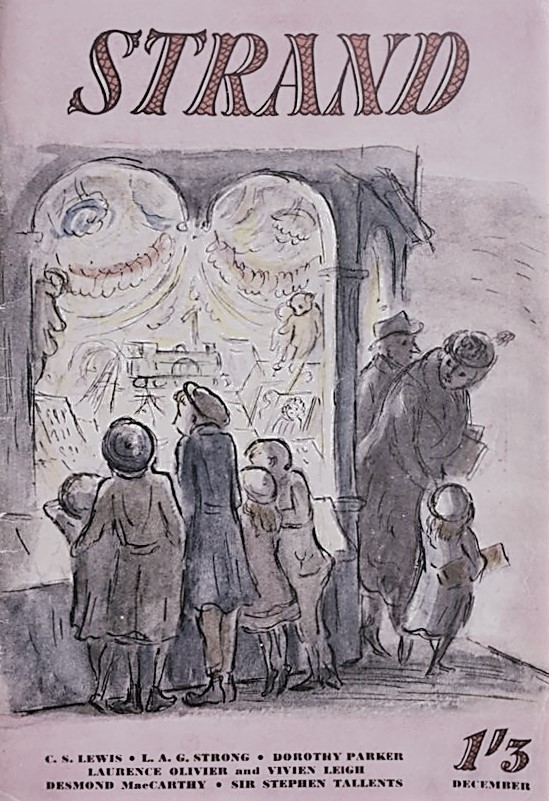
A few years ago, serendipity struck again with what is a rare find: a previously unknown essay by C.S. Lewis. While preparing to do research for her PhD at the University of Stirling on Lewis’ international reception, Stepanie Derrick discovered two entries in The Strand index referring to essays by Lewis that are not in any of our collections. Although published just after WWII, these articles have been overlooked ever since. You can read about her discovery in a recent Christianity Today article, “Christmas and Cricket: Rediscovering Two Lost C. S. Lewis Articles After 70 Years.”

Like most 20th-century British writers, Lewis had a bit of history with The Strand Magazine.

The Strand was where most readers first encountered Sherlock Holmes and some of Arthur Conan Doyle’s other stories. It became a massively popular magazine. Indeed, in a Nov 22nd, 1908 letter, one week before his eleventh birthday, Lewis wrote to his father in anticipation of reading the Strand for a schoolboy book club. A quarter of a century later, on Sep 6th, 1933, Lewis and his brother went for a swim and then a walk through Oxford. They landed at the Eastgate Hotel, where they languished at tea, reading old volumes of the Strand. Lewis later fictionalizes the moment in the hapless character of Mark Studdock, using his connection to Strand Magazine to describe Mark’s long journey out of and back into the self:

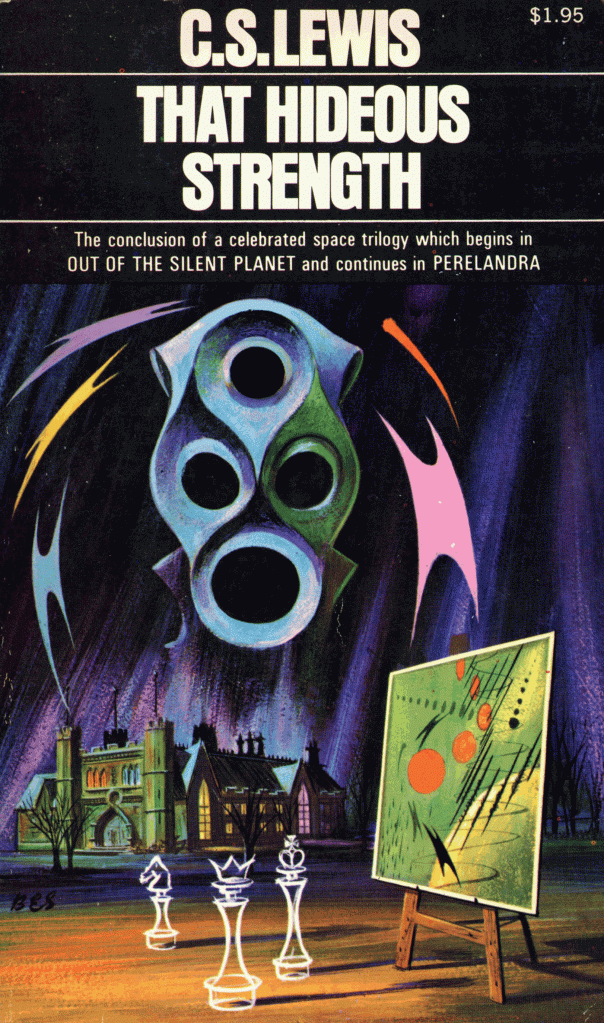
Mark went into the little hotel and found a kind elderly landlady. He had a hot bath and a capital breakfast, and then went to sleep in a chair before a roaring fire. He did not wake till about four. He reckoned he was only a few miles from St. Anne’s, and decided to have tea before he set out. He had tea. At the landlady’s suggestion he had a boiled egg with his tea. Two shelves in the little sitting-room were filled with bound volumes of The Strand. In one of these he found a serial children’s story which he had begun to read as a child, but abandoned because his tenth birthday came when he was half way through it and he was ashamed to read it after that. Now, he chased it from volume to volume till he had finished it. It was good. The grown-up stories to which, after his tenth birthday, he had turned instead of it, now seemed to him, except for Sherlock Holmes, to be rubbish. “I suppose I must get on soon,” he said to himself (That Hideous Strength 17.I).

The Strand was no doubt nostalgic for Lewis, but “nostalgia” is really just a word to evoke some effect of the past that we cannot describe. The Strand was specifically symbolic of something lost and recovered in his own childlike maturity. Perhaps this is why, just after publishing That Hideous Strength, Lewis agreed to write an article or two for the Strand. Indeed, there are echoes in the “Sermon” of That Hideous Strength and at least one direct quotation (from ch. 8, section III).

One of these newly discovered articles–an unusual piece written by “Clive Hamilton,” Lewis’ pen name in his 20s–is, for me, a doubtful connection. I’ll leave that to Dr. Derrick and others to discuss. But the Christmas piece of 1946 is most definitely a Lewisian discovery–not least for the upsidedown nature of the essay.

Knowing that he is supposed to be simply writing a Christmas sermon for post-Christians–pagan England after the collapse of Christianity–Lewis takes time to set the words “pagan” and “heathen” in context. Though beginning as words for backward countryfolk, people on the heath and in the pagus (village), in popular speech, “pagan” became a term for “pre-Christian.” To assume that post-Christian England will be like pre-Christian England, Lewis argues, is to assume that the experience of a widow is like that of a young woman before her wedding day, or that an uncultivated field and a ruined street are the same things.

Lewis then takes time to think about the difference between what a pre-Christian pagan was and what a post-Christian Brit might be like. The difference isn’t just disenchantment, the Western experience of losing that sense of the universe being alive. Real pagans, Lewis argues, had a clear morality of right and wrong, a true sense that what we do matters, and a fully integrated life in the natural world. By contrast, in the contemporary world, whether or not we are post-religious, nature is not a spiritual reality, the universe is a machine ready to hand for exploitation, and there is no ultimate right and wrong–only ideology. When something is wrong, Lewis suggests, the post-Christian Englishperson points to the Government or the education system or to God or whatever as the problem. Rarely does a post-Christian carry around a sense that they might be at fault.

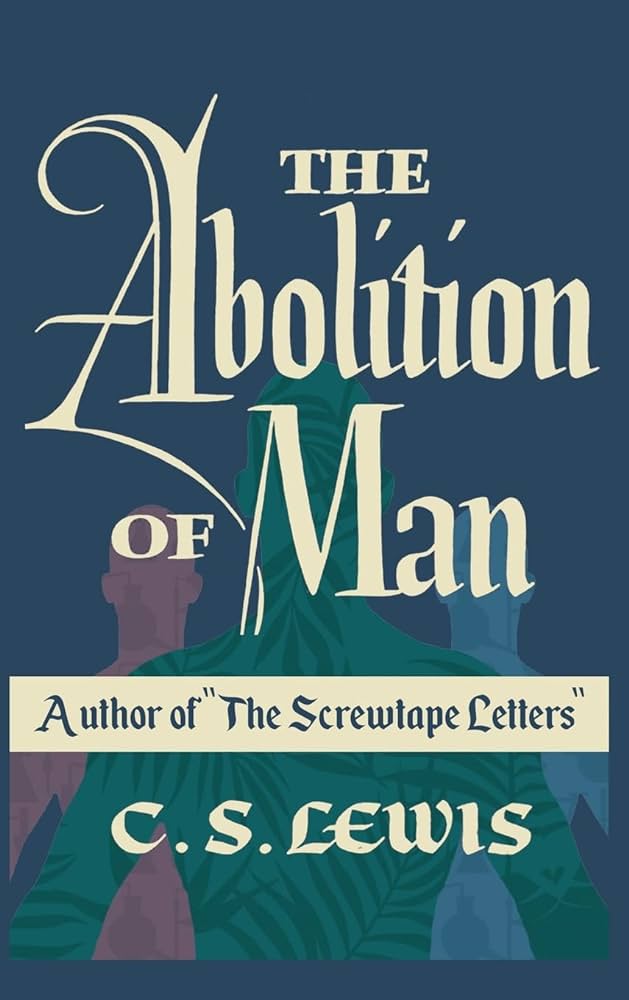
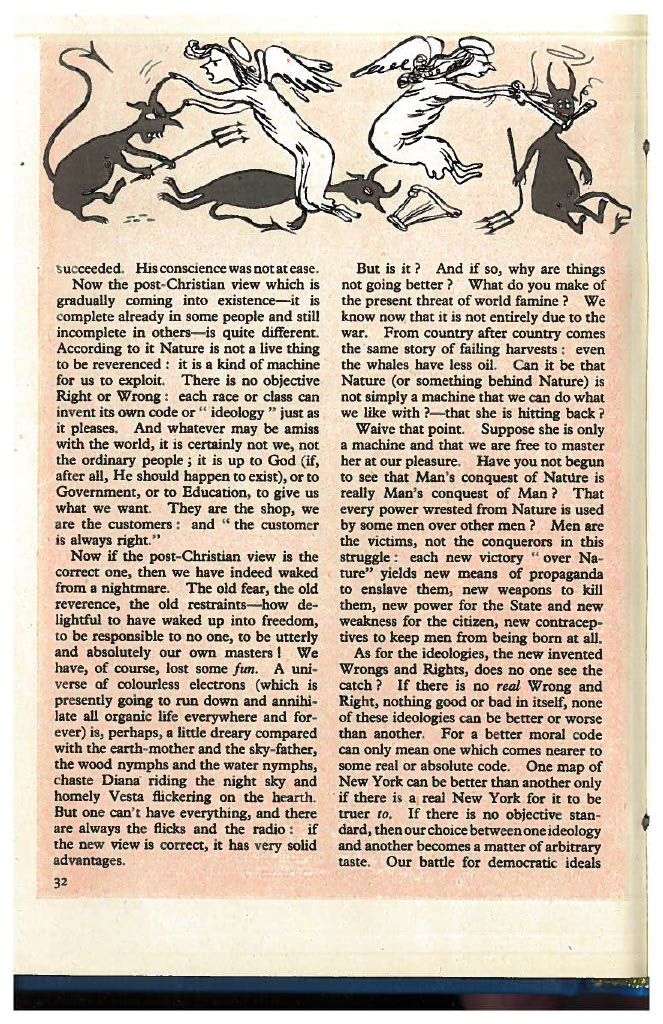
Besides the dreary worldview of the post-Christian mechanistic universe–compared with the colour of the pagan world, at least–Lewis is concerned about the social and environmental implications of the approach current in his time. In particular, as he argues in The Abolition of Man (1943) and That Hideous Strength (1945), an imperial approach to nature is not merely “Man’s conquest of Nature” but “really Man’s conquest of Man.” Lewis was right that in WWII and the years after, the real question was how some people were going to rule others. Although the Soviet Union has collapsed–the so-called end of ideology–that temptation to oligarchical domination is in us, whether in public life, in cultural morality, or on social media.

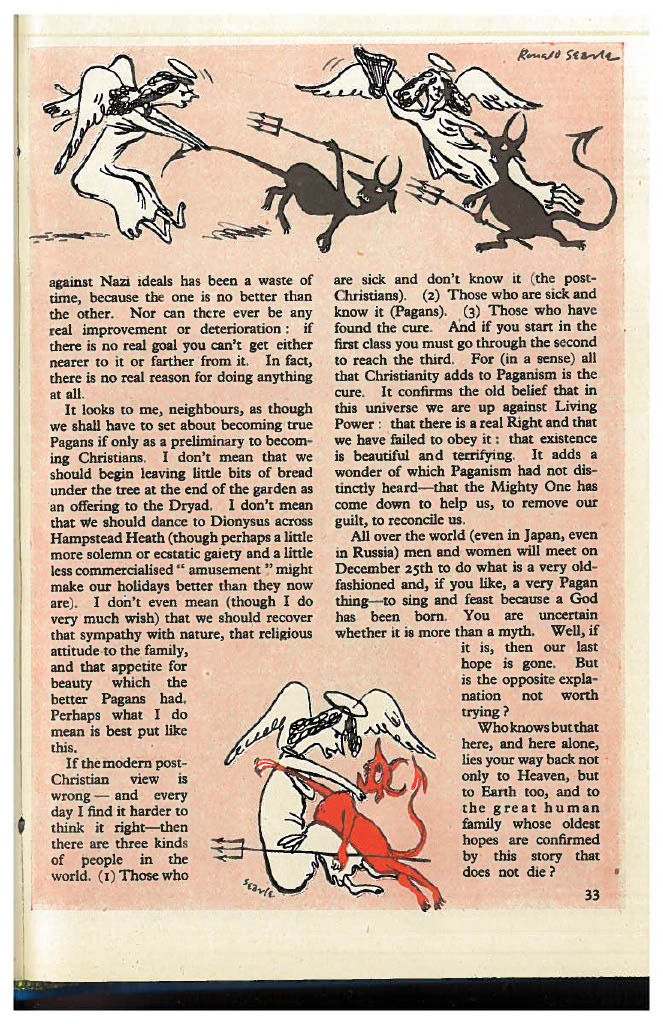
In this “Christmas Sermon for Pagans,” as in The Abolition of Man, Lewis is really focused on warfare technology, environmental damage in the name of progress, and social control. Beyond the warning of those things, he suggests that we are going to need a root for our morality. In order to say that Nazi ideology is “wrong,” we need to compare it to something which is truly “right.” He leaves that root of truth against great evil open for the post-Christian world to discover.

Well, not totally open. In his characteristic way, Lewis turns everything on its head. Derrick includes this intriguing moment in her CT article:

“It looks to me, neighbours, as though we shall have to set about becoming true Pagans if only as a preliminary to becoming Christians. … For (in a sense) all that Christianity adds to Paganism is the cure. It confirms the old belief that in this universe we are up against Living Power: that there is a real Right and that we have failed to obey it: that existence is beautiful and terrifying. It adds a wonder of which Paganism had not distinctly heard—that the Mighty One has come down to help us, to remove our guilt, to reconcile us.”

Thinking of post-Christians and those Christians who have no knowledge of the pagan world, I can’t think of anything more horrifying at Christmas than this sermon (except children’s Christmas concerts, which I think are universally horrifying, but I seem to be alone in this belief). In many ways, it isn’t a very Christmasy sermon. Fortunately, it isn’t anything like his Christmas curmudgeon essays I’ve talked about before.

In the CT article, Derrick describes her find in terms I can resonate with: “The thrill of discovery has brought home a few points (of encouragement) in a time when it sometimes seems as though all the stones have been overturned.” More than ever, I am convinced not all archival stones have been turned, that there are still discoveries to be had. More than the great moments–and this neat discovery is small compared with the work of Derrick’s research project as a whole–working in the archives brings a thousand additions, clarifications, and little points of interest to any curious reader. Archive research is like the sand settling between the stones in a jar, filling in the unknown empty spaces of our research for a fuller knowledge of what we study.

I would encourage you to read Stephanie Derrick’s CT article. Serendipitous discoveries can occur in twos. In volume 34 of SEVEN journal, Joel Heck (of “Chronologically Lewis) and Christopher Marsh provide a transcription and an introduction, “Discovering ‘A Christmas Sermon for Pagans.'” I hope you enjoy this unusual piece, and best wishes at Christmas!

Stephanie Derrick’s PhD research was published by Oxford University Press as The Fame of C. S. Lewis: A Controversialist’s Reception in Britain and America. Here are some other important books that assess C.S. Lewis’ impact:

  • Samuel Joeckel, The C.S. Lewis Phenomenon: Christianity and the Public Sphere (2013)
  • George Marsden, C.S. Lewis’s “Mere Christianity”: A Biography (2016)
  • Alan Snyder, America Discovers C. S. Lewis: His Profound Impact (2016)
  • Mark Noll, C.S. Lewis in America: Readings and Reception, 1935–1947 (2023)
  • Chad Walsh, The Literary Legacy of C.S. Lewis (1979)

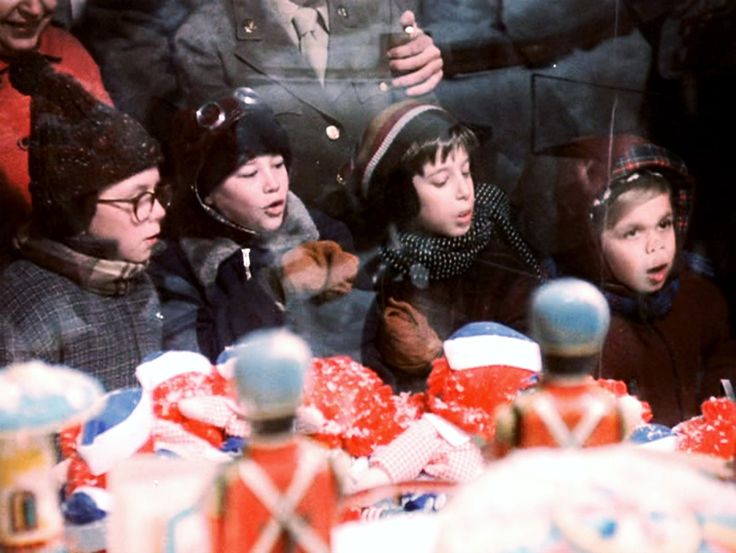
The cover of The Strand with C.S. Lewis and Laurence Olivier reminds me of one of my favourite Christmas movies, A Christmas Story (or the Ralphie movie, as we call it).

Posted in Feature Friday, Lewis Biography, Memorable Quotes, News & Links, Original Research | Tagged , , , , , , , , , , , , | 16 Comments

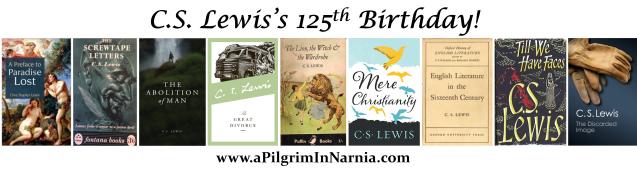
Happy 125th Birthday C.S. Lewis! (#CSLewisReadingDay)

“It’s my 125th birthday!” C.S. Lewis might cry out in celebration to a gathering of a few dozen of his closest friends. If he could have lived until he was 125, that is. And if he was a rather remarkable hobbit.

Though hobbits were scarce in Oxfordshire in the 20th century, Lewis shared with them a ruddy, brusque cheerfulness and love of homely things. And like Bilbo, Lewis combined a Tookish and a Bagginsish side. Lewis was an adventurous scholar and playful traditionalist whose life and work were the bringing together of word and image, reason and imagination, realism and the fantastic, love and loss, death and resurrection. Indeed, I believe that because he recognized the new life principle in the character of God and the patterns of creation, he was able to have a healthy view of death, loss, and self-giving love. The epic journey from Good Friday to Easter Sunday absolutely fills the landscape of Lewis’ creative writing in every mode: poetry, fairy tales, speculative fiction, literary history, cultural criticism, and theological reflection.

What do you get such a remarkable man of contrasts and possibilities for his 125th birthday? As there is no common etiquette for quasquicentenniality in the days since the longlivers have left our shores, I thought I would give C.S. Lewis readers the gift of some of my favourite writings about Lewis on A Pilgrim in Narnia. It is C.S. Lewis reading day, after all!

Some of these are my most popular essays and blog posts, but a couple of them are things I wrote that I still have fond feelings about, even if few noticed them at the time. Click on the snippet, and it should take you there. In any case, be well, read with wonder, and share generously.

Posted in Reflections | Tagged , , , , , , , , , , | 11 Comments

An Obituary of C.S. Lewis’ Life as an Oxford Don, by John Wain (on the 60th Anniversary of Lewis’ Death)

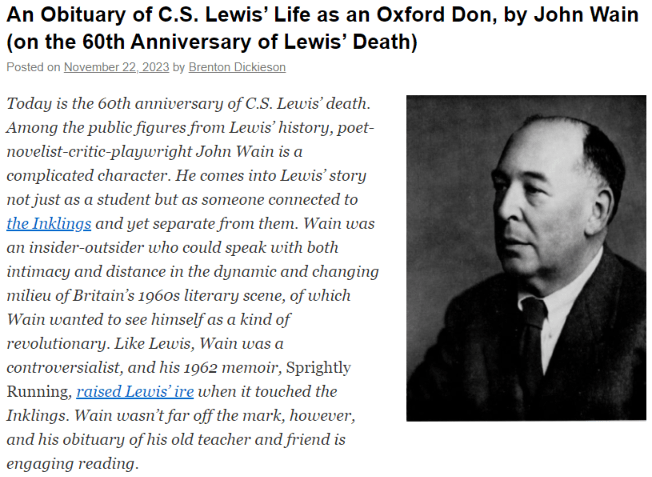
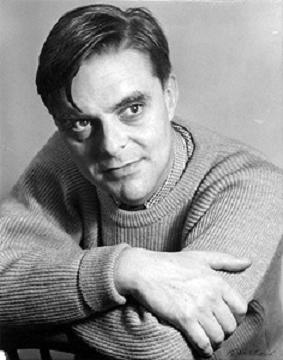
Today is the 60th anniversary of C.S. Lewis’ death. Among the public figures from Lewis’ history, poet-novelist-critic-playwright John Wain is a complicated character. He comes into Lewis’ story not just as a student but as someone connected to the Inklings and yet separate from them. Wain was an insider-outsider who could speak with both intimacy and distance in the dynamic and changing milieu of Britain’s 1960s literary scene, of which Wain wanted to see himself as a kind of revolutionary. Like Lewis, Wain was a controversialist, and his 1962 memoir, Sprightly Running, raised Lewis’ ire when it touched the Inklings. Wain wasn’t far off the mark, however, and his obituary of his old teacher and friend is engaging reading. 

I clearly don’t agree with Wain that Lewis’ novels are “simply bad” and that an author’s interest in science fiction is “a reliable sign of imaginative bankruptcy.” Of all the balance sheet issues I face, my imaginative life is perhaps the only one in the black. Under it all, of course, is his belief that popular writing is bad thinking–an unreflective prejudice that is the antithesis of Lewis’ vocation as a writer and what I am trying to do here on A Pilgrim in Narnia.

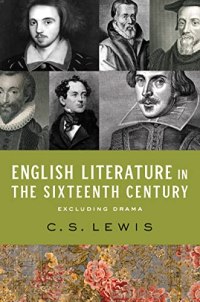
However, Wain’s assessment of Lewis’ life-work of literary history, English Literature in the Sixteenth Century, excluding Drama. I quite like how it leads to his conclusion with a Chaucer quotation, “gladly would he learn and gladly teach.” Of Lewis’ public profile–and his personal walls of protection against a public life–Wain may have something to say. Do you agree with Lewis’ old student, who only saw the veiled Lewis and never the revealed one? Even with his own blindspots, John Wain sees much of C.S. Lewis that is worth reading about on the 60th anniversary of his death.  

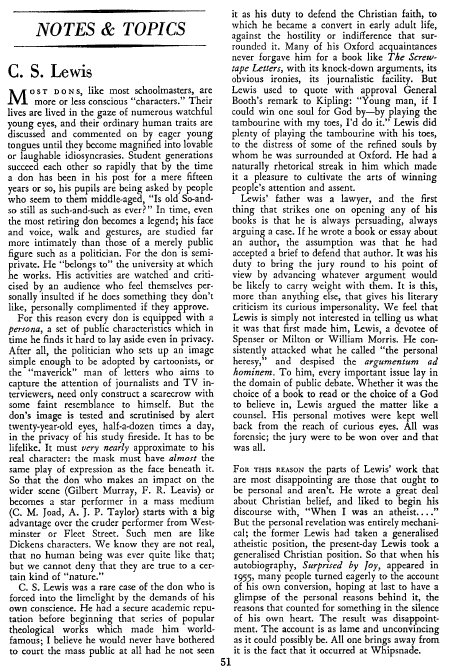
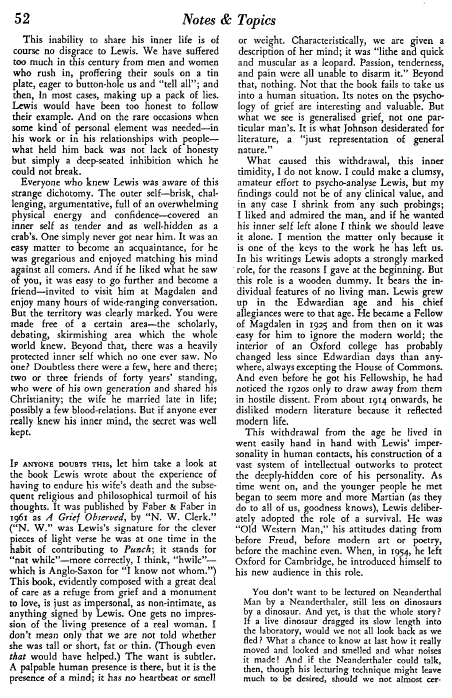
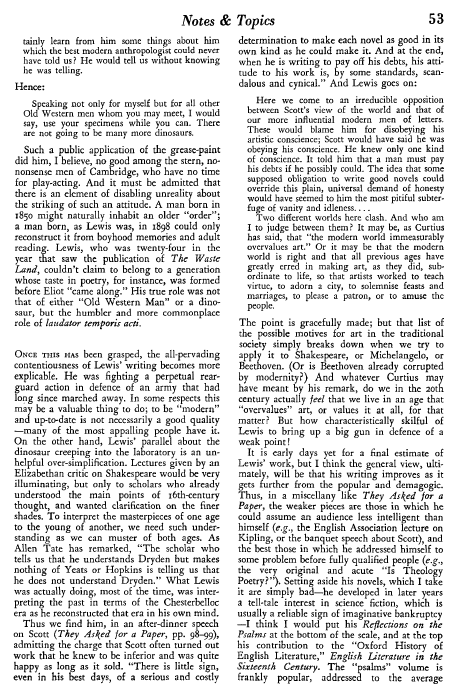
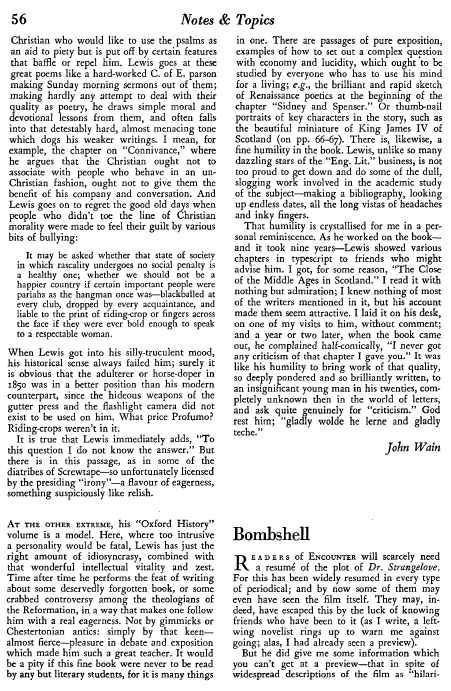
The transcription is my own from the May 1964 issue of Encounter, and I include photographs of it below. The pictures and links are obviously my editorial inclusions, along with some changes in the format (though none of the words). Best wishes on this day of memory.


Most dons, like most schoolmasters, are more or less conscious “characters.” Their lives are lived in the gaze of numerous watchful young eyes, and their ordinary human traits are discussed and commented on by eager young tongues until they become magnified into lovable or laughable idiosyncrasies. Student generations succeed each other so rapidly that by the time a don has been in his post for a mere fifteen years or so, his pupils are being asked by people who seem to them middle-aged, “Is old So-and-so still as such-and-such as ever?” In time, even the most retiring don becomes a legend; his face and voice, walk and gestures, are studied far more intimately than those of a merely public figure such as a politician. For the don is semiprivate. He “belongs to” the university at which he works. His activities are watched and criticised by an audience who feel themselves personally
insulted if he does something they don’t like, personally complimented if they approve.

For this reason every don is equipped with a persona, a set of public characteristics which in time he finds it hard to lay aside even in privacy. After all, the politician who sets up an image simple enough to be adopted by cartoonists, or the “maverick” man of letters who aims to capture the attention of journalists and TV interviewers, need only construct a scarecrow with some faint resemblance to himself.

But the don’s image is tested and scrutinised by alert twenty-year-old eyes, half-a-dozen times a day, in the privacy of his study fireside. It has to be lifelike. It must very nearly approximate to his real character: the mask must have almost the same play of expression as the face beneath it.

john wain oxfordSo that the don who makes an impact on the wider scene (Gilbert Murray, F. R. Leavis) or becomes a star performer in a mass medium (C. M. Joad, A. J. P. Taylor) starts with a big advantage over the cruder performer from Westminster or Fleet Street. Such men are like Dickens characters. We know they are not real, that no human being was ever quite like that; but we cannot deny that they are true to a certain kind of “nature.”

C.S. Lewis was a rare case of the don who is forced into the limelight by the demands of his own conscience. He had a secure academic reputation before beginning that series of popular theological works which made him world-famous; I believe he would never have bothered to court the mass public at all had he not seen it as his duty to defend the Christian faith, to which he became a convert in early adult life, against the hostility or indifference that surrounded it.

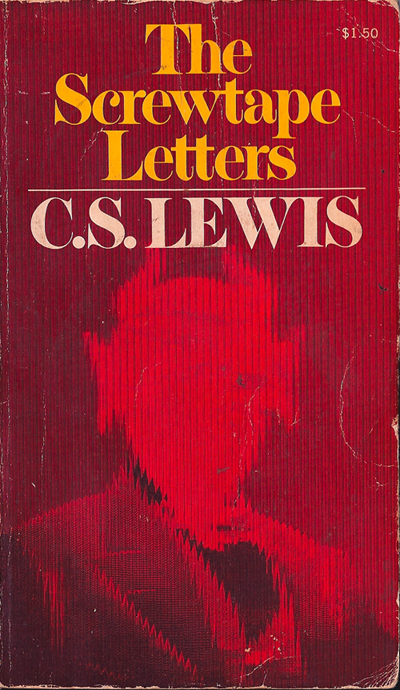
Many of his Oxford acquaintances never forgave him for a book like The Screwtape Letters, with its knock-down arguments, its obvious ironies, its journalistic facility. But Lewis used to quote with approval General Booth’s remark to Kipling: “Young man, if I could win one soul for God by playing the tambourine with my toes, I’d do it.” Lewis did plenty of playing the tambourine with his toes, to the distress of some of the refined souls by whom he was surrounded at Oxford.

He had a naturally rhetorical streak in him which made it a pleasure to cultivate the arts of winning people’s attention and assent.

Lewis’ father was a lawyer, and the first thing that strikes one on opening any of his books is that he is always persuading, always arguing a case. If he wrote a book or essay about an author, the assumption was that he had accepted a brief to defend that author. It was his duty to bring the jury round to his point of view by advancing whatever argument would be likely to carry weight with them. It is this, more than anything else, that gives his literary criticism its curious impersonality. We feel that Lewis is simply not interested in telling us what it was that first made him, Lewis, a devotee of Spenser or Milton or William Morris. He consistently attacked what he called “the personal heresy,” and despised the argumentum ad hominem. To him, every important issue lay in the domain of public debate. Whether it was the choice of a book to read or the choice of a God to believe in, Lewis argued the matter like a counsel. His personal motives were kept well back from the reach of curious eyes. All was forensic; the jury were to be won over and that was all.

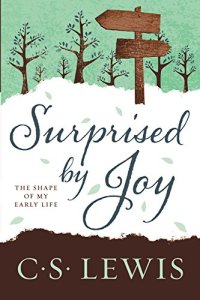
For this reason the parts of Lewis’ work that are most disappointing are those that ought to be personal and aren’t. He wrote a great deal about Christian belief, and liked to begin his discourse with, “When I was an atheist.. . .” But the personal revelation was entirely mechanical; the former Lewis had taken a generalised atheistic position, the present-day Lewis took a generalised Christian position. So that when his autobiography, Surprised by Joy, appeared in 1955, many people turned eagerly to the account of his own conversion, hoping at last to have a glimpse of the personal reasons behind it, the reasons that counted for something in the silence of his own heart. The result was disappointment. The account is as lame and unconvincing as it could possibly be. All one brings away from it is the fact that it occurred at Whipsnade.

This inability to share his inner life is of course no disgrace to Lewis. We have suffered too much in this century from men and women who rush in, proffering their souls on a tin plate, eager to button-hole us and “tell all”; and then, in most cases, making up a pack of lies. Lewis would have been too honest to follow their example. And on the rare occasions when some kind of personal element was needed–in his work or in his relationships with people–what held him back was not lack of honesty but simply a deep-seated inhibition which he could not break.

Everyone who knew Lewis was aware of this strange dichotomy. The outer self-brisk, challenging, argumentative, full of an overwhelming physical energy and confidence-covered an inner self as tender and as well-hidden as a crab’s. One simply never got near him. It was an easy matter to become an acquaintance, for he was gregarious and enjoyed matching his mind against all comers. And if he liked what he saw of you, it was easy to go further and become a friend–invited to visit him at Magdalen and enjoy many hours of wide-ranging conversation. But the territory was clearly marked. You were made free of a certain area-the scholarly, debating, skirmishing area which the whole world knew. Beyond that, there was a heavily protected inner self which no one ever saw.

No one? Doubtless there were a few, here and there; two or three friends of forty years’ standing, who were of his own generation and shared his Christianity; the wife he married late in life; possibly a few blood-relations. But if anyone ever really knew his inner mind, the secret was well kept.

If anyone doubts this, let him take a look at the book Lewis wrote about the experience of
having to endure his wife’s death and the subsequent religious and philosophical turmoil of his thoughts. It was published by Faber & Faber in 1961 as A Grief Observed, by “N. W. Clerk.” (“N. W.” was Lewis’s signature for the clever pieces of light verse he was at one time in the habit of contributing to Punch; it stands for “nat while’’–more correctly, I think, “hwilc”–which is Anglo-Saxon for “I know not whom.”) This book, evidently composed with a great deal of care as a refuge from grief and a monument to love, is just as impersonal, as non-intimate, as anything signed by Lewis. One gets no impression of the living presence of a real woman. I don’t mean only that we are not told whether she was tall or short, fat or thin. (Though even that would have helped.) The want is subtler.

A palpable human presence is there, but it is the presence of a mind; it has no heartbeat or smell or weight. Characteristically, we are given a description of her mind; it was “lithe and quick and muscular as a leopard. Passion, tenderness, and pain were all unable to disarm it.” Beyond that, nothing.

Not that the book fails to take us into a human situation. Its notes on the psychology of grief are interesting and valuable. But what we see is generalised grief, not one particular man’s. It is what Johnson desiderated for literature, a “just representation of general
nature.”

What caused this withdrawal, this inner timidity, I do not know. I could make a clumsy, amateur effort to psycho-analyse Lewis, but my findings could not be of any clinical value, and in any case I shrink from any such probings; I liked and admired the man, and if he wanted his inner self left alone I think we should leave it alone. I mention the matter only because it is one of the keys to the work he has left us. In his writings Lewis adopts a strongly marked role, for the reasons I gave at the beginning. But this role is a wooden dummy. It bears the individual features of no living man. Lewis grew up in the Edwardian age and his chief allegiances were to that age. He became a Fellow of Magdalen in 1925 and from then on it was easy for him to ignore the modern world; the interior of an Oxford college has probably changed less since Edwardian days than anywhere, always excepting the House of Commons. And even before he got his Fellowship, he had noticed the 1920s only to draw away from them in hostile dissent. From about 1914 onwards, he disliked modern literature because it reflected modern life.

This withdrawal from the age he lived in went easily hand in hand with Lewis’ impersonality in human contacts, his construction of a vast system of intellectual outworks to protect the deeply-hidden core of his personality. As time went on, and the younger people he met began to seem more and more Martian (as they do to all of us, goodness knows), Lewis deliberately adopted the role of a survival. He was “Old Western Man,” his attitudes dating from before Freud, before modern art or poetry, before the machine even. When, in 1954, he left Oxford for Cambridge, he introduced himself to his new audience in this role.
You don’t want to be lectured on Neanderthal Man by a Neanderthaler, still less on dinosaurs by a dinosaur. And yet, is that the whole story? If a live dinosaur dragged its slow length into the laboratory, would we not all look back as we fled? What a chance to know at last how it really moved and looked and smelled and what noises it made! And if the Neanderthaler could talk, then, though his lecturing technique might leave much to be desired, should we not almost certainly learn from him some things about him which the best modern anthropologist could never have told us? He would tell us without knowing he was telling.

Hence:

Speaking not only for myself but for all other old Western men whom you may meet, I would say, use your specimens while you can. There are not going to be many more dinosaurs.

Such a public application of the grease-paint did him, I believe, no good among the stern, no-nonsense men of Cambridge, who have no time for play-acting. And it must be admitted that there is an element of disabling unreality about the striking of such an attitude. A man born in 1850 might naturally inhabit an older “order”; a man born, as Lewis was, in 1898 could only reconstruct it from boyhood memories and adult reading. Lewis, who was twenty-four in the year that saw the publication of The Waste Land, couldn’t claim to belong to a generation whose taste in poetry, for instance, was formed before Eliot “came along.” His true role was not that of either “Old Western Man” or a dinosaur, but the humbler and more commonplace role of laudator temporis acti [one who praised the past].
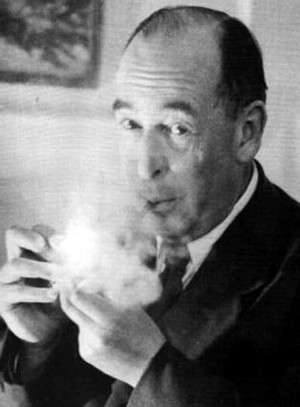
Once this has been grasped, the all-pervading contentiousness of Lewis’ writing becomes more explicable. He was fighting a perpetual rearguard action in defence of an army that had long since marched away.

In some respects this may be a valuable thing to do; to be “modern” and up-to-date is not necessarily a good quality–many of the most appalling people have it. On the other hand, Lewis’ parallel about the dinosaur creeping into the laboratory is an unhelpful oversimplification. Lectures given by an Elizabethan critic on Shakespeare would be very illuminating, but only to scholars who already understood the main points of 16th-century thought, and wanted clarification on the finer shades. To interpret the masterpieces of one age to the young of another, we need such understanding as we can muster of both ages. As Allen Tate has remarked, “The scholar who tells us that he understands Dryden but makes nothing of Yeats or Hopkins is telling us that he does not understand Dryden.” What Lewis was actually doing, most of the time, was interpreting the past in terms of the Chesterbelloc era as he reconstructed that era in his own mind.

Thus we find him, in an after-dinner speech on Scott (They Asked for a Paper, pp. 98-99), admitting the charge that Scott often turned out work that he knew to be inferior and was quite happy as long as it sold. “There is little sign, even in his best days, of a serious and costly determination to make each novel as good in its own kind as he could make it. And at the end, when he is writing to pay off his debts, his attitude to his work is, by some standards, scandalous and cynical.” And Lewis goes on:

Here we come to an irreducible opposition between Scott’s outlook and that of our more influential modern men of letters. These would blame him for disobeying his artistic conscience; Scott would have said he was obeying his conscience. He knew only one kind of conscience. It told him that a man must pay his debts if he possibly could. The idea that some supposed obligation to write good novels could override this plain, universal demand of honesty, would have seemed to him the most pitiful subterfuge of vanity and idleness, and a prime specimen of that ‘literary sensibility’ or ‘affected singularity’ which he most heartily despised.

Two different worlds here clash. And who am I to judge between them? It may be true, as Curtius has said, that ‘the modern world immeasurably overvalues art’. Or it may be that the modern world is right and that all previous ages have greatly erred in making art, as they did, subordinate to life, so that artists worked to teach virtue, to adorn the city, to solemnize feasts and marriages, to please a patron, or to amuse the people.

The point is gracefully made; but that list of the possible motives for art in the traditional society simply breaks down when we try to apply it to Shakespeare, or Michelangelo, or Beethoven. (Or is Beethoven already corrupted by modernity?) And whatever Curtius may have meant by his remark, do we in the 20th century actually feel that we live in an age that “overvalues” art, or values it at all, for that matter? But how characteristically skilful of Lewis to bring up a big gun in defence of a weak point!

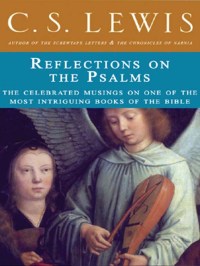
It is early days yet for a final estimate of Lewis’ work, but I think the general view, ultimately, will be that his writing improves as it gets further from the popular and demagogic. Thus, in a miscellany like They Asked for a Paper, the weaker pieces are those in which he could assume an audience less intelligent than himself (e.g., the English Association lecture on Kipling, or the banquet speech about Scott), and the best those in which he addressed himself to some problem before fully qualified people (e.g., the very original and acute “Is Theology Poetry? ”). Setting aside his novels, which I take it are simply bad–he developed in later years a tell-tale interest in science fiction, which is usually a reliable sign of imaginative bankruptcy–I think I would put his Reflections on the Psalms at the bottom of the scale, and at the top his contribution to the “Oxford History of English Literature,” English Literature in the Sixteenth Century. The “psalms” volume is frankly popular, addressed to the average Christian who would like to use the psalms as an aid to piety but is put off by certain features that baffle or repel him. Lewis goes at these great poems like a hard-worked C. of E. parson making Sunday morning sermons out of them; making hardly any attempt to deal with their quality as poetry, he draws simple moral and devotional lessons from them, and often falls into that detestably hard, almost menacing tone which dogs his weaker writings. I mean, for example, the chapter on “Connivance,” where he argues that the Christian ought not to associate with people who behave in an un-Christian fashion, ought not to give them the benefit of his company and conversation. And Lewis goes on to regret the good old days when people who didn’t toe the line of Christian morality were made to feel their guilt by various bits of bullying:

It may be asked whether that state of society in which rascality undergoes no social penalty is a healthy one; whether we should not be a happier country if certain important people were pariahs as the hangman once was-blackballed at every club, dropped by every acquaintance, and liable to the print of riding crop or fingers across the face if they were ever bold enough to speak to a respectable woman.

When Lewis got into his silly-truculent mood, his historical sense always failed him; surely it is obvious that the adulterer or horse-doper in 1850 was in a better position than his modern counterpart, since the hideous weapons of the gutter press and the flashlight camera did not exist to be used on him. What price Profumo? Riding-crops weren’t in it.

It is true that Lewis immediately adds, “To this question I do not know the answer.” But there is in this passage, as in some of the diatribes of Screwtape–so unfortunately licensed by the presiding “irony”–a flavour of eagerness, something suspiciously like relish.

At the other extreme, his “Oxford History” volume is a model. Here, where too intrusive a personality would be fatal, Lewis has just the right amount of idiosyncrasy, combined with that wonderful intellectual vitality and zest. Time after time he performs the feat of writing about some deservedly forgotten book, or some crabbed controversy among the theologians of the Reformation, in a way that makes one follow him with a real eagerness. Not by gimmicks or Chestertonian antics: simply by that keen–almost fierce–pleasure in debate and exposition which made him such a great teacher.

It would be a pity if this fine book were never to be read by any but literary students, for it is many things in one. There are passages of pure exposition, examples of how to set out a complex question with economy and lucidity, which ought to be studied by everyone who has to use his mind for a living; e.g., the brilliant and rapid sketch of Renaissance poetics at the beginning of the chapter “Sidney and Spenser.” Or thumbnail portraits of key characters in the story, such as the beautiful miniature of King James IV of Scotland (on pp. 66-67). There is, likewise, a fine humility in the book. Lewis, unlike so many dazzling stars of the “Eng. Lit.” business, is not too proud to get down and do some of the dull, slogging work involved in the academic study of the subject-making a bibliography, looking up endless dates, all the long vistas of headaches and inky fingers.

The photo Gabriel is fascinated withThat humility is crystallised for me in a personal reminiscence. As he worked on the book–and it took nine years–Lewis showed various chapters in typescript to friends who might advise him. I got, for some reason, “The Close of the Middle Ages in Scotland.” I read it with nothing but admiration; I knew nothing of most of the writers mentioned in it, but his account made them seem attractive. I laid it on his desk, on one of my visits to him, without comment; and a year or two later, when the book came out, he complained half-comically, ‘‘I never got any criticism of that chapter I gave you.” It was like his humility to bring work of that quality, so deeply pondered and so brilliantly written, to an insignificant young man in his twenties, completely unknown then in the world of letters, and ask quite genuinely for “criticism.” God rest him; “gladly wolde he lerne and gladly teche.”

Posted in Lewis Biography, Memorable Quotes | Tagged , , , , , , , , , , , , , , , | 10 Comments