Thoughts on Classic and Contemporary SF vs. Fantasy Hugo Best Novel Award Winners while Failing to Write a Review of a Great Book that was not Nominated

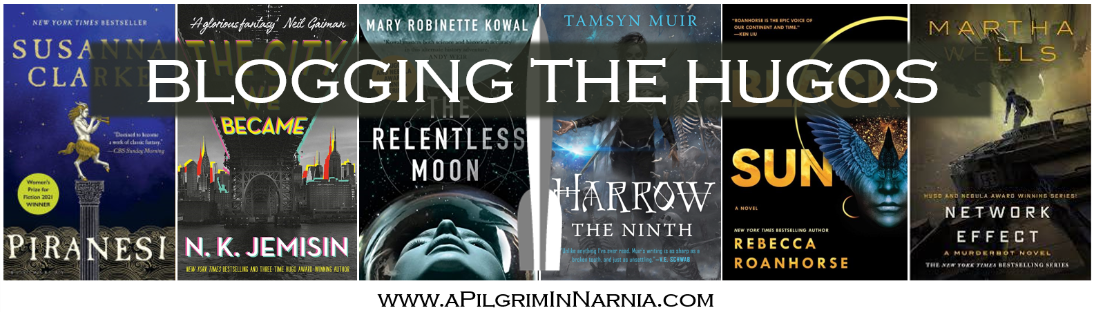
Tamsyn Muir’s Locked Tomb Series is a discovery from my stint as a Hugo Award panellist in 2020 and 2021–the years that Gideon the Ninth (book 1) and Harrow the Ninth (book 2) were nominated. As much as I loved these books–and even though I was defending gorgeous, award-deserving books like Alix E. Harrow’s The Ten Thousand Doors of January and Susanna Clarke’s Piranesi–they did not win the Hugos (though Gideon the Ninth won a few other awards, including the Locus best first novel).

While I can occasionally pick a Hugo winner, it is clear to me that my vision of “Novel of the Year” is often different than that of the Worldcon membership as a whole. I am a wee bit out of step, it seems.

SciFi books have dominated the Hugos through the decades–except, perhaps, during the first decade of this century, where the Harry Potter effect created a shift in focus. As fantasists, Rowling was joined then by folks like George R.R. Martin, Neil Gaiman, and (notably) Susanna Clarke. While I love science fiction as much as fantasy in terms of sheer readerly delight, you have to admit that those fantasy winners are such stellar standouts over the SciFi-winning novels of the period.

Fantasy novels sometimes age better, as well. What I remember of the 2011 list is N.K. Jemisin’s The Hundred Thousand Kingdoms, and not the SciFi novel that won–though Charles Stross’ 2006 AI singularity piece, Accelerando, lives still, when other novels of the period have faded in time. Though admittedly not pop-level books, Mary Doria Russell’s passed-over The Sparrow and her 2001-nominated Children of God may end up becoming science fiction classics.

And I must admit that many of the SciFi-weighted winners–and some of those passed over–have become classics or genre standards, like James Blish‘s A Case of Conscience (1959), Robert A. Heinlein‘s Starship Troopers (1960), Stranger in a Strange Land (1962) and The Moon Is a Harsh Mistress (1967), Walter M. Miller, Jr’s A Canticle for Leibowitz (1961), Philip K. Dick’s The Man in the High Castle (1963), Frank Herbert’s Dune (1966), Daniel Keyes’ Flowers for Algernon (nominated in 1967), Roger Zelazny‘s Lord of Light (1968), Ursula K. Le Guin‘s The Left Hand of Darkness (1970) and The Dispossesed (1975), Kurt Vonnegut Jr’s Slaughterhouse-Five (nominated in 1970), Larry Niven‘s Ringworld (1971), Arthur C. Clarke‘s Rendezvous with Rama (1974), William Gibson’s Neuromancer (1985), Orson Scott Card’s Ender’s Game (1986) and Speaker for the Dead (1987), and so on.

Though I loathe Heinlein’s writing, he is the godfather of the Hugos, a giant in his fairly gigantic field. I love most of the books on this list.

Beyond the classics, which take time to settle in, there are times that I resonate with the Hugo choice picks even though I am a little behind the times. N.K. Jemisin, for example, is clearly one of the science fiction greats of the generation. Time will tell if she will stand with the all-time greats, like H.G. WellsRobert A. Heinlein, Ray BradburyArthur C. Clarke, Isaac Asimov, Frank HerbertUrsula K. Le Guin, Philip K. Dick, or Octavia E. Butler. With her triple Hugo Award-winning Broken Earth series—the only author to have an entire trilogy win, the only author to win three years in a row, and one of only five writers who have three or more best novel wins—Jemisin is already set apart as a generation-leading SF superstar. While I really struggled with her 2021 Hugo-shortlisted The City We Became–you can see Part 1 and Part 2 of my review–I do thint she deserved her Broken Earth triple win in 2016, 2017, and 2018 (with some hesitancy on the 2017 mid-series novel, The Obelisk Gate).

Women have been dominating the Hugo Novel category since 2016, and completely filled the shortlist of 2020 and 2021 (but not 2022). Sadly, my 2020 novel pick, The Ten Thousand Doors of January, did not win–though I think it to be a lovely and provocative work of fantasy that is both fresh and classic.
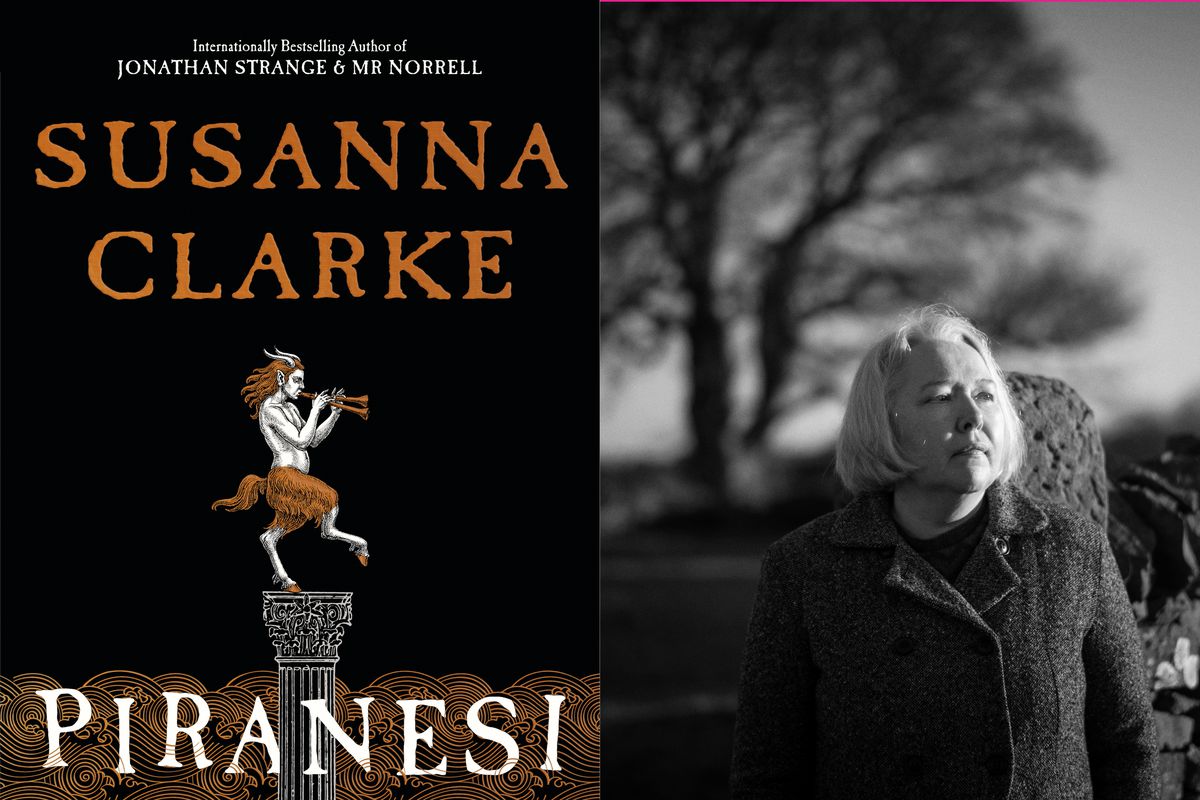
My 2021 book pick was a bit of an outlier: Susanna Clarke’s long-awaited novel, Piranesi–a work of such joyful simplicity and philosophical complexity that I have yet to complete my review … even a year later. I keep rewriting it. It seems to be a problem.

Though Piranesi is a standalone story–not a novel … a fairy tale? dream vision? parable?–I felt I needed to finally read Clarke’s vivid, game-changing 2004 Regency-era fantasy, Jonathan Strange & Mr Norrell as background. It was pretty great. This super long novel was the perfect combination of influences for out-of-the-closet Jane Austen-slash-SF lover like myself. Crossing the genre and literary fiction divide, Strange & Norell was longlisted for the 2004 Man Booker Prize and won the 2005 Hugo Award for Best Novel–as well as the World Fantasy Award, the Locus, and the Mythopoeic Award for Adult Lit. Jonathan Strange & Mr Norrell is one of the books that defined the decade of fiction.

Although Piranesi is unusually rich and compelling, except for earning Susanna Clarke the elite 2021 Women’s Prize for Fiction and a well-deserved Audie Award for Chiwetel Ejiofor’s audiobook performance, it did not top the major science fiction and fantasy award lists for which it was shortlisted (BFSA, Nebula, World Fantasy Award, Mythopoeic Fantasy Award, and the Hugo Novel). 

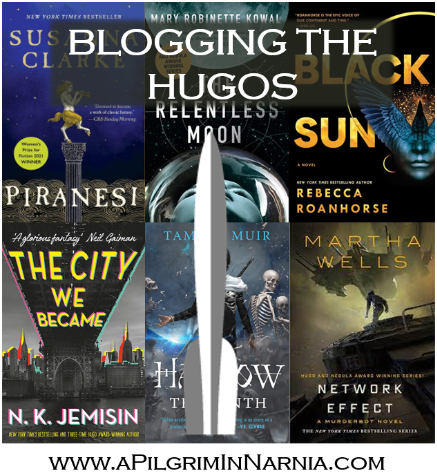
Another nominee of 2021, Mary Robinette Kowal’s 2021 Hugo-nominated The Relentless Moon, is not, perhaps, a novel to be remembered in history. However, the first novel in Kowal’s Lady Astronaut Universe, The Calculating Stars, deserved its 2019 Hugo win. While I would not have picked it up based on the book description because it sounded too much like a Netflix-type film with overly beautiful people “making a difference” in a historic moment, The Calculating Stars was for me a refreshing discovery–a classic feeling girl-power SciFi novel with religious and postapocalyptic sympathies in a strong and thoughtful series. 

Also from the 2021 nominee list, SciFi writer Martha Wells has been publishing for decades, including a Nebula nomination in 1999 for The Death of the Necromancer and Hugo nominations and wins for novellas and book series. She carefully shaped the Murderbot Diaries series that includes the 2021 nominee, Network Effect. She also had the entire series nominated in that category.

But this is where I start to pull away from the SF fan moment. While I was able to enjoy Network Effect–and my review essay, “Sarcastabots, The Wall-E Effect, and Finding the Human in Martha Wells’ Network Effect,” is one of the better things I’ve written in the last year or so–I am astounded that it took the Hugo over Piranesi or Rebecca Roanhorse’s astonishing mythological novel, Black Sun.

Seriously, check out my thoughts on Black Sun, because Roanhorse’s mythic fantasy is worthy of its Hugo class. 
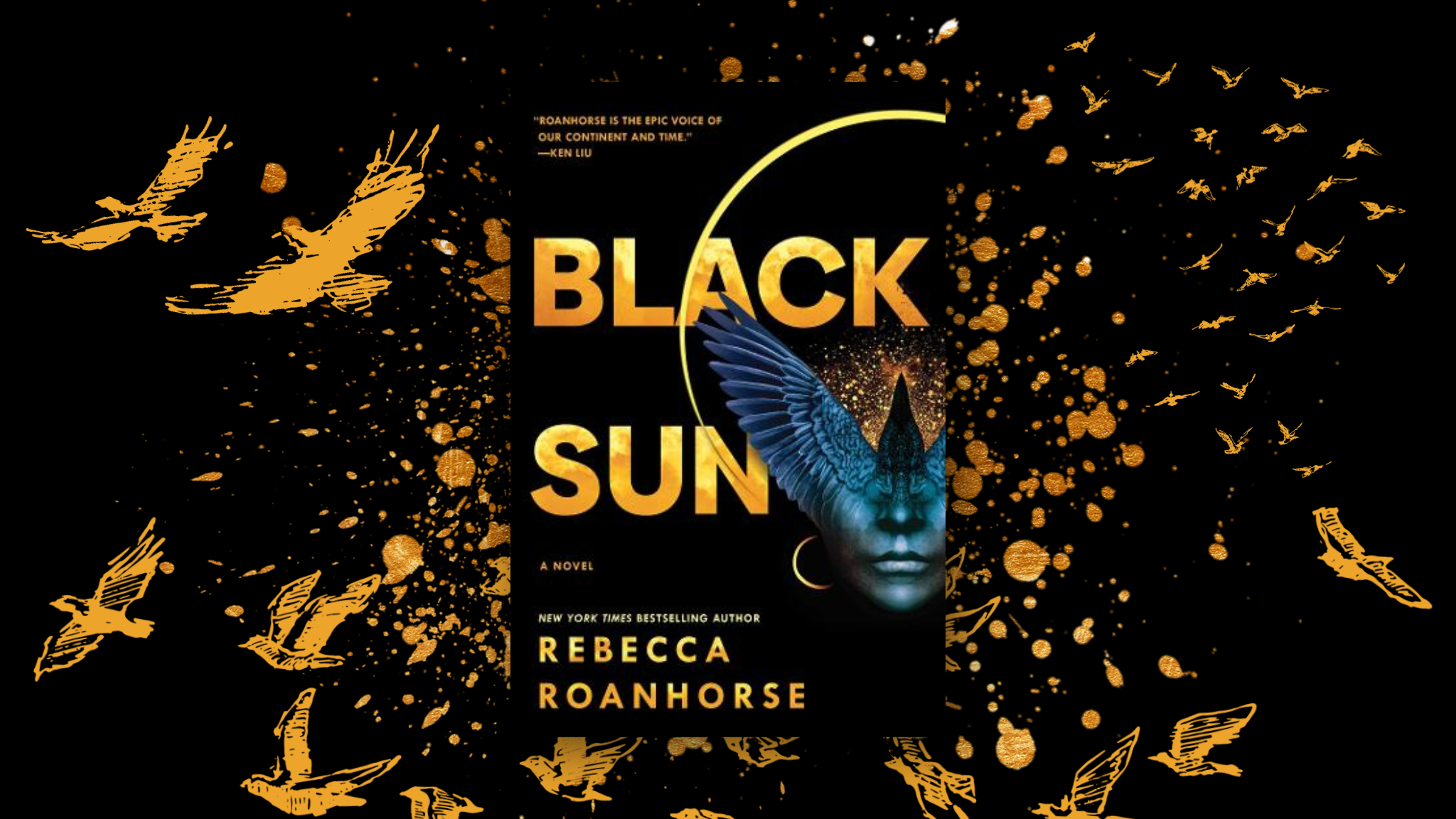
I don’t think Network Effect was either the best or the most long-lasting of the novels. I must admit, though, that it was tough to see Tamsyn Muir’s work get passed over again. 

Which brings me to the point of writing today: I sat down to write about the Heroic and Harrowing Features of Tamsyn Muir’s Newest Necromantic Dream Vision, Nona the Ninth, which I loved and found challenging and gorgeous and perverse and troubling. However, I have run out of time for the review itself–and not just because it is a supremely difficult book to review! But partly that. 
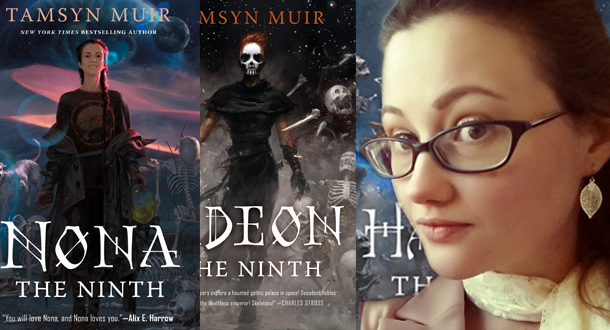
So, until I have the time or courage to write my response to Nona the Ninth, I hope you enjoyed my thoughts on the Hugo Awards. While favouring the science fiction side of the speculative seating arrangement, the Hugos have been able to predict future SF classics and discern some of the best of the 21st-century turn to fantasy. While I almost never pick the right winner, the Hugos continually give me a rich reading list that includes some of the best–and some of the very good–works of the generation. 

And, classically, I am already behind! There are 6 SF-heavy 2022 Hugo best novel nominees who have been in the world for months, and I haven’t read a single one.

  • A Desolation Called Peace, by Arkady Martine (Tor)
  • The Galaxy, and the Ground Within, by Becky Chambers (Harper Voyager / Hodder & Stoughton)
  • Light From Uncommon Stars, by Ryka Aoki (Tor / St Martin’s Press)
  • A Master of Djinn, by P. Djèlí Clark (Tordotcom / Orbit UK)
  • Project Hail Mary, by Andy Weir (Ballantine / Del Rey)
  • She Who Became the Sun, by Shelley Parker-Chan (Tor / Mantle)

I guess that’s my Hugo Christmas wish list!
 

Posted in Blogging the Hugos, Fictional Worlds, News & Links, Reviews | Tagged , , , , , , , , , , , , , , , , , , | 9 Comments

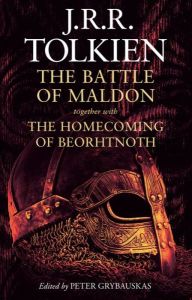
New Tolkien book on The Battle of Maldon, together with The Homecoming of Beorhtnoth

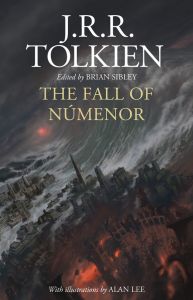
On the heels of The Fall of Númenor: and Other Tales from the Second Age of Middle-earth, here is another great piece of Tolkien publication news!

Anna Smol and the gang at the “Tolkien and Alliterative Verse” blog tipped me off to a new book from HarperCollins in 2023: J.R.R. Tolkien, The Battle of Maldon, together with The Homecoming of Beorhtnoth. The new volume will be edited by Peter Grybauskas, who has contributed to Tolkien essays in a couple of recent well-edited collections: Baptism of Fire: The Birth of the Modern British Fantastic in World War I (2015) and A Wilderness of Dragons: Essays in Honor of Verlyn Flieger (2018).

This new volume is a real treat for those of us who have loved the poetic and literary critical Tolkien collections that are not always the most popular because they are not primarily Middle-earth materials–books like Kullervo, The Lay of Aotrou and Itroun, The Legend of Sigurd and Gudrún, The Fall of Arthur, the Tree & Leaf and Tolkien Reader collections, the materials in studies like A Secret Vice and On Fairy-Stories, and all the Beowulf materials.

The “Tolkien Collector’s Guide” website includes this description of the forthcoming volume:

First ever standalone edition of one of J.R.R. Tolkien’s most important poetic dramas, that explores timely themes such as the nature of heroism and chivalry during war, and which features unpublished and never-before-seen texts and drafts.

In 991 AD, vikings attacked an Anglo-Saxon defence-force led by their duke, Beorhtnoth, resulting in brutal fighting along the banks of the river Blackwater, near Maldon in Essex. The attack is widely considered one of the defining conflicts of tenth-century England, due to it being immortalised in the poem, The Battle of Maldon.

Written shortly after the battle, the poem now survives only as a 325-line fragment, but its value to today is incalculable, not just as an heroic tale but in vividly expressing the lost language of our ancestors and celebrating ideals of loyalty and friendship.

J.R.R. Tolkien considered The Battle of Maldon ‘the last surviving fragment of ancient English heroic minstrelsy’. It would inspire him to compose, during the 1930s, his own dramatic verse-dialogue, The Homecoming of Beorhtnoth Beorhthelm’s Son, which imagines the aftermath of the great battle when two of Beorhtnoth’s retainers come to retrieve their duke’s body.

Leading Tolkien scholar, Peter Grybauskas, presents for the very first time J.R.R. Tolkien’s own prose translation of The Battle of Maldon together with the definitive treatment of The Homecoming of Beorhtnoth and its accompanying essays; also included and never before published is Tolkien’s bravura lecture, ‘The Tradition of Versification in Old English’, a wide-ranging essay on the nature of poetic tradition. Illuminated with insightful notes and commentary, he has produced a definitive critical edition of these works, and argues compellingly that, Beowulf excepted, The Battle of Maldon may well have been ‘the Old English poem that most influenced Tolkien’s fiction’, most dramatically within the pages of The Lord of the Rings.

Anna Smol's avatarTolkien and Alliterative Verse

Thanks to the Tolkien Guide, we have an announcement of a forthcoming book that will be important for the study of Tolkien’s alliterative verse: The Battle of Maldon together with The Homecoming of Beorhtnoth, edited by Peter Grybauskas and to be published by HarperCollins in March 2023.

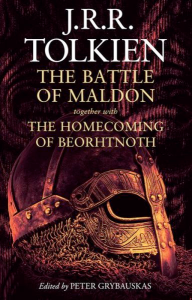
J.R.R. Tolkien, The Battle of Maldon together with The Homecoming of Beorhtnoth, edited by Peter Grybauskas

According to the pre-publication information, the book will include Tolkien’s lecture on “The Tradition of Versification in Old English,” a valuable resource for those who can’t go to Oxford to read Tolkien’s papers (and let’s face it — that’s most of us!)

Tolkien’s translation of “The Battle of Maldon” was done in prose, most likely as notes for his lectures on the poem. What it says — or doesn’t say — about his interpretation of the word “ofermod,” which is central to his short essay accompanying “The Homecoming,” should be of interest to Tolkien scholars.

As I’ve argued elsewhere, I think…

View original post 78 more words

Posted in Reflections | Tagged , , , , , , , , , | 14 Comments

A Quick Note on the Death of Dreams and Private Career College Corruption

Most readers of A Pilgrim In Narnia will not know that I spent a number of years working as a Researcher and Writer for the Prince Edward Island Government, especially in areas of Higher Education, advanced learning, career training, workforce development, and immigration. I am deeply passionate about helping people find their best vocational space. So, even though government writing is not for me, it was rooted in work I value.

Much of the career training in the US and Canada is provided by Private Training Schools and Private Career Colleges (PTS). These institutions may be new or old, nonprofit or for-profit, local brick-and-mortar schools or online programs (or a combination of the two). PTS provide everything from small program training (e.g., Embalming, Real Estate, Bartending/Mixology, Yoga Instructor Instruction, Language Teaching certifications), to large career programs (e.g., Office Admin, Nursing, Coding, Jazz Trombone, Electrical Engineering, Nuclear Facility Inspection), to academic programs (e.g., Sociology, Counselling, Business, Journalism, Religious Studies, Design, Architecture, Biology, Literature).

Most states and provinces have unique structures of law and policy for administrating higher education–and thus, particular structures for student support within a dynamic and ever-evolving educational marketplace. Thus, it can be difficult for students to navigate PTS and college pathways.

While large-scale fraud is rare in legitimate programs, there are often critical problems. Once again, CBC in Canada has committed to revealing bad practices in career training and doing good work keeping private colleges accountable. Today, CBC Marketplace has released an exposé on CDI College, a huge private, for-profit college in Canada with thousands of students. CDI College has 23 campuses in 5 Canadian provinces (BC, Alberta, Manitoba, Ontario, Quebec), but not PEI (where I live). CDI has been the subject of other investigative exposés, license investigations, student lawsuits, financial reporting investigations, and international student recruitment and support reviews. Now, they are facing difficult questions about their claims about accreditation and employment outcomes.

How important is the issue of PTS accountability and student protection? In the midst of my PhD, through the illness and death of my mother, in a period where I had books on my heart to write and a family I loved, I invested a huge amount of my time writing Policy, Legislation, and Regulations for Private Training Schools in Prince Edward Island. My hope was that I could help create structures where students could be a bit safer when making choices about where to invest their time and money.

Thus, I am disheartened that one of Canada’s largest educators is alleged to have lied to students about what their expensive education would mean. When you consider program fees and unpaid study time, the cost for students could be disastrous. For example, a one-year $20,000 program also costs $30,000 of lost wages (for a service worker in Canada). Students turning to PTS to make their dreams come true are the least likely to be able to incur $50,000 in meaningless debt.

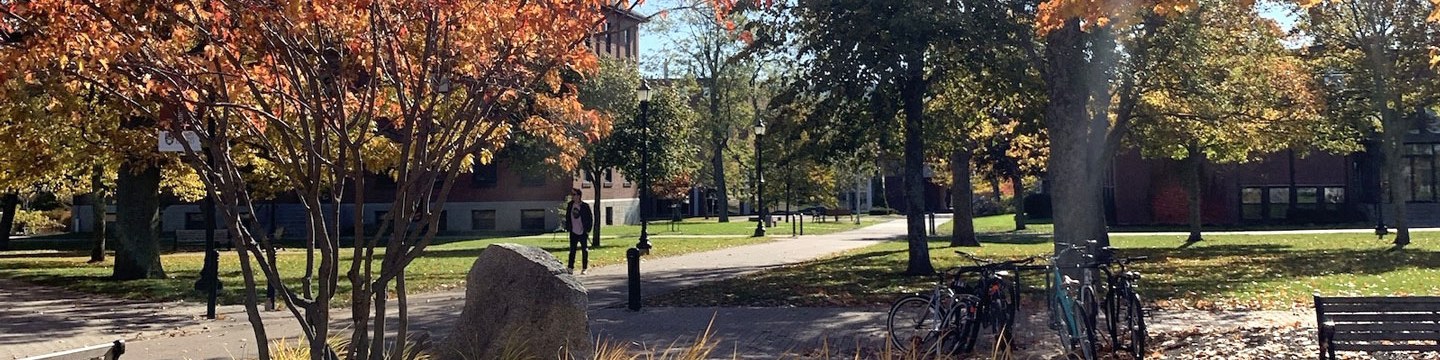
By contrast, all of the local and online education I have been a part of has been very good to excellent–and often innovative and superior quality–places such as the University of Prince Edward Island (UPEI, and the pics in this article are mostly from their gorgeous campus), Maritime Christian College, Signum University, Regent College, The King’s College (NYC), and Atlantic School of Theology.

Here are some quick notes about private colleges and a bit of advice for teachers, students, higher education administrators, and policy writers:

  • “Accreditation” has specific, legal meanings in US and Canada, so ensure the program you are interested in/leading is using the term as defined in your state, province, or territory.
  • Being a state-/province-approved, -regulated, or -legislated university or college is not the same as accreditation.
  • Accreditation is not necessarily essential to what you want to study. However, ensure your training and education match the industry you are entering in terms of degrees, diplomas, credentials, licenses, training units, etc.
  • Not all accreditation certifications have any meaning (e.g., in the US scene, DEAC, ATS, and the Bar are consistent and real, but there are dozens of dodgy ones).
  • In my research, I found that most of the family-owned, small-business private colleges offered good-quality education and training.
  • In my research, I also found that, in general, broader programs (like Office Administration or Computer Training) provided softer programming than state or provincial programs down the street.
  • Ensure your education delivery is designed for that mode (i.e., online training is designed for online learning, not just adapted classroom materials) and matches what you want to learn (i.e., if your education will need hands-on, local, in-class or on-the-job learning, ensure that’s part of the program).
  • In Canada, theological studies may fall under PTS categories or university categories, and may offer training for volunteer/unpaid work (nuns and monks, Sunday School teachers, music program leaders, spiritual directors, etc.) or professional work (pastors, professors, priests, preachers, missionaries, monks and nuns, etc.). For example, in PEI, Maritime Christian College is a denominational theological training school that offers career-path Bachelor degrees as well as certificates of training to support volunteer work. It is the oldest active degree-granting institution and falls under the University Act (with UPEI), while other theological schools would be under the PTS Act I wrote.
  • Despite what the CBC article says, some schools can get accreditation in Canada (e.g., theological schools), but I don’t know of any more traditional career college accreditation systems for entire full-service schools (there were none we could trust during policy research, but you should do research in your state or province).
  • In states and provinces with strong legislation, if a PTS makes any formal or informal claim about employment, credentials, or industry training, that claim must be veridical, confirmable, and evidence-based. Indeed, in most places, false claims may put the PTS is in jeopardy.
  • PEI (and all jurisdictions I know) has a mechanism for student complaints, so reach out to your PTS administrator if you have a concern.
  • I had a great team for writing legislation and policy but fraud is still possible. Quite honestly, we did not find a way to protect students from globally available online education. Thus, in PEI, we rooted our student protection in PTS that are situated here and offering whatever combination of on-campus, in-the-field, and online programs works best for their vocational focus.

I am no longer on any government payroll and am not currently being paid as an expert in this area by anyone. However, I work as a consultant, so I have a vested interest. My interest, however, is really that of a public intellectual, educator, parent, and friend. If we are real-life friends and you have questions about a particular school or training path, email me and we can chat. I am no longer an expert, but I might be able to help. And I would happily speak about the programs I know.

Best wishes everyone!

Posted in Feature Friday | Tagged , , , , , , , , | 3 Comments

Happy Birthday L.M. Montgomery! Born on the Imaginative North Shore of Prince Edward Island, My Home

Despite its global celebrity, Prince Edward Island’s north shore remains a largely unknown treasure. With hundreds of inlets, creeks, wharves, harbours, river valleys, hillside views, and quaint communities to explore, visitors who come here expecting to “see the Island” in a day or two are often disappointed. I would not wish our guests to miss miles of white sandy beaches juxtaposed by jagged red seaside cliffs.

Everyone should visit the Green Gables house in Cavendish and walk the boardwalk in North Rustico, stopping to eat at one of the artisan restaurants or take a harbour cruise or see a play at the Watermark Theatre. Through federal support of the fishing industry, investment by the arts community, the long memories of old friends, and the slow discovery of a place of beauty, the rugged hills and poverty-stricken lanes that made up my Rustico schoolboy days have been transformed into a village of coastal charm.

The Island treasures “on the map” are worth visiting, but the eye hungry for beauty should leave time for wasted hours in the corner and harbour and hamlets of our northern shore.

I still find my own New Glasgow breathtakingly beautiful. 200 years ago, left their farms off the Clyde some 15 or 20 miles from Glasgow, bringing only a few things with them: a fervent religious devotion, a commitment to hard work, a few tools, books, and household memories, and the names “River Clyde” and “New Glasgow” themselves.  While my great-great-great-great grandfather was apparently not worth taxing in the Parish of Houston, Renfrewshire, he managed to find passage to Prince Edward Island in 1820. And somehow in that connection, he married a Catherine Anne Stevenson, whose father became the pastor at the community church in New Glasgow. Though we late-1900s Dickiesons were the heathens to which others would find themselves next door, as a child, I played in the church that Elder Stevenson helped build. In ill-fitting Sunday clothes, I watched the ceiling fan while preachers preached and my grandmother prayed I would be still for just a few moments more. Later, still un-still but eagre, I served that church. My wife and I were married there and ordained there, and it is still a place I think of as home.

10 or 20 miles seaward of my childhood home, there are treasures many wayfarers miss. Though there are few places as Instagram-ready as French River, Prince Edward Island, Stanley Bridge is a brilliant harbour with a wide-mouth bay, archipelagos of dunes and wooded lands jutting into the sea, and a long, beautiful river to explore. Moving inland and east up Trout River, there are miles of wooded trails with red-dirt roads and the little corner of Millvale. I miss the mill, the smell of sawdust and the busy movement of laughing men working speedily inches from what seemed to me then–and still seems to me today, in memory–to be monstrously dangerous saws.

If you were to leave my old family farm in New Glasgow by car, you would pass by my church–what L.M. Montgomery somewhat disdainfully called the “New Glasgow Baptist Church”–as well as the famous Lobster Suppers and Toy Store. After about 8 hilly miles you would come to Stanley Bridge. Turning northeast would bring you within a few minutes into Cavendish, with the National Park along the shoreline, the Green Gables house inland, and Lucy Maud Montgomery‘s homestead at the centre of the village. A 3-mile drive directly west from Stanley Bridge along the 100-acred lots measured out from the river will take you to what I think of as the New London corner–though I don’t know if that’s its real name. Just 4 miles north of the corner is the postcard harbour of French River, and another two miles takes you to Park Corner, a family home where Montgomery felt love and friendship. The Park Corner home would become the image of “Silver Bush” in the 1930s.

Travelling west and south from New London corner will take you to Kensington, the train station where a fifteen-year-old Maud Montgomery would board a train to the West to reunite with her father. It is an auspicious occasion–not least because she met her grandfather, “Senator” Donald Montgomery, with Prime Minister John A. Macdonald and his wife, Lady Agnes. For Montgomery lovers, however, the following year in Saskatchewan would be decisive in Montgomery’s personal and literary life.

But on this day, the anniversary of the birth of Prince Edward Island’s most famous author and undoubtedly the Canadian writer with the most global reach, it is important to remain for a moment at New London corner. Like many PEI villages, New Londoners have extended their hospitality to visitors. There is a tea room, places to buy coffee or ice cream, historic venues for weddings, and nearby places to eat. The Potter’s Parlour is worth a visit for its coffee and craftsmanship, and The Table is a gourmand destination, a “Culinary Studio” in a beautifully renovated United Church–a newer building for what had, I presume, previously been a Methodist congregation, established in one of the earliest areas for Methodist preaching in PEI. As the St. John’s Presbyterian Church just a moment’s walk from the corner was built after Montgomery was born, I do not know where she was christened. However, the church captures the feel of Victorian rural PEI life well at the heart of New London.

And, at this same corner, Lucy Maud Montgomery was born on this day, Nov 30th, in 1874, in a small one-and-one-half-storey cottage, adjacent to the store on the corner. Secured by her grandfather, Senator Montgomery, this cozy home was where “Maud” spent her first months of life until her mother, Clara, died of tuberculosis 21 months later. Not long after, Montgomery‘s father would move to the Northwest Territories, Prince Albert, Saskatchewan, following hopeful ventures for financial success. Maud would live with her mother’s people, raised by her elderly grandparents a short walk from the corner in Cavendish.

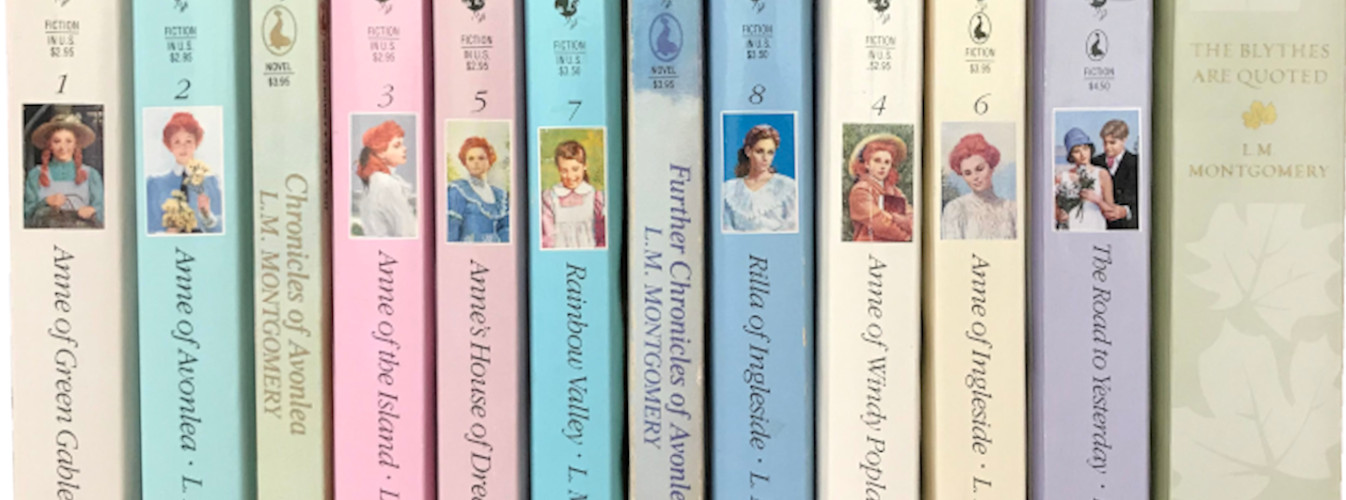
In the 19th century, when folks were calling this area Clifton, no one could have imagined the global impact this lonely orphan of a child would have. Her early days were as inauspicious as mine, just 10 miles southeast and 101 years later. L.M. Montgomery would go on to be the author of 20 novels, 530 short stories, 500 poems, and dozens of essays. She was a church organist and Sunday School teacher, a director of plays and fund-raisers, a life-long correspondent and journal writer, and a benefactor to her rural Canadian kin. She was a minister’s wife, a friend of farmers and Prime Ministers, a fellow of the Royal Society of Arts, an officer of the Order of the British Empire, and a lover of cats. Montgomery is probably in the 100 million club in terms of books sold, and according to this research, Anne of Green Gables is Canada’s most translated book (in at least 36 global languages, see photos below).

And, recruited by a well-meaning United Church minister in the 1980s, in Montgomery’s Cavendish church, I once gave an underwhelming reading of “And there were in the same country shepherds abiding in the field, keeping watch over their flock by night….” punctuated by “Fear not: for, behold, I bring you good tidings of great joy” shouted with red-face exuberance. In that church some forty years earlier, Montgomery had, in 1942, been laid to rest in a state funeral–a rare occasion in Canada’s far-flung rural reaches.

So, when you have the chance one summer day, I would encourage you to visit the Lucy Maud Montgomery Birthplace museum at Clifton corner. It is an authentically decorated Victorian home, painted white and green as an homage to Green Gables. There is a replica of Montgomery‘s quite tiny wedding dress, as well as a number of her personal scrapbooks where she pasted many of her stories, poems, and personal memories. It is a pretty little place that gives me a sense of what that home might have been.

More than the museum, however, is the north shore drive. That our little Prince Edward Island could produce one of the world’s most transformative modern authors is a complete mystery until you can see what Montgomery saw–the landscapes and seashores and skyways, the stunning geography of land brimming with imaginative possibilities, and the places that Montgomery called home. I am afraid to think about how much of the shoreline has changed because o Hurricane Fiona earlier this autumn. However, PEI’s beauty is ever-changing, and no doubt the charm and allure with remain.

So on what Anne might call an auspicious moment, I wish our own Lucy Maud Montgomery a happy birthday, and invite lovers of her writing to come and see the real-life imaginative world behind her works.

Posted in L.M. Montgomery | Tagged , , , , , | 25 Comments

“A Sense of the Season”: C.S. Lewis’ Birthday Pivot and the Cambridge Inaugural Address (Updated 2022)

In the autumn of 1954 at the age of 56, C.S. Lewis was at the height of his academic career. With a chance to speak to the academic community at Cambridge and the listening world on the BBC, Lewis used this moment to reposition himself in an unusual way.

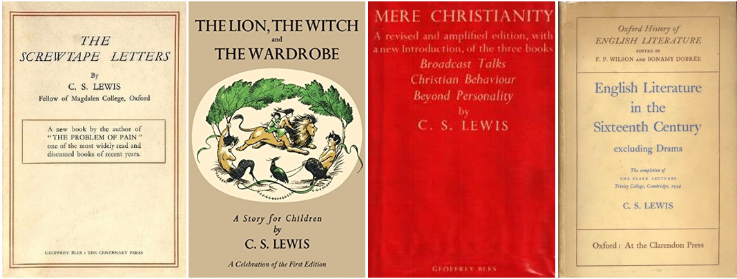
Two years previously, in the first week of July, 1952, Lewis finished writing the decades-long project, English Literature in the Sixteenth Century, Excluding Drama. That same week, Lewis released Mere Christianity, a compendium of his WWII BBC talks on faith and life. Lewis continued to be recognized as a Christian public intellectual with bestselling books like The Screwtape Letters (1942). Mere Christianity, however, extended his reach, ultimately becoming a modern classic and one of the most influential works of popular Christian thought in the world.

And in the springtime of 1949, this bachelor Oxford don, literary critic, and Christian controversialist had a most surprising manuscript in his hands: the first full draft of The Lion, the Witch and the Wardrobe. As The Screwtape Letters and Mere Christianity would be influential for the intellectual and spiritual lives of Christians, so The Chronicles of Narnia have provoked curiosity, wonder, and delight in millions of readers. Although writing children’s fantasy was new for Lewis, these Narnian stories are not a divergence from his other work of the period. In the classic stories of Narnian adventure, Lewis was able to put in fairy-tale form all of his love of literature and his intimacy with Christian faith as the mythic core of human existence.

On Sept 16th, 1954, after nearly two decades of research and writing what Lewis humorously called “OHEL”–a reference to the series title, “The Oxford History of English Literature”–English Literature in the Sixteenth Century, Excluding Drama was published. Lewis’ magnum opus intensified his value as a literary historian by providing a unique look at the cultural spirit of the 16th century through hundreds of its poets and authors. Written with ever-present wit and remarkable brevity, Lewis was able to exceed the quality and usefulness of his groundbreaking The Allegory of Love (1936). OHEL is a literary history so lively and provocative that I enjoy reading it, even though I haven’t read most of the original sources.

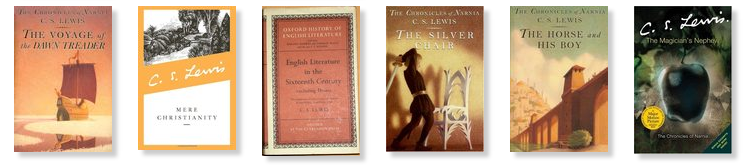
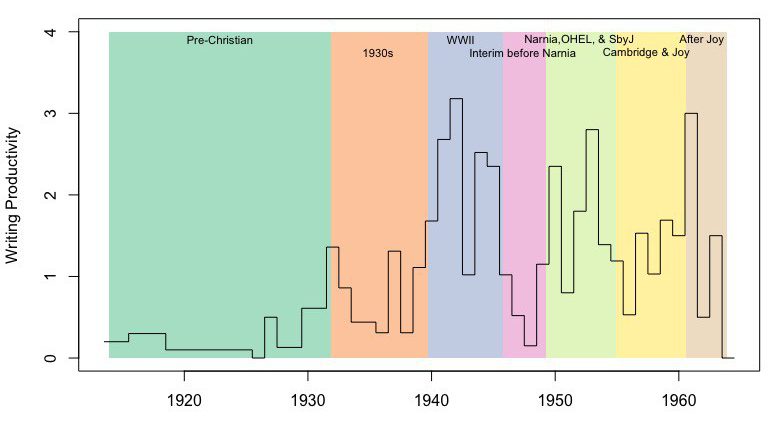
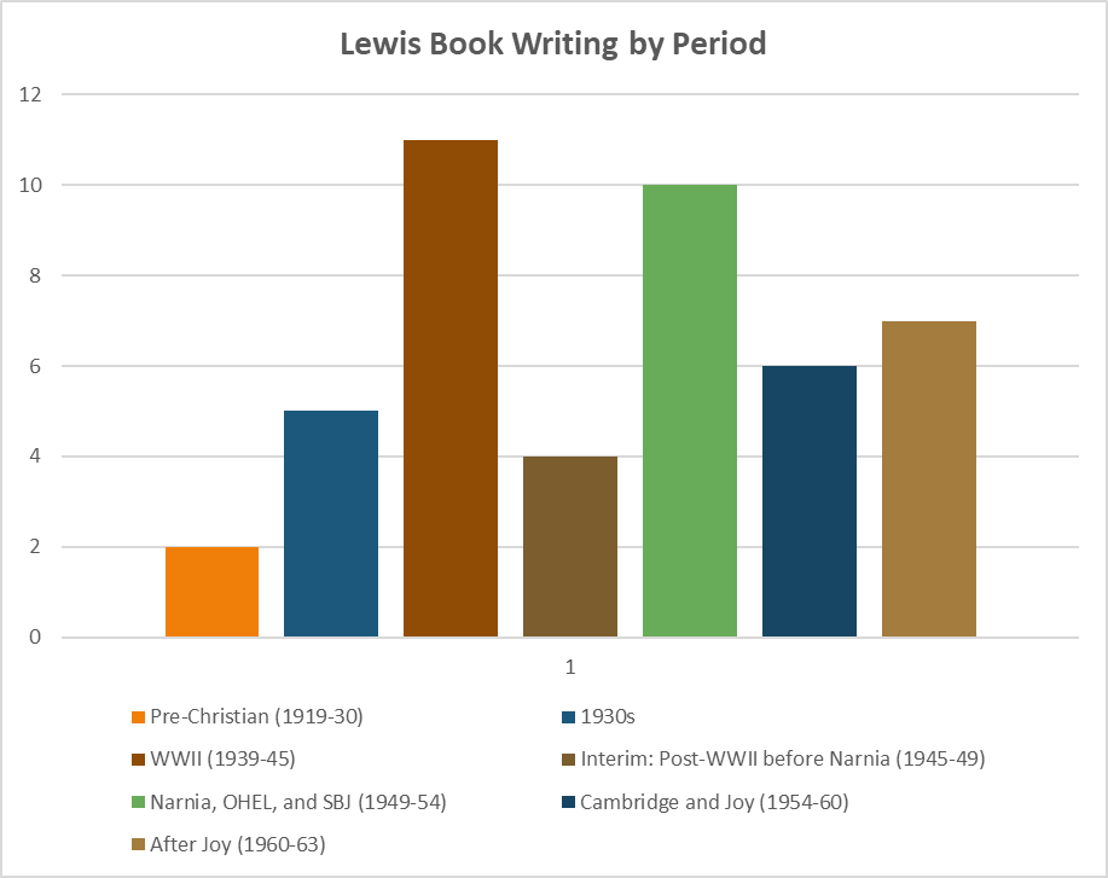
Just 10 days before OHEL was published in the UK, Lewis’ fifth Narnian chronicleThe Horse and His Boy landed in the bookshops. These are the 7th and 8th books that Lewis published in that 5-year period since 1949. Lewis’ letters reveal that he was working on his memoir, Surprised by Joy, through 1954, and The Last Battle was already complete, leaving only The Magician’s Nephew to draw together the story of Narnia as a prequel. It was a remarkably productive period, where Lewis wrote nearly two books a year–a pace matched only by his writing during WWII.

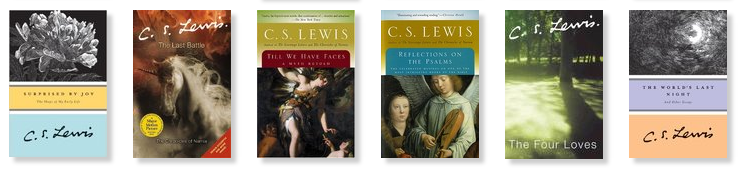
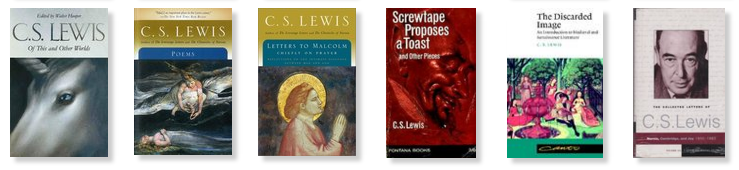
Beyond these great 1954 moments was a little pain. After thirty years as an Oxford don and numerous unsuccessful bids for a professorship, Lewis realized it was time to leave the academic home he had occupied since 1919. With some support from J.R.R. Tolkien, Cambridge designed a Chair in Medieval and Renaissance Literature specifically with Lewis in mind. Reluctant but hopeful–and after almost giving the opportunity away–Lewis agreed to take the Chair. It was a hard move to Cambridge, but there were great things ahead. By the end of 1954, the Carnegie Medal-winning Chronicles of Narnia were mostly complete, and Surprised by Joy would meet the world in 1955. That spring, Lewis would write his most literary fiction, Till We Have Faces (1956); at the same time he would begin to fall in love with Joy Davidman. The decade that followed his appointment to Cambridge was productive, filled with academic books and theological nonfiction, and culminating in his “prolegomena” in medieval literature, The Discarded Image (1964).

Christian Nonfiction

Literary Academic Books

This last decade was a particularly rich and focused period in Lewis’ literary life.

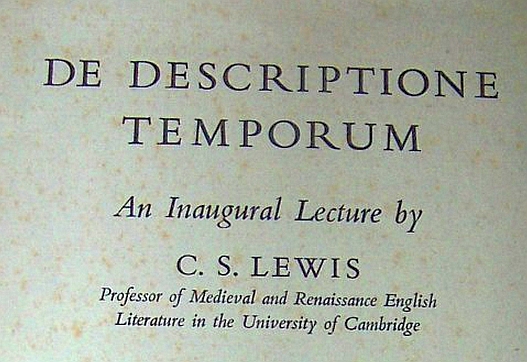
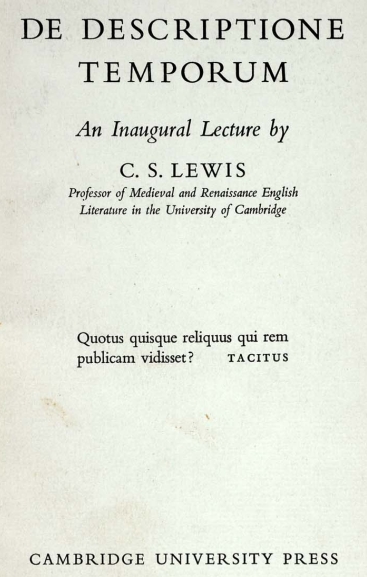
At the centre of this great moment in 1954 was Lewis’ 56th birthday on 29 Nov 1954. However Lewis may have spent his birthday in other circumstances, on this date he gave his Cambridge inaugural address, “De Descriptione Temporum.” Not only was this a celebration of achievement, but it was also a moment when Lewis’ entire public profile pivoted.

In the 1940s, Lewis was a well-recognized voice as a Christian controversialist. In 1950, he became the Narnian and the author of Mere Christianity–a profile that has led to hundreds of millions of readers. And in 1954 he became a Cambridge professor. His birthday Cambridge inaugural address was titled “De Descriptione Temporum”—“a description of the times” or “a sense of the season.” Lewis’ pulse-taking of the moment, intriguingly, is not a scathing rebuke of education or merely a “kids these days” kind of talk. Lewis doesn’t even present himself as simply another expert in period literature and culture—albeit with the unusual thesis that the idea of the “Renaissance” is an unhelpful historical fiction.

More than this, Lewis invites the audience to view him not merely as a guide to Medieval and Renaissance literature but as a specimen of that culture:

I have said that the vast change which separates you from old Western [the Medieval and Renaissance world] has been gradual and is not even now complete. Wide as the chasm is, those who are native to different sides of it can still meet; are meeting in this room. This is quite normal at times of great change…. I myself belong far more to that old Western order than to yours. I am going to claim that this, which in one way is a disqualification for my task, is yet in another a qualification. The disqualification is obvious. You don’t want to be lectured on Neanderthal Man by a Neanderthaler, still less on dinosaurs by a dinosaur.… If a live dinosaur dragged its slow length into the laboratory, would we not all look back as we fled? What a chance to know at last how it really moved and looked and smelled and what noises it made! And if the Neanderthaler could talk, then, though his lecturing technique might leave much to be desired, should we not almost certainly learn from him some things about him which the best modern anthropologist could never have told us? He would tell us without knowing he was telling (C.S. Lewis, Selected Literary Essays, 14-15).

Lewis goes on to admit that he would give much to hear an ancient Athenian—even an unlettered one—talk about Greek tragedy because

“He would know in his bones so much that we seek in vain. At any moment some chance phrase might, unknown to him, show us where modern scholarship had been on the wrong track for years” (C.S. Lewis, Selected Literary Essays, 14-15).

Given the class environment into which Lewis was speaking, reaching toward an uneducated ancient local instead of an Oxbridge scholar is a strong point in Lewis’ critique of modern scholarship, moving from critical, distant, external study to something more near and intimate. Lewis would probably have been completely unaware of a revolution in the field of anthropology that runs along the same line; still, he invites his listeners to consider himself from an anthropological perspective:

Ladies and gentlemen, I stand before you somewhat as that Athenian might stand. I read as a native texts that you must read as foreigners. You see why I said that the claim was not really arrogant; who can be proud of speaking fluently his mother tongue or knowing his way about his father’s house? It is my settled conviction that in order to read old Western literature aright you must suspend most of the responses and unlearn most of the habits you have acquired in reading modern literature. And because this is the judgement of a native, I claim that, even if the defence of my conviction is weak, the fact of my conviction is a historical datum to which you should give full weight. That way, where I fail as a critic, I may yet be useful as a specimen. I would even dare to go further. Speaking not only for myself but for all other old Western men whom you may meet, I would say, use your specimens while you can. There are not going to be many more dinosaurs (C.S. Lewis, Selected Literary Essays, 14-15).

How can students get a “description of the times” so they might understand their reading? By watching the habits and language and culture of someone who is a leftover from that long-lost age–a medieval poet who walks in modern-day streets, a dinosaur that escaped its enclosure, an Athenian loose in contemporary Cambridge.

But there are also a couple of other interesting points where Lewis is offering a “sense of the season.”

It is his birthday and a critical transition in his career, so this turn to autobiography in academic work in his own life is worth noting. He essentially calls himself a “dinosaur”–not a cutting-edge theorist like the Cambridge literary school was offering with the likes of I.A. Richards or F.R. Leavis. The irony of a man who is out of step with his times giving a talk about cultural moments is part of the humour in the piece, I think. It is kind of an absurd claim–that to understand Dante or Milton or Jane Austen you should watch a person who likes slow train rides and fought in the trenches and reads fairy tales for fun.

I think it is best that we read the lecture with a bit of a smile.

Beyond the joke with a serious point, though, is the fact that Lewis intuitively predicts the changing of the season I mention above: Where scholarship goes from the pretence of distance and perfect objectivity to a space where in some disciplines (like literature, theology, and anthropology), one’s own life is part of the “data” of good scholarship. George Watson once noted that Lewis’ lifetime of work in An Experiment in Criticism was ahead of the French turn:

“A French avant-garde, in any case, does not wish to be told that an Englishman has been saying it all for years” (George Watson, ed,, Critical Essays on C.S. Lewis, 4).

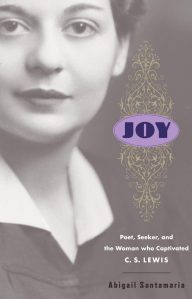
Biographer Abigail Santamaria helps provide Joy Davidman’s perspective on Lewis’ Cambridge Inaugural address from the perspective of a public intellectual and poet who was a stranger to the scholarly rituals of Oxford and Cambridge:

“‘There was much fuss . . . as a Coronation,’ Joy thought. ‘There were so many capped and gowned dons in the front rows that they looked like a rookery.’ Jack was ‘walled about with caps and gowns and yards of recording apparatus.’ When all the seats were filled, Jack’s friends and former students stormed the stage and sat at his feet” (Joy, 285).

Santamaria continues by sharing Davidman’s observation about how Lewis rejected a lecture path of “talking in the usual professorial way about the continuity of culture, the value of traditions, etc.” Insteand, Lewis announced that

“’Old Western Culture,’ as he called it, was practically dead. Leaving only a few scattered survivors like himself; that the change to the Age of Science was a more profound one than that from Medieval to Renaissance or even Classical to Dark Ages; and that learning about literature from him would be rather like having a Neanderthal man to lecture on the Neanderthal or studying paleontology from a live dinosaur! As I remember, he ended with, ‘Study your dinosaurs while you may; you won’t have us around for long!’ How that man loves being in a minority, even a lost-cause minority! Athanasius contra mundum, or Don Quixote against the windmills. He talked blandly of ‘post-Christian Europe,’ which I thought rather previous of him. I sometimes wonder what he would do if Christianity really did triumph everywhere; I suppose he would have to invent a new heresy” (Joy, 285).

As we reflect on the anniversary of Lewis’ birth, I think it is intriguing that someone who so clearly was out of date was also capable of speaking to the times and, in some cases, predicting the change of seasons. The epigraph to the published version of the inaugural lecture is from Tacitus:

“Quotus quisque reliquus qui rem publicam vidisset?”

Roughly translated for our conversation here, it is asking, “who is left who has really perceived what is going on?” Ironically–though perhaps expected for Quixotic intellectuals–Lewis-the-dinosaur remains shockingly current.


Since first publishing this piece, which I have updated to give a greater sense of the great things happening in 1954, I have developed the importance of Lewis’ “birthday pivot” as I’ve described it here. In June 2022, I presented a paper at the Christianity and Literature Study Group at Canada’s annual Congress of the Humanities and Social Sciences. The research allowed me to make more connections between “De Descriptione Temporum” and Lewis’ earliest and latest works of literary theory: The Personal Heresy written through the 1930s and published in 1939, and An Experiment in Criticism, written in the autumn of 1960 and published in 1961. The paper is called “The Personal Heresy and C.S. Lewis’ Autoethnographic Instinct: An Invitation to Intimacy in Literature and Theology.” I have not published it yet. However, I did a recording of the talk. You can find the details of the paper, including a PDF of the slides here, and I have included my video below.

You can read the full text of “De Descriptione Temporum here or in Selected Literary Essays or They Asked for a Paper

Posted in Lewis Biography, Original Research, Thoughtful Essays | Tagged , , , , , , , , , , , , , , , , , , , | 9 Comments