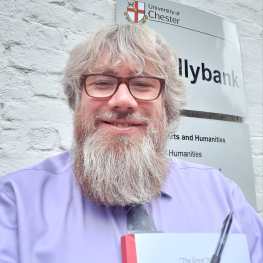
 Brenton D.G. Dickieson (BA, MCS, PhD)
For fifteen years, Brenton Dickieson (PhD, Chester, 2020) has taught at the University of Prince Edward Island. Returning to the home of his undergraduate studies in 2006, he is now the Lecturer in Theology and Literature at Maritime Christian College (Charlottetown, PE). Brenton also serves as Adjunct Instructor in Literature at The King’s College (New York City, NY), Lecturer and Preceptor at Signum University, and Distance Education Instructor in Spiritual Theology at Regent College (Vancouver, BC)–the home for his master’s degree in New Testament Studies. Brenton is also pleased to be a 2020-21 Distinguished Lecturer in Romantic Theology in the Doctor in Theology and Ministry at Northwind Seminary.
Dr. Dickieson’s peer-reviewed publications on literature and religion appear in leading journals such as Mythlore, Journal of L.M. Montgomery Studies, Sehnsucht: The C.S. Lewis Journal, Journal of the Southwest, and Notes and Queries, with reviews and review essays also in VII: Journal of the Marion E. Wade Center, The Journal of Inklings Studies, Studies in Religion, and Literature and Theology.
As the author of more than 1,100 articles, blog posts, and reviews, Brenton has worked as a freelance author, columnist, and policy writer for Canadian magazines and the government of Prince Edward Island. As a theologian of literature, Brenton writes the popular website, A Pilgrim in Narnia, which explores the intersections of faith, fantasy, and fiction. With more than 1.1 million website hits and a yearly readership now exceeding 200,000, more than 8,000 social media followers, and significant networks within the scholarly and readerly worlds of C.S. Lewis and the Inklings, Brenton has a powerful platform for considering the literary, spiritual, and theological interest of some of our most famous world-builders, including C.S. Lewis, J.R.R. Tolkien, L.M. Montgomery, and others. In becoming the Founding Producer and Host of the SSHRC-funded “MaudCast: The Podcast of the L.M. Montgomery Institute” in 2020, Brenton has increased his networks of popular and scholarly readers who like to talk about the books they love. Brenton is a popular guest speaker for theological and literary societies and a sought-after essayist.
As the winner of the L.M. Montgomery Institute’s Elizabeth Epperly Early Career Paper Award (2020), UPEI’s Hessian Award for Excellence in Teaching (2017), and the Mythopoeic Award for Inklings Scholarship (2018) for The Inklings and King Arthur edited by Sørina Higgins, which includes his chapter on C.S. Lewis and intertextuality, Brenton is poised to excel in scholarly pursuits in this new academic landscape in which we are navigating.
Brenton lives in the nearly magical land of Prince Edward Island with his superstar kindergarten teacher wife, Kerry, and their son, Nicolas, a singer-songwriter.
Education
PhD, Theology & Religious Studies (2013-2019)
University of Chester, UK
Thesis: “The Great Story on Which the Plot Turns”: Cruciformity in C.S. Lewis’ Narrative Spiritual Theology
Masters of Christian Studies (2003-2005)
Regent College, BC
Thesis: “Antisemitism and the Judaistic Paul: A Study of 1 Thess 2:14-16 in Light of Paul’s Social and Rhetorical Contexts and the Contemporary Question of Antisemitism”
B.A., Bible (1993-1997)
Maritime Christian College, PE
Teaching Experience
University of Prince Edward Island (2006-present)
Inquiry Studies (University 102) Team Member, UPEI (11 sections) (2015-present)
Global Issues Term Lecturer and Sessional Instructor, UPEI (10 sections) (2008-2013)
Sessional Lecturer, Faculty of Arts, UPEI (2006-present)
Taught 35 courses in the following areas of Religious Studies:
- Popular Courses like “Skepticism, Atheism, Agnosticism, Belief,” “Religion and the End of the World,” “Myths of Love, Sex, and Marriage,” and “Myths of Hate and Evil”
- Religions of the World (Western Traditions, twice with an Egypt focus)
- Worldviews and Cultural Mythologies
- Christian Studies (Early and Modern)
- Christian Thought and Theology
- The Old Testament, The New Testament
- Religious Movements and Religious Conflict
- Islam and Western Culture
- Judaism and Antisemitism
- Japanese Religion and Culture
Lecturer in Theology and Literature, Maritime Christian College, PE (2006-present)
Taught 26 courses in the following areas:
- Religion and Literature (Middle Earth, Narnia, Harry Potter, Classical Literature, etc.)
- New Religious Movements, World Religions and Worldviews
- Faith and Culture, Philosophy, Homiletics
- Biblical Greek (two semesters on a three-year rotation)
- Bible courses such as “New Testament Survey,” “Apostle of the Heart Set Free,” “The Biblical Mosaic,” “How to Read the Bible for All its Worth,” “Biblical Eldership”
Distance Education Instructor in Spiritual Theology, Regent College, BC (2005-present)
Regent College’s international graduate distance education program includes online virtual classrooms and personal tutorials. I have been Tutor and Marker in Biblical and Spiritual Theology courses. From 2005-2013 I was TA Marker for Rikk Watts’ “New Testament Foundations,” as well as other courses including “Old Testament in the New” (Rikk Watts), “Matthew” (Rikk Watts), “The Holy Spirit in the Letters of Paul” (Gordon Fee). Currently, I am an Instructor in Spiritual Theology for Eugene Peterson’s courses, including “Soulcraft: Spiritual Formations,” focussing on the book of Ephesians, and “Jesus and Prayer.”
Adjunct Instructor in Literature, The King’s College, NY (2017-present)
I developed the curriculum for “The Fantasy and Science Fiction of C.S. Lewis,” an intensive undergraduate-level literature online course. I teach the course each spring semester, using lecture and discussion to guide the reading of Lewis’ most popular fiction.
Lecturer and Preceptor, Signum University (2016-present)
SignumU is an established online university offering an MA in literature to a growing global community of adult learners. Using technological ingenuity and cutting-edge pedagogy, Signum provides a high-quality education based on core values, focussing on areas such as Germanic Philology, Mythological and Classical Literature, Imaginative Literature, and Tolkien Studies. I lecture or work as a small group instructor (Preceptor) as a C.S. Lewis expert, theologian, and critical scholar, and have supervised 5 master’s theses. I teach “Introduction to Research, Theory, and Writing” (2017, 2018, 2019), “Folkloric Transformations: Vampires and Big Bad Wolves” (2016, 2020), “Mythologies of Love and Sex” (2016; 2019), “Literature, Film, and Technoculture” (2018), “Lewis & Tolkien” (2020).
Peer-Reviewed Publications
- 2021: “Making Friends with the Darkness: L.M. Montgomery’s Popular Theodicy in Anne’s House of Dreams,” accepted with slight revision for peer-review publication in The Journal of L.M. Montgomery Studies; in revision.
- 2020: “A Cosmic Shift in The Screwtape Letters,” Mythlore 39, no. 1 (2020): 5-33.
- 2020: “Rainbow Valley as Embodied Heaven: L.M. Montgomery’s Narrative Spirituality in Rainbow Valley,” Journal of L.M. Montgomery Studies (2020).
- 2019: “The Archangel Fragment and C. S. Lewis’s WWII-era World-building Project,” Sehnsucht: The C.S. Lewis Journal 13 (2019): 11-28. Co-authored with Charlie W. Starr.
- 2018: “Mixed Metaphors and Hyperlinked Worlds: A Study of Intertextuality in C.S. Lewis’s Ransom Cycle” pp. 81-113 in The Inklings and King Arthur: J.R.R. Tolkien, Charles Williams, C.S. Lewis, and Owen Barfield on the Matter of Britain (ed. Sørina Higgins, Apocryphile Press).
- 2013: “Nuestra Señora de las Sombras: The Enigmatic Identity of Santa Muerte,” Journal of the Southwest 55, no. 4 (Winter 2013): 435-471. Co-authored with Pamela Bastante.
- 2013: “The Unpublished Preface to C.S. Lewis’s The Screwtape Letters,” Notes and Queries 60, no. 2 (2013): 296-298.
Other Academic Publications
- 2019: “C.S. Lewis’s Theory of Sehnsucht as a Tool for Theorizing L.M. Montgomery’s Experience of ‘The Flash,’” The Faithful Imagination: Papers from the 2018 Francis White Ewbank Colloquium on C.S. Lewis & Friends, Taylor University, edited by Joe Ricke and Ashley Chu, pp. 144-165. Conference Proceedings.
- 2019: “Why the Lewis & Friends Colloquium is Awesome (It’s the Students),” The Faithful Imagination: Papers from the 2018 Francis White Ewbank Colloquium on C.S. Lewis & Friends, Taylor University, edited by Joe Ricke and Ashley Chu, pp. 396-397. Anthologized article.
- 2019: “An Awkward Look at Prayer, and C.S. Lewis’s Letters to Malcolm,” Touchstone 37, no. 2 (June 2019): 22-28.
- 2018: “A Critical Moment in Lewis Gender Studies,” a review essay of Monika Hilder’s trilogy, The Feminine Ethos in C.S. Lewis’s Chronicles of Narnia (2012), The Gender Dance: Ironic Subversion in C.S. Lewis’s Cosmic Trilogy (2013), and Surprised by the Feminine: A Rereading of C.S. Lewis and Gender (2013), VII: Journal of the Marion E. Wade Center 35 (2018): 111-119.
- 2018: “Echoes of the Eternal in C.S. Lewis’ Fiction,” a review essay of Marsha Daigle-Williamson, Reflecting the Eternal: Dante’s Divine Comedy in the Novels of C.S. Lewis (2015), VII: Journal of the Marion E. Wade Center 35 (2018): e123-e131.
- 2018: “(Re)Considering the Planet Narnia Thesis,” An Unexpected Journal 1, no. 4 (Advent 2018): 59-76. Invited article.
- 2015: “‘Die Before You Die’: St. Paul’s Cruciformity in C.S. Lewis” in Both Sides of the Wardrobe: C. S. Lewis, Theological Imagination and Everyday Discipleship (ed. Rob Fennell, Resource Publications, 2015), pp. 32-45.
- 2013: “Stranger” and “Wise as a Serpent” in Dictionary of the Bible and Western Culture (eds. M. Gilmour and M. A. Beavis; Sheffield: Sheffield Phoenix Press, 2013), 521, 601-602.
- 2012: “The Pedagogical Value of The Screwtape Letters for a New Generation,” Inklings Forever VIII (2012): 12-29. Conference proceedings.
- 2005: Antisemitism and the Judaistic Paul: A Study of 1 Thessalonians 2:14-16 in Light of Paul’s Social and Rhetorical Contexts and the Contemporary Question of Antisemitism (Portland, OR: Theological Research Exchange Network, 2005). Master’s thesis.
Author of more than twenty popular articles and three short stories, columnist for Island Family Magazine (2009-2012), writer of more than sixty album reviews and nine articles for the Living Light News (2000-2005), and more than 1,100 blog posts on A Pilgrim In Narnia and other popular and academic blogs.
Academic Conference Papers and Panels
- Accepted for 2021: Upland, IN, Presenter: “As High as My Spirit, As Small as My Stature”: C.S. Lewis’ Theology of the Small and Monika Hilder’s Theological Feminism,” 12th Frances White Ewbank Colloquium on C.S. Lewis & Friends, Jun 2-5, 2022 (postponed from 2020 due to COVID-19).
- Accepted for 2021: Edmonton, AB, Presenter: “The Personal Heresy and C.S. Lewis’ Autoethnographic Instinct: An Invitation to Intimacy in Literature and Theology,” The Christianity and Literature Study Group Annual Conference at Congress2021, May 28-29, 2021 (postponed from Congress2020 due to COVID-19).
- Accepted for 2021: Edmonton, AB, Presenter: “Michael Gorman’s Narrative Spiritual Theology and C.S. Lewis’ Logic of Cruciformity: A Conversation Across Generations and Disciplines.” The Canadian-American Theological Association Meeting at Congress2021, May 28, 2021 (postponed from Congress2020 due to COVID-19).
- 2020, Upland, IN, Presenter: “The Image of the Cross in C.S. Lewis’ Spiritual Theology.” Nolloquium (Digital Conference), Jun 5, 2020.
- 2020: Upland, IN, Co-Presenter: “The Archangel Fragment and The Screwtape Letters: An Archival Discovery,” with Charlie W. Starr. C.S. Lewis & Friends Digital Tea, May 22, 2020.
- 2020: Charlottetown, PE, Presenter, “Clarity, Care, Connection, and Credibility: Lessons from 15 Years of Online Teaching,” UPEI Teaching Community Conference, May 5, 2020.
- Accepted for 2020: Charlottetown, PE, Presenter: “Making Friends with the Darkness: L.M. Montgomery’s Popular Theodicy in Anne’s House of Dreams.” Accepted after peer review for The L.M. Montgomery Institute’s 14th Biennial Conference, which has moved online as a “Forum” in 2020-21 due to COVID-19.
- 2019: Halifax, NS, Presenter: “Unveiling Bird Box: Thinking about Genres of Apocalypse and Contemporary Culture,” International Conference on Religion & Film, St. Mary’s University, Jun 13, 2019.
- 2018: Oxford, UK, Lecturer: “Dive: The Shape of the Cross in C.S. Lewis’ Writing,” the Oxford C.S. Lewis Society, Oct 23, 2018.
- 2018: Charlottetown, PE, Presenter: “In Her Own Tongue: L.M. Montgomery’s Spirituality of Imaginative Literature,” The L.M. Montgomery Institute’s 13th Biennial Conference.
- 2018: Upland, IN, Panel Moderator and Panelist: “The Quest for Bleheris,” with David C. Downing,” 11th Frances White Ewbank Colloquium on C.S. Lewis & Friends.
- 2018: Upland, IN, Presenter: “C.S. Lewis’s Theory of Sehnsucht as a Tool for Theorizing L.M. Montgomery’s Experience of ‘The Flash,’” 11th Frances White Ewbank Colloquium on C.S. Lewis & Friends.
- 2016: Glasgow, UK, Presenter: “Criticism as Conversion: Active Surrender in C.S. Lewis’ Spiritual Theology,” International Society for Religion, Literature, and Culture 18.
- 2016: Upland, IN, Presenter: “Testing the Possibilities of the Screwtape-Ransom Speculative Universe,” 10th Frances White Ewbank Colloquium on C.S. Lewis & Friends.
- 2014: Leuven, Belgium, Presenter: “From Epistles to Epistolary Fiction: Expanding Norman R. Petersen’s New Testament Sociology of Narrative Worlds,” International Society for Religion, Literature, and Culture 17.
- 2014: Norton, MA, Presenter: “A Cosmic Shift in The Screwtape Letters,” Mythcon
- 2014: Norton, MA, Panelist: “The Inklings and King Arthur,” Mythcon
- 2013: Halifax, NS, Presenter: “‘Die Before You Die’: St. Paul’s Cruciformity in C.S. Lewis” at the Atlantic School of Theology C.S. Lewis Symposium.
- 2012: “A Cosmic Find in a C.S. Lewis Archive,” UPEI Arts Colloquium Series. Re-presented at the UPEI Seniors College “Sharing Our Research” series in 2012 and 2013.
- 2012: Taylor University, Upland, IN, Presenter: “The Pedagogical Value of The Screwtape Letters for a New Generation” at the 2012 Joint Meeting of the 8th Frances White Ewbank Colloquium on C.S. Lewis & Friends and the C.S. Lewis & the Inklings Society.
- 2012: Kitchener-Waterloo, ON, Co-presenter: “La Negrita, La Comadre, and La Santita: The Enigmatic Identity of Santa Muerte” at Canadian Congress of the Humanities.
- 2010: Charlottetown, PE, Presenter: “Was St. Paul Anti-Semitic? A Look at a Key Text” at the Invisible Scholars Lecture Series.
Recent Guest Lectures, Public Lectures, Talks, and Panels
- 2020-21: Distinguished Lecturer in Romantic Theology in the Doctor in Theology and Ministry at Northwind Seminary. Lectures include “The Spiritual Theology of C.S. Lewis” and “Like the Falling of Small Stones: J.R.R. Tolkien’s Theology of the Small.”
- 2020-21: Founding Producer and Host of the SSHRC-funded “MaudCast: The Podcast of the L.M. Montgomery Institute.”
- 2021: Indianapolis, IN, Guest Speaker: “C.S. Lewis and L.M. Montgomery,” the C.S. Lewis Society of Central Indiana, Feb 19, 2021.
- 2021: Texas, USA, Session Presentation: “Is C.S. Lewis too Sexy for America?,” TexMoot 2021: Signum University’s Fourth Annual Texas Literature & Language Symposium, Feb 13, 2021.
- 2021: Charlottetown, PE, Guest Panelist: “Guest Discussion on Podcasting Women Writers,” for the English 2210 course, “Writing by Women” at the University of Prince Edward Island, Jan 19, 2018.
- 2020: Expert Interview in documentary The Science Fiction Makers, part two of the Faith in Imagination Series, written and directed by Andrew Wall, a Refuge 31 and Vision Video production.
- 2020: “War (What is it good for?)” discussion about The Screwtape Letters on the Pints with Jack Podcast, S04E09, Nov 3, 2020.
- 2020: Charlottetown, PE, Guest Lecturer: “A Feminist Critique of The Lion, the Witch and the Wardrobe,” for the Digital Humanities course “Putting Arts to Work” in the Applied Communication, Leadership, and Culture program at the University of Prince Edward Island, Nov 3, 2020.
- 2020: Charlottetown, PE, Guest Lecturer: “The Pronominal Cluster ‘One’ in The Lion, the Witch and the Wardrobe,” for the Digital Humanities course “Putting Arts to Work” in the Applied Communication, Leadership, and Culture program at the University of Prince Edward Island, Oct 20, 2020.
- 2020: Signum University Open Classroom, Public Lecture and Discussion, “The Anatomy of the Vampire Myth,” Oct 13, 2020.
- 2020: Signum University Thesis Theater, Facilitator: “Negotiated Symbiosis: Power, Identity, and Community in the Works of Octavia E. Butler,” A Signum Thesis Theatre on Octavia Butler’s speculative fiction by Jens Hieber, Oct 2, 2020.
- 2020: “The Cosmic Preface” discussion about The Screwtape Letters and C.S. Lewis’ Ransom Cycle on the Pints with Jack Podcast “Skype Session” series, Sep 29, 2020.
- 2020: Signum University, Moderator: “MootHub (Digital MythMoot),” attendee and academic conference moderator, Aug 6-9, 2020.
- 2020: Signum University Thesis Theater, Facilitator: “The Lady and Our Lady: Galadriel as a ‘Reflexion’ of Mary,” A Signum Thesis Theatre on Tolkien & Catholicism by Mickey Corso,” by MA recipient Dr. Mickey Corso, with Dr. Sara Brown, Chair of Language and Literature, Signum University, Aug 3, 2020.
- 2020: Signum University, Panelist: “Hugo Award 2020: Best Novel Roundtable,” panelist for The Ten Thousand Doors of January by Alix E. Harrow, Jul 31, 2020.
- 2020: “After Hours” discussion about Till We Have Faces on the Pints with Jack Podcast, S03E33, May 26, 2020.
- 2020: Vancouver, BC, Guest Lecture: “Engaging Graduate Students Online,” Digital Lecture and Training Session for Professors, Regent College, Apr 21-22, 2020.
- 2020: Charlottetown, PE, Guest Lecture: “Online Education During COVID-19,” Digital Lecture and Training Session for Teachers and Administrators, Immanuel Christian School, Mar 27, 2020.
- 2019: Signum University Symposium, Host: “What is Signum Culture?”, with Sørina Higgins, Sparrow Alden, Mark Lachniet, Chair of Literature and Languages Sara Brown, and President Corey Olsen.
- 2019: Mythgard Movie Club, Panelist: “18: The Fifth Element,” Mythgard Academy, Nov 21, 2019.
- 2019: Signum University Open Classroom, Public Lecture: “Narnia and Friendship,” with Diana Pavlac Glyer and Jason Lepojärvi, Nov 12, 2019.
- 2019: Signum University Open Classroom, Public Panel: “C.S. Lewis, Gender, and The Four Loves,” Sep 25, 2019.
- 2019: Signum University Thesis Theater, Facilitator: “An Image of the Discarded: C. S. Lewis’s Use of the Medieval Model in His Planetary Fiction,” by MA recipient Adam Mattern, with Dr. David Downing, director of the Wade Center at Wheaton College, Mar 14, 2019.
- 2018: Mythgard Movie Club, Panelist: “11: Fantastic Beasts: The Crimes of Grindelwald,” Mythgard Academy, Dec 14, 2018.
- 2018: Oxford, UK, Guest Lecturer: “Dive: The Shape of the Cross in C.S. Lewis’ Writing,” the Oxford C.S. Lewis Society, Oct 23, 2018.
- 2018: Signum University Thesis Theater, Facilitator: “J. R. R. Tolkien’s Sub-creative Vision: Exploring the Capacity and Applicability in Tolkien’s Concept of Sub-creation,” by MA recipient Rob Gosselin, Feb 26, 2018.
- 2018: Charlottetown, PE, Guest Lecture: “Manuscript Discoveries in the Wardrobe: The Lion, the Witch and the Wardrobe and Archival Research,” University of Prince Edward Island, Feb 6, 2018.
- 2018: Signum University Symposium Roundtable, Panelist: “The Inklings and King Arthur,” with Corey Olsen (moderator), and Malcolm Guite, Signum University, Feb 5, 2018.
- 2017: Mythgard Movie Club, Panelist: “01: Eternal Sunshine of the Spotless Mind,” Mythgard Academy, Dec 5, 2017.
- 2017: Signum University Symposium Roundtable, Panelist: “On Being a Public Intellectual,” with David Russell Mosley and Sørina Higgins, Signum University, Jan 24, 2017.
- 2017: Signum University Symposium Roundtable, Panelist: “One Fantastic Rogue Beast,” with Kat Sas, Curtis Weyant, Kelly Orazi, and Emily Strand, Jan 6, 2017.
- 2016: Signum University Pop Culture Conversation: “Stranger Things,” with President Corey Olsen, Signum University, Oct 31, 2016.
- 2016: Charlottetown, PE, Public Talk: “Concerning Hobbits and How They Save the World,” The St Dunstan’s University Institute for Christianity and Culture “Theology on Tap,” Jan 28, 2016.
- 2014: Charlottetown, PE, Guest Lecture: “How to Build A Fictional World,” PEI Seniors College.
- 2012: Charlottetown, PE, Presentation: “A Cosmic Find in a C.S. Lewis Archive,” UPEI Arts Colloquium Series. Re-presented at the UPEI Seniors College “Sharing Our Research” series in 2012 and 2013.
Conference speaker, workshop leader, and panelist at more than ten other public forums, including being keynote speaker at Exalt 2006, Chautauqua 2016, Pursuit 2016, and convocation speaker for the 2015 graduation at Maritime Christian College.
Other Academic Activity
- Founding Producer and Host of “MaudCast: The Podcast of the L.M. Montgomery Institute,” a SSHRC-funded project.
- Member of the Editorial Board of the Journal of L.M. Montgomery Studies.
- MA thesis supervisor for five students at Signum University:
- Jens Hieber, “’Accept the Risk’: Power Dynamics, Survival, and Healing Community through Symbiosis in Octavia Butler” (2020).
- Mickey Corso, “The Ladies and Our Lady: Elbereth and Galadriel as “Reflexions” of Mary” (2020).
- Adam Mattern, “An Image of the Discarded: C. S. Lewis’s Use of the Medieval Model in His Planetary Fiction” (2018).
- Rob J. Gosselin, “J. R. R. Tolkien’s Sub-creative Vision: Exploring the Capacity and Applicability in Tolkien’s Concept of Sub-creation (2017).
- Courtney Petrucci, “Abolishing Man in Other Worlds: Breaking and Recovering the Chain of Being in C.S. Lewis’s Ransom Trilogy” (2016).
- Invited peer reviewer for Journal of Religion and Popular Culture, Peter Lang Oxford, Humanities, The Canadian Journal of Education, Journal of L.M. Montgomery Studies.
- Member of Social Media Team for the L.M. Montgomery Institute’s 13th Biennial Conference, UPEI (2018).
- Member of the re-imagined Inquiry Studies team at UPEI (2015-current).
- External reader for three Honours theses at UPEI (English and Psychology).
- Led four directed studies at UPEI in Biblical and Religious Studies.
- S. Lewis research featured on the Essential C.S. Lewis podcast, the Pints with Jack podcast, In the Corner Back By the Woodpile, and several blogs.
- Worked with scholars in significant ways to help with their books in the editing stage:
- Gordon Fee, Pauline Christology: An Exegetical‐Theological Study. Hendrickson Publishers, 2007.
- Samuel Joeckel, The C.S. Lewis Phenomenon: Christianity and the Public Sphere. Mercer University Press, 2013.
- Charles Williams and Sørina Higgins, Chapel of the Thorn: A Dramatic Poem. Apocryphile Press, 2014.
Select Academic Book Reviews
- C.S. Lewis and the Christian Worldview by Michael L. Peterson, Literature and Theology (2020) fraa015.
- The Fame of C. S. Lewis: A Controversialist’s Reception in Britain and America by Stephanie L. Derrick, Sehnsucht: The C.S. Lewis Journal 13 (2019): 116-119.
- The Poetic Edda, a new translation by Jeramy Dodds in Scrivener Creative Review 40 (April 2015): 44-49.
- God and Charles Dickens: Rediscovering the Christian Voice of a Classic Author by Gary Colledge in Haddington House Journal 15 (2013): 129-130.
- Doors in the Air: C. S. Lewis and the Imaginative World by Anna Slack, ed., in Sehnsucht: The C.S. Lewis Journal 7-8 (2013-2014): 208-210.
- Devoted to Death: Santa Muerte, the Skeleton Saint by R. Andrew Chesnut in Studies in Religion 42, no. 2 (June 2013): 264-265.
- The Drama of Scripture: Finding Our Place in the Biblical Story by Craig G. Bartholomew & Michael W. Goheen in Stone-Campbell Journal 9, no. 1 (Spring 2006): 147-149.
- A Brief Introduction to the New Testament by Bart Ehrman in Stone-Campbell Journal 8, no. 1 (Spring 2005): 137-139.
- Narrative Dynamics in Paul by Bruce Longenecker in Ashland Theological Journal 35 (2003): 141-143.
Academic Honours and Grants
- 2021: Winner of the L.M. Montgomery Institute’s 2020 Elizabeth Epperly Early Career Paper Award for my paper, “Making Friends with the Darkness: L.M. Montgomery’s Popular Theodicy in Anne’s House of Dreams” (award includes expedited peer review of the paper for possible peer-review publication in the Journal of L.M. Montgomery Studies, and complimentary full registration at the 2022 biennial conference).
- 2018: The Inklings and King Arthur won the 2018 Mythopoeic Award for Inklings Scholarship.
- 2018: UPEI Sessional Instructor Grant, $1000, funding toward the transcription and publication of C.S. Lewis’ incomplete novel, The Quest of Bleheris.
- 2017: The Hessian Award for Excellence in Teaching (Sessional; $750 award).
- 2014: UPEI Sessional Instructor Grant, $1000, travel to archive at the Bodleian, Oxford.
- 2012: 2nd place paper prize in the Scholar/Faculty Writing Category at the Annual Meeting of the C.S. Lewis & the Inklings Society for “The Pedagogical Value of The Screwtape Letters for a New Generation.”
- 2012: UPEI Sessional Instructor Grant, $1000, travel to archive at the Wade, Wheaton, IL.
- 2011: Nominated for the Hessian Teaching Award at UPEI.
- 2005: Winner of the Pacific Northwest Society of Biblical Literature prize for Graduate Student Paper for “Hoi Ioudaioi and Paul’s Polemic in 1 Thessalonians 2:14-16.”
Other Relevant Experience
Researcher and Writer, Post Secondary Education, Government of PEI (2014-2018)
Relevant duties include:
- Research and consultation for the directors of Post Secondary Education, Workforce Development, and the Maintenance Enforcement Program (Justice)
- A departmental lead in policy and legislation writing
- International student recruitment and supports
- Briefing and consultation on higher education and labour development for Minister and Deputy Minister of Workforce and Advanced Learning
- Support in facilitation of relationships between UPEI, the colleges, and the Province
Freelance teaching, writing and speaking (2000-present)
- Maintain a popular literature and culture blog called “A Pilgrim in Narnia,” with more than 1,100,000 hits and 1,100 articles
- Spoken internationally at conferences, colleges, camps, and churches
- Columnist for Island Family Magazine (2009-2012)
- Reviewer and writer for Living Light News (2000-2005)
- Written dozens of journal articles, academic book reviews, and popular book reviews
- Social network-engaged scholar with 9,500 followers on WordPress, Instagram, Twitter, and Facebook
EAL Teacher, Nagano, Japan (2001-2003)
Youth and Campus Worker, Lethbridge, AB (1997-2001)
I believe in open access scholarship. Because of this, since 2011 I have made A Pilgrim in Narnia free with nearly 1,000 posts on faith, fiction, and fantasy. Please consider sharing my work so others can enjoy it.

 Narcity did this little piece last week: “Justin Trudeau Wants Everyone To Read More Canadian Books & Here Are Some Options.” The Prime Minister mentions:
 I am pretty critical of our prime minister, who is far better at showing gravitas than in making grave decisions. But I am very pleased to see him recognizing Canada’s literary history and arts community, though he continues his predecessor’s plan to functionally defund arts and humanities research in Canada. While I don’t know Heather O’Neill, I like his list. Robertson Davies is a Canadian treasure and Douglas Coupland is a weird and wonderful feature of the lost generation. PEI’s own Lucy Maud Montgomery is an international superstar, Canada’s bestselling storyteller–perhaps one day to be rivalled by Margaret Atwood. When Atwood came to PEI to talk about her sequel to the 2002 CBC Reads contender The Handmaid’s Tale, The Testaments, more than 1% of our adult population showed up to see her. She’s really quite remarkable.
 However, I wanted to write about “The Canadian Books the Prime Minister Forgot to Read.” Here is my list, which I hope diversifies our shared reading list in terms of genre (including fantasy and speculative fiction), style, national profile (a collection of authors who have lived in every region of Canada), and cultural background.
 Guy Gavriel Kay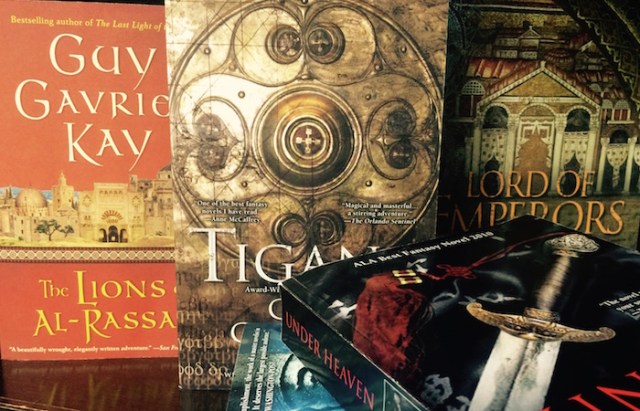
 Nalo Hopkinson
 Michael Crummey
 Emily St. John Mandel
 Mark Sampson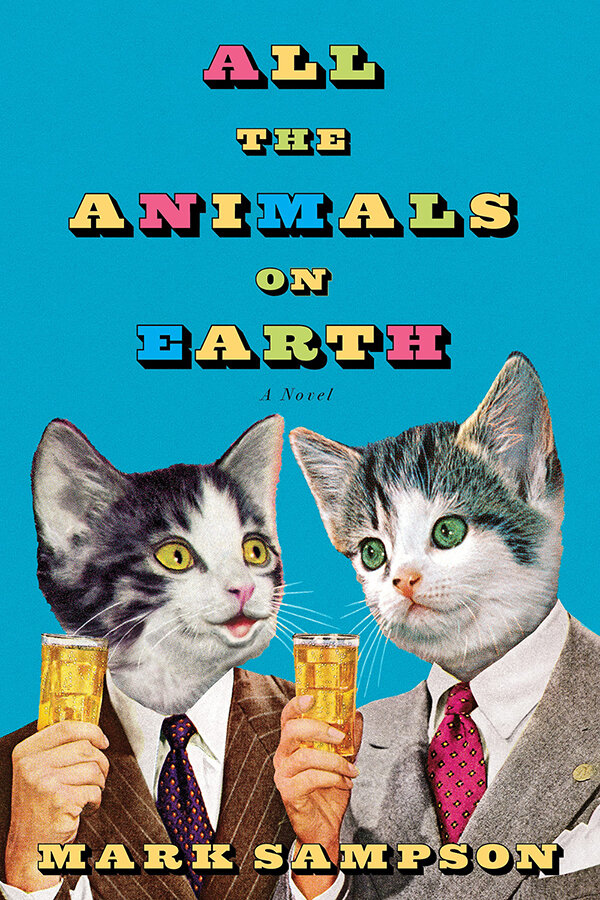
 Poetry Bonus: Louise Bernice Halfe, or Sky Dancer








 A Pilgrim in Narnia