Good C.S. Lewis Studies Books That Did Not Win the Mythopoeic Award: Part 1: C.S. Lewis on Theology, Philosophy, and Spiritual Life

Last week I wrote that “Tolkien Studies Projects Sweep the Mythopoeic Scholarship Award Shortlist in Inklings Studies“–a double-edged sword post that congratulated the authors of editors of five great books while noting that, once again, C.S. Lewis studies projects have been locked out of this prestigious award for Inklings Studies. Indeed, the last study focussed primarily on Lewis to be nominated was Alistair E. McGrath’s C.S. Lewis–A Life: Eccentric Genius, Reluctant Prophet, published all the way back in 2013.

My told-you-so tone is not because I do not think that Lewis’ work necessarily merits lighter or weaker scholarship–a point that I am carefully working through in a 3-part series on Tolkien Studies vs. Lewis Studies (see parts the first, the second, the third). And I happen to think that the stewardship of Lewis materials has been of global-class value to readers, and some of the greatest Lewis studies books are exceptional as scholarly books. Considering Lewis studies books on their own, besides Meilaendar, Lewis studies by Doris T. Myers, Walter Hooper, Kathryn Lindskoog, Joe R. Christoper and Joan K. Ostling, Lionel Adey, Don King, Peter J. Schakel and Charles A. Huttar, David C. Downing, Diana Pavlac Glyer, Michael Ward, Sanford Schwarts, Robert Boenig, John Bremer, and Monika Hilder–as well as the major biographers–deserved their nominations or wins.

So I thought that I would share quick reviews of “Good C.S. Lewis Studies Books That Did Not Win the Mythopoeic Award.” This is my own list and is no doubt narrow. I don’t know the rhetorical studies or precise philosophical volumes very well, for example–and if there is every a C.S. Lewis cookbook or walking tour of Narnia, you won’t hear from me. I have left out theses and most collections (which I usually read as individual essays), and did not include projects that I worked on. I have also cheated a little bit on these margins. But here are some good Lewis studies worth reading from the last few years, in four parts:

I’ll also include a note about 2021 books and a short series bout what I think are the best Lewis studies books you probably have read, the best ones you may not have heard of, and the best guides that I have encountered.
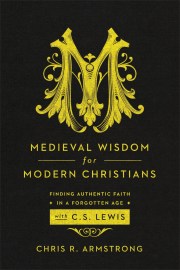
Chris Armstrong, Medieval Wisdom for Modern Christians: Finding Authentic Faith in a Forgotten Age, with C.S. Lewis (2016)

Chris Armstrong’s Medieval Wisdom for Modern Christians (2016)—much like his Patron Saints for Postmoderns (2009)—is written to give a resource to root contemporary seekers into the rich soils of the past. As the subtitle suggests, Armstrong uses C.S. Lewis as a primary link to medieval faith and practice. The particular strength of Medieval Wisdom for Modern Christians is how Armstrong connects with a particular social moment, especially for readers, where we are drawn back to certain ideas and modes of being from middle ages—a period foreign to most of us. Working as a professional historian and Christian leader, and using C.S. Lewis as a guide, this book is filled with meaningful ways to deepen life in church, family, and neighbourhood today. You can see my full review here.
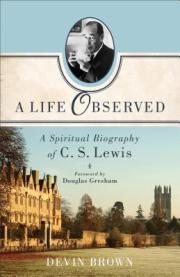
Devin Brown, A Life Observed: A Spiritual Biography of C.S. Lewis (2013)

Devin Brown has been producing books about Lewis and his writing for some years. His 2013 biography, A Life Observed: A Spiritual Biography of C.S. Lewis (2013), provided precisely the element I was looking for as I began my PhD that year. Brown focuses on “Lewis’s spiritual journey and his search for the object of the mysterious longing he called Joy (always capitalized), a quest which he claimed was the central story of his life” (xi). What Brown adds to the many Lewis biographies of the period is the precise focus on questions of spiritual life, Christian development, discipleship, and the numinous. This book landed on one of my Top 5 lists and pairs well with Will Vaus’ The Hidden Story of Narnia: A Book-by-Book Guide to C.S. Lewis’ Spiritual Themes (2010), Lyle W. Dorsett’s Seeking the Secret Place: The Spiritual Formation of C.S. Lewis (2004), and David C. Downing accessible and brilliant Into the Region of Awe: Mysticism in C.S. Lewis (2005).
Rob Fennell, ed., Both Sides of the Wardrobe: C.S. Lewis, Theological Imagination, and Everyday Discipleship (2015)

Quite apart from my article in this volume where I first argue that Lewis has a fairly sophisticated understanding of Christology that centres his writing on the spiritual life, I think this little book as a whole has value. First, it includes a number of short, smart pieces that a particularly directed to the ways that Lewis’ “theological imagination” is formative for Christian growth and spiritual vitality. The Narnian pieces by Michael Tutton and David J. Hawkesworth work well as theological introductions to the volume, while the articles by Allen B. Robertson and Gary Thorne represent two visions for Lewis’ imaginative transformations. David Mark Purdy’s genre study on Screwtape is a critical challenge to the field and helps us think about the way we read these demonic letters as spiritual enlightenment. Though we wrote independently, my “’Die Before You Die’: St. Paul’s Cruciformity in C.S. Lewis’s Narrative Spirituality” pairs well with Chris Armstrong’s piece on Lewis and the Theologia Germanica. There are reflections on Lewis as a preacher (by Laurence DeWolfe) and the eschatological Lewis (Sarah Layman). Finally, Wayne Smith’s “The Space Between: Observations From the Threshold” is a literary gem with theological creativity. Kudos to Rob Fennel for pulling the volume together and hosting the 2013 conference that gave birth to the idea.

Edith M. Humphrey, Further Up and Further In: Orthodox Conversations with C.S. Lewis on Scripture and Theology (2017)

Drawing from various parts of Lewis’ fiction and nonfiction, biblical theologian Edith Humphrey’s Further Up and Further In creates a unique conversation in Orthodox spirituality. With a sense of her personal story, Humphrey invites Lewis into conversation with classical and contemporary Orthodox thinkers and close readings of Lewis texts. This book appeared quite late in the process of my current book on C.S. Lewis and the spiritual life, but it has been a joy to draw Humphrey’s work together with my own. She is an author creating a spiritual theology that is similar to my own approach–looking at the way that Lewis’ fiction invites us to imagine the spiritual life–and Humphrey approaches it in a light, personal, and topical way. Unfortunately, this book has not been read very widely. It may be perceived as too niche—a topical study made for Orthodox readers as Rigney’s (below) is designed for American fundamentalist readers–but I would invite you to pick up Further Up and Further In if you have the opportunity.
Alan Jacobs, The Year of Our Lord 1943: Christian Humanism in an Age of Crisis (2018)

I am fascinated by a “synchronic” approach to a history of ideas. We often go through time tracking an idea, as Jacobs did in his 2008 book, Original Sin. What would it be like, however, to steady the lens of history to a particular point in time, and to just a few neighbourhoods, and see how rich and magnetic thinkers struggled with such a dynamic moment? The result of that experiment is The Year of Our Lord 1943: Christian Humanism in an Age of Crisis. As the war tilts toward allied victory, it was clear to a number of Christian public intellectuals that English, French, and American culture faced a moral and cultural challenge in a post-Christian, post-war era–a challenge that far exceeded austerity measures and the rebuilding of infrastructure. In this technocratic age, issues of what it means to be human surfaced in poignant ways. In what ways would Christians lead, speak, and serve in this age of machines after a techno-ideological war?

To struggle with the question, Alan Jacobs turns to a number of Christian intellectuals, mostly disconnected from one another, and the popular work they did in 1943. Jacobs looks at the lectures, talks, broadcasts, poems, essays, journals, and reviews of Jacques and Raïssa Maritain, T.S. EliotC.S. LewisW.H. Auden, and Simone Weil, as well as figures like Charles Williams, Mortimer Adler, Reinhold Niebuhr, Hannah Arendt, Jacques Ellul, and the WWII-era Oldham-Mannheim “Moot,” a religious, male serial conversation about Christian faith and public order in Britain. The conversation that results from these Christian intellectuals is a movement to restore a Christian understanding of the world in contemporary culture. For C.S. Lewis studies, Jacobs’ treatment is an effective contextual and comparative rereading of The Screwtape Letters and The Abolition of Man, resulting in a strong book that sets Lewis within his intellectual culture. A companion volume would be Samuel Joeckel’s The C.S. Lewis Phenomenon and the other volumes in the “reception” part of this series.
Sharon Jebb, Writing God and the Self: Samuel Beckett and C.S. Lewis (2011)

Theologian Sharon Jebb’s under-appreciated dissertation is a careful and highly readable study of Beckett’s Three Novels and Lewis’ Till We Have Faces. Jebb’s deeply theological study is in conversation with ancient theologians (like Augustine and Teresa of Avila) and contemporary ones (like Charles Taylor and Rowan Williams), offering a cultural theology of the self. Beckett and Lewis are an unusual pairing but a fruitful one. In particular, her analysis of God-knowledge and self-knowledge in Lewis is a significant discovery–even if the study itself is fairly narrow. While this is the oldest volume in our list, I want to mention it because it is too often missed by students and scholars of Lewis and should be on every Till We have Faces bibliography.

Joe Rigney, Lewis on the Christian Life: Becoming Truly Human in the Presence of God (12 hrs)

While this article shows that there are some books on Lewis and spirituality–and quite a number of devotional style materials–intelligent, integrated conversation about C.S. Lewis and the spiritual life is still limited. Rigney’s is the closest book so far to a full treatment of Lewis’ spiritual theology–though he does not use the words “spirituality” or “spiritual theology” anywhere in the book. I have some anxiety about Rigney’s connection to Bethlehem College & Seminary, which does not accept women in their seminary program–and, indeed, Rigney is speaking specifically to fundamentalist and conservative American readers, so the audience is somewhat narrow. While the book is limited by the questions that Rigney brings, nowhere in Lewis on the Christian Life do I see Rigney bending Lewis to his perspective. Unless you know that Rigney is offering a double critique–on the one hand, inviting fundamentalist and conservative Christian readers to be shaped by Lewis, and critiquing Lewis on perceived weaknesses on the other hand–the chapter on “Theology” is a bit strange as it sits in the text. But it is a book that grows throughout the reading, so that the later chapters on “Pride and Humility,” “Christian Hedonics,” and “Healthy Introspection” are among the best. It is a very American book (Lewis was not American, but many creative readers are), and it is very evangelical (Lewis was not evangelical, but many faithful readers are), but it brings a strong reading to a great many topics that a diverse set of readers have questions about. While not comprehensive, it is a warm and personal book as Rigney treats various topics one-by-one in a structured, catechetical way. Ultimately, we must admit, it is really a Christian doctrine book with a focus on personal response rather than a treatment of spiritual theology as a discipline itself–but it is the best of its kind so far.
Gary S. Selby, Pursuing an Earthy Spirituality: C.S. Lewis and Incarnational Faith (2019)

This book is perhaps as closely related to my work as Joe Rigney’s and came out the week after I submitted my thesis on the same topic. I have written an extensive review and critique of Pursuing an Earthy Spirituality, which also works as a critique of certain ways of narrowing the way we read C.S. Lewis in certain contexts. I won’t repeat the arguments I made there. Like Rigney, Selby is offering a self-critique, working to supplant a “bleak fantasy” or “negative spirituality” of evangelicalism with a holistic, vibrant, joyful, sensual, incarnational spiritual life suggested to us by Lewis. The book description captures what Selby is doing fairly well: “By considering themes such as our human embodiment, our sense of awareness in our everyday experiences, and the role of our human agency–all while engaging with the writings of Lewis, who himself enjoyed food, drink, laughter, and good conversation–Selby demonstrates that an earthy spirituality can be a robust spirituality.” Ultimately, Selby is arguing that there are two features to a healthy spirituality that we see in Lewis: consciousness and choice. Like many of the writers on Lewis featured here, Selby is a teacher who has found Lewis to be an engaging classroom conversation, and it is a very accessible read.

Michael L. Peterson, C.S. Lewis and the Christian Worldview (2020)

While the field Lewis studies still awaits a comprehensive study of Lewis’ philosophical thought that accounts for his entire corpus, Peterson’s recent C.S. Lewis and the Christian Worldview is a remarkably brief primer that draws students and scholars to many of the critical philosophical perspectives of Lewis. Peterson is sometimes reductionistic in his definitions—including “worldview” in the title, leaving out symbolic and praxeological elements. Overall, however, Peterson provides an accessible introduction to Lewis’ thought. Whatever philosophical weaknesses it might have and whatever seemingly injudicious choices he might make, Peterson shows that it is possible to take the ideas, images, and statements scattered across the disparate writings of a popular thinker and systematize them into a coherent whole.
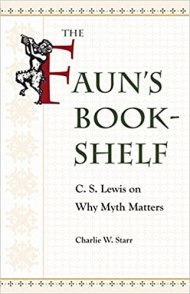
Charlie W. Starr, The Faun’s Bookshelf: C.S. Lewis on Why Myth Matters (2018)

While Charlie Starr is a friend and writing partner (see our co-written piece on “The Archangel Fragment” in Sehnsucht), I have no concerns about objectivity on this score. Charlie has become a leading C.S. Lewis scholar, particularly on Lewis’ handwriting and, the focus of this book, Lewis’ conception of “myth.” Moreover, I have been critical of Charlie’s work in the past (see here), while still consistently praising his perceptive eye (see the footnotes to my paper here) and publishing his work (see here). Most would not know, but Charlie’s doctoral dissertation, “The Triple Enigma: Fact, Truth, and Myth as the Key to C.S. Lewis’s Epistemological Thinking,” is a study of remarkable philosophical depth and literary capacity–and perhaps the longest study on a single passage in Lewis’ works! The Faun’s Bookshelf is a lighter touch but no less philosophically deft, as it sketches for interested readers Lewis’ multi-level fascination with myth–from being a lover a mythology to his work as a literary critic, Christian public thinker, and the maker of one the 20th-century’s great myths, The Chronicles of Narnia. As we might expect, from Charlie, beyond a study of “meaning” in Lewis, we also have a number of intriguing close readings of things that we might normally pass over–including the book titles on Tumnus’ bookshelf. While this study may lack some of the heft that a Mythopoeic Award nomination might require, and though I would quibble at points, as a literary resource it is critical, accessible, and enjoyable to read.
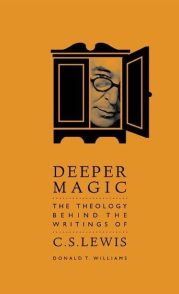
Donald T. Williams, Deeper Magic: The Theology Behind the Writings of C.S. Lewis (2016)

Despite several popular books about C.S. Lewis’ Christian teaching and some good theological treatments, there is as yet no comprehensive and critical theological treatment.  Donald Williams is closest with Deeper Magic, a brief systematic theology of Lewis’ thought. While not comprehensive, Deeper Magic comes out of a lifetime of writing about Lewis and is as strong as such a tight treatment could be. Williams’ traditional systematic theological treatment smartly adds “poimenics” for practical theological considerations, but, like so many Lewis scholars, his primary interest in this area is apologetics and evangelism. I would like to press Williams on the incarnational and cruciform theological centre of Lewis’ thought because I think he misses some implications for spiritual theology. However, with respect to Will Vaus who has done some good work to invite readers to a C.S. Lewis theology, Williams has provided the strongest and most accessible volume in the past decade. I also like that Williams is a poet and would love to see what a theological treatment completely given over to that poetic mode would look like.

I hope you can see the thematic links in this collection of studies. Despite some great work done and some good books for your pencil-behind-the-ear reading times, we are still missing the comprehensive volume in each of these major areas of philosophy, theology, and spirituality. I believe this coming decade will change that reality.
Posted in Original Research, Reviews | Tagged , , , , , , , , , , , , , | 9 Comments

Your Invitation to Epic Fantasy in Everyday Living: Ursula K. Le Guin: Worldbuilder by Signum University’s Bronwyn Rivera (Reblog)

I am pleased to announce that I am part of a team delivering a course at Signum University this fall on Ursula K. Le Guin: Worldbuilder. Prof. Kris Swank, PhD candidate at the University of Glasgow, is delivering a series of lectures on Le Guin, taking an approach to the eclectic Le Guin that is understudied. Le Guin was a “world-builder”–a shaper of speculative universes that are as dynamic, alluring, and provocative as her characters, storylines, and poetic prose have always been. Le Guin is the focus of much of my leisure reading in 2021–and well worth the time for authors, teachers, literary critics, and lovers of speculative fiction.

Brownyn Rivera has created a blog post invitation at the Signum University website that I thought was worth reblogging. If you would like to delve further into Le Guin’s worlds, I hope you can join us this fall. Registration for credit, discussion audit, and audit is open now for this masters-level course. You can always send me a personal note if you are wondering if an MA in Imaginative Literature is the right thing for you (my @signumu.org email address is brenton.dickieson). 

Your Invitation to Epic Fantasy in Everyday Living: Ursula K. Le Guin: Worldbuilder

From fantastical creatures, to unraveling the mysteries of time travel, to the classic Hero’s Journey, fantasy and science fiction are constantly being defined and redefined by reader and writer alike. Rather than striving for global-scale wars and high word counts, Ursula K. Le Guin chose to write about small, everyday people in small, everyday villages, often within the span of 100-150 pages per story. When she passed away in January 2018, she left behind an expansive collection of novels, short stories, poetry, essays, and translated works. According to Kristine Ainsworth Swank, lecturer for Ursula K. Le Guin: Worldbuilder, “There’s usually a battle going on within a person. Someone becoming an adult, a person learning their powers, a stranger fitting into a new world. Sometimes you meet royalty, but most often you don’t. If you can’t find someone to relate to in Le Guin, you haven’t read enough Le Guin yet.”

That’s all well and good, you might say. But why should I study Le Guin? We ask you the following:

  • Would you like to sit at the feet of a passionate “grandmaster” of storytelling?
  • Do you already enjoy the works of other fantasy and science fiction authors such as N.K. Jemisin, Neil Gaiman, and Ray Bradbury?
  • Is the technique of worldbuilding something you’d like to learn, especially for crafting your own epic novel or video game?
  • Do you want to see how an author ahead of her time tackled social and political movements such as Black Lives Matter, #metoo, and equality for all genders?
  • Do stories which “seem to favor villages over cities, craft over industry, poetry over gunfire,” but also involve talking dragons and strange gizmos appeal to you?
  • Are you a book lover who simply wishes for a TBR pile that will have you set for life?

If you answered “Yes! to any of these, we invite you to sign up for Ursula K. Le Guin: Worldbuilder for the Fall 2021 semester. Even if you aren’t familiar with Le Guin or have only read a few of her works, deep knowledge isn’t required in order to enjoy the class. That being said, Swank does recommend getting a headstart on the reading list and watching the 2018 documentary Worlds of Ursula K. Le Guin (available on AmazonKanopy, and PBS Passport). Additionally, Mythgard Academy offers comprehensive seminars on two of Le Guin’s novels, The Dispossessed and A Wizard of Earthsea. These are led by “The Tolkien Professor” Dr. Corey Olsen, founder and president of Signum University, and can be accessed through those links on Mythgard Institute’s website for free.

If you’re not able to dive deep into every book, fret not. The goal of the class is to have an overview of the novels and come away with what you will. Students who join the class will have access to all of the lectures and course materials even after the semester is over, and are welcome to revisit Ursula K. Le Guin: Worldbuilder as many times as they wish. We hope you’ll join us for the adventure.

By Bronwyn Rivera

Weekly Schedule

This course includes two live 90-minute lectures per week with one 60-minute discussion session as assigned.

Course Schedule

Week 1: A Citizen of Mondath

  • Le Guin’s biography
  • Early world-building

Week 2: The Hainish Cycle I: Beginnings

  • “Myth and Archetype in Science Fiction”
  • The early Hainish Cycle writings

Week 3: The Hainish Cycle II: Gender

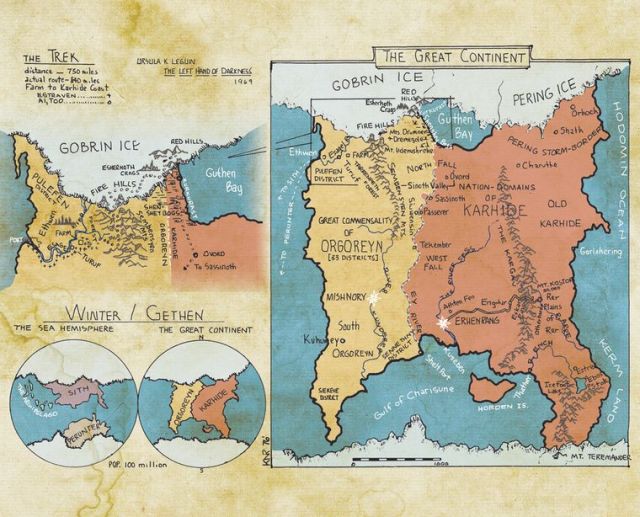
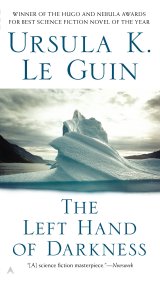
  • The Left Hand of Darkness
  • Gender revisited

Week 4: The Hainish Cycle III: Politics

  • The Dispossessed
  • Politics in Le Guin’s writings

Week 5: The Hainish Cycle IV: The Environment

  • The environment in Le Guin’s writings
  • The Word for World is Forest

Week 6: New Wave SF

  • Le Guin and the New Wave Science Fiction
  • The Lathe of Heaven

Week 7: The Books of Earthsea I: Power

  • The early Earthsea writings
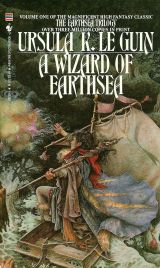
  • A Wizard of Earthsea

Week 8: The Books of Earthsea II: Race and Culture

  • Race & culture in Le Guin’s writings
  • The Tombs of Atuan

Week 9: The Books of Earthsea III: Religion

  • Religion in Le Guin’s writings
  • The Farthest Shore

Week 10: The Books of Earthsea IV: Feminism

  • Tehanu
  • Feminism in Le Guin’s writings

Week 11: The Books of Earthsea V: Later Re-visions

  • The Other Wind
  • Tales from Earthsea

Week 12: Other Worlds

  • Late world-building, and the Annals of the Western Shore series
  • “Omelas” and Le Guin’s literary legacy

Required Texts

Note: Students may use any edition of the following texts.

Further readings will be provided by the course instructors in the final syllabus.

Special Note: Robert Steed, PhD, Professor of Humanities at Hawkeye Community College, will give a special guest lecture during Week 9 of this course. Steed specializes in the study of Chinese religions, particularly Daoism, and Asian religions more generally. His research and teaching interests extend to religion and popular culture, medieval and world Christianity, mysticism, religion and art, and mythopoeic art, especially that of J.R.R. Tolkien, Ursula K. Le Guin, and Miyazaki Hayao.

Posted in Reflections | Tagged , , , | 4 Comments

Tolkien Studies Projects Sweep the Mythopoeic Scholarship Award Shortlist in Inklings Studies (Trying Not To Say “I Told You So”)

I just spent the weekend at Mythcon–a short, digital version of the normally weird and wonderful long weekend of scholarship and fan fun. Many of the parts of Mythcon that I love were still featured, including thoughtful and engaging panels, longer feature paper sessions to work out more complex ideas, and a bright and eclectic symposium of true lovers of imaginative literature and film. It was at Mythcon where I have met so many life-long nerd friends–and where I first launched my archival work that suggests that Lewis conceived of The Screwtape Letters as a part of the same fantasy universe as The Ransom Cycle (see here). I really love this community.

And I enjoyed the mini-con–though for this particular conference, I long to be there in person. Just as Mythcon has a tendency to encourage its participants to dust off dusty lyres and return again to fallow manuscripts when they return home, one never thinks the same again about the game of golf after Mythcon.

Honestly, I was just pleased to be able to connect at all. At this year’s online mini-conference there was a good deal of buzz about the Mythopoeic Awards. With four categories of awards (Adult lit, Children’s lit, and a Scholarship Award each for Inklings Studies and Myth and Fantasy Studies), and with five finalists in each category, the Mythopoeic Awards have a tendency to fill my TBR pile to overflowing–especially as it was a very strong slate of finalists.

While the fantasy awards are great, it’s the scholarship awards that I’m always paying attention to, especially in the Inklings Studies category (whose shortlist will, one day, contain a book with my name on the cover). Past winners include many of the scholars that we have mentioned here, including Clyde KilbyWalter HooperKathryn LindskoogHumphrey Carpenter, Paul Ford, Tom Shippey, Peter Schakel, Joe Christopher, Christopher Tolkien, Doug Anderson, George SayerCharles HuttarDavid DowningVerlyn Flieger, Michael Drout, John Garth, Janet Brennan Croft, Diana GlyerDimitra FimiMichael Ward, and Grevel Lindop, with his recent biography of Charles Williams.

Lately, these awards have been pretty hot.

In 2018, I had a chapter in a book edited by Sørina Higgins, The Inklings and King Arthur, which won the Mythopoeic Scholarship Award in Inklings Studies–shockingly edging out Jane Chance’s resourceful, Tolkien, Self and other: This Queer Creature (Palgrave Macmillan, 2016), Lisa Coutras’ pace-setting Tolkien’s Theology of Beauty: Majesty, Splendor, and Transcendence in Middle-earth (Palgrave Macmillan, 2016), and two masters in the field: Verlyn Flieger’s There Would Always Be a Fairy Tale: More Essays on Tolkien (Kent State University Press, 2017) and Christopher Tolkien’s beautifully designed and edited volume of one of his father’s greatest tales, Beren and Luthien (Houghton Mifflin Harcourt, 2017). In 2019, Verlyn Flieger’s book took the category, deservedly so (with respect to Catherine McIlwaine’s gorgeous exhibition book, Tolkien: Maker of Middle-earth and Jonathan S. McIntosh’s Thomistic theology of Tolkien, The Flame Imperishable). In 2019, Inklings scholar Dimitra Fimi took the fantasy award with Celtic Myth in Contemporary Children’s Fantasy: Idealization, Identity, Ideology.

Because there wasn’t a Mythcon in 2020, the 2020 finalists and winners were sort of bundled together with expectations about 2021. For the 2020 awards, it is not clear to me how they may have chosen out of these five excellent Inklings studies books:

Of that group, The Sweet and the Bitter won out, and it is a resourceful and deep study. The Fantasy Studies award category was equally strong:

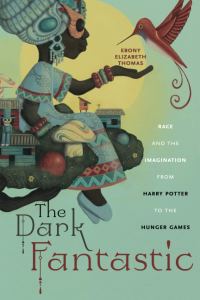
Gifford won that category. My vote was for Thomas’ The Dark Fantastic–and I would place it at the top of my list of Fantasy Studies volumes of the decade–and I am enjoying C. Palmer-Patel’s structuralist study. So it pleased me to see the shortlist of awards come out this weekend and include both C. Palmer-Patel and Ebony Elizabeth Thomas for a second run:

Mythopoeic Scholarship Award in Myth & Fantasy Studies

  • The Metamorphoses of Myth in Fiction since 1960 by Kathryn Hume.
  • Gods and Robots: Myths, Machines, and Ancient Dreams of Technology by Adrienne Mayor
  • The Shape of Fantasy: Investigating the Structure of American Heroic Epic Fantasy by C. Palmer-Patel
  • The Dark Fantastic: Race and the Imagination from Harry Potter to The Hunger Games by Ebony Elizabeth Thomas
  • Fantasies of Time and Death: Dunsany, Eddison, Tolkien by Anna Vaninskaya

I have heard that Vaninshkaya’s study is great, and Kathryn Hume is always thoughtful, so we’ll see how that category goes.

But it is the Inklings Studies award shortlist that I find the most telling:

Mythopoeic Scholarship Award in Inklings Studies

  • John M. Bowers, Tolkien’s Lost Chaucer (OUP)
  • Oronzo Cilli, Tolkien’s Library: An Annotated Checklist (Luna)
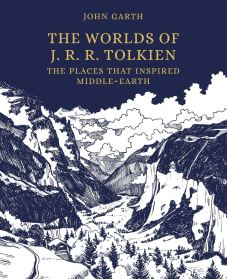
  • John Garth, The Worlds of J.R.R. Tolkien: The Places That Inspired Middle-earth (Princeton UP)
  • Catherine McIlwaine, ed. Tolkien: Maker of Middle-earth (Bodleian)
  • John Rateliff, ed. A Wilderness of Dragons: Essays in Honor of Verlyn Flieger (Gabbro Head)

Five strong books with striking individual identities that also work as a collective resource kit for Tolkien scholars and fans alike.

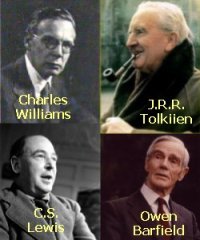
I have never picked the winner in these photo-finish races, so I will not begin prognosticating now. I will note the link. “Inklings Studies,” narrowly conceived, includes Tolkien father and son, Charles Williams, Owen Barfield, the Lewis brothers, and a handful of more minor writers. Given the way the Inklings grew as writers and how we have grown as a fan community, we would not be surprised to find scholarly material about George MacDonald, G.K. Chesterton, Joy Davidman, or Dorothy Sayers in that list. Strikingly, though, every book on the list is a Tolkien studies volume–though the Verlyn Flieger festschrift could have included a Lewis study or two, given her lifetime of work. It did not, however, and the list stands as a testimony to the strength of recent Tolkien studies.

However, we must admit that it is not a terribly recent phenomenon. As I argued in my series, “Why is Tolkien Scholarship Stronger than Lewis Scholarship?“, Tolkien studies strength over Lewis studies–not to mention the degree to which Williams and Barfield are under-studied–goes back for some years. There are exceptions in the last decade, but they simply prove the rule–and it has been a thin decade at that.

I made a quip at the mini-Mythcon that I hope one day a Lewis studies volume would be strong enough to warrant a nomination. Historically, there have been noted Lewis studies by Doris T. Myers, Walter Hooper, Kathryn Lindskoog, Lionel Adey, Don King, Peter Schakel, Diana Pavlac Glyer, Michael Ward, Sanford Schwarts, Robert Boenig, John Bremer, and Monika Hilder, as well as good biographies by Philip Zaleski and Carol Zaleski, Alistair McGrath, Alan Jacobs, and George Sayer. So, worried that I was being overly facetious, I clarified that there were some good recent Lewis studies books, just not ones of exceptional argument, depth, or contribution to the field. It is still a tough admission to make. The publication of this award shortlist is just another confirmation that Tolkien scholarship continues to shine in ways that Lewis scholarship simply does not.

Why is this? I have offered three articles composed of a dozen reasons why I think that Lewis scholarship (as a whole) is not as strong as Tolkien scholarship (as a whole):

There is very little shade thrown on my field in those pieces, and I still struggle to fully understand the difference. I followed that up by editing a piece by Connor Salter (see “Lewis and Tolkien among American Evangelicals“), and a resource pack to make all readers into better scholars (if they want to make their field stronger: “5 Ways to Find Open Source Academic Research on C.S. Lewis, J.R.R. Tolkien, and the Inklings.” Perhaps these resources will help.

However, really the best thing I should do is write a study of C.S. Lewis that warrants a Mythopoeic scholarship award nomination. And then I have no one to blame but myself when the 2024 shortlist appears!


Posted in Reflections | Tagged , , , , , , , , , , , , , , , , , , , , , , , , , , , | 26 Comments

Weekend Events: Mythcon 51: A Virtual Halfling Myth (Still Time To Register!) + Colin Duriez on “Death, Dante, and Dorothy Sayers”

Mythcon 51: A Virtual Halfling Mythcon (Jul 31-Aug 1, 2021)

Out of the disarray and disruption of COVID19, fan gatherings and academic conferences have done a solid job of reinventing themselves. Recent Mythmoot and Tolkien Society conferences have been quite successful online–and Mythmoot did a solid job with the even more challenging hybrid conference in Spring. While there is no doubt something lost–especially as we connect digitally all year long and use these conferences to meet old friends and make new ones–in terms of receiving great content, sharing discoveries, and increasing digital networks, I have truly appreciated the programs in the last year or so and hope that Oxonmoot (Sep 2-5) is able to pull of their live/online hybrid event safely and effectively.

Mythcon is one of the great fantasy conferences on the American continent. Quirky, connected, and artistic, we are all looking forward to the in-person Mythcon52 in 2022 in Albuquerque, New Mexico. Until then, showing a deft creativity and an understanding of how fans and friends need to connect, the Mythcon Council of Stewards are hosting a “Halfling” online mini-conference (July 31-Aug 1). This is an extremely affordable ($20 for full online access) and audience-driven two-day symposium. Beside conversations about J.R.R. Tolkien and C.S. Lewis, topics include Christina Rossetti, Neil Gaiman, H.P. Lovecraft, fantasy studies, mythopoeic literature, fairy-stories and philosophy, fantastic adaptation, and Norse and Arthurian literature. I would encourage you to register here and join in the fun this weekend!.

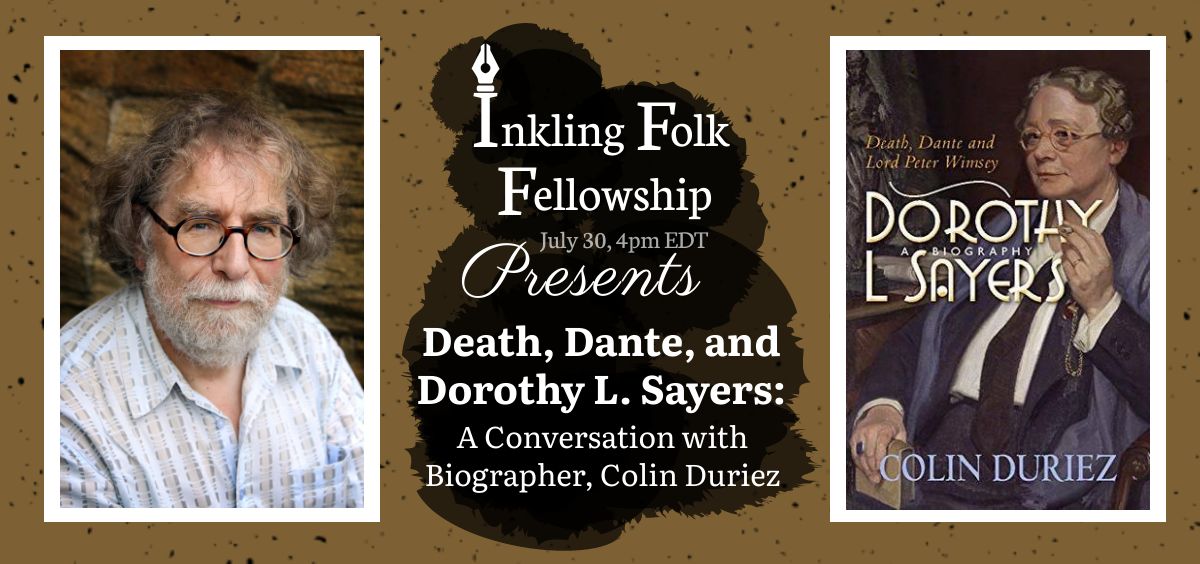
Colin Duriez on “Death, Dante, and Dorothy Sayers” (Jul 30th, 4pm Eastern)

And with a tireless commitment to fellowship and knowledge, the Inkling Folk Fellowship continues tonight (Jul 30th) at 4pm Eastern. Joe Ricke is hosting a conveersation with highly productive Inklings biographer, Colin Duriez–this time tackling the effervesent Dorothy Sayers and her twin literary achievements: the Lord Peter Wimsey mysteries and her translation of Dante’s Comedy. You can find this event information for the free Zoom event on facebook.

Posted in Reflections | Tagged , , , , , , , , | 4 Comments

The Thing about Riding Centaurs: A Note on Narnia, Harry Potter, Madeline Miller’s Song of Achilles, and the Black Stallion

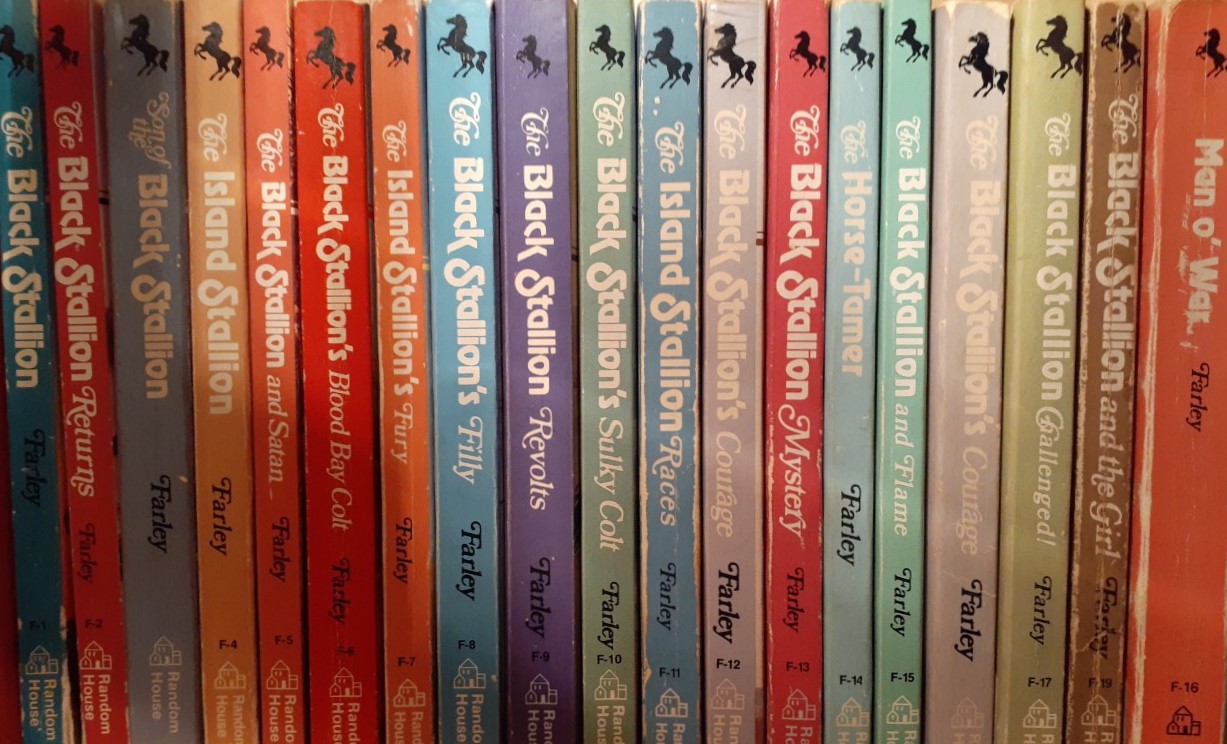
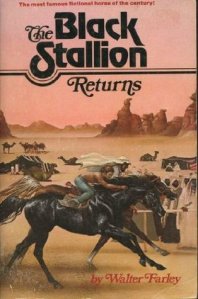
As a child reading in a bed surrounded by acres of horse-less fields, I was completely taken up by the Black Stallion series by Walter Farley. Marooned survivors of a shipwreck, city kid Alec Ramsay befriends an untameable stallion, whom he calls “Black.” In taming Black, Alec is able to survive in the wild. He returns to the West as the jockey and child-trainer of a championship racehorse who changes the landscape of the field. I still have almost all twenty of the volumes on my bookshelf–though no one in our household seems inclined to pull them down lately.

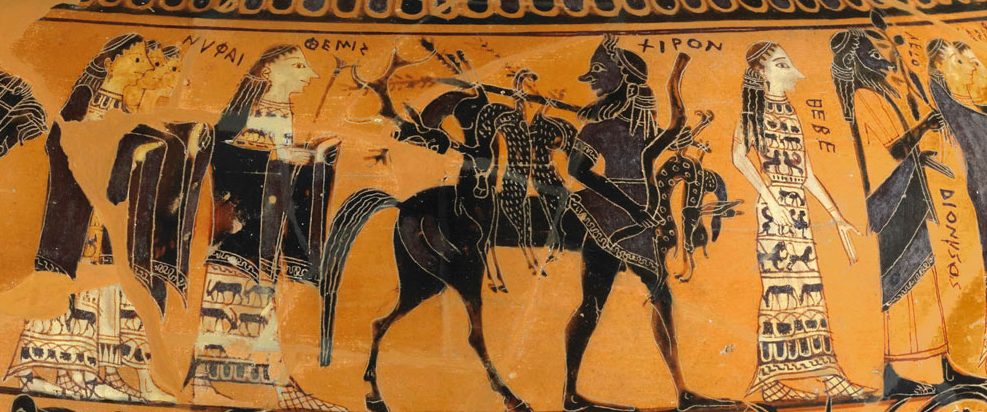
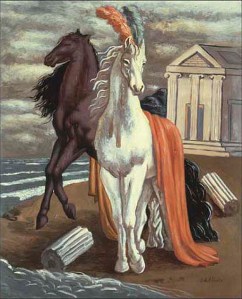
Chiron, Themis and Hebe from theoiIt is still nice to wander mentally through those paper fields, even today as a city kid. Nostalgia is an acceptable past-time, I think–and it is my memory of The Black Stallion that came back to me recently when reading Madeline Miller’s Song of Achilles.–a book I argued last week was, like C.S. Lewis’ Till We Have Faces, a strong myth retold. My sudden recollection of Alec as a child horse master may seem a bit incongruous as it occurred during the first encounter with Chiron the Centaur in Miller’s Greek myth retold–but bear with me.

In Miller’s myth, two princes–the divinely touched hero Achilles and the exiled Patroclus–suddenly encounter Chiron, the legendary teacher and teacher of legends. The Centaur’s presence, knowledge, and invitation to ride disturb our narrator, Patroclus, who describes his first ride upon the Centaur in detail:

Beside me Achilles bowed his head. “Master Centaur,” he said. “I am sorry for the delay. I had to wait for my companion.” He knelt, his clean tunic in the dusty earth. “Please accept my apologies. I have long wished to be your student.”

The man’s—centaur’s—face was serious as his voice. He was older, I saw, with a neatly trimmed black beard.

He regarded Achilles a moment. “You do not need to kneel to me, Pelides. Though I appreciate the courtesy. And who is this companion that has kept us both waiting?”

Achilles turned back to me and reached a hand down. Unsteadily, I took it and pulled myself up.

“This is Patroclus.”

There was a silence, and I knew it was my turn to speak.

“My lord,” I said. And bowed.

“I am not a lord, Patroclus Menoitiades.”

My head jerked up at the sound of my father’s name.

“I am a centaur, and a teacher of men. My name is Chiron.”

I gulped and nodded. I did not dare to ask how he knew my name.

His eyes surveyed me. “You are overtired, I think. You need water and food, both. It is a long way to my home on Pelion, too long for you to walk. So we must make other arrangements.”

He turned then, and I tried not to gawk at the way his horse legs moved beneath him.

“You will ride on my back,” the centaur said. “I do not usually offer such things on first acquaintance. But exceptions must be made.” He paused. “You have been taught to ride, I suppose?”
We nodded, quickly.

“That is unfortunate. Forget what you learned. I do not like to be squeezed by legs or tugged at. The one in front will hold on to my waist, the one behind will hold on to him. If you feel that you are going to fall, speak up.”

Achilles and I exchanged a look, quickly.

He stepped forward.

“How should I— ?”

“I will kneel.” His horse legs folded themselves into the dust. His back was broad and lightly sheened with sweat. “Take my arm for balance,” the centaur instructed. Achilles did, swinging his leg over and settling himself.

It was my turn. At least I would not be in front, so close to that place where skin gave way to chestnut coat. Chiron offered me his arm, and I took it. It was muscled and large, thickly covered with black hair that was nothing like the color of his horse half. I seated myself, my legs stretched across that wide back, almost to discomfort.

Chiron said, “I will stand now.” The motion was smooth, but still I grabbed for Achilles. Chiron was half as high again as a normal horse, and my feet dangled so far above the ground it made me dizzy. Achilles’ hands rested loosely on Chiron’s trunk. “You will fall, if you hold so lightly,” the centaur said.

My fingers grew damp with sweat from clutching Achilles’ chest. I dared not relax them, even for a moment. The centaur’s gait was less symmetrical than a horse’s, and the ground was uneven. I slipped alarmingly upon the sweat-slick horsehair.
There was no path I could see, but we were rising swiftly upwards through the trees, carried along by Chiron’s sure, unslowing steps. I winced every time a jounce caused my heels to kick into the centaur’s sides.

As we went, Chiron pointed things out to us, in that same steady voice.
There is Mount Othrys.
The cypress trees are thicker here, on the north side, you can see.
This stream feeds the Apidanos River that runs through Phthia’s lands.

Achilles twisted back to look at me, grinning.

We climbed higher still, and the centaur swished his great black tail, swatting flies for all of us.

Chiron stopped suddenly, and I jerked forward into Achilles’ back. We were in a small break in the woods, a grove of sorts, half encircled by a rocky outcrop. We were not quite at the peak, but we were close, and the sky was blue and glowing above us.

“We are here.” Chiron knelt, and we stepped off his back, a bit unsteadily.

In front of us was a cave… (ch. 8).

The image I had from The Black Stallion was Alec’s unusual riding style. Having learned to ride the wildest of Arabic horses bareback, Alec never fully submits to using the reins and stirrups. He tucks his feet back, leaning forward into Black’s mane–bridling Black with subtle movements of his body and voice rather than leather, steel, and whip.

How different to ride a Centaur with a human torso and horse’s body! One could not lean in and hold the mane like Alec did. The only place to hold on would be the naked body of the chimerical man-horse before you.

And a Centaur, of course, is not merely an untamable beast: he is a free person, not to be tamed by hands human or divine.

I thought immediately of Alec and Black when I read of Patroclus’ awkward ride upon Chiron. In this encounter with a Greek Centaur, however, I should have thought first of Narnia–a tale full of mythic creatures who, when the need is great, submit to carrying humans on their backs as Black does for Alec in the wilderness and as Chiron does for Achilles and Patroclus on the first day of their tutelage.

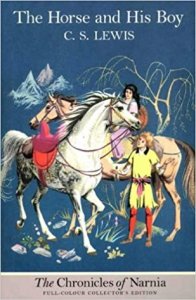
In the Narnian chronicle, The Horse and His Boy, the Talking Horse Bree must teach the unschooled slave-boy, Shasta, to feign horse mastery while actually giving Bree the rains. While Bree rejects horse tack because the boy is his and he is not the boy’s (as we see in the title)–and because Bree desires to be, or least to become, a free Narnian–it is also a practical affair. Shasta has never learned to ride, and all horses know–even if their humans do not–that reins in the hand of an untrained rider do more harm than good.

Bree patiently teaches Shasta to ride (mostly an affair of Shasta falling off enough times to learn how to fall well and only when necessary), but tells him to never use the reins and absolutely forbids the use of spurs. Bree wants to be in full control:

“[A]s I intend to do all the directing on this journey,” Bree says to Shasta, “you’ll please keep your hands to yourself. And there’s another thing. I’m not going to have you grabbing my mane.”

Shasta sees the problem immediately.

“But I say,” pleaded Shasta. “If I’m not to hold on by the reins or by your mane, what am I to hold on by?”

“You hold on with your knees,” said the Horse. “That’s the secret of good riding. Grip my body between your knees as hard as you like; sit straight up, straight as a poker; keep your elbows in (ch. 1).

Lacking Alec’s advantage of leaning into the horse’s neck or Achilles’ strong grip on Chiron’s torso, what is Shasta to do? There are still the knees–forbidden by Chiron but used by Alec to learn to ride Black in their shared wilderness and also the key to a good human-foal to the Narnian Talking Horse.

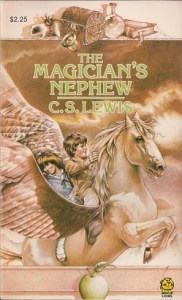
In The Magician’s Nephew, the first of all Narnian Flying Horses, Fledge, is more generous than Bree the Talking Horse–though we must admit that the physiology of a Flying Horse may make it easier for unbridled humans to ride bareback. We have few details about how Digory and Polly positioned themselves in the first Narnian horse-flight. And yet, the image is the most powerful one in my childhood memory of Narnia.

We do see Digory leaning forward against Fledge’s neck (like Alec on Black) and Polly holding tight to Digory’s waist (like Achilles of Chiron). A long flight, we learn, is like a long ride, leaving horse and rider hungry and stiff and tired. Falling off of Bree is painful but educational for Shasta; falling off Fledge in flight, however soft the new Narnian pastures might be, is a somewhat different affair. It is also a challenge to mount any horse without stirrups–even when your steed is not the father of an entire race–though Chiron and the youthful Greek heroes navigate the problem well enough.

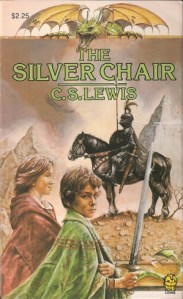
While it is perhaps not so grand as riding the first Flying Horse, Eustace and Jill’s adventure in The Silver Chair is crowned with a singular honour: the invitation to ride a Centaur.

If Narnia’s first Flying Horse is awesome and thrilling to ride and Bree’s sternness is intimidating to a liberated stable boy, Centaurs command a different kind of respect altogether–as we see in the Greek boys’ reaction to Chiron. Watching the Centaurs through the eyes of Jill and Eustace reminds us that, in all their gravity as a species, Centaurs do not carelessly lend themselves to humans as beasts of burden. It is worth quoting good portions of chapter 16 of The Silver Chair to get a sense of the gravity of the honour and majesty of Centaurs–and some hints at their physiology to supplement Miller’s image of Chiron:

“Ah! You’ve woken up at last, Daughter of Eve,” [Glimfeather the Owl] said. “Perhaps you’d better wake the Son of Adam. You’ve got to be off in a few minutes and two Centaurs have very kindly offered to let you ride on their backs down to Cair Paravel.” He added in a lower voice. “Of course, you realize it is a most special and unheard-of honour to be allowed to ride a Centaur. I don’t know that I ever heard of anyone doing it before. It wouldn’t do to keep them waiting.”

… Eustace was now up and he and Jill set about helping Orruns [the Faun] to get the breakfast. Puddleglum was told to stay in bed. A Centaur called Cloudbirth, a famous healer, or (as Orruns called it) a ‘leech’, was coming to see to his burnt foot.
“Ah!” said Puddleglum in a tone almost of contentment, “he’ll want to have the leg off at the knee, I shouldn’t wonder. You see if he doesn’t.” But he was quite glad to stay in bed.

Breakfast was scrambled eggs and toast and Eustace tackled it just as if he had not had a very large supper in the middle of the night.

“I say, Son of Adam,” said the Faun, looking with a certain awe at Eustace’s mouthfuls. “There’s no need to hurry quite so dreadfully as that. I don’t think the Centaurs have quite finished their breakfasts yet.”

“Then they must have got up very late,” said Eustace. “I bet it’s after ten o’clock.”

“Oh no,” said Orruns. “They got up before it was light.”

“Then they must have waited the dickens of a time for breakfast,” said Eustace.

“No, they didn’t,” said Orruns. “They began eating the minute they awoke.”

“Golly!” said Eustace. “Do they eat a very big breakfast?”

“Why, Son of Adam, don’t you understand? A Centaur has a man-stomach and a horse-stomach. And of course both want breakfast. So first of all he has porridge and pavenders and kidneys and bacon and omelette and cold ham and toast and marmalade and coffee and beer. And after that he attends to the horse part of himself by grazing for an hour or so and finishing up with a hot mash, some oats, and a bag of sugar. That’s why it’s such a serious thing to ask a Centaur to stay for the week-end. A very serious thing indeed.”

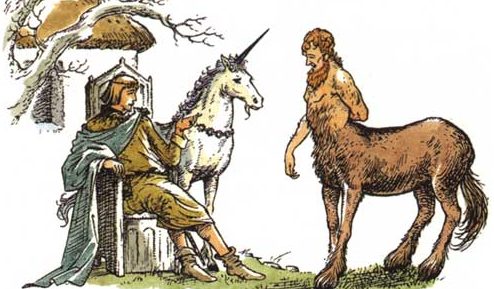
At that moment there was a sound of horse-hoofs tapping on rock from the mouth of the cave, and the children looked up. The two Centaurs, one with a black and one with a golden beard flowing over their magnificent bare chests, stood waiting for them, bending their heads a little so as to look into the cave. Then the children became very polite and finished their breakfast very quickly. No one thinks a Centaur funny when he sees it. They are solemn, majestic people, full of ancient wisdom which they learn from the stars, not easily made either merry or angry; but their anger is terrible as a tidal wave when it comes.

… To ride on a Centaur is, no doubt, a great honour (and except Jill and Eustace there is probably no one alive in the world today who has had it) but it is very uncomfortable. For no one who valued his life would suggest putting a saddle on a Centaur, and riding bare-back is no fun; especially if, like Eustace, you have never learned to ride at all. The Centaurs were very polite in a grave, gracious, grown-up kind of way, and as they cantered through the Narnian woods they spoke, without turning their heads, telling the children about the properties of herbs and roots, the influences of the planets, the nine names of Aslan with their meanings, and things of that sort. But however sore and jolted the two humans were, they would now give anything to have that journey over again: to see those glades and slopes sparkling with last night’s snow, to be met by rabbits and squirrels and birds that wished you good morning, to breathe again the air of Narnia and hear the voices of the Narnian trees.

…  And when they had crossed they rode along the south bank of the river and presently came to Cair Paravel itself. And at the very moment of their arrival they saw that same bright ship which they had seen when they first set foot in Narnia, gliding up the river like a huge bird…. The children saw there would be no chance of reaching the Prince through all that crowd, and, anyway, they now felt rather shy. So they asked the Centaurs if they might go on sitting on their backs a little longer and thus see everything over the heads of the courtiers. And the Centaurs said they might.

A flourish of silver trumpets came over the water from the ship’s deck….

We get less detail here about the intimacy of riding Narnian Centaurs than Greek ones, but we also learn about the habits of this community of Centaurs. Unlike Miller’s Chiron, we see that a rider’s seat is an advantage for comfort–even if a long journey bareback on a Centaur is still a painful affair. In both cases, the Centaurs are teachers and guides, filled with wisdom and strength, grave and yet generous.

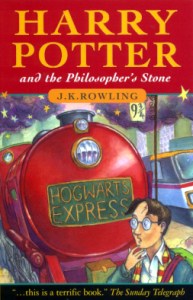
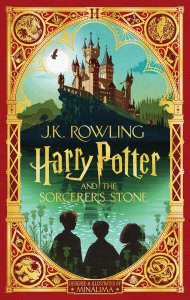
One can learn much riding on the back of a Centaur–as we see in each of these Narnian and Greek scenes, but also as Harry Potter is rescued from grave danger in the Forbidden Forest by Firenze, a Centaur who is featured throughout the epic. Unlike Patroclus and Achilles of the Greek chronicles or Jill and Digory of the Narnia tales, Harry accepts a ride upon Firenze without knowing what a grave and unusual privilege it is. And, intriguing for the trend we see here, Harry approaches the invitation without answering the question of whether he is a trained rider.

In Harry Potter and the Philosopher’s Stone, J.K. Rowling deepens the gravity of such an invitation:

‘Are you all right?’ said the centaur, pulling Harry to his feet.

‘Yes – thank you – what was that?’

The centaur didn’t answer. He had astonishingly blue eyes, like pale sapphires. He looked carefully at Harry, his eyes lingering on the scar which stood out, livid, on Harry’s forehead.

‘You are the Potter boy,’ he said. ‘You had better get back to Hagrid. The Forest is not safe at this time – especially for you. Can you ride? It will be quicker this way.

‘My name is Firenze,’ he added, as he lowered himself on to his front legs so that Harry could clamber on to his back.

There was suddenly a sound of more galloping from the other side of the clearing. Ronan and Bane came bursting through the trees, their flanks heaving and sweaty.

‘Firenze!’ Bane thundered. ‘What are you doing? You have a
human on your back! Have you no shame? Are you a common
mule?’

‘Do you realise who this is?’ said Firenze. ‘This is the Potter
boy. The quicker he leaves this Forest, the better.’

‘What have you been telling him?’ growled Bane. ‘Remember, Firenze, we are sworn not to set ourselves against the heavens.
Have we not read what is to come in the movements of the planets?’

Ronan pawed the ground nervously.

‘I’m sure Firenze thought he was acting for the best,’ he said, in
his gloomy voice.

Bane kicked his back legs in anger.

‘For the best! What is that to do with us? Centaurs are concerned with what has been foretold! It is not our business to run around like donkeys after stray humans in our Forest!’

Firenze suddenly reared on to his hind legs in anger, so that
Harry had to grab his shoulders to stay on.

‘Do you not see that unicorn?’ Firenze bellowed at Bane. ‘Do you not understand why it was killed? Or have the planets not let you in on that secret? I set myself against what is lurking in this Forest, Bane, yes, with humans alongside me if I must.’

And Firenze whisked around; with Harry clutching on as best he could, they plunged off into the trees, leaving Ronan and Bane behind them (ch. 15).

There is significantly more to the life of Centaurs in J.K. Rowling‘s invented worlds, but we learn much here. Rowling deepens the grave choice for a Centaur to carry a human by making it symbolic of the Centaurs’ long oppression by the Wizarding world. Firenze choosing to carry Harry brings a sense of cultural indignity–even as Firenze is doing one kind of good in the moment. As Bree disdains being compared with a donkey, Potter-world Centaurs feel the sting of the same comparison. The insults against Firenze are deeper than mere insult, though. Given the Centaurs’ struggle for recognition (which heightens in the series as the Wizarding world flirts with different kinds of authoritarian regimes), readers will know how deep the wound of “mule” goes, given the half-breed nature of our common, infertile beast of burden.

Later in the Harry Potter series, Firenze becomes a Hogwarts teacher, drawing wisdom from terrestrial and celestial signs much like the Narnian Centaurs. Firenze is different in character than Roonwit the Centaur in The Last Battle, and Rowling’s racial (species) struggle is a keen one. Regardless, the Centaurs in both worlds share similar arts and sciences and, as a race, carry themselves with a certain dignity and grandeur.

I have never doubted that the grave, thoughtful, clannish, and mystical centaurs that live near Hogwarts in Harry Potter are drawn from the same ancestry as the Narnian Centaurs. And yet there is more to these links than I first thought. Whether it is human perspectives about their chimeric physiology, the art of riding, the grave dignity of the creature, or the teacherly wisdom Centaur’s yearn to share even as they are tight-lipped and reticent, there is a shared Centaur tradition in our pages–despite different storylines and an open debate about whether humans are easier to train as riders than to retrain. Madeleine Miller’s Chiron–with perhaps a literary nod to Narnia that Rowling’s Potterverse shares–reminds me about how the stories go back and back, ever feeding imaginative writers and readers and myth-speakers with evocative images of these greatest of untameable creatures.

It is interesting, isn’t it, how memory and story work?

Posted in Thoughtful Essays | Tagged , , , , , , , , , , , | 41 Comments