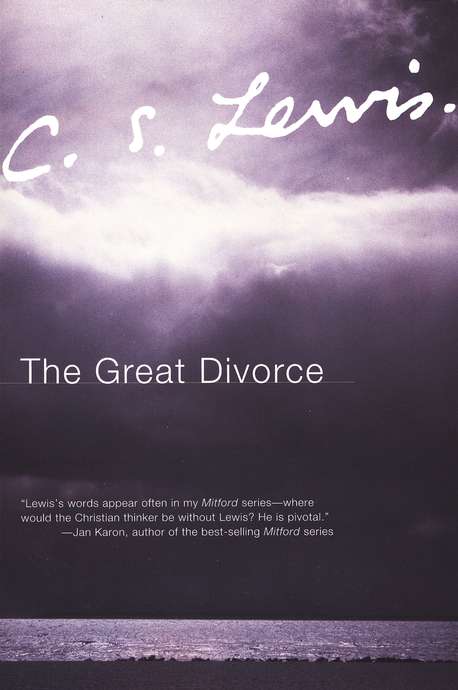
In his evocative and soul-revealing re-imagining of the spiritual life in the irreconcilable ecosystems of heaven and hell, The Great Divorce, C.S. Lewis tells a lie.
As I described last week, The Great Divorce is a travel-journey philosophical novella. Like Dante, the author-as-protagonist journeys from hell to glance, even briefly, at the bright lands of deepest heaven. Lewis’ hell is a gloaming suburb of near-nothingness, a ghostly, misty, insubstantial realm of despondency and despair. By contrast, heaven is wild and vivid, with a bright, penetrating light and landscape. Lewis’ cosmos is terrestrial rather than celestial, but the object is the same. As Lewis wrote of Dante’s Divine Comedy, it is about the
Lewis’ Beatrice (or one of them, anyway) is a bus driver who transports hellish day-trippers to the front lawn of heaven. As Lewis takes his seat on the bus, an obscure, self-absorbed scholar sits beside him. Lewis then writes:
“Realising with a shudder that what he was producing from his pocket was a thick wad of typewritten paper, I muttered something about not having my spectacles…” (ch. 1).
It is a small lie, granted, but it makes hell seem murkier for a moment.
I have to admit that it is a lie that tempts almost everyone who spends much time in professional literary lands. Almost monthly, I am offered a book for peer assessment or academic journal review, or asked to give advice on a manuscript. Once upon a time, I defended my stance not to write bad book reviews. As the scholarly stakes increased, however, that luxury slipped away from me. Of my last three published reviews, one was critically positive, one deeply negative, and an anthology with a mix of the two. Those latter two—combined with a hard “no” to an editor on a scholarly book and an editor passing over a book I gave a solid “yes”— made me lose heart. I’ve passed on almost every request since, mumbling something indistinct about not having my reading glasses.
Thus, when I got a request to review a book in the “Inspirational” category from the epicentre of American Christian publishing, This was a hard pass. I decided to ignore the request.
Then I took a glance. The author was Amy Baik Lee, a name I knew from the Rabbit Room newsletter and (I think) connected to the Anselm Society. She and I had also chatted a bit online about links between C.S. Lewis and L.M. Montgomery. So, I took the risk and opened the request.
What I found was an endearing letter from the author—which she followed up with the loveliest handwritten note I’ve received in some time. Intrigued, I looked at an eBook sample and discovered three things.
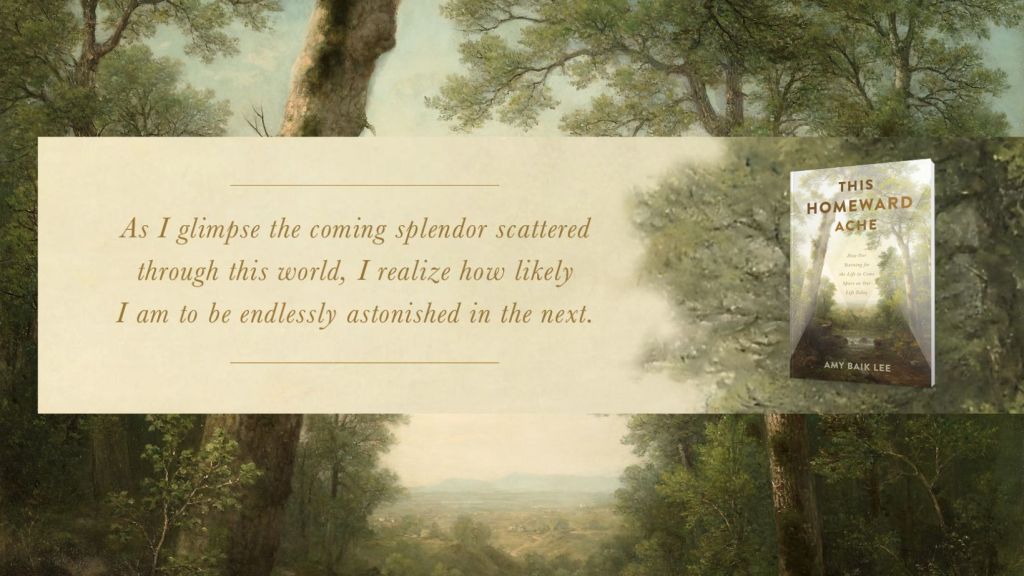
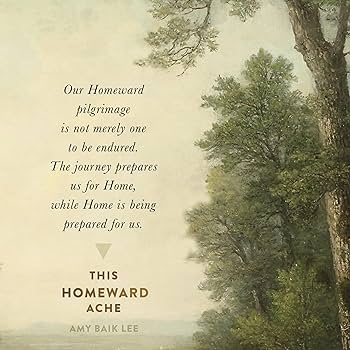
First, wherever the book was made, its subject was right in the centre of what I have been thinking about. This Homeward Ache is captured well in the subtitle: How Our Yearning for the Life to Come Spurs on Our Life Today. In 2020, I was preaching a 10-part series in our church called “Remembering Heaven.” This theme was precisely what I was trying to do, and made me retroactively envious of Lee’s phrase, This Homeward Ache. Unfortunately, an apocalypse happened—which is always inconvenient when you are preaching about heaven—and my project kept adapting to the social distance. Still, Amy and I seemed to share the same literary and theological friends—including C.S. Lewis—and I felt drawn to the content.
Second, after reading only a few pages, I knew that the writing was thoughtful and descriptive—which I would expect of any writer on this topic. Deeper than that, though, the prose was careful, precise, intricate, even—this was not just writing but craft. It revealed a text that had the reflective weight of years and literary friendship behind it.
And as I read, I discovered that in concert with the subject itself, the prose was refreshing. It was a life-giving meeting of form and content. I used up most of my pencil marking up passages that resonated within me:
Something I had only sensed in times of great grief and great wonder had me in its grasp, and I had no name for it (8).
Piercing is a word I try to use sparingly to describe Homeward longing, mostly because I suspect I’d become a one-word writer if I gave it free rein. This ache is undeniably a sharp-edged joy… (37).
I am missing the wholeness of a world that I have only ever experienced in shards…. I understand, then, that I am Homesick indeed, and that the long is chronic. I walk about—and write—like a woman with an open wound and a dressing that never seems to stay. This thing gets everlastingly in the way of my living and yet fuels its very core (56-58).
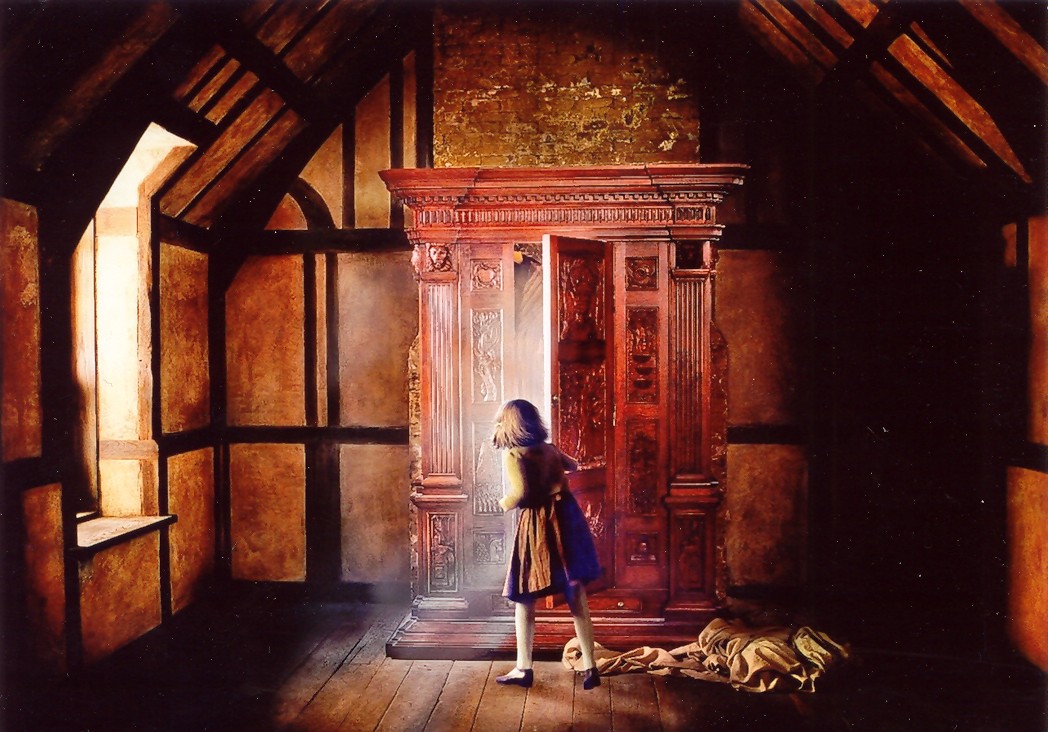
Narnia opened my eyes to the immediate presence of another reality alongside my tangible one—and the call I have as a human being to engage in both. It is in this world, with its breaking news reports and quotidian library corners that “we have battle and blazing eyes, / And chance and honour and high surprise” (67-68, quoting Chesterton).
My mental map is gradually taken up more by blank spaces than the crowding of dots (88).
And so on, through the end.
Third, the book is beautifully designed—and I love beautiful books whose skin matches their innards. So I asked them to send it along.
I have not been well, as I talked about earlier this year. I would like to properly review This Homeward Ache, but I only have the ability to write the introduction. At the moment, I’m not capable of expressing my wish that Part 1, the author’s background story, was longer. And I can’t express why ch. 5, “Return to the Meadow,” was the most delightful chapter, or that ch. 9, “With Temporary Homes,” was the most helpful to me as it brought together the previous three chapters on exile, wandering, and pilgrimage.
A beautiful book deserves a beautiful review. But if I delay the review any longer, I will never write a word.
Instead, all I can do is speak simply to my experience of reading This Homeward Ache. I read it slowly through the winter, page by page. If I was not up for a full chapter, I read a section, giving myself the freedom to close the book for a walk or a nap whenever I felt like it was needed. Duty is the wrong posture towards soulful refreshment and self-care—not least when, like The Great Divorce and Lewis’ other images of longing for heaven, the book is about giving our spiritual imaginations their head.
As I read This Homeward Ache, even through this hellish post-covid fog, or whatever it is, I found myself healing. I read a little, and I was able to read a little more. If they can cease obsessing about their own fears and injuries, even for a moment, the miserable, feeble ghosts of The Great Divorce are invited to follow their longing to go deeper in and higher up. As they journey in a land of goodness that is “harsh to the feet of shadows” (ch. 5), they begin to grow more substantial. Their feet begin to toughen up as they acclimatize to the unbending realness of heaven. In a similar way, This Homeward Ache drew me out of myself, little by little, into a fuller reality of this tangible world of email requests and front sunporch couches that exist in parallel to Narnia.
And, because I could see more clearly in this land, my own world, I have been able to return with fresher eyes and tougher souls in my pilgrimage to Narnia.
Amy Baik Lee has caused me to be more careful of the literary requests that find their way toward me. It is a privilege, not a cause for shuddering. And who knows where such a path may lead?
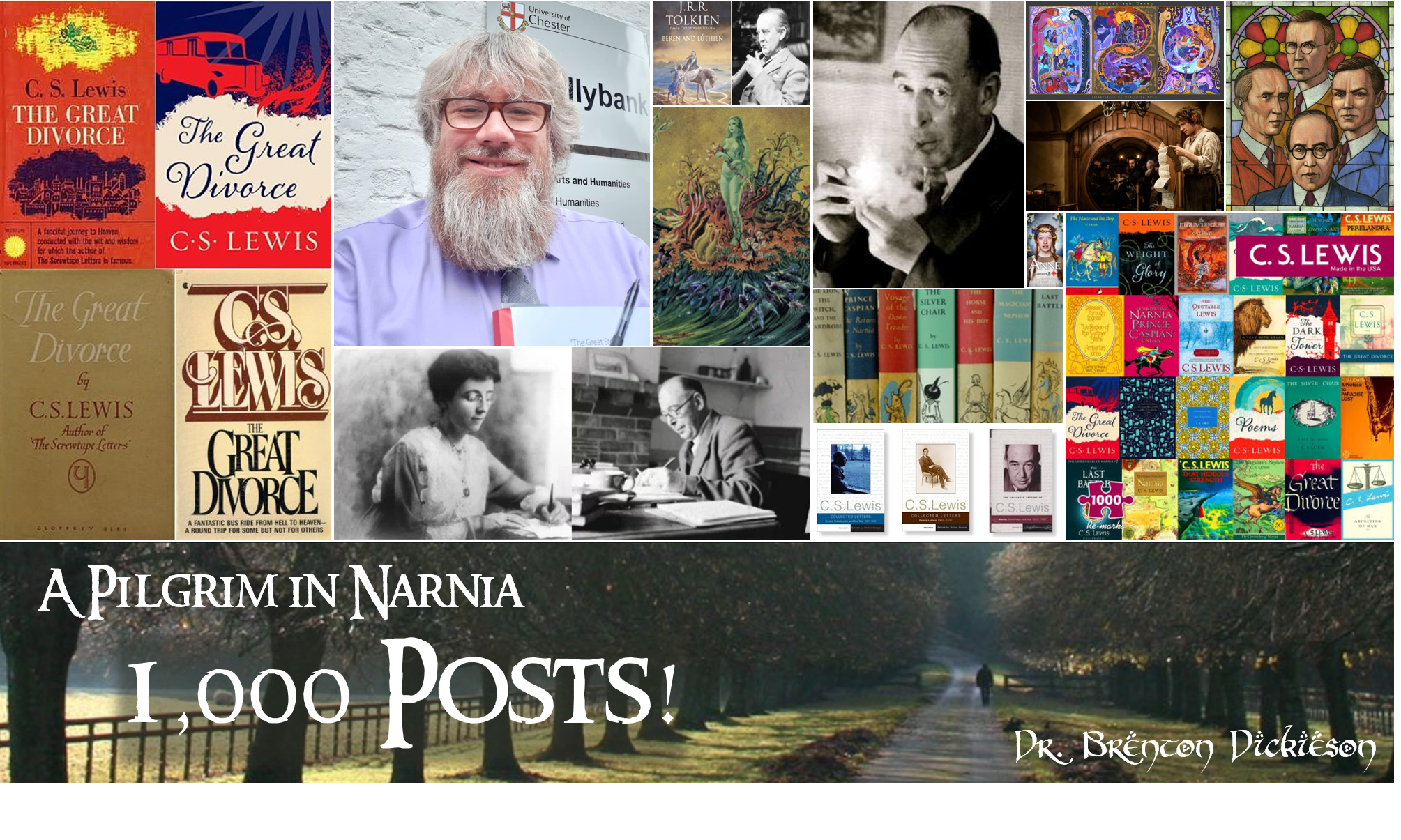
I believe in open access scholarship. Because of this, since 2011 I have made A Pilgrim in Narnia free with nearly 1,000 posts on faith, fiction, and fantasy. Please consider sharing my work so others can enjoy it.
Well, it has been quite some time since I wrote my “I’m still here but just exhausted” blog post. I am still here! I am less exhausted, but the tumbling forward of incomplete work continues. Moreover, though I’m making excellent progress on the last stages of a book, I can’t seem to write short, snappy thoughts and smart mini-essays.
To put it briefly, I’m struggling with brevity.
But the heavens are on my mind today. A total eclipse will fall on Prince Edward Island soon. My wife and I are headed west with dark glasses to see how close we can get to Totality. As Lewis was a speculative fiction writer fascinated with the heavens, I thought a briefish note about C.S. Lewis and Solar Eclipses would be interesting.
The scrupulous editors at Wikipedia tell me that no Total Solar Eclipse was visible from the United Kingdom between 1724 and 1925, when it skipped across the Hebrides in the north. Other off-centre kinds of solar eclipse events happened again in 1954 and 1959, but this time most of the UK experienced partial eclipses. I see nothing in any of Lewis’s writings that suggests that Lewis knew about the events in 1925, 1954, or 1959.
Closer to home, in Jun 29, 1927, there were 24 seconds of Totality in North Wales/Northeast England, meaning that Lewis’s home of Belfast would have had a partial eclipse. Lewis’s father, Arthur, would have been unlikely to break his routine to see the light and shadows, and his brother, Warren, was in (or on his way to) Shanghai. On Jul 9, Lewis writes to Warren:
“I have no difficulty in imagining a day grey and drizzling as an English November ‘seeing as how’ we have lived under such days for a week or so, relieved by the mutterings of a chronic thunderstorm. The popular theory is that the weather is all ‘caused by the eclipse’, the eclipse which has been ‘news’ in the papers long before and after its occurrence: or as Rose Macaulay wd. say, it produced ‘amazing crowds’ and in them were ‘many well dressed women’. Unfortunately it was not visible from Headington. What I can’t understand is why, if the moon is constantly revolving round the earth, it gets directly in the light of the sun only once in a century or so: I shd. have imagined that it would happen about twice a year. None of the elaborate explanations in the papers touch this point, so I suppose it must just be given up.”
I don’t know what the inverted commas mean in this passage at some points, but it is a lovely combination of flawed folk knowledge, unhelpful media, and Lewis’s limitations in scientific understanding. After all, there had not been a total eclipse in England since the early 18th century, nearly 200 years. Lewis chose not to Google the answer, but I did. It turns out that I have been having trouble thinking fourth dimensionally, as the Doc would remind me. I can envision orbits overlapping, but I had not considered the nearness or farness of the moon in that orbit.
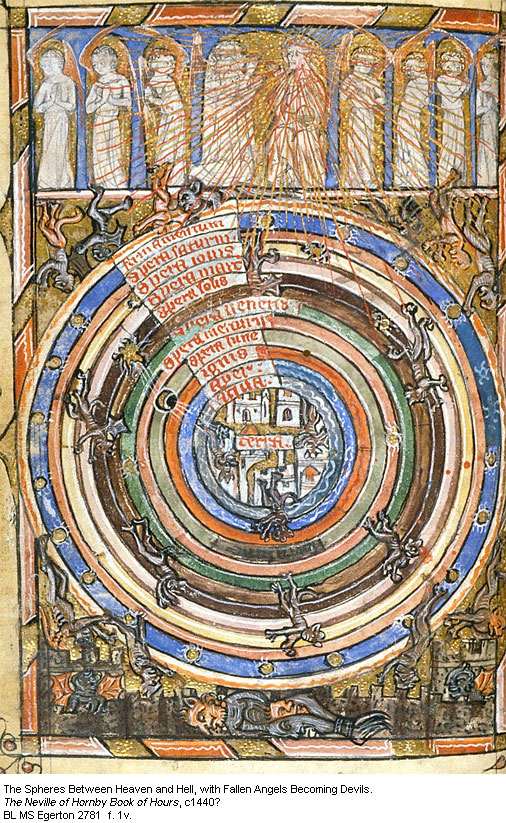
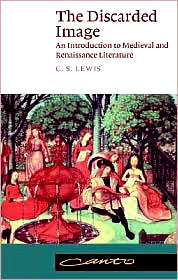
The closest to a total eclipse where Lewis lived and worked in England during his lifetime was at dawn on Feb 15, 1961. Lewis was lecturing at Cambridge on Spenser’s Faerie Queene in the season, commuting back and forth from Oxford. I can’t see even a hint of it in his correspondence or anything remarkable in his writings of the period. One of these period pieces is The Discarded Image, published in 1964, a few months after he died. I do not know what months he was working on this book, but it brings together decades of his Oxford and Cambridge lectures, which were designed to prepare students to read medieval poetry by teaching them about the medieval worldview. In a precursor essay from the mid-50s, “Imagination and Thought in the Middle Ages,” Lewis writes about how medieval folk viewed what was happening in the intentionally designed geocentric heavens:
Nor were those high regions dark [in the medieval imagination]. The darkness in which the stars (for us) are set is merely the darkness of the long, conical shadow cast by the Earth when the sun is below our feet. They knew, from their theory of lunar eclipses, that the apex of this dark cone must fall well above the moon. Beyond that apex the higher heavens are bathed in perpetual sunshine. In a sense, no doubt, we should say the same. But then we are aware (as they, I think, were not) of the part played by the air in diffusing sunlight and producing that bubble of luminosity which we call day; we have even, in stratospheric ascents, gone high enough to see the blue curtain grow thin at the zenith so that blue turns to black and the night of space almost shows through. They knew that, up yonder, one was above the air, in whatever they meant by aether; they did not know that one would see the sun flaming in a black pit. They thought on the contrary that they would be floating (for Milton is here a medieval) in
those happie climes that lye Where day never shuts his eye, Up in the broad fields of the skye. (Milton, Comus, lines 976-8)
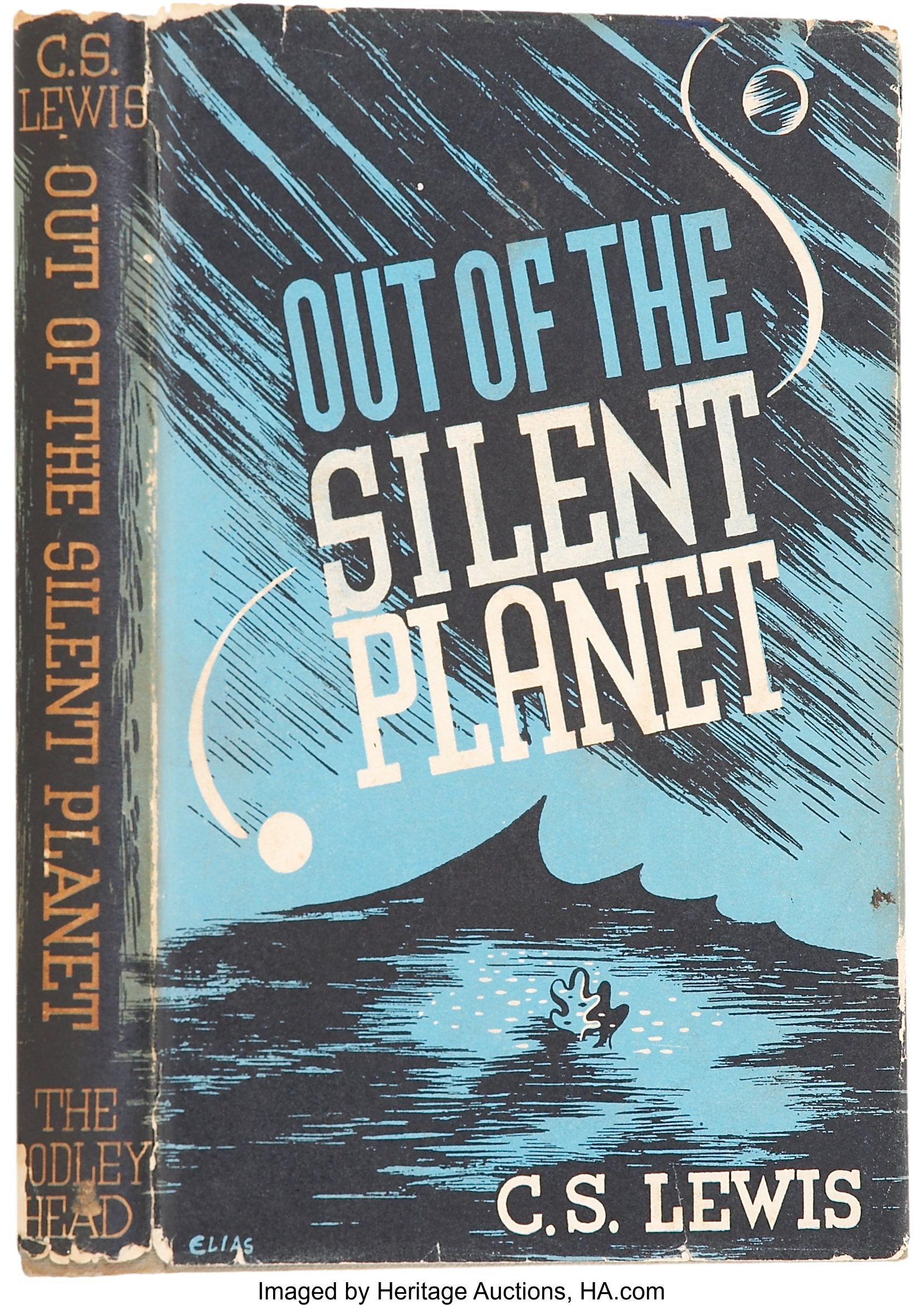
Lewis works out this thought about medieval cosmology in his late 30s SF novel, Out of the Silent Planet. Indeed, he quotes this very passage in the space voyage part of the novel, where there is some neat play between light, shadow, and darkness. For all that Lewis was not scientifically minded—and he openly admitted to not caring that much about precision in his science fiction writing—there is a slip of paper in the archive where Lewis sketches out the complexities of getting a ship home from Mars when Earth is now on the other side of the sun. The space voyagers (like me and Lewis with regard to eclipses) fail to calculate the orbit of the moon, and their return voyage is in peril.
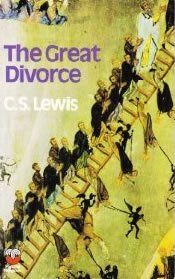
Lewis uses eclipses as an analogy in letter VII of Letters to Malcolm, which I believe he began in earnest in 1962. However, I don’t see much more thought about it. Even the above passage is about lunar eclipses, not solar. However, as I thought about the bright heavens and the earth’s umbra, I thought about The Great Divorce. In my fight with brevity, I have written a description of the speculative (after)worlds of heaven and hell in the WWII-era book, which I kind of like. So I hope this unauthorized book-jacket description works to add light (and not shade) to today’s events and Lewis’ literary cosmology.
An Unauthorized Book-Jacket Description of The Great Divorce
I have made no secret of my abiding interest in Lewis’ strange dream-vision novella, The Great Divorce. I keep finding my way back to this Dante-like version of a medieval idea turned into a literary experiment. “Let us suppose,” Lewis posits, “that the souls suffering in hell might have a day trip to heaven.” We then follow one of these tourists from hell to heaven as he walks through a travelogue of character encounters about the choices we make. Though it is a book about the afterlife, it is truly about the ways we curate the habits of our hearts and minds in the here and now.
Lewis’ hell in The Great Divorce is a gloaming suburb of near-nothingness, a ghostly, misty, insubstantial realm of despondency and despair. Imagine yourself sitting on a rarely cleaned floor of a smoggy subway station in the middle of the night. You are on hold with customer support, which is trying out their latest AI-generated hold music in the long intervals between nonlinear conversations with the new AI-bot customer assistant who was, incidentally, trained by the Quality Assurance Team from The Office. Add that kind of cold, misty dampness that never quite turns to satisfying, vivifying rain and the sulfuric smell of machines in the deep dark where there is never enough air. Finally, add eternity. Now, you should have a sense of what hell is like in the speculative universe of The Great Divorce.
By contrast, heaven is wild and vivid, with a bright, penetrating light and landscape. The hellish day-trippers are as insubstantial and natural to their environment as a greasy thumbprint on an eyeglass lens. It is so beautiful that it hurts. The land of goodness is “harsh to the feet of shadows.”
The hellish ghosts are invited to stay in heaven, but it is a hostile, untamable, immense, and alien land. In hell, dusk always feels like it will descend into apocalyptic night, the heat death of the universe. In heaven, twilight threatens the first rays of a sun whose life-giving heat and light pierces human hearts and shatters worlds. C.S. Lewis’ heaven is no flannelgraphed after-school special Disneyfied angelically glowing land of lost pets and no regrets.
By observing how the day-trippers react to heaven, we can see in story form what words cannot easily define, which is the Great Divorce between those worlds. Heaven cannot reach hell because its tiniest angels are cosmically huge, like trying to squeeze a mountain into a molecule. And hell simply cannot abide heaven. Thus, the more the ghastly refugees from hell have bound themselves up in their fears and desires, the more repulsed they will be by the unyielding goodness and bright light of heaven.
I love this disturbing book and find myself in many of the characters. It does, especially today, help me imagine the umbra of Totality and the penumbra of indecision in new ways. And if I understand it correctly, The Great Divorce imagines that one of its worlds will eclipse the other.
Note: the song doesn’t quite get it right … it will be better in PEI than Nova Scotia.
I believe in open access scholarship. Because of this, since 2011 I have made A Pilgrim in Narnia free with nearly 1,000 posts on faith, fiction, and fantasy. Please consider sharing my work so others can enjoy it.
When I began blogging all those digital generations ago (2011), I decided that I was not going to apologize to readers when I missed a week. I would do what I liked and write whatever I wanted. As this is my 1302nd post, perhaps it was an unnecessary resolution. Once I found my feet, I doubt I missed more than a handful of weeks in the first decade of A Pilgrim in Narnia. It turns out I was good at this. I discovered that loved blogging. So, I poured thousands of hours into making A Pilgrim in Narnia the best piece of art that I could offer the world.
As a result of that hard work–and a good deal of algorithmic serendipity, no doubt–A Pilgrim in Narnia has has met all of my goals. The blog has done precisely what I meant it to do, allowing me to test material, hone my craft, and extend my reach.
Reading is a pilgrimage of the mind and heart. So is writing. My second main goal was to hone my craft. From the beginning, I have been intentional about learning to write well and in many different modes. While I have not succeeded in creating an error-free first draft, and my spelling is atrocious (a nod to Grammarly here), my writing is more clear and vivid than a decade ago. I am still working on being concise, I’m afraid–and this challenge has winded me. However, the more I practice, the more I realize that I need to write in order to know what I really think.
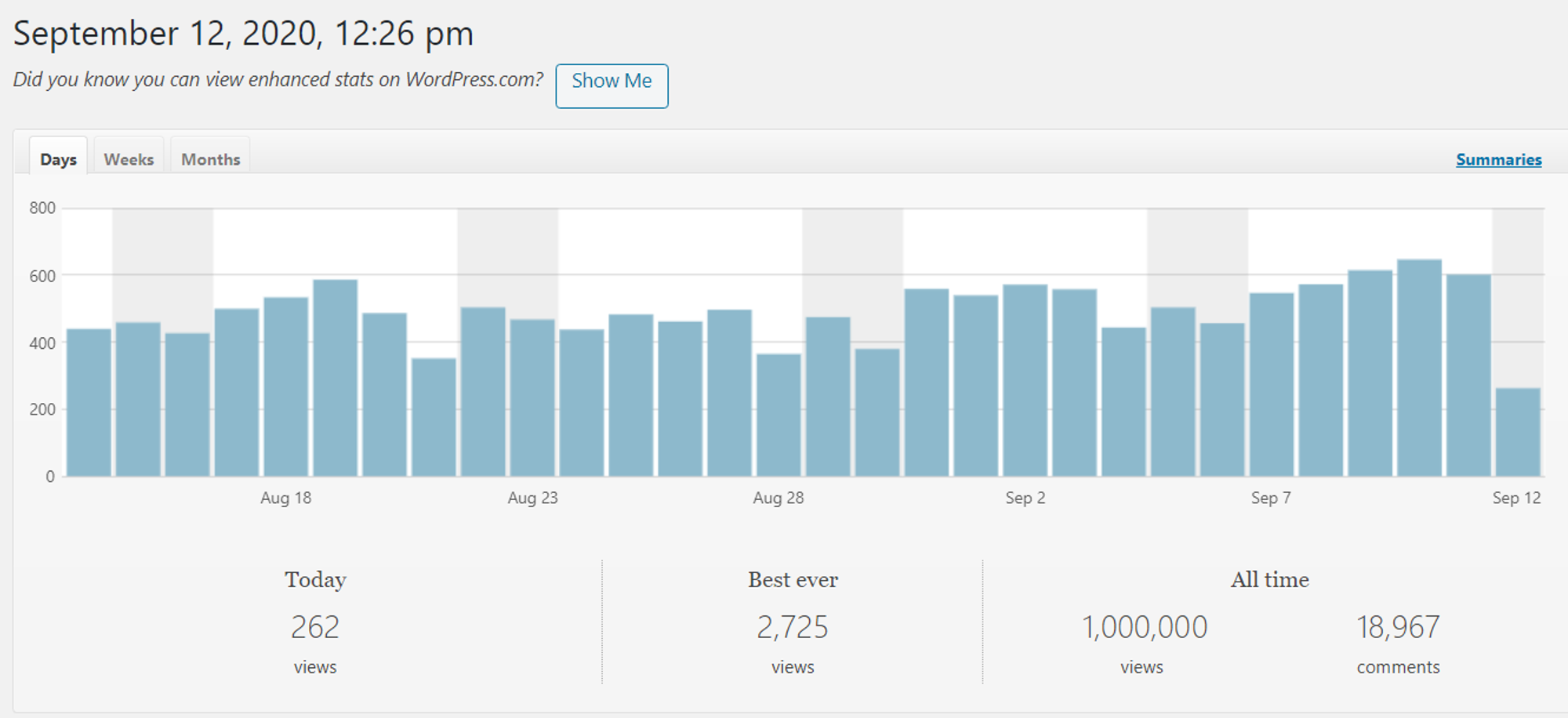
Third, I began A Pilgrim in Narnia to extend my reach. Honestly, the statistics are kind of amazing for a niche, academic blog. We are likely to have our 2,000,000th viewer later this Spring. Sure, a lot of that is simply that Google trusts me as a content provider because of some algorithmic choice in its make-up. Still, the response has been startling because, often enough, my writing is made up of half-finished essays, incomplete ideas, and off-the-cuff supposals and suppositions that have varying levels of irresponsibility and thoughtfulness. Moreover, I write what I want. Sure, I occasionally create a clickbaity title or share a more broadly applicable resource. But I have never written for the sake of numbers.
Or even readers–though that is why these words are public rather than private. I create content because I love creating the content. That’s it. Academic responsibility, literary neighbourliness, and a teaching vocation are often my motivation for taking a rough note and making a carefully curated post of one kind or another. But I only do what I love.
The stats are cool, no doubt–and helpful in a certain kind of way. Occasionally, someone is impressed–though rarely my students, unless they are writers, designers, or social-media engaged.
But I have to confess–have I done so already?–that my drive to extend my reach was more than just making a difference in the worlds of readers and fans. I knew early on that I was not likely to get a tenure-track position at the University where I have now worked for 18 years. Despite winning awards, training thousands of students, and teaching more that 60 courses at cut-rate pay, I suspected that I would be unlikely to land a position.
I was right: I am still a nomad here, around when UPEI needs cheap teachers or a colleague in my discipline is on leave. On Mondays and Wednesdays, I share an office with all the Poli Sci, Philosophy, and Religious Studies adjuncts. On Tuesdays and Thursdays, I am with my (pretty awesome) Inquiry Studies team. I love the people I work with. I love these students and I get to teach in creative ways. I love this campus and my Deans have been kind to me. But I remain an alien here. My name is never on an office door unless I have it printed out from a Canva template. I am here until they decide they are done with me, or I say the wrong thing in public, or until I am all used up.
UPEI leaders have intentionally designed the system so that I would continue to be under-resourced and alienated. They want it this way. And I choose to be here.
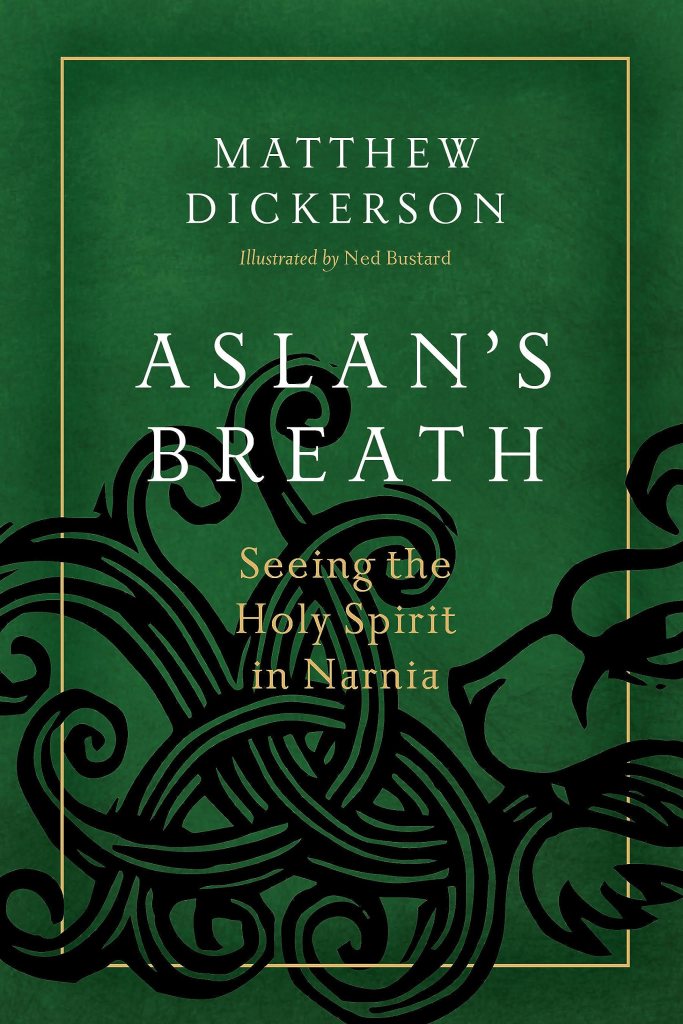
So since I was never going to be “Professor of Theology” or “Associate Professor of Speculative Literature and Contemporary Culture” or “Chair of Curiosity Studies,” I needed to make my own lectern. I needed a space to speak from. Thus, I worked hard on A Pilgrim in Narnia so that it could become a platform. Instead of a grand title, when I blurb a book–like James Como’s Mystical Perelandra–I have “A Pilgrim in Narnia” instead of University of Metrocity or St. Fabulouso College. I like how it looks on Matthew Dickerson‘s upcoming book, Aslan’s Breath, the simple note:
Brenton Dickieson, Curator of A Pilgrim In Narnia.
Not that I would turn down a research and teaching post, if you happen to have one laying around. It’s just that I am glad that blogging has given me a connection with other scholars and fellow fans, so I can be the “A Pilgrim in Narnia” guy whether I’m speaking in Oxford or teaching a local Senior’s College class.
Not that it’s perfect. In one of my retrospectives, I wrote:
The only thing the blog hasn’t done is get me a book deal, land me a major award, provide me an invitation to speak in a warm spot in winter, put me in line for a tenure-track position, or get me a chance to argue about Tolkien with Stephen Colbert.
I’m still waiting for Colbert‘s team to call and I really would love a flight to just about anywhere in the midst of a Canadian winter. But since starting A Pilgrim in Narnia, I have had hundreds of connections in panels, guest lectures, workshops, podcasts, documentaries, book clubs, and social media events. I work with Signum University and taught for six winters at The King’s College in New York City on the strength of this blog. I haven’t gained a tenure-track invitation, but my portfolio has landed me chances to develop scholarship in new ways, like hosting the MaudCast or teaching in Applied Communications, Leadership, and Culture.
And, it turns out, A Pilgrim in Narnia did land me a contract with a major book publisher. More on that another time, but I am pretty chuffed.
Beyond the big blog numbers and the international media attention in major urban markets, as a reader, writer, and teacher–jeepers, as a fan, a nerd, a lover of things he loves–A Pilgrim in Narnia has opened for me a world of wonderful connections. Because, beyond all else, I wanted to create a space for reading well. Good readers are less rare than I once thought they were, but the list of our allies is becoming rather thin. I feel rich in friends in these digital realms, which then tumble into the three-dimentional life I live.
There were also goals that I adapted as I grew. For example, as I confessed in my 700,000th view party in February 2019, I was still trying to work out my time balance. Back then, I was six weeks from finishing the solid first draft of my thesis, so it really was on my mind.
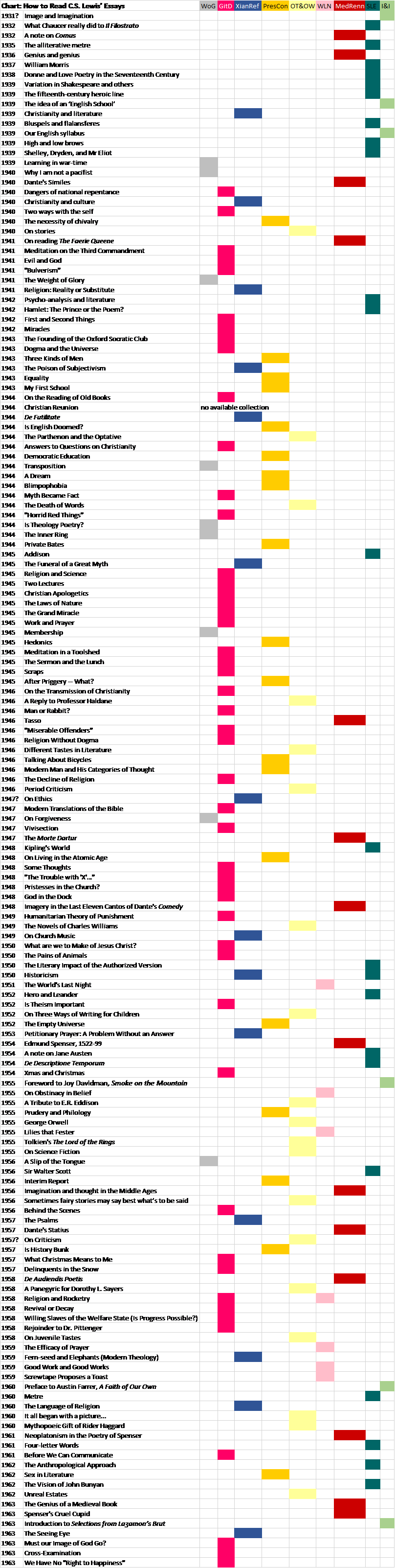
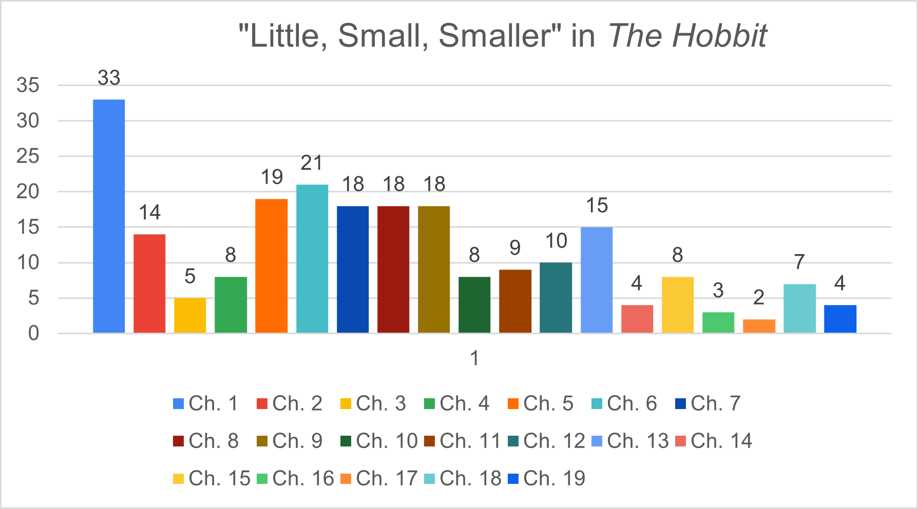
And as I matured and my work and dreams evolved over the years–and as social conversations changed in form–I began to press in on the advice I gave to others in my post, “The 5 Most Common Mistakes Bloggers Make.” I have defined myself (#2) over the years, but I have been content to be a bit loose on the edges. I can make links between C.S. Lewis and L.M. Montgomery easily enough, but my fellow Prince Edward Island author seems pretty distant from Dante or Nnedi Okorafor. I’m fine with that, and readers over the years have been content to ignore lots of what I’ve written, I’m sure. After all, I produced and published such exciting resources as the chart on the left.
A great deal of what I have done here is addressing flaw #3, “They Don’t Translate.” A Pilgrim in Narnia is not just a public-facing place for scholarship, but is meant to be an honest engagement with various academic, literary, and readerly worlds I inhabit. Indeed, with Tolkien studies, it is often hard to distinguish a knowledgeable fan from someone who is writing critical scholarship simply by their Quenya accent. I have never written or spoken about Tolkien without learning something from a reader or audience member who simply knew much more than me and could awaken me to myriad links within the Legendarium.
What about the #1 mistake, “They Don’t use WordPress”? Well, I do, though their “helpful new accessible features” are making it more and more burdensome to work here. Long before WordPress tried to Instagramize writing, I became content with the spirit of that law in that I did not update the website design. I liked the image of someone walking down the road in the woods that came free when I first made this space. I have begun the redesign now, but failing to keep my finger on the cultural moment of design and thought, I have consistently made the mistakes people make when producing social content.
And, well … it worked. It all worked. By that, I don’t mean a particular level of popularity or literary quality. I mean the whole thing.
It worked and I wrote–and kept writing. In the decade beginning with my first calendar year of blogging (2012), I published between 100,000 and 200,000 words on A Pilgrim in Narnia. It has been wonderful.
And then, after all of that, it just kind of … broke.
Beginning in the Fall of 2022, my productivity slowed and I exceeded my mental bandwidth. I burnt out. I had lots to say, but I lost my ability to say it. Over the last couple of years, I have written 74 draft posts–but I could finish none of them. The mental magic that makes me a creative teacher and scholar is my ability to grasp ideas and talk about them in crisp, tight, meaningful ways. Ideas bump together in my head, readings and rereadings find their meaning, and I see things in ways others don’t–or cannot–see.
Suddenly–it seemed sudden at the time–the magic was gone. Bright shiny digital conversation spaces became tarnished. I became muddled or overly complex in my thinking. I am a scholar of words and I lost my words. There was just nothing left.
2022 overwhelmed my senses, exhausting me utterly. I began to have serious gaps in my memory of the last couple of years–an experience I haven’t had since the illness and death of my mother in 2016. On Dec 21st, 2022, I submitted my final student grades and fell into bed, ill. I missed Christmas, for the most part. It was more than a week before I began to emerge. It was pretty scary.
I had had some warning signs. I know that PhD’s often experience burnout, though I felt pretty good in the months after my Viva on Labour Day Weekend, 2019. In the February 2020 graduation ceremony at the University of Chester, someone tweeted a congratulations note with a pic of the program. I was enjoying my teaching, and had reconfigured my whole writing curriculum to integrate Lego as a tactile activity and visual illustration. I was preaching a 10-episode series on “Remembering Heaven” in my local church while a pastor was on furlough. I was enjoying rewritng my thesis into a book and reconnecting with some friends that seemed distant in the last year of the PhD. I pitched a series of conference papers for May and June 2020, and looked forward to returning to the Marion E. Wade centre in Wheaton, IL (the Inklings archive).
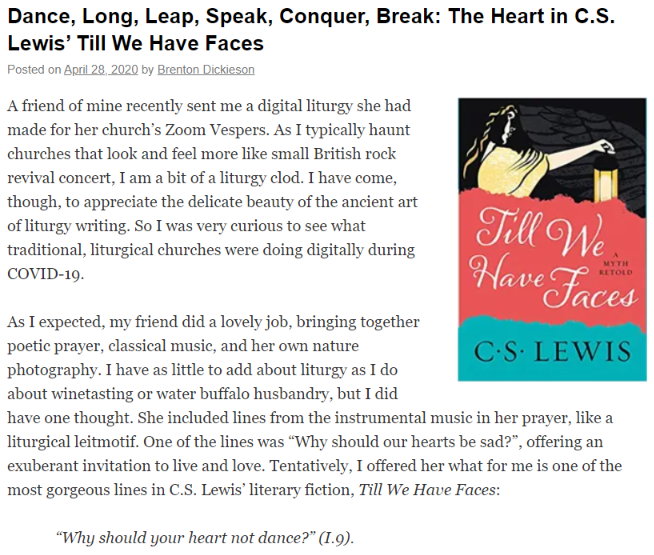
And then the world ended. Depending on which political party you support or resist in whatever country you are from, you experienced COVID-19 quite differently. The newest plague and stay-at-home orders inspired a fun blogging series on C.S. Lewis’ Till We Have Faces. However, it also brought on a tremendous amount of work, as we redesigned our courses and student supervision for a remote emergency format. I had designed a lot of online and distance education curriculum, but this was trying to recreate the much different experience of live learning in poorly designed digital spaces. I cannot emphasize this enough: it was so much work.
And, of course, I was not paid for much of it.
As we moved from semester to semester in a pandemic environment, I found I had to be constantly redesigining my modes of work. Not intentional redesign in a desire to increase the value of my writing and teaching, but reactive and frantic adaptations to unpredictable challenges. At first, I was from hopping from term to term. Eventually, I was lurching from week to week, waiting for the next door to close.
And some doors did close. The King’s College is a brilliant undergraduate Liberal Arts program, and it fell to financial pressures last year. Since 2005, I have been teaching at my alma maters Regent College in Vancouver and Maritime Christian College in Charlottetown. In 2020, I gladly helped Regent’s very cool faculty team with some tips for online teaching, and they discovered they had new tools at their fingertips. Without fanfare or even a note of thanks, my fifteen years of distance ed teaching ended. Maritime Christian College also found its way into cyberspace modes and graduated its last cohort of local, live, in-class students. I taught two dozen courses there over the years, and during COVID I taught my last group of Greek students. I love teaching Greek.
So it has been emotionally hard, financially distressing, and physically exhausting.
And the work is unending. Last spring, we had a month-long faculty strike, where once more UPEI administrators were offered a chance to treat long-term faculty members as integral to their educational vision, not contingent or extraneous. They declined, and spent more than $1,000,000 of government and student dollars to ensure that an entire class of underlings is there to support the luxuries of administrative pay and faculty security.
Even with very supportive colleagues, it was discouraging. Even with a very cool curriculum to teach, it was hard to return to campus this fall. My son was walking across our heritage quad with me a few months ago and said, “I think I would love to make this campus home.” I did not answer, but my response was very clear:
So do I. I wish I had a home here. I wish I was truly welcome.
This discouragement came on the heals of unending work and a minor but personal heartbreak. In the weeks and months after Hurricane Fiona hit Prince Edward Island on Sep 23rd, 2022, I continued to be deluged with work.
At home and in our institutions, we were clearly not ready for a full hurricane. The first deluge was literal: we fought to keep water out of our house and to get the water out of my office and library.
Then, the second deluge: we were 12 days without electricity. That’s 12 days in the capital city of a Canadian Province! The storm knocked out the entire grid, and daily life became this huge affair of protecting the house from water damage, keeping freezers cool (we lost our fridge food), keeping neighbours safe, cleaning up all the downed trees, and keeping my in-laws’ home safe and comfortable. As mid-autumn nights set in, there was no way to heat their house.
The third deluge is the administrative work that has followed. I had worked almost without a breath through 2022, teaching 6 new university classes (though one was a Narnia study, so mostly design and student support, not lecture prep), producing and delivering 3 academic papers and 5 other public lectures, and writing a major grant application (about 550-600 hours of work). Sep 21st, 2022 came, the grant was submitted, I slept, and then the storm hit on the 23rd.
And here, in the deluge of work, I was swept away in a current stronger than Atlantic hurricanes or institutional abuse. I stared at a screen with 582 unread email. I could find no time to write–or, when there was time, no words to align my thoughts with. I missed manuscript deadlines and went weeks and months without seeing my friends. I dropped every digital connection possible to maintain a few.
And I lost opportunities. I have 5 great guest essays ready to appear on A Pilgrim in Narnia from 5 very interesting scholars and writers, and I cannot do the two-hour job of editing and setting them. They are good pieces, too. You will like them. I had a book project fail and missed a chance at a small research fellowship. I have had to cancel a pretty great Signum SPACE class scheduled for this winter. In 2020, I began saying “no” to most invitations to speak or write something. In 2021, I turned the tap off completely, turning down every invitation, even if it paid or could make a transformative difference in someone’s life. I missed so very much. I went several months without pay. And still, the deluge of work has overwhelmed me.
It has been hard.
Sadly, gladly … I’m not sure … but many of the things that have made me exhausted are wonderful.
My last year of Greek at MCC was one of my favourite classes every, and led to a reading group.
I was paid full-time to teach Applied Communication, Leadership, and Culture for two terms, and taught brilliant courses–including one of my most meaningful capstone-course teaching experience, and two chances to teach “C.S. Lewis and the Chronicles of Narnia: Leadership, Communication, and Culture” … I just love teaching that class. Our Inquiry Studies team at UPEI has started the Curiosity and Inquiry Research Collaborative Lab (CIRCL), and we have our own lab space (I call it the “Room of Inquirement,” but I don’t know if that’ll catch on). I am extending my foundation-year teaching in new directions and am a coach for Signum University.
And my son is grown, and is a punk studying music at Holland College’s School of Performing Arts. He writes great songs and my wife is a superstar Kindergarten teacher, and it is wonderful, even when it is hard.
On the scholar-writer-teacher front, most exciting of all, I had my manuscript accepted at my dream University Press and breezed through peer review. I am absolutely loving this final rewriting draft.
Do you see how cool all that is? Who needs a salary and health care from an employer when I get to do all that stuff?
It turns out, I do. When I say “it broke,” I mean also that I broke.
There was the burn out at the end of 2022, which I’ve described. I reduced my work in 2023 and began to put some new habits in my life. I began seeing a counselor and took some health advice. I even booked a 6-night Mexico vacation with my family to give myself space to heal. And it worked! I came back from Mexico a new man.
However, there is damage done. I had been a NO-VID until August 2023, when I tested COVID positive and had a week of pretty normal cold symptoms. I recovered and began a new term. Soon, though, I was sleeping through entire weekends after a week of pretty normal work. By October, I was having to take sensory breaks between sessions or classes. On Hallowe’en, a migraine set in, and I lost nearly a week. After that, I could not tolerate bright light or noises. And I was still sleeping whenever I lay my head down.
Most significantly, besides the pain and exhaustion, I could not tolerate computer screens for more than a few minutes at a time. I went from my normal 8-10 hours a day on a computer to struggling to get 2 hours. Unsurprisingly, student assessment didn’t go away. Notes of support to students, feedback, administration–all those things continued at their normal pace, but I was working at 20% capacity. Every day, I was turning out all the lights in my office or sneaking into an unused storage space and wrapping my jacket around my head. I would then sit in the dark until the dizziness and confusion went away.
Most tragic of all–at least in my strange brain–I had been having so much fun with my book, and I could not do more than 15 minutes a day on it. It has been painful at many levels.
“Are you well?” people ask me. I guess we are supposed to lie and say fine. Here on PEI, they say, “How’r’ye now?” and we are supposed to respond, “** Looks like weather’s coming.” (the ** is an unpronounceable affirmative intake of breath in our local accent” But I have not been well, and it doesn’t seem to matter if weather is coming or not.
At some point in November, I clued in to the fact that I may have Long Covid symptoms. As there is no diagnostic for Long Covid, and no cure, deciding that wouldn’t help me much. Except that it did one thing: Normally, I have been taught to power through pain, disillusion, busyness, illness, and stress. Sick days aren’t a luxury provided to me, but they aren’t in my moral makeup anyway. With Long Covid, powering through makes you more ill. Instead of trying harder, I had to learn where my limits were, and respect them.
In mid-December, I started to recover. I am now up to 60% capacity, I think. I turned down a couple of contracts and am now trying to recover time I lost with Signum University and the MaudCast. It is slow and a bit frustrating, but no longer so terrifying.
Through this … illness–I struggle even to write that, because there is something in me that thinks illness is a cop out, a shamre–through this illness, there have been two blessings.
First, I could read. I read a lot, including every back issue of the New York C.S. Lewis Society newsletter back to 2018, especially Dale Nelson’s “Jack and the Bookshelf.” I read poetry and my friends’ work. Reading worked for me–though I still cannot tolerate much time with audiobooks.
Second, strangely, throughout all of this Long Covidicity, I was very cheerful. I had trouble feeling despair. I felt stress and guilt, but not hopelessness. Without evidence, without any sign of it being true, I felt like this would pass.
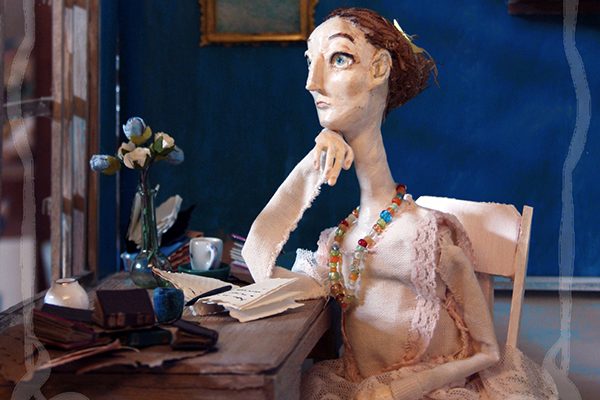
How do I even explain it all? I have written and rewritten this post many times. In December, I was working on “A Cheerfully Weary Christmas Letter to My Readers.” Before that, it was “Feeling Failure in a Successful Year.” “The Wearying One-Thing-After-Anotherness of Things” was another title I considered, and quite like. Finally, I settled on this line that L.M Montgomery used to summarize the weariness of her last decade in a letter to G.B. MacMillan on Sep 3rd, 1925:
“the hateful feeling of breathlessness I have had for years”
“Breathless, breathless. Everything is breathless.” It’s been a while since I studied it, but that’s a way of translating Qohelet’s nihilistic complaint in Ecclesiastes. “Breathless” is a good word. Unlike “vanity,” my breathless chasing after the wind has beauty and purpose. Like I said: I have been cheerful. I did not sink to the depths of despair. It is hard. I am humbled as I try to rebuild my research, teaching, and writing toolkit. But I have hope there too.
So, what is this? It isn’t a break-up letter. I love A Pilgrim in Narnia and what it is, both for me and in the world. Neither is this an apology. I have a twinge of regret for the weeks I have missed, and some frustration for the remaining 73 drafts I can’t seem to finish. But to apologize is to presume I owe you something. I refuse to think of it that way. My words and design here are a gift to you, only if you want it. When you read, comment, share, critique, encourage, and use my work in your research or classroom, you give me a gift. When you read well and write well–even if I never see it–you bless me. I share these lines of lovely nonsense and sensitive readings not because we are caught in a social or economic contract, but because it is art. It is gift. It is possibility. A Pilgrim in Narnia is a companion to my work in the classroom and research. It is something beautiful I make–at least beautiful to me.
I want to keep writing and making because it is bound up with the calling that is at the very centre of my being. I curate A Pilgrim in Narnia because I want to.
What’s next? I don’t know. This week, I am stronger than the previous two weeks, but more dizzy and tired than the first week of January. I don’t know what comes next–though I am hoping to publish a guest post every couple of weeks. But I really don’t know. Perhaps successive apocalypses of plague and political strife and environmental catastrophe will once again set me off kilter from my usual writing and editing productivity. Perhaps I will lose that ability to do lots of things at once, which I love. Maybe my divergent, planets-colliding, curiosity-oriented magic as a teacher and thinker will never return. I cannot know.
For, after all, my struggle has never been any one thing, in particular. As a leader and teacher, the one-thing-after-anotherness of it all is wearying. I hope, though, that A Pilgrim in Narnia will become part of the way that I catch my breath.
All my best wishes to you all in the newness of today and every day.
Brenton
I believe in open access scholarship. Because of this, since 2011 I have made A Pilgrim in Narnia free with nearly 1,000 posts on faith, fiction, and fantasy. Please consider sharing my work so others can enjoy it.
I believe in open access scholarship. Because of this, since 2011 I have made A Pilgrim in Narnia free with nearly 1,000 posts on faith, fiction, and fantasy. Please consider sharing my work so others can enjoy it.
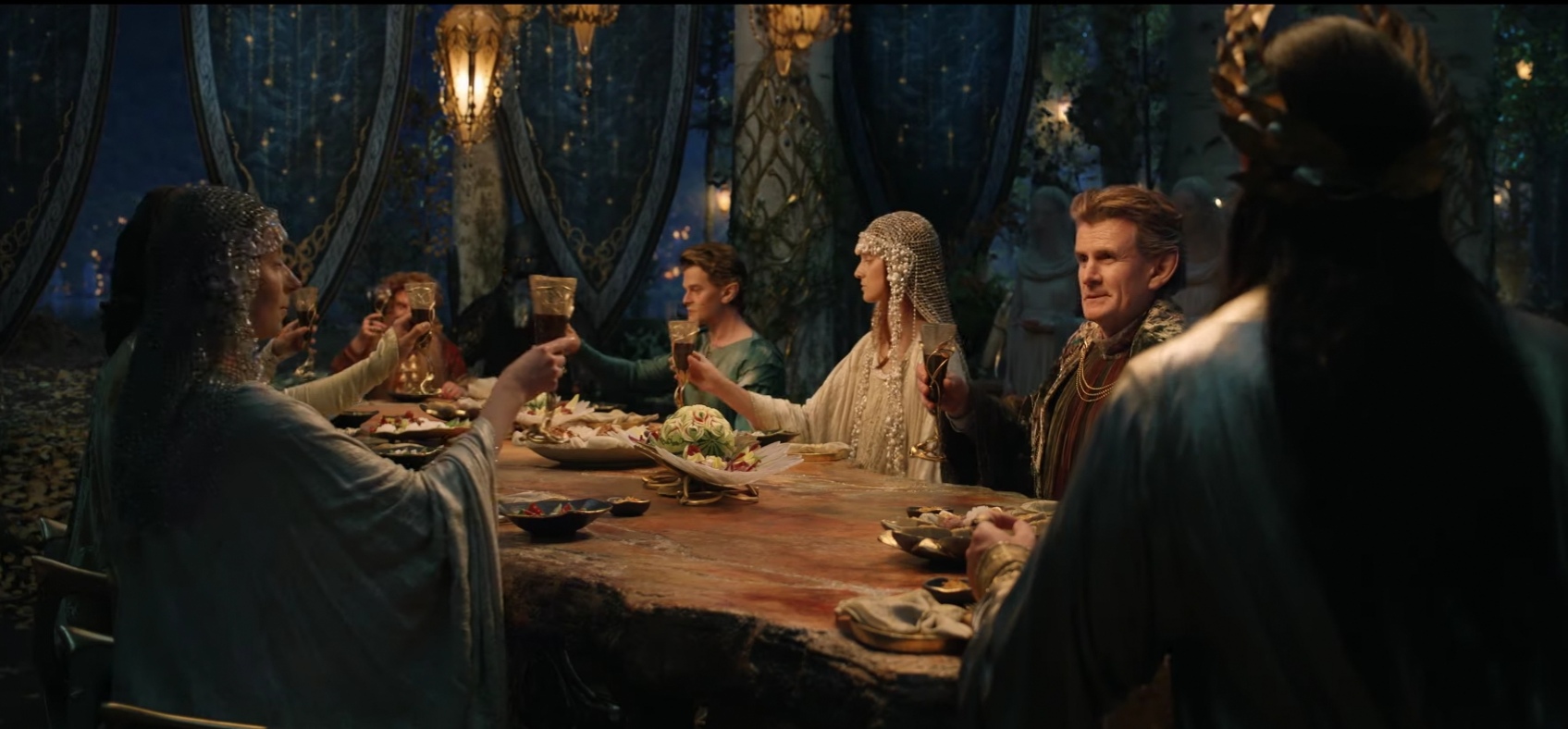
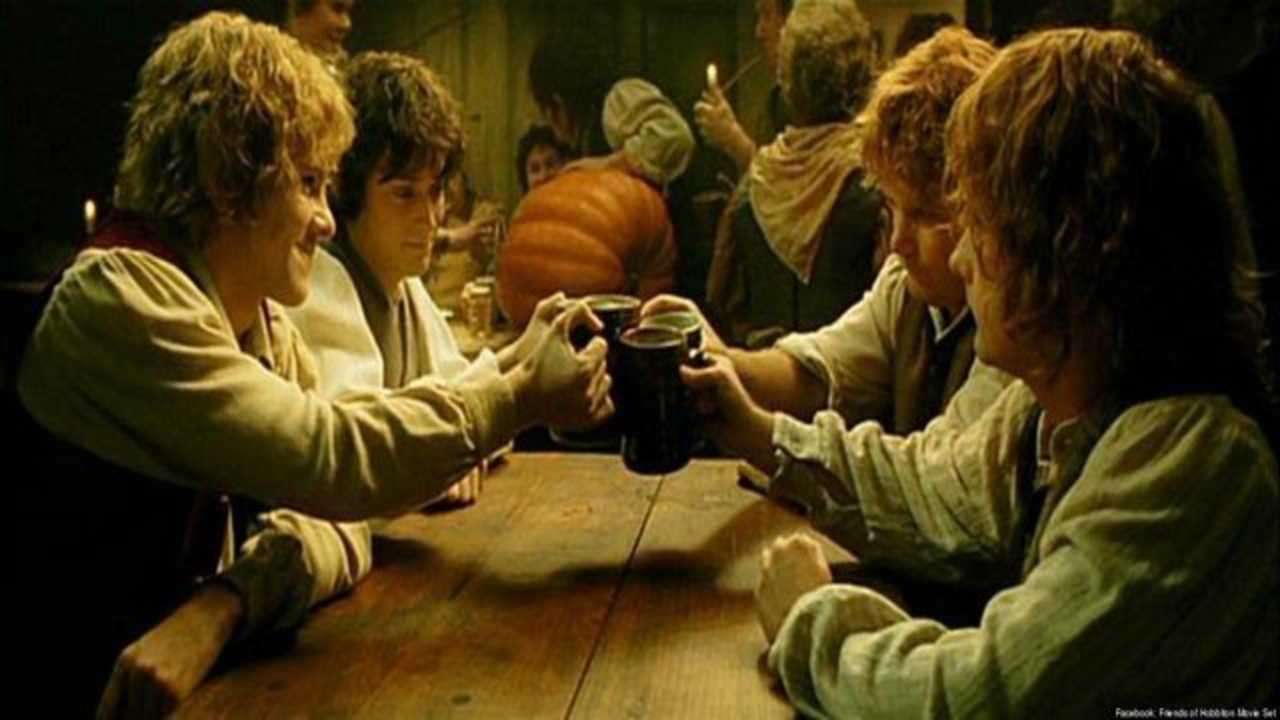
As J.R.R. Tolkien was born 69,425,820 minutes ago, give or take. The Tolkien Society is again raising a toast to the Professor on his birthday, 3 January 2023 (see here). After Bilbo left the Shire on his eleventy-first birthday in The Lord of the Rings, Frodo toasted his uncle on their shared birthday each year. Tolkien friends, fans, and fellows continue the tradition, toasting the maker of Middle-earth on this day. J.R.R. Tolkien was born in South Africa on 3 January 1892, making this (if he had had Hobbitish longevity) his 132nd. The Tolkien Society invites us to celebrate the birthday by raising a glass of comfort or joy at 9pm your local time, simply toasting “The Professor!”
In honour of Tolkien’s birthday, I like to update the catalogue of Tolkien posts featured here on A Pilgrim in Narnia. I am in the midst of a monograph going to my editor very soon, and so 2022-23 has been a bit thin on new or substantially rewritten content. Still, I wrote or rewrote 8 Tolkien-related articles, reflections, reviews, or blog posts, and I reblogged two new essays that I thought were pretty great.
That said, it has been a hard couple of years for me, Tolkienistically speaking. In 2022, I was supervising Tolkien projects and spoke at Tolkienmoot in the summer (really, I just joined in the fun). I read and (positively) reviewed Carl Hostetter’s editorial gift to scholars and fans, The Nature of Middle-earth. It should appear in Sehnsucht: The C.S. Lewis Journal in the coming months. It has been a great couple of years reading what I catch myself thinking of as the “nonfiction” of the legendarium–The Nature of Middle-earth fits the bill, but I’m also thinking of The Silmarillion, Sauron Defeated, and Unfinished Tales of Númenor and Middle-earth, as well as a few other points in History of Middle-earth (e.g., see here).
And despite my deep desire to do so, I wasn’t able to make space this year to write about my thoughts or to read either The Lord of the Rings or The Hobbit. These stories genuinely refresh my spirit and invite joy, so I miss them when they are not part of my year. And while I began 2022 with the hopeful news of a new Tolkien adaptation, the digital debate was so often infused with invective designed to strike at the most intimate parts of our human being and living. I became ashamed of my literary, religious, and activist communities as everything turned sour. I lost heart. Despite a dozen attempts to rewrite my “Approaching The Silmarillion for the First Time” article and provide an update to my “J.R.R. Tolkien’s Texts on The (Down)Fall of Númenor” piece (following great reader notes and the release of the Brian Sibley edited, The Fall of Númenor), I simply could not complete anything.
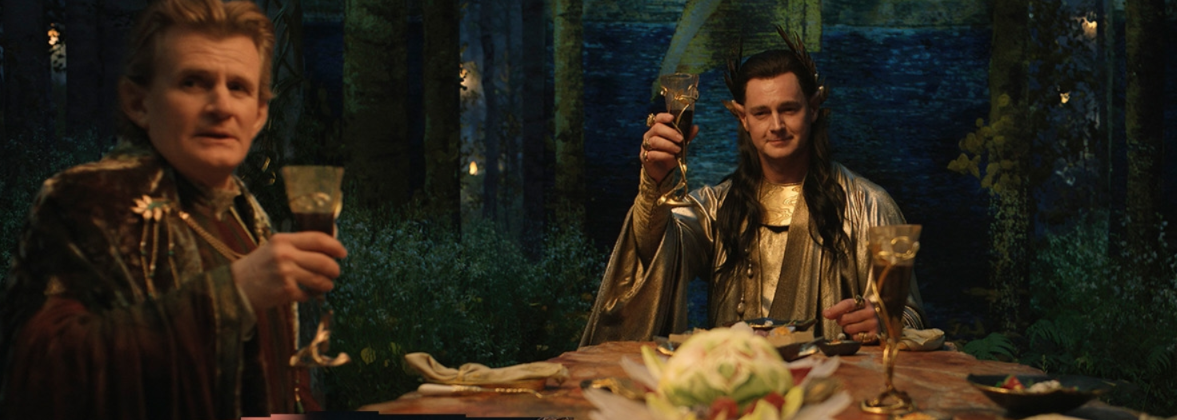
Wisely, perhaps, I stepped out of the conversation and stopped watching the Rings of Power Amazon Prime serial. While I have been called immoral and disloyal, I have found that adaptations on the stage, in film or on television, and by audiobook can enrich my experience of reading the texts that are most meaningful for me. Although I am in the same place a year later, I look forward to a season ahead when I can return to the simple pleasures of reading and watching beyond the courts of rage.
Here at A Pilgrim in Narnia, I desire to curate a space for people who love the simple pleasures of a well-told story and a well-built world. Thus, this “brace” of Tolkien posts. Over 110 article links are now listed here–far more than a brace, methinks. So, I hope this great feast of guest bloggers, hot links, and feature posts will complement your Tolkien reading and inspire you to widen and deepen your Tolkienaphilia. And, of course, a glass raised to the Professor for all of the 6887 weeks since his birth, and, I hope, 6887 weeks of great reading to come.
I would also encourage readers to check out the annual J.R.R. Tolkien Lecture on Fantasy Literature at Pembroke College, Oxford. Tolkien editor and historical fantasist Guy Gavriel Kay was the 2021 lecturer, which I discuss here: “Just Enough Light: Some Thoughts on Fantasy and Literature.”
Perhaps Tolkien’s most central contribution beyond the storied world is his idea of subcreation in the poem, “Mythopoeia” and in other works like the essay, “On Fairy-stories” and the allegorical short story, “Leaf by Niggle.” I have been reading a lot about this concept–partly because of students working on the idea–and appreciated poet-philosopher Malcolm Guite’s take on it here.
I have admitted before that my Tolkien reading and writing is just pure enjoyment. I don’t pretend to have much original to say on the scholarly level. My most important contribution, I think, is my Theology on Tap talk, called “A Hobbit’s Theology,” which I rewrote in 2021 for Northwind Theological Seminary’s doctoral degree in Romantic Theology (which has a Tolkien studies track). It is one of the ideas I am struggling with, most specifically in my academic work, and I hope to do some future writing on the topic. Out of that same lecture series came this piece, “‘Small’ and ‘Little’, a Literary Experiment on J.R.R. Tolkien’s The Hobbit,” where I used some word-date analysis by Sparrow Alden and her “Words That You Were Saying” Tolkien word-study blog.
In a similar mode–thinking of Tolkien’s work through a theological lens–is Mickey Corso’s excellent work on Tolkien and Catholicism. The video conversation of “The Lady and Our Lady: Galadriel as a ‘Reflexion’ of Mary,” A Signum Thesis Theatre on Tolkien and Catholicism by Mickey Corso, is now online. In this mode, I blogged “’Joy Beyond the Walls of the World, Poignant as Grief,’” a conversation between J.R.R. Tolkien and Frederick Buechner. As a Tolkien Easter reflection, I reblogged Wade archivist Laura Schmidt’s piece, “Wounds that Never Fully Heal.” Also, check out a couple of video conversations: “Inklings of Imagination” with myself, Malcolm Guite, and Kirstin Jeffrey Johnson on the theological imagination, and “Imaginative Hospitality” from a theological angle with Kirstin Jeffrey Johnson, Diana Glyer, Michael Ward, and Fr. Andrew Cuneo.
And one of the more popular posts of 2016 was a very personal one about me as a writer and researcher, “Battling a Mountain of Neglect with J.R.R. Tolkien.” Though I am still not sure if I should have written that post, it has connected with readers. In retrospect, 2016 was a very difficult year in many ways.
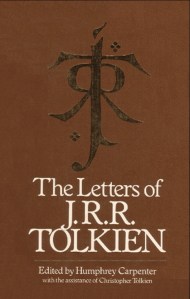
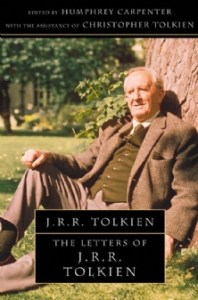
Recently, I was thinking through the relationship between C.S. Lewis and T.S. Eliot. In the midst of that search, I found Tolkien’s 30 August 1964 letter to Anne Barrett of the publisher, Houghton Mifflin. On the anniversary of that letter, I shared this piece: “Great and Little Men: J.R.R. Tolkien’s Letter about C.S. Lewis and T.S. Eliot.” As with much of Tolkien’s praise of Lewis, there is a slighting comment or two. And yet, it is a powerful bit of testimony to the content of C.S. Lewis’ character, in his friend’s estimation. In this vein, check out “C.S. Lewis and J.R.R. Tolkien: Friendship, True Myth, And Platonism,” an academic paper by Justin Keena published here on A Pilgrim in Narnia.
Finally, a little fun with the post, “When Sam Gamgee Wrote to J.R.R. Tolkien.” As you might guess, it is about a real-life Sam Gamgee who sends a note to the maker of Middle-earth. And, of course, when the season of advent returns, check out the Father Christmas Letters. While there are others with better Father Christmas Letters posts and articles, my piece got picked up on Reddit in 2021, so I touched it up again for that Christmas Day reading.
The Silmarillion Project
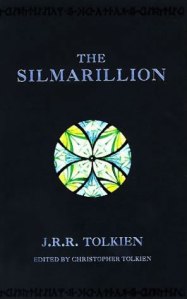
This is a newish feature for me, partly because 2017 was the year I completed The Silmarillion in its entirety in a single reading (rather than the higgledy-piggledy approach of cherry-picking stories and languishing in the mythic portions, as I am wont to do). I reread it in early 2020 and mid-2022, this time by audiobook, and enjoyed it deeply. Still, I find it a challenge. I thought I would take advantage of my status as a Silm-struggler to offer suggestions and resources to people looking to extend their reading of the Legendarium.
In “Approaching “The Silmarillion” for the First Time,” I made a few suggestions for readers intending to read this peculiar book for the first time. If you are a fellow Silm-struggler, I hope this helps you get a fuller experience of a beautiful collection of texts. That experience inspired me to write “A Call for a Silmarillion Talmud,” an unusual post for Tolkienists with more creative and technological skills to consider.
Finally, I had to write as a fan and scholar together in considering the cycle of Lúthien and Beren. In “Of Beren and Lúthien, Of Myth and the Worlds We Love,” I talk about my love of the story and its links to the Legendarium while noting my hope for the 2017 release of the Beren and Lúthien materials and sharing some Silmarillion-inspired artwork. In my tribute to Star Wars, I speculate that to the degree that Star Wars succeeds, at least for me, it is mythopoeic–a myth-making project, a myth itself, or something like it.
Thinking about Tolkien Studies
Over the last few years, I have slowly been gathering an understanding of Tolkien studies as a discipline. I am far from an expert, but I have been struck by the most robust Tolkien books and essays I have encountered. Verlyn Flieger‘s Splintered Light is a lyrically beautiful critical study: it is tight and thematically vibrant, invested in the entire corpus, and yet wholly accessible as a single study of light and darkness. John Garth‘s Tolkien and the Great War is not simply one of the best Tolkien historical works I have read, and is by far my favourite study on WWI. There are numerous vital medievalist approaches to and with Tolkien, and Tom Shippey is a Tolkien scholar of great clarity and energy. Among younger scholars, I greatly admire Dimitra Fimi’s Mythopoeic Award-winning Tolkien, Race, and Cultural History: From Fairies to Hobbits. I carefully watch what her students and colleagues are doing.
Inspired by this work–and a sense of frustration in Lewis studies–I began reflecting on Tolkien Studies in 2021. The result was a somewhat saucy but generally thoughtful series on “Why is Tolkien Scholarship Stronger than Lewis Scholarship?” in three parts:
Part 3: Other Factors (including comfort with literary theory, the work of literary societies to engender scholarship, and some cultural aspects of Lewis studies)
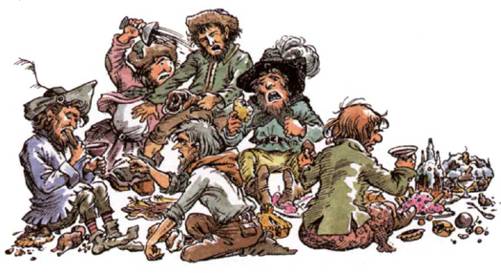
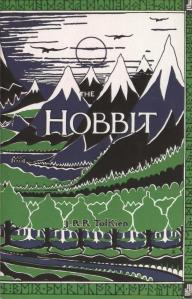
One of my first digital exchanges was participating in The Hobbit Read Along–you can still see the great collection of posts online. While doing this shared project, I was reading The Hobbit to my 8-year-old son. It was a great experience, but I made the mistake of voicing accents to distinguish characters early on in the book. That’s fine when you’ve got oafish trolls or prim little hobbits. But a baker’s dozen of dwarfs stretched my abilities! You can read about my reading-aloud adventures here.
In 2021, I used Tolkien Reading Day (March 25th) to share some of my fun Tolkien bookstore discoveries and to think about Tolkien’s audiobooks as “adaptations” or interpretations: “Reading J.R.R. Tolkien by Audiobook and Adaptation: Thoughts on a Portland Discovery.” In this piece, I talk about The Green Hand in Portland, ME (I visited again in the summer of 2023, but did not have any Tolkien epiphanies), and how at Enterprise Records, I found a beautiful library withdrawal vinyl collection of the Nicol Williamson’s abridged reading of The Hobbit. Spinning this record, and thinking about Andy Serkis’ version of The Hobbit, I discuss what audiobook readings do for me on an imaginative level. I also talk about some of my Tolkien collectible books I’ve discovered hither and yon. None of these are super valuable: a US 1st edition of The Silmarillion that I got for $10 at a used bookstore (and I added a UK 1st edition this year for $20), a nice boxed illustrated anniversary edition of The Hobbit, the original wide-sized printing of the Tolkien-illustrated Mr. Bliss, and my UK 2nd editionLord of the Rings, which looks nice on the shelf. Truth be told, I also love the design of the Middle-earth volumes from the last decade or so, and my wife and I were pleased to give our son hardcover editions of Beren and Lúthien and The Fall ofGondolin for Christmas.
Film Reviews
When the teaser trailer of the third film, The Battle of Five Armies, was released, I wrote “Faint Hope for The Hobbit.” Although it is clear in the trailers that this is a war and intrigue film, I still had some hope I would enjoy it. The huge comment section shows in that post shows that not everyone agreed it was possible!
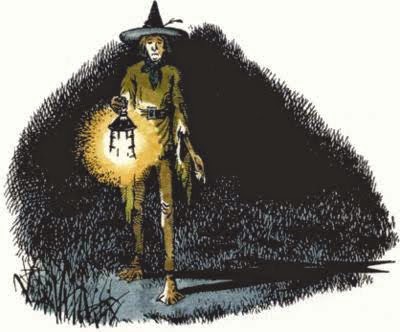
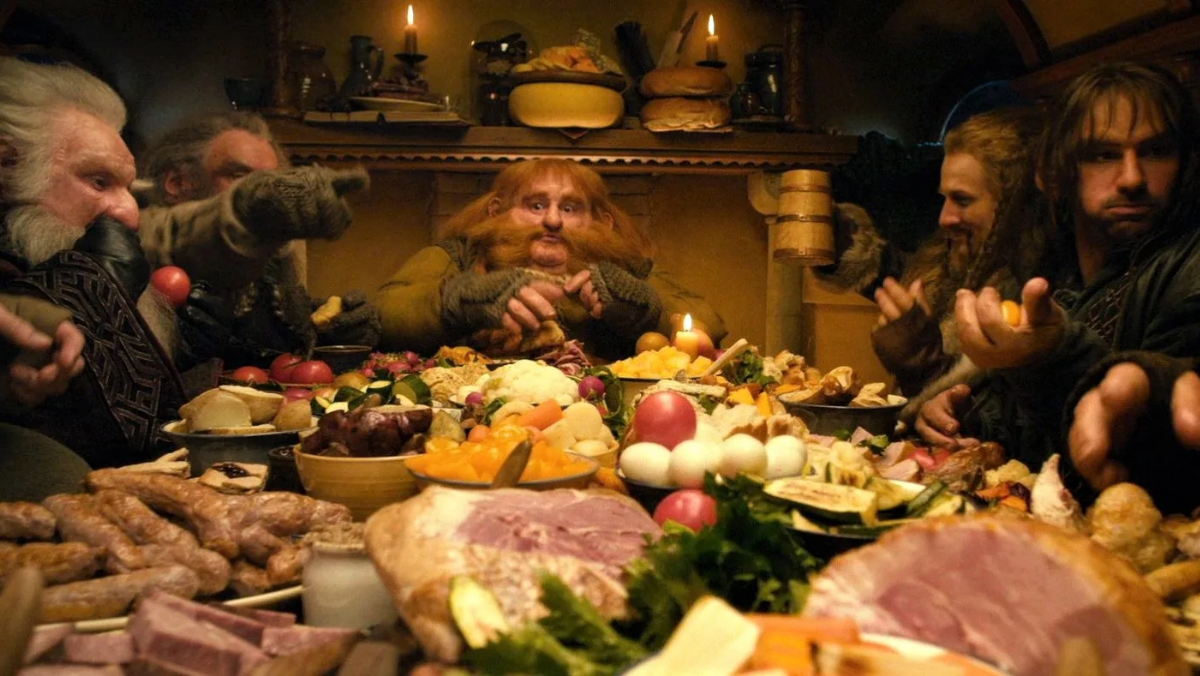
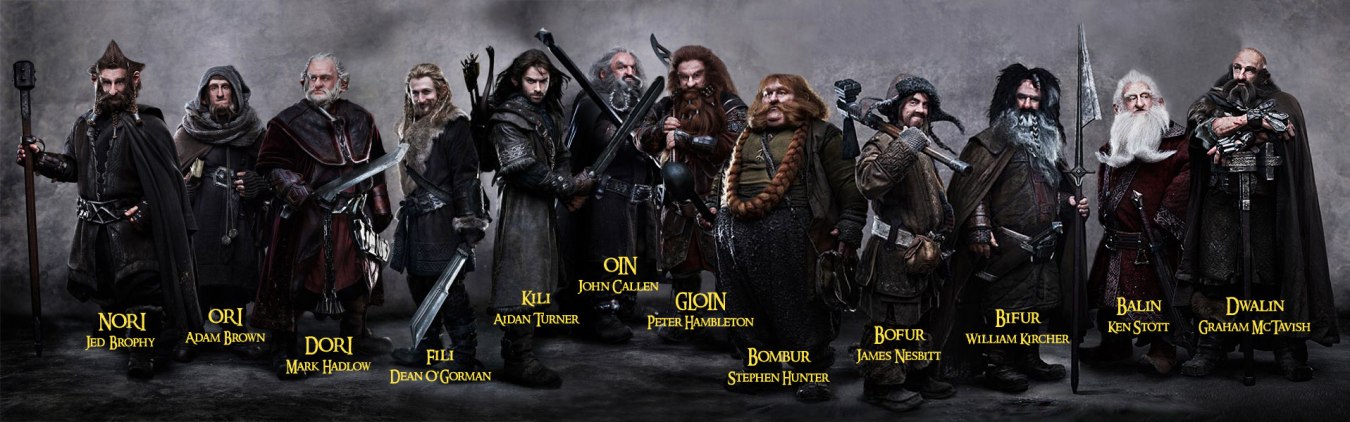
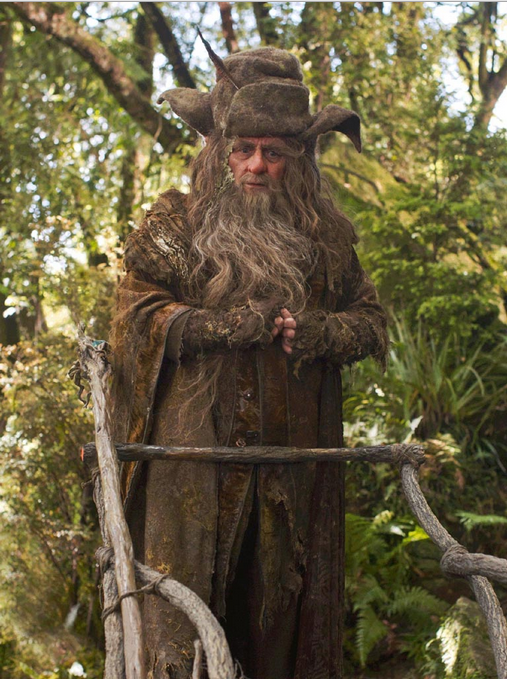
My review of An Unexpected Journey captures the tug back and forth I feel about the films. I called it “Not All Adventures Begin Well,” and it is a much more positive review than many of the hardcore Tolkien fans or academics. And it gives this cool dwarf picture:
“What Have We Done?” These words are breathed in the dying moments of the second installation of The Hobbit adaptation, The Desolation of Smaug. In this review, I think about what it means to do film adaptations. While I do not hate this Hobbit trilogy, I think Peter Jackson got lost.
When I finally got to The Battle of 5 Armies, I decided doing a Battle of 5 Blogs would be fun. 5 other bloggers joined it, making it a Battle of 6 Blogs! But the armies are pretty tough to count, anyhow. I titled my blog “The Hobbit as Living Text.” It was a controversial approach to the film, I know. Make sure you check out the other reviewer’s link here. Some of us chatted about the films in an All About Jack Podcast, which you can hear here and here.
While these aren’t substantial reviews, I featured two indie films: a documentary on Tolkien’s Great War, and a fictional biopic recreating Tolkien’s invention of Middle Earth called Tolkien’s Road—both inspired, perhaps, by John Garth’s work.
Though the Hobbit films were unsatisfying, I still miss having a Tolkien-Peter Jackson epic to watch in theatre at Christmastime. 2019 supplied us, though, with the Tolkien biopic. Besides posting the trailers, I did lead-up posts like “Getting Ready for TOLKIEN: John Garth and Other Resources.” I still encourage people to read John Garth’s Tolkien and the Great War before watching the film, but I am not like many Tolkien fans who simply could not connect with the film. I reviewed it in three different ways, in three different places:
As I discussed above, I have decided to reserve judgment on the new Amazon Prime Rings of Power series–though I was excited enough to share the title announcement on the Blog nearly two years ago. Even with the announcement of the trailer, I could sense the tensions around the project and was trying to find a way through it. When I do write about the Rings of Power adaptation, I will likely be too late to be relevant! I am quite fine with that.
While I fled the Rings of Power arenas of debate, I spoke at Tolkienmoot in 2022 on the Second Age of Middle-earth, specifically the dissipation of Númenor. Thus my “J.R.R. Tolkien’s Texts on The (Down)Fall of Númenor” piece was anticipating both the Rings of Power series and the The Fall of Númenor, and Other Tales from the Second Age of Middle-earth edited by Brian Sibley, but was also the result of my thinking about that fine summer meeting.
Book Reviews
There was no more excellent friend of The Hobbit in the early days than C.S. Lewis. In “The Unpayable Debt of Writing Friends,” I talk about how, if it wasn’t for Lewis, Tolkien might never have finished The Hobbit, and the entire Lord of the Rings legendarium would be in an Oxford archive somewhere. Lewis not only encouraged the book to completion but also reviewed The Hobbit a few times. Here is his review in The Times Literary Supplement.
Lewis is not the only significant reviewer of The Hobbit. When he was 8, my son Nicolas published his review just as the first film was coming to the end of its run. When I was posting Nicolas’ review, I came across another young fellow–the son of Stanley Unwin, the first publisher to receive the remarkable manuscript of The Hobbit. Unsure how children would respond, he paid his son, Rayner, to write a response to the book. You can read about it here: “The Youngest Reviewers Get it Right, or The Hobbit in the Hands of Young Men.”
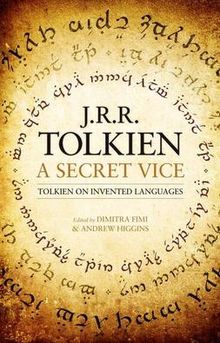
I have also done more book reviewing in the last couple of years on this blog. I note Fimi & Higgins’ “Secret Vice” above, as well as my review of Bower on Tolkien’s Lost Chaucer. I reviewed Verlyn Flieger’s edition of Tolkien’s The Story of Kullervo, which I quite loved. I also reblogged John Garth’s review of Tolkien’s Lay of Aotrou and Itrou–also edited by Flieger, and also gorgeous.
Tolkien and Art
I am fascinated by Tolkien’s own artwork. In some of the Tolkien letters we find out how his humble drawings came to be published with the children’s tale. I decided, though, that I wanted to explore it a little more, and so I wrote, “Drawing the Hobbit.”
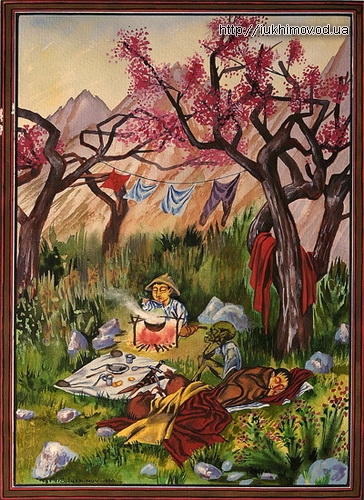
There have been many other illustrators since–including Peter Jackson, whose work as a whole is visually stunning, even for those who don’t feel he was true to the books. One of my favourites was captured in this reblog, “Russian Medievalist Tolkien“–a gorgeous collection of Sergey Yuhimov’s interpretation of The Hobbit.
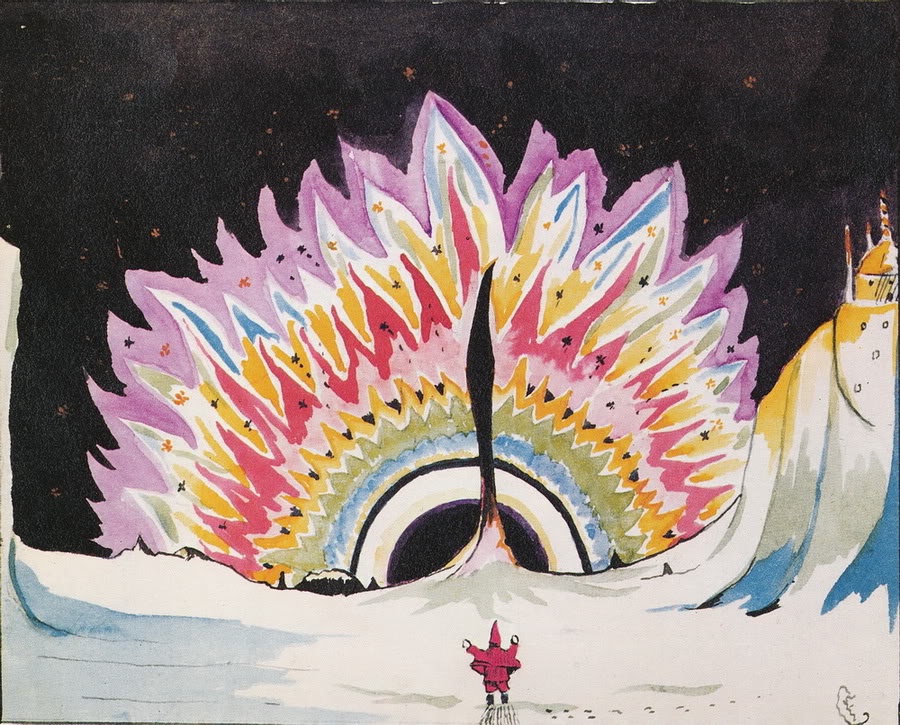
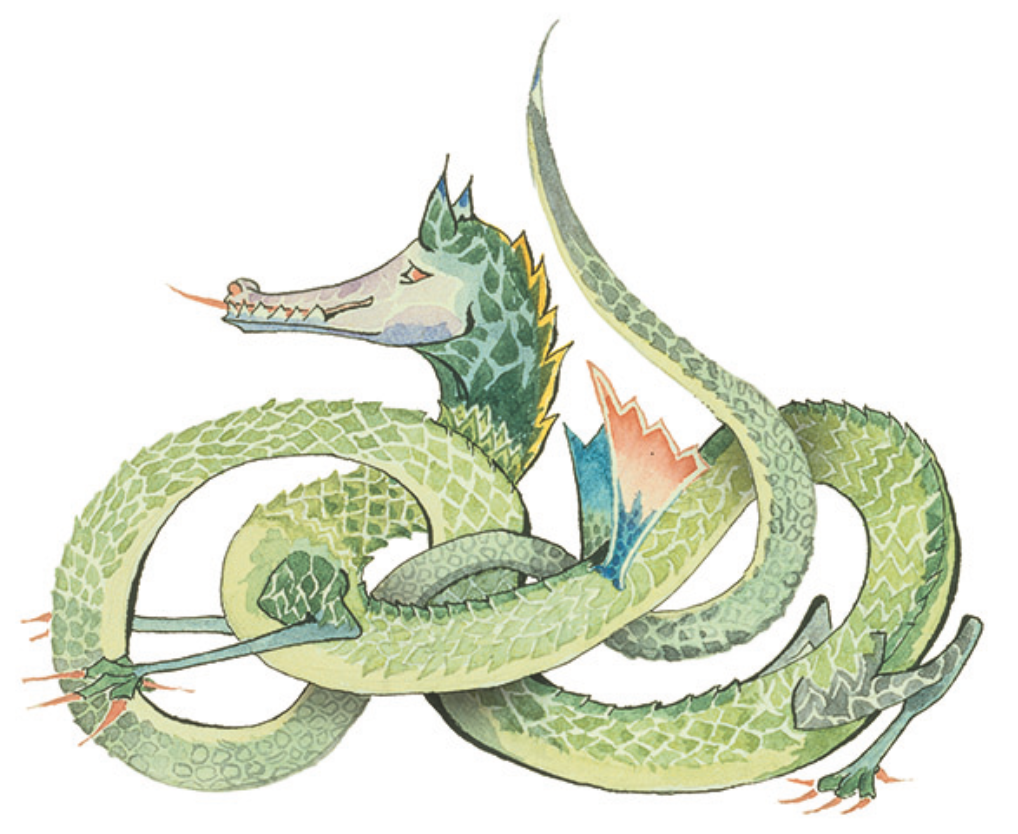
With the great new editions of unpublished Tolkien by his son, we also get to see some of Tolkien’s original art. I continue to be fascinated by this dragon drawing. What an evocation of the Würme in medieval literature!
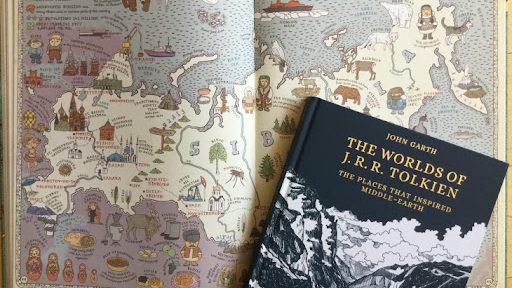
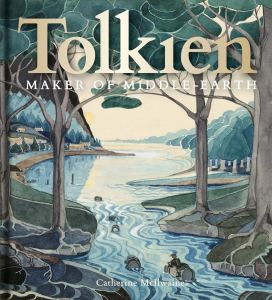
I was also blessed throughout the year to wander through two beautiful and rich newish Tolkien books: John Garth‘s The World of J.R.R. Tolkien and the Bodleian Library exhibit text, Tolkien: Maker of Middle-earth, edited by Catherine McIlywaine.
I know that the world of Tolkien art is rich beyond my imagination. However, I would like to note that (with permission) I have been using some of Emily Austin’s Inklings-inspired art in my lectures, and keep her 2018 “Niggle’s Country” in my office.
Well, before the fun but still interesting, I hope, is my post “Stephen Colbert, Anderson Cooper, C.S. Lewis, Tolkien & Me: Thoughts on Grief.” Not super heavy on Tolkien, but we do know that Stephen Colbert is a fan. 2020 also saw two new pieces on Tolkien’s friendships. One was Pilgrim favourite Diana Glyer on The Babylon Bee, talking about “The Tolkien and Lewis Bromance.” The other piece on friendship is “C.S. Lewis and J.R.R. Tolkien: Friendship, True Myth, And Platonism,” a Paper by Justin Keena. This was the top guest post of 2020, and one of the few times a long, academic paper had gotten a lot of traction on A Pilgrim in Narnia. I think that is a testimonial to Justin’s work, but also a comment about how readers like that Lewis-Tolkien connection that I’ve brought out in some of those letter posts noted above.
I believe in open access scholarship. Because of this, since 2011 I have made A Pilgrim in Narnia free with nearly 1,000 posts on faith, fiction, and fantasy. Please consider sharing my work so others can enjoy it.











 A Pilgrim in Narnia