A Brace of Tolkien Posts for his 129th Birthday

To celebrate Tolkien’s twelfthty-ninth (or eleventy-nineteenth–a joke that expires this year) birthday on 3 January 2021, the Tolkien Society is once again raising a toast to the Professor (see here). After Bilbo left the Shire on his eleventy-first birthday in The Lord of the Rings, Frodo toasted his uncle’s birthday each year. Tolkien fans continue the tradition for the maker of Middle-earth on this day. J.R.R. Tolkien was born in South Africa on 3 January 1892, making this (if he had had Hobbitish longevity), his 129th. The Tolkien Society invites you to celebrate the birthday by raising a glass at 9pm your local time, simply toasting “The Professor!”

If you go to the Tolkien Society site, there are a number of Tolkien gatherings listed for today. You can also use the Twitter hashtag, #TolkienBirthdayToast for a little social media cheer.

In honour of Tolkien’s birthday, each year I update the catalogue of Tolkien posts featured here on A Pilgrim in Narnia. Among countless references and new reflections on his writings, the key Tolkien post of the year–and one of the most viewed posts of 2020–was my tribute to Christopher Tolkien, who passed away in mid January. There are now over 100 article links in this post! I hope you enjoy the great selection of guest bloggers, hot links, and feature posts, filling out your Tolkien reading and inspiring you to widen and deepen your Tolkienaphilia.
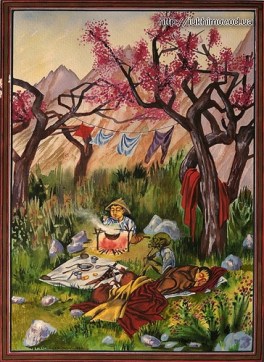
Frodo, Sam and Gollum in IthilienTolkien’s Ideas

Tolkien’s work is rich with reflections upon the world around us. In posts like “Let Folly Be Our Cloak: Power in the Lord of the Rings” and “Affirming Creation in LOTR,” I explore themes related to ideas that are central to Tolkien’s beliefs. The latter idea, creation and good things green, is covered also with Samwise Gamgee here and with Radagast the Brown here. One that resonates long after first reading is the theme of Providence, which I explore in “Accidental Riddles in the Invisible Dark.”

One surprising connection was “Simone de Beauvoir and the Keyspring of the Lord of the Rings“–a pairing that many would find unusual and includes some great old footage. Guest blogger Trish Lambert rounded out the discussion with “Friendship Over Family in Lord of the The Rings.” Author Tim Willard talks about “Eucatastrophe: J.R.R Tolkien & C.S. Lewis’s Magic Formula for Hope.” And you can follow Stephen Winter’s LOTR thought project here and Luke Shelton’s Tolkien Experience Project here.

Perhaps Tolkien’s most central contribution beyond the storied world is his idea of subcreation in the poem, “Mythopoeia” and in other works like the essay, “On Fairy-stories” and the allegorical short story, “Leaf by Niggle.” I have been reading a lot about this concept–partly because of students working on the idea–and appreicated poet-philosopher Malcolm Guite’s take on it here.

My most important contribution, I think, is my Theology on Tap talk, called “A Hobbit’s Theology,” which I am hoping to deepen and rewrite in 2021 for Northwind Theological Seminary. It is one of the ideas I am struggling with most specifically in my academic work. In a similar mode–thinking of Tolkien’s work through a theological lens–is Mickey Corso’s excellent work on Tolkien and Catholicism. The entire video conversation of “The Lady and Our Lady: Galadriel as a ‘Reflexion’ of Mary,” A Signum Thesis Theatre on Tolkien and Catholicism by Mickey Corso, is now online.

And one of the more popular posts of 2016 was a very personal one, “Battling a Mountain of Neglect with J.R.R. Tolkien.” Though I am still not sure if I should have written that post, it has connected with readers.

Tolkien as Writer
lord of the rings tolkien folioI remain fascinated by Tolkien’s development as an author, and spent some time of late exploring the theme. The most popular of pieces I wrote was the coyly titled, “The Shocking Reason Tolkien Finished The Lord of the Rings.” The reason is, of course, not all that shocking, but could be helpful for the subcreators amongst us. Two more substantial posts on the topic are “12 Reasons not to Write Lord of the Rings, or an Ode Against the Muses” and “The Stories before the Hobbit: Tolkien Intertextuality, or the Sources behind his Diamond Waistcoat.”

C.S. Lewis took an interest as well in Tolkien’s formation (see “Book Reviews” below). You can read more about it in Diana Pavlac Glyer’s Bandersnatch, and in this blog post, “‘So Multifarious and So True’: The C.S. Lewis Blurb for the Fellowship of the Ring.” Lewis’ support for Tolkien did not go unrewarded. Besides the great joy of Tolkien’s work, there was a time when Tolkien interceded a time or two on Lewis’ behalf. Friendship goes both ways. Tolkien historian John Garth takes some time to explore this literary friendship further in his detailed explanation of “When Tolkien reinvented Atlantis and Lewis went to Mars.”

One post from 2018 created a lot of (pretty positive) controversy. In “Lewis, Tolkien and Different Views of Fan Fiction” I invited thought about two trends: Tolkien-readers’ resistance to fan fiction (in concert with Tolkien himself), and a strong trend of good fanfiction from Tolkien lovers. The post is worth reading, but so are the 100+ comments. But my most substantial and original piece on Tolkien’s writing, I think, is the 2020 article, “Trees, Leaves, Vines, Circles: The Layered Worlds of J.R.R. Tolkien’s Fiction, A Note on ‘Athrabeth Finrod ah Andreth,’” which includes art by Emily Austin.
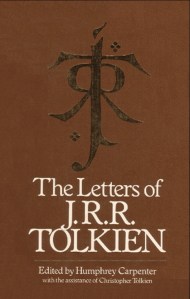
The Tolkien Letter Series

Tolkien’s letters remain a rich resource for researchers that is available to everyday readers–and usually available used for a pretty cheap price. In these letters I discovered the tidbits on writing above, and notes like “The Tolkien Letters that Changed C.S. Lewis’ Life” (which remains a top 10 post). But it goes much deeper. In “The Tolkien Letter that Every Lover of Middle-Earth Must Read“–also a top 10 post–I include much of a draft that Tolkien wrote to a Mrs. Mitchison that fills in much of the background to Middle-earth. I also took the time to put Tolkien’s great “I am in fact a Hobbit (in all but size)” quotation in context, which I updated in 2020 with a note on books and their authors.

A more sober but quite moving letter is the one that I featured in this popular post from fall 2018: “The Last Letter of J.R.R. Tolkien, on the 45th Anniversary of His Death.” It is a post to read when raising a toast. And now, with the passing of Christopher Tolkien, son of the genius, I have added a second toasting post. In my 2020 tribute piece, Christopher Tolkien, Curator of Middle-earth, Has Died, there is also a pretty poignant letter from his father. I hope you enjoy.

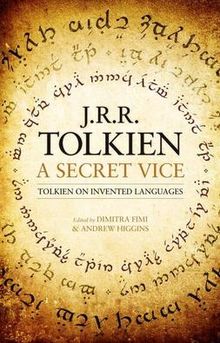
The letters afforded me some time to think about some other ideas. In a longer popular post that any conlanger will know is poorly named–“Why Tolkien Thought Fake Languages Fail“–I discussed Tolkien’s own constructed language program and surmised with the Professor that conlangs fail when the lack a mythic element. I think I am mostly correct and the essay is quite fun, even if I am missing some key elements. I was able to push further when I did a personal response to new Tolkien language research in this post: “J.R.R. Tolkien’s “Secret Vice” and My Secret Love: Thoughts on Dimitra Fimi and Andrew Higgins’ Critical Edition of A Secret Vice: Tolkien on Invented Language.”

Finally, a little fun with the post, “When Sam Gamgee Wrote to J.R.R. Tolkien.” As you might guess, it is about a real-life Sam Gamgee who sends a note to the maker of Middle-earth. And, of course, when the season of advent returns, check out the Father Christmas Letters.

The Silmarillion Project
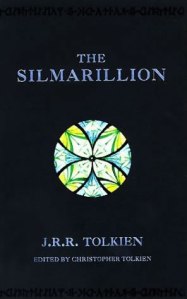
This is a newish feature for me, partly because 2017 was the year I completed The Silmarillion in its entirety in a single reading (rather than the higgledy-piggledy approach of cherry-picking stories and languishing in the mythic portions, as I am wont to do). I reread it in early 2020, this time by audiobook, and enjoyed it deeply. Still, I find it a challenge. I thought I would take advantage of my status as a Silm-struggler to offer suggestions and resources to people looking to extend their reading of the Legendarium.

In “Approaching “The Silmarillion” for the First Time” I made a handful of suggestions for readers intending to read this peculiar book for the first time. If you are a fellow Silm-struggler, I hope this helps you get a fuller experience of a beautiful collection of texts. That experience inspired me to write “A Call for a Silmarillion Talmud,” an unusual post for Tolkienists with more creative and technological skills to consider.

Finally, I had to write as a fan and as a scholar together in considering the cycle of Lúthien and Beren. In “Of Beren and Lúthien, Of Myth and the Worlds We Love” I talk about my love of the story and its links to the Legendarium while noting my hope for the 2017 release of the Beren and Lúthien materials and sharing some Silmarillion inspired artwork.

The Hobbit - The Battle of the Five Armies - Evangeline LillyFilm Reviews

When the teaser trailer of the third film, The Battle of Five Armies, was released, I wrote “Faint Hope for The Hobbit.” Although it is clear in the trailers that this is a war and intrigue film, I still had some hope I would enjoy it. The huge comment section shows in that post shows that not everyone agreed it was possible!

My review of An Unexpected Journey captures the tug back and forth I feel about the films. I called it, “Not All Adventures Begin Well,” and it is a much more positive review than many of the hardcore Tolkien fans or academics. And it gives this cool dwarf picture:
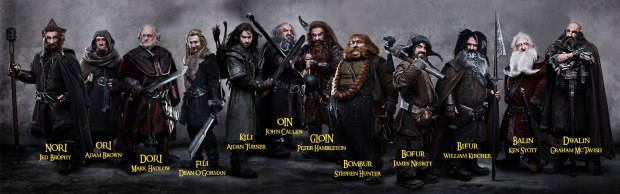
What Have We Done?” These words are breathed in the dying moments of the second installation of The Hobbit adaptation, The Desolation of Smaug. In this review I think about what it means to do film adaptations. While I do not hate this Hobbit trilogy, I think that Peter Jackson just got lost a bit.

When I finally got to The Battle of 5 Armies, I decided it would be fun to do a Battle of 5 Blogs. 5 other bloggers joined it, making it a Battle of 6 Blogs! But the armies are pretty tough to count anyhow. I titled my blog, “The Hobbit as Living Text.” It was a controversial approach to the film, I know. Make sure you check out the other reviewers link here. Some of us chatted about the films in an All About Jack Podcast, which you can hear here and here.
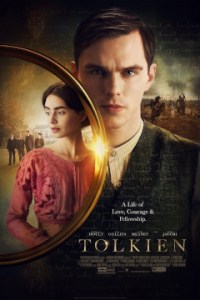
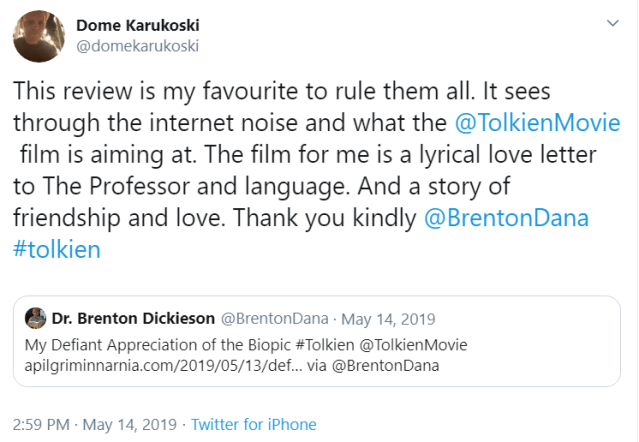
While these aren’t substantial reviews, I featured two indie films: a documentary on Tolkien’s Great War, and a fictional biopic recreating Tolkien’s invention of Middle Earth called Tolkien’s Roadboth inspired, perhaps, by John Garth’s work.

Though the Hobbit films were unsatisfying, I still miss having a Tolkien-Peter Jackson epic to watch in theatre at Christmastime. 2019 supplied us, though, with the Tolkien biopic. Besides posting the trailers, I did lead-up posts like “Getting Ready for TOLKIEN: John Garth and Other Resources.” I still encourage people to read John Garth’s Tolkien and the Great War before watching the film, but I am not like many Tolkien fans who simply could not connect with the film. I reviewed it in three different ways, in three different places:

Book Review

secret_viceThere was no greater friend of The Hobbit in the early days than C.S. Lewis. In “The Unpayable Debt of Writing Friends,” I talk about how, if it wasn’t for Lewis, Tolkien may never have finished The Hobbit, and the entire Lord of the Rings legendarium would be in an Oxford archive somewhere. Lewis not only encouraged the book to completion, but reviewed The Hobbit a few times. Here is his review in The Times Literary Supplement.

Lewis is not the only significant reviewer of The Hobbit. When he was 8, my son Nicolas published his review, just as the first film was coming to the end of its run. When I was posting Nicolas’ review, I came across another young fellow–the son of Stanley Unwin, the first publisher to receive the remarkable manuscript of The Hobbit. Unsure how children would respond, he paid his son, Rayner, to write a response to the book. You can read about it here: “The Youngest Reviewers Get it Right, or The Hobbit in the Hands of Young Men.”

I have also done more book reviewing in the last couple of years on this blog. I note Fimi & Higgins’ “Secret Vice” above. I reviewed Verlyn Flieger’s edition of Tolkien’s The Story of Kullervo, which I quite loved. I also reblogged John Garth’s review of Tolkien’s Lay of Aotrou and Itroun–also edited by Flieger, and also gorgeous.

The Read-Aloud Hobbit

One of my first digital exchanges was participating in The Hobbit Read Along–you can still see the great collection of posts online. As I was doing this shared project, I was reading The Hobbit to my 7 3/4-year-old son. It was a great experience, but I made the mistake of doing accents to distinguish characters early on in the book. That’s fine when you’ve got oafish trolls or prim little hobbits. But a baker’s dozen of dwarfs stretched my abilities! You can read about my reading aloud adventures here.

In reading aloud I was really struck by the theme of providence in The Hobbit. I’m sure others have talked about it, but “Accidental Riddles in the Invisible Dark (Chapter 5)” is a great example of that hand of guidance behind the scenes.
Hobbit and Art

I am fascinated by Tolkien’s own artwork. In some of the Tolkien letters we find out how his humble drawings came to be published with the children’s tale. I decided, though, that I wanted to explore it a little more, and so I wrote, “Drawing the Hobbit.”

There have been many other illustrators since–including Peter Jackson, whose work as a whole is visually stunning, even for those who don’t feel he was true to the books. One of my favourites was captured in this reblog, “Russian Medievalist Tolkien“–a gorgeous collection of Sergey Yuhimov’s interpretation of The Hobbit.

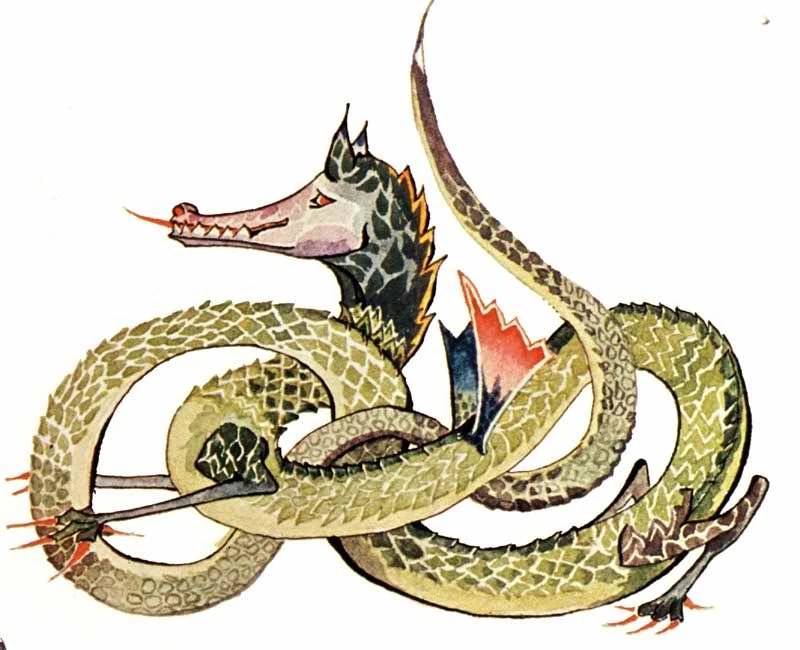
With the great new editions of unpublished Tolkien by his son, we also get to see some of Tolkien’s original art. I continue to be fascinated by this dragon drawing. What an evocation of the Würme in medieval literature!

I was also blessed throughout the year to wander through two beautiful and rich newish Tolkien books: John Garth‘s The World of J.R.R. Tolkien and the Bodleian Library exhibit text, Tolkien: Maker of Middle-earth, edited by Catherine McIlywaine.

Tolkien’s Worlds
radagast-the-brown

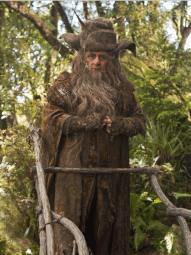
I would like to spend more time thinking about the speculative universes of J.R.R Tolkien. Meanwhile, I would encourage you to read Jubilare’s reblog of the Khazâd series. It’s just the first of a great series, but shows you a bit of the depth of Tolkien’s world behind the world. In reading up on the Wizards of Middle Earth–the Brown, the White, the Grey, and the two Blues–it struck me how relevant Radagast the Brown is to us today. I take some time here to put a comment that Lewis made about Tolkien’s work in the context of other speculative writers, especially J.K. Rowling.

You can also check out the work of people like the Tolkienist, the links on the Tolkien Transactions to catch what kinds of conversations are about these days, or the academic work of people like David Russell Mosley. And, of course, we are all interested in Tolkien’s work on Beowulf. I read it in 2017 for the free SignumU three-lecture class with Tom Shippey, which is now free on the SignumU youtube channel.

Let me add two posts from the Inklings and King Arthur series in Winter 2017. Prof. Ethan Campbell writes about “Wood-Woses: Tolkien’s Wild Men and the Green Knight,” and intertextuality expert Dale Nelson writes about “Tiny Fairies: J.R.R. Tolkien’s ‘Errantry’ and Martyn Skinner’s Sir Elfadore and Mabyna.” Beyond these, we are always on the lookout for new research. So check out the Signum University thesis theatre with Rob Gosselin. I chatted with Rob about his MA thesis on “J. R. R. Tolkien’s Sub-creative Vision: Exploring the Capacity and Applicability in Tolkien’s Concept of Sub-creation.” It’s not only a great conversation about world-building, but a very personal one.

colbert is a tolkien nerdAnd Just For Fun….

Well, before the fun but still interesting, I hope, is my post “Stephen Colbert, Anderson Cooper, C.S. Lewis, Tolkien & Me: Thoughts on Grief.” Not super heavy on Tolkien, but we do know that Stephen Colbert is a fan. 2020 also saw two new pieces on Tolkien’s friendships. One was Pilgrim favourite Diana Glyer on The Babylon Bee, talking about “The Tolkien and Lewis Bromance.” The other piece on friendship is “C.S. Lewis and J.R.R. Tolkien: Friendship, True Myth, And Platonism,” a Paper by Justin Keena. This was the top guest post of 2020, and one of the few times a long, academic paper had gotten a lot of traction on A Pilgrim in Narnia. I think that is a testimonial to Justin’s work, but also a comment about how readers like that Lewis-Tolkien connection that I’ve brought out in some of those letter posts noted above.

For the fun…. Weirdly, the top 2019 Tolkien post is my note on “Philip Pullman as a Reader of C.S. Lewis and J.R.R. Tolkien.” It’s short and light and good to get the blood-boiling.

And have you checked out some of the top Tolkien nerd projects, like Sparrow Alden’s digital word study of The Hobbit,Words That You Were Saying,” and Emil Johansson’s LOTRProject?

Of course, some things are entirely meaningless, I will leave you with a quiz: What Character in the Hobbit Are You? You will not be surprised that I am Thorin Oakenshield! The LOTR Project is a great online source for all kinds of Tolkien geekery, by the way. The LOTR Project has some great connections to Sparrow Alden’s “Words That You Were Saying” digital humanities project.
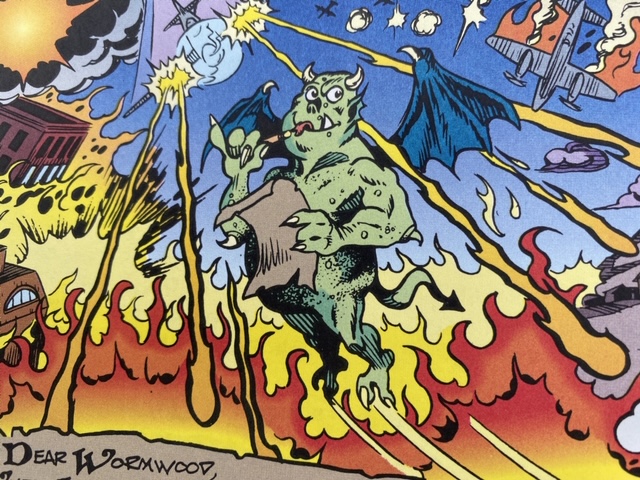
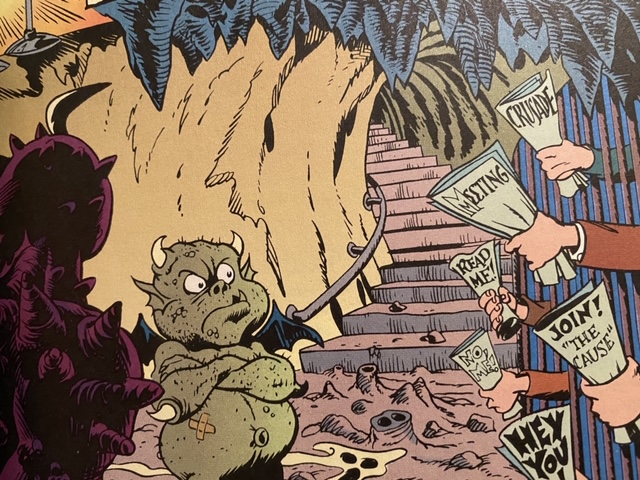
Oh, plus this. Or this!

Posted in News & Links, Reviews | Tagged , , , , , , , , , , , , , , , | 10 Comments

A Screwtape Christmas Miracle

With all the modern skepticism in the world, I still have not been able to shake off a belief in Father Christmas. And I mean here more than that “Yes, Virginia, there is a Santa Claus” approach to the season of love and sharing, or the heartwarming and overly litigious versions of Miracle on 34th St. As I confessed in my “Santa Manifesto” from years ago, my wondering eye has never seen a miniature sleigh and eight tiny reindeer. I’ve never caught the old man in his trick smuggling elf-made presents into our house. I have some doubt there is a single, solitary, bearded North Pole dweller who visits each house in a single evening, dealing coal to some and Hasbro toys to others–though I am a quite beard-friendly fellow. I’m also not certain the spirit of St. Nicolas has left this world entirely. He may not look exactly like a Coca Cola commercial, but I’m inclined to believe that there still is a Santa Claus.

Part of that tendril of belief is that, from time to time, I get unexplainable gifts. My wife is not so convinced as I am that I am not night-wrapping gifts for myself, though I wouldn’t put it past my subconscious self to pull such a caper. As far as I know, though, there have been Christmas gifts that have come to me without explainable provenance.

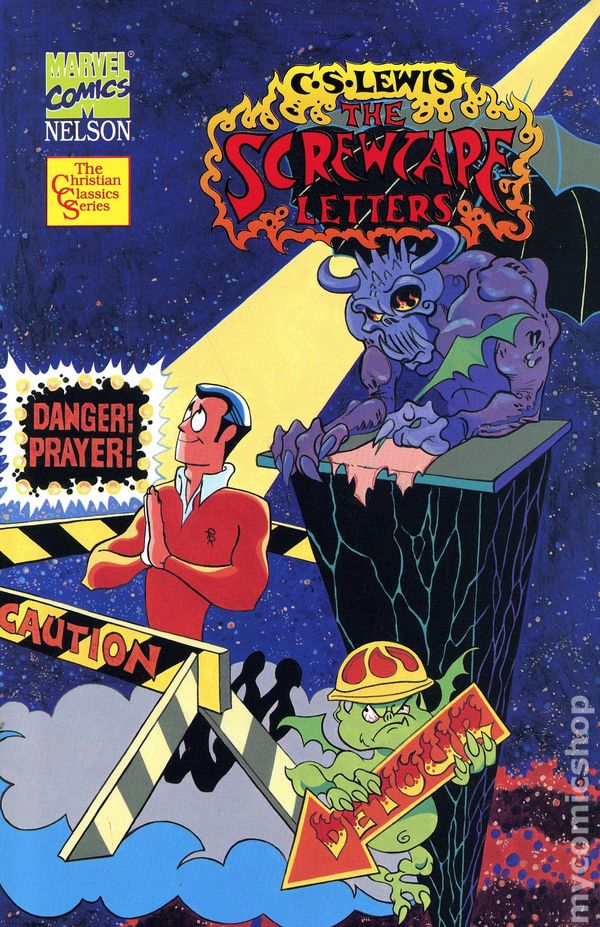
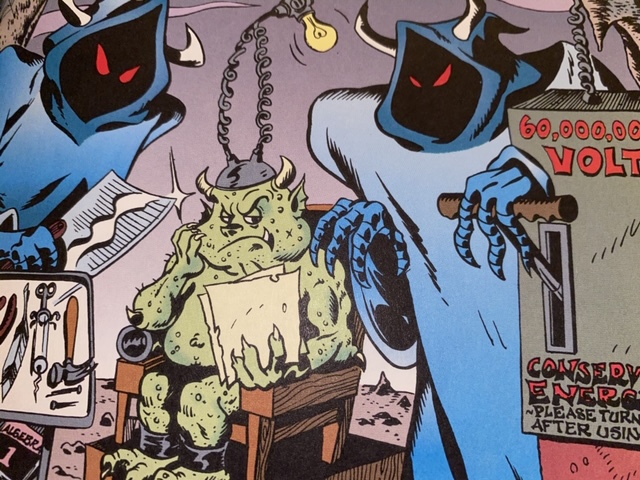
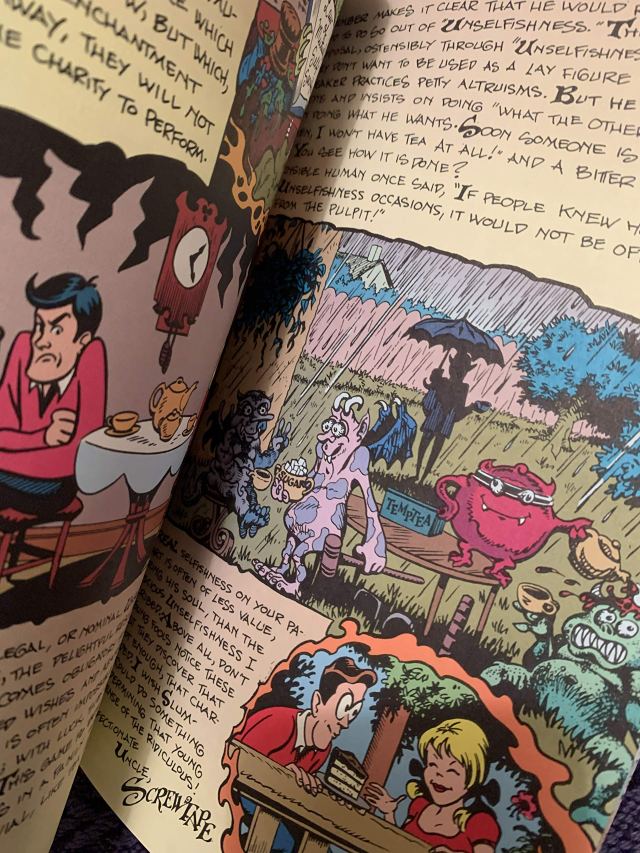
My gift from Santa for 2020 is, remarkably, the Marvel Comics version of C.S. Lewis’ The Screwtape Letters. This 1994 Charles E. Hall graphic novel adaptation of Screwtape has proved completely impossible to find in local shops. I suspect that collectors keep it, and that very few sought it out when it was first published who were not already Lewis fans. As you can imagine, both as a C.S. Lewis scholar and an avid reader of Screwtape, I am pretty pleased to have gotten this 1st Canadian edition in the mail on Christmas Eve!

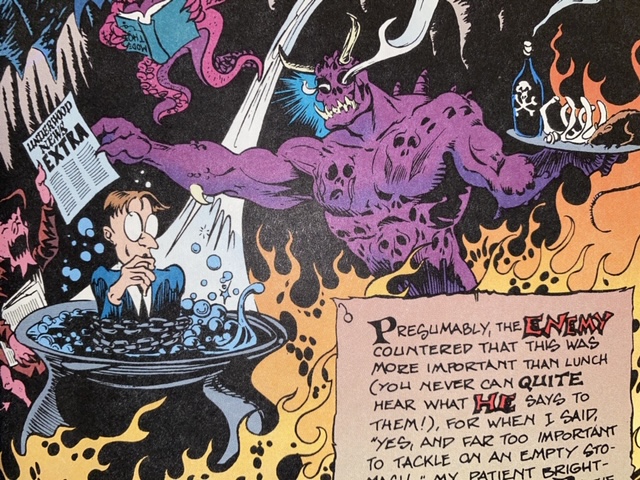
As I have only just popped in and out of the adaptation, I’ll leave it to Tyler Hummel at “Geeks Under Grace” for a substantial review with a few great pictures (which I have used here). My impressions, though, are largely the same as his: a colourful, busy, layout crammed with as much text as they thought they could get away with in an adaptation that is more hybrid comic/book than graphic novel. The comic version seems like a great way to reread The Screwtape Letters in a new way. As a medium for capturing what Lewis was trying to do for Christian spirituality, however, it takes a risk that could undercut itself. The grotesque is “cute,” and thus shares the danger of parody for pushing the line from the witty to the ridiculous. The cover is a case in point, where the “Danger! Prayer!” sign next to the square-jawed, clean-cut white kid oozes 20th-century American Christian pop culture cheese.

Still, I very much look forward to immersing myself in the reading experience. Deep thanks, then, to whomever may have sent this to me. I do no know if you wear robes of scarlet or not. I cannot tell if your pipe smoke encircles your head like a wreath and your little round belly shakes when you laugh like a bowl full of jelly–though I will note that belly weight and smoking are twin concerns for heart disease later in life. But I am grateful for this Screwtape Christmas miracle–a demonical gift to brighten one’s Christmas!

Posted in Reflections | Tagged , , , , | 11 Comments

A Very Merry MaudCast, and Fireside Poetry for Winter Solstice

I must admit that this calendar year, 2020, is one upon which I will be pleased to turn the calendar. Among many of the terrible, terrible events of 2020–events that sound more like the Apocalypse or a Creedance Clearwater Revival classic than a normal change of the decades–there have been some high points for me. After nearly a decade of preparation and writing, I officially received my PhD diploma from the University of Chester in a socially distanced ceremony. I’ve taught some cool classes and put many miles on my walking shoes as my family headed out of doors in COVID-busting hikes and wanders. And my son, who astonishes me with his creativity and sheer brightness, simultaneously turned 16 and released a song that has since had more than 6,000 spins on streaming platforms.

It’s also been an interesting year for me when it comes to my burgeoning work in reading and writing about L.M. Montgomery and the spiritual life. In May, after 2.5 years of writing and editing, my first Montgomery studies peer-reviewed paper was published. This was my literary-critical piece, “Rainbow Valley as Embodied Heaven: Initial Explorations into L.M. Montgomery’s Spirituality in Fiction,” published in the Journal of L.M. Montgomery Studies (see here). In June 2020, I was supposed to a paper for the L.M. Montgomery Institute’s 14th Biennial conference–the premier Montgomery studies event in the world. Though the conference was cancelled, we managed to host a digital forum to capture some of the essence of the event.

I decided to keep working on my paper, keeping my scheduled writing retreat in June to pull together the threads of a year’s note-taking and journal writing. They decided to keep the 2020 Elizabeth R. Epperly Award for Outstanding Early Career Paper contest open, receiving full journal submissions and judging them. With submissions from six countries on three continents, I am pleased to say that my paper was selected as the winner! You can read all about it here, including the description of my piece, “Making Friends with the Darkness: L.M. Montgomery’s Popular Theodicy in Anne’s House of Dreams.” I’m working on a revision of the paper this week for 2021 publication. Stay tuned for details about the release.

2020 also saw the launch of the Maudcast, The Podcast of the L.M. Montgomery Institute, which I produce and host. Designed to be a monthly podcast, this brand new bit of work is our quest to discover cutting-edge scholarship about the life and works of Lucy Maud Montgomery, welcoming to the microphone leading academics, emerging scholars, local researchers, and imaginative readers and writers from Prince Edward Island and around the world. Designed before the pandemic, with a delayed launch because of the COVID lockdown, we managed to publish 6 guest interviews in 7 podcasts in 2020:

  • S01E01: Lesley Clement, Launch of the Vision Forum
  • S01E02: Laura Leden, L.M. Montgomery and Nordic Translation
  • S01E03: Kate Scarth and the L.M. Montgomery Institute
  • S01E04: Trinna Frever and the Art of Reading, Parts One and Two
  • S01E05: Andrea McKenzie and Reading Montgomery as a Historian
  • S01E06: Carolyn Strom Collins and the Anne of Green Gables Manuscript

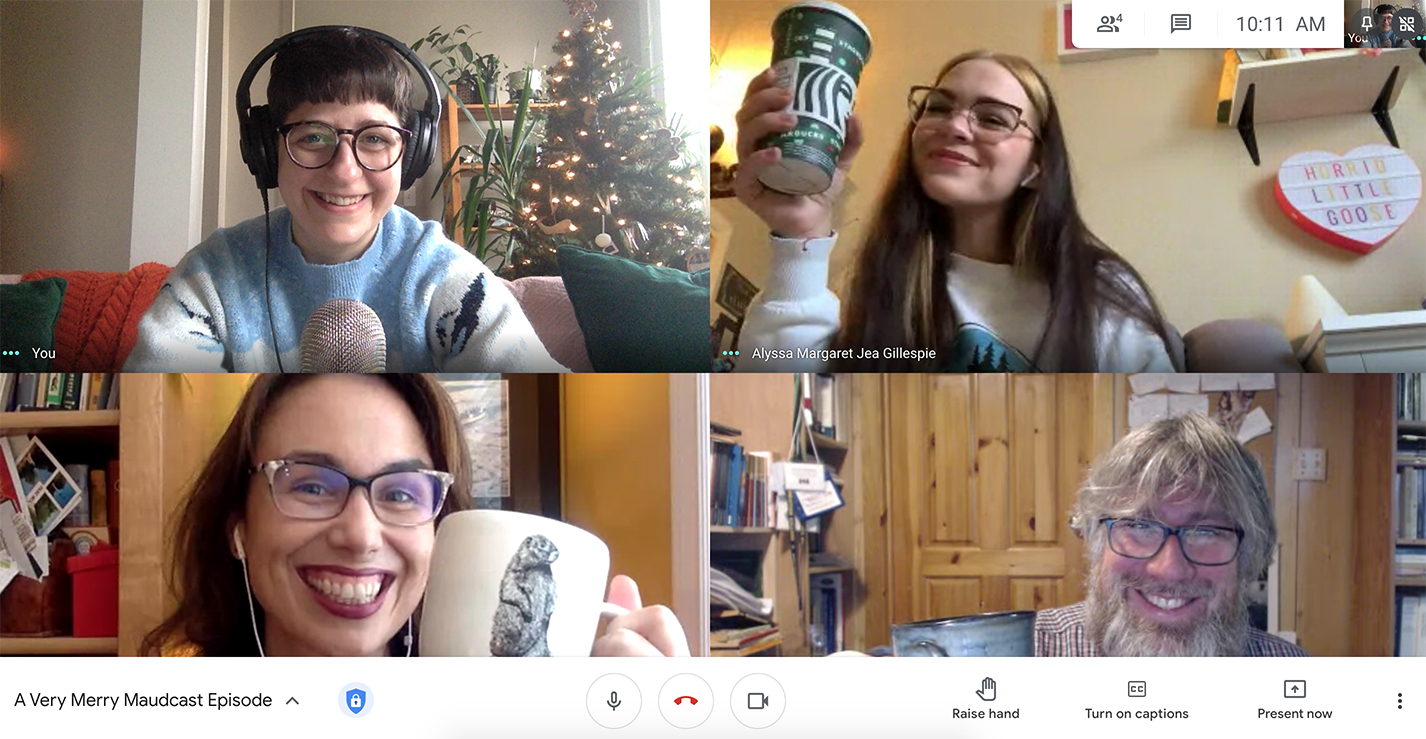
To close off 2020 with our 7th episode, I thought it would be fun to sit down digitally with members of the local MaudCast team. In this Very Merry MaudCast, I chat with Kate Scarth, Chair of L.M. Montgomery Studies at the University of Prince Edward Island,  Alyssa Gillespie, editorial assistant for The Journal of L.M. Montgomery Studies, and technical director of the MaudCast, Kristy McKinney. With eggnog lattes in our hands and red currant wine in our hearts, the MaudCast team toasts this strange year that was with hopes for the years to come. In discussing our family holiday traditions and our favourite Montgomery moments, Kate and Alyssa read Christmas scenes from Anne of Green Gables and Anne of Windy Poplars (Windy Willows in the UK). The episode concludes with my 20-minute reading of “Christmas at Red Butte,” Montgomery’s prairie Christmas story. Much like O Henry’s classic “The Gift of the Magi,” “Christmas at Red Butte” is a story that reminds us of the importance of family and self-sacrifice–even in the midst of adversity, isolation, and distance from the ones we love.

I think it is a fine way to conclude the year, so I hope you enjoy! Best wishes to you all as we look toward the new year!

Oh, and this is quite nice–Fireside Poetry for the Winter Solstice: original, new, and classical poems for the turn of the seasons by friends of Signum University. Gabriel Schenk did a brilliant job hosting this, and I think Gabriel will become the Bob Ross of fireside poetry–though a more British and slightly saucier version.

Posted in L.M. Montgomery, News & Links, Reflections, The MaudCast | Tagged , , , , , , , , | 7 Comments

Bethlehem as the Hingepoint of History: C.S. Lewis’ Christmas Revolution Poem

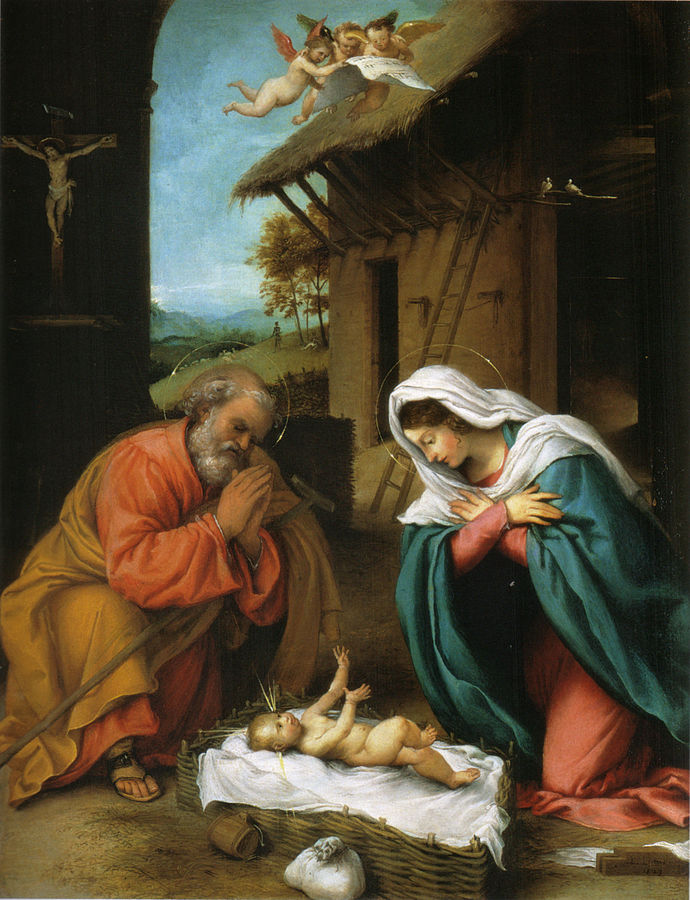
It is difficult to see this poem in the Christmases that most of us are subjected to. I think that’s why C.S. Lewis became a bit of a Christmas curmudgeon in his latter days. But in the midst of his Narnian period, Lewis penned a poem that I think is one of his most important short pieces. It is here, in “The Turn of the Tide,” where we see how Lewis puts the incarnation of Christ–that great, eucatastrophic movement of incarnation, death, and resurrection–is not just a key moment in the history of salvation, and certainly not a model for crèche or card. The birth of Christ is the hingepoint of history, where all cosmic realities turn toward hope.

Lewis captures this in a poem filled with evocative imagery. Jerry Root and Mark Neal describe the turning point well it well:

When the hush has stilled both earth and heaven with a paralyzing fear of death and annihilation, there returns with a rush a sense of life and equilibrium, a lightening of spirits (The Surprising Imagination of C.S. Lewis, 184).

It is a Perelandran moment of myth and history becoming one and changing every destiny in the universe. Whatever we have reduced Christmas to in our culture, whatever they say on TV, this poem shows the ages of depth behind the Bethlehem moment.

The Turn of the Tide

Breathless was the air over Bethlehem; black and bare
The fields; hard as granite were the clods;
Hedges stiff with ice; the sedge, in the vice
Of the ponds, like little iron rods.
The deathly stillness spread from Bethlehem; it was shed
Wider each moment on the land;
Through rampart and wall into camp and into hall
Stole the hush. All tongues were at a stand.
Travellers at their beer in taverns turned to hear
The landlord—that oracle was dumb;
At the Procurator’s feast a jocular freedman ceased
His story, and gaped; all were glum.
Then the silence flowed forth to the islands and the north
And it smoothed the unquiet river-bars,
And leveled out the waves from their revelling, and paved
The sea with the cold, reflected stars.
Where the Cæsar sat and signed at ease on Palatine,
Without anger, the signatures of death,
There stole into his room and on his soul a gloom,
Till he paused in his work and held his breath.
Then to Carthage and the Gauls, to Parthia and the Falls
Of Nile, to Mount Amara it crept;
The romp and rage of beasts in swamp and forest ceased,
The jungle grew still as if it slept.
So it ran about the girth of the planet. From the Earth
The signal, the warning, went out,
Away beyond the air; her neighbours were aware
Of change, they were troubled with doubt.

Salamanders in the Sun who brandish as they run
Tails like the Americas in size,
Were stunned by it and dazed; wondering, they gazed
Up at Earth, misgiving in their eyes.
In Houses and Signs the Ousiarchs divine
Grew pale and questioned what it meant;
Great Galactic lords stood back to back with swords
Half-drawn, awaiting the event,
And a whisper among them passed, “Is this perhaps the last
Of our story and the glories of our crown?—
The entropy worked out?—the central redoubt
Abandoned?—The world-spring running down?”
Then they could speak no more. Weakness overbore
Even them; they were as flies in a web,
In lethargy stone-dumb. The death had almost come,
And the tide lay motionless at ebb.

Like a stab at that moment over Crab and Bowman,
Over Maiden and Lion, came the shock
Of returning life, the start, and burning pang at heart,
Setting galaxies to tingle and rock.
The Lords dared to breathe, swords went into sheathes
A rustling, a relaxing began;
With rumour and noise of the resuming of joys
Along the nerves of the universe it ran.
Then, pulsing into space with delicate dulcet pace,
Came a music infinitely small,
But clear; and it swelled and drew nearer, till it held
All worlds with the sharpness of its call,
And now divinely deep, ever louder, with a leap
And quiver of inebriating sound,
The vibrant dithyramb shook Libra and the Ram,
The brains of Aquarius spun round—
Such a note as neither Throne nor Potentate had known
Since the Word created the abyss.
But this time it was changed in a mystery, estranged,
A paradox, an ambiguous bliss.

Heaven danced to it and burned; such answer was returned
To the hush, the Favete, the fear
That Earth had sent out. Revel, mirth and shout
Descended to her, sphere below sphere,
Till Saturn laughed and lost his latter age’s frost
And his beard, Niagara-like, unfroze;
The monsters in the Sun rejoiced; the Inconstant One,
The unwedded Moon, forgot her woes;
A shiver of re-birth and deliverance round the Earth
Went gliding; her bonds were released;
Into broken light the breeze once more awoke the seas,
In the forest it wakened every beast;
Capripods fell to dance from Taproban to France,
Leprechauns from Down to Labrador;
In his green Asian dell the Phoenix from his shell
Burst forth and was the Phoenix once more.

So Death lay in arrest. But at Bethlehem the bless’d
Nothing greater could be heard
Than sighing wind in the thorn, the cry of One new-born,
And cattle in stable as they stirred.

Posted in Reflections, Thoughtful Essays | Tagged , , , , , , , , | 4 Comments

Always Winter, Never Christmas Dinner

I admit it: the turkey was a bit of a panic purchase. There had been an article in the news about a run on Christmas turkeys, and I found myself settling for the store brand version of a Butterball instead of something local. Now I have this 18 pound Behemoth in my freezer and a slight case of buyer’s regret. Turkey is my COVID toilet paper, apparently.

In the midst of all the trim and trappings of our big ole family Christmases, I am still inexplicably linked to the turkey dinner. To the point that I, being the least of those qualified to do so, have taken on responsibility for this yummiest aspect of our yuletide celebration. I trim and cook the turkey, open the can of cranberry jelly, mash the potatoes and bake the yams, add a secret blend of brown sugar and local butter to the turnips, and do everything associated with Christmas dinner–except for the gravy, which seems beyond me somehow. Invariably, I’m usually completely uninterested in food after a day in the kitchen–or burnt out from school, or sick with some bug….. And yet, I want the Christmas turkey dinner, even if I would rather have a little lie down when dinner finally comes around.

It is this unjustifiable and imbecilic love of Christmas dinner that resulted in my trying to find room for an 18lb turkey in our little chest freezer.

According to my Turkey Research Binder–yes, it exists–we typically do a 12 or 13lb turkey for our family, including my in-laws. That gives us two full dinners, plus leftover sandwiches and one hash brunch. In 2004, we did a 16-pounder because we were having some students over who had no particular home for Christmas–like ourselves, Christmasing in Vancouver, far away from home. So the 18-pound pre-dinner beast in the ice chest is something of an outlier for our little family.

I justified it at the time–standing above a pile of frozen birds at the store, wondering if this would be my last chance–because we wanted to have a small handful of international students in this year. It has been a really tough year for students from abroad, as they have flown to our island, isolated for 2 weeks, and then went to a dorm room where they had food delivered and took classes online. What a terrible, terrible experience for their first year in Canada, for their first semester at college. This is how I justified upping our turkeyness by 50% this year: hospitality to stray students. After all, Christmas seems like a good time of year to welcome pilgrims.

Alas, this is not the year. Because of strict pandemic-response measures–and a handful of other factors–Prince Edward Island has not been devastated by COVID-19. The majority of our cases have come from people who travel–folks working elsewhere but living in PEI, folks coming to PEI to do the low-skilled and high-tech jobs in our economy, and folks bringing us the food and supplies that we need. The Island is at the end of the supply chain and in a wintry region. If we want citrus and bandaids and flour, we rely on truckers to bring us the goods. But for the most part, Islanders have obeyed self-isolation and stay-at-home orders, and there has been no community COVID spread.

Until there was. In the midst of spiking cases in much of Canada this November, and as our nearest neighbours were battling local outbreaks, Prince Edward Island had its first community spread cases–including an unknown-index case. As a result, in early December, we went into a 2-week circuit-breaker response of limited movement and targeted testing. Intriguingly, it seems to have worked–and the hundreds of students who have returned home for the holidays have followed the rules. Our social restrictions have softened in a bit of Christmastide public health generosity, but we are still in a situation where our chief doctor has told us to limit contacts.

And thus, a pretty empty table and an 18lb turkey.

I am disappointed. Frankly, though, we really have it better than most. We can visit with my wife’s parents and my sister’s family–though I’m deeply sad that my niece and nephew and their family from the next province over are not part of our Christmas season, as they have been every year we have been in the same time zone. I support our partial lockdown measures, knowing that in many parts of the world, these are not partial measures. In so many places, people are alone this Christmas because their family is far away or local cases are spiking–or, frankly, because this disease that has killed a confirmed 1.7m people, including 320,000 Americans has also killed their partner, parent, child, or friend.

It has been a long winter, this 20th year of the new millennium. There is something about Narnia‘s century-long freeze that makes me want to connect it to this year of health crises, social distance, travel shutdowns, and economic hardships. The tyranny is of a different form–not a single dictator who bends all of the Narnian woods and citizenry to a single self-serving vision, but a haunting threat, a destroying fire, and the variously successful attempts to make things a little less terrible. COVID-19 is like a tyrant: cruel, oppressive, despotic, and arbitrary master. It has frozen our world in place, making us afraid of shadows, wary of secret police forces, and suspicious of neighbours.

Unlike Narnia’s long winter, though, there are no whispers of divine intervention, no folk prophecies that we can count on. A little knowledge of history and a modicum of faith in our technological systems leads me to suspect that Christmas 2021 will not be like this year’s solitary affair. It may take a couple of years before the globe is spinning again, but I have some hope in a recovery. Though I lack the security that faithful Narnians have to let me know for sure, I have enough self-delusion and trust in humanity that it will be better soon. Or soonish.

I must say, though, thinking about Narnia, that I admire the pluck of Mr. and Mrs. Beaver. Over a century of snow and ice–no running streams and buds in spring since their grandparents’ days–and yet the Beavers are full of spirit. They defy the tyrant in myriad ways. They are part of a revolutionary movement to defy the royal pretender, Jadis, by smuggling the true heirs to the throne across the countryside. Beyond that, they are clearly part of an underground trade system with Archenland to the south. They have hops for beer and fresh potatoes–two ingredients impossible to keep for many winters–as well as technologies like a sewing machine. Rather than depressed by years of solitude and cruelty, the Beavers are brave and determined–with some degree of self-deprecation in the bargain. When I read about the years that people have spent suffering in wartime and periods of plague–or the so-called long winter behind the iron curtain–I think of the plucky, brave, revolutionary Beavers in The Lion, the Witch and the Wardrobe.

With the Beavers in mind–and with an 18-pound turkey now thawing in the fridge–I have determined to raise my spirits a bit. I think of the closing words of Charles Dickens’ iconic moral tale, A Christmas Carol:

And it was always said of [Scrooge], that he knew how to keep Christmas well, if any man alive possessed the knowledge. May that be truly said of us, and all of us!

If I can transform the words for this long winter, I have determined to keep COVID well! I admitted in a previous post that the months of full lockdown were a struggle for me. I have determined during this period of renewed circuit breakers and community shutdowns to be brave like the Beavers–not just brave in the face of danger, but brave in the face of drudgery and want and a yearning for something better. I hope in this season to look not so much at the empty chairs at the dinner table, the unbridged distance between me and the ones I long to see, and the plans of career and adventure that were dashed to the ground in 2020, a year I won’t forget. Instead, I am determined to count my blessings, to bear up against the unknown, and to live in a way that challenges the title of this article.

After all, think of the extra leftovers I will have this year!

Posted in Reflections | Tagged , , , , , , , , | 13 Comments