Introducing C.S. Lewis’ Unfinished Teenage Novel “The Quest of Bleheris”

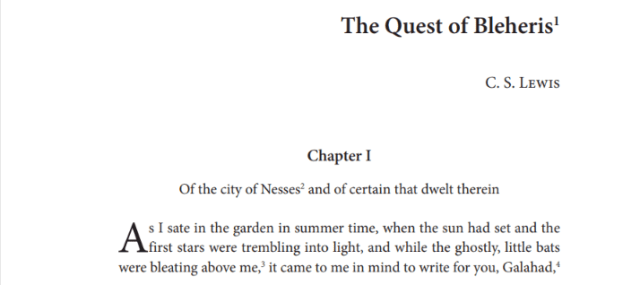
Hello friends! I want to share what I have been up to in the last few weeks. Some folks will know that I have been working for about nine years on C.S. Lewis’ unfinished teenage Arthurian novel, “The Quest of Bleheris.” Each week in the Spring and Summer of 1916, a seventeen-year-old C.S. Lewis wrote a weekly letter to his best friend, Arthur Greeves. In these weekly epistles, Lewis included a chapter of an Arthurian romance he was working on. This 19,000-word unpublished manuscript was left incomplete after seventeen chapters, but is an evocative piece. As Lewis’ first attempt at long-form prose fantasy, written in the style of William Morris, “The Quest of Bleheris” emerges out of a rich and exciting time in Lewis’s life. Studying under the Great Knock, Lewis is thriving in his literary world and testing out his authorial voice with his best friend. In this period, Lewis has just encountered George MacDonald’s Phantastes, declared his atheism to Arthur, decided to enter the war, and prepared for entrance to Oxford.
More than just teen fan fiction, “The Quest of Bleheris” is a resource for understanding Lewis’ spiritual development and charting his growth as a critic and imaginative writer.

In 2018, I led a panel with Dr. David Downing at the C.S. Lewis and Friends Colloquium (with help from Jennifer Rogers), and in 2022, I presented some findings at the New York C.S. Lewis Society. This past weekend was Canada’s annual Congress of the Humanities and Social Sciences (Congress 2023) in Toronto. In 2021, I presented some material from my forthcoming book, The Shape of the Cross in C.S. Lewis’ Spiritual Theology, to the Canadian-American Theological Association (CATA; see description and video here). I have also presented at the Christianity and Literature Study Group (CLSG) on C.S. Lewis’ instinct to write himself into stories (in 2021, see description, resources, and video here) and on language in Lewis’ Ransom Cycle (in 2022, see description here).
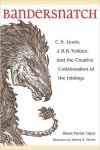
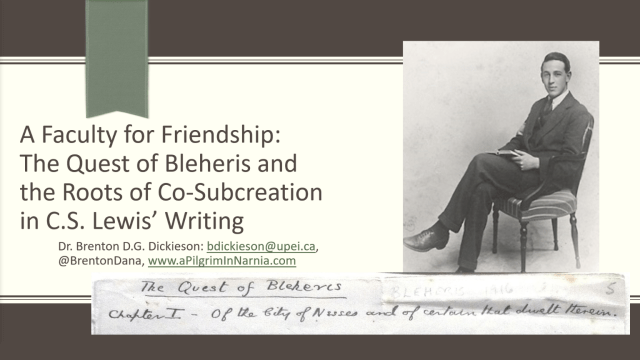
As the Congress–and in particular, the small academic societies within the Congress–is a fruitful place for scholarly discussion, I wanted to present some of my ideas on “The Quest of Bleheris” and what I call C.S. Lewis’ “Faculty for Friendship.” In a work-in-project peer-reviewed paper that I have brought to draft form, I am testing the implications of “The Quest of Bleheris” for  Diana Pavlac Glyer‘s theory of creative collaboration among the Inklings. I was pleased when the folk at the CLSG were kind enough to accept my proposal for what is a fairly data-heavy piece.

And then I could not go! I was sad about missing the conference as it was so close (only about a 20-hour drive to Toronto) and because I wanted to connect in real life with my friends at CLSG and CATA. My cancellation also meant, though, that I would leave a hole in the CLSG programme and lose that opportunity to test out my ideas. Again, with great scholarly hospitality, the CLSG folk allowed me to record and present my paper by video.

I am limited from sharing any aspects of the physical manuscript, some particular images, and a portion of the argument. However, I wanted to share a 4-minute segment from my talk for a couple of reasons.

First, “The Quest of Bleheris” has historically been available only to those who could get to archives in Oxford, UK or Wheaton, IL. In 2021, Inklings scholar Don W. King was able to provide a full transcription of “The Quest of Bleheris” in Sehnsucht journal. Recently, Sehnsucht has become an open-access journal. Thus, by clicking on this link, you can find the full transcription of the tale, with critical notes and an introduction by Don King. As this story is now available to the reading world, I hope my short introductory video can give you a feeling for both the story and the manuscript history.
Second, I want to whet your appetite for the paper when I have finally concluded my work. I have spent these years working on this nearly lost piece of Lewis’ writing history because I believe it has deep value for readers and biographers of C.S. Lewis, as well as writers, literary scholars, and WWI historians.

Beneath my 4-minute video, you can find the abstract for the paper and some notes about project. I hope you enjoy, and I welcome any feedback or scholarly questions.

Abstract: A Faculty for Friendship: “The Quest of Bleheris” and the Roots of Co-Subcreation in C.S. Lewis’ Writing

When a seventeen-year-old C.S. Lewis was preparing for Oxford entrance and WWI service in 1916, he wrote seventeen chapters of a prose novel. “The Quest of Bleheris” is a letter-styled chivalric tale of heart-longing for adventure in a latter-days world. Young Bleheris must discover the true meaning of knighthood in a land where King Arthur is a distant memory and chivalry exists only as a formal social game.

Intriguingly, Lewis did not merely write “The Quest of Bleheris” in epistolary form; it is itself an epistolary novel that he mailed in weekly installments to his closest friend, Arthur Greeves. Thoughtful consideration of the extant correspondence, a close reading of the surviving 19,176-word text, and careful analysis of the manuscript show that a culture of creative collaboration goes deep in Lewis’ instincts as a writer. Arthur is implicated at many levels of this tale, both within and without the text. The formation of Lewis’ writerly habits, inspiration for the tale, the form of the novel, critical aspects of the world-building, the atmosphere of the story and the secondary world, critique and feedback, authorial commentary, text illustrations, and the preservation of the manuscript—Arthur was involved at each of these aspects of writing. Again and again, Lewis draws Greeves into the creative process—and goes further, as Lewis imagines he and Arthur, narrator and listener, living within the secondary world as characters. Arthur is there as the story begins to take form, he supports Lewis as he describes all of his doubts and insecurities along the way, and he is the one to whom Lewis announces “Bleheris is dead” some months later.

“The Quest of Bleheris” is an intertextually and autobiographically rich piece. Besides being the literary treasure of a precocious attempt at high romance by one of the 20th-century’s most famous fantasists, the Bleheris manuscript shows early signs of Lewis’ discipline and instincts as a career writer. While the story lacks the inversive elements in his later fiction, it has moments of heightened prose that capture the imagination and open a window into his youthful atheism and love of mythology. It also shows how Lewis instinctively viewed the writing process as going beyond the sole genius model of modern literature to a more capacious medieval model of collaboration, reinvention, multimodal storytelling, and symbolic play. Lewis’ friendship with Arthur extended his image of the “author” beyond the solidary desk to something more like an Arthurian round table experience.

This paper presents evidence for Lewis’ faculty for friendship in the creative process through analysis of the manuscript, the text, and the relevant correspondence. This analysis confirms the work of Diana Pavlac Glyer on collaboration among the Inklings by extending the data to include Lewis’ earliest creative endeavours. We discover the early roots of something like co-subcreation by teasing out Lewis’ instinct challenges us to re-imagining the creative process in these almost-forgotten literary remains.

Notes:

The hand-drawn facsimile of the header of “The Quest of Bleheris” in manuscript form was created by Katie Stevenson, who also did a bit of manuscript help for Sørina Higgins’  The Chapel of the Thorn during her visit to the Wade centre in 2014.

Thanks to Bronwyn Rivera for the note on the “Three Greats.”

I am always grateful to the amazing folk at the Wade and the Bodleian.


Posted in Original Research, Reflections | Tagged , , , , , , , , , , , , , , , | 17 Comments

Why Did Star Wars Stick? #MayThe4thBeWithYou #StarWarsDay

star wars logoAs much as we wonder about it, it’s a question that is not perfectly easy to answer. Long before technologically precise blockbuster films, Star Wars had cheesy lines, over-the-top acting, and zippers up the back of the monster’s costume. How many films just like it have found their way into the Betamax bins of history?

And those were originals! There aren’t many true fans who love all the feature films–the “trinal triplicities” and the two one-off films–not to mention Star Wars books and serials beyond count. Everyone has something that trips them up in the universe they love. For me, it is Hayden Christensen–the brooding emo-menace of Episode II. That role is worse, even, than the dead-on-the-production-floor film Ewoks in Las Vegas. Worse even than Jar Jar Binks, who I hate myself for kind of liking.

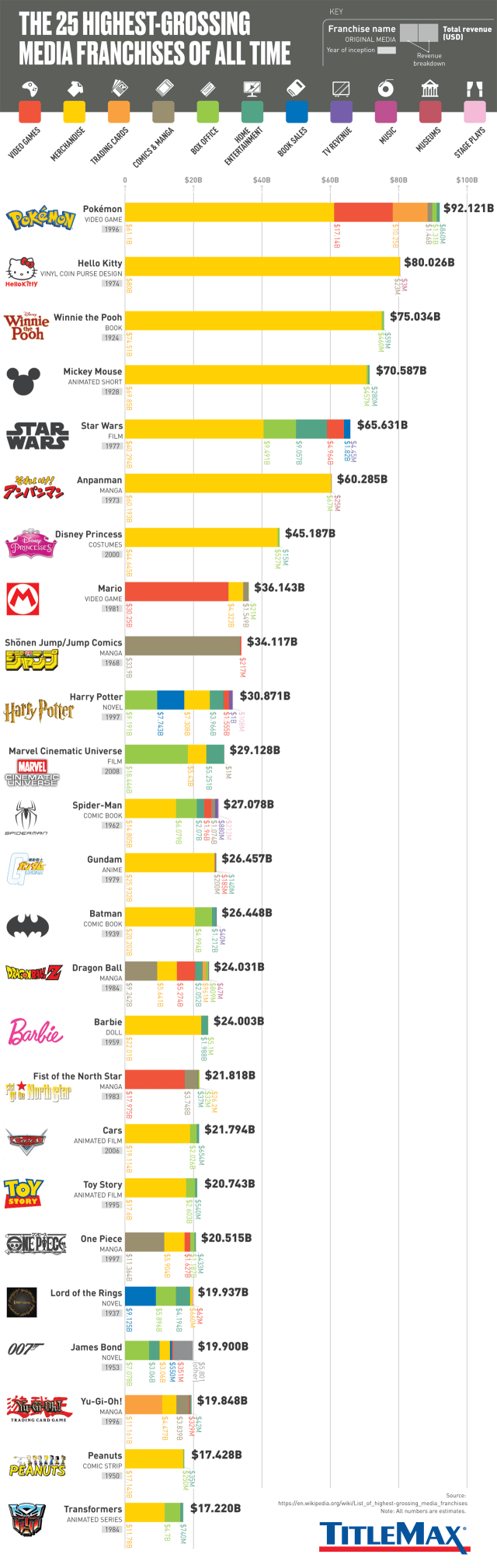
Yet, flaws and all, Star Wars lives. Not only lives, but thrives, growing in popularity as its universe of characters grows. While the Marvel Universe films have become the kings of the opening weekend, Star Wars is still a giant in a land of grasshoppers. Star Wars still beats out Harry Potter, Bond, The Lord of the Rings, and all the other comic book cinematic empires. It’s hard to beat the Japanese for pop culture or children’s entertainment for eager consumers. In total media franchise sales, Pokémon and Hello Kitty lead the world, with Winnie-the-Pooh and Micky not far behind. When it comes to total economic impact, even with the Netflixization of film, Star Wars continues to outpace Harry Potter and the Marvel Cinematic Universe combined (see the infographic below).

Let’s be honest: I still wish I had an ’80s classic Millennium Falcon. I lived in great envy for a great many years.

Why did Star Wars stick? If we are to believe the writers of That ’70s Show, it is the keen action and the super-duper special effects. But there is also something more. Watch the first little bit of the famous ’70s Show episode, “A New Hope.”

The entire episode is filled with nostalgia and hilarious throwbacks to the original series. Tugged as we are back to the 1980s by series like Stranger Things, the nostalgia continues to this day–from reproductions of Star Wars lunch boxes to celebrated Goodwill discoveries of Chewy pyjamas and broken lightsabers. Though it was almost lost in the incredibly painful second film of the prequel series, Attack of the Clones, the third episode, Revenge of the Sith, begins to recover the things we loved most about the original three.

Almost. It is still a painful, painful prequel. But the empire moved on with its own strengths and weaknesses in the sequel trilogy. Perhaps you disagree. The Last Jedi was a complex and perhaps failed film, though one I quite loved. The first two parts of the sequel are echoes or mirrors of the original series, and the Rise of Skywalker conclusion brings that saga to a close. Critics are mixed on the way the series concludes, but fans are deeply torn. The trilogy that concludes the Skywalker trilogy is cinematically brilliant, but the storylines don’t always land. Some of the characters brighten up and fill out that world, while others fall with a thud.

Personally, I think the Skywalker Saga was an excellent close to the 2010s–the decade of nostalgia that we now feel nostalgic for. I love these films, even as digital waggery and character-fails replace stage acting and zippers on costumes. I am content with what we have, even having loved the standalone Rogue One–you gotta love a director who has the courage to kill almost every character on his payroll. And although Ron Howard is always better with his partner Brian Grazer, Solo, one of the most expensive films ever made, deserved my $15.

I recognize that a lot of this is memory-building and nostalgia–no doubt enhanced by the fact that COVID-era filmmaking has been inconsistent. Nostalgia is pretty important right now.

But I don’t think that’s a problem. We see this in the tone set by the very first J.J. Abrams episode, The Force Awakens. Predictably, it was filled with nostalgic moments:

“Chewy, we’re home.” Classic.

Über critical fans did not like it, I think. To them, it looked like a commercial grab for the fans of the past blended with a technological capability George Lucas could only have dreamed of. Personally, I loved the new characters and think the visual technologies have finally found their home.

There are problems with the logic of the series and the storylines. Star Wars still fails to answer its own question of providential luck–characters in The Force Awakens find each other across staggering distances or in buildings of near-infinite complexity–and Rogue One, despite its apocalyptic air, still carries that part of the myth on. But I like how the final trilogy is paced, and although there are huge gaps, and a gaff or two, it fits well into the Star Wars universe. More than nostalgic, The Force Awakens is framed up like a remake of A New Hope.

Imperial-class Star Destroyers wrenched into the sands of an alien world, Darth Vader’s mask from the flames, R2D2, the ping-pwang of laser fire: nostalgia, certainly. The deconstruction of the old series in The Last Jedi only adds to the nostalgia, even as it usurps it. But, nostalgia for what? There has to be something at the core of the series beyond cheese and lights. Why has Star Wars stuck with us?

I think the answer is hidden in this long-lost trailer from 1977.

In the days after Saturday Night Live and Spaceballs and The Simpsons, it’s hard not to imagine going into the theatre in 1977 and expecting a spoof. Perhaps we’ve lost our innocence as a culture these days.

And it is also easy to forget how far the art and science of special effects has come. When you live in a generation where you can use shareware software to stage an at-home lightsabre battle for Youtube, 20th-century effects won’t impress us much. Think of Hugo, The Life of Pi, Inception, The Jungle Book, and Harry Potter–an almost random collection of films from the last decade from five different genres that have special effects unlike anything imagined by the human race in my childhood. And the acceleration just keeps accelerating.

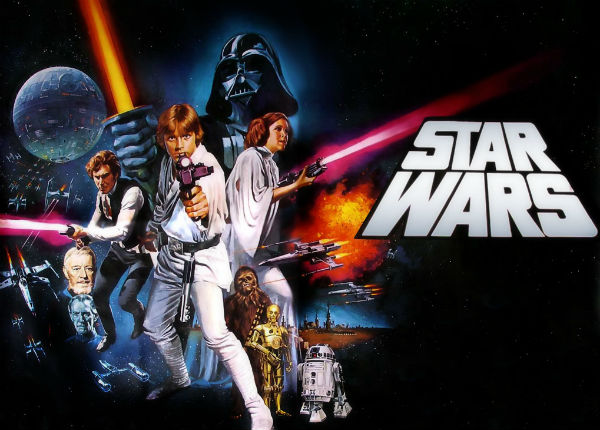
star wars posterBut it isn’t just effects is it?.

The films that visually impressed me the most growing up–Toy Story, the Lord of the Rings trilogy, The Matrix, Shrek, and, more recently, Inception–had more to them than technology. 2012 is a good example of a film with no story and a pretty dumb premise but pretty good effects.

No, I think the reason we love Star Wars is that it goes deeper into our cultural consciousness than we can imagine. Look at the stunning statements made by the trailer:

“an adventure unlike anything on your planet”

“the story of a boy, a girl, and a universe”

“a big, sprawling space saga of rebellion and romance”

“it’s a spectacle light years ahead of its time”

“it’s an epic of heroes and villains and aliens from a thousand worlds”

“a billion years in the making: Star Wars”

Then the flash of light.

A_long_time_ago prologueGeorge Lucas is, I think, at the deepest level, a mythmaker. He certainly is a genius SciFi world-builder. He takes the universe-changing work of Larry Niven and Frank Herbert to a new level with his own mythic Empire. But while Ringworld and Dune are set in the future, Star Wars, like The Lord of the Rings, is set in the deep past.

Star Wars isn’t just adventure. Star Wars is mythology.

In this sense, I think that as much as George Lucas relies on the SF masters, he is also a deep reader of the master myth-maker: J.R.R. Tolkien. Tolkien understood the project of mythopoiea at the most intimate level, shaping Middle-earth out of a worldview that is entirely consistent with itself. Moreover, Tolkien’s project does what myth always does: it tells us about the present world. Myths are never really buried in the past. True myths, the good ones, will resonate again and again through cultures that appear long after the myth-making culture has slipped into legend.

That is why I think Star Wars has lasted. Beyond big names and big budgets and super-duper effects, when you watch Star Wars you get the sense that it really is a film “a billion years in the making.” It is a story that tells all our stories, a myth speaks to us today. For all their flaws, I think Rian Johnson and J.J. Abrams get the myth in us.

At the centre, then, it is not just about nostalgia–which is no bad thing–but about our deepest realities of being human.  May the 4th be With You always!

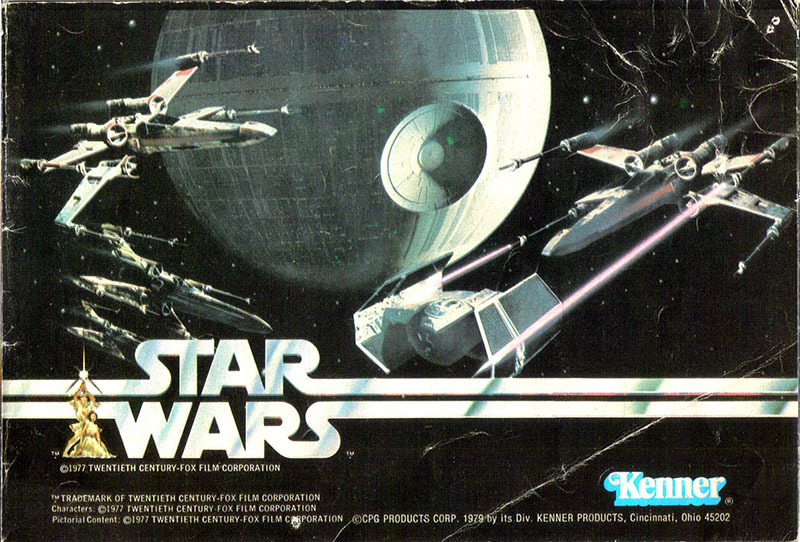
star wars box 1979

Plus, this is amazing:

The Infographic from TitleMax, which needs to be update:

Posted in Fictional Worlds, Reviews | Tagged , , , , , , , , , , , , , , , | 4 Comments

A Rationale for Teaching C.S. Lewis’ Fiction in The Wrong Order

I am in my sixth year of teaching “The Fantasy and Science Fiction of C.S. Lewis” at The King’s College in New York City. I inherited this online course from Dr. Sørina Higgins, who followed the original mind behind the course, the late Dr. Bruce Edwards. After a year of working with their curriculum, I redeveloped the course to include a full series of lectures that anchor the online discussion and course projects.

However you decide to teach it, “The Fantasy and Science Fiction of C.S. Lewis” will be a reading-intensive course. As my students are from diverse backgrounds and come from many disciplines in a Liberal Arts college, my lectures provide background material and close readings of the texts. I also leaned in on certain aspects. For example, my lectures on Narnia provide a survey of the critical reading tools that these non-lit students would normally get in an undergraduate program in English Literature. Many of these methods follow Lewis’ own approaches, such as pairing “Meditation in a Toolshed” with The Voyage of the “Dawn Treader”. I add in other elements, such as world-building in lectures like “Proposals for the Creation of Narnia,” “C.S. Lewis and the Epistolary Tradition,” and my work in reading The Screwtape Letters with the Dr. Ransom SciFi books in a single fictional universe, The Field of Arbol. I also provide fairly high-level theological analysis, including my work on Cruciformity and the Narrative Spiritual Theology of C.S. Lewis and lectures like “Remembering Heaven.”

I think it is a cool course—though no doubt challenging. Fortunately, King’s is a very cool school (e.g., see here and here), and the students have a strong ability to read deeply, think critically, and triangulate the course material with their individual intellectual, spiritual, cultural, and vocational development.

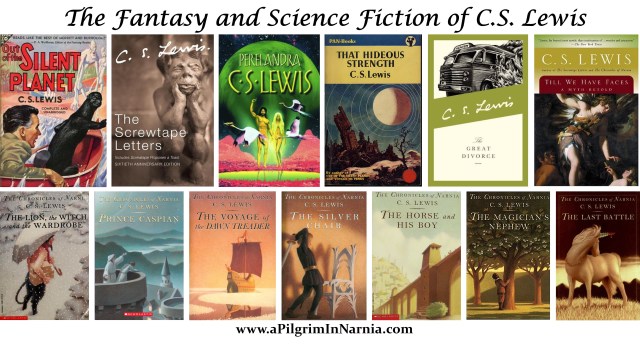
One of the factors that make this course challenging is the movement between different genres and periods of Lewis’ fiction. Narnia is different in many ways from the Science Fiction books or his WWII-era theological novellas, The Screwtape Letters and The Great Divorce. If you are not already a Lewis reader, a classic SciFi fan, or an avid reader of dystopias, That Hideous Strength can be a deeply puzzling book. And most students have never read anything like Till We Have Faces.
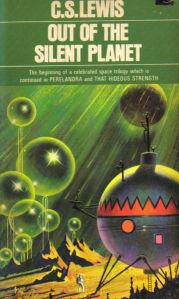
As some of the students were struggling with Out of the Silent Planet last week, one of them noted that reading it before Narnia might be helpful. It is certainly something that I have considered. I currently teach the course in four movements:

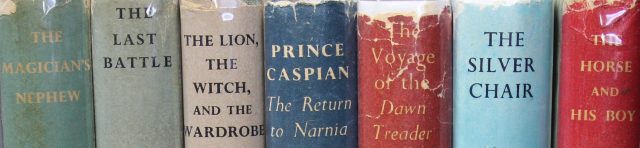
  1. The Chronicles of Narnia in Publication Order: The Lion, the Witch and the Wardrobe, Prince Caspian, The Voyage of the Dawn Treader, The Silver Chair, The Horse and His Boy, The Magician’s Nephew, The Last Battle
  2. Theological Novellas: The Screwtape Letters and The Great Divorce
  3. The Ransom Cycle: Out of the Silent Planet, Perelandra, That Hideous Strength, with a second look at The Screwtape Letters
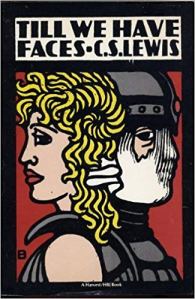
  4. Mythopoeia: Till We Have Faces

As I was redesigning the course, I went back and forth on whether we should follow this pattern, or whether we should read Lewis chronologically (and I am a fan of that approach). Chronologically, it would look like this:

  1. WWII-era: Out of the Silent Planet, The Screwtape Letters, Perelandra, That Hideous Strength, The Great Divorce
  2. Early 1950s: Narnia, Till We Have Faces

The publication order of Narnia is pretty close to the order of writing and represents that period well for Lewis.

For all the times I have hammered on about Reading Lewis Chronologically, my rationale for beginning with Narnia and turning to the theological novellas before the Science Fiction had a few factors.

Primarily, I was concerned about a first-day confrontation with Lewis’ first work of popular fiction, Out of the Silent Planet. I have found that Silent Planet is a strange place to start for a generation like ours. Very few undergraduate students are already lovers of classic Science Fiction before its golden age. The SciFi novels we are reading today—and there is no shortage of great writers and voracious readers—are written more like epic fantasies (deeply implicated psychological journeys, complex world-building, etc.) than Lewis’ medieval-invoking, inversive, postcolonial, modernist/anti-modernist culture-cracking novel, Out of the Silent Planet. Finally, practically speaking, Out of the Silent Planet is harder to catch up on if a student begins the course late.

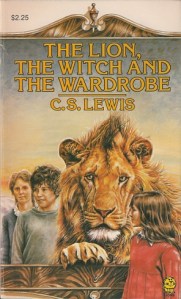
By contrast, about half of my students had Narnia read to them as children or encountered it in their school curriculum growing up. And almost all of my students watched the Disney interpretation of The Lion, the Witch and the Wardrobe as children. This will perhaps make some readers feel like they are aging quickly, but most of my first years were born the year the film was released. Very few students have absolutely no encounter with Narnia before they arrive in my class, and those that have missed Narnia usually sign up because of The Screwtape Letters or Mere Christianity. The Lion, the Witch and the Wardrobe is a great place to invite new students into an intensive literature course.

Plus, well, Narnia is just super fun! It is rare for serious readers to read all seven books carefully and then go, “meh.” Something is there for everyone, whereas the Ransom Cycle takes more investment on the readers’ part to get started. Invariably, students also usually love one of the Ransom books— Out of the Silent Planet, Perelandra, That Hideous Strength, or The Screwtape Letters—even if they don’t love adult speculative fiction more generally. Beginning with Narnia invites readerly investment in fresh ways.

From a close-reading perspective, The Lion, the Witch and the Wardrobe is both a rich and accessible novel to teach. It invites reading in different modes and leaves a lot of space for students to talk about their own ideas without losing sight of the text. Students often have a passionate response to The Lion, the Witch and the Wardrobe (though not always a positive one). I have taught The Lion, the Witch and the Wardrobe for high school, undergraduate, graduate, and Senior’s College students. I have used the novel in classes about literary theory, theology, children’s literature, speculative fiction, C.S. Lewis’ life and work, “Communication, Leadership, and Culture,” and as an introduction to the Liberal Arts. I could honestly spend an entire term on Lewis’ first foray through the wardrobe. So I like beginning with The Lion, the Witch and the Wardrobe.

And we must admit that in the dozen or so years between Out of the Silent Planet on a wager and writing The Lion, the Witch and the Wardrobe, Lewis had grown as a writer.

Beyond the richness and approachability of Narnia, I like the four movements of my course. I love going from The Last Battle to The Great Divorce—two apocalyptic visions of the afterlife, and two incredibly strange books from a genre perspective. I like that the new Eden tale, Perelandra, is just a handful of books after Magician’s Nephew with its own fairy tale revisioning of Genesis. The Screwtape Letters and The Great Divorce pair really well together:  they are both theological novellas published in a serial form in The Guardian, and they are mirror-image tales about the heart of temptation in each reader’s spiritual life. Knowing how war haunts Narnia allows Out of the Silent to be more prophetic: if you read that epilogue and closing letter of Out of the Silent, it sounds like WWII has begun; it is still 2 years away. The themes of war, leadership, and courage in Narnia and Out of the Silent helps makes sense of how WWII is a living reality in all of the Ransom Cycle books.

Finally, the jump from Narnia to Till We Have Faces is quite startling for most students—even though it is only a few months of Lewis’ time between the last two Narnian chronicles and Till We Have Faces. Lewis’ myth retold is complex, literary, mythic, and intimate in a way that none of his other writing approaches. If Lewis’ genre fiction faded away in culture, I suspect that his least-read book, Till We Have Faces, might still be studied from time to time as literary fiction in universities.

There are some practical and personal reasons I chose the four movements rather than a chronological approach. Specifically, my four movements provide three “seams” in the curriculum that works well with King’s students’ needs for navigating their semester. Plus, Bruce Edwards designed the curriculum with a similar outline, and Sørina Higgins passed it on to me. I am inclined to trust their teacherly and literary wisdom.

Well, that’s the rationale. Is it wise? Have I made a case for these four movements for a Liberal Arts undergraduate program where most students are not literature majors, but all students have some training in theology, Biblical studies methods, and cultural criticism? Or have I fallen into some deep heresy in terms of Lewis’ works or curating an encounter with a diverse reading list?

I would love your thoughts in the comments below.

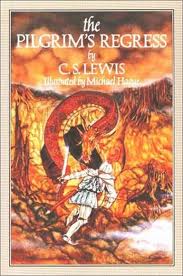
I must admit, though, that even this reading- and writing-intensive course is leaving a lot out. I don’t teach The Pilgrim’s Regress, Letters to Malcolm, Lewis’ short stories, his narrative poems, or any of his incomplete fiction.

And, tragically, I am leaving out most of C.S. Lewis’ linking essays or books that make the literature richer, e.g., The Allegory of Love as background to The Pilgrim’s Regress and Out of the Silent Planet; Screwtape in the context of The Problem of Pain and the early BBC talks; A Preface to Paradise Lost with Perelandra; the Abolition of Man lectures with That Hideous Strength; Lewis’ sermon “The Weight of Glory” with The Great Divorce, and so on. Any small set of pairings (like the Ransom Cycle, Narnia, theological novellas, a study of divine figures, a study of character transformation, Lewis’ classics retold, etc.) would provide excellent material for a full semester of study.

Plus, I don’t have time to address even the most immediate intertextual links, e.g. Bunyan’s Pilgrim’s Progress as background to The Pilgrim’s Regress; H.G. WellsFirst Men in the Moon and War of the Worlds behind Out of the Silent Planet (not to mention David Lindsay’s Voyage to Arcturus and Charles Williams’ The Place of the Lion). John Milton’s Paradise Lost with Perelandra; the entire catalogue of Inklings’ writings before 1944 with That Hideous Strength (or Lewis’ dystopia with Orwell’s 1984 on the topic of language and control); Dante’s Purgatori0 with The Great Divorce, and so on. Honestly, I would have no idea how to narrow down the intertextual elements in The Screwtape Letters, except to recommend Dante’s Comedy, Charles Williams’ Descent into Hell, Boswell’s Life of Johnson, everything G.K. Chesterton wrote, and the entire English epistolary tradition (both epistolary novels and certain famous collections of letters). Reading the books hidden in any one of Lewis’ novels would be an entire course of study, not a single class.

Not that this excuses my professorial sins if I have made the wrong choice. But it does illustrate how diverse and varied the bookshelf is that Lewis has bequeathed to us. At the very least, I hope it can inspire your own personal curriculum of reading Lewis. As I have always argued, rereading Lewis is always more important than reading Lewis in any particular order. Ultimately, my rationale is to introduce students to Lewis as an experimental storyteller who gives us the tools to open up the doors of our imaginations and see our world in brighter and bolder colours. This order seems to work.

Posted in Reflections | Tagged , , , , , , , , , , , , | 19 Comments

“Sweet Quarantine” by Nicolas Riel (Single Launch)

I’m pleased to announce that my son, Nicolas, is launching his new single today!

With singer-songwriter wit in an indie rock performance, “Sweet Quarantine” was written out of the depths of Nicolas’ experience of our most recent apocalypse, the COVID pandemic. “It’s the end of the world,” the song begins–and so we enter the moment again through song. Nicolas describes his new single this way:

“‘Sweet Quarantine’ is a bittersweet love song written during the darkest days of the 2020 lockdown. While the song started as a confessional of seasonal depression and covid lonesomeness, it quickly became a hopeful and tongue-in-cheek love letter.

The release of ‘Sweet Quarantine’ has been a long-time coming, and I hope that my hopeful reflection on a time of pandemic darkness may provide comfort for those who listen.”

The song was co-written with Island musician Andrew Waite (whose music you should also check out on Spotify), and produced/engineered by Sergey Varlomov at Crabbe Road Studio. Nicolas designed the album cover and promotional materials.

Although you might remember Nicolas from his 2020 song, “Obsessive, Compulsive,” which he wrote and performed with Moment of Eclipse, this is his first solo release as Nicolas Riel.

I am in the privileged position of having watched this song go from a few sketched-out words and a melody, through writing and refinement, into the studio, and then on its way to the world. As one of the chief funders of Nicolas’ studio (i.e., it’s in our Spare Room), I got a copy of this song as soon as it was mastered. “Sweet Quarantine” has been constantly spinning on my devices ever since. The lyrics and melodies of this hopeful flirtation with doomsday have wormed their way into my soul.

“Sweet Quarantine” also captures so much of my own experience during the COVID lockdowns. When I hear the beginning of the first verse:

Oh, the grass is never green this time of year
When the snow stops falling…

it is like I am back in the late winter of 2020, when Prince Edward Island’s legendary natural beauty was overtaken by crusty late-winter snow and grey, barren trees, and our family went on long walks through empty streets and lonely trails just to avoid being inside another hour.

But it is the second chorus that captures in just a few words that depressive, dislocated, drudgerly, deadening feeling that haunted me through those months:

It’s the end of the world
Oh sweet quarantine
I try to write new songs but all I want to do is sleep

All parental pride aside, I think it is brilliant.

So I encourage you to check it out. Nicolas’ “linktree” gives links to stream the song on your favourite platforms, like Spotify, Youtube, Apple Music, and Bandcamp–where you can support his music by purchasing the song. You can also find his social media links there. 

Spread the news: artists, musicians, and writers rely on you sharing their work on social media. Scholars too–which is why I have worked for more than a decade to make A Pilgrim in Narnia an accessible, no-limits, ad-free source for scholarship and artistry. As readers, music-lover, art appreciators, you can do your part by sharing.

“Sweet Quarantine” by Nicolas Riel

It’s the end of the world
And I’ve been thinking of you
I go to bed at daylight and I stay in bed ’til moonlight
Cause I’ve got nothing to do

Oh, the grass is never green this time of year
When the snow stops falling,
And my mind stops thinking clear
You can write me if you want,
I can be your confidant
But listen baby I’ve been thinking
I don’t want your social distance

It’s the end of the world
Bittersweet sixteenth
The slow recession and great depression
Keeps my eyes glued on you

It’s the end of the world
Oh sweet quarantine
I try to write new songs but all I want to do is sleep
I’ve been dreaming of you, have you been dreaming of me?
Six feet further, six feet under,
Six feet closer to the end

Written by Nicolas Dickieson and Andrew Waite

Performed by Nicolas Dickieson, Sergey Varlamov, Jonathan MacInnis and Josh MacNeil

Engineered by Sergey Varlamov at Crabbe Road Studio

Posted in Feature Friday, News & Links | Tagged , , , , , , , | 5 Comments

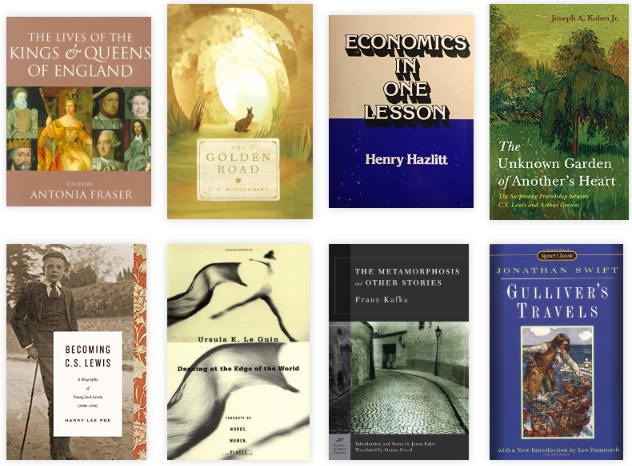
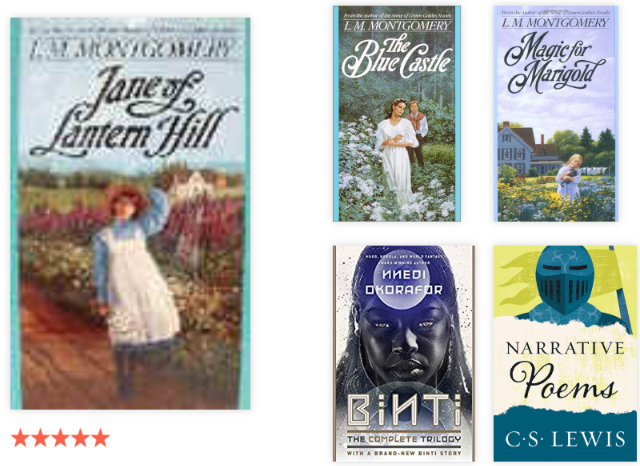
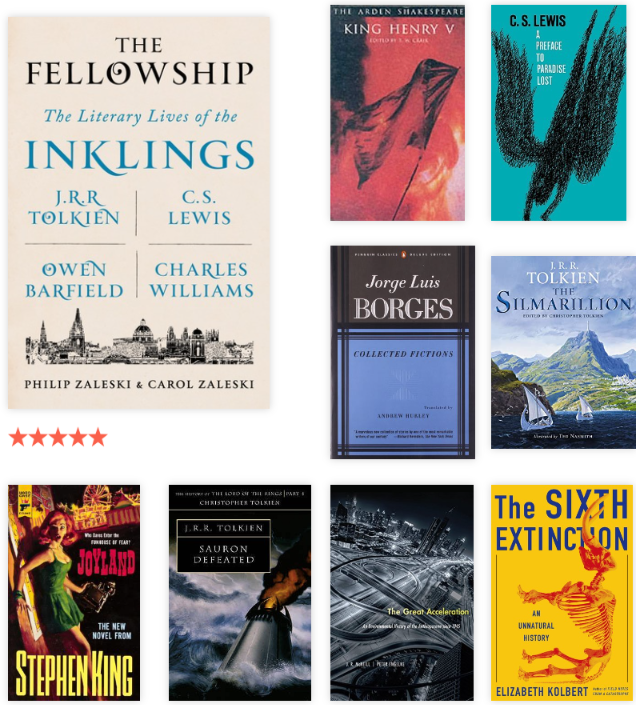
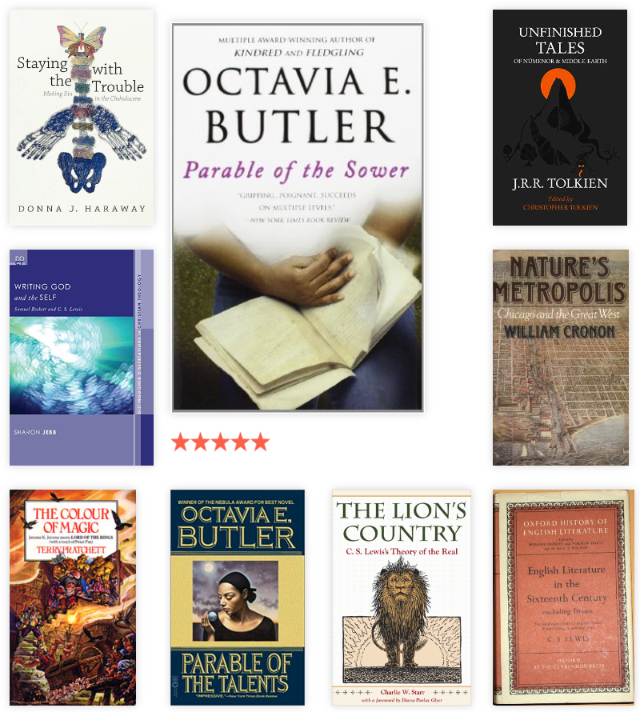
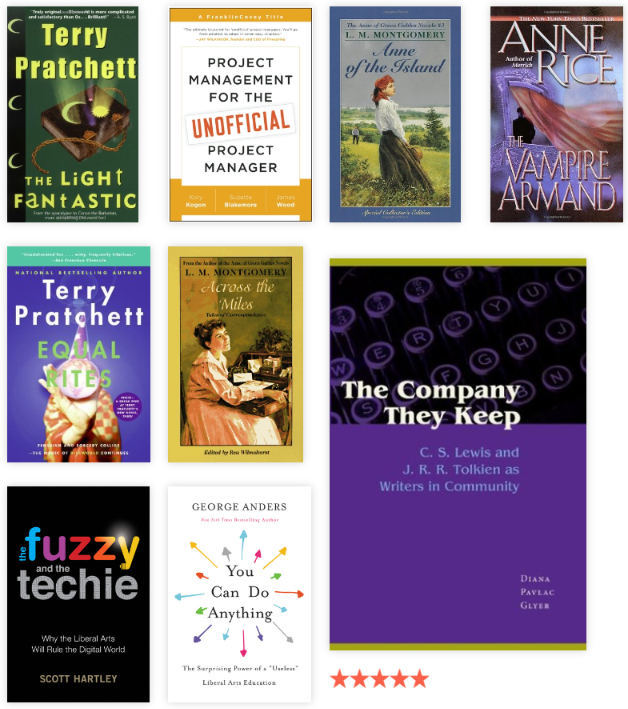
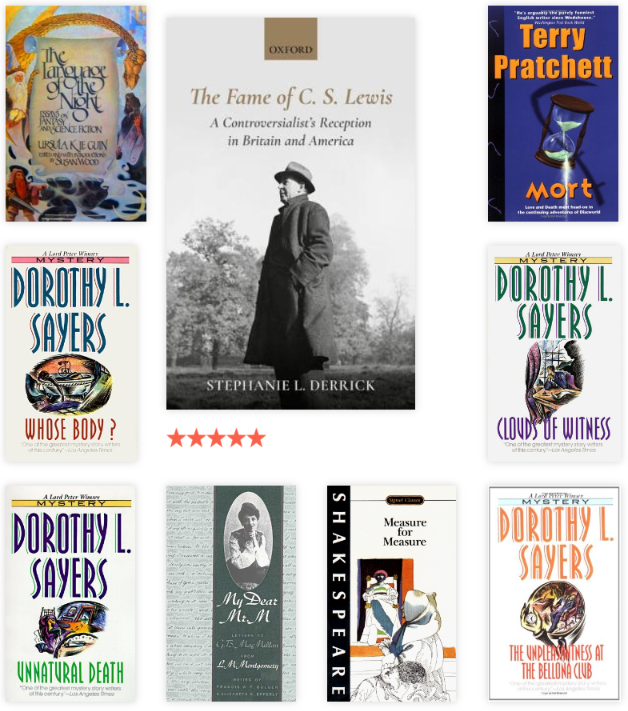
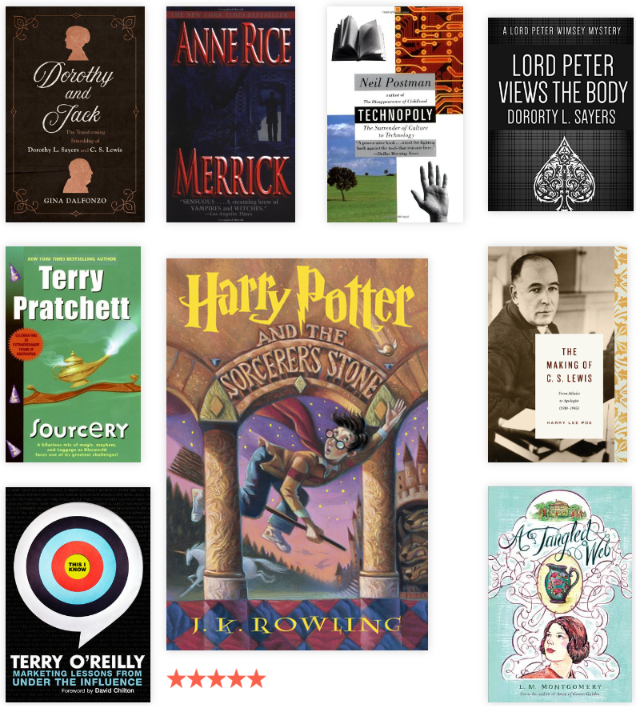
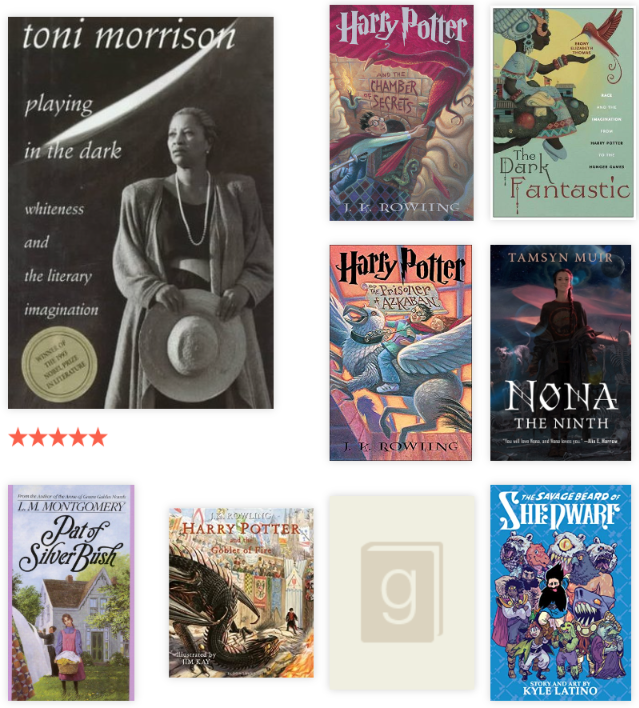
2022: My Year in Books: The Infographic

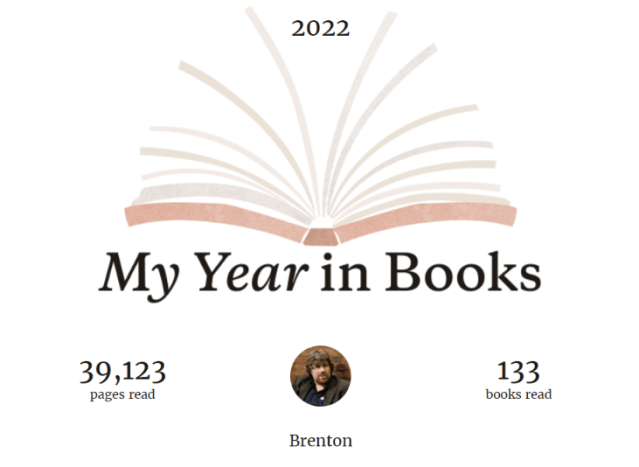
Happy New Year, everyone! I am once again assembling the “reading nerd data” in an upcoming post. I love charts. And behind every chart is a great spreadsheet. I guess I just love spreadsheets.

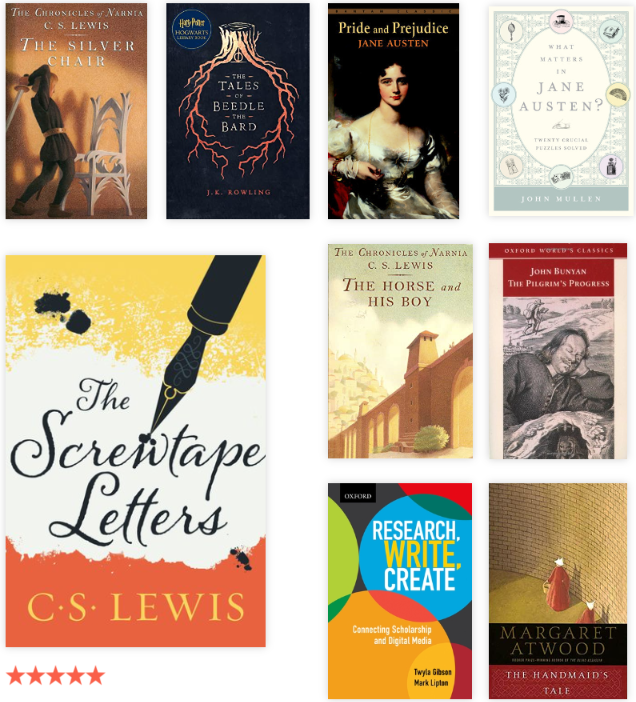
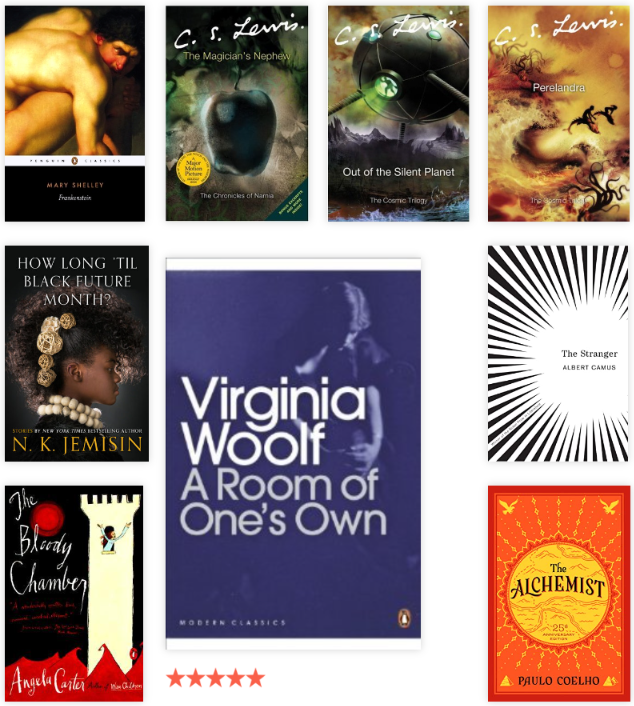
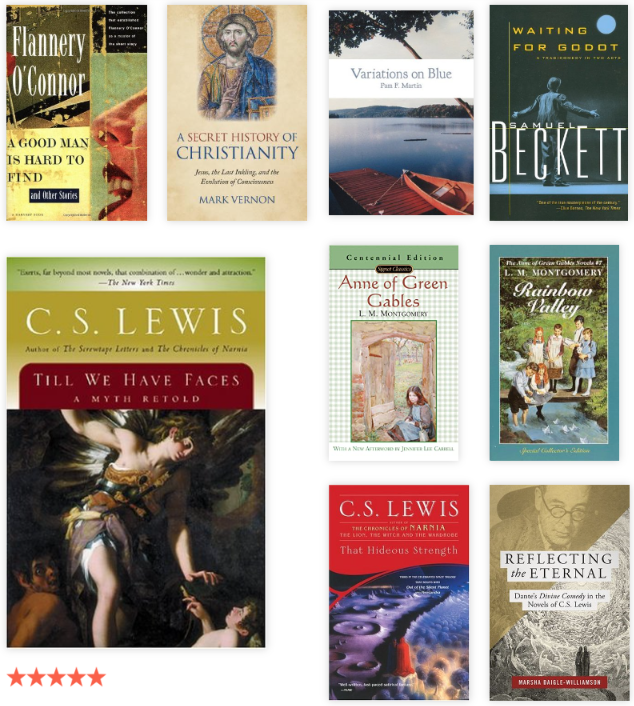
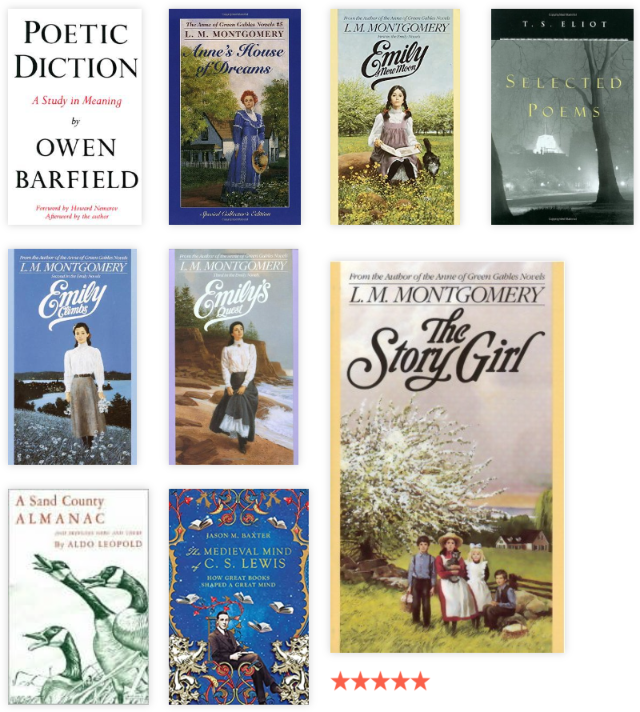
Meanwhile, as is my tradition, I wanted to share the Goodreads “My Year in Books” infographic with some brief reflections and book discoveries. For the first time in a few years, I have to confess that I fell short of most of my goals this year–with a few exceptions. Still, the year has some lessons–and I hope some invitations to great book ideas for you, the reader of A Pilgrim in Narnia.

“You’re really good at reading, and probably a lot of other things, too!” Well shucks, thanks for the encouragement Goodreads! In 2021, I was focused on learning more about my strengths and weaknesses as a reader, writer, teacher, leader, and friend. In 2022, I completely failed to apply these lessons! Instead, 2022 was a year of survival. Most of my reading was about work–writing and teaching, especially–or imaginative escape. In previous years, I have focussed quite a lot on self-development. While there are threads of those kinds of books–and my life is designed to learn and grow from all of my reading–2022 was the least growth-centred year I’ve experienced in as long as I’ve been tracking what I read.

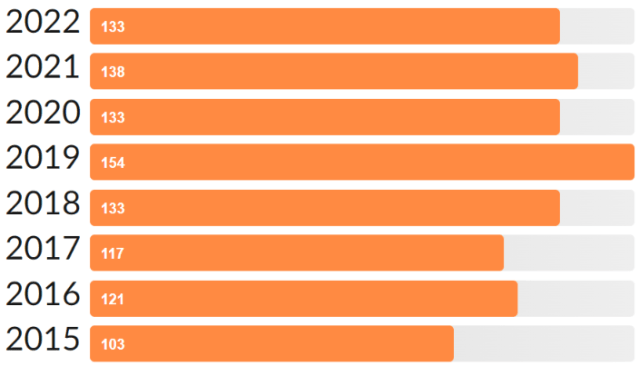
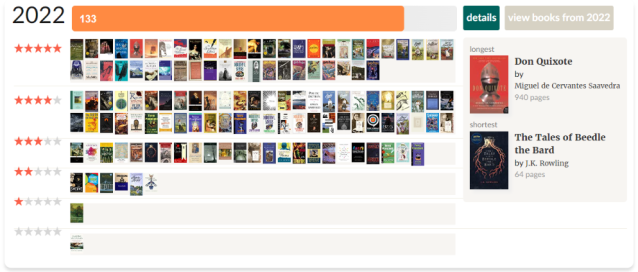
On paper, 133 books read looks quite great (actually, I read a couple of other books for review, which I don’t publish). In terms of yearly reading goals, the book number is right on. I had set a goal for 132–knowing that I’ll probably never repeat my 2019 success again–that period where I was at the most productive time in my PhD thesis writing. My natural rhythm is not 154 books per year, but 117-138–with an average of 129 books.

While these graphs look impressive, reading-wise, I have learned that I am lazier than I would wish. I yearn to recover that dynamic, all-engrossing ability I had as a young adult to simply immerse myself in a book! Part of my goal for 2022 was to look for bedtime readings that enthrall me. Instead, in the last half of 2022, bedtime reading for me was about rest and refreshment, not adventure or challenge.

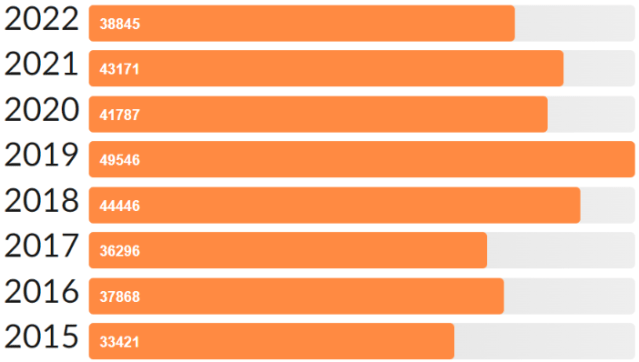
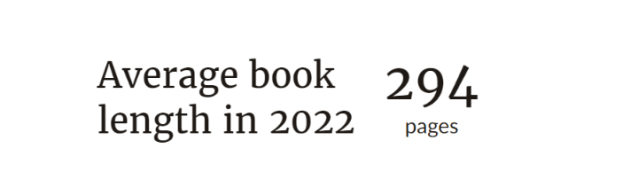
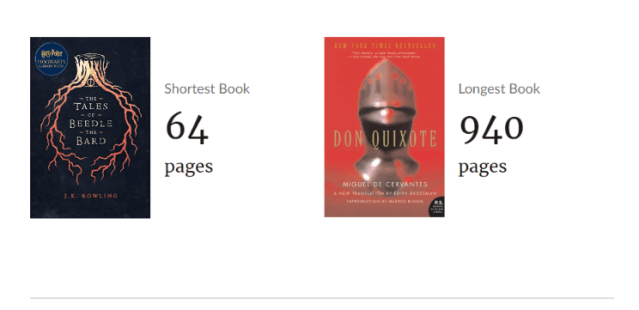
Thus, while I tend to use the book list and page number count to motivate me, all of that fell by the wayside in 2022. In terms of sheer page number count, I turned fewer pages than in any of the five previous years (about 39,500 with review reading). As a result, I saw a huge drop in the average size of books, down to 295 pages/book (from 315 last year).

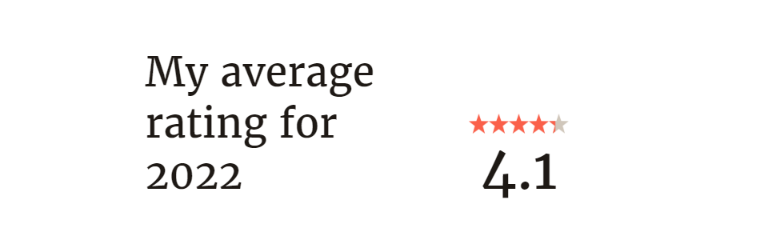
For the most part, the books I chose to read in 2022 were great. I have been openly mocked for my over-exuberant ratings, usually swinging between 4.0 and 4.2 stars, on average. I rate books too highly–even though I am trying to be tougher–to reassert 3 stars as a good book that either didn’t fully connect with me or has some correctable flaws. This inflationary star-number rating culture comes from my years ranking music, where 5-star reviews go to songs I want to hear most often, rather than a rating for the genius and exceptional works that land in my feed.

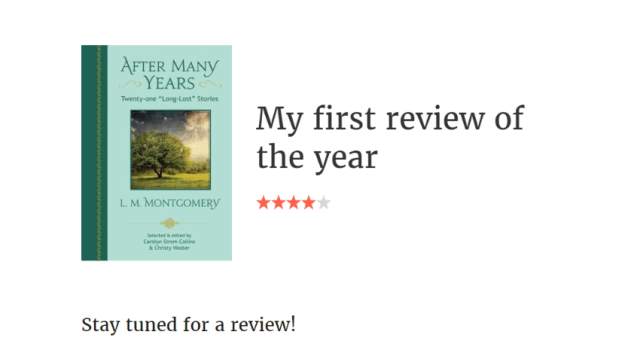
To be fair, I try not to read books that warrant 1, 2, or even 3 stars. My fiction and self-learning DNF pile is high. Unless I am made to do so by contract, I simply won’t read something that isn’t good–though inevitably, the 3-star books land on my desk. Often, my 3-star books are simply things I’ve read that I’m disappointed in. In 2022, I started and then set aside at least 20 books that I simply did not want to read. Instead, I picked up books I have loved from the past. Fully 55% (74) books in 2022 were rereads for me (especially C.S. Lewis, J.R.R. Tolkien, Octavia Butler, L.M. Montgomery, Terry Pratchett, Nnedi Okorafor, and J.K. Rowling–and I would have read more Jane Austen, Stephen King, and Ursula K. Le Guin by audiobook if I had had the time).

Those are my 5-star book friends–and I would add others to the clique, like Frederick Buechner, Marilynne Robinson, Ursula K. Le Guin, Flannery O’Connor, N.K. Jemisin, Margaret Atwood, Shūsaku Endō, Madeleine L’Engle, Anne Rice, Charlotte Brontë, and Haruki Murakami.

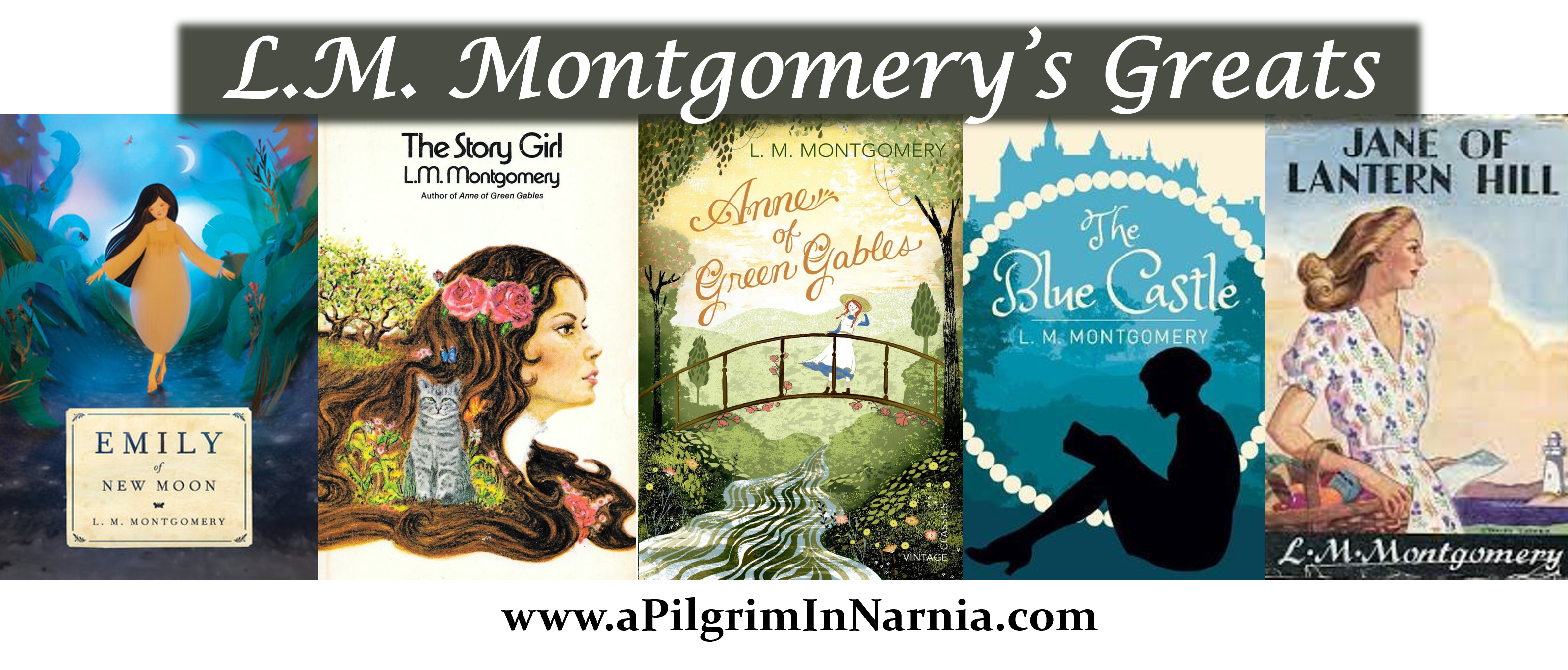
Similar to last year, my list is dominated by C.S. Lewis (18 books, including 2 read twice) and L.M. Montgomery (18 books). In 2021, I focussed on Ursula K. Le Guin (22 books, with 2 read twice), and I finished a couple of others in 2022–though none of my favourite fiction.

Once again, I attempted a Shakespeare play a month (trying to include a couple of biographies and some lectures or background reading. And like the previous two years in my Shakespeare Play of the Month challenge, I failed. In 2022, I only read 5 plays–and these were all in the first half of the year, and included rereading 3 of my favourites. Oh well, here’s to 2023! I do still want to complete Shakespeare’s catalogue so I can pretend less at parties and lit-prof gatherings.

I did, however, manage to entwine Macbeth with teaching and a struggle with sleeplessness in early 2022, which resulted in a couple of my favourite blog posts of the year: “‘But then begins a journey in my head’: Shakespeare’s Haunting Poetry of Sleeplessness” and “Thoughts from Different Angles on Joel Coen’s Macbeth with Denzel Washington and Frances McDormand, and Is This Why I Can’t Sleep?

Have I mentioned that I struggled in 2022 to come up with snappy, short blog-post titles?

Another notoriously long-named piece is “Thoughts on Classic and Contemporary SF vs. Fantasy Hugo Best Novel Award Winners while Failing to Write a Review of a Great Book that was not Nominated.” I think that post captures my 2022 journey in reading fairly well! It also meant that I fell away from my newly developed habit of keeping up with the Hugo Novel Award nominees. We’ll see what the new year brings when it comes to new brings, but I would like to keep up with new-writing authors like Rebecca Roanhorse, N.K. Jemisin, Tamsyn Muir, Martha Wells, Mary Robinette Kowal, and Susanna Clarke. Clarke’s Hugo-nominated Piranesi was such an astounding work of fiction that I am reading it for a second time, this time with a rich audio reading by Chiwetel Ejiofor.

I try to read good books. Why do anything else?

My highlights from 2022 include faithful rereads and new discoveries: 

  • In literary criticism, I once again turned to Ebony Elizabeth Thomas’ gorgeously designed and well-written transmedial study in critical race, reader-response, and feminist theory, The Dark Fantastic: Race and the Imagination from Harry Potter to the Hunger Games. Getting to chat with Ebony when we were both guests of honour at Mythmoot VII in 2021 was pretty cool, and I was able to use her work in my Fall 2022 curriculum. That sent me back again to Toni Morrison’s powerful lecture series-née-book Playing in the Dark: Whiteness and the Literary Imagination (which was also my first review of 2021).
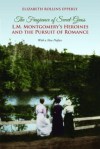
  • Actually, 2022 was a “refreshing the spirit” literary criticism reading year for me, including returning to works by Elizabeth R. Epperly, Diana Glyer, Donna J. Haraway, Stephanie L. Derrick, Marsha Daigle-Williamson, and C.S. Lewis.
  • One of my favourite lit crit/bio surprise discoveries of 2022 was John Mullan’s What Matters in Jane Austen? Twenty Crucial Puzzles Solved (2012). Super fun and intriguing work that enhanced my reading.
  • Another great discovery was William Cronon’s now-classic environmental history, Nature’s Metropolis: Chicago and the Great West (1992). Cronon is such a great data-centred storyteller.
  • Because of my mental exhaustion this year, I struggled with authors I have traditionally loved, like Albert Camus, Anne Rice, Angela Carter, Sir Thomas More, Jonathan Swift, Goethe, Franz Kafka, and Jorge Luis Borges (though he is still pretty great taken in small bites). Even Flannery O’Connor, who I think is brilliant, was less flavourful to me this year.
  • By contrast, I binged Dorothy L. SayersLord Peter Wimsey mysteries in late Autumn, which I found deeply refreshing.
  • Successfully completing Cervantes’ Don Quixote was a highlight for me in 2022. I blogged about it with cat poetry, which I think is fitting.
  • I read no full books from the medieval world or antiquity. Weird.
  • In terms of full theological works, I failed utterly in my reading goal of one theology book a month (that doesn’t fit under other categories). I had quite a few great books queued up, but I simply lacked the mental space to penetrate them (or allow them to penetrate them).
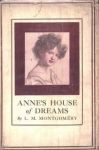
  • Most of my reading is theologically informed, however. I was able to use an invitation by the Atlantic School of Theology to teach an online short course to deepen my theological focus on L.M. Montgomery. “Spirituality in the Writing of L.M. Montgomery” was super popular, with more than 75 participants, and gave me permission to dive deep into text that we might too easily dismiss as being unsophisticated kids’ books, like Anne of Green Gables, Anne’s House of Dreams, Rainbow Valley, The Story Girl, and Emily of New Moon.
  • On the heels of this course, in June 2022, I presented a paper at the L.M. Montgomery Institute’s 15th Biennial International Conference. While my presentation was a bit more focused than my proposal (see here), “Reverent Irreverence: Images of God and Montgomery’s ‘Pilgrims on the Golden Road of Youth’” allowed me to do a very cool theological close reading of the early chapters of Anne of Green Gables. I have the notes written up for the chapter, but I am trying to think about whether there is a better mode of sharing that work.
  • The Montgomery conference was where I officially received my Elizabeth R. Epperly Award for Outstanding Early Career Paper for my reading of Anne’s House of Dreams as theodicy–which was the background to one of the short course units.
  • My 2022 reading was far richer than past years in terms of ecology and creation care. More of this anon!
  • I had set a goal of one BIPOC author a month with the goal of stretching my experience a bit. While I came close to that goal, it was really by reading authors I knew already: Robin Wall Kimmerer, Octavia Butler, N.K. Jemisin, Nnedi Okorafor, Ebony Elizabeth Thomas, Toni Morrison, etc.
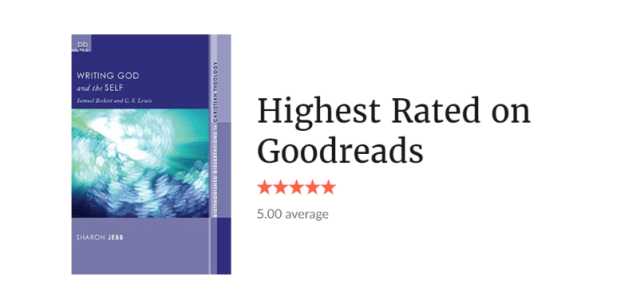
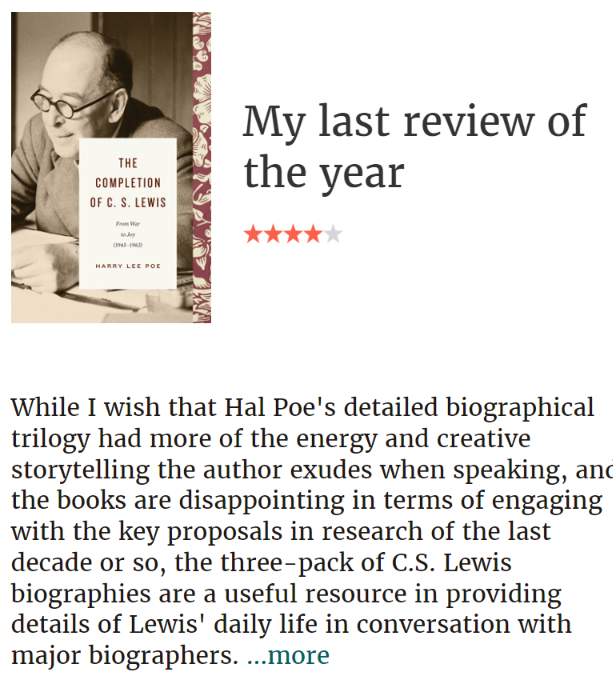
  • I read several new or newish Inklings studies critical texts this year that range from interesting to excellent. These include Hal Poe’s trilogy of new C.S. Lewis biographies, and studies by Jason M. Baxter, James Como, Gina Dalfonzo, Mark Vernon, John Garth, Philip Zaleski and Carol Zaleski, and Charlie Starr. I also read some critical C.S. Lewis studies that I had never completely finished during my PhD, including work by Sharon Jebb, Doris T. Myers, and (in progress) Paul Holmer.
  • In teaching a new approach to Narnia in early 2022–a course on Narnia and Communication, Leadership, and Culture at UPEI–I not only had one of the greatest teaching experiences of my life, but was also refreshed by reading the Narniad in a new way.
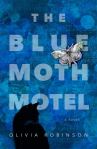
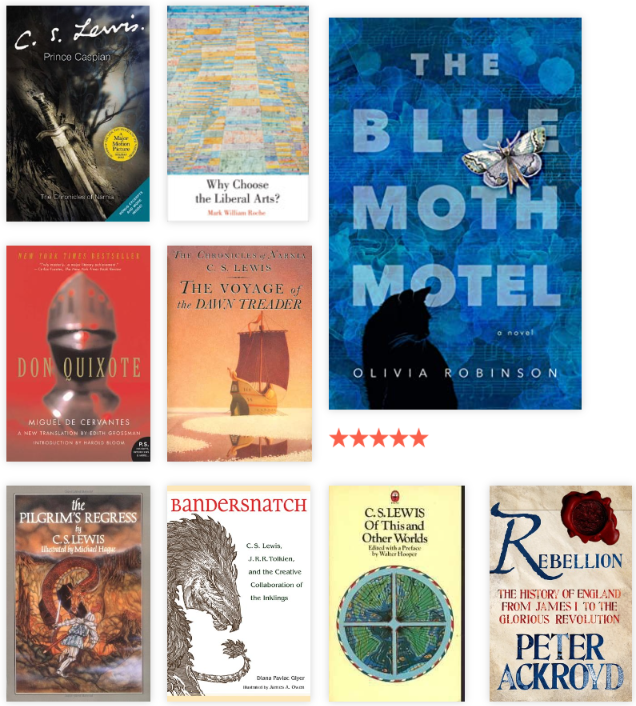
  • While I usually share my “5-star Surprises” with readers, this year, only two works of new-to-me fiction made it to my 5-star list: Cervantes’ Don Quixote from the early 17th century, and The Blue Moth Motel by Olivia Robinson from 2021. Admittedly, Don Quixote is one of the greats and Olivia Robinson is a past student of mine, so these “5-star Surprises” might be a bit biased. Still, I loved reading both of these books (in quite different ways).

Here is the rest of the infographic and stay tuned for more!


Posted in News & Links | Tagged , , , , , , , , , , , , , , | 20 Comments